Forensic Lenses: Interview with Voracious Reader, blogger and Reviewer Candace


FORENSIC LENSES


dreamstime_s_17002112


********


Take the journey to enjoy the view -Jeffrey Benjamin


********


What is the actual experience of the reader? -Benjamin Thomas


59726f0cae791ade944735f60e444da1


Welcome back ladies and gentlemen for another edition of Forensic Lenses; an investigative and exploratory approach into minds of voracious readers. Somewhat recently I put my thinking cap on (Yes, I have one) and imagined viewing people in a different light. Not just as writers, but as readers. Reading is the fire that ignites the imagination in so many that have become authors. So we’re here trying to discover the vast wealth of the complete reader experience. Join me, as we embark on this journey.


Everybody please welcome Candace!


12417684_10153699550060751_6448342001679727683_n


Candace is a book fiend, a classic reviewer, excellent blogger, and the awesome mind behind Literary Dust.  You can find her on Twitter at @literarydust, on Facebook Literary Dust: A Bookish World, and on Instagram at Literarydust.


I’m so glad I had opportunity to connect with Candace, because she is an avid reader who consumes books by the minute. I wish I could read as fast as she does. Or perhaps, a second set of eyes could be helpful. Or it could prove to be more troublesome! Hah!


11971032031656278230ted_Eyes_Crossed.svg.med


*You’re a blogger, book reviewer and a reader.  Are you also a writer or artist?

Well I try to write, but haven’t gotten far enough where I could be called a writer. Hopefully one day I will finish a book. I also used to be really into photography, but I don’t have much time for that.  As for any other art form? I can’t draw a stick figure to save my life.

Hey, if you writing you’re a writer. There’s no set of rules to dictate the designation. You’re a writer when you call yourself one. This kind of struggle is fairly common actually. Myself included. It took me several months to call myself a writer. Try it, its fun!


*What did you study in school? 

I studied to be a teacher, but I didn’t finish that.

Never too late I suppose. You don’t necessarily need school to be a positive role model in someone’s life though.


*I saw that you are obsessed with books. What is it about books that you love?

I love the escape, and the opportunity to be in someone else’s mind for a moment. The fact that you can go almost anywhere whether it is a fictional world that is beautiful or dark without the worry of something dreadful actually happening to you yet getting to experience something incredible.


Candace, I utterly enjoy the escapism too. The last six years have been a complete nightmare. I plunged deep into depression without a way out. Just this morning while listening to an audiobook on the way to work was therapeutic. I take great pleasure being in someone else’s skin for a while. You know, there’s a lot of benefits to audiobooks that you don’t get by reading. The subtle intonation of voice, minor dramatic effects, and the different dialects of characters make a BIG difference. Actually I laughed pretty hard a few times because the way something was said. 


*What is your current occupation? 

I actually stay at home.  I suffer from hemiplegic migraines.

More time to read books!  Sometimes all I want to do is read and write. Put the world and everything in it on pause. 


Pause


Time to read…


*What were your favorite childhood books and why?


Strega Nona, Where the Wild Things Are, and The Giving Tree. I loved these books because they have meaning within them, and I feel they teach life lessons inside of their short pages, and the pictures inside are memorable and have stayed with me.


Those are the best. The stories that teach you something with theme and rich significance. You can’t beat it.


*You mentioned how you like to be in someone else’s mind when reading. Name your all time favorite characters and how you most relate to them.


I was always into reading when I was younger, but when I was in high school I read 1984, and that book opened a whole new world for me. Being in Winston’s head was interesting, and the whole thing was just intense.  I feel like if I were in that situation with the whole “Big Brother” type situation I would want to break the rules too.

Nice. It’s stunning, how one character can open up “worlds” for us when we read them on the page. Amazing.


*Name your top five fictional worlds


1. A Court of Thorns and Roses by: Sarah J. Maas 

2. The Covenant series by: Jennifer L. Armentrout 

3. The Hunger Games by: Suzanne Collins

4. Angelfall by: Susan Ee

5. Shatter Me by: Tahereh Mafi


Don’t hate me, but I actually haven’t read any of these authors yet. I always enjoy seeing what others favs are though. Thanks for sharing. 


*If you had a one way ticket  to one of them, which would it be?

Most of these worlds would actually be pretty scary to live in, but I am going to go with A Court of Thorns and Roses because in Rhysand’s world I could spend an eternity.


Sounds intriguing!


da9c35ba619d68676e1e535f5c66f7af


*Have you ever cried while reading? If so, why, and state what you were feeling at the moment.

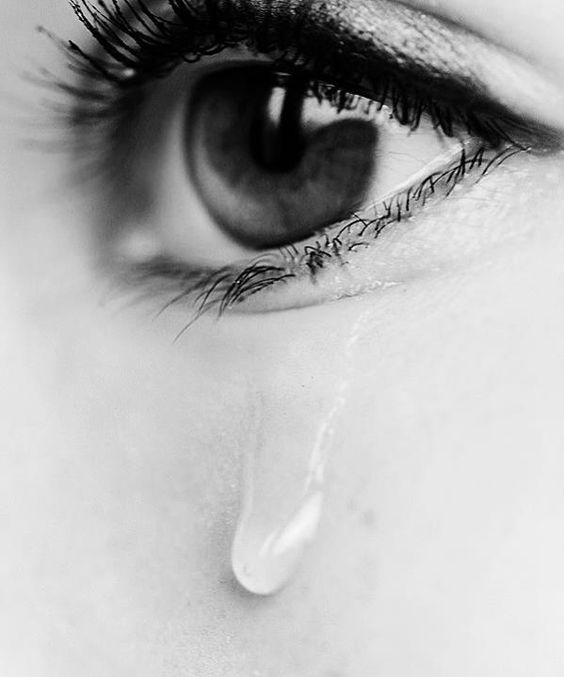
I have cried while reading, but I don’t get hysterical.  It is mainly just tears sliding down my face, but it has been when characters I really have grown to love die, and it feels like a piece of your soul has been torn away.  It is weird how you can feel for these characters that aren’t even real, yet they feel so three dimensional.


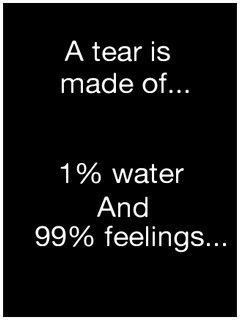
This is the most amazing experience, when an author can make me cry. There’s only two books where I’ve almost cried, only because I was holding back. *he he he*   😉


66457ccbf38f28e9a75780ad67abe013


It’s good to cry, let those feelings out. 


You know in some countries if you burp that means the meal was good. Well, if and when there’s a tear streaking down your face, hats off to the author. 


9e7098a3c214b108bcb6536911667905


*Name your favorite YA books and what you love about them. 

The Shatter Me series by Tahereh Mafi, The Under the Never Sky series by: Veronica Rossi, The Precious Stone Trilogy by: Kerstin Gier, Throne of Glass and A Court of Thorns and Roses by: Sarah J. Maas, Six of Crows by Leigh Bardugo, The Falling Kingdoms series by: Morgan Rhodes, and The Blood of Eden series by: Julie Kagawa, and I could keep going on for a while. I love these mainly because most of them are just a whole different world, and these characters just all do things that normal people just don’t do, and I love that.

I can almost see your enjoyment here. Great!


AT THE SCENE OF THE CRIME….


*Name your top 5-10 pet peeves you hate when reading a book. 

1. Too much self loathing

2. When characters say someone “Let out a breath they didn’t know they were holding”. How is that possible?

3. If characters have kissing scene etc. and get interrupted too many times. Does that happen in real life?

4. Way too many point of views.

5. Names I can’t pronounce. Unless the author provides a page on how to sound out the names.


1194984609285255522police_man_ganson.svg.med


Hold it right there, pal…


*What other genres do you read?

Fantasy, Paranormal, New Adult contemporary. I can’t do a lot of the “People with real problems” type books.

I hear you. Guess that could be rather depressing.


*What do you think of the current 5 star system for book reviews?

It is okay, but I know the 3 star area is different to some people. Some people say 3 stars is still a good book while others have 3 stars as thinking it wasn’t great, so it is all opinion pretty much.

I’ve heard the same thing. It think it serves a certain purpose while failing in others. Doesn’t capture the complete reader experience in my opinion. But eh, what do I know?


*When you rate a book, do you have specific criteria? Or does it depend on your subjective feeling?

If I am left really thinking about the book I give it a 5. I don’t really give books a 1 because those are ones that I wasn’t able to finish, but I feel bad about rating a book I don’t finish, so I just don’t rate it at all.

Same here. If I didn’t finish a book I wouldn’t be able to properly assess it.


*In your opinion, who are the top authors of the century and why?
Wow okay sorry to disappoint, but I don’t have something like Shakespeare or Poe. At the moment it has to be Sarah J. Maas. Her series are just so addicting and always has me yearning for the next book.
You just elicted the WOW factor!
Wow Surprised Word Astonished Surprising
Give credit to Sarah J. Maas
*Over the course of your life, how has reading affected you?
It has opened doors to all sorts of places where I now have an open mind and can see from others perspectives even if I don’t agree with their actions. I feel that that has helped me be a better person and can empathize with people in real life and understand the choices that some people make even if they are not the same choices I would choose. Everyone is different, and if we were all the same and thought the same then what a boring world this place would be.


Awesome! I read somewhere that reading literally changes your brain and how you think. Empathy was one thing the article mentioned. That’s so cool!


Thanks for joining us Candace!


cb73e69def62054242816e76f5aa2a72


********


~Books fall open, you fall in. -David McCord


********


“I was born with a reading list I will never finish.” -Maud Casey


********


Never take for granted what you read -Benjamin Thomas


Benjamin Thomas

@thewritingtrain

http://www.thewritingtrain.com

Interview: Reading habits and the Classics with Bestselling Author KM Weiland


WELCOME

TO THE

WRITING TRAIN


Composite image of close up of female blue eye


When you read a book, what do your eyes see? What do they perceive?


Writers extend to virtually every corner of the earth; east, west, south, north and arguably are the most fascinating people on the planet. Well if you ask me, they are the most fascinating people on the planet. It’s no great secret that I take great joy in interviewing them. To discover and share in their craft, learn how they tick, or don’t. Fascinating indeed.

I had a crazy thought of interviewing writers from a completely different perspective. Most writers began their journey as readers so why not get a view into this experience?  So here it is, the Forensic Lenses series. An investigative and exploratory approach into the minds of your favorite authors.


FORENSIC LENSES

SERIES


c102e876cfbd83a2f887bb4039e2eeb0


Do you–follow the reader?

I do…

Her name is KM Weiland.


MainAvatar2


Welcome Kate!


K.M. Weiland is an award-winning, butt-kicking, internationally published author of the bestselling Outlining Your Novel and Structuring Your Novel books. She writes speculative and historical fiction from imaginary lands. Her blog  helpingwritersbecomeauthors.com is regularly ranked in Writer’s Digest top 101 Best Websites For Writers every year, but is #1 in my book. She puts up with writers like me who don’t know grammar yet. Way to go Kate!


In the history of the blogosphere, there has never been such a defining moment until today. As a token of our appreciation we bestow upon you, KM Weiland, the ever noble…


Seal of Awesomeness


Awesome Gold Vintage Label


Wear it with dignity and honor.

*applause, standing ovation*


Alright, so let’s cut to the chase.

Was reading Scottish Chiefs by Jane Porter, the inciting Incident in your path of becoming a writer? You mentioned how this sparked your love of history, laid the groundwork for your book A man called Outlaw, influenced your novel Behold the Dawn and not to mention your desire to write historical fiction.


That’s an interesting way to look at it. The Scottish Chiefs was definitely a formative fiction experience for me as a child. But I think it was more of a “feeding” of my love for stories, than it was an inspiration to actually start writing. I didn’t start writing until several years later and certainly not with any intent to actually *be* a writer. I actually really like that I kind of slipped sideways into writing. It was never an ambition. It was more just an out-breathing of myself.


But Scottish Chiefs definitely influenced me, on at least a subconscious level, in regards to *what* I would end up writing: medieval-esque epic and heroic tales–what I call “blood and thunder” stories.

Never was my ambition either. Funny how that works huh? So it was more of a feeding your love for stories, great! How reading affects us on a subconscious level and fuels our imaginations is quite a mystery. Perhaps we should we call it, Fuelination? Whatever the term, early reading habits in children serve as the impetus for authorship later in life. Then all it takes is a small spark of inspiration to ignite the flame. BOOM. The passionate flame has been lit, begetting another writer. A particular breed of humanity.

petrol pump nozzle hold by hand with gasoline


How has your reading experience and love for stories evolved from childhood, teenage, to adulthood?


I have always loved stories. They have always been my language. But I was a very undisciplined reader as a child and teenager. My parents weren’t readers themselves and weren’t able to guide my reading choices. I read and loved and re-read (and re-read and re-read) a few classics like Little Women, Anne of Green Gables, The Black Stallion. But I also read a lot of highly forgettable children’s novels–and probably every book in the Star Wars Extended Universe that had been published to that point. It wasn’t until I was in my late teens that I started discovering better quality fiction and disciplining myself to read widely and broadly–especially in the classics. It’s my goal to read all the classics before I die. I’m working my way through the authors alphabetically. So far, I’m up to M.


I find it interesting, even though your family wasn’t a reading family, you still became a voracious reader and ultimately a writer. I’m wondering if you got your books from the library or bought them on allowance. It sounds like your learned that discipline through reading experience on your own. Versus someone telling you this is good, or that is bad. You had to cultivate it yourself. Which I think had a big role in making you who you are today. You’re probably more keen because of it. 

Woman reading inside a huge book
Reading the classics
How has being a writer affected your reading? Is it a killjoy because you have more of a critical eye? Or does it yield more appreciation for the story? Take us into your realm as a reader.


Most of my childhood reading was from the library. My grandparents and aunts bought me a lot of books as well. I tended to reread the books I owned a lot–hence the multiple visits to Anne of Green Gables and Co. As for writing affecting my reading… You hear a lot about authors who find that their own awareness of the principles of writing turns them into hypercritical readers and robs them of the joy of reading. But I’ve never really experienced that. Maybe because I’ve always been hypercritical! :p For me, writing has only enhanced my reading. Instead of *just* reading for pleasure, now I also read with a writer’s eye and get to explore and enjoy the psychology and craft of every new author’s work. It brings a whole new dimension to my appreciation of a good book.


I really appreciate this. Having a writer’s eye, exploring and enjoying the craft are all pluses!


11971017688323435Chrisdesign_green_comic_egg.svg.med


AT THE SCENE OF THE CRIME…

As a reader what are your 3-5 pet peeves and why?


  1. Flat narrative voices that “tell” instead of “show.”
  2. Self-indulgent authors, who are obviously too in love with their own story worlds and characters to be objective about the reader experience.
  3. Unnecessary prologues
  4. Repetitious dialogue
  5. Overuse of character names when addressing each other in dialogue


It’s good to be aware of these. Thanks!


detective-md


I’ve often heard you say you must read all the Classics before you die. It must be high on the bucket list!  So why this journey through the Classics and what impressions do you have?


For the purposes of challenging myself to read all the classics, I define a classic as any book published before 1966 with a title or author I recognize. I started the challenge really just as a way to get myself to read the important literature landmarks from history. It’s been an interesting journey–tedious at times, but, overall, definitely worth the effort. I feel like I’ve vastly broadened myself and my understanding of people, the world, and writing. It’s made me read books by authors I never would have touched otherwise–from so many time periods and countries and about so many different topics. I estimate I’m about halfway done (I’ve just reached the “M” authors). I’ve found it incredibly rewarding.


I’m looking forward to your response when you’re finished as well. I’ve been thinking a lot about the most influential authors of the century. How they left their footprint upon society and the craft of writing. 


footprint-md


Every great writer has left their footprints in the craft. We gladly follow in their footsteps. But as we do, we don’t realize we begin to make our own.

~Benjamin Thomas


BONUS:  Your mission should you choose to except it, would be to note the changes in the craft while reading the Classics.


The primary facets of good storytelling have remained the same over time: structure, character, and theme. I would cite two things in particular as the biggest changes over the years:


1) The visual style. Television, the movies, and the Internet have made the far corners of the world accessible to everyone. As a result, complex descriptions of foreign places and things are no longer necessary. Writers today need only a few vivid details to bring a scene to life for readers, who can then fill in the blanks for themselves. At the same time, however, due to the overwhelmingly visual nature of entertainment these days, authors also have to be much more evocative in their descriptions. Readers want to see a “movie” in their heads, which is why “showing” (instead of “telling”) has become such a touted technique.


2) The pacing is much tighter and faster these days, for the most part. Again, the culture in which we now live is faster-paced and more than a little distracted. Readers today aren’t as patient with long, flowing passages. They want to get to the point.


Excellent! Thanks so much for sharing.


Thanks KATE!


*Please see KM Weiland‘s Amazon author page and her award winning books!

*For further contact visit kmweiland.com and her award winning blog at helpingwritersbecomeauthors.com or on Twitter @KMWeiland

*Join the 2016 Reading book challenge on Goodreads


uIYTjkcb


 Storming: A Dieselpunk Adventure Novel  One of my favorite reads of 2016!


*********


Dreamlander-NIEA-Finalist-165


Dreamlander  Read the BRAG Medallion winner and NIEA finalist!

*********


outlining-165

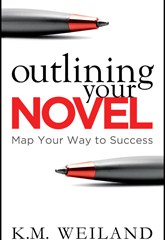
Outlining Your Novel: Map Your Way to Success  Don’t miss this award-winning beauty! One of  personal favorites.


*********


634e06ab49dec1956f52b6fed379f344

Structuring Your Novel: Essential Keys for Writing an Outstanding Story

An award winning blockbuster and must have writing book! One of  personal favorites.


Today a READER, 

tomorrow a LEADER.

-Margaret Fuller


1202568285fe4f0f0c5a61730153df99

Never underestimate the power of a good book

~Benjamin Thomas


Benjamin Thomas

@thewritingtrain

http://www.thewritingtrain.com

Forensic Lenses: With Cozy Mystery Author Elizabeth S. Craig


“Read a lot. Write a lot. Delete a lot.”

~ Hannah Richell


Hello everyone and welcome back to another episode on the Writing Train. Well today is very special because it’s the day we’re kicking off our new series! Check it out.


Contact lenses


What is forensic lenses? First, it’s another reason for me to interview people. Second, it’s an interview with a particular view in mind (No pun intended) hence the name forensic lenses. But why forensic lenses? The word forensic means: pertaining to, connected with, or used in courts of law or public discussion and debate.  So far I’ve been interviewing so many wonderful writers both published and unpublished. Writers from all backgrounds, levels and walks of life. Now, I’d like to interview  them as…wait for it…..READERS. Yes you read that correctly. Readers.


A lens is defined in part, as a substance that changes the convergence of light rays, as for magnification, or in correcting defects of vision. In other words, they help you see things you wouldn’t normally see. They make things bigger, or magnified, that wouldn’t normally stick out. But the most simplistic definition is that they help you see. Everyone’s eyes are different, and everyone’s lenses are different in how they affect eyesight. We were all born with two embedded scanners in our heads, but we still see things in our own particular way. So when you’re reading the next bestseller what do you see? What do I see?  What resonates you to tears may bore me to death, and vice versa.


Personally I LOVE eyes for some reason. Research estimates that eighty to eighty five percent of our perception, learning, cognition and activities are mediated through vision (Vision Is Our Dominant Sense). Before there were writing conferences, retreats, blogs, and how-to-do-everything, there were just books. Good old fashioned tangible books. How did the great writers before our time learn the craft so well? BREAKING NEWS: They read a lot. Sounds simple eh?


12603896661797746970jantonalcor_ReaderBoy.svg.med


Forensics naturally solves crimes by scientifically providing evidence to be used in a court of law. To prove one’s guilt, or perhaps their innocence. In other words help solve crimes and catch criminals.  As a reader do you have any pet peeves? Have you ever read something that made you throw the book across the room? Or made you close it, never wanting to open it again? Most of the time it’s not that dramatic, but it could be something small and equally frustrating. These are what I consider crimes so to speak. Things that violate your emotional resonance. That’s on the negative side. The positives are things you enjoy, observe, or witness that prove to be worth your time. It’s the evidence of a great read, and possibly a re-read!


Reading is dreaming with your eyes open

~YoYo


open your eyes
Keep your eyes open…


Teen girl reading book outdoors
Dream reading


FORENSIC LENSES


Let’s get started with the first guest of the series!

Please welcome

Elizabeth S. Craig 


ElizabethCraig1


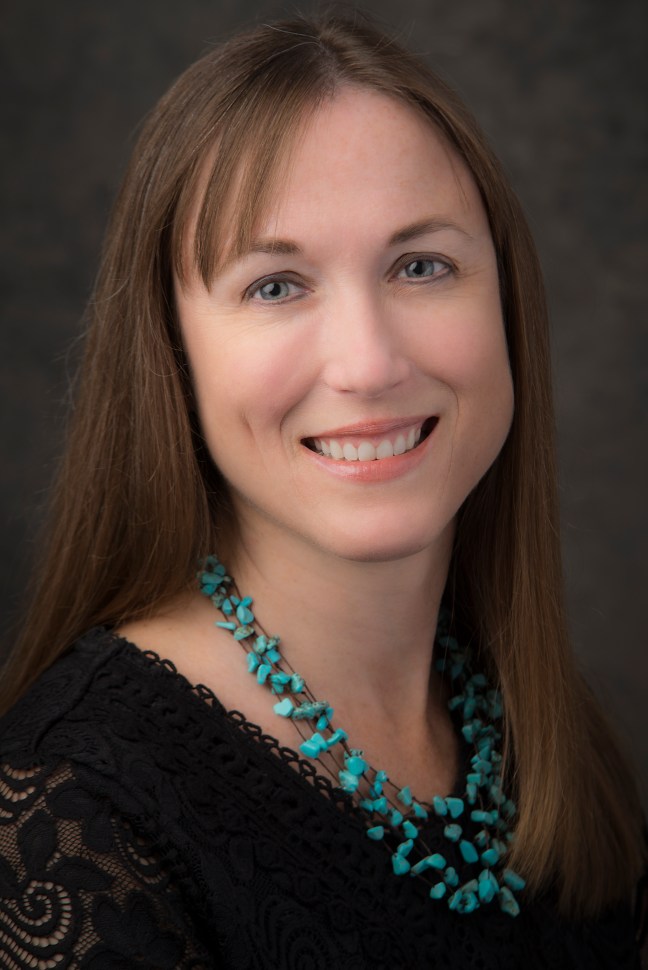
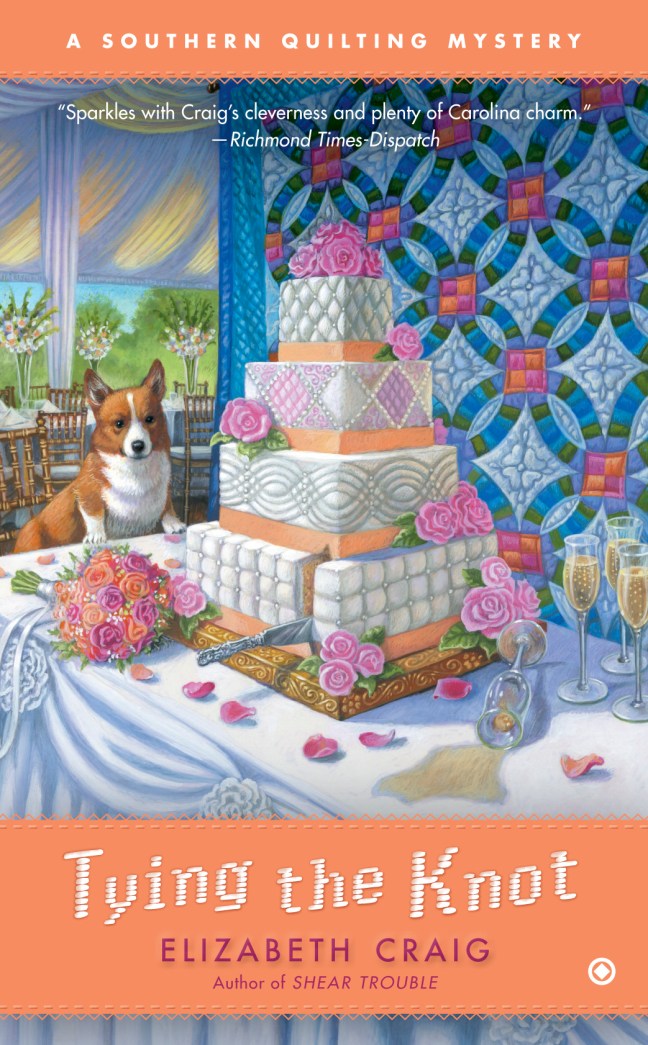
Elizabeth is the bestselling cozy mystery author of the Southern Quilting mysteries and Memphis Barbeque mysteries. She also has one of Writer’s Digest’s 101 best websites for writers. Feel free to visit her over at: elizabethspanncraig.com. Receive a free ebook, updates, recipes by signing up for her newsletter click here.


MurderonOpeningNight_ebook


TyingTheKnot_FC


tn_fingerlickindead (2)


To see more books by Elizabeth click  here.


*How did you begin reading habits as a child? Did someone in your family read to you?

My father was an English teacher and my grandmother was a retired English teacher. Reading was as much a part of my day as eating and sleeping.  Everyone in my family read to me and continued reading to me, even when I was able to read for myself.  Sometimes the settings of the books we read together, the Oz complete series, for example, were almost more real to me than my own home.

YES I love this. It always begins with reading. That’s great you had English teachers in your family AND experience collective reading habits from family members. Amazing.


*Who was your childhood favorite? Scooby-Doo, Nancy Drew, Trixie Belden, Hardy Boys? Why?

Nancy Drew was an early-elementary school favorite because she seemed so calm, collected, mature and brave as she unraveled genuinely creepy mysteries.  By late elementary, I’d shifted my loyalties to Trixie a bit.  That’s probably because Trixie was closer to my age and actually misbehaved in the stories…she seemed a little more realistic.  The interesting thing about my childhood favorites; Nancy, Trixie, and Scooby; is that they all embody the ‘friends as sidekicks’ approach to sleuthing.  That had a tremendous influence on me as a writer…no solo sleuths or lone wolf detectives for me.

Yeah, I think the lone wolf characters are kind of boring honestly. Unless something really sticks out.


“Reading… a vacation for the mind….” ~Dave Barry


*In your bio, you state “I started in on the Agatha Christies. Miss Marple and Hercule Poirot made me a lifelong mystery fan.” What was it at this stage of reading that made you a LIFELONG mystery fan? Something had a major impact here.  


Agatha Christie and the other masters of the genre turn mystery reading into an interactive experience. Their mysteries grab the reader and drag him in. A good mystery, such as the ones Christie wrote, make the reader feel as if he or she is in the sleuth’s skin, solving the mystery as they go.  It’s this armchair detection, the ability to feel the thrill of edging closer to a dangerous killer, all from the comfort and safety of one’s home. To me, there’s nothing else like it—it’s the ultimate escape.


Wow! I had an escape just by reading your statement! Excellent.


*Currently, who are your top 5 mystery writers and why? 

For cozies, my top pick is M.C. Beaton.  Her ability to write quirky characters and an engrossing setting is second to none. For police procedurals I like Elizabeth George, Deborah Crombie, and Louise Penney—their sympathetic portrayals of their detectives and how they balance their personal lives and professional lives makes their books both realistic and a joy to read.  For a darker story, I go to Norwegian writer Jo Nesbø…the grittiness of his stories sometimes just hits the spot, as a reader.


Elizabeth George is absolutely amazing. Can’t wait to read more of her books. 


*Since you’re an experienced reader in the mystery genre, is it easy to figure out whodunit? Or does it make it harder to enjoy a good mystery book? 

Unfortunately, yes, I usually figure it out.  I absolutely love it when I’m wrong. I love twists, I love being surprised.  But if the writer has done a good job wrapping up all the loose ends of a mystery and circled around to the beginning of the book from the conclusion, I’m still satisfied as a reader, even when I’ve pegged the killer.


Man, just was thinking how hard it must be to fool an experienced mystery reader.


*As a reader, what are your biggest pet peeves? (Writer Crimes)

I’m really not keen on plot devices and seeing writers manipulate plot and make characters behave out of character just out of convenience. This kind of Deus ex machina, especially at the end of a book, feels contrived and can contribute to a flat ending.

This is a very interesting viewpoint. We must be the ever skillful writer to avoid things like these. 


*After all these years of reading, what makes a good mystery? Or a great one?

I think greatness ultimately is attained through the sleuth’s personality. We don’t have to like the sleuth, but we have to relate to or understand him or her. A good mystery will have an interesting or appealing sleuth and a cast of supporting recurring characters that either act as a sleuth’s foil or play up his or her strengths.

I love this. It comes down to character and more specifically his personality. Understanding him or her makes all the difference. Sweet!


Thanks so much for joining us Elizabeth! Please come again.


elizabethspanncraig.com
Newsletter Sign-up


A book is a gift you can open again and again.

-Garrison Keillor


**********

Keep reading

It’s one of the most marvelous adventures

that anyone can have

-Lloyd alexander


**********


READING IS FUEL 

FOR THE IMAGINATION

~ Benjamin Thomas


Join the Locomotion

Benjamin Thomas

@thewritingtrain

http://www.thewritingtrain.com