
IT’S TELEVISION TUESDAY WITH HARLAN COBEN

Who’s your favorite mystery writer? Tell me in the comments!
Benjamin Thomas
@thewritingtrain
http://www.thewritingtrain.com


*If you had to do one thing over in life what would it be?
I would have taken a year off from work when I learned about the extent of Phoebe’s problems – the bullying and the cutting. And then I would have made a point of getting to know my daughter’s friends, Jessie and Emma. Not doing that was a mistake on my part. Definitely. And I believe if I’d done that, what happened to Phoebe in the fall of her freshman year would never have happened.
Well, you know what they say, hindsight is 20/20. I certainly enjoyed meeting Jessie and Emma!

*If you had a chance to do it over again would you homeschool Phoebe, or take your chances in public/private school?
I don’t happen to believe in homeschooling, nor do I think I would be any good at it. But don’t get me wrong, my hat’s off to people who are capable teachers and can provide a solid education to their children by homeschooling. It’s just not for me. I know my limits.
And yes, I would stick with private and/or public school. In the end, I believe you cannot protect your children from life. They will have to go out into the world at some point, as flawed as it sometimes is, and as dangerous as it can be. It’s also a wonderful place…the world, and you just have to help your children navigate the difficult parts.
I bet you could have pulled it off though, Izzy. Your’re fully capable, methodical, determined and very considerate in your way of doing things.
Your’re right, we can’t protect our children from life. We have to help them navigate through the storm and focus on the beauty in life. But after the storm is over and gone, there’s always the sweetest calm.

*If you could impart a missing virtue into Phoebe what would it be?
I don’t believe Phoebe has any missing virtues. She is a bit over-sensitive, but that’s far better than being insensitive. She is a wonderful human being.
Well said. Over-sensitive, yes. She’s only 13! There’s so many things going on in your head at that age.
*If you could add a missing virtue to yourself as a parent what would it be?
I’ve learned a lot about being more open-minded and less judgmental. I assumed that Phoebe’s close friends were a bad influence on her, but I think that was wrong. I made those assumptions without really knowing either Jessie or Emma very well. So before judging other people it’s important to actually know them!
Well, you had good reason to be judgmental from the beginning considering what happened. Being open-minded is always a plus, but it’s hard not having a knee-jerk reaction under those circumstances.

*If you were a friend Phoebe’s age, how would you protect her?
It’s difficult to protect someone else at that age, except to be a good and loving friend, there in good times and bad. Maybe in Phoebe’s case, it would have been helpful for her friends to stand up to the children who bullied her in eighth grade (which, I believe, Jessie did as much as possible), and then in ninth grade to counteract the cyber-bullying by writing Facebook posts that are supportive of Phoebe. Even to call Phoebe and suggest she get off of Facebook/the Internet. Or to contact an adult and ask them to intervene. But that’s a lot to ask of 13- and 14-year- old girls and boys.
Having supportive friends in times of trial is certainly a big help. But I suppose that’s asking a lot from a 13 or 14 year old!
*What is the most challenging quality of Phoebe?
Her emotional volatility. She is a bit too sensitive and reactive to other people’s opinions. But I’m sure she’ll outgrow this once she establishes a firmer sense of herself. This comes with maturity. It also comes from us, her parents, by helping her through this period in her life.
It’s tough being a teenager. Especially managing your own reactions to peers who should be your support group.

*What do you cherish most about her?
I cherish Phoebe’s basic goodness. She is a loyal friend; she’s smart and kind and considerate. What more could anyone want?
She’s a sweet kid.
*What from your past has affected your parenting style?
(Isabel arches her brow at the interviewer.) You need to ask? It’s the same for most people, I believe. One’s own parents’ behaviors and parenting styles often influence us, their children. So my father was rigid and uncompromising and so was I. But now I see what that cost me. What that cost us. Phoebe. And I’ll never be that way again. I don’t mean that I will compromise my values, no, but I will listen more closely and try to understand what my children are going through before deciding what’s best in the way of limits, consequences and so on. I’ll even listen to my husband. No doubt there will still be disagreements, but I won’t rush to judgment or to decision so quickly.
I can totally relate to this, Iz. My mother was the rigid disciplinarian type. I know it all too well. But two heads are better than one. Talk it over with Ron, he’s the more easy going type. Tell him I said hello and let’s hook up for coffee sometime.

*What frustrates you most about other parents?
I can’t help it, but parents who allow their children to do whatever they want without any consequences, well, that drives me crazy. They are trying to be their children’s best friends, and that means they are abdicating their role as parents. You may not believe this, but I’ve actually heard girls say that they wish their parents were stricter and not just let them do everything they ask. Sometimes kids need to be able to say, “No, sorry, my parents won’t let me do that.” They actually want limits, it’s a great way for them to be able to say no but place the blame elsewhere.
YES. This is so true. Children on one had test the limits, but they also want them apparently. Sounds ironic doesn’t it? But it matches my experience. Sometimes I feel bad being the “policeman” all the time but they appreciate and respect the boundaries that are set.

*If you could encourage other parents, what would you say?
Learn from my mistakes. I was too rigid in upholding rules and not listening closely enough to what my daughter was trying to tell me.
This is such a hard lesson for a parent. It’s almost a science; knowing when to be compassionate and pliable, or when to apply rigidity. I’ve often made the same mistake as you, Izzy.
Raising children is the most wonderful and difficult experience we’ll ever have. As they grow up we may not realize that we need to grow along with them. They have their own little personalities and needs….And we need to listen to them.


www.crimsonedgepress.com
www.facebook.com/AuthorJoshuaRobertson
@robertsonwrites










*In your recent book, The Mind of a Murderer, and now Confession, both take the offender’s point of view. Can you tell us the significance of this as opposed to other approaches?
Actually, The Mind of a Murderer places each POV of an extreme offender in the frame of the theorist or clinician who interviewed him or her. It describes a dozen cases from the past century of mental health experts who devoted time to an extended case analysis through interview. This gave me an appreciation of the benefits of this approach, which can yield items that arise only with a deepening sense of the subject. Because it’s clinical and not salacious, the trained listener can structure the questions for maximum advantage to the discipline of criminology. You get a good sense of the layers of behavior – especially the manipulative behavior – as well as being able to ask a lot of questions that might occur to you along the way, so you can develop a more complex portrait. Within that, you might find motives that fail to fit stereotypes. An important aspect is to identify outliers, so that we can recognize the limits of our current theories and improve them. With Rader in Confession, at first, there was distance, as he did not know me well but he respected my credentials. As he found that it was easy to talk about ordinary things, he revealed more. There came an element of trust and familiarity that one can achieve only with numerous contacts. In addition, if you catch someone in an inconsistency or deception, you have their statements on tape or in writing. More important, though, is the ability to stay focused on a subject, pressing for clarity and detail. This is what we call qualitative research, which provides an open-ended richness to an interview that standardized tests or superficial questioning just cannot achieve. It’s not about having offenders just talk about whatever they want. Because the experts have background in research and/or trained expertise, they will structure the interviews to draw out helpful insights. There’s a bit of a research filter, but not much.
I appreciate this approach very much as it applies to the the discipline of criminology. Hopefully this will give us an inside view of the criminal mind and expose the limits of our understanding of serial killers. I’ve read another book entitled, Inside the Mind of BTK by former legendary FBI profiler John Douglas, who writes from a completely different approach. But the approach taken in Confession provides a certain mindset drawing out rich details.

*How do you immerse yourself in the mind of an extreme offender such as Dennis Rader?
I’m not sure if you’re asking about my method or my ability to endure it. My method was to read everything available, including five years of correspondence from a previous person who had contacted him. Then I spent five years corresponding with him and talking with him on the phone. Prison visits, I discovered, were of little value, aside from socializing. The real work came from his writing and drawings. How I was able to get deeply into this project relies on the ability to keep my goals in mind and adopt a clinical perspective. I have studied extreme offenders for many years and have written quite a few other books on them, so I had the ability to 1) listen to Rader describe his murders without reacting emotionally, and 2) place what he was saying in the context of my prior research. Many writers will tell you that immersion is truly the best way to experience and express yourself on any subject. Quite a few of my projects have been immersive. In this way, you shed your personal frame and evolve toward other perspectives. You learn to think like someone else. My first experience of this was jarring, but eventually I fully embraced it.
Wow. This was truly an immersive project. Having to read 5 years of previous correspondence, spend another 5 corresponding, and then conclude with a professional analysis is nothing short of amazing.

*What did you learn about the perception of this particular serial killer?
Dennis Rader has written hundreds of pages and drawn explicit pictures from his fantasy life. He provided a rare opportunity to get inside the mind of an organized, predatory serial killer who designed his killing career on specific role models, real and fictional. Because he offered specific details, I could add some experience. For example, when he described how he had selected stamps to use on his cat-and-mouse letters, I considered this when I looked at a wall of stamps. It helped me to briefly think like a predator. In turn, this helps me to stay safe and teach others to do so. I expected that working so closely with someone like Rader would have an impact on my thinking and theorizing. I have deepened my description of certain aspects of the criminal mind. Rader and I discussed things like living compartmentalized, but watching the act of it up close is quite an experience. There were walls that kept him sealed inside specific narratives, and nothing I asked or said made him more self-reflective about them. However, this behavior interested me, too. Cops have said I didn’t confront him enough to get to the “truth,” but there are many types of truths. I wasn’t interrogating him.
People like Rader think differently. As Rader puts it, “Hunting and prowling became a habit, much like drugs. You learn to cover up, hide those times in your normal life and develop a different set of life frames.” We need to accept that reality has layers and we don’t all share the same perception of it.
Yes, I read about his development from his childhood, and it definitely sounds like he had some abnormalities that may have affected his brain development. Especially his hidden erotic fantasies. It seems that they secretly grew within him until he actively sought out to reproduce what he saw in his own head.

*How is Rader unique in the realm of other serial killers?
It’s difficult to answer this question succinctly, since I spent an entire book exploring it. But I can say this: Many people have assumptions about serial killers and they expected Rader to fit the mold. In some ways he did, but in other ways he didn’t. Not many serial killers start out trying to copy role models. Not many compartmentalize successfully for three decades, especially when addiction is part of the compulsion. Few carry on a successful social life, with family responsibilities and a job, while also planning murder. Those who are conversant with their paraphilias won’t necessarily offer up details for analysis the way Rader did. Many have abusive backgrounds, but he did not. He kept an extraordinary amount of “hidey-holes” for all of his fantasy paraphernalia. And he had contrived a way to be Jack the Ripper and the Boston Strangler all rolled into one – although he didn’t quite pull off his ultimate plan.
He definitely breaks the mold of assumption. This was definitely an eyeopener!
*In a separate interview, you made this statement: “I am most fascinated with Rader’s description of “cubing” (his word for the more clumsy academic phrase, compartmentalization). He talks about how he developed “life frames,” but more interesting for me was bumping up against these boundaries whenever I asked difficult questions.” Is this “cubing” or compartmentalization unique to Rader, or do others exhibit this trait?
Living with several psychological compartments is common to anyone who attempts to have separate and contradictory centers of morality or meaning. It’s difficult to kill and also dictate that extreme violence on TV is wrong (as Rader does) unless you can move comfortably between these diverse points of view. It’s not multiple personality disorder. It’s more like being an actor, taking on different personas. With these people, the various roles are part of their lives. With psychopathic tendencies, the reduced sense of empathy and the lack of remorse assist the process. But compartmentalizing isn’t limited to serial killers, or even to criminals. It’s not difficult to spot it in many public figures, from sports stars to CEOs to politicians.
On one hand this is completely mind boggling, but on the other it’s very fascinating. A lot of people are intrigued by crime because they don’t understand the “why” or the motivations behind it. Although we may never understand the reasons or varied obscurities of crime, we should analyze its expression. In this book, you let Rader express himself according to a structured clinical perspective. He also kept copious amounts of written material about his fantasies, crimes and drawings which gave us an intrinsic view of his mindset.

*Do you think this “cubing” mindset contributed to his criminal behavior? Or why in his own mind would he separate his lifestyles in the way that he did?
Cubing is a pretty common activity, and it evolves gradually. It’s not a calculated adoption of a lifestyle. It’s part of the development of a fantasy life, because it’s about enjoying oneself in secrecy. The more deviant one’s fantasies are, the more likely one will develop a cube for it. In this way, the brain develops neural pathways to support it, so that it’s easier to go in and out, as well as easier to keep separate. You develop a persona that is acceptable to the people around you, but you go into your fantasy world when you want to fully indulge. I would say any novelist knows this experience, and probably other creative types. The more they accommodate the secret life, the more natural it feels, and if it’s more rewarding than ordinary life, it will become their ultimate retreat. Then, when they act out and actually commit a murder to accommodate their fantasy, they decide if it’s all it was cracked up to be. If so, and they get away with it, they will do it again. Rader describes how he kept believing there was a line he wouldn’t cross, but then he did. It was like being on a boat that was floating away. He kept thinking he wouldn’t float so far that he couldn’t get back to shore, but then he did. And he accommodated it, thereby evolving toward a new sense of himself. What he believed did not match his reality. His victims paid the price for that. Then his life changed and kept changing, but he had no moral base against which to measure himself. He just kept doing what felt good to him. He recreated himself.
I’m very curious about how his brain would’ve developed abnormally according to his dark fantasies. He probaby was hard wired completely for his intense fantasy world. Brain plasticity or neuroplasticity, has great potential for change throughout life according to normal life experiences. As a child develops over time their brain is shaped according to what they learn and practice producing neural pathways typical of any human being. But in this case, sounds like his brain developed atypically for something dark and abnormal. From what I’ve read, even way before he acted out his killings on others, he practiced binding on animals and even on himself.
One other confusing thing is that he had no moral base against which to measure himself. He was the president of his church and an active member so he must’ve possessed some morals. Second, he was a strict city compliance officer who would go out and measure people’s lawns with a ruler. Third, he served in the U.S. military for some length of time. Fourth, he was a cub scout leader. Fifth, he was a wannabe cop who was addicted to reading detective magazines. The guy definitely had morals, well, at least in that “cube” of his life. But when it came to his “fantasy cubed life” he used a twisted sense of morality to carry out his crimes. Actually, his sense morality in this part of his life was entirely based on fictional and real serial killers. He would berate and measure himself if he didn’t’ conduct his crimes correctly or lose control.

*Was he incapable of distinguishing between his “normal” life from his own criminal fantasies?
No, he was capable of understanding the difference, but the reward of his darker life had more weight than his “social obligations.” It felt more alive and exciting; it held the possibility of fame. His ordinary life did not. Some offenders are much more focused on immediate reward than on moral duty and prosocial behavior. This does not mean they are mentally impaired. For Rader, it became an addiction, but he didn’t lose sight of the fact that murder was wrong and illegal. After all, he went regularly to church!
This is fascinating. That he was completely capable of understanding the difference between the two, yet the reward of the darker life dominated all sense of social obligation, or moral duty of law. Now I’m theorizing how this goes back to his lifelong practice of paraphilia would’ve affected his brain development and neural pathways. Any drug addiction is a neurochemical nightmare on any human body. According to WebMD, “drug addiction is a brain disease because the abuse of drugs leads to changes in the structure and function of the brain”. Unfortunately his drug of choice was a complex binding and torturing fantasy of human beings.

*Why do killers seem to inspire one another? Is it fame, power, recognition?
Only some killers are inspired by others, and for a diversity of reasons. Healthcare serial killers, for example, want to learn how to use medications they hadn’t thought of. Among copycat mass murderers, some get ideas or methods that they hadn’t considered, while others find courage or confidence from seeing another carry out what they fantasize about doing. For some, the act of another is a trigger. Something similar can be said for serial killers who view others as role models or who think that this is the best road to fame. Rader got ideas, was inspired, fed his fantasies, acquired an identity, and felt compelled to become one of the elite. He had several reasons to copy others, but primarily it was for the erotic rush. But I’ve seen some killers who merely seek fame. There isn’t a way to generalize, because each has his or her own trajectory toward violence.
I think I understand some parts of his life, but seeking to become one of the “elite” is beyond me. We talked about cubing or compartmentalization. It seems that all his “cubes” were just a stage for the most dominant one, his fantasy. The addiction of the erotic rush was there, but so was ambition to become one of the greatest. To me, this is just an extension of his fantasy.
*Why would he, or anyone, seek to be famous for serial murder?
For some people, fame is highly intoxicating. Some people seek it through legitimate means, others through crime. Those who seek it through crime either believe it’s the only way they can be famous or they decide that crime is the most exciting avenue to fame. They see it in news coverage and they want to be described like that, too. Some even identify an actor to play them in a movie about their crimes.
Fame can be intoxicating. We can see that in the corruption of politics, sports, business and even our own lives. But how someone would seek it through crime is unfathomable. Then to decide that it’s the most exciting avenue to fame is startling. Fame can be a drug or an addiction.

*How will the findings of this book affect criminal or forensic psychology?
It won’t affect these disciplines as a whole, but hopefully, I have added some information to a subfield of knowledge about extreme offenders. I would like to believe that I have elicited greater appreciation for the extended, in-person case study, but I know that few people have the time to devote to something like this. I also hope I have made a case for keeping our notions about serial violence open-ended. People who study human beings in terms of probabilities or trends tend to focus on categories – what I call a cookie-cutter approach. This encourages a “we know all we need to know” mentality. I prefer to ponder individuals, to see how the particular details of their lives braided together toward violence. I think we need to stay open to the element of surprise and uniqueness.
I believe your last statement wholeheartedly. I would prefer to ponder the individual as well, then apply it contextually.
*What did you experience in writing this?
Across the course of five years, I had many experiences, although I never had second thoughts about pursuing it. At first, it felt somewhat daunting, although I had already written two biographies and other books. Also, I knew that some serial killers can be vulgar, crude, and demanding, but Rader never was. Over time, we got to know each other and the project took shape. When I saw that he was really trying, this became a more significant project for my research. As I was wrapping up, it seemed like this could be the most intense and psychologically deep book that I’ve ever written. I didn’t know if it would actually turn out well, but during the final six months, I was pretty sure it would cap so much of what I had done before it. The final result feels dense and comprehensive, but I don’t think what I did is complete, so there’s an experience of anticipating something more.
I really appreicate the time, effort and dedication you’ve committed to this project. You’re a consummate professional. Thumbs up.

*How has this book affected your understanding of a serial killer?
I have deepened my understanding of certain aspects, such as the academic notion of compartmentalizing. But also, I have experienced pressure to force Rader into a “type,” to make him fit cultural and academic notions about serial killers. Colleagues had certain expectations, such as that he had to have been abused as a child, which made me think about the fact that we sometimes act as if we already have all the answers. This is a terrible attitude for researchers. It means we’ve closed off possibility and there’s no reason to keep exploring. When we’re dealing with humans, we can’t be so certain. Each person brings something from his own life story, and rather than try to force Rader into a pre-established mold to suit colleagues, I let his story be the way he saw it. Maybe it’s not all true and maybe some things remain hidden, but the behavior that went into the telling of it had its own revelations. Having once taught existentialism at Rutgers University and having studied phenomenology at Duquesne University, it was nice to be reminded to bracket my personal bias and let the raw material be what it was.
This is much appreciated! You’re highly regarded for expertise and experience. You’re honesty is also notable. Thank you so much for all your hard work.
*****************




***

GIVEAWAY: Rafflecopter giveaway




*Where are you from?
Sheffield, UK
I’m not going to lie. I had to look this one up on the map. I’ve definitely heard of it, but couldn’t place it in my head. Think I need a memory upgrade.

*What exactly is the 60 minute read series?
When I was considering starting my quest to write a book, I first thought about the books that I like reading: sharp, punchy, to the point. No fluff. No fuss. No long, dreary, padded paragraphs. Since my kids arrived, time is also a premium, so short bursts of reading is usually the norm. And thus, amongst all my pooled ideas, the Sixty Minute Reads series was born. Roughly 300 words per chapter, each with its own cliffhanger drawing the reader on, all anchoring in real time around an event or location, with flashbacks and revelations converging to that final, sixtieth minute.
I love the concept of this. Very fascinating and innovative. You certainly deserve a high five.

*Do you write full time?
I don’t write full time. I’m not even sure I write part time! I just write as and when the mood takes me. I’m very much a flitter in life.
Hah! I can totally relate to this one.
*Tell us about the protagonist in your new book.
Holly Holloway is hard to understand. She’s strong, she’s sassy, yet in certain situations she acts weak, vulnerable, and well, human. Perhaps she is difficult to like, seems a bit of a bitch, but maybe all things become clear in the end.
Vulnerability is always a keeper in crafting a protagonist. Readers tend to relate to that more than anything.
*Is this a stand alone book or beginning of a new series?
It is very much a series. I love my concept, there’s so much scope.
That’s awesome. Sounds like it definitely has potential.

*What genre do you mainly write in?
Young Adult: this is to be a series of Thrillers, but I have also written a YA Adventure novel (yet to be published)
YA definitely has a lot of market appeal. I love to read in this genre too!
What inspired you to become a writer?
I used to read books a lot as a child. I was really encouraged by my family, and would consume book after book, even walking to the bus stop banging into lampposts. Writing seemed to come naturally later in life.
That’s awesome. I cracked up at this. Picturing you banging into a lamppost while reading was hilarious.

What’s your GOAL in becoming a writer?
I think I have already reached my goal: to become a published author. Perhaps my new goal is to become a multiple published author.
Goal achieved. Multiple publications sounds very desirable.
What 3 things have hindered you from completing your projects? (CONFLICT)
Time, desire, imagination.
Time: I work full time, have a young family that I love spending all my free time with, and climb as a hobby when I can.
Desire: I find it hard to WANT to edit my books. The thought of endlessly correcting my work seems to eternally stretch before me, so I put it off and off.
Imagination: My own imagination runs away with itself, such that when Draft 1 is complete, I am already off and thinking about the next book or books or series of books.
Ah, yes. These are the three heavyweights. Time, desire and imagination.
What keeps you motivated in achieving your dream? (DESIRE)
To get that first book in paperback. To see it on our bookshelf at home. To think that one day my children will pick it up and read it and know that their Daddy created it. That it might inspire and spark their own imagination and dreams and loves. Motivation, got it in spades mate.
I guess that would be pretty surreal seeing your own book on the shelf.
What’s your ANTAGONIST? What’s in the way?
Only my self. The wandering, writers mind. If only I could type as fast as my brain can think.
This wandering mind can be quite a problem sometimes.

Have you ever wanted to give up your dream? If so, why?
I’ve given up plenty of times. When the rejection letters came through from an industry that is only interested in the “painting by numbers” writing approach. When I had 10 chapters left to write and I couldn’t be bothered. When my laptop ran out of battery. Any excuse really.
Well, I glad to see your book online!
Why do writers give up, quit, or never complete their projects?
From a personal point, I would say that human modesty plays a large part. Imagine writing down all your thoughts and ideas, and then letting somebody else read them. Or worse, your friends, family, the guy next to you at work. It’s weird, right? But you get over it. You get supported. You realise you’re being silly and life is like that sometimes.
I suppose we have to develop very thick skin to survive.

What would you say to a struggling writer who’s given up?
Why give up? With self publishing such an easy, free, accessible ride these days, you can publish to the world, and then learn from your mistakes. No need to tell anybody you know, maybe even write under a pen name, but put it out there. Don’t let all that hard work go to waste. Lots of people won’t like it, but if you’re proud of it, then there will be people out there who will be too. Don’t write for everybody, write for yourself.


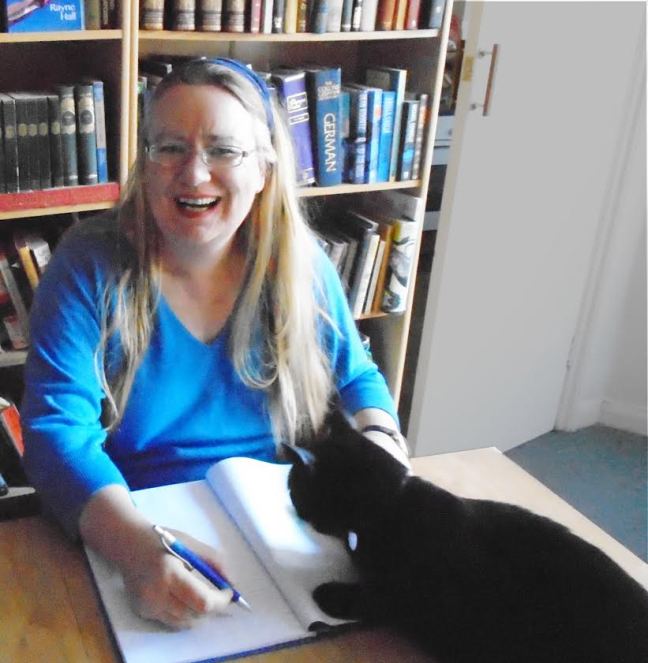

Who influenced you in your early reading habits as a child?
I learnt to read early. At the age of 4, I startled my parents by reading a political newspaper headline out loud. They were aghast, because they had not taught me to read. I had somehow worked out the meaning of letters myself, though I can’t remember how I did it.
From then on, I devoured books, starting with small-sized illustrated children’s books from the ‘Pixi’ series which was popular in Germany at the time. Soon I grew bored and read bigger books, borrowed from my elder sister who encouraged me. There were a lot of religious books in our home, mostly gifts from a great-uncle who was a catholic priest, and they included some really exciting children’s stories. I also remember a book filled with stories about the lives and deaths of martyrs. That was scary stuff – it seemed that the reward for a pious life was to get crucified, burnt alive or eaten by lions!
When I finally went to school to be taught to read, I was of course bored. After reading about kings, robbers, goblins and pirates, the school book with pages of nothing but ‘i I i’ and ‘l l l’ held no interest. Even in year two, when we finally got a textbook with stories, I was frustrated, because I’d read the whole book on the first day which left nothing new for the rest of the year.
This is rather AMAZING. You seemed to devour books even before you were officially taught to read! You’re probably the most voracious reader yet. You’re voracity is off the charts!

*Who were your childhood favorite authors?
You may not have heard of them, because they’re German authors: Hans Baumann, Karl May, Anna Müller-Tannewitz. Erich Kästner. I was also a fan of Enid Blyton and devoured every book available in German translation. Once a week I took the bus into town and borrowed as many library books as the library card allowed, which was never enough. Eventually, I’d read every book in the library’s children’s section.
Now that’s an amazing feat. Reading EVERY book in the library’s children’s section. That’s completely mind-boggling. You just elicited the WOW factor.

*Tell us how you came to read around 500 books a year
I read very, very fast.
It’s not just your appetite for books, but also the pace of reading that’s stunning.

*That comes down to about 10 books per week and 41 per month. That’s a lot of books. Are a lot of them forgettable? Which one’s touch you the most and why?
I easily read a book a day, often more. Sometimes I don’t read for a day or two, but that’s rare.
I remember most of them, although not consciously. I often buy or borrow a book which feels familiar after a few pages and after a couple of chapters it’s clear that I’ve already read it many years ago.
If a book is forgettable, I won’t waste time reading anything by that author again. I wish Amazon had a feature for marking authors I don’t want to read again. On the other hand, if I loved a book, I immediately look for more works by that author.
You must have an awesome memory! Can I borrow some? There must be a longstanding history in the memory banks. I can only imagine.

*In your motivation to read so many books, are you searching for something particular?
I seek the pleasure of reading, of experiencing different worlds, meeting new people, learning new things, going on adventures without putting myself in danger. Sometimes I look for excitement, sometimes for something to smile about, sometimes for information, inspiration or advice.
These are all so lovely. It’s amazing how we can experience it all through the written word. Exciting!
*What’s your method? Do you aim for a certain amount books per week or month?
Not at all. That would make reading a duty.
Well said.
*Do you have an outlet after accumulating so many experiences reading?
I’m not sure I understand your question. I always mean to review all the books I read, but I rarely get round to this, because I’m always busy reading the next book.
There’s a wealth of experience just waiting to be mined. I would love to pick your brain sometime.

*You’re a very experienced reader who must have a keen eye. What are your 5 biggest pet peeves?
Let me think.
1. Characters who sigh and grunt all the time, and heave deep breaths to steady themselves on every page.
2. Over-use of ‘began to’ and ‘started to’.
3. Gratuitous sex scenes.
4. Head-hopping/point- of-view violations, i.e. when I’m reading the story and experiencing the events from inside the head of one of the characters, and then suddenly I’m in another character’s head. That jolts me out of the story.
5. Writers obviously natural talent but haven’t honed their skill to the full level and instead used self-publishing as a short-cut before they were great. Had they continued learning their craft and revising their works, their books could have been great.
These are all very good. Everyone’s pet peeves are different but some are more common than others. Head hopping or POV hopping is definitely one of the more frequent ones.

*How has reading affected your career in writing, editing and publishing?
I’ve become very aware of how important the free sample pages are. As a reader, I always download several samples, glance at the beginning, and decide which one I want to buy. Some books are appallingly written, and I won’t buy them. But I’ve also come across many books where the free sample had no real content. The sample was taken up by legal disclaimers, forewords, quotes, lists of the author’s other works, review excerpts – but no taste of the actual book. So I didn’t buy them. This has taught me to arrange the front matter in away that leads the reader straight into the main content.
I spot common mistakes, and see what kind of mistakes writers make most. These range from lay/lie confusions to early flashbacks. Knowing what mistakes writers make is useful when I guide writers in my classes, books and consultations.
I know which beginnings are overused, for example, the main character travelling to a destination, the main character waking up and readying himself for the day, the main character selecting a dress to wear for the special event. This knowledge helps me avoid those beginnings in my fiction, and it enables me to advise other writers.
It’s also the other way round: my writing and editing work influences how I read. I see flaws in books more than a ‘normal’ reader does. If I wasn’t a writer and editor myself, I would probably still perceive those flaws, but I couldn’t put a finger on what exactly is wrong, I would just sense vaguely that ‘I don’t like this’.
You must have a very keen eyes.

*As a person who has read probably thousands of books, what has changed over the years?
Are you asking about books, or about me? I’ll answer both. What’s changed about me is that I’ve become less patient. I used to read at least two chapters before giving up on a book I didn’t like. Now I don’t even read two pages. Two paragraphs is enough to tell me whether a book is worth reading or not. The free sample downloads are great for this. I guess I’ve become blasé in my assessment what books are worth reading.
What’s changed about books over the years? A lot! Thanks to ebooks and the indie publishing revolution, far more books are getting published, and a much wider choice is available for any taste. Books have become available catering to very specific niches. There’s more freedom for readers to choose, and more freedom for writers to write what they want. All this is wonderful.
The downside of this is that a lot of sub-standard stuff gets published. New authors don’t realise that their book isn’t good enough yet, and some people hire ghostwriters for ridiculously low rates to churn out book after book. But I don’t think this is a big problem, because readers can choose what they want to read, thanks to the ‘look inside’ and ‘download sample’ functions.
There’s a lot more interactions between readers and authors. In part that’s because in many cases, middlemen have been removed from the publishing process, and in part its thanks to easy online communications. In the past, if I wanted to write to an author, I had to write a snail mail letter c/o the publisher, who would forward it to the agent, who would forward it to the author, and if I was lucky, the author would reply. Most of the time, I didn’t get a reply, because the author was long dead (and I didn’t realise that), because the publisher hadn’t bothered to forward my letter (withholding fan mail was common practice) or because the author couldn’t be bothered – and I didn’t know which was the case. Nowadays, I simply search the author online, send them a message via their website, leave a comment on their blog or write a quick tweet. And most of the time, I get a reply. That’s wonderful. Often there’s a dialogue between authors and readers that wasn’t possible in the past.
Book buying has become easier. I remember how long I had to wait to get a book I wanted. I had to go to a book shop, order the book, wait for days or weeks for it to arrive… and then it was often a disappointment.
Now I click ‘download sample’, dip into those pages, and if I like it, I click ‘buy now’ and have the book within seconds.
Regarding book content, I’ve noticed that there’s a lot more sex in fiction. Erotic fiction has become easily available in a wide range of subcategories catering to every taste. It think the emergence of ebooks enabled that, because readers can buy the book they want without exposing their interest, and they can read it on their Kindles without anyone seeing. I remember as a twenty-year- old I wanted to read some erotic fiction. I waited until I went on a journey by railway, then at the destination station, where nobody knew me, I scanned the shelf for such titles and had to make a rapid choice without test-reading. Hot and blushing with embarrassment, I took my selection to the cashier. Back at home, I wrapped the books to hide the covers, less any visitors would see the titles. When I finally got to reading them, they were often disgusting stuff I didn’t like, because of the narrow available range and the hurried decisions. These days, I could browse at leisure, pick a book I really wanted to read, and read it discreetly on my Kindle. I’m no longer interested in reading erotica – I choose not to – but I think it’s good that other adults have the freedom to read erotica if they choose. And they don’t even have go through the mortifying process of taking the books to a cashier.
Sex has also become more common in other genres – so common that sometimes it’s difficult to find a book without sex in it. Personally, I prefer erotic tension to erotic actions, and when characters have sex, I prefer it if they keep their bedroom doors closed. I get annoyed when sex scenes are forced on me. I remember wanting to read some good urban fantasy novel and every one of them had gratuitous sex. Of course, the latest development is the rise of the ‘chaste’ book. In almost any genre, it’s possible to search for ‘chaste’ or ‘clean read’ books. That’s part of the diversity and increased choice, and is good.
In crime fiction – cosy mysteries and thrillers – specific real locations have come to play a much bigger role than they used to. Whole series are set in Edinburgh or in Colorado or wherever, often the place where the author lives. This local flavour has become part of the pleasure of reading crime fiction.
In non-fiction, I’ve observed that advice books are increasingly based on the author’s experiences, and include first-person sections. This makes the books more authentic and personal.
This is great info indeed, thanks!

*As an experienced reader, in your opinion, what makes a good book?
My answer would be different depending on what kind of book. A good book is a book that gives me what I want – and what I want differs from day to day and genre to genre.
I love this answer. It’s so succinct and to the point.
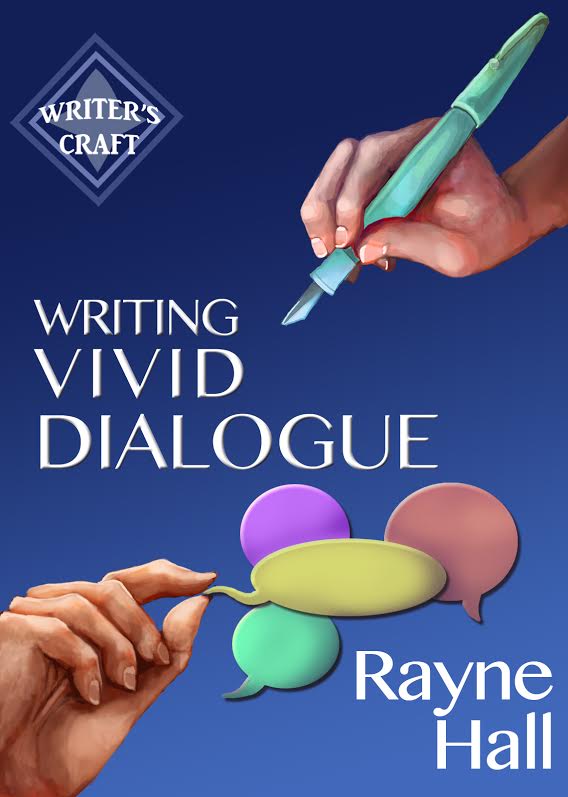
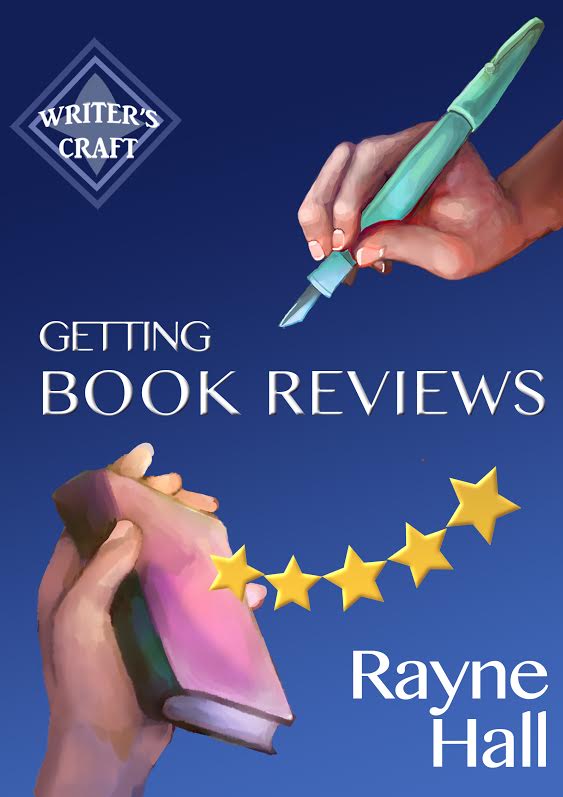
THANK YOU RAYNE
************
************






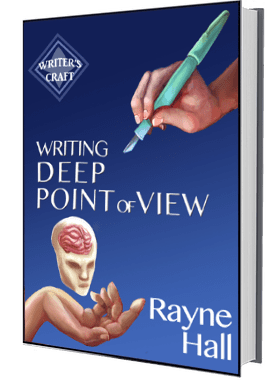
___________________________________________________________
************
************
_____________________________________________________________

rejuvenatement - not retirement
...a crime-fictional site
Established in May 2011 to help nurture and inspire the poetic spirit.
A place for poems and pics
a simple pairing of pictures and poetry
Sharing Poetry and Hugs
Persistent WV Poet
A.I. Art and Poetry
short writing prompts
I am the way and the reality and the life...John 14:6
Submit your film, screenplay, novel, to the festival and get it showcased at the FEEDBACK Festival. Full Feedback on all entries.
Military Science Fiction Author
 The Writing Train: Join the locomotion