Book Review: Saving Phoebe Murrow by Author Herta Feely


BOOK REVIEW AND CHARACTER Q&A WITH ISABEL WINTHROP


pheebs


Women’s Fiction, Adult Fiction

Paperback 425 pages, Kindle edtion 416 pages

Published September 2nd, 2016

Publisher: Upper Hand Press LLC

ISBN13   9781785770326


SYNOPSIS:


A timeless story of mothers and daughters with a razor-sharp 21st century twist, this heart-wrenching debut for fans of Kimberly McCreight (Reconstructing Amelia) and Liane Moriarity (Big Little Lies) will make you question how you and your family spend time online. With Saving Phoebe Murrow, acclaimed writer and longtime children’s activist Herta Feely introduces readers to Isabel Murrow: a suburban mother precariously balancing her busy career as a D.C. lawyer and her family, who she would do anything to protect. In a world of bullies and temptations, all Isabel wants is to keep her thirteen-year-old daughter, Phoebe, safe. But with her hectic schedule, Isabel fails to recognize another mother’s mounting fury and the danger her daughter faces by flirting with a mysterious boy online. A cyber-bulling incident aimed at Phoebe, with horrific consequences, finally pushes Isabel to the edge. Smartly paced and equal parts shocking and sadly familiar, Saving Phoebe Murrow is a riveting addition to the contemporary women’s fiction landscape that will resonate with parents, teens, and anyone compelled by timely and beautifully crafted stories


MY RATING 


Five golden stars isolated on white background


This was a stellar read about the teenage tragedies that exists throughout our society. Gripping, riveting, and deeply disturbing on many levels. This one will stick with you for quite a while. Author Herta Feely does a excellent job of capturing the fragile relationships, peer pressure, and split-second decisions that our young people have to make in order to navigate the world. Front and center is Phoebe’s loving mother and stout attorney, Isabel Winthrop.


CHARACTERS:  5 stars  The Characters were all too real.

PLOT: 5 stars     Masterful and wrought with emotional intensity.

STORY EFFECT:  5 stars  A very powerful story with a lingering effect.


Notes:  The depth of each character is amazing. From adolescents, parents, friends, antagonists it was captured perfectly.


HI HERTA!


herta-feely-bw


AUTHOR BIO:


Herta Feely is a writer, full-time editor, and the co-founder of Safe Kids Worldwide. Her short stories and memoir have been published in anthologies and literary journals, including The Sun, Lullwater Review, The Griffin, Provincetown Arts, and Big Muddy. In the wake of the James Frey scandal, Feely edited and published the anthology, Confessions: Fact or Fiction? Awarded the James Jones First Novel Fellowship and an Artist in Literature Fellowship from the DC Commission on the Arts and Humanities for The Trials of Serra Blue, she has also received an award from American Independent Writers for best published personal essay for a piece on immigration. Feely is a graduate of UC Berkeley and Johns Hopkins University. She has two grown sons and lives in Washington, DC, with her husband and cats.


Q&A with Isabel Winthrop, mother of Phoebe Murrow in Herta Feely’s new novel, Saving Phoebe Murrow


*If you had to do one thing over in life what would it be?

I would have taken a year off from work when I learned about the extent of Phoebe’s problems – the bullying and the cutting. And then I would have made a point of getting to know my daughter’s friends, Jessie and Emma. Not doing that was a mistake on my part. Definitely. And I believe if I’d done that, what happened to Phoebe in the fall of her freshman year would never have happened.

Well, you know what they say, hindsight is 20/20. I certainly enjoyed meeting Jessie and Emma!


arrow-1538695_960_720


*If you had a chance to do it over again would you homeschool Phoebe, or take your chances in public/private school?

I don’t happen to believe in homeschooling, nor do I think I would be any good at it. But don’t get me wrong, my hat’s off to people who are capable teachers and can provide a solid education to their children by homeschooling. It’s just not for me. I know my limits.

And yes, I would stick with private and/or public school. In the end, I believe you cannot protect your children from life. They will have to go out into the world at some point, as flawed as it sometimes is, and as dangerous as it can be. It’s also a wonderful place…the world, and you just have to help your children navigate the difficult parts.

I bet you could have pulled it off though, Izzy. Your’re fully capable, methodical, determined and very considerate in your way of doing things. 

Your’re right, we can’t protect our children from life. We have to help them navigate through the storm and focus on the beauty in life. But after the storm is over and gone, there’s always the sweetest calm.


norman-79860_960_720


*If you could impart a missing virtue into Phoebe what would it be?

I don’t believe Phoebe has any missing virtues. She is a bit over-sensitive, but that’s far better than being insensitive. She is a wonderful human being.

Well said. Over-sensitive, yes. She’s only 13! There’s so many things going on in your head at that age. 


*If you could add a missing virtue to yourself as a parent what would it be?

I’ve learned a lot about being more open-minded and less judgmental. I assumed that Phoebe’s close friends were a bad influence on her, but I think that was wrong. I made those assumptions without really knowing either Jessie or Emma very well. So before judging other people it’s important to actually know them!

Well, you had good reason to be judgmental from the beginning considering what happened. Being open-minded is always a plus, but it’s hard not having a knee-jerk reaction under those circumstances.


direction-1033278_960_720


*If you were a friend Phoebe’s age, how would you protect her?

It’s difficult to protect someone else at that age, except to be a good and loving friend, there in good times and bad. Maybe in Phoebe’s case, it would have been helpful for her friends to stand up to the children who bullied her in eighth grade (which, I believe, Jessie did as much as possible), and then in ninth grade to counteract the cyber-bullying by writing Facebook posts that are supportive of Phoebe. Even to call Phoebe and suggest she get off of Facebook/the Internet. Or to contact an adult and ask them to intervene. But that’s a lot to ask of 13- and 14-year- old girls and boys.

Having supportive friends in times of trial is certainly a big help. But I suppose that’s asking a lot from a 13 or 14 year old!


*What is the most challenging quality of Phoebe? 

Her emotional volatility. She is a bit too sensitive and reactive to other people’s opinions. But I’m sure she’ll outgrow this once she establishes a firmer sense of herself. This comes with maturity. It also comes from us, her parents, by helping her through this period in her life.

It’s tough being a teenager. Especially managing your own reactions to peers who should be your support group. 


help-153094_960_720


*What do you cherish most about her?

I cherish Phoebe’s basic goodness. She is a loyal friend; she’s smart and kind and considerate. What more could anyone want?

She’s a sweet kid.


*What from your past has affected your parenting style?

(Isabel arches her brow at the interviewer.) You need to ask? It’s the same for most people, I believe. One’s own parents’ behaviors and parenting styles often influence us, their children. So my father was rigid and uncompromising and so was I. But now I see what that cost me. What that cost us. Phoebe. And I’ll never be that way again. I don’t mean that I will compromise my values, no, but I will listen more closely and try to understand what my children are going through before deciding what’s best in the way of limits, consequences and so on. I’ll even listen to my husband. No doubt there will still be disagreements, but I won’t rush to judgment or to decision so quickly.

I can totally relate to this, Iz. My mother was the rigid disciplinarian type. I know it all too well. But two heads are better than one. Talk it over with Ron, he’s the more easy going type. Tell him I said hello and let’s hook up for coffee sometime. 


family-1613592_960_720


*What frustrates you most about other parents?

I can’t help it, but parents who allow their children to do whatever they want without any consequences, well, that drives me crazy. They are trying to be their children’s best friends, and that means they are abdicating their role as parents. You may not believe this, but I’ve actually heard girls say that they wish their parents were stricter and not just let them do everything they ask. Sometimes kids need to be able to say, “No, sorry, my parents won’t let me do that.” They actually want limits, it’s a great way for them to be able to say no but place the blame elsewhere.

YES. This is so true. Children on one had test the limits, but they also want them apparently. Sounds ironic doesn’t it? But it matches my experience. Sometimes I feel bad being the “policeman” all the time but they appreciate and respect the boundaries that are set. 


sign-161176_960_720


*If you could encourage other parents, what would you say?

Learn from my mistakes. I was too rigid in upholding rules and not listening closely enough to what my daughter was trying to tell me.

This is such a hard lesson for a parent. It’s almost a science; knowing when to be compassionate and pliable, or when to apply rigidity. I’ve often made the same mistake as you, Izzy.  

Raising children is the most wonderful and difficult experience  we’ll ever have. As they grow up we may not realize that we need to grow along with them. They have their own little personalities and needs….And we need to listen to them. 


sound-159915_960_720


PURCHASE INFORMATION + LINKS

Saving Phoebe Murrow [Upper Hand Press, September 2 2016] is available in paperback and e-book formats via all online and select brick-and- mortar book retailers.

Get your copy today on Amazon


Connect with Herta on Facebook, Twitter,

Goodreads and her website: www.hertafeely.com


herta-feely-headshot


SOCIAL MEDIA HANDLES:


Twitter: @hertafeely

Facebook: Saving Phoebe Murrow

Goodreads: Herta Feely

Website: www.hertafeely.com


Thank you Herta and Smith Publicity, INC. for a great blog tour!


Benjamin Thomas

@thewritingtrain

http://www.thewritingtrain.com

Immersed in the Criminal Mind with Author Katherine Ramsland, PH.D.


This is the hauntingly true story of the infamous Wichita Kansas Serial Killer, BTK. Katherine Ramsland, PH.D. has in depth work into the minds of one of the most notorious extreme offenders in modern history.


*PLEASE NOTE THAT ALL PROCEEDS OF THIS BOOK WILL GO TO THE VICTIMS FAMILIES*


Get it now on Amazon


Confession


Available now on Amazon: CONFESSION


From Katherine Ramsland’s Amazon Author page:

Katherine Ramsland began her career as a writer with Prism of the Night: A Biography of Anne Rice. She had a bestseller with The Vampire Companion. Since then, she has published 59 books and over 1,000 articles, reviews and short stories. From ghosts to vampires to serial killers, she has taken on a variety of dark subjects.

She holds graduate degrees in forensic psychology, clinical psychology, criminal justice, and philosophy. Currently, she teaches forensic psychology and criminal justice at DeSales University. Her books include The Forensic Psychology of Criminal Minds, The Human Predator: A Historical Chronicle of Serial Murder and Forensic Investigation, Inside the Minds of Serial Killers, Inside the Minds of Sexual Predators, and Inside the Minds of Mass Murderers.

She speaks internationally about forensic psychology, forensic science, and serial murder, and has appeared on numerous documentaries, as well as such programs as The Today Show, 20/20, 48 Hours, NPR, Coast to Coast, Montel Williams, Larry King Live and E! True Hollywood. She spent 5 years assisting “BTK” Killer Dennis Rader write his autobiography, and has started a supernatural fiction series with The Ripper Letter.


WELCOME KATHERINE


search-1019904_960_720


*In your recent book, The Mind of a Murderer, and now Confession, both take the offender’s point of view. Can you tell us the significance of this as opposed to other approaches?

Actually, The Mind of a Murderer places each POV of an extreme offender in the frame of the theorist or clinician who interviewed him or her. It describes a dozen cases from the past century of mental health experts who devoted time to an extended case analysis through interview. This gave me an appreciation of the benefits of this approach, which can yield items that arise only with a deepening sense of the subject. Because it’s clinical and not salacious, the trained listener can structure the questions for maximum advantage to the discipline of criminology. You get a good sense of the layers of behavior – especially the manipulative behavior – as well as being able to ask a lot of questions that might occur to you along the way, so you can develop a more complex portrait. Within that, you might find motives that fail to fit stereotypes. An important aspect is to identify outliers, so that we can recognize the limits of our current theories and improve them. With Rader in Confession, at first, there was distance, as he did not know me well but he respected my credentials. As he found that it was easy to talk about ordinary things, he revealed more. There came an element of trust and familiarity that one can achieve only with numerous contacts. In addition, if you catch someone in an inconsistency or deception, you have their statements on tape or in writing. More important, though, is the ability to stay focused on a subject, pressing for clarity and detail. This is what we call qualitative research, which provides an open-ended richness to an interview that standardized tests or superficial questioning just cannot achieve. It’s not about having offenders just talk about whatever they want. Because the experts have background in research and/or trained expertise, they will structure the interviews to draw out helpful insights. There’s a bit of a research filter, but not much.

I appreciate this approach very much as it applies to the the discipline of criminology. Hopefully this will give us an inside view of the criminal mind and expose the limits of our understanding of serial killers. I’ve read another book entitled, Inside the Mind of BTK by former legendary FBI profiler John Douglas, who writes from a completely different approach. But the approach taken in Confession provides a certain mindset drawing out rich details. 


Forensic evidence word cloud


*How do you immerse yourself in the mind of an extreme offender such as Dennis Rader? 

I’m not sure if you’re asking about my method or my ability to endure it. My method was to read everything available, including five years of correspondence from a previous person who had contacted him. Then I spent five years corresponding with him and talking with him on the phone. Prison visits, I discovered, were of little value, aside from socializing. The real work came from his writing and drawings. How I was able to get deeply into this project relies on the ability to keep my goals in mind and adopt a clinical perspective. I have studied extreme offenders for many years and have written quite a few other books on them, so I had the ability to 1) listen to Rader describe his murders without reacting emotionally, and 2) place what he was saying in the context of my prior research. Many writers will tell you that immersion is truly the best way to experience and express yourself on any subject. Quite a few of my projects have been immersive. In this way, you shed your personal frame and evolve toward other perspectives. You learn to think like someone else. My first experience of this was jarring, but eventually I fully embraced it.

Wow. This was truly an immersive project. Having to read 5 years of previous correspondence, spend another 5 corresponding, and then conclude with a professional analysis is nothing short of amazing.


Brain activity


*What did you learn about the perception of this particular serial killer? 

Dennis Rader has written hundreds of pages and drawn explicit pictures from his fantasy life. He provided a rare opportunity to get inside the mind of an organized, predatory serial killer who designed his killing career on specific role models, real and fictional. Because he offered specific details, I could add some experience. For example, when he described how he had selected stamps to use on his cat-and-mouse letters, I considered this when I looked at a wall of stamps. It helped me to briefly think like a predator. In turn, this helps me to stay safe and teach others to do so. I expected that working so closely with someone like Rader would have an impact on my thinking and theorizing. I have deepened my description of certain aspects of the criminal mind. Rader and I discussed things like living compartmentalized, but watching the act of it up close is quite an experience. There were walls that kept him sealed inside specific narratives, and nothing I asked or said made him more self-reflective about them. However, this behavior interested me, too. Cops have said I didn’t confront him enough to get to the “truth,” but there are many types of truths. I wasn’t interrogating him.

People like Rader think differently. As Rader puts it, “Hunting and prowling became a habit, much like drugs. You learn to cover up, hide those times in your normal life and develop a different set of life frames.” We need to accept that reality has layers and we don’t all share the same perception of it.

Yes, I read about his development from his childhood, and it definitely sounds like he had some abnormalities that may have affected his brain development. Especially his hidden erotic fantasies. It seems that they secretly grew within him until he actively sought out to reproduce what he saw in his own head.


child-1154951_960_720


*How is Rader unique in the realm of other serial killers?

It’s difficult to answer this question succinctly, since I spent an entire book exploring it. But I can say this: Many people have assumptions about serial killers and they expected Rader to fit the mold. In some ways he did, but in other ways he didn’t. Not many serial killers start out trying to copy role models. Not many compartmentalize successfully for three decades, especially when addiction is part of the compulsion. Few carry on a successful social life, with family responsibilities and a job, while also planning murder. Those who are conversant with their paraphilias won’t necessarily offer up details for analysis the way Rader did. Many have abusive backgrounds, but he did not. He kept an extraordinary amount of “hidey-holes” for all of his fantasy paraphernalia. And he had contrived a way to be Jack the Ripper and the Boston Strangler all rolled into one – although he didn’t quite pull off his ultimate plan.

He definitely breaks the mold of assumption. This was definitely an eyeopener!


*In a separate interview, you made this statement: “I am most fascinated with Rader’s description of  “cubing” (his word for the more clumsy academic phrase, compartmentalization). He talks about how he developed “life frames,” but more interesting for me was bumping up against these boundaries whenever I asked difficult questions.” Is this “cubing” or compartmentalization unique to Rader, or do others exhibit this trait?

Living with several psychological compartments is common to anyone who attempts to have separate and contradictory centers of morality or meaning. It’s difficult to kill and also dictate that extreme violence on TV is wrong (as Rader does) unless you can move comfortably between these diverse points of view. It’s not multiple personality disorder. It’s more like being an actor, taking on different personas. With these people, the various roles are part of their lives. With psychopathic tendencies, the reduced sense of empathy and the lack of remorse assist the process. But compartmentalizing isn’t limited to serial killers, or even to criminals. It’s not difficult to spot it in many public figures, from sports stars to CEOs to politicians.

On one hand this is completely mind boggling, but on the other it’s very fascinating. A lot of people are intrigued by crime because they don’t understand the “why” or the motivations behind it. Although we may never understand the reasons or varied obscurities of crime, we should analyze its expression.  In this book, you let Rader express himself according to a structured clinical perspective. He also kept copious amounts of written material about his fantasies, crimes and drawings which gave us an intrinsic view of his mindset. 


crime-scene-1240780_960_720


*Do you think this “cubing” mindset contributed to his criminal behavior? Or why in his own mind would he separate his lifestyles in the way that he did?

Cubing is a pretty common activity, and it evolves gradually. It’s not a calculated adoption of a lifestyle. It’s part of the development of a fantasy life, because it’s about enjoying oneself in secrecy. The more deviant one’s fantasies are, the more likely one will develop a cube for it. In this way, the brain develops neural pathways to support it, so that it’s easier to go in and out, as well as easier to keep separate. You develop a persona that is acceptable to the people around you, but you go into your fantasy world when you want to fully indulge. I would say any novelist knows this experience, and probably other creative types. The more they accommodate the secret life, the more natural it feels, and if it’s more rewarding than ordinary life, it will become their ultimate retreat. Then, when they act out and actually commit a murder to accommodate their fantasy, they decide if it’s all it was cracked up to be. If so, and they get away with it, they will do it again. Rader describes how he kept believing there was a line he wouldn’t cross, but then he did. It was like being on a boat that was floating away. He kept thinking he wouldn’t float so far that he couldn’t get back to shore, but then he did. And he accommodated it, thereby evolving toward a new sense of himself. What he believed did not match his reality. His victims paid the price for that. Then his life changed and kept changing, but he had no moral base against which to measure himself. He just kept doing what felt good to him. He recreated himself.


I’m very curious about how his brain would’ve developed abnormally according to his dark fantasies. He probaby was hard wired completely for his intense fantasy world. Brain plasticity or neuroplasticity, has great potential for change throughout life according to normal life experiences. As a child develops over time their brain is shaped according to what they learn and practice producing neural pathways typical of any human being. But in this case, sounds like his brain developed atypically for something dark and abnormal. From what I’ve read, even way before he acted out his killings on others, he practiced binding on animals and even on himself. 

One other confusing thing is that he had no moral base against which to measure himself. He was the president of his church and an active member so he must’ve possessed some morals. Second, he was a strict city compliance officer who would go out and measure people’s lawns with a ruler. Third, he served in the U.S. military for some length of time. Fourth, he was a cub scout leader. Fifth, he was a wannabe cop who was addicted to reading detective magazines. The guy definitely had morals, well, at least in that “cube” of his life. But when it came to his “fantasy cubed life” he used a twisted sense of morality to carry out his crimes. Actually, his sense morality in this part of his life was entirely based on fictional and real serial killers. He would berate and measure himself if he didn’t’ conduct his crimes correctly or lose control. 


skull-1529065_960_720


*Was he incapable of distinguishing between his “normal” life from his own criminal fantasies?

No, he was capable of understanding the difference, but the reward of his darker life had more weight than his “social obligations.” It felt more alive and exciting; it held the possibility of fame. His ordinary life did not. Some offenders are much more focused on immediate reward than on moral duty and prosocial behavior. This does not mean they are mentally impaired. For Rader, it became an addiction, but he didn’t lose sight of the fact that murder was wrong and illegal. After all, he went regularly to church!

This is fascinating. That he was completely capable of understanding the difference between the two, yet the reward of the darker life dominated all sense of social obligation, or moral duty of law. Now I’m theorizing how this goes back to his lifelong practice of paraphilia would’ve affected his brain development and neural pathways. Any drug addiction is a neurochemical nightmare on any human body. According to WebMD, “drug addiction is a brain disease because the abuse of drugs leads to changes in the structure and function of the brain”.  Unfortunately his drug of choice was a complex binding and torturing fantasy of human beings.


smoking-1418483_960_720


*Why do killers seem to inspire one another? Is it fame, power, recognition?

Only some killers are inspired by others, and for a diversity of reasons. Healthcare serial killers, for example, want to learn how to use medications they hadn’t thought of. Among copycat mass murderers, some get ideas or methods that they hadn’t considered, while others find courage or confidence from seeing another carry out what they fantasize about doing. For some, the act of another is a trigger. Something similar can be said for serial killers who view others as role models or who think that this is the best road to fame. Rader got ideas, was inspired, fed his fantasies, acquired an identity, and felt compelled to become one of the elite. He had several reasons to copy others, but primarily it was for the erotic rush. But I’ve seen some killers who merely seek fame. There isn’t a way to generalize, because each has his or her own trajectory toward violence.

I think I understand some parts of his life, but seeking to become one of the “elite” is beyond me. We talked about cubing or compartmentalization. It seems that all his “cubes” were just a stage for the most dominant one, his fantasy. The addiction of the erotic rush was there, but so was ambition to become one of the greatest. To me, this is just an extension of his fantasy. 


*Why would he, or anyone, seek to be famous for serial murder? 

For some people, fame is highly intoxicating. Some people seek it through legitimate means, others through crime. Those who seek it through crime either believe it’s the only way they can be famous or they decide that crime is the most exciting avenue to fame. They see it in news coverage and they want to be described like that, too. Some even identify an actor to play them in a movie about their crimes.

Fame can be intoxicating. We can see that in the corruption of politics, sports, business and even our own lives. But how someone would seek it through crime is unfathomable. Then to decide that it’s the most exciting avenue to fame is startling. Fame can be a drug or an addiction. 


desert-444833_960_720


*How will the findings of this book affect criminal or forensic psychology?

It won’t affect these disciplines as a whole, but hopefully, I have added some information to a subfield of knowledge about extreme offenders. I would like to believe that I have elicited greater appreciation for the extended, in-person case study, but I know that few people have the time to devote to something like this. I also hope I have made a case for keeping our notions about serial violence open-ended. People who study human beings in terms of probabilities or trends tend to focus on categories – what I call a cookie-cutter approach. This encourages a “we know all we need to know” mentality. I prefer to ponder individuals, to see how the particular details of their lives braided together toward violence. I think we need to stay open to the element of surprise and uniqueness.

I believe your last statement wholeheartedly. I would prefer to ponder the individual as well, then apply it contextually.


*What did you experience in writing this?

Across the course of five years, I had many experiences, although I never had second thoughts about pursuing it. At first, it felt somewhat daunting, although I had already written two biographies and other books. Also, I knew that some serial killers can be vulgar, crude, and demanding, but Rader never was. Over time, we got to know each other and the project took shape. When I saw that he was really trying, this became a more significant project for my research. As I was wrapping up, it seemed like this could be the most intense and psychologically deep book that I’ve ever written. I didn’t know if it would actually turn out well, but during the final six months, I was pretty sure it would cap so much of what I had done before it. The final result feels dense and comprehensive, but I don’t think what I did is complete, so there’s an experience of anticipating something more.

I really appreicate the time, effort and dedication you’ve committed to this project. You’re a consummate professional. Thumbs up.


thumb-1429327_960_720


*How has this book affected your understanding of a serial killer?

I have deepened my understanding of certain aspects, such as the academic notion of compartmentalizing. But also, I have experienced pressure to force Rader into a “type,” to make him fit cultural and academic notions about serial killers. Colleagues had certain expectations, such as that he had to have been abused as a child, which made me think about the fact that we sometimes act as if we already have all the answers. This is a terrible attitude for researchers. It means we’ve closed off possibility and there’s no reason to keep exploring. When we’re dealing with humans, we can’t be so certain. Each person brings something from his own life story, and rather than try to force Rader into a pre-established mold to suit colleagues, I let his story be the way he saw it. Maybe it’s not all true and maybe some things remain hidden, but the behavior that went into the telling of it had its own revelations. Having once taught existentialism at Rutgers University and having studied phenomenology at Duquesne University, it was nice to be reminded to bracket my personal bias and let the raw material be what it was.

This is much appreciated! You’re highly regarded for expertise and experience. You’re honesty is also notable. Thank you so much for all your hard work.


Follow Katherine Ramsland:

On GOODREADS

On her website Katherine Ramsland

On her blog Psychology Today


*****************


OTHER BOOKS BY KATHERINE RAMSLAND

My Forensic Books

Psych Books

Paranormal

Other Books


thank-701985_960_720


Benjamin Thomas

@thewritingtrain

http://www.thewritingtrain.com


YA Bound Book Tour: Petrified by Olaf M. Solstrand


Petrified tour banner


ENJOY THE YA BOUND BOOK TOUR

Featuring Petrified, written by Olaf M. Solstrand 


forest-868715_960_720


AVAILABLE IN BOTH DIGITAL AND PAPERBACK


Petrified Amazon


Print Length: 143 pages

Publisher: Solstrand Publishing

Publication date: August 15, 2016

ASIN: B01G72GITG


***

PETRIFIED 

by Olaf Moriarty Solstrand

Genre: YA Fantasy/Sci-fi

Release Date: September 2016

Summary from Goodreads: 

Gunhild is a private in the Royal Army. She’s headstrong and reckless, but she’s also the best troll hunter in the country, and when a troll gets away with a national treasure, she’s the only person with any chance of getting it back. Kirabo was on his way home to Aberash after a fulfilled research mission, but he managed to enter the wrong coordinates into his spaceship. Now he and his PA robot are stranded on a far-off planet, and they don’t have enough fuel to get back home. As genres collide on Troll Island, Earth, the troll hunter and the space explorer have to overcome their differences and work together if they want to survive this fairytale.


Add to Goodreads

Buy Link (FREE this week!): Amazon


Olaf


About the Author


Olaf Moriarty Solstrand (1982-) is a Norwegian writer and librarian, currently living in Ski, Akershus with two lovebirds, one wife and a hyperactive Twitter account. Since 2001, he has written scripts for more than sixty Donald Duck comics, and his stories have been published in 29 countries. His first novel, Trolløya, was self published in 2013. In 2010 he received the Raptus Award for the work he’s done for Norwegian comics.


Author LinksWebsite │GoodreadsTwitterFacebook


GIVEAWAY:  Rafflecopter giveaway

MY RATING:

Five golden stars isolated on white background

I was completely captivated by this story on many levels!  First, the setting, feel, tone and characters gave me a lasting impression of great fantasy. Gunhild is a bold and reckless troll hunter sent on an impossible mission. Kirabo an unsuspecting traveler; is brought along for the journey and fight for his life, learns a thing or two in the process. These two suddenly meet, and under extreme circumstances, are forced into an improbable interdependency which makes the story much more compelling.

There’s also a good element of suspense, anticipation, and theme that made this read worthwhile. This author has great skill in crafting a story. Highly recommended!

shield-895808_960_720
YA Bound Book Tours


Blog Tour Organized by: YA Bound Book Tours

This was fun! Thank you to YA Bound Book tours for Organizing this event. Much appreciated.

Benjamin Thomas

@thewritingtrain

http://www.thewritingtrain.com

The Story of Dave Johnston Family man and Author


MEET DAVE JOHNSTON 

AUTHOR OF THE ATOMIC NUMBER SIXTY

And the Sixty Minute Read Series


DaveJohnson


WELCOME DAVE!


sixtypublishing


Atomic Number Sixty (Sixty Minute Reads Book 1) 


*Where are you from?
Sheffield, UK

I’m not going to lie. I had to look this one up on the map. I’ve definitely heard of it, but couldn’t place it in my head. Think I need a memory upgrade. 

map-1019896_960_720

*What exactly is the 60 minute read series?

When I was considering starting my quest to write a book, I first thought about the books that I like reading: sharp, punchy, to the point. No fluff. No fuss. No long, dreary, padded paragraphs. Since my kids arrived, time is also a premium, so short bursts of reading is usually the norm. And thus, amongst all my pooled ideas, the Sixty Minute Reads series was born. Roughly 300 words per chapter, each with its own cliffhanger drawing the reader on, all anchoring in real time around an event or location, with flashbacks and revelations converging to that final, sixtieth minute.

I love the concept of this. Very fascinating and innovative. You certainly deserve a high five.

Fans: Men High Five Each Other

*Do you write full time?

I don’t write full time. I’m not even sure I write part time! I just write as and when the mood takes me. I’m very much a flitter in life.

Hah! I can totally relate to this one.

board-928392_960_720

*Tell us about the protagonist in your new book.

Holly Holloway is hard to understand. She’s strong, she’s sassy, yet in certain situations she acts weak, vulnerable, and well, human. Perhaps she is difficult to like, seems a bit of a bitch, but maybe all things become clear in the end.

Vulnerability is always a keeper in crafting a protagonist. Readers tend to relate to that more than anything.

*Is this a stand alone book or beginning of a new series?

It is very much a series. I love my concept, there’s so much scope.

That’s awesome. Sounds like it definitely has potential. 

trust-1287750_960_720

*What genre do you mainly write in? 

Young Adult: this is to be a series of Thrillers, but I have also written a YA Adventure novel (yet to be published)

YA definitely has a lot of market appeal. I love to read in this genre too!

What inspired you to become a writer?

I used to read books a lot as a child. I was really encouraged by my family, and would consume book after book, even walking to the bus stop banging into lampposts. Writing seemed to come naturally later in life.

That’s awesome. I cracked up at this. Picturing you banging into a lamppost while reading was hilarious.

lampost-893131_960_720

What’s your GOAL  in becoming a writer?

I think I have already reached my goal: to become a published author. Perhaps my new goal is to become a multiple published author.

Goal achieved. Multiple publications sounds very desirable. 

What 3 things have hindered you from completing your projects? (CONFLICT)

Time, desire, imagination.

Time: I work full time, have a young family that I love spending all my free time with, and climb as a hobby when I can.

Desire: I find it hard to WANT to edit my books. The thought of endlessly correcting my work seems to eternally stretch before me, so I put it off and off.

Imagination: My own imagination runs away with itself, such that when Draft 1 is complete, I am already off and thinking about the next book or books or series of books.

Ah, yes. These are the three heavyweights. Time, desire and imagination. 

sumo-156787_960_720

What keeps you motivated in achieving your dream? (DESIRE)

To get that first book in paperback. To see it on our bookshelf at home. To think that one day my children will pick it up and read it and know that their Daddy created it. That it might inspire and spark their own imagination and dreams and loves. Motivation, got it in spades mate.

I guess that would be pretty surreal seeing your own book on the shelf.

What’s your ANTAGONIST? What’s in the way?

Only my self. The wandering, writers mind. If only I could type as fast as my brain can think.

This wandering mind can be quite a problem sometimes. 

no-1513027_960_720

Have you ever wanted to give up your dream? If so, why?

I’ve given up plenty of times. When the rejection letters came through from an industry that is only interested in the “painting by numbers” writing approach. When I had 10 chapters left to write and I couldn’t be bothered. When my laptop ran out of battery. Any excuse really.

Well, I glad to see your book online!

Why do writers give up, quit, or never complete their projects?

From a personal point, I would say that human modesty plays a large part. Imagine writing down all your thoughts and ideas, and then letting somebody else read them. Or worse, your friends, family, the guy next to you at work. It’s weird, right? But you get over it. You get supported. You realise you’re being silly and life is like that sometimes.

I suppose we have to develop very thick skin to survive. 

signs-1172211_960_720

What would you say to a struggling writer who’s given up?

Why give up? With self publishing such an easy, free, accessible ride these days, you can publish to the world, and then learn from your mistakes. No need to tell anybody you know, maybe even write under a pen name, but put it out there. Don’t let all that hard work go to waste. Lots of people won’t like it, but if you’re proud of it, then there will be people out there who will be too. Don’t write for everybody, write for yourself.

I tried to beat my reading addiction……Worst two minutes of my life. -Unknown

If a book is well written, I always find it too short. -Jane Austen

Whatever you do keep writing…..


Benjamin Thomas

@thewritingtrain

http://www.thewritingtrain.com

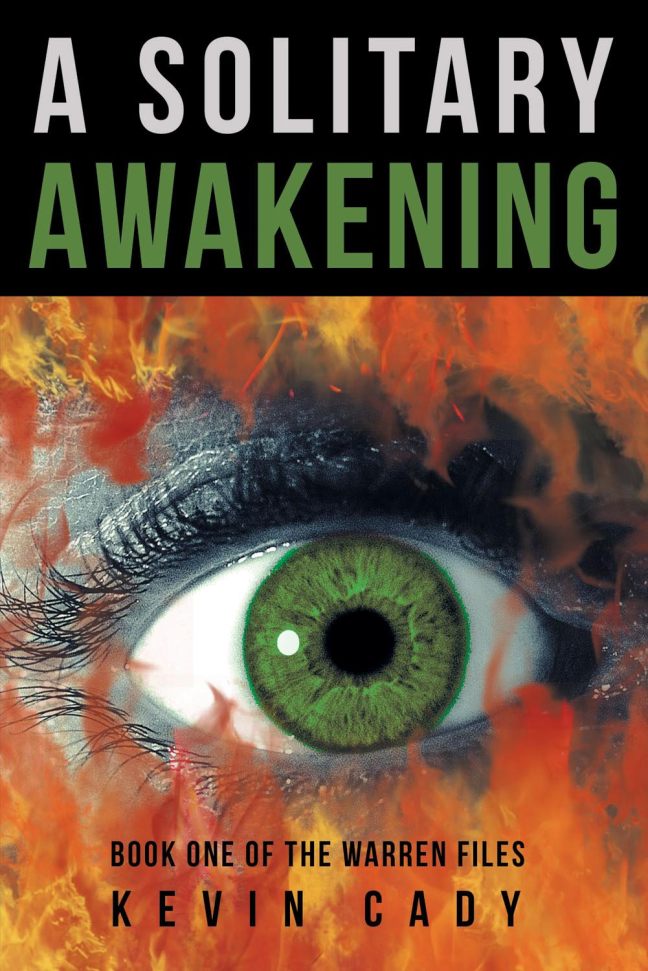
Author Kevin Cady Introduces the Warren Files Trilogy


Everyone please welcome KEVIN CADY


Kevin Cady


Kevin is the author of the Warren Files Trilogy, a high school teacher from Colorado Springs who loves climbing in the mountains.


BOOK ONE OF THE WARREN FILES by Kevin Cady


A Solitary Awakening


A Solitary Awakening: Book One of the Warren Files


Where are you originally from?

I’m originally from Oxford Ohio, a red-bricked college town tucked in the southwest corner of Ohio.

YAY Ohio! Woohoo!  I’m from Ohio and currently in the Dayton area. I’ll be going to visit a family in Oxford this weekend! 


Ohio wooden sign with agriculture landscape on background


Have you always wanted to be a writer?

I have certainly not always wanted to be a writer, but writing was the one subject in school I deemed tolerable. I wasn’t a great student and wasn’t a great reader. Writing novels came to me as an adult because of the ideas I want to consider and convey. With how I work, writing makes sense, because it helps me understand, and ultimately manage the world I’m in.

I can certainly relate to this. Writing didn’t really take off until late adulthood. Everyone’s path is a little different, but that’s the beauty of it.


The right destination


Which authors have influenced you the most in your career?

Writers, and writing which has influenced me is a tough question to answer, because I don’t necessarily want my work lined up beside those people (half lighthearted and joking). But there are certainly writers who have influenced me, and writers whose work I greatly admire. I hope I can someday stack up. The people I admire (I feel) have written their own way, in their own style. I think Chuck Palahniuk, author of Lullaby and Fight Club (among others) is a perfect example of someone, who isn’t writing in the same genre as I am, but is a perfect example of someone who creates amazing narratives in their own way, almost as his own genre. When you pick up a Palahniuk book, you know who wrote it. I feel the same about a man named William Sloane, who published a couple of Cosmic Horror novels in the 1930’s, light years ahead of his time in my opinion. These two have surely influenced my writing, but a shortlist of others would include… Mark Danielewski, Steven Hall, and Alex Garland.

I haven’t heard of any of these but I always enjoy learning of new authors. 


What attracted you to crime writing?

I love crime writing because it generally centers around the darkness that lives inside people. I think this darkness is something interesting, and the idea that people do horrible things for a slew of reasons can be an exciting combination. What happens if we agree with motive but disagree with action? It can create unique moral dilemmas, and it can push big-picture questions out into the world.

YES. I love it. It’s quite fascinating isn’t it? The darkness of the human condition, legal grey areas and the impossibility of moral dilemmas are all too intriguing.


Moral dilemma ahead


Can you give us an introduction to Elijah Warren and the Warren Files Trilogy?

Elijah Warren is a man who lives for his job. He breaths and sleeps the FBI, and it might seem due to his lack of personal life. In fact, he lives the FBI to avoid a personal life. He’s cast off relationships and (since a tragic accident as a child) unofficially vowed to focus on the Bureau’s issues. When he is forced to work alongside Aurelia Blanc, an erudite detective whose vast intelligence isn’t superseded by her beauty, a twinge of something finds him affected, and when they’re pushed to find the esoteric, “Poetic Murderer,” the quandary becomes all the more real.

In the first book our protagonists chase the Poetic Murderer across the United States. They’re twisted and turned around, and rarely are gaining evidence it doesn’t appear they were set up to find. The first book focuses greatly on why things happen, and sets up the key pieces for the remaining two books.

The second book, Crooked Principles, takes the (now former) detectives to remote Grizzly, Alaska, where they’re snowed in and forced to track a killer who has killed a person per year for twelve years, leaving the town’s population at less than a hundred. It’s a very personal story, and as the detectives feel more and more stranded, more and more paranoid, their relationships are put to the test. New relationships pop up and affect theirs. Elijah Warren starts to feel like maybe he’s out of his depth, and comes ever closer to losing Aurelia as they search for Grizzly’s Secret.

The final book brings characters from both novels together, and the narrative becomes bigger than all they’ve done. Unbeknownst to them, their prior actions have begun a series of events that will come to  affect every human in the world. There is still a serial killer, one indicative of the Poetic Murderer’s work, but that’s not the greatest challenge this time. The protagonists are separated and pulled all across the globe, chasing a new enemy that threatens civilization at its core, and has for nearly a century. Elijah and Aurelia and their collective crew are the ones that must intervene.

AWESOME! I can’t wait to see how the story develops. 


detective-158249_960_720


When can we expect the next installment of the series?

The second book in the Warren Files Trilogy, Crooked Principles, is in the final stage of revision, and it’ll be available next summer!

AWESOME. It already sounds intriguing. 


Who are your favorite characters or protagonists, or sleuths?

One of my favorite characters ever written is Lisbeth Salander from the Millennium Series, by Stieg Larson. I was immediately captivated by her terse impassiveness, in combination with her unique technological skills. It made her immediately intriguing, and I wanted to know all I could about her. I finished all his books because I needed to understand Lisbeth and her story.

Another character I loved reading about was Hannibal Lector. His intelligence, way of thinking, and ultimately his relatability made him an unforgettable antagonist.

Wow. These are all noteworthy. I love how you felt compelled to understand Lisbeth Salander and her story. I don’t think an author could ask for more from a reader. Crafting an unforgettable antagonist is one of my hidden ambitions. BROUHAHAHAHA.


Child reading a book, wearing large glasses


What’s it like being a teacher?

Being a teacher, and the experience of it, is something I could have never foreseen. As mentioned, I didn’t like school, and didn’t do that well. I try to teach in an engaging way, one that pushes all students to critically think. I try to teach the power of thinking, and this year I’m getting to do so through a series of novels I’ve chosen. It is a senior level English class, and it is a unique year because I’ve taught these kids 6 years in a row.

I came to Atlas Preparatory when it was just beginning as a school, and each year we have added a grade (we started in 5 th ) . I’ve taught my students various courses, but I’ve moved up with them each year, and this year I’ll finally shake their hands at graduation.

It must be rewarding to see them grow and develop before they’re sent off into the world. 


hands-1445472_960_720


You think you’ll ever write a YA series?

I’m certainly not opposed to a YA series, but I don’t know if it’d be anytime soon. I love some of the newer YA series because they’re able to engage thinking toward high-level societal issues, and so, if I was to write a YA novel or series, it would have to be deliberately tackling some sort of worldly dilemma. I would want people to be engaged by and love the story, but I’d want a greater purpose for it.

Well put. I can tell you put a lot of thought behind your writing. Excellent.


Favorite quotes?

Do the right thing. (It’s the motto I give my students.) We don’t know what we don’t know.


**************


THANKS KEVIN 

Your time is much appreciated!


**************


“Remember that guy that gave up? Neither does anybody else.” -Unknown


____________________________________________________


“Why not go out on a limb? That’s where the fruit is.” -Mark Twain


____________________________________________________


The book to read is not the one that thinks for you, but the one which makes you think. – Harper Lee


____________________________________________________


Over and out….


man-303962_960_720


JOIN US NEXT TIME

On the train….


Benjamin Thomas

@thewritingtrain

http://www.thewritingtrain.com

The Impact of Reading & the Power of Storytelling with Lorna Faith


Welcome back to the new reading series FORENSIC LENSES 


Join me, as we go deep sea diving into the intrinsic view of the actual reading experience. Interviewing authors, bookworms, and voracious readers alike.

Words are powerful. Especially when crafted by a skillful author who knows how to tell a great story. While I love interviewing authors and displaying their work, I equally enjoy getting a glimpse of their reading life. That’s what this series is all about folks!

Come, let us take peek….


Eye scanning. Concept image. Concept image


THE EYE SEES ALL, BUT THE MIND SHOWS US WHAT WE WANT TO SEE- William Shakespeare


*******


Welcome LORNA FAITH!


Lorna Faith pic 800X800


Lorna is a fiction & Non-fiction author, storyteller, blogger, podcaster, story coach and lover of books!


Bio: I love to write unusual historical romances that have been known to include scarred heroines, brave heroes, far too much scheming, evil terrorists and always a way for the two lovebirds to find their sweet happily-ever-after.

When not writing fiction, I love to help first-time and struggling writers get rid of their fear of the blank page and self-publish their stories. In the in-between time I can usually be found either drinking green smoothies, or cleverly think up another way I can convince my hubby and four college-age children to watch yet another old movie;)

LET’S BEGIN!

Are you originally from Canada?

Yes, I am originally from Canada… and still live there. I was born – the youngest child of 11 -in the far north woods 50 miles north of Fort St. John, British Columbia. We were a family that lived off the land. My Dad had a little more than a section of land, where we grew crops like wheat, barley, canola, oats, hay and more. We also had milk cows, chickens, pigs, a couple of horses, a goat, a lamb, 2 cats and 3 dogs.

We butchered cows and pigs in the fall for our meat for the winter (we did this with our neighbours) and milked the cows every morning and evening for our own milk and cream.

So each of us kids knew how to work – but what I loved most, was that we learned how to play as hard as we worked. We made our own go-carts, wooden stilts, tree forts as well as rode trail motorbikes, rode horses, and played baseball as a family on Sundays.

The summer I finished elementary school, we moved to Hythe, Alberta. Dad and Mom had bought a hobby farm and that’s where I lived until I got married at 19 years of age 🙂

That sounds like a lot of fun! A nice big family on the farm. You definitely don’t see large families like that anymore. I think the hardest part for me would be waking up at 4 am to milk the cows.


11954397472115075722cow_alexandre_norman_cli_02.svg.med


Which stories did you grow up reading?

My mom was always reading bedtime stories to us after the days work was done. She would sit on a creaky wooden chair in the hallway that separated our 2 bedrooms (where we slept 2 to a bed – some of the oldest children had moved out of the house by then) and would read Hardy Boy mysteries, Nancy Drew stories as well other children’s books like Hans Christian Anderson or Uncle Arthur’s bedtime stories. 

So I grew up with a big interest in stories. There were always stories told around the supper table of some sort of mishap that happened on the farm that day, or my dad or mom would tell stories of their life growing up after their parents immigrated to Canada.

Listening to and reading stories through my growing up years, definitely made a big impact and fed my love of storytelling.

I always enjoy hearing this part of someone’s life. How they were impacted by particular stories and their early reading habits. 


~When you read a great book, you don’t escape from life, you plunge deeper into it.-Julian Barnes


Can you name 5 or more books that had the most impact on you? (As a child or adult).

I’m not sure that I can keep the list to 5… but I’ll try. My first real love of stories was when I read the Hardy Boy mysteries for the first time. I loved how they would always get the bad guy in the end…. but I especially loved the suspense leading up to where they discovered who the bad guy was. 

Then in my teens I read Anne of Green Gables, The Lion, The Witch and the Wardrobe, Little Women, Gone with the Wind and Pride and Prejudice. I remember feeling like a whole new world of stories had opened up. I thought to myself, if only I could write stories that were so captivating and descriptive someday, I’d be thrilled. 

In my 20s and 30s – while I was studying for my Bachelor of Music degree and later raising 4 children – I would binge read all the time. A few of my favourites were contemporary romances by Debbie MacComber and The Thorn Birds by Colleen McCullough. 

Some nonfiction books that have really inspired me to push past resistance and have helped me to believe in myself are The War of Art by Steven Pressfield, Big Magic by Elizabeth Gilbert and The Practicing Mind: Developing Focus and Discipline in Your life by Thomas M. Sterner.


“I thought to myself, if only I could write stories that were so captivating and descriptive someday, I’d be thrilled.”  I drawing on this statement.  I’m always fascinated how stories affect our imagination from a young age. From a child, through the teenage years and adulthood, they continue to have a major impact on us.  I’ve noticed that children attempt to imitate, reproduce or recreate what they see. I can see that you your statement above. I believe every writer has had that thought running through their mind at some one point while reading. 


child-817373_960_720


Have you ever cried while reading? What were you experiencing at that moment?

Yeah, I’ve cried many times while reading a great story.

But, I can’t help it, I love a good cry-fest. I’ve cried while reading Anne of Green Gables. It’s this orphan girls struggle to be accepted and loved by family and the town that pulls at my heartstrings.

Another book that made my cry through the whole reading of it, was A Child Called “It” by Dave Pelzer. To me this is easily one of the saddest true stories of abuse I’ve ever read. This little boy suffered horrific abuse from his abusive mother and others. I cried because of his desperation for love and acceptance and that he still continued to fight for survival in a home where he was thought of as worthless.

Also another real tear jerker is The Road by Cormac McCarthy. I cried at the boy and his father traveling by foot in a post-apocalyptic world, trying to eek out an existence when all seems lost. I cried because of their losses, their struggle to survive and was inspired by this profound and moving story – of their journey. The father and his son are inspiring as they still imagine a future even though no hope seems to remain. They are each other’s whole world – and they are sustained by the love they have for each other, in the face of total devastation. Amazing story.

These are all admirable and very touching. I hate crying, honestly. But if an author can evoke tears through their story  It’s a 5/5 star read in my book. Only a few books have managed to accomplish that feat so far. One book I recently added to my TBR list had me crying just by reading the premise! It’s called M is for Munchers: The Serial Killers Next Door, by Alexandria Constantinova Szeman. 


allergy-1299884_960_720


What are your favourite genres?

My favourite genres are Historical Romance and Contemporary Romance. I especially love how characters are in a big mess at the beginning of the story and how they are transformed through acceptance and love 🙂 I love it when each of those genres also includes a little bit of suspense and mystery. Also, I do love reading Dystopian novels too – like Divergent, The Hunger Games, The Testing, and others.

Nice. 


Who are your top 3 – 5 characters and what do you love about them? (If you had to marry one of them who would it be?)

There are a few characters who have stuck with me.

One of those characters is Elizabeth Bennet in Jane Austen’s novel Pride and Prejudice. I love that Lizzy grows into a strong, confident woman who isn’t afraid to say “no” to marry the man that her mother wants her to marry. She is respectful to her parents and people around her, but she is strong and many times it’s Lizzy who in her maturity, points out the folly of some of the actions of her sisters or parents.

Anne Shirley, from the story Anne of Green Gables sticks out in my mind from when I was a teenager, as a girl I could relate to. She had to survive through abuse, fear and rejection and continued to grow and transform herself into a better person as she grew up. She didn’t let all of life’s struggles ruin her… instead it made her stronger.

Lastly, I like the character of Rhett Butler from Gone with the Wind. Rhett is a man of strength who falls deeply in love with Scarlett. Even through all her temper tantrums, he still loves Scarlett, that is until the very end when Rhett discovers even he has a boundary line that Scarlett crosses. I like how he is practical, that he still does what he needs to do, to help his friends, that he respects his mother and that he is generous throughout the story to Scarlett, despite her childish ways.

Of course, if I wasn’t married already… I would definitely marry Rhett Butler! He’s a man of strength, exciting, adventurous, respectful, generous and loves deeply 😉

Awesomesauce!  Gotta love your favorite characters. You do crazy things when you’re in love. 


skeletal-601213_960_720


Do you have a favourite antagonist or anti-hero?

Well, as a big fan of Star Wars, I’d have to say Darth Vader is a pretty convincing antagonist. For me, I loved learning of Darth Vader’s background. That he as Anakin Skywalker – a goodhearted jedi and hero of the Clone Wars and a powerful Jedi – that made me see him as more than just an anti-hero. So with the fall of the republic, when Anakin Skywalker became a disciple of the dark side, and eventually became known as Darth Vader, I felt I understood him a little better… he seemed more human somehow… even though he was the bad guy.

Darth is my absolute favorite antagonist. He’s such a, well, force to be reckoned with.  No pun intended. 


darth-1138246_960_720


AT THE SCENE OF THE CRIME….


As a reader what are your top 5 pet peeves?

What a great question… and one I took some time to answer.

For a bookworm like me, who finds reading not only relaxing, but often therapeutic, there are many things that have become pet peeves. Maybe there are other readers who can relate.

Spoilers. I really don’t like it when I find a book I’m excited to read, only to have someone else tell me how it ends… before I get a chance to read it. Ugh.

Waiting for Library Books. With 4 kids, we’ve often gone to the Library to read or have ordered books from the Library online. It’s super disappointing borrowing a book, only to realize that you are number 20 on the list… which means you have to wait a couple of months before you can read it.

A book with a promising start that begins to go downhill. I feel a little miffed as a reader, when I love the first few pages or chapter of a book and then the story suddenly takes a turn for the worse. It feels like all my hopes for a good read have just been dashed with cold water ;(

Being interrupted while reading a good book. I’m sure I’m not the only one who feels a little annoyed at constant interruptions when you’re in the middle – or near the end – of a good book. Although, I must say as far as my family goes, they don’t interrupt me so much anymore when they see I’m reading a book.

Poorly Edited Books. For me, this means not only poor grammar or typos, but also repeated metaphors and descriptions or when the storyline is way too predictable. I guess I just really like some surprises in a story.

So those are some of my pet peeves. But I’m also a reader who loves to give first-time authors a good chance. I’ll read the entire first chapter before I’ll decide if I want to keep reading or pass on a book. I think it’s because I totally get where new authors are coming from… and if they choose to keep writing books, I’ll give another one of their books a chance, because I know as writers we keep getting better in our craft, the more we keep writing.

I love your list, but I love your understanding even better. Very touching.


crime-515923_960_720


THE PILLARS OF STORYTELLING


In your opinion and experience, what makes a great story?

There are a few details, in my opinion, that make a great story.

First a really great story is easy to read. I love it when the story is so easy to read, that I just get “caught up” in the moment.

Secondly, great stories have captivating characters. I love characters that are flawed and yet they are transformed somehow throughout the story. I love coming to ‘the end’ feeling inspired 🙂

Third, a story is compelling when it has a sense of wonder. For example, in C.S. Lewis’ Narnia tales, the creatures and land of Narnia are so unusual and exotic, that as a reader I feel a sense of excitement and my curiosity is piqued because of the newness of it all.

Fourth, I love a story theme that is easily recognizable and that is meaningful. Common themes are: good vs. evil; love conquers all; or sacrifice, redemption, acceptance, etc. When your flawed characters face soul-searching themes, it’s a pretty compelling reason to keep reading.

Fifth, I do love a story where there’s a lot at stake for the characters. Where they give up everything for love or they have to face an evil villain that challenges all they believe in – and the characters are forced to overcome the odds. The best stories I’ve read, are those where characters were changed and they also changed their world around them for the better.

I LOVE IT! This pretty much says it all!  Wonderful.


Kid with bear toy


“The best stories I’ve read, are those where characters were changed and they also changed their world around them for the better”.-Lorna Faith


How do you help writers tell their stories?

I do love to help first-time and/or struggling storytellers, to write, self-publish and market their stories to their unique audience of readers. I’m passionate about helping new writers, because I spent so many years trying to get over fear and insecurity that I could actually write. Then it took me a few more years of searching on Google for answers on how to self-publish my novel. After all those years of trying to figure this out, I became passionate about helping to save writers time and money – to avoid the mistakes I did. So, for new writers who are struggling to write and self-publish and market their books, and are tired of struggling and failing over and over again, they can get Write and Publish your first Book as a Free eBook download – along with The Storyteller’s Roadmap mini-course when you click here: The Storyteller’s Roadmap


Receive the Western Historical Romance Free Book download. The link is here: A Most Unsuitable Husband


Subscribe to Lorna’s Podcast on iTunes at this link: Create A Story You Love

Or, You can sign up for new podcasts/blogposts to come to your email inbox every Thursday, when you add your email here: Lornafaith.com


 BONUS:


Lorna has her own Youtube Channel: CREATE A STORY YOU LOVE. Check out the videos!

I’ve included a wonderful video with Lorna & Joanna Penn entitled, Learn How to Trust Emergence in Storytelling with Joanna Penn. 


~Those who tell the stories rule society- Plato


*******


~There’s a story in you, don’t be stingy. -Benjamin Thomas


Benjamin Thomas

@thewritingtrain

http://www.thewritingtrain.com


Watch “Our Write Side Trailer” on YouTube


IT’S TELEVISION TUESDAY FOLKS!


television-899265_960_720


Check out the Ourwriteside.com website! 


Tell me what you think in the comments! 


Benjamin Thomas

@thewritingtrain

http://www.thewritingtrain.com


Contemplating the Writing Life with Writer Rochelle Deans


Hi Folks! 

Welcome Back 

To the Story of the Writer 

Interview Series


chalkboard-620316_960_720


History has reaped the countless benefits of those who tell stories. Of those who wield the untold power of the written word embedded in print, as well as the heart. Their word transcends even the ultimate barrier of time, as if their prose seeks out a soul for a tear, dollop of joy, a praise or a cheer.

What is the path one takes to become writer? Everyone has a different story. What laid the tracks before them? No two paths are the same. What inspires this particular breed of humanity? Come let us see–The story of the writer.


gleise-1555348_960_720


EVERYONE PLEASE WELCOME

ROCHELLE DEANS!


Rochelle Deans


Rochelle is a freelance editor, author, lover of quotes and the smell of real books. She has written Harry Potter fanfiction, three novellas, a short novel and currently working on her third manuscript. I personally know Rochelle as a fellow writer through our AWESOME Facebook group, Wordplayers. Which was created and supported  by none other than the international bestselling Jedi Master K.M. Weiland.


You’re a writer; so what’s your story, or
what inspired you?

I’ve been a writer for pretty much my whole life. But I was exclusively a songwriter and poet in middle school and high school. I actually had a friend who signed my senior yearbook with something about how she knew I’d publish a novel someday and I laughed and told her I didn’t have the patience to write something that long. I graduated college with a degree in writing and literature and some AWFUL short stories to my name. It took me a few years to recover from the pressure of school (and realizing that I wasn’t a natural-born genius storyteller), but I decided I wanted to give novel-writing a try. So I did what any (in)sane person would do, and I turned to fandom. I knew from the aforementioned short stories that I wasn’t good at coming up with dynamic, believable characters or putting them into dire situations. So I thought maybe if I used some characters I already knew were dynamic and believable, they would remain dynamic and believable, and I wouldn’t be so scared to hurt them, since they weren’t mine. I wrote Harry Potter fanfiction for two years, graduating from 1,000-word stories about the main characters to, eventually, a 50,000-word story that took place 1,000 years in the future and involved entirely original characters. Then, finally, I felt ready to write the book I wanted to, which was a YA dystopian novel. That was two books ago. I’m currently working on a YA contemporary.

Wow that’s quite a wealth of experience there. I’d love to see your songs, poems and YA writings! 


pencil-147130_960_720


What’s your GOAL in becoming a writer?

To write sentences as beautiful as John Green’s are in a plot that keeps readers turning pages. On the level of “what do I want to accomplish for myself in this career?” I would love to be able to do even a small book tour to schools and book stores and maybe even get shortlisted for some award. That would be awesome. But obviously, those aren’t reasons why I write. Mainly, I feel convicted to write stories about people struggling with their faith. Young adulthood is a time when so many kids begin to question the faith of their parents and the way they’ve grown up, needing to move into a faith of their own. Usually, this time also involves things that contradict the Sunday School answers we grow up with. So my goal in writing is to ask the hard questions and try to provide answers. Usually those answers are bittersweet.

That’s great you know what you want to write and who your target audience is. Not everyone has that you know. Young adulthood is definitely a time of trial for a lot of young people struggling with their faith amongst other things.


*******


“The only writer to whom you should compare yourself is the writer you were yesterday.” -David Schlosser


*******


What 3 things have hindered you from completing your projects? (CONFLICT)

Pregnancy, young babies, and a day job. Most notably, I had the idea for my most recently completed MS in the summer of 2013. I started collecting ideas for a story in which everyone knows the day they’re going to die and got ready to write it for NaNoWriMo that November. Unfortunately for the book but fortunately for my life as a whole, in October I found out I was pregnant with my oldest child, and it turns out that morning sickness and trying to write 50,000 words in a month while working a full-time job aren’t really compatible. Surprisingly, I did manage to write 42,000 words for that book in 2014, when my daughter was between 4.5 and 5.5 months old, and finished it in the summer of 2015.

Rochelle that’s AMAZING. Keep writing! I really like the idea that you mentioned.  


man-1454744_960_720


You fail only if you stop writing – Ray Bradbury 


What keeps you motivated in achieving your dream? (DESIRE).

One of the main things that keeps me motivated is my writer friends. Two of my critique partners are 2016 debuts, and seeing their success spurs me on. They are awesome cheerleaders, keeping me on track and promising me that my stories have potential.

We have the same motivations! Having great writer friends and being fueled by their successes is quite invigorating. Birds of the same feather tend to stick together. We’re not alone! 


team-1525447_960_720


What’s your ANTAGONIST? What’s in the way?

My biggest antagonist is honestly laziness. Writing books is a lot of work. Some days (*cough* like today *cough*) it’s easier to stay in my pajamas and watch my kids play instead of doing the hard work of writing, revising, and rewriting a story worth telling. Now that I work from home, it should be much more doable to get things done. But I’m not the kind of person that can be trusted with a lot of free time.

I can completely relate to this struggle. It definitely requires discipline and character to whip out a complete manuscript. Sometimes its hard being your own drill sergeant. 


Drill sergeant with moustache


Why do writers give up, quit or never complete their projects, and what would you say to inspire them?

Honestly, if someone would have told me in 2012 when I started writing my dystopian novel that I’d be sitting in 2016 working on my third book and yet I was still agentless and book-deal-less, I probably would have given up. I was so sure my first novel would sell and do well that I actually made plans for when I’d quit my day job based on when I was going to query it. (This is me laughing at my past self.) Still, there isn’t much I’d change about the past four years. Yeah, I’m working on my third manuscript, but in the meantime I’ve had two beautiful children, made some awesome writing friends, learned a lot, and, to my biggest surprise, kept getting ideas for stories. Writing is HARD, and it’s a long game. To anyone who wants to quit, I would just say, “If you want to keep writing, even just a little bit, keep at it. Keep practicing, even if the writing is only for you. You never know what could happen one day. From what I’ve seen, the publishing industry moves at a glacial pace… until. When you hit that ‘until’ things start happening so fast you forget to breathe. So enjoy the slowness, enjoy getting to know your writing style, and especially enjoy learning, because if you don’t enjoy learning, there is no way to enjoy writing as a career.”

YES. This is great info. Totally soaking in this statement. I agree, writing is more like a marathon than an all out sprint.  Thanks so much for sharing!


Thanks Rochelle!!


You can connect with Rochelle on twitter at @RochelleDeans, or on her website at Rochelledeans.com.


*******


“…enjoy the slowness, enjoy getting to know your writing style, and especially enjoy learning, because if you don’t enjoy learning, there is no way to enjoy writing as a career.” ~Rochelle Deans


*******


The six golden rules of writing: 

READ, READ, READ, AND WRITE, WRITE, WRITE. 

-Ernest Gaines


*******


~I will write my way into another life. – Ann Patchett


*******


Writing is such communicable beauty; a mutual flight of feeling between author and reader. -Benjamin Thomas


*******


“Writers aren’t exactly people….They’re a whole bunch of people trying to be one person.” – F. Scott Fitzgerald


team-386673_960_720


Whatever you do….keep writing.


Benjamin Thomas

@thewritingtrain

http://www.thewritingtrain.com

Discussing the Reading Experience with Writer & Blogger Wendy Greene


WELCOME BACK

TO THE FORENSIC LENSES 

INTERVIEW SERIES


Bringing you the best of the reading experience. What’s yours?


Forensic


“Finishing a good book is like leaving a good friend” -William Feather


*******


“To read without reflecting is like eating without digesting” ~Edmund Burke


*******


This series is all about reflecting on the reading experience. When we read and enjoy a great book, there’s so many things happening in our brains! We need time to reflect and digest what we just ate, then fully appreciate the beauty. 


~When you read a good book what do your eyes really see?


Bambino con lente d'ingrandimento - Boy with a magnifying glass


Well, we all see a little differently. Let’s introduce today’s guest! 

WELCOME WENDY GREENE


Wendy


Wendy is an aspiring writer, successful bookworm, a fellow blogger and follower of Christ.


What were your childhood experiences with reading?

I actually hated reading when I was younger! I enjoyed small books once and a while, but I never really got into it until I was probably in 5th grade. I was in the library and randomly started reading the Dear America series. I read every single one they had in about six months and fell in love with historical fiction that later branched out into more genres.

WOW! I find that so fascinating. You once were a person who hated reading, then somehow you became a complete BOOKWORM. The impact the Dear America series had on you is nothing less than impressive.


bookworm-151738_960_720


Which books influenced you the most as a child?

Of course, the Dear Americas were so influential in my life as well as Little House on the Prairie. But I remember, very distinctly, the first book that made me sob. It was titled Ashes of Roses by Mary Jane Auch. I would say it traumatized me more than influenced me, though XD It was a historical fiction about a girl who immigrated to Ellis Island to work in a clothing factory in New York. Horrific events occurred (but I won’t spoil it for you ;)) and the realization that it based on actual events rattled me to the core. Even though that experience hurt, it made me realize the power of words and how a collection of pages can change someone.

Words are powerful. I love to see how the writings of others have affected us. This never ceases to amaze me.


What’s your favorite genre to read? (it could be plural) and what do you enjoy most about them?

As of this moment, I really love science fiction. I hadn’t read a lot of that genre before, but I just love the mix of science and whimsy. Although, fantasy is a longtime love for me and the possibilities of that genre are ENDLESS. But also historical fiction. ALL OF THEM, PRETTY MUCH.

I love science fiction and fantasy as well. Hard to choose one eh?


library-425730_960_720


Who are your top 5 favorite characters of all time?

Ooooh, that’s SO HARD. I’d have to say Percy Jackson from the Percy Jackson series is definitely up there along with Anne Shirley from Anne of Green Gables, Aslan from Narnia, Bilbo Baggins from The Hobbit, and Wolf from the Lunar Chronicles.

Bilbo is lovable and Wolf from the Lunar Chronicle is a pretty cool guy. 


*******


~There is more treasure in books than in all the pirates loot on treasure island – Walt Disney


*******


What is it about them that draws you?

I love quirky personalities. Especially in Percy and Anne, they have a significant amount of spunk.They’re also brave without realizing it and simply view themselves as normal people; nothing particularly special. With Aslan, of course, he’s such a strong character and I’ve admired him for a long time. Bilbo is basically me if I were a hobbit, so there’s that. Wolf is just so awesome. He’s so violent yet sweet and I just loved him. ^_^

This is a nice handful of heroes! Sounds like they all have had a particular affect on you as a reader. 


Do you enjoy character driven books more or plot driven?

I definitely believe that good characters can make up for a bad plot. If I can connect and love a character, I tend to ignore the massive plot holes that stand in the way. With that said, I love a good, intense, well-written storyline. So, both?

Good answer! 


meadow-677878_960_720


Have you ever cried while reading? If so, what were you experiencing?

YES. I cry in books All. The. Time. Sometimes the author will describe an emotion in such a beautifully rich way that touches me so deep I can’t help but cry. Other times I just feel the pain of the characters or relate something to my own life that moves me to tears. Oh, and there are also the copious amounts of character deaths I sob through…

Yes, this is truly a special moment when an author evokes tears in the reader.


doll-1585290_960_720


AT THE SCENE OF THE CRIME…


As a reader what are your top 5 pet peeves?

Insta-love. Masculine female characters. Dog-eared pages. Stupid parents/villains. Pointless deaths.

I always enjoy seeing what irks people the most in books. Good things to avoid when writing!


police-1141037_960_720


When you read what are you seeking most?

Sometimes that depends on why I’m reading. Sometimes I delve into a book to escape from the world, other times I want to laugh or think. Sometimes I read as a writer. Reading is the tool I use the most when trying to develop my own writing style. If that’s the case, I read to glean information on style, story structure etc. But overall, I read because it’s so unique and beautiful. It gives me a glimpse of a universe unexplored and allows me to become someone else. I read because it changes me.

You just elicited the wow factor!!! That’s probably one of the best answers I’ve seen yet.


Wow Surprised Word Astonished Surprising


What are your top reads of 2016?

Oh dear…such a hard question! Number one would probably be Scarlett by Marissa Meyer. I also loved Little Dorrit by Charles Dickens, Storm Siren by Mary Weber, and What He Must Be by Vodie Baucham (there are so many more, but there ya go XD)

I enjoyed Scarlett too, but my favorite of that series was Cress. Great choices!


Thank you so much for interviewing me, I had so much fun! =D


THANKS SO MUCH WENDY!!!!!


earthworm-151033_960_720


~The more that you read, the more things you will know. The more that you learn, the more places you’ll go. –Dr. Seuss


~Nothing transforms the mind like a good book -Benjamin Thomas


Benjamin Thomas

@thewritingtrain

http://www.thewritingtrain.com


Author Interview with Karen A. Wyle


WELCOME BACK TO THE STORY OF THE WRITER SERIES

EVERYONE PLEASE WELCOME

~KAREN A. WYLE~


Wyle author photo number 2


Karen is an Appellate attorney, author of several novels, picture books, a mother of two, a photographer, political junkie and a Indiana Hoosier fan. 


WELCOME KAREN!


welcome-to-our-home-1205888_960_720


*You’re a writer; so what’s your story, or what inspired you?

I wanted to be a novelist since at least the age of nine. I can’t remember exactly why, but my family greatly valued literature and education.


Those are very good values to have in family! 


*******


If a story is in you it has to come out -William Faulkner


*******


*What’s your GOAL  in becoming a writer?

(a) To create interesting characters with whom readers can empathize, and embed them in thought-provoking stories. (b) To have people read what I write.

I share the same goals as you. To create interesting characters that people care read and care about. Easier said than done though!


boy with the typewriter. Retro style portrait


*What 3 things have hindered you from completing your projects? (CONFLICT)

When I was younger: lack of anything particular to say, difficulty getting words to flow, and lack of confidence. Now: nothing.

Impressive progression here. My main problem right now is completing my first project.


*What keeps you motivated in achieving your dream? (DESIRE)

Unlike the world in which I formed and then (for decades) abandoned my ambition, the current literary era allows authors to publish without the approval of gatekeepers or the investment of large sums of money. That means I’ve been able to find readers who have enjoyed and cared about my work – and that keeps me motivated.


Finding those who truly care about your is one of the greatest motivations!  But also, as you said, being able to publish your work is critical. 


man-1424877_960_720


                                                      Your readers


*What’s your ANTAGONIST? What’s in the way?

When I was younger, besides the obstacles already mentioned, I encountered a last straw in the form of a teacher (graduate student teaching undergraduates) who casually mentioned in public that I did something well for someone who “[wasn’t] a born writer.” Through years of failing to find the right medium, the right genre, or the right story, my lifelong belief that I was indeed and exactly a “born writer” had kept me going. That moment was my excuse to give up writing fiction for several decades. (About one decade into that span, I found a few of her books in a bookstore. I am not generally someone who hates, but if she had walked in at that moment, I might have assaulted her. And I will admit enjoying some schadenfreude when I discovered, perhaps three years ago, that none of her books appear to be in print.)


I hear this from time to time about someone in faculty. How someone had a negative impact on a potential future author always surprises me.


darth-vader-1207142_960_720


I find your goals—rather disturbing, young Jedi…


*Why do writers give up, quit or never complete their projects?

Many writers still feel the need to “be” published, aka traditionally published, and give up after multiple unsuccessful attempts to find a publisher.


Many writers continually second-guess themselves, self-editing constantly, which greatly slows their output. National Novel Writing Month (aka NaNoWriMo or Nano), an annual online event which challenges writers to complete a very rough draft of a novel at least 50,000 words long within the month of November, is a great way to overcome this tendency. At that pace, there’s no time to self-edit.


They’re are many potholes on the road to publication. Not to mention that that road is always under construction.


Potholes warning sign.
Illustration of the writing journey


*What would you say to a struggling writer who’s given up?

If that writer still wants to write and is unhappy with having given up, I’d suggest giving NaNoWriMo (see above) a try. There’s no commitment involved: you can dive in with minimal preparation and see what the next day or two may bring. That’s how I started what became my first novel, Twin-Bred, and I’m now preparing my seventh novel for publication.


NaNoWriMo is an excellent way to begin! That’s what gave me a boost last year in my project.  2016 NaNoWriMo is just around the corner!


*******


“I’m convinced that about half of what separates the successful entrepreneurs from the non-successful ones is pure perseverance.” -Steve Jobs


*******


Connect with Karen on her website at Karenawyle.net, on twitter at @WordsmithWyle and find her books on Amazon at Karen Wyle.  


Get a glimpse of some of her writings below!


Closest to the Fire - cover for distribution -  smaller


TBRE ebook cover lower res for distribution


Twin-Bred Collection - smaller for distribution


Wander Home ebook cover - small for Spotlights-etc


Reach ebook cover - smaller for reviews etc


Playback Effect ebook cover - small and low-res


Division ebook cover, lower res for web


Leaders eBook Cover - lower res


THANKS FOR PARTICIPATING KAREN!


“Easy reading is damn hard writing.” -Nathaniel Hawthorne


 Someone out there is waiting for your next book, keep writing-Benjamin Thomas


Benjamin Thomas

@thewritingtrain

http://www.thewritingtrain.com