
Welcome to Television Tuesday
Have at it!

Tell me in the comments which books spark your interest!


Writers extend to virtually every corner of the earth; east, west, south, north and arguably are the most fascinating people on the planet. Well if you ask me, they are the most fascinating people on the planet. It’s no great secret that I take great joy in interviewing them. To discover and share in their craft, learn how they tick, or don’t. Fascinating indeed.
I had a crazy thought of interviewing writers from a completely different perspective. Most writers began their journey as readers so why not get a view into this experience? So here it is, the Forensic Lenses series. An investigative and exploratory approach into the minds of your favorite authors.
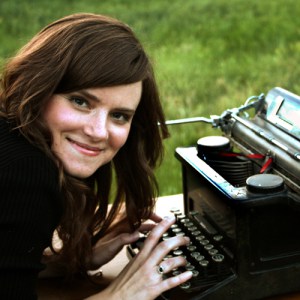
K.M. Weiland is an award-winning, butt-kicking, internationally published author of the bestselling Outlining Your Novel and Structuring Your Novel books. She writes speculative and historical fiction from imaginary lands. Her blog helpingwritersbecomeauthors.com is regularly ranked in Writer’s Digest top 101 Best Websites For Writers every year, but is #1 in my book. She puts up with writers like me who don’t know grammar yet. Way to go Kate!
In the history of the blogosphere, there has never been such a defining moment until today. As a token of our appreciation we bestow upon you, KM Weiland, the ever noble…

*applause, standing ovation*
Alright, so let’s cut to the chase.
Was reading Scottish Chiefs by Jane Porter, the inciting Incident in your path of becoming a writer? You mentioned how this sparked your love of history, laid the groundwork for your book A man called Outlaw, influenced your novel Behold the Dawn and not to mention your desire to write historical fiction.
How has your reading experience and love for stories evolved from childhood, teenage, to adulthood?
I have always loved stories. They have always been my language. But I was a very undisciplined reader as a child and teenager. My parents weren’t readers themselves and weren’t able to guide my reading choices. I read and loved and re-read (and re-read and re-read) a few classics like Little Women, Anne of Green Gables, The Black Stallion. But I also read a lot of highly forgettable children’s novels–and probably every book in the Star Wars Extended Universe that had been published to that point. It wasn’t until I was in my late teens that I started discovering better quality fiction and disciplining myself to read widely and broadly–especially in the classics. It’s my goal to read all the classics before I die. I’m working my way through the authors alphabetically. So far, I’m up to M.
Most of my childhood reading was from the library. My grandparents and aunts bought me a lot of books as well. I tended to reread the books I owned a lot–hence the multiple visits to Anne of Green Gables and Co. As for writing affecting my reading… You hear a lot about authors who find that their own awareness of the principles of writing turns them into hypercritical readers and robs them of the joy of reading. But I’ve never really experienced that. Maybe because I’ve always been hypercritical! :p For me, writing has only enhanced my reading. Instead of *just* reading for pleasure, now I also read with a writer’s eye and get to explore and enjoy the psychology and craft of every new author’s work. It brings a whole new dimension to my appreciation of a good book.
I really appreciate this. Having a writer’s eye, exploring and enjoying the craft are all pluses!

AT THE SCENE OF THE CRIME…
As a reader what are your 3-5 pet peeves and why?
It’s good to be aware of these. Thanks!

I’ve often heard you say you must read all the Classics before you die. It must be high on the bucket list! So why this journey through the Classics and what impressions do you have?
For the purposes of challenging myself to read all the classics, I define a classic as any book published before 1966 with a title or author I recognize. I started the challenge really just as a way to get myself to read the important literature landmarks from history. It’s been an interesting journey–tedious at times, but, overall, definitely worth the effort. I feel like I’ve vastly broadened myself and my understanding of people, the world, and writing. It’s made me read books by authors I never would have touched otherwise–from so many time periods and countries and about so many different topics. I estimate I’m about halfway done (I’ve just reached the “M” authors). I’ve found it incredibly rewarding.
I’m looking forward to your response when you’re finished as well. I’ve been thinking a lot about the most influential authors of the century. How they left their footprint upon society and the craft of writing.

The primary facets of good storytelling have remained the same over time: structure, character, and theme. I would cite two things in particular as the biggest changes over the years:
1) The visual style. Television, the movies, and the Internet have made the far corners of the world accessible to everyone. As a result, complex descriptions of foreign places and things are no longer necessary. Writers today need only a few vivid details to bring a scene to life for readers, who can then fill in the blanks for themselves. At the same time, however, due to the overwhelmingly visual nature of entertainment these days, authors also have to be much more evocative in their descriptions. Readers want to see a “movie” in their heads, which is why “showing” (instead of “telling”) has become such a touted technique.
2) The pacing is much tighter and faster these days, for the most part. Again, the culture in which we now live is faster-paced and more than a little distracted. Readers today aren’t as patient with long, flowing passages. They want to get to the point.
Excellent! Thanks so much for sharing.


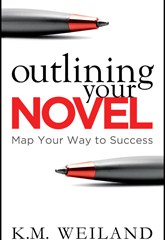


Melanie is a science fiction & fantasy novelist-in-progress, a published poet and short story writer and all around awesome person. I first met Melanie through our awesome Facebook group entitled: THE WORDPLAYERS. Sounds cool huh? Because it is!
Are you originally from Canada?
Well, this is an interesting story (but I may be biased). I was born right here, in Sudbury, Ontario, and when I was about a year and a half, my grandparents built themselves a new house. My parents decided to buy my grandparents’ old house, where my dad had grown up.
It gets better.
After I spent a few years away at university, I returned to Sudbury, married, and, once we both had stable employment, my husband and I bought the house from my parents 🙂
The land on which both houses stand was part of a farm that my grandfather had bought, back in the day, and to finance the building of their new house (which my parents eventually moved into after my grandparents passed) they sold off some of the land to the city.
So I live in the house in which three generations of Marttilas have lived, on the street that bears my family name. Beside my mom. My writing room was my bedroom growing up. How cool is that?
I mean, some people might think it’s BORING, but, you know. Cool. *smiles*
I keep meeting great writers from Canada, it’s wonderful! I seriously need to go there one day. Look out Canada!

What’s it like?
Sudbury is a mining town in what most people consider northern Ontario. If you look at a map, we’re actually smack in the middle, about an hour and a half drive from Manitoulin Island in Georgian Bay, which is part of Lake Huron.
We’re the site of an ancient meteor impact, which is where all the stuff mined here came from and why Sudbury is called the nickel capitol.
Sudbury is also on pre-Cambrian shield, ancient mountains that have been ground down by glaciers. We have a chunk of it in our basement 🙂
When I was a kid, open pit smelting had blackened the rock and consumed most of the trees as fuel. In the 60’s, NASA came up here because the landscape, at the time, was very much what they expected to find on the moon . . .
The International Nickel Company (INCO) built the stack (to divert the sulfurous smog produced by smelting the nickel), changed their refining processes, and started to recover the landscape that had been ravaged by their previous practices. Now, we’re lovely and green again—in the summer, anyway. Winters here are pretty hellish.
Having said all that, my family was never involved in mining. Sudbury is the kind of place that gets into your blood, though. That’s why I came back and have made my life here, despite the winters.
Our area of Ontario is dotted with lakes that have formed in depressions in the pre-Cambrian shield. Outside the city, it’s considered prime cottage country.
Sounds like a memorable and scenic place.
How long have you been writing?
Egad. Since I was seven years old.

Wowsers! I have a seven year boy right now. Writing is not his strong suit, its reading. But it’s amazing you were able to begin writing stories at such a young age.
What was your career path?
I worked in retail from the age of thirteen through high school, had some interesting jobs in university—canine security patrol and video camera person and editor for a company that filmed show jumping and dressage shows across Canada and down into New York—and after graduation, I had an unreliable series of contracts in libraries and academia. My sister-in-law made me aware of an opportunity with her employer, and now I’ve been working with that same employer for fifteen years.
I’m currently in L&D, learning and development. Call me a corporate trainer. I’m a certified trainer (and certifiable, some would argue), but still working toward the goal of being able to leave my day job for my true passion, writing.
That’s an interesting mix of jobs there. I love how it always comes back to writing in the end.

I find everyone’s story so fascinating. Normally it starts early in childhood, then comes back full circle with a full blown passion of writing.
AMAZING.
*******
*******
*******
*******
What did you study in college?

BA in English Literature, rhetoric emphasis, cum laude, thankyouverymuch 😉 MA in English Literature and Creative Writing.
Ouch, that sounds difficult. But it does make me very curious. I’ve only had one creative writing class in college. Got an A. Makes me feel smart.
You’re a writer; so what’s your story, or what inspired you?
I was in grade three. I’d just gotten a puppy and wrote what might be called a “personal essay” about her. So I was already writing. I just hadn’t really caught the bug. Yet.
Then . . . IT happened. The students of the grade five class wrote and illustrated their own storybooks and were invited to present them to us.
One of the grade five students, a girl named Siobhan Riddell (isn’t that a lovely name?) did her own version of St. George and the Dragon. I didn’t even remember the rest of the stories. I wanted to take Siobhan’s home with me and read it and look at the pictures, over and over.
The thing you should know about Siobhan is that she was an awesome artist, even then. She grew up to become a professional artist and then, that bastard cancer took her from the world 😦
But that was the moment. I made my first submission—to CBC’s Pencil Box, a show that dramatized the stories of their young viewers—that year. I wrote the Christmas play for my class the next year.
And I’ve been in love with words ever since.
That’s such a lovely story! I often wonder what it is that ignites in some children to become writers and not others. I suppose some just “catch the bug”. Love that expression.

What’s your GOAL in becoming a writer?
To write. Pure and simple. Writing is (almost) everything to me. It’s my spiritual practice; my counsellor; my companion, and my comfort. I feel off when I can’t write for whatever reason. I have said that I’m going to write until age and infirmity—it’s going to take both of them because I’m not going down without a fight—rob me of the capacity.
My self-worth isn’t pinned to getting published, but I can’t see how I can justify quitting my day job unless I can make a decent living from my words. So, I’m doing the work to make that happen.
So far, I’ve had three sales of science fiction short stories, a handful of wins in local writing contests, and a bunch of poetry published in anthologies.
2015 was a year of near misses, long lists, short lists, second readings, and the like. And lots of rejections. I’m also querying an epic fantasy novel, without success. I like to reframe rejections: I’m one ‘no’ closer to ‘yes!’
I’m focused mostly on writing novels now, though, and most of those are fantasy of various shades.
YES. I love your attitude here. “one step closer to yes” is a great way to look at it. I can’t wait to see what you come up with. We wouldn’t mind seeing more of your poetic muscle too.
What 3 things have hindered you from completing your projects? (CONFLICT)
I generally finish what I start. I’m diligent (and a bit compulsive) that way.
The three things that keep me from writing as much, or as quickly, as I’d like are:
The day job. It allows me to invest in my writing (conferences, courses, etc.) but—man—would I love to spend my days doing the thing I love.
Actually, it’s just the one thing (oopsie). *grins*
I like that you are DILIGENT. It’s an indispensable character trait necessary for every writer. Without it our stories go nowhere. Our characters go nowhere. Our careers go nowhere. Splendid. You don’t suppose you could lend me some of yours do you? Got an extra gallon or so lying around?

Here’s a picture of Melanie’s desk
What keeps you motivated in achieving your dream? (DESIRE)
The writing itself. It is truly a way of life for me. I wouldn’t give it up for anything.
As one of my characters says, I want to be a part of the great voice that carries this age into the future.
Now that’s not arrogant at all, is it? 😛
Not at all. You are very clearly a writer to me. I love your laser-beam-like focus on writing.
What’s your ANTAGONIST? What’s in the way?
Um. Yeah. Day job.
Ah yes, the dreaded day job. The more I dive into the writing realm the less I like my day job. All I want to do is read and write. I’m not sure how that happened, but there it is.
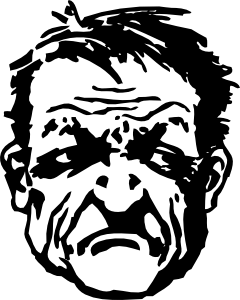
Day Job: I hate you.
You: I hate you too.
Day Job: I wish you’d quit and go write somewhere.
You: I will, you just wait…
If you have given up your dream, why?
I’ve never given up. The dream has lain dormant for periods of time (sometimes years), but even when I wasn’t writing, I was thinking about writing, journaling, daydreaming, and doing other creative stuff (sketching, gardening, cross stitch–yeah, that’s what I thought at first, too–and I was even in a musical for a local theatre company).
I discovered Joseph Campbell in my undergraduate years and I’ve really come to understand my creative journey in terms of the Hero’s Journey. It hasn’t been a straight line, or even a circle, as the Hero’s Journey is often presented.
It’s been more of a spiral, kind of like the end of C.S. Lewis’s The Last Battle, where the Pevensies, Scrubb, Pole, and the rest run through Narnia after Narnia, in Escher-esque fashion, Aslan urging them, “Further on! Further in!” until they reach their final destination.
My journey has been defined by my threshold guardians. The play I wrote in grade four? The teacher edited my work substantially without telling me or explaining why the changes were necessary. Even at that point, I knew it was wrong, and it seeded a deep distrust of authority.
In grade five, a former friend appeared to offer an olive branch, bury the hatchet, what have you, but only did so long enough to gain my trust and ask to ready my stories . . . to which she took an entire bottle of white out, returning my exercise book of obliterated words only when the teacher made her stop.
The big threshold guardian was my first advisor in my MA program, an icon of Canadian Literature. He questioned my presence in the program and accused me of “wasting his time.” That was the wound that wouldn’t heal, even after I returned to work with a different advisor and finish the collection of short stories that became my creative thesis.
After that, I internalized the lessons of my threshold guardians over the years and my internal editor became monstrous. It’s one thing when other people tear you or your work down, but when you start to tear yourself apart . . .
It wasn’t until another icon of Canadian Literature shared his own trials with threshold guardians that I found my way back to the page.
I’m happy to say I haven’t left it since.
Wow that’s a very touching story with devastating experiences along the way. But what I’m really seeing and enjoying, is your resilience through it all.
Why do writers give up, quit or never complete their projects?
Fear.
The new writer is afraid to look silly or expose their relative level of craft to the scrutiny of others.
The experienced, but unpublished, or minimally published, writer is afraid that they can’t be as good as other publish authors, or that their stories have no value.
Even published writers fear that they can’t write another novel as good as their last.
You have to learn to put fear in its place, make it your friend, listen to the legitimate lessons it has to teach you, and then agree to disagree on the rest.
That’s the hard part.
Well said. Seems like fear must teach us many lessons along our journey. To step out there and expose ourselves to the world. For better or for worse. With this in mind, I found a Superhero guy to help us out a little. I call him….CAPTAIN NO FEAR.

learning the words;
noun and adjective,
verb and adverb.
Putting them together
in little sentences—
she won’t let me play
with the big ones yet—
But she’s left me alone
just for a minute
with this big cauldron
teeming with
letters
and other viscera.
Before she returns
I grab the ladle
and gulp,
burning my mouth
with the potent brew.
Then I run
me and my belly full of words,
out the Dutch-door,
through the muddied fields
of hay stubble,
to the tree with leaves of paper,
draw forth the quill–
stolen from a feather duster–
prick my thumb
for ink.
Then.
I write.
Lovely! That’s great! UGH I miss poetry so much. I haven’t written very much lately. You’ll have to come back and grace us with your poetic words.

*Tell us about your short stories
In “The Broken Places,” a doctor on board a generation ship headed for another galaxy tries to diagnose a strange plague affecting the ship’s crew/citizens. What she discovers in trying to find a cure for the blue skin, void-like eyes, and verbal non-sequiturs is something she never suspected, but if she doesn’t stop the condition from progressing, the crew, and their mission, are in jeopardy. That one was published in Bastion Science Fiction Magazine in June 2014.
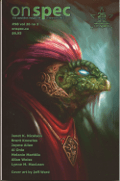
“Downtime” is the story of Opus, an AI-borg who achieves sentience, and liberation from her creators, as she learns what it means to be human, and that she’ll never be one. The good people of On Spec Magazine, one of Canada’s most respected speculative fiction markets, published that in their Fall 2014 issue.
Something tells me one day you’re going to hit one out of the ball park.
*what has writing taught you over the years?
What has writing taught me? Who I am. That quote by Flannery O’Connor, “I write because I don’t know what I think until I read what I say,” is very true. The more I write, the better, the more authentic, a person I become. The rest is between me and the page 😉
Oh yes! I love that quote. I’m finding it to be very true in my own experience. Writing things out is a very tranquil experience. There’s no like it.
*******
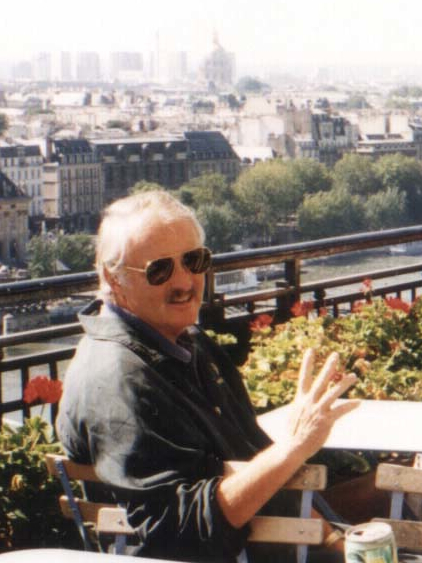
Everybody say hello to fantasy author James D. Priest! He’s the author of the KIRINS fantasy trilogy, a retired physician, husband, father, podcaster and currently enjoying life in Hawaii. You can check out his official home page at www.kirinbooks.com.

*Where are you originally from?
I was born and raised in Minnesota, went to high school and college in Minnesota, and went on to medical school at the University of Minnesota. However, since then I have lived in Japan, California, and now Hawaii.
Nice. I’ve been to the twin cities a few years ago and to the gigantic uber mall there. I used to live in So. Cal, would love to visit Japan, and never been to Hawaii.
*You used to tell stories to your friends on the bus. How did that come about? Or how did you pick up the knack for storytelling?
Storytelling on the grade school bus came from what I have since discovered is an ample imagination. In composing my fantasy trilogy, I borrowed a few names from real people or situations, but the vast majority of what I created and wrote is directly from imagination.
I’m lovin’ it Jim. Just by looking at your fantasy trilogy I can see you have a very vivid imagination.
*What was it about Tolkien that drew you into fantasy?
I loved his world building, creating an alternate universe, Middle-earth, from nothing but his imagination. His conflict between good and evil. His characters, such as Frodo and Bilbo, are genuine and likable. His Gollum is a work of creative art, the likes of which fantasy authors should strive for, as I have with an urgol, Gian, in the third book of my trilogy.
Yes! You’re touching on some of the things I love most about being a writer. CREATING AND IMAGINATION are my favs. Don’t hate me, but I haven’t read Tolkien yet. I’ve seen all the movies though. Gollum is probably the most compelling character to me in the whole book!
*Did you want to be writer before going into medicine?
I think I’ve always had somewhere in the back of my mind that I wanted to be a writer. And I was a writer while in medicine, where I published about 30 medical articles.
Ah yes, I’m all too familiar with this kind of writing. Not my favorite honestly, but necessary.

*How has studying English in undergrad, graduate school and participating in professional medical writing prepared you as an author?
As they say, practice makes perfect. I think the more writing you do, the better you get. But I’ve also learned that every writer needs an editor. We’re only human, and we need guidance both on a grammatical level, and in the line of reasoning, the logic, of your writing.
Yep, you nailed it there Jim. We desperately need good editors, especially us intuitive types.
*First, give us a knockout summary of your trilogy.
My trilogy is published in print, ebook, and audiobook. But there is, in fact, a fourth book, a sequel, not yet published.
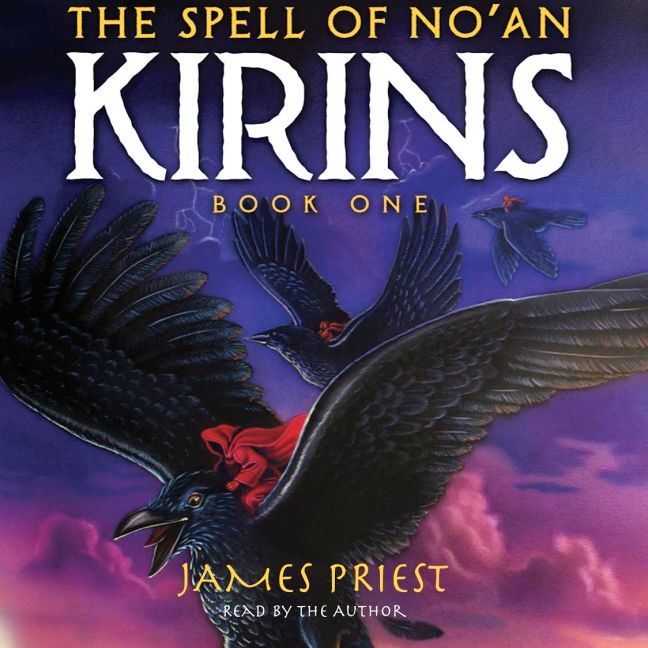
My trilogy, The Spell of No’an, The Flight of the Ain, and The Secret of the Hanging Stones, tells the epic tale of KIRINS, a race of tiny, magical beings who live throughout Earth today.
Dwelling in elaborate tree homes and underground sanctuaries, they enjoy a strong kinship with the animals and birds of their region. In the distant past humans knew them well. But an ancient rift occurred between the races, and kirins chose to separate themselves from humans. Sadly, we humans are now unaware of their secret civilization.

For thousands of years kirins everywhere lived in calm. But now a mysterious, dark force threatens their existence. Knowing little about the enemy they face, the kirin clans choose a party of five daring adventurers led by the wise magician Speckarin. On the backs of birds they travel thousands of clan-dominions across land and sea to Stonehenge, to save the kirin race. But what the journey holds in store for them, they could never have imagined.

In the fourth book, The Seer of Serone, a sequel, Speckarin and his intrepid party journey to Alaska to attempt to bridge the chasm between kirins and humans, and to rescue a kirin lad captured and forced into loathsome service by a human. Assistance in dealing with the offending human is provided by a powerful local wizard, a kirin, The Seer of Serone.
Review by Mary Logue, award-winning writer and poet, author of Dancing with an Alien and Snatched: “Having read all three books of James Priest’s wonderful trilogy, I have nothing but praise. The scope of this work, which takes us from the middle of North America across the Atlantic on the backs of birds to Stonehenge, is extraordinary. I enjoyed every moment I spent with the kirins. Priest’s work resembles Lord of the Rings, but is more rooted in nature and gentler in tone.”
This looks so fascinating! Love the cover images on all three books. You’ve got some great reviews too on Amazon.
*You’re a writer; so what’s your story, or what inspired you?
Having always liked the idea of writing, I challenged myself to write in a genre I’ve enjoyed, fantasy. I decided to write a story set in today’s world. Every culture has mythical small beings. In Ireland they are leprechauns, in Norway and Denmark nisse, and in Hawaii menehune. People want to believe they exist in gardens, trees, and nature. In my tale they are kirins. Because I have always liked small things, the story is of a race of tiny, magical beings, kirins, living throughout Earth today, though humans are unaware of their existence.
Wonderful. Creative little creatures!
*What’s your GOAL in becoming a writer?
Like most or all writers, to become a bestselling author, and to leave something in this world that will make it a better place.
Excellent. No shame in that. It shows you’ve got heart!

*What 3 things have hindered you from completing your projects?
Finding time to write was a problem while I was practicing medicine. Getting the books into all three formats, print, ebook, and audiobook (self-narrated), has taken years to complete. As with almost all writers, promotion and marketing have been a challenge.
WOW! That’s unbelievable! You wrote these books while practicing medicine, had them formatted AND self-narrated them? That’s more than amazing. Promotion and marketing are challenge, no doubt.
*What keeps you motivated in achieving your dream?
I like to work, but writing fantasy was never work for me. It engrossed me so much that it made me forget about anything else. If I went too long at the keyboard, I would become fatigued, tired of writing. I didn’t want that, so learned to pace myself and take time off when necessary. I never had a specific time of the day to write. I wrote when I could, and loved it.
I am motivated by two factors:
1) I want to create something for all the world, especially my family, to appreciate, and 2) My books are good, and thus I keep working in promotion and marketing. KIRINS is a fantasy in the classic tradition: epic storyline, an immersive all-new world, great characters, powerful and mysterious magic, plot twists and turns, an immediate threat, romance, and heroism. And the books are suitable for readers 10 to 110. No vampires, werewolves, zombies, blood, guns, drugs, car wrecks, or post-apocalyptic landscapes. No obscenities or erotica. No superheroes, just heroes.
Hah! I love it. Your vision and motivation is very clear.

*What would you say to a struggling writer who’s given up?
If he/she wants to be a writer, pick yourself up, dust yourself off, and start all over again.
Amen, and amen. I’ll add, if you can’t pick yourself up, join a supportive writing group. They’ll pick you up and keep you going.
*******

Everybody please welcome science fiction author Greg Spry of the Beyond the Saga series!
Beyond the Cloud Nine won silver medal in 2015 Reader’s Favorites Awards in the Science Fiction category, and IAN Book of the year awards nominee for Science Fiction. He writes action-packed hard science fiction with space combat and technology. If you go to his website, you can enter a Goodreads giveaway beginning Jun 23 and ending Jun 30. I’ve wandered around his site and it really has a nice feel to it. Please go to: www.gregspry.com.
I found Greg to be an all around fascinating person with a great background to write science fiction. He has worked in IT, computer programming, search engine marketing, entrepreneurship and holds a MS Space Systems degree from the Florida Institute of Technology. But above all, he loves science fiction. There it is folks!

*How did you get into science fiction? Early childhood influences?
I’ve loved science fiction as far back as I can remember. As a kid, I used to create Lego spaceships, watch Star Trek and Robotech, and play video games like Final Fantasy and every space shooter I could find. Now that I think about it, my dad used to watch a lot of sci-fi, so I watched along with him.
Yes! I did much of the same thing. Lego spaceships, Robotech, video games, Star Trek, but my brother never let me play Final Fantasy. I begged him to play it but he was quite dedicated to my misery. Robotech is probably my favorite out of this group though. I wish they would”ve made it a longer series.

*What kind of books did you read over the years?
I remember reading My Teacher is an Alien and plenty of Choose Your Own Adventure books. I read Ender’s Game in late elementary school, the 21-book Robotech series three times in middle school, and classics like To Kill a Mockingbird in high school. Now, I read hard science fiction and self-published books.
I can see you were an early consumer of science fiction. Never realized that Robotech had a book series! My diet mainly consisted of various cartoons versus books.
*Have you always wanted to be a writer?
Since a young age, yes. I wrote a couple of full manuscripts in middle school.
This is an amazing feat for a kid in middle school. Some adults haven’t even completed full manuscripts!

*Are you currently writing full-time?
No, I work as a software consultant for an IT company during the day. I’m working toward turning writing into my full-time day job.
That’s great, I’m all for it. A lot of us have the same dream. I certainly think you have the talent to do so.
*Who are your favorite authors?
My favorite authors are Arthur C. Clarke, Peter Hamilton, and Alastair Reynolds.
Nice. I’ve heard of Clarke, but the others are new to me honestly. They must be pretty good!
*Tell us about the Beyond Saga series
The Beyond Saga is my generational, fate-of-the-galaxy-hangs-in-the-balance type of space opera based on elements of hard science fiction. The saga includes the first attempts at faster-than-light speed travel, exciting space combat, cool technologies that are truly possible, first contact with alien races, time travel, alternate realities, and more.
Wow. This sounds like a very juicy series!
See the Beyond Cloud Nine official homepage

Beyond Cloud Nine (Beyond Saga Book 1)
Book 1, Beyond Cloud Nine (https://bit.ly/bc9kdle), is the story of the first pilot to fly faster than light and the solar conspiracy that gets in her way. Book 2, Beyond the Horizon (https://bit.ly/bthkdle), follows a young ensign as she tries to stop the extermination of a benevolent alien race during humankind’s first interstellar mission. Book 3, Beyond Yesterday, involves travel to Earth’s past to discover mankind’s origins and book 4, Beyond Existence, is the big intergalactic finale in which the human race may perish or prevail—or both. Books 1 and 2 are available now.
Beyond the Horizon was just published May 1, 2016. Read the Beyond the Horizon official homepage. His website is amazing!

Beyond the Horizon (Beyond Saga Book 2)
*Can you take us through your research process?
I’ve immersed myself in science fiction my whole life, so I know the concepts and how things go. With a master’s degree in space systems from the Florida Institute of Technology, I’ve got a solid knowledge base regarding the realities of real space flight. All things space and astronomy naturally interest me, so I’ll use Google to confirm the details about things like the gravity and atmosphere of Titan or the conditions on a planet orbiting a red dwarf star.
At the start of the writing process, I outline at a high level and create basic character profiles. Then I let the story go where it goes as I write a rough first draft. Draft 2 is where I round out the characters, fix plot holes, make sure I’m showing rather than telling, and fill in the fine details. Draft 2 goes to beta readers and/or a critique group and an editor for refinement. After that process completes and the proofreading’s done, the publication and marketing process begins.
AMAZING. This sounds like a pretty refined process. I always enjoy hearing how authors delivers the goods! This is great.

You’re a writer; so what’s your story, or what inspired you?
The books, movies, shows, and video games I’ve loved throughout the years have inspired me. One big inspiration was the Final Fantasy games. Anyone who has played role-playing video games knows they’re like interactive books or movies. The great plots and characters in them motivated me to create my own.
My brother would know all about it…
What’s your GOAL in becoming a writer? After being published what’s next?
I’ve self-published two books, and I’m working to complete book 3 and then book 4 in my Beyond Saga. My goal is to generate enough of a revenue stream via book sales that I can turn to writing full-time, which means that marketing is currently my biggest challenge. I’ve been trying out different promotional services in hopes of finding something that works. Ultimately, I’d love to have my books turned into movies. Many people have seconded the notion that the space battles, environments, and plot of Beyond Cloud Nine would work well on the big screen.
Let it be so! That would be cool to see it on the big screen. You never know, it just might happen one day.

What has hindered you from completing your projects? (CONFLICT)
A market-savvy author knows that each book is an opportunity to sell all the other books. Hence, the more books you’ve published, the more books you’ll sell. My first problem is that the process of writing and releasing each book takes too much time given that I can only write in my spare time. If I could quit my day job and pump each one out faster, I’d make that much more money. I’ve been dumping hundreds, if not thousands, of dollars into promotion without seeing enough results to even offset my costs. If it weren’t for my day job, I’d be declaring bankruptcy about now. So I’m kind of stuck at the moment not being able to write fast enough to make enough money at it.
Ah, that sounds like such a heartache. Drop me a line, I’d be happy to do some book promotion.
What keeps you motivated in achieving your dream? (DESIRE)
I love smart science fiction and creating plots, worlds, and characters. I also believe in myself and think I can do these things just about as well as most anything else that’s out there.
We definitely share the same values in creating plots, worlds and characters. Your confidence is also inspiring. Don’t let anything get you down.
What’s your ANTAGONIST? What’s in the way?
As previously discussed, visibility and how it takes money to make money. There are some well-known works of fiction out there that are only well-known because they’ve been mass-marketed. Meanwhile, there are other great works that aren’t well-known because a wide audience has yet to discover them. Such is the reality of the industry.
I’m glad I’ve discovered your work! And another reason why I do these interviews is to support authors like yourself.
Have you ever wanted to give up your dream? If so, why?
I actually got really down in the dumps for a few days after I released book 2. I ran a 3-month promo period prior to publication in which I gave away review copies, put my book on Amazon for pre-order, did Twitter blasts, contacted bloggers, and spent hundreds of dollars. I didn’t do any of that for book 1, yet sales of book 2 paled in comparison to book 1. So I thought if I’m going to pump all that effort into promo and not see results, how can I possibly be successful and why bother to keep writing? I make plenty of money in my day job. If I focus on that, I’ll be far better off financially in the long run, so why waste my time being anti-social and writing in my personal time when I could be out doing more active stuff? But as the weeks have gone by, I’ve noticed a little bit better recurring sales. It’s taken people a while to read book 1 and then get around to reading book 2. While sales are still a long way from where they need to be, I’m more hopeful for the future. I’ve also learned what to do and not to do with a book release, which will help with book 3 and beyond.
This is very helpful to get a view of your experiences. Seems like it’s quite a battle once you get your book published. Probably a lot of writers think getting a book published equals instant success. Thanks for sharing.
Why do writers give up, quit or never complete their projects?
To answer this question, we should put on our business caps. I’ve started several businesses in the past unrelated to writing. While most of them failed, I learned a lot from trying. Every now and then, a friend who wants to start a business will come to me for advice. They have a great idea and want to know how to make it a success. They want to pitch it like in an episode of Shark Tank. What do I tell them? That except in very special cases, Shark Tank is a lie and their idea doesn’t matter. When running a business, the least important factor in success is your product or service. Rather, your business system is what matters. I mean, of course you can’t be selling crap. But things like internal business practices/culture, marketing, sales, customer service, timing, leadership, and everything else surrounding the product or service is more important. Does McDonald’s serve the greatest, most revolutionary food on the planet? Of course not. Then why are they the biggest fast food chain in the world? Figure that out, and you start understanding what it takes to be successful. The point is that the actual writing itself is only a small part of the overall process—and not necessarily the most critical part—of being a successful author.
That’s why I think the single most important thing is passion. You’ve got to be able to conjure up the motivation to keep writing and promoting when nothing’s going right. So I ask people who come to me for advice about whether to start a business if they want to live and breathe their trade for 100+ hours per week. Do they want to not get paid for years until their product or service finally catches on? Do they want to spend far more time on everything else besides the actual trade (writing) that they love in order to make the business successful? Only if you answer yes to every one of those questions should you start that business, or in our case, get serious about writing. So to sum up and answer the question, people who quit don’t have the sustained passion for EVERYTHING that it takes to be successful.
Wow, this is wonderful advice for us newbies. You definitely sound like an entrepreneur to me. Simply being a writer isn’t going to cut it in today’s world. We must be the ultimate entrepreneur.

What would you say to a struggling writer who’s given up?
Do you have the passion to keep going? Is this what you truly love? If not, give up. But if yes, stick with it. Even if your writing isn’t very good, if you love doing it and have great desire to improve, you can and will get better. Don’t let anyone tell you writing a book is some mysterious art form that some people are born for and others aren’t. While some people are naturally good storytellers, the vast majority of all stories have certain structural elements in common. Simply put, there are right ways and wrong ways to write a story. You can learn them if you stay open to feedback, do your research, and are willing to put yourself out there.
I’m lovin’ it. Solid words here. Let’s face it, authors are the most resilient people on the planet. We must have an undying passion, a steadfast commitment, and a desire for life long learning. I love writing and learning equally. It’s an awesome journey and adventurous process. Let’s keep the ball rolling! Woohoo!
BONUS: What else do you have coming down the pike?
I’m currently working on book 3 in the Beyond Saga. After that, I’ll write the final book 4. Somewhere in there, I’m going to publish one or more of my Bears in Space short stories, which are sci-fi comedies. Think South Park in space but with raunchy adult Disney animal characters. Bears in Space allows me to do some fun venting about all the horrible clichés out there: unrealistic alien invasions where the all-powerful but completely moronic aliens hover their spaceships over our cities like big bullseyes instead of just blasting us from orbit or releasing a virus, cheesy romance novels with the dude with washboard abs on the cover, dystopian apocalypses where the biggest threat is zombies that can’t even move fast enough to jog, and more. After the Beyond Saga, I’ll return to working on Destalis, which was the first full manuscript I wrote as an adult. Destalis will continue to explore the concepts introduced toward the end of the Beyond Saga but with more of a Game-of-Thrones-in-space type of feel. I haven’t decided whether it will remain a single book or if I’ll expand it into a book series.
Man, that sounds pretty sweet. Can’t wait to see what you come up with. Write on! Don’t let anybody slow you down.
There’s also a BEYOND THE HORIZON ENCYCLOPEDIA that lists the following:

Do you love stories? We ALL do right? It’s no secret writers have some of the most gripping minds on the planet. The characters they’ve created; worlds they’ve crafted, and plots they’ve weaved together, have left their imprint upon the world. This series is dedicated to them, published or unpublished.


First off, I’d like to pay a special tribute to my friend Caroline. She may be largely aware of this, but she inspired me in a very particular way as a writer. I was stuck in a dreamy state wishing and wanting to be a writer. There I was, sitting on the sidelines cheering and watching everyone else’s success. She had just published one of her books (can’t remember which one) and I got so excited and genuinely happy. I proceeded to ask her the question. Kind of like, what’s your secret sauce question. So I asked; what’s the difference between those who dream, and those who achieve their dreams? Then she dropped the line on me. BAM. Just like that, it smacked in the face like a ton of bricks. But what she said was utterly simple. Make a plan and do the work. That’s it. Make a plan and do the work. I’d like to plaster these words on my forehead in neon ink. Possibly a green, or orange color would suffice.
You may never know how your words affect other people. Words have power. Lasting power. Enduring power. A single word, phrase, sentence can last a generation. It may ignite and inspire an entire generation. It certainly did with me.
*Are you originally from Kent, UK?
I am! I live ten minutes from my family \home so I get to see my parents all the time. I currently live in a little village which is famous for being where Winston Churchill lived. Lots of tourists come here in the summer. It’s a very typically English town (pubs, teashops and the like!)
Wowsers! Winston Churchill, thats amazing! I saw some pictures online and it Kent is a very beautiful place. Would love to visit there someday. Here’s some juicy quotes by Winston Churchill.
*******
*******
*Did you love books as a child? Name your favorites.


*******
Hello everyone and welcome back to another episode on the Writing Train. Well today is very special because it’s the day we’re kicking off our new series! Check it out.

What is forensic lenses? First, it’s another reason for me to interview people. Second, it’s an interview with a particular view in mind (No pun intended) hence the name forensic lenses. But why forensic lenses? The word forensic means: pertaining to, connected with, or used in courts of law or public discussion and debate. So far I’ve been interviewing so many wonderful writers both published and unpublished. Writers from all backgrounds, levels and walks of life. Now, I’d like to interview them as…wait for it…..READERS. Yes you read that correctly. Readers.
A lens is defined in part, as a substance that changes the convergence of light rays, as for magnification, or in correcting defects of vision. In other words, they help you see things you wouldn’t normally see. They make things bigger, or magnified, that wouldn’t normally stick out. But the most simplistic definition is that they help you see. Everyone’s eyes are different, and everyone’s lenses are different in how they affect eyesight. We were all born with two embedded scanners in our heads, but we still see things in our own particular way. So when you’re reading the next bestseller what do you see? What do I see? What resonates you to tears may bore me to death, and vice versa.
Personally I LOVE eyes for some reason. Research estimates that eighty to eighty five percent of our perception, learning, cognition and activities are mediated through vision (Vision Is Our Dominant Sense). Before there were writing conferences, retreats, blogs, and how-to-do-everything, there were just books. Good old fashioned tangible books. How did the great writers before our time learn the craft so well? BREAKING NEWS: They read a lot. Sounds simple eh?

Forensics naturally solves crimes by scientifically providing evidence to be used in a court of law. To prove one’s guilt, or perhaps their innocence. In other words help solve crimes and catch criminals. As a reader do you have any pet peeves? Have you ever read something that made you throw the book across the room? Or made you close it, never wanting to open it again? Most of the time it’s not that dramatic, but it could be something small and equally frustrating. These are what I consider crimes so to speak. Things that violate your emotional resonance. That’s on the negative side. The positives are things you enjoy, observe, or witness that prove to be worth your time. It’s the evidence of a great read, and possibly a re-read!


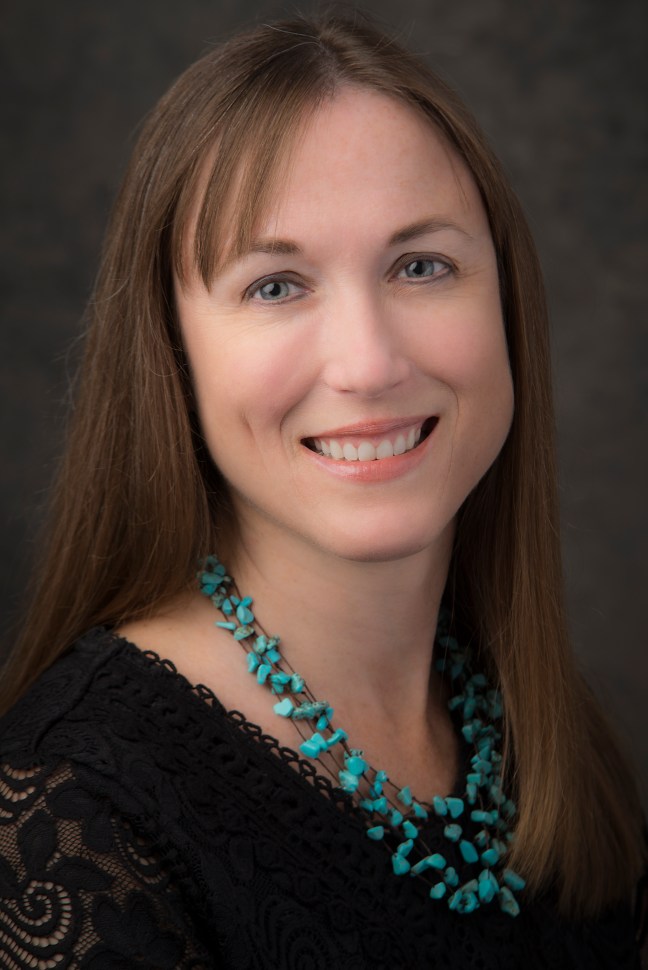
Elizabeth is the bestselling cozy mystery author of the Southern Quilting mysteries and Memphis Barbeque mysteries. She also has one of Writer’s Digest’s 101 best websites for writers. Feel free to visit her over at: elizabethspanncraig.com. Receive a free ebook, updates, recipes by signing up for her newsletter click here.

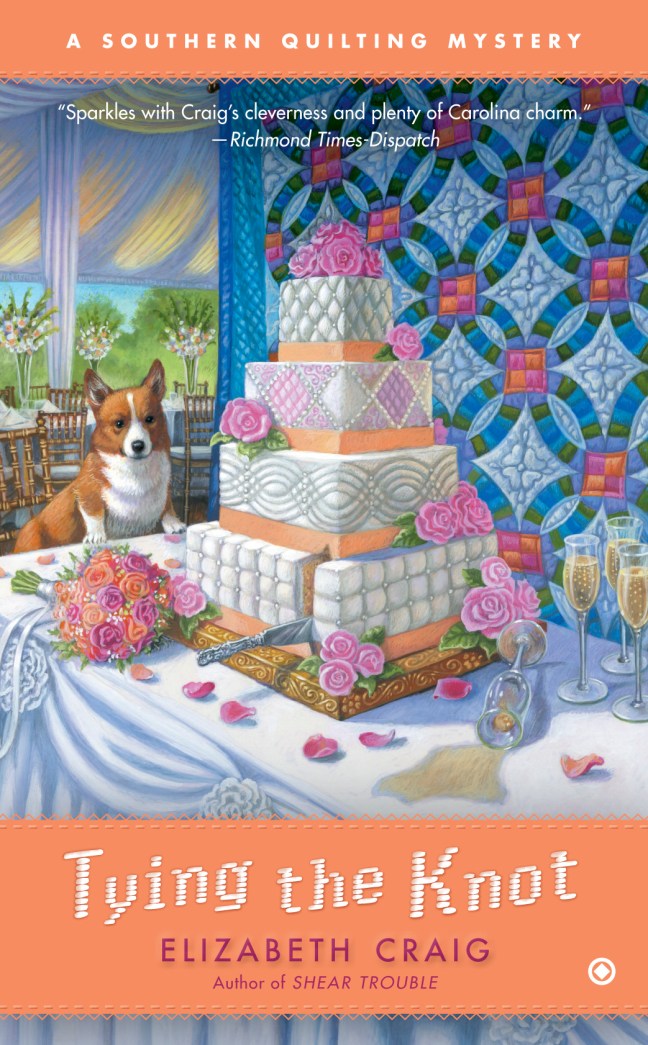

To see more books by Elizabeth click here.
*How did you begin reading habits as a child? Did someone in your family read to you?
My father was an English teacher and my grandmother was a retired English teacher. Reading was as much a part of my day as eating and sleeping. Everyone in my family read to me and continued reading to me, even when I was able to read for myself. Sometimes the settings of the books we read together, the Oz complete series, for example, were almost more real to me than my own home.
YES I love this. It always begins with reading. That’s great you had English teachers in your family AND experience collective reading habits from family members. Amazing.
*Who was your childhood favorite? Scooby-Doo, Nancy Drew, Trixie Belden, Hardy Boys? Why?
Nancy Drew was an early-elementary school favorite because she seemed so calm, collected, mature and brave as she unraveled genuinely creepy mysteries. By late elementary, I’d shifted my loyalties to Trixie a bit. That’s probably because Trixie was closer to my age and actually misbehaved in the stories…she seemed a little more realistic. The interesting thing about my childhood favorites; Nancy, Trixie, and Scooby; is that they all embody the ‘friends as sidekicks’ approach to sleuthing. That had a tremendous influence on me as a writer…no solo sleuths or lone wolf detectives for me.
Yeah, I think the lone wolf characters are kind of boring honestly. Unless something really sticks out.
*In your bio, you state “I started in on the Agatha Christies. Miss Marple and Hercule Poirot made me a lifelong mystery fan.” What was it at this stage of reading that made you a LIFELONG mystery fan? Something had a major impact here.
Agatha Christie and the other masters of the genre turn mystery reading into an interactive experience. Their mysteries grab the reader and drag him in. A good mystery, such as the ones Christie wrote, make the reader feel as if he or she is in the sleuth’s skin, solving the mystery as they go. It’s this armchair detection, the ability to feel the thrill of edging closer to a dangerous killer, all from the comfort and safety of one’s home. To me, there’s nothing else like it—it’s the ultimate escape.
Wow! I had an escape just by reading your statement! Excellent.
*Currently, who are your top 5 mystery writers and why?
For cozies, my top pick is M.C. Beaton. Her ability to write quirky characters and an engrossing setting is second to none. For police procedurals I like Elizabeth George, Deborah Crombie, and Louise Penney—their sympathetic portrayals of their detectives and how they balance their personal lives and professional lives makes their books both realistic and a joy to read. For a darker story, I go to Norwegian writer Jo Nesbø…the grittiness of his stories sometimes just hits the spot, as a reader.
Elizabeth George is absolutely amazing. Can’t wait to read more of her books.
*Since you’re an experienced reader in the mystery genre, is it easy to figure out whodunit? Or does it make it harder to enjoy a good mystery book?
Unfortunately, yes, I usually figure it out. I absolutely love it when I’m wrong. I love twists, I love being surprised. But if the writer has done a good job wrapping up all the loose ends of a mystery and circled around to the beginning of the book from the conclusion, I’m still satisfied as a reader, even when I’ve pegged the killer.
Man, just was thinking how hard it must be to fool an experienced mystery reader.
*As a reader, what are your biggest pet peeves? (Writer Crimes)
I’m really not keen on plot devices and seeing writers manipulate plot and make characters behave out of character just out of convenience. This kind of Deus ex machina, especially at the end of a book, feels contrived and can contribute to a flat ending.
This is a very interesting viewpoint. We must be the ever skillful writer to avoid things like these.
*After all these years of reading, what makes a good mystery? Or a great one?
I think greatness ultimately is attained through the sleuth’s personality. We don’t have to like the sleuth, but we have to relate to or understand him or her. A good mystery will have an interesting or appealing sleuth and a cast of supporting recurring characters that either act as a sleuth’s foil or play up his or her strengths.
I love this. It comes down to character and more specifically his personality. Understanding him or her makes all the difference. Sweet!
elizabethspanncraig.com
Newsletter Sign-up
**********
**********
Benjamin Thomas
@thewritingtrain
http://www.thewritingtrain.com


*So what interests you in classical languages and studies? (I love Greek, Hebrew, and Latin by the way).
What actually got me into Classics were the languages themselves, particularly Latin grammar. I’ve always leaned heavily philological—my dissertation looked at how Roman authors used descriptions of odors in their texts, and at how those descriptions give us greater insight into Roman sensory culture.
Now that sounds cool. First, Classical studies is utterly fascinating. It’s no secret that people love roman culture. They definitely left their footprint on society. Yammers, I’ve got so many things to pick your brain about!
*What made you want to pursue this in college?
I needed a language requirement and had a friend who took Latin in high school and loved it. The next year I took “Greek and Roman Civilizations” to fulfill an honors requirement, and the rest, as they say, is (ancient) history.
Oh, Greek and Roman Civilizations sounds great. I’m not sure what it is about these two cultures, but they were powerhouses.

*Have you always wanted to be a writer?
Yes and no. I wrote as a kid—my school had a “Publishing Center” where we could illustrate our stories and have them bound into little books—and when Peter Jackson’s Fellowship of the Ring adaptation came out I got really into fantasy writing. I entered college as a writing major but didn’t really know what I would do with it—I naively thought I could study creative writing and magically become a successful fantasy author, so I was never very interested in my professional writing classes. In hindsight, I wish I’d gone that route; I think I would have enjoyed marketing.
Man, your high school had a publishing center? That’s awesome! Wish we had one. So many people have been influenced by the Lord of the Rings its amazing. I’ve seen the movies but haven’t read the books yet. *sinks in shame*
*Are you originally from Michigan? (I was just in Ann Arbor actually)
Yes; my family lived in Indianapolis for a year when I was about 2, but otherwise we’ve always lived in Michigan.
Cool beans! I like Michigan.
*Do you despise the Buckeyes?
I had to look up the Buckeyes to make sure they are, in fact, Ohio State, so…that probably tells you how I feel about them. 😛
Lol! Yup, that’s good ol’ fashioned Ohio State. Just curious. There seems to be a great rivalry between the two. Makes for great entertainment!
*Would you use your background in classical studies to influence your writing?
Subconsciously, I think I do—my Latin classes were where I learned 90% of English grammar, and studying literature has definitely made me think about what I’m conveying with my own writing. I haven’t set any stories in Rome-inspired cities, though, or raided classical mythology for ideas—probably in the future, though!
I bet. It’s a rich source to draw from!

*You’re a writer; so what’s your story, or what inspired you?
I’ve always been telling stories to myself—I played soccer as a kid and mid-game I’d be standing in the field staring at the clouds imagining what lived up there. I remember taking bike rides and narrating stories out loud as I rode. 😛 Because I was fairly shy, I think writing them down was the natural next step. Interestingly, though, I’m not a natural storyteller—I’ve always been better at the actual writing than at crafting a narrative.
Eh, narrative, can be learned of course. You’ve been telling stories since you were a kid though, that counts. For what it’s worth, I’m not a natural storyteller either, but that’s a skill that can be picked up as we learn the craft. I have a particular fascination with narrative, point of view and how it affects the story. When you learn something new drop me a line.

*What’s your GOAL in becoming a writer?
At the end of the day, I think I’d say it’s to give people hope. I’ve got nothing against sad stories, and while I shy away from killing characters whenever possible, I understand the value of doing so in the right situation. But I want to write stories that, no matter what bad things might happen in them, leave my readers looking forward and thinking about the possibility for good—in people, in the world, in their own lives. I don’t write Christian lit, but I am a Christian, and I hope that underlies everything I write.
Well very good. (Pun unintended)
*What 3 things have hindered you from completing your projects? (CONFLICT)
1. Loss of interest. Occasionally I start writing and have no idea where the story’s going, and most of the time I peter out and lose interest before I develop a direction. But that’s not always bad—sometimes I just need to get a scene out of my system, or try something new as an exercise.
2. Writing difficulties. If I’m not sufficiently dedicated to a story, any serious snag (plot holes, character issues, etc.) might cause me to give up rather than push through.
3. Edit-as- you-go syndrome. I get so bogged down in editing that I don’t give the story room to grow and develop. My most popular tweet says “Keep writing, you can edit later,” but it’s advice I’m terrible at following!
These are all valid points. The “edit-as-you-go-syndrome” seems to be a common one. You hack the thing to pieces before its even ready. I planted a gladiolus bulb in the front yard one year. After a few short weeks, I was so frustrated because I didn’t see any growth. So what did I do? Dummy me, had to go dig it up to see if it was growing. It had a beautiful bright green stalk about 3 1/2 inches long judding out of the bulb. Of course it broke in half when I dug it up. *sigh* Plants are both beautiful and frustrating at the same time. To see them grow, develop, bud and blossom is absolutely beautiful. But sometimes waiting for it to grow can be very frustrating. I suppose beauty requires patience.

*What keeps you motivated in achieving your dream? (DESIRE)
One of my favorite things about writing is just hanging out with my characters. Getting to know them. Watching them interact. Giving them a hard time. If I’m not excited about the people in my story, chances are I’m not enthused about the story itself. So part of my motivation is getting to spend time with cool, albeit totally fictional, people, and part of it is hoping that someday I’ll get to share these characters with readers—who will hopefully grow as attached to them as I am.
This is a good one. I’ve heard many writers say the same thing. Hanging out with characters, or living in imaginary worlds etc. But you’re right Kate, if we’re not excited about our own peeps, it’s hard to imagine anyone else will.
*What’s your ANTAGONIST? What’s in the way?
Impostor syndrome—the constant conviction that I’m not good enough, not creative enough, don’t know enough. It might sound stupid for a fantasy writer to say this, but I don’t tend to think of myself as a very creative person. I need to remind myself that cool ideas are only a small part of what it takes to succeed as a writer, regardless of genre.
This just validates that you’re a writer! A normal one. Cool ideas are relatively easy to come up with. But to take an idea and ripen it into a compelling story, is craft. Which can be learned. To me, a writer is essentially a learner. We’re just like the characters we create. We have goals, desires, dreams and what not. Then there’s the dreaded antagonist standing in our way. He often uses the fear tactic to stymie us. Works like a charm every time. As writers we have to learn to work through those internal conflicts to achieve what we want. Then as we overcome the internal conflict, we’re empowered to deal with the external conflict. Next thing you know you’re off to save the day and live happily ever after. But knowing the nature of the conflict and facing our own antagonist is the heart of the battle.
*Why do writers give up, quit or never complete their projects?
Any number of reasons. I was just reading a post by a writer lamenting that her favorite genre has fallen out of favor with agents and publishers—despite the fact that this was what she loved to write, she was considering giving it up because she was worried it wouldn’t sell. Time is another one—either the realization that writing a book takes a great deal more time and effort than expected, reluctance to set aside the necessary time, or an actual lack of time due to life circumstances. In the end, unless you remember what it is you love about something—a hobby, a dream, a job—you can always find a reason to give it up.
Well said. I like how you brought it back to what we love about something that’ll “keep the drive alive”. Love is most interesting isn’t it? There’s a great deal of investment that goes into writing a book, published or unpublished. Love will keep us afloat amidst treacherous waters.
*What would you say to a struggling writer who’s given up?
Think about why you started writing in the first place, and what you love about it. It can be really easy, in the tsunami of social media, to feel you’re not a “real writer” or that you’re “doing it wrong.” It can also be easy to get caught up in what’s popular and believe that in order to be successful, you have to write something similar. Don’t. Stick with the story in your heart. Write for yourself. Write for the fun
of spending time with your characters. Whatever gives you joy in writing, start from there.
I LOVE THIS. You know, by doing these interviews, I’m the first one that get encouraged. Writing is an extremely subjective experience, written by fantastically subjective persons. And the definition of success is also a very twisted subjective concept to most people. We tend to subjectively measure ourselves based on what we see objectively in others. We try to climb the mountain that they built. As they say, Rome wan’t built in a day. But then, it’s hard not to see the mountains around us. James Patterson, Patricia Cornwell, JK Rowling, Suzzanne Collins, Victoria Aveyard, George R.R. Martin. They’re gorgeous and breathtakingly majestic. Don’t try to climb their mountain; grow your own wings and take to the sky, see where it takes you.

CONNECT WITH KATE
Blog: K.T. IVANREST
Twitter: @KT_Ivanrest

Benjamin Thomas
Howdy all, welcome back to the Train. Today we have another special guest…They’re all special right? Everybody please welcome Abby Jones! She’s actually a friend of the first interviewee of this series, Bethany A. Jennings. Thanks for joining us today Abby.

Are you married with children?
I’m happily married to a man who is Licensed Teacher (Recognized Gifted Brother) in our church, with a desire for the eldership. We haven’t been blessed with any of our own children, but we have 11 nieces and nephews. I often write children’s stories for them, which I hope to publish as picture books someday. You can read some of them on my blog.
That’s awesome you already have an audience!
Where are you located?
I live in the great state of Texas near Fort Worth.
Sweet. I’m in Buckeye country. I love Texas though.
Where did you go to school? Major?
After high school, I attended a local junior college where I got an Associate’s Degree and swore off college.
I have an Associate’s as well. Think about going back, but it’s much TOO expensive.
You said you switched genres a few times, can you take us through your experiences, journey with these?
Well, the first switches were due to my desire to spend more time writing and less time doing research. My older brother is an amateur historian, and I’m an armchair historian, so even writing Swords and Sorcery type fantasy required lots of research for fear my brother would call me out on an incorrect detail. Moving closer to a time frame I loved—Victorian—didn’t solve the problem. Funny enough, I still needed to do research. Confounded, I switched to Urban Fantasy. At least I’m familiar with what types of clothing we wear. Here I discovered my voice: action flick meets thriller meets fantasy with smatterings of beautiful prose.
For several years I settled down nice and snug in my world of serial killers, saved vampires, and broken hunters. While I was researching how to torture people (researching serial killers didn’t bother me as much as researching corsets or halberds), my husband and I sold our business so we could focus more on our church. I had several books under my belt by then, finished, and in various stages of editing.
My husband started preaching for our church on almost weekly basis. That’s when I realized that if I continued, I’d be going down one path and he’d be going down another. After talking to him and some close friends, praying, and crying a lot, I switched genres to something that lines up better with his plans: Faerie Stories and Children’s Stories.
Before anyone freaks out, my decision wasn’t forced on me, nor do we believe a hopefully-future-pastor’s wife couldn’t write vampire serial killer stories. Not at all. We both believe I had the total freedom to do that. It was me asking myself if those stories were serving my church at all. The answer was no. About three or four people total would even read them. Most people shied away from them. And, I didn’t feel comfortable talking about them with my church family.
Switching that last time to something I could actually share with my church was one of the hardest things I’ve ever done. I switched blogs, set aside stories I loved, and packed away very dear characters. But, I didn’t want to go down a path that would lead me away from my husband’s hopes for the future, and I didn’t want to be unable to share the writing side of me with my church. If I’m not using my gift to encourage Christ’s bride, what’s the point of having it? (This is by no means meant to guilt anyone, just me being honest about my choices.)
God is amazing. He’s graciously blessed my work. My church family has been encouraged by my blog. I’ve connected with other churches via my writing that I never would have met otherwise. I’m closer to being published than I’ve ever been before with my children’s books. And, I’ve figured out how to tie my new YA Faerie Stories into my beloved Urban Fantasies minus the violence and language. God has been so gentle and kind to me through this time.
That’s a very touching story, thanks for sharing! I’m sure it wasn’t easy. At least you’re still writing!
Below you’ll find an image that has inspired Abby in her writing endeavors. Check it out, there’s some pretty cool artwork.

1. You’re a writer; so what’s your story, or what inspired you?
I discovered my love of writing back in 2000. My husband (then boyfriend) had just read Lord of the Rings, and was inspired to try his hand at writing. Wanting to be engaged in his interests, I started piddling around with writing as well. All my life, I’ve been a reader and a lover of stories, but I hate all things grammar-related. My mom even put me through remedial English as a home schooler. I longed for a way to artistically express myself, but couldn’t imagine dealing with commas and spelling and such. Don’t even get me started on homonyms. Everything changed when I finally gave in and put pen to paper. I discovered my form of self-expression. The stories in my head have been escaping ever since. Even with 16 years under my belt, I require editors (friends). I still can’t sort out where commas are supposed to go.
It always begins with reading doesn’t it? I talked to so many people that’ve been inspired by the Lord of the Rings. I’ve seen the movies but haven’t read the books!
2. What’s your GOAL in becoming a writer?
My original goal was to express myself. I’ve always felt the need or the longing to do creative things. I tried music, painting, drawing (which I still dabble in), photography, fashion (still something I love), and crafts. I was never satisfied with what poured out. I could never get anything to match what was in my head. Discovering writing was like discovering magic, though it should have come as no surprise based on the way I devour books.
Once I found my voice, my goal became, and still is, to tell warrior stories that don’t mince on the hardships of life but are flooded with beauty, light, and hope, from a Christian worldview. I love the concept of the man who sacrifices a normal life to hunt things that go bump in the night, and the woman at his side…with magic thrown in. I also love the idea of the Undeserved Rescue. I always have at least one villain being shown grace.
There you go, sounds good. Even the villains need mercy. That’s probably why I like Darth Vader so much.
3. What 3 things have hindered you from completing your projects? (CONFLICT)
The first thing that has hindered me is just the learning curve. My first few projects fell by the wayside because I wrote myself into a plot corner that I couldn’t see a way out of. I’m also determined to publish a well-written story. I love books with excellent prose, and refuse to add to the slush pile of poorly written literature. This means years spent honing my craft and wordsmithing. I’m also a pantser and can’t publish one part of a series until the whole thing is done because it takes me that long to make sure I don’t need to make changes.
Second, I’ve changed my focus several times. I started out pretty traditional Sword and Sorcery, switched to Victorian Historical Fantasy, then to Urban Fantasy with a strong Criminal Thriller feel where I found my voice, and finally to YA Dark Faerie Stories. Each time I’ve changed focus, I’ve set myself back and created a new learning curve.
Last, writing is not my main focus in life. I love it. I write every day. I hope to be published someday, but all that is secondary to serving my church, my husband, and my family. Those three things are far more important to me than my stories. I’m unwilling to sacrifice them for the sake of my writing. This can be a real struggle. In our culture, we’re pushed to give up everything for the sake of art. I constantly battle the voices that tell me I should abandon everything to be a published writer. The voices lie. The stories are important, but they aren’t everything.
Yeah, I guess changing focus would definitely slow you down. Suppose it’s part of the journey of being a writer.
I love stories. I love telling stories. I love this story and my Worlds before the Door (my name for them) specifically. Even if I can only write for ten minutes a day, I’ll take it. Even if I couldn’t write, I’d still be making stories up in my head. I’ve been doing that since I was six. It’s part of who I am, and who God made me. Besides…I’m really rough on my characters and even if I’m the only one reading the story, I can’t leave them until they reach the light.
I can relate! I love creating things and being creative. So storytelling is an outlet of that for me. The possibilities are endless! Honing or craft is learning how to take those ideas and shape them into a compelling story. Keep at it!

5. What’s your ANTAGONIST? What’s in the way?
My main antagonist is probably being a pantser. I have to discover the story first, while I’m writing it. Then I have to do major edits and rewrites. It seems to me that outlining is very useful because it cuts down on rewriting entire plot points or just having to yet again change the time of day. But, outlining doesn’t work for me. I am trying to learn how to outline, but thorough outlining drives me away from the story.
I’m a panster, or tweener, kind of. It’s good knowing what doesn’t work for you though. It’s part of the process!
6. Why do writers give up, quit or never complete their projects?
Learning to write well takes a long time, a lot of focus, and dedication. You can’t just sit down and peck out the next Great American Novel. It can take years to hone your craft. That’s intimidating. It can be a long time before you can share your work. That can be lonely. Every book you read seems to be better than anything you can produce. That can be discouraging. These are the reasons I’ve been tempted to give up.
It’s 100% intimidating, but also liberating and fun! Jerry Jenkins said something simple that lifted alot of weight off my shoulders. “Give yourself time to learn the craft first”. EPIC. Simple yet full of wisdom. So I gave myself permission and time to learn. The fact that it’s a life-long learning with dedication involved is very appealing to me on many fronts. One, being a life long learner! I’m probably a polymath of some sort. A lover of learning. Just take the process as it comes. Day by day.
7. What would you say to a struggling writer who’s given up?
Find your core. What was it that first excited you about writing? Why did you start writing? Getting back to your roots can help you regain some perspective. Also, make sure you’re doing some fun writing, whether it’s fan fiction, word doodles, or poetry, do something playful. Last, write what you want to read.
Anytime I feel like I’ve lost my desire, I return to the concept of the Undeserved Rescue, war movies, and friendship stories. (Think Band of Brothers and Firefly.) These concepts fuel my mind and inspire me. You have to find that thing that keeps you going.
Absolutely, I love it. That’s very inspiring. “Find your core” I adore that statement. Those are some really good ideas, I’m going to have to play with some of those. Thanks for sharing.
BONUS:
Can you tell us a little about your writing time in homeschooling? (Sounds like fun).
Most of the writing I did while in school was English/Grammar related, like parts of a sentence and such. At one point, my mom did tell me I could write sentences that didn’t include a black stallion. Good luck with that one. I manage to work a black stallion into just about every major story I’ve ever written.
One time my Mom gave me a ‘free-writing’ type of assignment. I wrote an anthropomorphic story about my cat. My mom loved it and suggested I try my hand at writing beyond the required homework. I ran screaming in terror and didn’t try writing for fun again until several years later.
The great gift home schooling gave me was books. My Mom encouraged me to read, and read with discernment, filling me up with beautiful stories. I’m so thankful for the books she constantly put before me.
Books, books and more books! Wonderful aren’t they?
Can you say a little about how you run your writing time in your group?
Due to some health issues, I’ve had to step back from our group for over a year now. But, when I ran it, we would start by going over our goals, then I had a ‘Being Brave’ question which forced all of us to share something about our work. The bulk of the time was spent reading aloud a 1000 word excerpt from a project of your choice. After each reading, we would go in circle and offer remarks. I used a timer (3 minutes per person) and we had a no repeat rule: if it’s been said, either say something new or pass.
I’d like to say we kept things organized, but the group could get very long-winded. I have a love/hate fascination with Writing Groups.
Thanks for sharing your story and joining us on the Train Abby!
You can connect with Abby all over social media:
Blog: http://gentleandquiet.com
Facebook: https://www.facebook.com/gentleandquiet
Pinterest: https://www.pinterest.com/olivecrow/
Instagram: https://instagram.com/abigailtinuviel/
Goodreads: https://www.goodreads.com/user/show/7303921-abby-jones
Twitter: https://twitter.com/GentleandQuiet
Scribophile: http://www.scribophile.com/authors/abby-jones/
KEEP WRITING
YOUR STORY
NO ONE ELSE WILL
Benjamin Thomas
@thewritingtrain
http://www.thewritingtrain.com
Welcome back folks for another session of the Story of the Writer series! Today we’ll be featuring romance novelist and owner of editing company Narrative InkDanielle Rose. If memory serves me correctly, I remember Danielle from the 2015 NaNoWriMo Wahoo! To learn more about Danielle please check out her blog: danielle-rose.com

Glad you’re with us.

 Alright time for lift off, let’s get right to it….
Did something or someone influence you as a child to be a writer?
I consider myself to be a late bloomer. While I do remember writing stories as a child, I didn’t start taking my writing seriously until late-2009. At that point, I wrote on and off for several years, while pursing my education, until I started to publish in 2015. In 2008, I began reading religiously, which is what prompted me to write my Blood Books trilogy. After reading at least a hundred books, I couldn’t find, what I considered to be, the perfect story. So I wrote it.
I love your story! It seems that in your hunt for the perfect story, you had a great realization. You had to write it yourself. Epic. If you’d like to explore Danielle’s complete story on becoming a writer click here. Quite fascinating.
Where did you go to school and what was your major?
I obtained my Bachelor of Arts in English and certification in professional writing from the University of Wisconsin—Parkside. I then obtained my Master of Fine Arts in creative writing from the University of Southern Maine.
That’s awesome! I’ve always admired the one’s who’ve actually studied this stuff in college. Flunked technical report writing with flying colors, whoo-hoo! Somehow giving presentations and speeches gave rise to panic attacks. Arrggh. Eventually passed it online. Whew. Got an A in creative writing though.
Obviously you’re a cheesehead, how many packer games have you been to?
Hmm, honestly, I’m not sure. We have season tickets. I go to games every year, and when I can’t go, I watch the games on TV.
Would love to come to cheesehead country and go to a game. Supposedly I’m 49’ers fan, but they need some serious resuscitation. Somebody call the paramedics.
What’s it like being an editor?
It’s the second best job I’ve ever had. The first, of course, is being an author. Narrative Ink has a fantastic client base, and I’m honored to be trusted to edit their manuscripts.
Amazing. This must keep you pretty busy !
List your favorite writing books or novels.
Some of my favorite authors are Sylvia Day, Lauren Blakely, Meredith Wild, Chloe Neill, and Richelle Mead. I collect books on the craft of writing, but it’s difficult to say which are my favorites. In a way, they’re all my favorites, because they’re all equally important. Some describe experiences, some give advice, and some discuss the basics. In my opinion, a good writer won’t turn away a good source. So I read and collect.
“a good writer won’t turn away a good source” YES, you hit the nail on the head with this one. Absolutely LOVE reading and collecting craft books. Can’t get enough of them!
The idea of the “perfect” story is subjective. My idea of the perfect story changes constantly. It usually depends on the genre I’m writing. Sometimes, the perfect story depends on the right balance between action and romance. Other times, the perfect story depends on strong, dynamic characters and dialogue to drive the plot.
I always write the story I need to write, which in and of itself is the perfect story for me. However, I still believe I haven’t written my best work yet. In time, I hope I will.
Love you outlook on this. Your idea of the perfect story is constantly evolving with the right balance of particular elements. Whatever seems to meet the need at the moment. “I always write the story I need to write.” This seems to resonate with me as well for some reason. Should print this out and stick it on my wall.
You mainly write romance, paranormal romance, and romantic suspense? Are locked into this genre or will you branch out?
Yes, I mainly write romance (contemporary, suspense, paranormal, new adult, erotic, etc.), but I don’t limit myself. I have a horror short story published, too, and my paranormal romance trilogy, Blood Books, is heavily urban fantasy. There is just as much action (if not more than) as romance. I’d love to write psychological thrillers one day, too.
Psychological thrillers definitely sound like a must. I’d read it! Here’s a short story by Danielle.

Check it out: Daemon Academy: A Horror Short Story
Tell us about the Blood Books trilogy leading up to the final installment, Blood Promise, due to be released June 28th 2016.
My Blood Books trilogy follows the harrowing journey of Avah Taylor, a mortal witch in the midst of a centuries old war against the immortal vampire species. Avah’s intense journey is fueled by blood, sex, jealously, betrayal, murder, and revenge. This trilogy is meant for new adult/adult audiences.
I read a few pages into Blood Rose book and I can tell you’re a skilled writer. Your idea sounds well developed, crafted and flows well. Should be a great read!
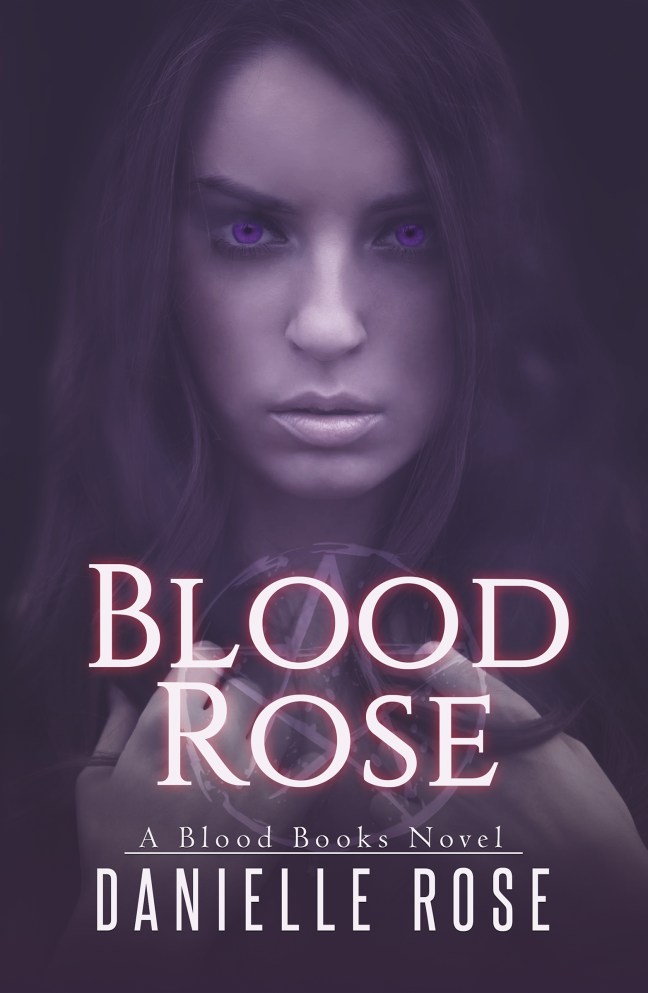
Check it out: Blood Rose (Blood book 1)


Blood Promise (Blood Book 3) Releases June 28, 2016!
Click here to add Blood Promise to your reading list on Goodreads.
At this stage in your career, what is your goal (s)? (GOAL)
I have many short-term and long-term goals. I believe in the power of setting and reaching goals, so I always strive to add more to my list. I actually have a writing group (We formed our group after meeting in graduate school.), and we check-in with weekly goals. We also do daily writing sprints/stints, which are extremely helpful for writers who struggle with procrastination.
I’m finding that without goals nothing practical happens. Our dreams aren’t coming around knocking on our front door, we have to make it happen.
Many of us see publication as the only lofty goal, but the lack vision afterwards.
Publication was definitely a long-term goal for me when I started writing in 2009. After achieving this goal in 2015, I updated my list. Some of my goals include publishing a certain number of books each year, perfecting my marketing plan, reaching a bestseller list, attending certain writing conventions as a signing author, and seeing my books on the shelves at major retailers. Honestly, my goals are similar to what most writers strive to achieve.
This is very specific. My goals are very short sighted like, finish my WIP. Not much of a planner so drumming up goals is work for me. I really like your mindset on this though. Maybe if I talk to enough planners it’ll rub off. Hah!
Do you have any major conflicts hindering you from attaining your goals? Once you’re published what’s the next hurdle? (CONFLICT)
I absolutely do. I think conflicts are the main reasons behind why these are goals and not reality. My biggest hurdle is reach. Without readers, I can’t do what I love, and I couldn’t obtain my goals/dreams. This is actually a common problem most writers face.
Very true. Somehow I believe you won’t have any trouble with this one. They’ll come with zombie fueled voracious eyeballs, trust me.
What keeps you motivated? (DESIRE)
Readers, my writing group, and bills. (Ha!)
That’s actually a good list!
What’s the main antagonist in your life or career?
I’m the main antagonist in my life. Like anyone, I can fall victim to my own self-doubt. In my opinion, the mind can be the biggest advantage or hindrance to writers.
This is all too true. We’re our own worst enemy. Every day is different and changes like the wind. Actually, our days are pretty much the same. The mind is what turns on a dime. Heads or tails? Who knows? The best thing we can do is show up every day and be consistent.
You have your own editing company. What made you want start it?
Honestly, there’s no exciting story here. I have a strong background in editing, and I’ve always wanted to start my own business, be my own boss. I took some entrepreneurship courses in undergrad, so it was fairly easy to branch out and form my own LLC, Narrative Ink Editing.
That’s great Danielle. We’ll always need Samurai editors to slice and dice our manuscripts, for sure.
As an editor, what are some of the major problems that affect writers and their careers?
In my opinion, self-doubt, shortcuts, and marketing are the three biggest problems writers are facing today.
Self-doubt: There is a fine line between self-doubt and self-pride, and many writers can’t walk that line without stepping over. Writers who experience self-doubt constantly question their writing. When this happens, the book rarely makes it to print.
Shortcuts: On that same note, self-pride can ruin a career. Having pride in your work is great, but at some point, you have to step aside and bring in professionals. Don’t take shortcuts. While you may believe you can do it all alone, the truth is, not everyone can be an editor or book designer or interior formatter or marketing guru. Writers who take shortcuts are hindering their growth. Readers judge books by the cover, design, and editing first. The plot comes second.
Marketing: Many writers believe they only need to write the book. Once it’s published, they can sit back and watch the sales come flying in. This is never the case. Even major authors, like Stephen King and Nicholas Sparks, have a marketing team to ensure the news of the impending release reaches readers. Sure, the name alone will sell the book, but marketing is still involved. Don’t sell yourself short. Invest in a good marketing plan.
I really appreciate the inside scoop on this. Writing and publishing books is only half the battle, while marketing is an oft forgotten element in the equation. The business side of writing is lacking with a lot of writers. Just taking up writing a novel is a huge endeavor, but the business side of matters is another animal altogether.
What made you want to switch from pre-law to English and creative writing?
I was actually pre-med first. For as long as I can remember, I wanted to be a doctor. I was never the kid in class who said she wanted to be a princess. But after my first year of pre-med, I knew that wasn’t the right route for me, so I switched to pre-law and changed my major from biology to English. That’s when I fell in love with literature and the written word.
This is so fascinating. I’m so glad you found it!
Having studied writing in college, what top 3-5 things did you learn about the craft?
The biggest lesson I learned in college was how to write. I first learned the rules of writing. I learned the technical skills, like spotting dangling modifiers and proper placement of punctuation. And then I learned how to break the rules to discover my own style.
I long for the day when I discover my own style. Guess you have to learn the box first before you can think outside it right?
What writing books do you highly recommend?
I have never come across a writing book that I wouldn’t recommend. I believe writers should read as many as they can get their hands on. I collect books on writing and reread when I have time. Some of the books sitting on my shelves are Stephen King’s On Writing, Carol Fisher Saller’s The Subversive Copyeditor, Caroline Taggart and J.A. Wines’ My Grammar and I… Or Should That Be Me?, and William Zinsser’s On Writing Well.
I have a couple that you mentioned here. The others I’ll have to look into! Thanks for the pic.

If permissible, can you tell us about some of your clients you helped at Narrative Ink?
I’ve had the pleasure of working with immensely talented authors, who continue to surprise me with their stories. I’ve recently edited manuscripts by Rachel Amphlett, Jackie Parry, and Liam Saville. I’ve also worked with Andrea Cefalo, Taylor Lavati, Margaret Bucklew, and Matt Jordan.
Thanks so much Danielle for joining us! Please come again, and if you’ll recommend anyone for an interview let me know.
This is the Writing Train signing off. Happy reading and writing everyone!
KEEP WRITING
SOMEONE OUT THERE NEEDS
YOUR WORDS
Benjamin Thomas
@thewritingtrain
http://www.thewritingtrain.com
rejuvenatement - not retirement
...a crime-fictional site
Established in May 2011 to help nurture and inspire the poetic spirit.
A place for poems and pics
a simple pairing of pictures and poetry
Sharing Poetry and Hugs
Persistent WV Poet
A.I. Art and Poetry
short writing prompts
I am the way and the reality and the life...John 14:6
Submit your film, screenplay, novel, to the festival and get it showcased at the FEEDBACK Festival. Full Feedback on all entries.
Military Science Fiction Author


 The Writing Train: Join the locomotion