Physiology of the Writer: Respiratory System


Lungs with visible bronchi


Howdy there!

Welcome back to another edition of the physiology of the writer!  We will dedicate this weeks post to the awesome respiratory system.  Did you know that the average person breathes 7-8 liters of air per minute? And uses about 550 liters of pure oxygen on a daily basis?  That’s a lot of air!  And that’s not even taking into account any amount of exercise you might be engaged in.

The entire respiratory system as a whole is extremely vital to our body’s functioning and survival.  Without it we die.  Plain and simple.  Without oxygen nothing works. Plain and simple.  The physiology of the respiratory system is very complicated and I won’t go into details here. But there’s one word I could I’d use to characterize the entirety of the respiratory system.  RECEIVING.  The lungs consume oxygen amongst other elements and delivers them to virtually every part of our body.  Technically as the lungs expand and recoil they not only receive but relieve the body of excess gases when we exhale. Pretty cool huh?

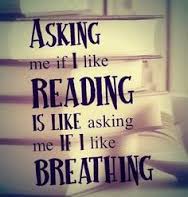
As writers we can liken this receiving function to READING. Yes, reading. You hear a lot about how we need to write daily and often, but we need to read just as much.

  “Great writers are great readers”

 -Bestselling author Jerry Jenkins

11949855142139989868cartoon_squirrel_mike_sm1.svg.med

So I did something this year to dedicate myself to reading.  I joined myself to a 100 book reading challenge hosted by author K.M. Weiland!  Excellent.

images (3)

LIVE

READ

LEARN

images (2)

READ

BREATH

WRITE

Have fun!


The Physiology of the Writer: The Bones

Still life of model skeleton in Halloween concept

THE BONES

Welcome the second edition of the Physiology of the writer.  This week we will discuss a little about the inner workings of the bones as it pertains to the writer.

One of the most essential elements of the human body, or even its functioning is the skeletal system.  Bones are living organs within every human being.  They have a host of cells that enable them to carry out their daily functions for maintaining homeostasis.  You have the osteocytes, osteoblasts, osteoclasts, not to mention a host of red blood cells within the bone marrow.  But one of the most basic functions of the skeletal system or bones, are that they provide a rigid site for muscle attachment.  Which ultimately is for movement.  And without such an arrangement of bones we would literally be a shapeless sack of flesh.

So you could logically say that without bones there would be no movement or locomotion.  There would be no shape to appreciate, or anything to hold us together.

As writers what is the most basic element of our writing?   I’m guessing it’s the OUTLINE.  The “skeleton” of our writing process.  Without it there’s no locomotion and no shape.  It would be a complete blob.  No matter how awesome the other elements would be there still would be no shape.  It’s much harder to appreciate a bag of flesh just resting on the floor.  Gross huh?  Yup.  It’s even challenging to figure out which organ is which in such a state.

So I’ve been learning one of the most important aspects of writing is the outline.  By nature or design I’m a pantser.  Meaning I’m not much of a planner.  I see one day at a time and I go after it.  But when it comes to writing, there needs to be some definite planning.  Well unless of course you are a diehard pantser.  James Patterson convinced me that the outline is one of the most critical components of the book.  Yes.  Outline.  He spends sometimes a month just on the outline!  Author K.M. Weiland sometimes spends 3 months just on the outline!

Without an outline I’m completely flying blind.  There’s no roadmap and the characters have no idea where they’re going.

But there’s something even more simplistic than the skeleton itself, and that’s the bone marrow.  In physiologic terms there’s nothing simplistic about the functioning of bone marrow.  Hematopoiesis, or blood forming, is the producing of red blood cells that are absolutely vital for survival.  Without it we die. Period.  I know because my father died of bone cancer.  He suffered several vertebral fractures, ailments, and unfortunately he passed.  Multiple Myeloma.

To me the intrinsic bone marrow represents  a basic story premise.  Which is basically a mini outline of the entire story.  Kind of like a birds eye view.

Story Premise

  • Hero or the Protagonist
  • Situation – condition of the hero at the beginning of the story
  • Objective – what does the hero desperately want?
  • Opponent or Antagonist – who opposes the hero?
  • Disaster – forces hero to respond
  • Conflict – main conflict in story

You can see more about story premise here:  Six elements of the Story Premise

I’ve been enjoying working with a basic story premise which has been awesome!  Hopefully sooner than later I’ll master outlining the novel, then structuring the novel by K.M. Weiland.  I’m also reading Plot and Structure by James Scott Bell which has been an eye opener.  Another way of outlining is a way I heard from Kylie Day.  Click here to check it out:

More resources:

7 Point Story Structure by Kylie Day.

Story Engineering with Larry Brooks

Every writer is different.  Isn’t that a beauty?  So I’m curious what’s your experience?  How do you approach writing a novel or short story?


Benjamin


The World in your Hands

New Future Technology within Palm of Your Hand

WELCOME TO THE WRITING TRAIN FOLKS! 

Get in.  It’s time for a ride.  I’m glad you could join us. 

This is a very historical moment ladies and gents, for it’s the first post of many to come.  I’m hoping to keep the ink wet with words flowing smoothly from the heart to the page.  But this blog isn’t just about me.  It’s you and I intertwined as part of the writing community.  Awesome right?  Writers are the most intriguing people on Earth.  Hands down and second to none.  That means your awesome.

Question.  What if the whole world was in your hands?  What would you do with it?  If you could feel the breadth, width of the entire earth in the grip of your palm?

As writers we may have many fears that ultimately slaughter our dreams of being successful.   Maybe it’s the grim reaper, the killer of dreams.  But okay, so let’s not blame the grim reaper for now.  How about us?  We’re our own worst critic.  Doubt.  Fear.  Dismay.  There’s seems to be an invisible tape recorder playing nonstop in the background.  And boy,  do we know that tune.  We fall for it every time.  Hook, line, and sinker.  “You’ll never make it, you’re simply not good enough.  You’ll never be a writer”.  Or I suppose it could be a fierce zombie crazed energizer bunny, running around demonizing all the would be authors.  Is that what we really fear?  Is success that scary?

Well, I’m no different than the next.  Fears abound.  But hey, let’s turn the tables on ol’ grim.  Embrace the fear, gaze sternly back in it’s fickle eye and welcome him with open arms.  In other words, it’s an opportunity to learn something.  It’s called writing.  I’m discovering that writing is largely a learning process.  A marvelous lifelong learning marathon versus an all out weekend sprint.  A craft that can be learned with training, practice, hiccups, coffee and mistakes.  Yup. Mistakes.  Lots of them.  How else can one learn anything?  I’m certain that no bestselling author hasn’t taken this road.  It’s a long rugged road.  How far will you go?  Don’t travel alone and definitely don’t quit.  It’s a long way back.  Join the train instead.

I’m all in.  How about you?


The world is in your hands, open your eyes and make it yours.  Why not give it a story?


Join the writing train by following this blog directly or by email.  Find me on twitter @thewritingtrain or on tumblr at The Writing Train.

Well, until the next time…


Benjamin