Forensic Lenses: Interview with Voracious Reader, blogger and Reviewer Candace


FORENSIC LENSES


dreamstime_s_17002112


********


Take the journey to enjoy the view -Jeffrey Benjamin


********


What is the actual experience of the reader? -Benjamin Thomas


59726f0cae791ade944735f60e444da1


Welcome back ladies and gentlemen for another edition of Forensic Lenses; an investigative and exploratory approach into minds of voracious readers. Somewhat recently I put my thinking cap on (Yes, I have one) and imagined viewing people in a different light. Not just as writers, but as readers. Reading is the fire that ignites the imagination in so many that have become authors. So we’re here trying to discover the vast wealth of the complete reader experience. Join me, as we embark on this journey.


Everybody please welcome Candace!


12417684_10153699550060751_6448342001679727683_n


Candace is a book fiend, a classic reviewer, excellent blogger, and the awesome mind behind Literary Dust.  You can find her on Twitter at @literarydust, on Facebook Literary Dust: A Bookish World, and on Instagram at Literarydust.


I’m so glad I had opportunity to connect with Candace, because she is an avid reader who consumes books by the minute. I wish I could read as fast as she does. Or perhaps, a second set of eyes could be helpful. Or it could prove to be more troublesome! Hah!


11971032031656278230ted_Eyes_Crossed.svg.med


*You’re a blogger, book reviewer and a reader.  Are you also a writer or artist?

Well I try to write, but haven’t gotten far enough where I could be called a writer. Hopefully one day I will finish a book. I also used to be really into photography, but I don’t have much time for that.  As for any other art form? I can’t draw a stick figure to save my life.

Hey, if you writing you’re a writer. There’s no set of rules to dictate the designation. You’re a writer when you call yourself one. This kind of struggle is fairly common actually. Myself included. It took me several months to call myself a writer. Try it, its fun!


*What did you study in school? 

I studied to be a teacher, but I didn’t finish that.

Never too late I suppose. You don’t necessarily need school to be a positive role model in someone’s life though.


*I saw that you are obsessed with books. What is it about books that you love?

I love the escape, and the opportunity to be in someone else’s mind for a moment. The fact that you can go almost anywhere whether it is a fictional world that is beautiful or dark without the worry of something dreadful actually happening to you yet getting to experience something incredible.


Candace, I utterly enjoy the escapism too. The last six years have been a complete nightmare. I plunged deep into depression without a way out. Just this morning while listening to an audiobook on the way to work was therapeutic. I take great pleasure being in someone else’s skin for a while. You know, there’s a lot of benefits to audiobooks that you don’t get by reading. The subtle intonation of voice, minor dramatic effects, and the different dialects of characters make a BIG difference. Actually I laughed pretty hard a few times because the way something was said. 


*What is your current occupation? 

I actually stay at home.  I suffer from hemiplegic migraines.

More time to read books!  Sometimes all I want to do is read and write. Put the world and everything in it on pause. 


Pause


Time to read…


*What were your favorite childhood books and why?


Strega Nona, Where the Wild Things Are, and The Giving Tree. I loved these books because they have meaning within them, and I feel they teach life lessons inside of their short pages, and the pictures inside are memorable and have stayed with me.


Those are the best. The stories that teach you something with theme and rich significance. You can’t beat it.


*You mentioned how you like to be in someone else’s mind when reading. Name your all time favorite characters and how you most relate to them.


I was always into reading when I was younger, but when I was in high school I read 1984, and that book opened a whole new world for me. Being in Winston’s head was interesting, and the whole thing was just intense.  I feel like if I were in that situation with the whole “Big Brother” type situation I would want to break the rules too.

Nice. It’s stunning, how one character can open up “worlds” for us when we read them on the page. Amazing.


*Name your top five fictional worlds


1. A Court of Thorns and Roses by: Sarah J. Maas 

2. The Covenant series by: Jennifer L. Armentrout 

3. The Hunger Games by: Suzanne Collins

4. Angelfall by: Susan Ee

5. Shatter Me by: Tahereh Mafi


Don’t hate me, but I actually haven’t read any of these authors yet. I always enjoy seeing what others favs are though. Thanks for sharing. 


*If you had a one way ticket  to one of them, which would it be?

Most of these worlds would actually be pretty scary to live in, but I am going to go with A Court of Thorns and Roses because in Rhysand’s world I could spend an eternity.


Sounds intriguing!


da9c35ba619d68676e1e535f5c66f7af


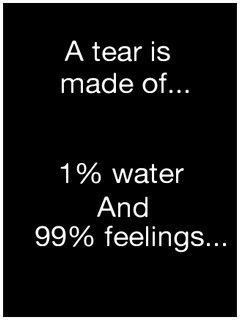
*Have you ever cried while reading? If so, why, and state what you were feeling at the moment.

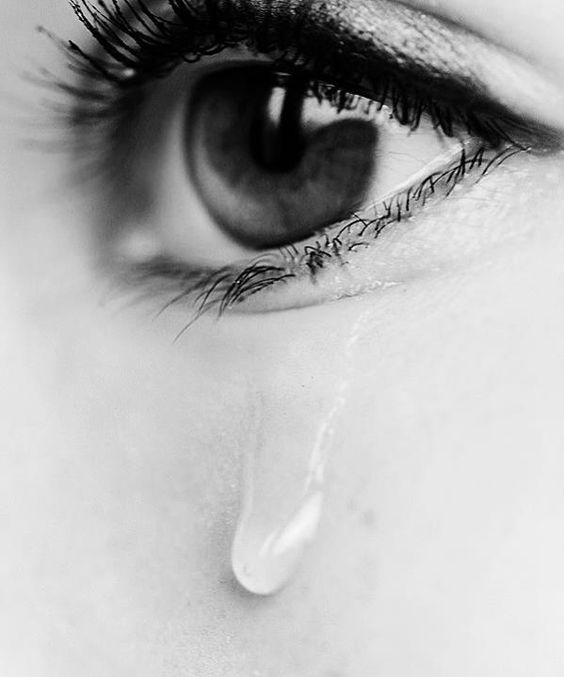
I have cried while reading, but I don’t get hysterical.  It is mainly just tears sliding down my face, but it has been when characters I really have grown to love die, and it feels like a piece of your soul has been torn away.  It is weird how you can feel for these characters that aren’t even real, yet they feel so three dimensional.


This is the most amazing experience, when an author can make me cry. There’s only two books where I’ve almost cried, only because I was holding back. *he he he*   😉


66457ccbf38f28e9a75780ad67abe013


It’s good to cry, let those feelings out. 


You know in some countries if you burp that means the meal was good. Well, if and when there’s a tear streaking down your face, hats off to the author. 


9e7098a3c214b108bcb6536911667905


*Name your favorite YA books and what you love about them. 

The Shatter Me series by Tahereh Mafi, The Under the Never Sky series by: Veronica Rossi, The Precious Stone Trilogy by: Kerstin Gier, Throne of Glass and A Court of Thorns and Roses by: Sarah J. Maas, Six of Crows by Leigh Bardugo, The Falling Kingdoms series by: Morgan Rhodes, and The Blood of Eden series by: Julie Kagawa, and I could keep going on for a while. I love these mainly because most of them are just a whole different world, and these characters just all do things that normal people just don’t do, and I love that.

I can almost see your enjoyment here. Great!


AT THE SCENE OF THE CRIME….


*Name your top 5-10 pet peeves you hate when reading a book. 

1. Too much self loathing

2. When characters say someone “Let out a breath they didn’t know they were holding”. How is that possible?

3. If characters have kissing scene etc. and get interrupted too many times. Does that happen in real life?

4. Way too many point of views.

5. Names I can’t pronounce. Unless the author provides a page on how to sound out the names.


1194984609285255522police_man_ganson.svg.med


Hold it right there, pal…


*What other genres do you read?

Fantasy, Paranormal, New Adult contemporary. I can’t do a lot of the “People with real problems” type books.

I hear you. Guess that could be rather depressing.


*What do you think of the current 5 star system for book reviews?

It is okay, but I know the 3 star area is different to some people. Some people say 3 stars is still a good book while others have 3 stars as thinking it wasn’t great, so it is all opinion pretty much.

I’ve heard the same thing. It think it serves a certain purpose while failing in others. Doesn’t capture the complete reader experience in my opinion. But eh, what do I know?


*When you rate a book, do you have specific criteria? Or does it depend on your subjective feeling?

If I am left really thinking about the book I give it a 5. I don’t really give books a 1 because those are ones that I wasn’t able to finish, but I feel bad about rating a book I don’t finish, so I just don’t rate it at all.

Same here. If I didn’t finish a book I wouldn’t be able to properly assess it.


*In your opinion, who are the top authors of the century and why?
Wow okay sorry to disappoint, but I don’t have something like Shakespeare or Poe. At the moment it has to be Sarah J. Maas. Her series are just so addicting and always has me yearning for the next book.
You just elicted the WOW factor!
Wow Surprised Word Astonished Surprising
Give credit to Sarah J. Maas
*Over the course of your life, how has reading affected you?
It has opened doors to all sorts of places where I now have an open mind and can see from others perspectives even if I don’t agree with their actions. I feel that that has helped me be a better person and can empathize with people in real life and understand the choices that some people make even if they are not the same choices I would choose. Everyone is different, and if we were all the same and thought the same then what a boring world this place would be.


Awesome! I read somewhere that reading literally changes your brain and how you think. Empathy was one thing the article mentioned. That’s so cool!


Thanks for joining us Candace!


cb73e69def62054242816e76f5aa2a72


********


~Books fall open, you fall in. -David McCord


********


“I was born with a reading list I will never finish.” -Maud Casey


********


Never take for granted what you read -Benjamin Thomas


Benjamin Thomas

@thewritingtrain

http://www.thewritingtrain.com

Watch “Writing and Publishing: Facebook Live Q&A Replay 3 July 2016 with Joanna Penn” on YouTube


WELCOME TO TUESDAY TELEVISION


Bringing you the best video for your writing journey. 

Tune in to the talented entrepreneur Joanna Penn during her Facebook live Q & A session. 


tv-md


Here it is!

l


So what did you learn? Tell me in the comments!


Benjamin Thomas

@thewritingtrain

Watch “Plot Your Fiction Novel by Using Depth, Drama and Heart with Roz Morris” on YouTube


1197099192237286365ampeddesign_lcd_screen.svg_.med_.png


WELCOME TO TUESDAY TELEVISION 


~Bringing you the best video for your writing journey~

Don’t miss this video with the talented Roz Morris & Lorna Faith


What did you learn? Tell me in the comments!


Interview: Reading habits and the Classics with Bestselling Author KM Weiland


WELCOME

TO THE

WRITING TRAIN


Composite image of close up of female blue eye


When you read a book, what do your eyes see? What do they perceive?


Writers extend to virtually every corner of the earth; east, west, south, north and arguably are the most fascinating people on the planet. Well if you ask me, they are the most fascinating people on the planet. It’s no great secret that I take great joy in interviewing them. To discover and share in their craft, learn how they tick, or don’t. Fascinating indeed.

I had a crazy thought of interviewing writers from a completely different perspective. Most writers began their journey as readers so why not get a view into this experience?  So here it is, the Forensic Lenses series. An investigative and exploratory approach into the minds of your favorite authors.


FORENSIC LENSES

SERIES


c102e876cfbd83a2f887bb4039e2eeb0


Do you–follow the reader?

I do…

Her name is KM Weiland.


MainAvatar2


Welcome Kate!


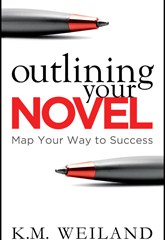
K.M. Weiland is an award-winning, butt-kicking, internationally published author of the bestselling Outlining Your Novel and Structuring Your Novel books. She writes speculative and historical fiction from imaginary lands. Her blog  helpingwritersbecomeauthors.com is regularly ranked in Writer’s Digest top 101 Best Websites For Writers every year, but is #1 in my book. She puts up with writers like me who don’t know grammar yet. Way to go Kate!


In the history of the blogosphere, there has never been such a defining moment until today. As a token of our appreciation we bestow upon you, KM Weiland, the ever noble…


Seal of Awesomeness


Awesome Gold Vintage Label


Wear it with dignity and honor.

*applause, standing ovation*


Alright, so let’s cut to the chase.

Was reading Scottish Chiefs by Jane Porter, the inciting Incident in your path of becoming a writer? You mentioned how this sparked your love of history, laid the groundwork for your book A man called Outlaw, influenced your novel Behold the Dawn and not to mention your desire to write historical fiction.


That’s an interesting way to look at it. The Scottish Chiefs was definitely a formative fiction experience for me as a child. But I think it was more of a “feeding” of my love for stories, than it was an inspiration to actually start writing. I didn’t start writing until several years later and certainly not with any intent to actually *be* a writer. I actually really like that I kind of slipped sideways into writing. It was never an ambition. It was more just an out-breathing of myself.


But Scottish Chiefs definitely influenced me, on at least a subconscious level, in regards to *what* I would end up writing: medieval-esque epic and heroic tales–what I call “blood and thunder” stories.

Never was my ambition either. Funny how that works huh? So it was more of a feeding your love for stories, great! How reading affects us on a subconscious level and fuels our imaginations is quite a mystery. Perhaps we should we call it, Fuelination? Whatever the term, early reading habits in children serve as the impetus for authorship later in life. Then all it takes is a small spark of inspiration to ignite the flame. BOOM. The passionate flame has been lit, begetting another writer. A particular breed of humanity.

petrol pump nozzle hold by hand with gasoline


How has your reading experience and love for stories evolved from childhood, teenage, to adulthood?


I have always loved stories. They have always been my language. But I was a very undisciplined reader as a child and teenager. My parents weren’t readers themselves and weren’t able to guide my reading choices. I read and loved and re-read (and re-read and re-read) a few classics like Little Women, Anne of Green Gables, The Black Stallion. But I also read a lot of highly forgettable children’s novels–and probably every book in the Star Wars Extended Universe that had been published to that point. It wasn’t until I was in my late teens that I started discovering better quality fiction and disciplining myself to read widely and broadly–especially in the classics. It’s my goal to read all the classics before I die. I’m working my way through the authors alphabetically. So far, I’m up to M.


I find it interesting, even though your family wasn’t a reading family, you still became a voracious reader and ultimately a writer. I’m wondering if you got your books from the library or bought them on allowance. It sounds like your learned that discipline through reading experience on your own. Versus someone telling you this is good, or that is bad. You had to cultivate it yourself. Which I think had a big role in making you who you are today. You’re probably more keen because of it. 

Woman reading inside a huge book
Reading the classics
How has being a writer affected your reading? Is it a killjoy because you have more of a critical eye? Or does it yield more appreciation for the story? Take us into your realm as a reader.


Most of my childhood reading was from the library. My grandparents and aunts bought me a lot of books as well. I tended to reread the books I owned a lot–hence the multiple visits to Anne of Green Gables and Co. As for writing affecting my reading… You hear a lot about authors who find that their own awareness of the principles of writing turns them into hypercritical readers and robs them of the joy of reading. But I’ve never really experienced that. Maybe because I’ve always been hypercritical! :p For me, writing has only enhanced my reading. Instead of *just* reading for pleasure, now I also read with a writer’s eye and get to explore and enjoy the psychology and craft of every new author’s work. It brings a whole new dimension to my appreciation of a good book.


I really appreciate this. Having a writer’s eye, exploring and enjoying the craft are all pluses!


11971017688323435Chrisdesign_green_comic_egg.svg.med


AT THE SCENE OF THE CRIME…

As a reader what are your 3-5 pet peeves and why?


  1. Flat narrative voices that “tell” instead of “show.”
  2. Self-indulgent authors, who are obviously too in love with their own story worlds and characters to be objective about the reader experience.
  3. Unnecessary prologues
  4. Repetitious dialogue
  5. Overuse of character names when addressing each other in dialogue


It’s good to be aware of these. Thanks!


detective-md


I’ve often heard you say you must read all the Classics before you die. It must be high on the bucket list!  So why this journey through the Classics and what impressions do you have?


For the purposes of challenging myself to read all the classics, I define a classic as any book published before 1966 with a title or author I recognize. I started the challenge really just as a way to get myself to read the important literature landmarks from history. It’s been an interesting journey–tedious at times, but, overall, definitely worth the effort. I feel like I’ve vastly broadened myself and my understanding of people, the world, and writing. It’s made me read books by authors I never would have touched otherwise–from so many time periods and countries and about so many different topics. I estimate I’m about halfway done (I’ve just reached the “M” authors). I’ve found it incredibly rewarding.


I’m looking forward to your response when you’re finished as well. I’ve been thinking a lot about the most influential authors of the century. How they left their footprint upon society and the craft of writing. 


footprint-md


Every great writer has left their footprints in the craft. We gladly follow in their footsteps. But as we do, we don’t realize we begin to make our own.

~Benjamin Thomas


BONUS:  Your mission should you choose to except it, would be to note the changes in the craft while reading the Classics.


The primary facets of good storytelling have remained the same over time: structure, character, and theme. I would cite two things in particular as the biggest changes over the years:


1) The visual style. Television, the movies, and the Internet have made the far corners of the world accessible to everyone. As a result, complex descriptions of foreign places and things are no longer necessary. Writers today need only a few vivid details to bring a scene to life for readers, who can then fill in the blanks for themselves. At the same time, however, due to the overwhelmingly visual nature of entertainment these days, authors also have to be much more evocative in their descriptions. Readers want to see a “movie” in their heads, which is why “showing” (instead of “telling”) has become such a touted technique.


2) The pacing is much tighter and faster these days, for the most part. Again, the culture in which we now live is faster-paced and more than a little distracted. Readers today aren’t as patient with long, flowing passages. They want to get to the point.


Excellent! Thanks so much for sharing.


Thanks KATE!


*Please see KM Weiland‘s Amazon author page and her award winning books!

*For further contact visit kmweiland.com and her award winning blog at helpingwritersbecomeauthors.com or on Twitter @KMWeiland

*Join the 2016 Reading book challenge on Goodreads


uIYTjkcb


 Storming: A Dieselpunk Adventure Novel  One of my favorite reads of 2016!


*********


Dreamlander-NIEA-Finalist-165


Dreamlander  Read the BRAG Medallion winner and NIEA finalist!

*********


outlining-165

Outlining Your Novel: Map Your Way to Success  Don’t miss this award-winning beauty! One of  personal favorites.


*********


634e06ab49dec1956f52b6fed379f344

Structuring Your Novel: Essential Keys for Writing an Outstanding Story

An award winning blockbuster and must have writing book! One of  personal favorites.


Today a READER, 

tomorrow a LEADER.

-Margaret Fuller


1202568285fe4f0f0c5a61730153df99

Never underestimate the power of a good book

~Benjamin Thomas


Benjamin Thomas

@thewritingtrain

http://www.thewritingtrain.com

Interview: with Author Melanie Marttila


Story of the Writer


Everyone please welcome Melanie Marttila 


MelNov2015


Melanie is a science fiction & fantasy novelist-in-progress, a published poet and short story writer and all around awesome person. I first met Melanie through our awesome Facebook group entitled: THE WORDPLAYERS. Sounds cool huh? Because it is!


WELCOME ABOARD


Are you originally from Canada?

Well, this is an interesting story (but I may be biased). I was born right here, in Sudbury, Ontario, and when I was about a year and a half, my grandparents built themselves a new house. My parents decided to buy my grandparents’ old house, where my dad had grown up.

It gets better.

After I spent a few years away at university, I returned to Sudbury, married, and, once we both had stable employment, my husband and I bought the house from my parents 🙂

The land on which both houses stand was part of a farm that my grandfather had bought, back in the day, and to finance the building of their new house (which my parents eventually moved into after my grandparents passed) they sold off some of the land to the city.

So I live in the house in which three generations of Marttilas have lived, on the street that bears my family name. Beside my mom. My writing room was my bedroom growing up. How cool is that?

I mean, some people might think it’s BORING, but, you know. Cool. *smiles*


I keep meeting great writers from Canada, it’s wonderful! I seriously need to go there one day. Look out Canada!


11949843491094783413canada_umbrella_ganson.svg.med


What’s it like?

Sudbury is a mining town in what most people consider northern Ontario. If you look at a map, we’re actually smack in the middle, about an hour and a half drive from Manitoulin Island in Georgian Bay, which is part of Lake Huron.

We’re the site of an ancient meteor impact, which is where all the stuff mined here came from and why Sudbury is called the nickel capitol.

Sudbury is also on pre-Cambrian shield, ancient mountains that have been ground down by glaciers. We have a chunk of it in our basement 🙂

When I was a kid, open pit smelting had blackened the rock and consumed most of the trees as fuel. In the 60’s, NASA came up here because the landscape, at the time, was very much what they expected to find on the moon . . .

The International Nickel Company (INCO) built the stack (to divert the sulfurous smog produced by smelting the nickel), changed their refining processes, and started to recover the landscape that had been ravaged by their previous practices. Now, we’re lovely and green again—in the summer, anyway. Winters here are pretty hellish.

Having said all that, my family was never involved in mining. Sudbury is the kind of place that gets into your blood, though. That’s why I came back and have made my life here, despite the winters.

Our area of Ontario is dotted with lakes that have formed in depressions in the pre-Cambrian shield. Outside the city, it’s considered prime cottage country.


Sounds like a memorable and scenic place. 


How long have you been writing?

Egad. Since I was seven years old.


11954223871731788173johnny_automatic_girl_playing_soccer.svg.med


Wowsers!  I have a seven year boy right now. Writing is not his strong suit, its reading. But it’s amazing you were able to begin writing stories at such a young age. 


What was your career path?

I worked in retail from the age of thirteen through high school, had some interesting jobs in university—canine security patrol and video camera person and editor for a company that filmed show jumping and dressage shows across Canada and down into New York—and after graduation, I had an unreliable series of contracts in libraries and academia. My sister-in-law made me aware of an opportunity with her employer, and now I’ve been working with that same employer for fifteen years.

I’m currently in L&D, learning and development. Call me a corporate trainer. I’m a certified trainer (and certifiable, some would argue), but still working toward the goal of being able to leave my day job for my true passion, writing.

That’s an interesting mix of jobs there. I love how it always comes back to writing in the end. 


job-application-md


I find everyone’s story so fascinating. Normally it starts early in childhood, then comes back full circle with a full blown passion of writing. 

AMAZING.


*******

*******


“The journey, not the arrival matters.”

~Michel de Motaigne


*******

*******


What did you study in college?


1194983755665086384carnegie_library_building_01.svg.med


BA in English Literature, rhetoric emphasis, cum laude, thankyouverymuch 😉 MA in English Literature and Creative Writing.

Ouch, that sounds difficult. But it does make me very curious. I’ve only had one creative writing class in college. Got an A. Makes me feel smart. 


 You’re a writer; so what’s your story, or what inspired you?

I was in grade three. I’d just gotten a puppy and wrote what might be called a “personal essay” about her. So I was already writing. I just hadn’t really caught the bug. Yet.

Then . . . IT happened. The students of the grade five class wrote and illustrated their own storybooks and were invited to present them to us.

One of the grade five students, a girl named Siobhan Riddell (isn’t that a lovely name?) did her own version of St. George and the Dragon. I didn’t even remember the rest of the stories. I wanted to take Siobhan’s home with me and read it and look at the pictures, over and over.

The thing you should know about Siobhan is that she was an awesome artist, even then. She grew up to become a professional artist and then, that bastard cancer took her from the world 😦

But that was the moment. I made my first submission—to CBC’s Pencil Box, a show that dramatized the stories of their young viewers—that year. I wrote the Christmas play for my class the next year.

And I’ve been in love with words ever since.


That’s such a lovely story! I often wonder what it is that ignites in some children to become writers and not others.  I suppose some just “catch the bug”. Love that expression.


A luz do outro lado da ponte


What’s your GOAL in becoming a writer?

To write. Pure and simple. Writing is (almost) everything to me. It’s my spiritual practice; my counsellor; my companion, and my comfort. I feel off when I can’t write for whatever reason. I have said that I’m going to write until age and infirmity—it’s going to take both of them because I’m not going down without a fight—rob me of the capacity.

My self-worth isn’t pinned to getting published, but I can’t see how I can justify quitting my day job unless I can make a decent living from my words. So, I’m doing the work to make that happen.

So far, I’ve had three sales of science fiction short stories, a handful of wins in local writing contests, and a bunch of poetry published in anthologies.

2015 was a year of near misses, long lists, short lists, second readings, and the like. And lots of rejections. I’m also querying an epic fantasy novel, without success. I like to reframe rejections: I’m one ‘no’ closer to ‘yes!’

I’m focused mostly on writing novels now, though, and most of those are fantasy of various shades.

YES. I love your attitude here. “one step closer to yes” is a great way to look at it. I can’t wait to see what you come up with. We wouldn’t mind seeing more of your poetic muscle too. 


What 3 things have hindered you from completing your projects? (CONFLICT)

I generally finish what I start. I’m diligent (and a bit compulsive) that way.

The three things that keep me from writing as much, or as quickly, as I’d like are:

The day job. It allows me to invest in my writing (conferences, courses, etc.) but—man—would I love to spend my days doing the thing I love.

Actually, it’s just the one thing (oopsie). *grins*


I like that you are DILIGENT. It’s an indispensable character trait necessary for every writer. Without it our stories go nowhere. Our characters go nowhere. Our careers go nowhere. Splendid. You don’t suppose you could lend me some of yours do you? Got an extra gallon or so lying around?


DeskatStandingHeight


Here’s a picture of Melanie’s desk


What keeps you motivated in achieving your dream? (DESIRE)

The writing itself. It is truly a way of life for me. I wouldn’t give it up for anything.

As one of my characters says, I want to be a part of the great voice that carries this age into the future.

Now that’s not arrogant at all, is it? 😛


Not at all. You are very clearly a writer to me. I love your laser-beam-like focus on writing.


What’s your ANTAGONIST? What’s in the way?

Um. Yeah. Day job.

Ah yes, the dreaded day job. The more I dive into the writing realm the less I like my day job. All I want to do is read and write. I’m not sure how that happened, but there it is.  


11954252651296126621johnny_automatic_tough_guy.svg.med


Day Job: I hate you.

You:  I hate you too.

Day Job: I wish you’d quit and go write somewhere.

You: I will, you just wait…


If you have given up your dream, why? 

I’ve never given up. The dream has lain dormant for periods of time (sometimes years), but even when I wasn’t writing, I was thinking about writing, journaling, daydreaming, and doing other creative stuff (sketching, gardening, cross stitch–yeah, that’s what I thought at first, too–and I was even in a musical for a local theatre company).

I discovered Joseph Campbell in my undergraduate years and I’ve really come to understand my creative journey in terms of the Hero’s Journey. It hasn’t been a straight line, or even a circle, as the Hero’s Journey is often presented.

It’s been more of a spiral, kind of like the end of C.S. Lewis’s The Last Battle, where the Pevensies, Scrubb, Pole, and the rest run through Narnia after Narnia, in Escher-esque fashion, Aslan urging them, “Further on! Further in!” until they reach their final destination.

My journey has been defined by my threshold guardians. The play I wrote in grade four? The teacher edited my work substantially without telling me or explaining why the changes were necessary. Even at that point, I knew it was wrong, and it seeded a deep distrust of authority.

In grade five, a former friend appeared to offer an olive branch, bury the hatchet, what have you, but only did so long enough to gain my trust and ask to ready my stories . . . to which she took an entire bottle of white out, returning my exercise book of obliterated words only when the teacher made her stop.

The big threshold guardian was my first advisor in my MA program, an icon of Canadian Literature. He questioned my presence in the program and accused me of “wasting his time.” That was the wound that wouldn’t heal, even after I returned to work with a different advisor and finish the collection of short stories that became my creative thesis.

After that, I internalized the lessons of my threshold guardians over the years and my internal editor became monstrous. It’s one thing when other people tear you or your work down, but when you start to tear yourself apart . . .

It wasn’t until another icon of Canadian Literature shared his own trials with threshold guardians that I found my way back to the page.

I’m happy to say I haven’t left it since.


Wow that’s a very touching story with devastating experiences along the way. But what I’m really seeing and enjoying, is your resilience through it all. 


Why do writers give up, quit or never complete their projects?

Fear.

The new writer is afraid to look silly or expose their relative level of craft to the scrutiny of others.

The experienced, but unpublished, or minimally published, writer is afraid that they can’t be as good as other publish authors, or that their stories have no value.

Even published writers fear that they can’t write another novel as good as their last.

You have to learn to put fear in its place, make it your friend, listen to the legitimate lessons it has to teach you, and then agree to disagree on the rest.

That’s the hard part.


Well said. Seems like fear must teach us many lessons along our journey. To step out there and expose ourselves to the world. For better or for worse. With this in mind, I found a Superhero guy to help us out a little. I call him….CAPTAIN NO FEAR.


12570917801864669806kablam_Super_Hero_-_Flame.svg.med

  Captain No Fear


Behold some of Melanie’s poetic muscle below.


A Poet’s Apprentice


learning the words;

noun and adjective,

verb and adverb.

Putting them together

in little sentences—

she won’t let me play

with the big ones yet—

But she’s left me alone

just for a minute

with this big cauldron

teeming with

letters

and other viscera.

Before she returns

I grab the ladle

and gulp,

burning my mouth

with the potent brew.

Then I run

me and my belly full of words,

out the Dutch-door,

through the muddied fields

of hay stubble,

to the tree with leaves of paper,

draw forth the quill–

stolen from a feather duster–

prick my thumb

for ink.

Then.

I write.

Lovely!  That’s great!  UGH I miss poetry so much. I haven’t written very much lately. You’ll have to come back and grace us with your poetic words. 


neoverse


*Tell us about your short stories

In “The Broken Places,” a doctor on board a generation ship headed for another galaxy tries to diagnose a strange plague affecting the ship’s crew/citizens. What she discovers in trying to find a cure for the blue skin, void-like eyes, and verbal non-sequiturs is something she never suspected, but if she doesn’t stop the condition from progressing, the crew, and their mission, are in jeopardy. That one was published in Bastion Science Fiction Magazine in June 2014.

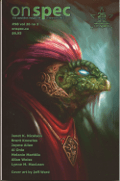
“Downtime” is the story of Opus, an AI-borg who achieves sentience, and liberation from her creators, as she learns what it means to be human, and that she’ll never be one. The good people of On Spec Magazine, one of Canada’s most respected speculative fiction markets, published that in their Fall 2014 issue.


Something tells me one day you’re going to hit one out of the ball park. 


OnSpecFall2014sm


*what has writing taught you over the years?

What has writing taught me? Who I am. That quote by Flannery O’Connor, “I write because I don’t know what I think until I read what I say,” is very true. The more I write, the better, the more authentic, a person I become. The rest is between me and the page 😉


Oh yes! I love that quote. I’m finding it to be very true in my own experience. Writing things out is a very tranquil experience. There’s no like it. 


THANK YOU MELANIE

THIS WAS A TRULY ENJOYABLE INTERVIEW


*******


Keep writing 

until the pen

runs dry

~Benjamin Thomas


Benjamin Thomas

@thewritingtrain

http://www.thewritingtrain.com


Interview: A Window Seat with Publishing expert Jane Friedman


Welcome back to the Writing Train


Have you ever had to go out of your way to get a window seat? Whether it be on a bus, train, car, or an airplane? Well if you did, there were definite benefits to the journey. So why do adults and children alike fight for the ever-sacred window seat? It’s not about the window itself, but the view that comes with it. The scenery and vista are the grand prize! Something well worth fighting for, so here it is.


Today we have a “window seat” experience  with a very special person among both the publishing and writing community. Someone who hardly requires an introduction; who is widely respected for her knowledge, experience, generosity and expertise in multiple areas.


EVERYONE PLEASE WELCOME JANE FRIEDMAN

.


car of train of long-distance message


People are multi-faceted creatures with many sides that we may or may not be aware of. In the process this interview, I was ecstatic to see various sides of Jane I hadn’t seen before. Splendid indeed!


LET US BEGIN


Hi Jane!


Jane-Friedman-1


Here’s a little more about Jane, which is just the tip of the iceberg. If you’d like the full iceberg experience please visit her about page on her  blog. Her resume could very easily saturate an entire blog post.


  • A Writer and Professor who has 20 years of experience in the publishing industry and specializes in digital media strategy for authors and publishers.
  • Former Editorial director and publisher of Writer’s Digest.
  • Teaches digital media and publishing at the University of Virginia
  • Columnist for Publishers Weekly.
  • Educates authors about the publishing industry


So just in summary: 


~Jane is the ultimate Jedi Master~


toucan-jedi-master-md


If you’re looking to publish anything anytime soon, take heed you of little faith, to the work of Jane. 


  1. Visit her site Janefriedman.com or Jane’s blog.
  2. @JaneFriedman or @HotSheetPub  on Twitter
  3. How to Publish Your Book, by The Great Courses (Video, audio, DVD, and CD formats available). 24 Scrumptious lectures!
  4. The Hot Sheet a biweekly email newsletter and essential publishing news for traditionally and self-published authors.
  5.  Online Classes
  6.  Books
  7.  Resources for Writers
  8.  Speaking in upcoming workshops and keynotes.
  9.  Facebook
  10.  Youtube


Here’s a great book to get started with…


Pub101-cover


Don’t miss Publishing 101!


A Window Seat….


I’ve heard of some famous Friedmans in Cincinnati and beyond, are you related to them?

I wish I knew, but probably not.


Fair enough.


You write poetry! Do you still write poetry? I was so elated to see “Jane’s Embarrassing College Poetry” on Amazon. I think we largely know you in the publishing realm, but not so much as a writer, or even a reader.


I haven’t written poetry since I left graduate school in the early 2000s—I became consumed with my career in the publishing industry.


Now that I’m my own boss, and my business is doing well, I have a chance to steal back some personal time. So what do I write? I don’t know. Staying busy with my career (perhaps a “shadow career” to use a term from Steven Pressfield) has been an excellent way to avoid confronting the most fearful step of all—seriously devoting myself to my own writing.


Jane writes poetry! YES. I almost fell out of my chair when I saw your poetry book on Amazon. I’ve included the first poem for proof.  


LYING IN BED

The little things that keep us up at night-

a drip drip coming from the kitchen sink;

the entrancing  glow of the streets and soft moonlight;

the heater rattling on, clink by clink.

Two thrown-off sheets and sweat above my lip, 

the windows open, breezes blowing in.

Both hands and fingers grasping the air,no grip, 

but shadows touch the walls, acting the twin. 

The curse of overactive minds I know,

for the art of sleeping well is lost on me, 

when I remember your leaving years ago

and sleep away from where I thought I’d be. 

Then you laugh someplace and mention my small name.

I wake to hear you; nothing is the same.

~Jane Friedman


******* 

*Poetry is just the evidence of life. If your life is burning well, poetry is just the ash. -Leonard Cohen


book

I read somewhere where you said, “I probably read more than anyone on the planet”…and I wanted to get a window into your THAT experience. I’m assuming this is academic reading. Can you bring us into this experience, and what exactly you’re looking for?


I think what you’re remembering is a line from Publishing 101, where I discuss having read more writing advice than anyone else on the planet. That’s a result of working for Writer’s Digest, the No. 1 publisher of writing advice books in the world. We released several dozen books every year while I worked there—in addition to the monthly magazine—and not only did I read the majority of what we published, but I had to keep up on the competing books as well.


These days, most of my reading is related to the business of the publishing industry and the evolution and future of the media. I have moments of existential angst where I ask myself, “Did I really choose this? How did I end up here?” But I don’t think the answer matters; it’s where I am, and there’s satisfaction in the mastery I’ve attained. However, it does matter what I do next: is this an obsession I want to keep feeding?

In recent years I’ve become interested in reading histories. Maybe reading too many trend pieces and hot takes has resulted in a desire for a deeper understanding of cyclical change and behavioral patterns. I want to get beyond either/or, reductionist thinking and instead investigate better questions to ask and how certain frameworks affect the questions and answers we come up with. Unfortunately, nuanced thinking isn’t known to drive traffic or buzz.


Epic indeed. I enjoyed what you said about the “evolution and future of the media” as it relates the business of publishing. Definitely a hot topic!


flame_color

The Hot Flame of Publishing

What kind of books do you read for pleasure?

Almost always nonfiction. One of my recent favorite reads was What Technology Wants by Kevin Kelly. I’m currently working through From Dawn to Decadence by Jacques Barzun and will soon finish Status Anxietyby Alain de Botton.  I’m looking forward to reading Virginia Heffernan’s newest book on the internet. To fall asleep I read Wikipedia entries on my phone.


I’m also a devoted subscriber to The New Yorker; that’s my coffee-and-toast reading in the morning. I haven’t missed an issue since 1998.


Nice. I hear you–Can’t miss that coffee time. The apocalypse can wait…Give me my coffee first. I’m all over the place with reading habits, but reading a lot about personality traits. I saw that you’re INFP! Woo-hoo! I’m ENFP, so we’re in the same neighborhood. 


Who are your favorite authors and why?

I don’t really have favorite authors, but if I had to choose one, Alain de Botton. Reading his books are like eating a nutritious doughnut.


 Nutritious doughnuts, now that’s something they could genetically modify. Haven’t heard of Alain de Botton, I’ll have to check him out.


Here’s my one publishing question based on the most recent Hot Sheet [http://hotsheetpub.com] newsletter. Can you briefly touch on the deeper market factors affecting the income of writers today? (See excerpt below)

“Publishers share the frustration of the author community that it is increasingly difficult for authors to make a decent living from their writing. However, we locate the principal source of this problem not in the contractual relations between publisher and author but in deeper market factors. With margins being squeezed across the whole supply chain, books facing increasing stiff competition from other media and entertainment sectors for consumers’ time, and there simply being more writers … the reasons for the decline in average author income are wide and varied.”

Well, here’s the thing—my partner on The Hot Sheet wrote this particular item, and while you can find evidence to support this view, I don’t buy into the popular myth that it’s increasingly difficult for authors to make a decent living from their writing. It has always been difficult.


That said, perhaps one of the best times to be a writer was during the 19th century. Literacy dramatically increased, and the number of magazines exploded, in addition to the number of books published annually. But despite it being something of a golden age, one author complained to a US congressional committee that he did not know any author who made a living by writing literary work. He said that of all the learned professions, “Literature is the most poorly paid.” The truth is that many writers’ careers are gifted into existence by their birth, by privilege, by marriage.


Authors sometimes lay the blame for their economic situation on the publisher, and it has always been thus. Going back to ancient Rome, authors have been accusing their publishers of greed. But such accusations almost always betray ignorance about how the industry works.

In the digital era, it’s becoming more common to lay the blame for authors’ suffering on the tech companies, such as Google. The Authors Guild in particular has expended all kinds of resource on trying to argue before the US courts that Google essentially steals money out of the pockets of authors and publishers. There’s an oft-repeated and oft-misunderstood saying that “information wants to be free,” which the Authors Guild says creates a sense of entitlement among readers, or that it creates an expectation that writers shouldn’t be paid. I don’t think this is true at all. However, what’s valuable to us, or what is worth paying for, has changed. Analyst Ben Thompson explains the value shift very well in his post about the the Smiling Curve [https://stratechery.com/2014/publishers-smiling-curve/]. Clay Shirky too has written at length about how publishing has been turned into a “button”—publishing is the new literacy, meaning that anyone can publish, it doesn’t require professional experience any longer. We live in an era of universal authorship where everyone has the ability for self-expression and distribution of that expression. Not all of that expression will be high quality (a lot of it will be crap), but I don’t place a value judgment on that; it’s a fact of digital life and we can’t go back to some previous era. And if you could go back to a previous era, you would simply find the same complaints in the culture: that too much crap is being published. It dates back to Gutenberg, these “problems” we have with both quality and quantity of material being published.


Authors can make a decent living from their writing if they’re willing to pay attention to how the business works, figure out a business model that works for them, and adapt as needed. Too many authors and authors’ organizations want to preserve a system that doesn’t work with new forms of publishing, distribution, and media.


This is great info. I think I’ll start calling you Jedi Jane.  


Your Twitter profile has the following statement: “A writer who believes art and business can happily co-exist.” Can you give us a little marriage counseling, those of us who are not looking forward to this union?

Another one of the harmful assumptions of “serious” writers is that art and business are antithetical to one another. This belief is so ingrained that no one questions it any longer. Before writers even have a single word published—before they’ve encountered any aspect of the business of their art—they presume that they are bad at business or that business concerns will pollute their efforts. There’s absolutely no openness to the possibility that the business side can be just as imaginative and interesting as the artistic process itself. And of course businesses excel when they employ people who have kept their artistic side alive, who can bring imagination and innovation to their work.

To be sure, business can and does ask for compromises—but that’s not always to the detriment of art. A bit of friction, some kind of barrier—a net on the tennis court!—is healthy. There’s a wonderful book Make Money Make Art by Elizabeth Hyde Stephens that looks at this dynamic using the framework of Jim Henson’s career. He started off in advertising, and found ways to pursue his art in commercial settings. He used those commercial opportunities to hone his craft and support later artistic projects. Dana Gioia is another example of someone who sees how art and business can inform each other—a poet who has an MBA and worked as a corporate executive. And Alain de Botton is yet another; although I don’t think I’ve heard or read him on this topic, it’s clear that he has an integrative approach. Just look at his venture, The School of Life, and how it’s a business manifestation of the ideas you find in his books. It’s genius. What if he said, “Oh no, getting involved in a business is beneath me, it is crass. I need to focus on my writing.” Thank God he is not that boring.

Thanks, I needed to hear that. I’m glad you’re pointing the misconceptions that many of us have ingrained us already. I guess this is the part where we ride off into the sunset and live happily ever after!. Hey, my grandparents were married for 60+ years!  And that’s really saying something.

Tell us about your upcoming book!

There are thousands of students in creative writing programs who study the art and the craft, but receive very little or no guidance on what to do once they’ve graduated. They don’t know how the publishing business works and their expectations can be wildly out of line with reality. Even worse, they can even be conditioned—because of everything I’ve described above—to feel bitter and resentful toward editors, agents, and the industry, to feel victimized. This doesn’t help anyone and it has to stop.


My book, The Business of Being a Writer, is meant to provide that missing education—what it means to make a living as a writer, and how to understand the business well enough to advance your writing career, without relying on luck or magical thinking. It’s slated for release in Fall 2017 from the University of Chicago Press.


Businessman Superhero With Sunset In City

*The Business of Being a Writer*


Thanks Jane!


To show we really appreciate your time, we’d like to present to you an honorary fist bump. I’ve only given out a few of these so I hope you enjoy it.


Gestenserie- Faust

 Honorary Fist Bump


Do what no one else can do-

Be you.

~Benjamin Thomas


Benjamin Thomas

@thewritingtrain

http://www.thewritingtrain.com

Story of the Writer: Author James Priest


JOIN THE LOCOMOTION 

at the Writing Train


Please Welcome James D. Priest 


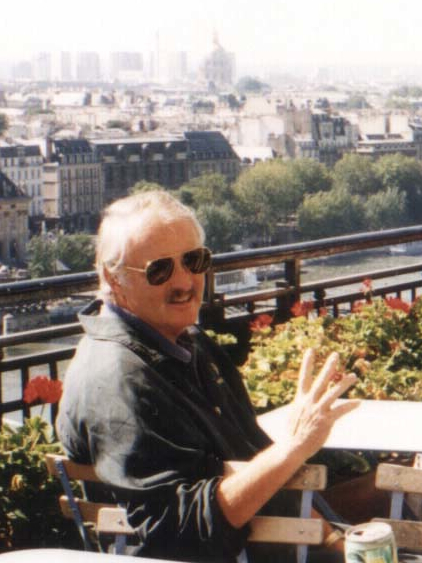
Priest-Author Photo


Everybody say hello to fantasy author James D. Priest! He’s the author of the KIRINS fantasy trilogy, a retired physician, husband, father, podcaster and currently enjoying life in Hawaii. You can check out his official home page at www.kirinbooks.com.


Thanks so much for joining us Jim! 


thank-you-md


 *Don’t miss the Kirins Series Book Trailer*


*Where are you originally from?

I was born and raised in Minnesota, went to high school and college in Minnesota, and went on to medical school at the University of Minnesota. However, since then I have lived in Japan, California, and now Hawaii.

Nice. I’ve been to the twin cities a few years ago and to the gigantic uber mall there. I used to live in So. Cal, would love to visit Japan, and never been to Hawaii.  


palm-tree-md


*You used to tell stories to your friends on the bus. How did that come about? Or how did you pick up the knack for storytelling?

Storytelling on the grade school bus came from what I have since discovered is an ample imagination. In composing my fantasy trilogy, I borrowed a few names from real people or situations, but the vast majority of what I created and wrote is directly from imagination.

I’m lovin’ it Jim. Just by looking at your fantasy trilogy I can see you have a very vivid imagination. 


*What was it about Tolkien that drew you into fantasy?

I loved his world building, creating an alternate universe, Middle-earth, from nothing but his imagination. His conflict between good and evil. His characters, such as Frodo and Bilbo, are genuine and likable. His Gollum is a work of creative art, the likes of which fantasy authors should strive for, as I have with an urgol, Gian, in the third book of my trilogy.

Yes! You’re touching on some of the things I love most about being a writer. CREATING AND IMAGINATION are my favs. Don’t hate me, but I haven’t read Tolkien yet. I’ve seen all the movies though. Gollum is probably the most compelling character to me in the whole book!


*Did you want to be writer before going into medicine?

I think I’ve always had somewhere in the back of my mind that I wanted to be a writer. And I was a writer while in medicine, where I published about 30 medical articles.

Ah yes, I’m all too familiar with this kind of writing. Not my favorite honestly, but necessary. 


12569995111081258635MoSelf_Doctor.svg.med


*How has studying English in undergrad, graduate school and participating in professional medical writing prepared you as an author?

As they say, practice makes perfect. I think the more writing you do, the better you get. But I’ve also learned that every writer needs an editor. We’re only human, and we need guidance both on a grammatical level, and in the line of reasoning, the logic, of your writing.

Yep, you nailed it there Jim. We desperately need good editors, especially us intuitive types. 


*First, give us a knockout summary of your trilogy.

My trilogy is published in print, ebook, and audiobook. But there is, in fact, a fourth book, a sequel, not yet published.


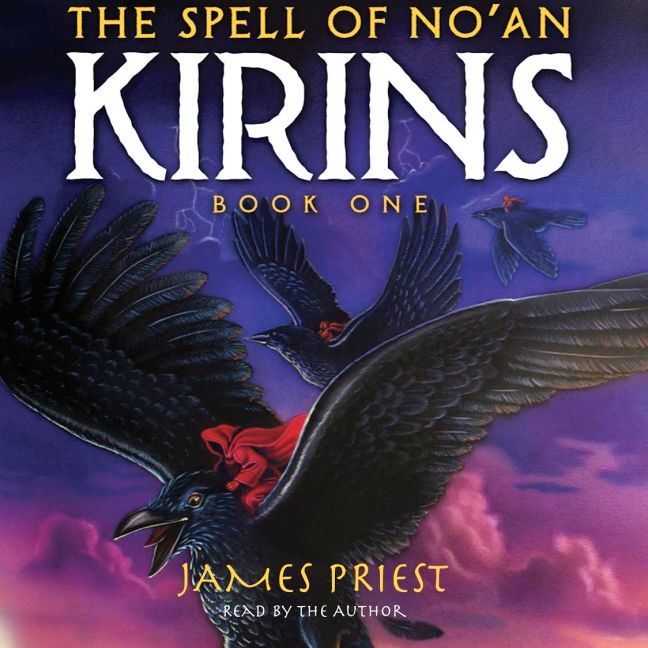
NO'AN-Book I 1124x1124


KIRINS SERIES SUMMARY:


My trilogy, The Spell of No’an, The Flight of the Ain, and The Secret of the Hanging Stones, tells the epic tale of KIRINS, a race of tiny, magical beings who live throughout Earth today.

Dwelling in elaborate tree homes and underground sanctuaries, they enjoy a strong kinship with the animals and birds of their region. In the distant past humans knew them well. But an ancient rift occurred between the races, and kirins chose to separate themselves from humans. Sadly, we humans are now unaware of their secret civilization.


AIN-Book II 1124x1124


For thousands of years kirins everywhere lived in calm. But now a mysterious, dark force threatens their existence. Knowing little about the enemy they face, the kirin clans choose a party of five daring adventurers led by the wise magician Speckarin. On the backs of birds they travel thousands of clan-dominions across land and sea to Stonehenge, to save the kirin race. But what the journey holds in store for them, they could never have imagined.


STONES-Book III 1124x1124


In the fourth book, The Seer of Serone, a sequel, Speckarin and his intrepid party journey to Alaska to attempt to bridge the chasm between kirins and humans, and to rescue a kirin lad captured and forced into loathsome service by a human. Assistance in dealing with the offending human is provided by a powerful local wizard, a kirin, The Seer of Serone.

Review by Mary Logue, award-winning writer and poet, author of Dancing with an Alien and Snatched: “Having read all three books of James Priest’s wonderful trilogy, I have nothing but praise. The scope of this work, which takes us from the middle of North America across the Atlantic on the backs of birds to Stonehenge, is extraordinary. I enjoyed every moment I spent with the kirins. Priest’s work resembles Lord of the Rings, but is more rooted in nature and gentler in tone.”

This looks so fascinating!  Love the cover images on all three books. You’ve got some great reviews too on Amazon.


*You’re a writer; so what’s your story, or what inspired you?

Having always liked the idea of writing, I challenged myself to write in a genre I’ve enjoyed, fantasy. I decided to write a story set in today’s world. Every culture has mythical small beings. In Ireland they are leprechauns, in Norway and Denmark nisse, and in Hawaii menehune. People want to believe they exist in gardens, trees, and nature. In my tale they are kirins. Because I have always liked small things, the story is of a race of tiny, magical beings, kirins, living throughout Earth today, though humans are unaware of their existence.

Wonderful. Creative little creatures!  


1206566086625250088Anonymous_pen_pencil_3.svg.med


*What’s your GOAL in becoming a writer?

Like most or all writers, to become a bestselling author, and to leave something in this world that will make it a better place.

Excellent. No shame in that.  It shows you’ve got heart! 


Strong Superhero Businessman Heart Concepts
You’ve got heart


*What 3 things have hindered you from completing your projects?

Finding time to write was a problem while I was practicing medicine. Getting the books into all three formats, print, ebook, and audiobook (self-narrated), has taken years to complete. As with almost all writers, promotion and marketing have been a challenge.


WOW! That’s unbelievable! You wrote these books while practicing medicine, had them formatted AND self-narrated them? That’s more than amazing. Promotion and marketing are challenge, no doubt. 


*What keeps you motivated in achieving your dream?

I like to work, but writing fantasy was never work for me. It engrossed me so much that it made me forget about anything else. If I went too long at the keyboard, I would become fatigued, tired of writing. I didn’t want that, so learned to pace myself and take time off when necessary. I never had a specific time of the day to write. I wrote when I could, and loved it.

I am motivated by two factors:

1)  I want to create something for all the world, especially my family, to appreciate, and 2) My books are good, and thus I keep working in promotion and marketing. KIRINS is a fantasy in the classic tradition: epic storyline, an immersive all-new world, great characters, powerful and mysterious magic, plot twists and turns, an immediate threat, romance, and heroism. And the books are suitable for readers 10 to 110. No vampires, werewolves, zombies, blood, guns, drugs, car wrecks, or post-apocalyptic landscapes. No obscenities or erotica. No superheroes, just heroes.

Hah! I love it. Your vision and motivation is very clear.


1245688392544500617khendraw_Fuelmeter.svg.med


*What would you say to a struggling writer who’s given up?

If he/she wants to be a writer, pick yourself up, dust yourself off, and start all over again.


Amen, and amen. I’ll add, if you can’t pick yourself up, join a supportive writing group. They’ll pick you up and keep you going.


119498489859501915trebuchement_yves_guillo_01.svg.med


BONUS:


*Who’s your favorite author?

J.R.R. Tolkien


*******


*What’s your favorite quote?


“A professional writer is an amateur who didn’t quit.” -Richard Bach, author of Jonathan Livingston Seagull


Thanks, Benjamin!


Thank you for coming Jim!

Keep writing…

someone

is out there waiting

~Benjamin Thomas



Benjamin Thomas

@thewritingtrain

http://www.thewritingtrain.com


Story of the Writer: With Greg Spry


GREG SPRY 

WELCOME TO THE TRAIN


greg5


Everybody please welcome science fiction author Greg Spry of the Beyond the Saga series!

Beyond the Cloud Nine won silver medal in 2015 Reader’s Favorites Awards in the Science Fiction category, and IAN Book of the year awards nominee for Science Fiction. He writes action-packed hard science fiction with space combat and technology. If you go to his website, you can enter a Goodreads giveaway beginning Jun 23 and ending Jun 30.  I’ve wandered around his site and it really has a nice feel to it. Please go to: www.gregspry.com.


I found Greg to be an all around fascinating person with a great background to write science fiction. He has worked in IT, computer programming, search engine marketing, entrepreneurship and holds a MS Space Systems degree from the Florida Institute of Technology. But above all, he loves science fiction.   There it is folks!


Let’s meet our guest!


-md


*How did you get into science fiction? Early childhood influences?

I’ve loved science fiction as far back as I can remember. As a kid, I used to create Lego spaceships, watch Star Trek and Robotech, and play video games like Final Fantasy and every space shooter I could find. Now that I think about it, my dad used to watch a lot of sci-fi, so I watched along with him.


Yes! I did much of the same thing. Lego spaceships, Robotech, video games, Star Trek, but my brother never let me play Final Fantasy. I begged him to play it but he was quite dedicated to my misery. Robotech is probably my favorite out of this group though. I wish they would”ve made it a longer series.


Sunrise over group of planets in space


*What kind of books did you read over the years?

I remember reading My Teacher is an Alien and plenty of Choose Your Own Adventure books. I read Ender’s Game in late elementary school, the 21-book Robotech series three times in middle school, and classics like To Kill a Mockingbird in high school. Now, I read hard science fiction and self-published books.


I can see you were an early consumer of science fiction. Never realized that Robotech had a book series! My diet mainly consisted of  various cartoons versus books. 


*Have you always wanted to be a writer?

Since a young age, yes. I wrote a couple of full manuscripts in middle school.

This is an amazing feat for a kid in middle school. Some adults haven’t even completed full manuscripts!


11970909541543419959gramzon_Pencil.svg.med


*Are you currently writing full-time?

No, I work as a software consultant for an IT company during the day. I’m working toward turning writing into my full-time day job.

That’s great, I’m all for it. A lot of us have the same dream. I certainly think you have the talent to do so.


*Who are your favorite authors?

My favorite authors are Arthur C. Clarke, Peter Hamilton, and Alastair Reynolds.


Nice. I’ve heard of Clarke, but the others are new to me honestly. They must be pretty good!


*Tell us about the Beyond Saga series

The Beyond Saga is my generational, fate-of-the-galaxy-hangs-in-the-balance type of space opera based on elements of hard science fiction. The saga includes the first attempts at faster-than-light speed travel, exciting space combat, cool technologies that are truly possible, first contact with alien races, time travel, alternate realities, and more.


Wow. This sounds like a very juicy series! 


See the Beyond Cloud Nine official homepage


beyondcloudnine-cover-front-edition2-hires


Beyond Cloud Nine (Beyond Saga Book 1)


Book 1, Beyond Cloud Nine (https://bit.ly/bc9kdle), is the story of the first pilot to fly faster than light and the solar conspiracy that gets in her way. Book 2, Beyond the Horizon (https://bit.ly/bthkdle), follows a young ensign as she tries to stop the extermination of a benevolent alien race during humankind’s first interstellar mission. Book 3, Beyond Yesterday, involves travel to Earth’s past to discover mankind’s origins and book 4, Beyond Existence, is the big intergalactic finale in which the human race may perish or prevail—or both. Books 1 and 2 are available now.

Beyond the Horizon was just published May 1, 2016. Read the Beyond the Horizon official homepage. His website is amazing!


beyondthehorizon-cover-front-hires


Beyond the Horizon (Beyond Saga Book 2)


*Can you take us through your research process?

I’ve immersed myself in science fiction my whole life, so I know the concepts and how things go. With a master’s degree in space systems from the Florida Institute of Technology, I’ve got a solid knowledge base regarding the realities of real space flight. All things space and astronomy naturally interest me, so I’ll use Google to confirm the details about things like the gravity and atmosphere of Titan or the conditions on a planet orbiting a red dwarf star.

At the start of the writing process, I outline at a high level and create basic character profiles. Then I let the story go where it goes as I write a rough first draft. Draft 2 is where I round out the characters, fix plot holes, make sure I’m showing rather than telling, and fill in the fine details. Draft 2 goes to beta readers and/or a critique group and an editor for refinement. After that process completes and the proofreading’s done, the publication and marketing process begins.


AMAZING. This sounds like a pretty refined process. I always enjoy hearing how authors delivers the goods! This is great.


1194985174159045351small_truck_steffen_gluc_01.svg.med


You’re a writer; so what’s your story, or what inspired you? 

The books, movies, shows, and video games I’ve loved throughout the years have inspired me. One big inspiration was the Final Fantasy games. Anyone who has played role-playing video games knows they’re like interactive books or movies. The great plots and characters in them motivated me to create my own.

My brother would know all about it…


What’s your GOAL in becoming a writer? After being published what’s next?

I’ve self-published two books, and I’m working to complete book 3 and then book 4 in my Beyond Saga. My goal is to generate enough of a revenue stream via book sales that I can turn to writing full-time, which means that marketing is currently my biggest challenge. I’ve been trying out different promotional services in hopes of finding something that works. Ultimately, I’d love to have my books turned into movies. Many people have seconded the notion that the space battles, environments, and plot of Beyond Cloud Nine would work well on the big screen.


Let it be so! That would be cool to see it on the big screen. You never know, it just might happen one day.


12081853371627177650shuttermonkey_Movie_Clapperboard.svg.med

Beyond the Saga


What has hindered you from completing your projects? (CONFLICT)

A market-savvy author knows that each book is an opportunity to sell all the other books. Hence, the more books you’ve published, the more books you’ll sell. My first problem is that the process of writing and releasing each book takes too much time given that I can only write in my spare time. If I could quit my day job and pump each one out faster, I’d make that much more money. I’ve been dumping hundreds, if not thousands, of dollars into promotion without seeing enough results to even offset my costs. If it weren’t for my day job, I’d be declaring bankruptcy about now. So I’m kind of stuck at the moment not being able to write fast enough to make enough money at it.


Ah, that sounds like such a heartache. Drop me a line, I’d be happy to do some book promotion.


What keeps you motivated in achieving your dream? (DESIRE)

I love smart science fiction and creating plots, worlds, and characters. I also believe in myself and think I can do these things just about as well as most anything else that’s out there.


We definitely share the same values in creating plots, worlds and characters. Your confidence is also inspiring. Don’t let anything get you down.


What’s your ANTAGONIST? What’s in the way?


1195422331490730233liftarn_Masked_man.svg.med


As previously discussed, visibility and how it takes money to make money. There are some well-known works of fiction out there that are only well-known because they’ve been mass-marketed. Meanwhile, there are other great works that aren’t well-known because a wide audience has yet to discover them. Such is the reality of the industry.


I’m glad I’ve discovered your work! And another reason why I do these interviews is to support authors like yourself. 


Have you ever wanted to give up your dream? If so, why?


I actually got really down in the dumps for a few days after I released book 2. I ran a 3-month promo period prior to publication in which I gave away review copies, put my book on Amazon for pre-order, did Twitter blasts, contacted bloggers, and spent hundreds of dollars. I didn’t do any of that for book 1, yet sales of book 2 paled in comparison to book 1. So I thought if I’m going to pump all that effort into promo and not see results, how can I possibly be successful and why bother to keep writing? I make plenty of money in my day job. If I focus on that, I’ll be far better off financially in the long run, so why waste my time being anti-social and writing in my personal time when I could be out doing more active stuff? But as the weeks have gone by, I’ve noticed a little bit better recurring sales. It’s taken people a while to read book 1 and then get around to reading book 2. While sales are still a long way from where they need to be, I’m more hopeful for the future. I’ve also learned what to do and not to do with a book release, which will help with book 3 and beyond.


This is very helpful to get a view of your experiences. Seems like it’s quite a battle once you get your book published. Probably a lot of writers think getting a book published equals instant success. Thanks for sharing. 


Why do writers give up, quit or never complete their projects?

To answer this question, we should put on our business caps. I’ve started several businesses in the past unrelated to writing. While most of them failed, I learned a lot from trying. Every now and then, a friend who wants to start a business will come to me for advice. They have a great idea and want to know how to make it a success. They want to pitch it like in an episode of Shark Tank. What do I tell them? That except in very special cases, Shark Tank is a lie and their idea doesn’t matter. When running a business, the least important factor in success is your product or service. Rather, your business system is what matters. I mean, of course you can’t be selling crap. But things like internal business practices/culture, marketing, sales, customer service, timing, leadership, and everything else surrounding the product or service is more important. Does McDonald’s serve the greatest, most revolutionary food on the planet? Of course not. Then why are they the biggest fast food chain in the world? Figure that out, and you start understanding what it takes to be successful. The point is that the actual writing itself is only a small part of the overall process—and not necessarily the most critical part—of being a successful author.

That’s why I think the single most important thing is passion. You’ve got to be able to conjure up the motivation to keep writing and promoting when nothing’s going right. So I ask people who come to me for advice about whether to start a business if they want to live and breathe their trade for 100+ hours per week. Do they want to not get paid for years until their product or service finally catches on? Do they want to spend far more time on everything else besides the actual trade (writing) that they love in order to make the business successful? Only if you answer yes to every one of those questions should you start that business, or in our case, get serious about writing. So to sum up and answer the question, people who quit don’t have the sustained passion for EVERYTHING that it takes to be successful.


Wow, this is wonderful advice for us newbies. You definitely sound like an entrepreneur to me. Simply being a writer isn’t going to cut it in today’s world. We must be the ultimate entrepreneur. 


businessman-in-suit-md


(Your name here)


What would you say to a struggling writer who’s given up?

Do you have the passion to keep going? Is this what you truly love? If not, give up. But if yes, stick with it. Even if your writing isn’t very good, if you love doing it and have great desire to improve, you can and will get better. Don’t let anyone tell you writing a book is some mysterious art form that some people are born for and others aren’t. While some people are naturally good storytellers, the vast majority of all stories have certain structural elements in common. Simply put, there are right ways and wrong ways to write a story. You can learn them if you stay open to feedback, do your research, and are willing to put yourself out there.


I’m lovin’ it. Solid words here. Let’s face it, authors are the most resilient people on the planet. We must have an undying passion, a steadfast commitment, and a desire for life long learning.  I love writing and learning equally.  It’s an awesome journey and adventurous process.  Let’s keep the ball rolling!  Woohoo! 


BONUS: What else do you have coming down the pike?

I’m currently working on book 3 in the Beyond Saga. After that, I’ll write the final book 4. Somewhere in there, I’m going to publish one or more of my Bears in Space short stories, which are sci-fi comedies. Think South Park in space but with raunchy adult Disney animal characters. Bears in Space allows me to do some fun venting about all the horrible clichés out there: unrealistic alien invasions where the all-powerful but completely moronic aliens hover their spaceships over our cities like big bullseyes instead of just blasting us from orbit or releasing a virus, cheesy romance novels with the dude with washboard abs on the cover, dystopian apocalypses where the biggest threat is zombies that can’t even move fast enough to jog, and more. After the Beyond Saga, I’ll return to working on Destalis, which was the first full manuscript I wrote as an adult. Destalis will continue to explore the concepts introduced toward the end of the Beyond Saga but with more of a Game-of-Thrones-in-space type of feel. I haven’t decided whether it will remain a single book or if I’ll expand it into a book series.


Man, that sounds pretty sweet. Can’t wait to see what you come up with. Write on! Don’t let anybody slow you down.


Thanks for coming on the site Greg! Come again!


GREG SPRY HAS AN EPIC WEBSITE


  www.gregspry.com

There’s also a BEYOND THE HORIZON ENCYCLOPEDIA that lists the following:

Characters

Technology

World

Terminology


Favorite quotes?


“There’s no sense in nonsense, especially when the heat’s hot.” – Safety Not Guaranteed movie. I don’t know why I love this saying. Maybe because it’s so stupid it’s awesome.


KEEP WRITING 

UNTIL IT’S 

FINISHED 


Benjamin Thomas
@thewritingtrain

http://www.thewritingtrain.com


Story of the Writer: Caroline Peckham


Welcome back to the Writing Train!


To Trains sign


Howdy!


Do you love stories? We ALL do right? It’s no secret writers have some of the most gripping minds on the planet. The characters they’ve created; worlds they’ve crafted, and plots they’ve weaved together, have left their imprint upon the world. This series is dedicated to them, published or unpublished.

~Every author is a story~


Books, old, stacked.


Everyone please welcome

YA Fantasy Author

Caroline Peckham


unnamed


First off, I’d like to pay a special tribute to my friend Caroline. She may be largely aware of this, but she inspired me in a very particular way as a writer. I was stuck in a dreamy state wishing and wanting to be a writer. There I was, sitting on the sidelines cheering and watching everyone else’s success. She had just published one of her books (can’t remember which one) and I got so excited and genuinely happy. I proceeded to ask her the question. Kind of like,  what’s your secret sauce question. So I asked; what’s the difference between those who dream, and those who achieve their dreams?  Then she dropped the line on me. BAM. Just like that, it smacked in the face like a ton of bricks. But what she said was utterly simple. Make a plan and do the work. That’s it. Make a plan and do the work. I’d like to plaster these words on my forehead in neon ink. Possibly a green, or orange color would suffice.


You may never know how your words affect other people. Words have power. Lasting power. Enduring power. A single word, phrase, sentence can last a generation. It may ignite and inspire an entire generation. It certainly did with me.


THANK YOU CAROLINE


*Give honor to whom honor is due*


~Make a plan and do the work~

-Caroline Peckham


*Are you originally from Kent, UK?


I am! I live ten minutes from my family \home so I get to see my parents all the time. I currently live in a little village which is famous for being where Winston Churchill lived. Lots of tourists come here in the summer. It’s a very typically English town (pubs, teashops and the like!)


Wowsers! Winston Churchill, thats amazing!  I saw some pictures online and it  Kent is a very beautiful place. Would love to visit there someday. Here’s some juicy quotes by Winston Churchill. 


“This is no time for ease and comfort. It is time to dare and endure”

~Winston Churchill


*******


“Success is going from failure to failure without a loss of enthusiasm.”

~ Winston Churchill


*******

“We make a living by what we get, but we make a life by what we give.”

~ Winston Churchill


*Did you love books as a child? Name your favorites. 


I did, I was brought up in a strict diet of books and The Beatles haha. My dad used to read to me all the time and, as he was a bigger lover of fantasy, even read me books like The Hobbit and The Lord of the Rings when I was probably much too young for them!
I remember him reading me the first couple of Harry Potter books but I was old enough to read them myself by the time the third one came out and was absolutely hooked! Some of my all time favourites were His Dark Materials trilogy by Phillip Pullman, The Healer’s Keep by Victoria Hanley, and any of the Katherine Roberts books (I actually won a signed copy of one of her books which I still have!). They were fantasy books for young teens, my particular favourite was Spellfall. I used to read it every time I was sick off school.
I’m beginning to realize that reading begets writers, and writers beget readers. It’s an endless cycle. It seems to affect only a select group of individuals though. Obviously everyone who reads doesn’t become an author. But somehow when it reaches kids at a young age; and their combustible imaginations, it takes flight. Then in turn your words will indeed beget more writers, enable more readers. Awesome.
*What influenced you the most in your early years towards being an author?
It’s a bit of a cliche but I grew up in the golden age of Harry Potter. The stories just captivated me and I began writing around this time. When I was older one of the things that really resonated with me from this series was that feeling of pure excitement about a novel coming out. I used to queue up at midnight to buy the books from my local supermarket and I wanted to write something that made me feel that way again. I can honestly say my debut series excites me as much as they did, if not more!
Yes! I love it. Exciting isn’t it? 
*Would you write anything besides YA fantasy? 
I have a few science fiction ideas but, through no real intention of my own, most of my ideas tend to be based in the fantasy genre. I would definitely move around a bit perhaps into something a but more paranormal. I have a massive document dedicated purely to ideas so any time something comes to me it goes straight in there!
Yes, having something like an idea folder is quite critical. Especially us writers who have ideas literally coming out of our ears. That in itself sounds paranormal.   🙂
*Did you study literature in college?
I didn’t, I actually studied Zoology. One of my other passions in life is animals and I never actually considered a writing career as a possibility until the last few years. I always just assumed writing would have to be my hobby until I realised there was nothing I wanted more than to do it fulltime.
Awesome! I always find it intriguing when I hear this. Lawyers, Physicians, journalists, engineers etc. all have had an unquenchable desire to write. It never ceases to amaze me; that those in top notch professions would be willing to put them aside and pursue writing!  Passion is powerful. 
*Tell us a bit about your series
My series follows a sixteen year old boy on a journey through the seven worlds to save his sister from a curse. Each world is locked by a Gateway and a challenge must be completed in order to receive a key. An enemy is on the rise who is looking to thwart them at every turn and Oliver’s family is much more involved with him than he could ever have imagined. It’s got a bit everything from action, magic, adventure, to romance!
I always enjoyed a book with a journey in it. I love the organic feeling of movement in a story that is always heading toward an end point.
Journey wins every time. Let’s take a look at some of your books.

unnamed (1)

Creeping Shadow  (The Rise of Isaac, Book 1)
unnamed (2)
Bleeding Snow (The Rise of Isaac, Book 2)

NEW RELEASE 

May 24, 2016


unnamed (3)
Turning Tide (The Rise of Isaac, Book 3)
*Can you tell us a bit more how you made the transition from zoology to being a full-time writer? What was the tipping point
I suppose I’m the sort of person who follows her heart – mushy as it sounds! I try to do things in life that make me happy. I don’t believe in ‘one day I’ll do this’, instead, I make a plan and start working toward that goal. So I guess the tipping point was leaving university and after several failed interviews for jobs my heart wasn’t even in, I asked myself what I wanted to do. The answer was writing. So, I decided to work for my family business and on the side start writing my fantasy series with the goal of one day doing it fulltime.
YES. I. Love. It. Not mushy at all. You totally sound like a go getter. Keep following your heart!
*What made you chose the self-publishing route? 
I, like I imagine a lot of self-published authors do, tried to get an agent first. I was so unbelievably naieve to the whole publishing world I didn’t even know anything about self-publishing! After being rejected…a lot…I discovered Amazon’s KDP programme. I learnt about building an author platform by blogging and getting out there on social media. I started to really look at being an author as a business and now (having five years of experience in my family’s business) I had a good background in what made a business work.
It was another year before I was ready to hit publish on Amazon with my first book last December and I haven’t looked back!
Nice. It’s certainly not easy to take this route. I’m glad you overcame those hurdles. 
hurdler-in-black-md
*What was your goal (s) in becoming a writer? (GOAL)
The number one reason I’m writing this fantasy series is that I love it. I couldn’t stop writing it whether I had people reading it or not. In fact, for the first years it was just me and a whole lot of self-doubt. It wasn’t until I got the first book out there and I started getting reviews that I really started believing I had written something worthwhile. So I suppose my goal in becoming a writer was to write something I love and, now that it’s out there, all I want is for the people who read it to love it too!
This is better than going to the movies. Seriously. I wish I had some popcorn right now. Your passion is tangible! I highlighted your words because they’re so inspiring. 
*Now that you’re published, do you have new goals in view?
It’d be a lie to say that it’s all sunshine and rainbows in self-publishing. There has to be a certain amount of planning, deadlines and marketing that goes on behind the scenes. My goals now are to get out books regularly (every 90 days) which benefits the fans and keeps my books up there in the new releases etc. so I don’t fall off the radar. I suppose my short term goals are to have this series out over the summer and have hopefully started a new one before the year is out.
I’m floored. Self-publishing has done a lot for authors though.   Its been a game changer on many fronts. I think its also cultivated authors to become entrepreneurial in today’s world.  Every 90 days! Wow! Hey, if you’re sending out review copies in the future drop me a line.
*Do you have any major conflicts hindering you from attaining your goals?  (CONFLICT)
I think the one thing self-published authors are always battling against is visibility. Amazon changes the way it ranks books/publicises them/presents them all the time. So we indie authors have to try and keep up with that, constantly adapting to try and stay visible. With 2,000,000 ebooks on Amazon Kindle alone it’s no wonder a single author has to battle for their spot in the limelight!
You’re not kiddin, and there’s alot of people casting shadows. Hopefully there’s enough limelight to go around.
1195426182390716620Andy_Houses_on_the_horizon_-_Starburst_remix.svg.med
*What keeps you motivated? (DESIRE)
I think a simple passion for my stories is what keeps me going. In a funny way, I‘m as excited to find out what happens as the fans! I get the same joy out of writing as I do out of reading. I can’t deny receiving great reviews and emails from the fans doesn’t make my heart absolutely sing though. Knowing someone out there is waiting for the next installment of my book is the best motivation an author could ask for.
“I get the same joy out of writing as I do out of reading” … This is so amazing.  Joy and passion working together in unison. 
*What’s the main antagonist in your  career?
The antagonist of my career! What a brilliant question!
I suppose Amazon is the antagonist and the protagonist. It can be the best and most helpful thing in the world when its algorithms are in favour of my books but it’s getting Amazon to work for you that is the most monumental task for an indie author.
That kind of sounds like an anti-hero with evil algorithms.
11971014531325291269raphie_green_lanthern_smiley.svg.med
Evil antagonist
*Why do writers give up? And what would you say to inspire them?
I can see why writers give up. It has been a seriously long road to where I am and, now that I’m here, I can’t just sit back and enjoy the view. It takes constant work to keep yourself out there. I think anyone looking to write fulltime, self-published or not, should do it because it’s their passion because at the end of the day it’s hard work!
Also, I’ve looked into whether there’s a magic fix or formula that makes your books blow up and get sales but I can honestly say that the key is consistency. Stick at it and you’ll get there. View this as a life long thing not a quick fix.
I read a self-published author’s advice somewhere (and I wish I could remember who it was now!) but they said something that has really stuck with me: when you independently publish an ebook it has unlimited potential. Over the course of the rest of your life, your book has the potential to return revenue to you. What other business has that much possibility?
Yup. I think Joanna Penn calls this scalable income. It definitely has unlimited potential. You’re on the right track, keep running.

*Writing is marathon. Are you a distance runner?*


Running
Writing is the journey
 

BONUS: What are your favorite quotes?


I’m a big Pinterest freak! I love looking at quotes on there that give me a boost when I need it. So, instead of sharing my favourite book quotes with you I’m gonna share a couple of my favourite motivational quotes that make me believe anything is possible.

“Never give up on a dream just because of the time it will take to accomplish it. The time will pass anyway.” – Earl Nightingale


*******

“Doubt kills more dreams than failure ever will.” – Suzy Kassem


*******


“Anything’s possible if you’ve got enough nerve.” – J.K Rowling


You can find Caroline online:

Thanks so much Caroline! Please come again. 


Keep writing,

someone’s always feverishly hunting 

the next book…

Why not write it?

Benjamin Thomas

@thewritingtrain

http://www.thewritingtrain.com

Forensic Lenses: With Cozy Mystery Author Elizabeth S. Craig


“Read a lot. Write a lot. Delete a lot.”

~ Hannah Richell


Hello everyone and welcome back to another episode on the Writing Train. Well today is very special because it’s the day we’re kicking off our new series! Check it out.


Contact lenses


What is forensic lenses? First, it’s another reason for me to interview people. Second, it’s an interview with a particular view in mind (No pun intended) hence the name forensic lenses. But why forensic lenses? The word forensic means: pertaining to, connected with, or used in courts of law or public discussion and debate.  So far I’ve been interviewing so many wonderful writers both published and unpublished. Writers from all backgrounds, levels and walks of life. Now, I’d like to interview  them as…wait for it…..READERS. Yes you read that correctly. Readers.


A lens is defined in part, as a substance that changes the convergence of light rays, as for magnification, or in correcting defects of vision. In other words, they help you see things you wouldn’t normally see. They make things bigger, or magnified, that wouldn’t normally stick out. But the most simplistic definition is that they help you see. Everyone’s eyes are different, and everyone’s lenses are different in how they affect eyesight. We were all born with two embedded scanners in our heads, but we still see things in our own particular way. So when you’re reading the next bestseller what do you see? What do I see?  What resonates you to tears may bore me to death, and vice versa.

 

Personally I LOVE eyes for some reason. Research estimates that eighty to eighty five percent of our perception, learning, cognition and activities are mediated through vision (Vision Is Our Dominant Sense). Before there were writing conferences, retreats, blogs, and how-to-do-everything, there were just books. Good old fashioned tangible books. How did the great writers before our time learn the craft so well? BREAKING NEWS: They read a lot. Sounds simple eh?


12603896661797746970jantonalcor_ReaderBoy.svg.med


Forensics naturally solves crimes by scientifically providing evidence to be used in a court of law. To prove one’s guilt, or perhaps their innocence. In other words help solve crimes and catch criminals.  As a reader do you have any pet peeves? Have you ever read something that made you throw the book across the room? Or made you close it, never wanting to open it again? Most of the time it’s not that dramatic, but it could be something small and equally frustrating. These are what I consider crimes so to speak. Things that violate your emotional resonance. That’s on the negative side. The positives are things you enjoy, observe, or witness that prove to be worth your time. It’s the evidence of a great read, and possibly a re-read!


Reading is dreaming with your eyes open

~YoYo


open your eyes
Keep your eyes open…


Teen girl reading book outdoors
Dream reading


FORENSIC LENSES


Let’s get started with the first guest of the series!

Please welcome

Elizabeth S. Craig 


ElizabethCraig1


Elizabeth is the bestselling cozy mystery author of the Southern Quilting mysteries and Memphis Barbeque mysteries. She also has one of Writer’s Digest’s 101 best websites for writers. Feel free to visit her over at: elizabethspanncraig.com. Receive a free ebook, updates, recipes by signing up for her newsletter click here.


MurderonOpeningNight_ebook


TyingTheKnot_FC


tn_fingerlickindead (2)


To see more books by Elizabeth click  here.


*How did you begin reading habits as a child? Did someone in your family read to you?

My father was an English teacher and my grandmother was a retired English teacher. Reading was as much a part of my day as eating and sleeping.  Everyone in my family read to me and continued reading to me, even when I was able to read for myself.  Sometimes the settings of the books we read together, the Oz complete series, for example, were almost more real to me than my own home.

YES I love this. It always begins with reading. That’s great you had English teachers in your family AND experience collective reading habits from family members. Amazing.


*Who was your childhood favorite? Scooby-Doo, Nancy Drew, Trixie Belden, Hardy Boys? Why?

Nancy Drew was an early-elementary school favorite because she seemed so calm, collected, mature and brave as she unraveled genuinely creepy mysteries.  By late elementary, I’d shifted my loyalties to Trixie a bit.  That’s probably because Trixie was closer to my age and actually misbehaved in the stories…she seemed a little more realistic.  The interesting thing about my childhood favorites; Nancy, Trixie, and Scooby; is that they all embody the ‘friends as sidekicks’ approach to sleuthing.  That had a tremendous influence on me as a writer…no solo sleuths or lone wolf detectives for me.

Yeah, I think the lone wolf characters are kind of boring honestly. Unless something really sticks out.


“Reading… a vacation for the mind….” ~Dave Barry


*In your bio, you state “I started in on the Agatha Christies. Miss Marple and Hercule Poirot made me a lifelong mystery fan.” What was it at this stage of reading that made you a LIFELONG mystery fan? Something had a major impact here.  


Agatha Christie and the other masters of the genre turn mystery reading into an interactive experience. Their mysteries grab the reader and drag him in. A good mystery, such as the ones Christie wrote, make the reader feel as if he or she is in the sleuth’s skin, solving the mystery as they go.  It’s this armchair detection, the ability to feel the thrill of edging closer to a dangerous killer, all from the comfort and safety of one’s home. To me, there’s nothing else like it—it’s the ultimate escape.


Wow! I had an escape just by reading your statement! Excellent.


*Currently, who are your top 5 mystery writers and why? 

For cozies, my top pick is M.C. Beaton.  Her ability to write quirky characters and an engrossing setting is second to none. For police procedurals I like Elizabeth George, Deborah Crombie, and Louise Penney—their sympathetic portrayals of their detectives and how they balance their personal lives and professional lives makes their books both realistic and a joy to read.  For a darker story, I go to Norwegian writer Jo Nesbø…the grittiness of his stories sometimes just hits the spot, as a reader.


Elizabeth George is absolutely amazing. Can’t wait to read more of her books. 


*Since you’re an experienced reader in the mystery genre, is it easy to figure out whodunit? Or does it make it harder to enjoy a good mystery book? 

Unfortunately, yes, I usually figure it out.  I absolutely love it when I’m wrong. I love twists, I love being surprised.  But if the writer has done a good job wrapping up all the loose ends of a mystery and circled around to the beginning of the book from the conclusion, I’m still satisfied as a reader, even when I’ve pegged the killer.


Man, just was thinking how hard it must be to fool an experienced mystery reader.


*As a reader, what are your biggest pet peeves? (Writer Crimes)

I’m really not keen on plot devices and seeing writers manipulate plot and make characters behave out of character just out of convenience. This kind of Deus ex machina, especially at the end of a book, feels contrived and can contribute to a flat ending.

This is a very interesting viewpoint. We must be the ever skillful writer to avoid things like these. 


*After all these years of reading, what makes a good mystery? Or a great one?

I think greatness ultimately is attained through the sleuth’s personality. We don’t have to like the sleuth, but we have to relate to or understand him or her. A good mystery will have an interesting or appealing sleuth and a cast of supporting recurring characters that either act as a sleuth’s foil or play up his or her strengths.

I love this. It comes down to character and more specifically his personality. Understanding him or her makes all the difference. Sweet!


Thanks so much for joining us Elizabeth! Please come again.


elizabethspanncraig.com
Newsletter Sign-up


A book is a gift you can open again and again.

-Garrison Keillor


**********

Keep reading

It’s one of the most marvelous adventures

that anyone can have

-Lloyd alexander


**********


READING IS FUEL 

FOR THE IMAGINATION

~ Benjamin Thomas


Join the Locomotion

Benjamin Thomas

@thewritingtrain

http://www.thewritingtrain.com