
IT’S TELEVISION TUESDAY!

How To Find And Capture Ideas For Your Novel with Joanna Penn
How do you capture your ideas? Tell us in the comments!
Benjamin Thomas
@thewritingtrain
www.mysterythrillerweek.com

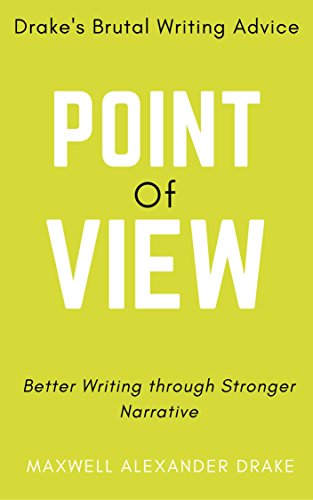
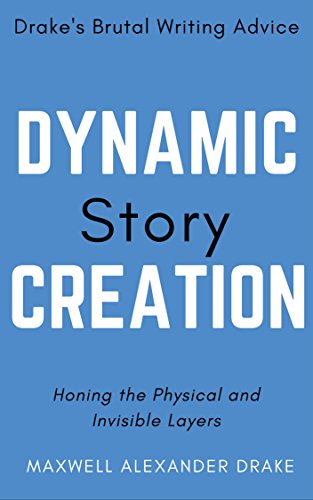




You’ve completed the first draft of your novel–now what? Chances are, it’s not perfect…at least not yet. In order to increase your chances of getting a literary agent, selling your manuscript to a publisher, or garnering an audience for your self-published work, you need targeted, practical instruction on tackling the problem areas and weak spots in your story. You need Troubleshooting Your Novel.
In this hand-on, easy-to-use guide, award-winning author Steven James provides helpful techniques and checklists, timesaving tricks of the trade, and hundreds of questions for manuscript analysis and revision. You’ll learn how to:

This is awesome! Two words stick out to me in this statement. Emerge and organic. Trusting the story to emerge as we’re writing it is very intuitive.

Within every scene you will find a variety of narrative forces pressing in on the narrative. For example, believability (the scene needs to remain believable within that story world), causality (every event has an impetus and an implication), escalation (tension continues to tighten), and pace, flow, voice, and so on. The context that precedes a scene will affect the emergence and affect of these forces. Really, any scene edited out of context will suffer in one of these areas. Writing great fiction does not consist of filling in the blanks, but in allowing the context and the unfolding promises and their payoff to inform the direction that the story takes.
I love it. Can’t wait to get more into this.
3. What are the major facets of storytelling?
Beyond the ones I mentioned early would be implied and explicit promises. So, is you start a story by showing how perfect Anna’s home life is, with her doting husband and obedient children and daily yoga lessons, it’s an implied promise to readers that things are about to go very wrong very soon. You’re not telling readers this, but they understand the movement of a story and anticipate it. I strive to always give readers what they want or something better. And much of that comes from making big promises. And then keeping them.
This sounds simple yet profound. I totally agree with readers understanding the movement of the story. When all is well in the beginning there’s a certain amount of anticipation and suspense built up. Excellent.

4. What are the biggest hindrances to storytelling?
It’s lonely. Every novel I write requires at least a thousand hours of solitude. At times it’s hard to feel motivated, especially on a project that’s so large and daunting. So, many of the hindrances deal not with content or ideas, but with words and perseverance.
That’s amazing! A thousand hours of solitude rounds out to be 41.6 days steeped in the organic writing process. You just elicited the Wow factor.

Not going insane by keeping them caged up in my imagination. If I keep them chained up, they start looking for their one way of escape.
I can totally relate to this. This is the real escapism for authors. To gladly unleash our imagination to the world.
He gave himself;
to the power of solitude, willingly.
Him.
of words, unsparingly.
Now the masses consume them.


*******
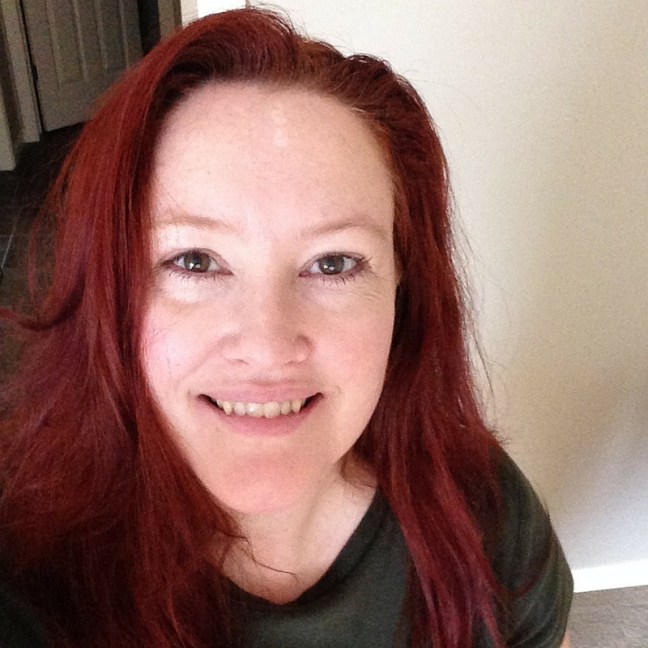
Lorna is a fiction & Non-fiction author, storyteller, blogger, podcaster, story coach and lover of books!
Bio: I love to write unusual historical romances that have been known to include scarred heroines, brave heroes, far too much scheming, evil terrorists and always a way for the two lovebirds to find their sweet happily-ever-after.
When not writing fiction, I love to help first-time and struggling writers get rid of their fear of the blank page and self-publish their stories. In the in-between time I can usually be found either drinking green smoothies, or cleverly think up another way I can convince my hubby and four college-age children to watch yet another old movie;)
Are you originally from Canada?
Yes, I am originally from Canada… and still live there. I was born – the youngest child of 11 -in the far north woods 50 miles north of Fort St. John, British Columbia. We were a family that lived off the land. My Dad had a little more than a section of land, where we grew crops like wheat, barley, canola, oats, hay and more. We also had milk cows, chickens, pigs, a couple of horses, a goat, a lamb, 2 cats and 3 dogs.
We butchered cows and pigs in the fall for our meat for the winter (we did this with our neighbours) and milked the cows every morning and evening for our own milk and cream.
So each of us kids knew how to work – but what I loved most, was that we learned how to play as hard as we worked. We made our own go-carts, wooden stilts, tree forts as well as rode trail motorbikes, rode horses, and played baseball as a family on Sundays.
The summer I finished elementary school, we moved to Hythe, Alberta. Dad and Mom had bought a hobby farm and that’s where I lived until I got married at 19 years of age 🙂
That sounds like a lot of fun! A nice big family on the farm. You definitely don’t see large families like that anymore. I think the hardest part for me would be waking up at 4 am to milk the cows.

Which stories did you grow up reading?
My mom was always reading bedtime stories to us after the days work was done. She would sit on a creaky wooden chair in the hallway that separated our 2 bedrooms (where we slept 2 to a bed – some of the oldest children had moved out of the house by then) and would read Hardy Boy mysteries, Nancy Drew stories as well other children’s books like Hans Christian Anderson or Uncle Arthur’s bedtime stories.
So I grew up with a big interest in stories. There were always stories told around the supper table of some sort of mishap that happened on the farm that day, or my dad or mom would tell stories of their life growing up after their parents immigrated to Canada.
Listening to and reading stories through my growing up years, definitely made a big impact and fed my love of storytelling.
I always enjoy hearing this part of someone’s life. How they were impacted by particular stories and their early reading habits.
Can you name 5 or more books that had the most impact on you? (As a child or adult).
I’m not sure that I can keep the list to 5… but I’ll try. My first real love of stories was when I read the Hardy Boy mysteries for the first time. I loved how they would always get the bad guy in the end…. but I especially loved the suspense leading up to where they discovered who the bad guy was.
Then in my teens I read Anne of Green Gables, The Lion, The Witch and the Wardrobe, Little Women, Gone with the Wind and Pride and Prejudice. I remember feeling like a whole new world of stories had opened up. I thought to myself, if only I could write stories that were so captivating and descriptive someday, I’d be thrilled.
In my 20s and 30s – while I was studying for my Bachelor of Music degree and later raising 4 children – I would binge read all the time. A few of my favourites were contemporary romances by Debbie MacComber and The Thorn Birds by Colleen McCullough.
Some nonfiction books that have really inspired me to push past resistance and have helped me to believe in myself are The War of Art by Steven Pressfield, Big Magic by Elizabeth Gilbert and The Practicing Mind: Developing Focus and Discipline in Your life by Thomas M. Sterner.
“I thought to myself, if only I could write stories that were so captivating and descriptive someday, I’d be thrilled.” I drawing on this statement. I’m always fascinated how stories affect our imagination from a young age. From a child, through the teenage years and adulthood, they continue to have a major impact on us. I’ve noticed that children attempt to imitate, reproduce or recreate what they see. I can see that you your statement above. I believe every writer has had that thought running through their mind at some one point while reading.
Have you ever cried while reading? What were you experiencing at that moment?
Yeah, I’ve cried many times while reading a great story.
But, I can’t help it, I love a good cry-fest. I’ve cried while reading Anne of Green Gables. It’s this orphan girls struggle to be accepted and loved by family and the town that pulls at my heartstrings.
Another book that made my cry through the whole reading of it, was A Child Called “It” by Dave Pelzer. To me this is easily one of the saddest true stories of abuse I’ve ever read. This little boy suffered horrific abuse from his abusive mother and others. I cried because of his desperation for love and acceptance and that he still continued to fight for survival in a home where he was thought of as worthless.
Also another real tear jerker is The Road by Cormac McCarthy. I cried at the boy and his father traveling by foot in a post-apocalyptic world, trying to eek out an existence when all seems lost. I cried because of their losses, their struggle to survive and was inspired by this profound and moving story – of their journey. The father and his son are inspiring as they still imagine a future even though no hope seems to remain. They are each other’s whole world – and they are sustained by the love they have for each other, in the face of total devastation. Amazing story.
These are all admirable and very touching. I hate crying, honestly. But if an author can evoke tears through their story It’s a 5/5 star read in my book. Only a few books have managed to accomplish that feat so far. One book I recently added to my TBR list had me crying just by reading the premise! It’s called M is for Munchers: The Serial Killers Next Door, by Alexandria Constantinova Szeman.
What are your favourite genres?
My favourite genres are Historical Romance and Contemporary Romance. I especially love how characters are in a big mess at the beginning of the story and how they are transformed through acceptance and love 🙂 I love it when each of those genres also includes a little bit of suspense and mystery. Also, I do love reading Dystopian novels too – like Divergent, The Hunger Games, The Testing, and others.
Nice.
Who are your top 3 – 5 characters and what do you love about them? (If you had to marry one of them who would it be?)
There are a few characters who have stuck with me.
One of those characters is Elizabeth Bennet in Jane Austen’s novel Pride and Prejudice. I love that Lizzy grows into a strong, confident woman who isn’t afraid to say “no” to marry the man that her mother wants her to marry. She is respectful to her parents and people around her, but she is strong and many times it’s Lizzy who in her maturity, points out the folly of some of the actions of her sisters or parents.
Anne Shirley, from the story Anne of Green Gables sticks out in my mind from when I was a teenager, as a girl I could relate to. She had to survive through abuse, fear and rejection and continued to grow and transform herself into a better person as she grew up. She didn’t let all of life’s struggles ruin her… instead it made her stronger.
Lastly, I like the character of Rhett Butler from Gone with the Wind. Rhett is a man of strength who falls deeply in love with Scarlett. Even through all her temper tantrums, he still loves Scarlett, that is until the very end when Rhett discovers even he has a boundary line that Scarlett crosses. I like how he is practical, that he still does what he needs to do, to help his friends, that he respects his mother and that he is generous throughout the story to Scarlett, despite her childish ways.
Of course, if I wasn’t married already… I would definitely marry Rhett Butler! He’s a man of strength, exciting, adventurous, respectful, generous and loves deeply 😉
Awesomesauce! Gotta love your favorite characters. You do crazy things when you’re in love.

Do you have a favourite antagonist or anti-hero?
Well, as a big fan of Star Wars, I’d have to say Darth Vader is a pretty convincing antagonist. For me, I loved learning of Darth Vader’s background. That he as Anakin Skywalker – a goodhearted jedi and hero of the Clone Wars and a powerful Jedi – that made me see him as more than just an anti-hero. So with the fall of the republic, when Anakin Skywalker became a disciple of the dark side, and eventually became known as Darth Vader, I felt I understood him a little better… he seemed more human somehow… even though he was the bad guy.
Darth is my absolute favorite antagonist. He’s such a, well, force to be reckoned with. No pun intended.

As a reader what are your top 5 pet peeves?
What a great question… and one I took some time to answer.
For a bookworm like me, who finds reading not only relaxing, but often therapeutic, there are many things that have become pet peeves. Maybe there are other readers who can relate.
Spoilers. I really don’t like it when I find a book I’m excited to read, only to have someone else tell me how it ends… before I get a chance to read it. Ugh.
Waiting for Library Books. With 4 kids, we’ve often gone to the Library to read or have ordered books from the Library online. It’s super disappointing borrowing a book, only to realize that you are number 20 on the list… which means you have to wait a couple of months before you can read it.
A book with a promising start that begins to go downhill. I feel a little miffed as a reader, when I love the first few pages or chapter of a book and then the story suddenly takes a turn for the worse. It feels like all my hopes for a good read have just been dashed with cold water ;(
Being interrupted while reading a good book. I’m sure I’m not the only one who feels a little annoyed at constant interruptions when you’re in the middle – or near the end – of a good book. Although, I must say as far as my family goes, they don’t interrupt me so much anymore when they see I’m reading a book.
Poorly Edited Books. For me, this means not only poor grammar or typos, but also repeated metaphors and descriptions or when the storyline is way too predictable. I guess I just really like some surprises in a story.
So those are some of my pet peeves. But I’m also a reader who loves to give first-time authors a good chance. I’ll read the entire first chapter before I’ll decide if I want to keep reading or pass on a book. I think it’s because I totally get where new authors are coming from… and if they choose to keep writing books, I’ll give another one of their books a chance, because I know as writers we keep getting better in our craft, the more we keep writing.
I love your list, but I love your understanding even better. Very touching.

In your opinion and experience, what makes a great story?
There are a few details, in my opinion, that make a great story.
First a really great story is easy to read. I love it when the story is so easy to read, that I just get “caught up” in the moment.
Secondly, great stories have captivating characters. I love characters that are flawed and yet they are transformed somehow throughout the story. I love coming to ‘the end’ feeling inspired 🙂
Third, a story is compelling when it has a sense of wonder. For example, in C.S. Lewis’ Narnia tales, the creatures and land of Narnia are so unusual and exotic, that as a reader I feel a sense of excitement and my curiosity is piqued because of the newness of it all.
Fourth, I love a story theme that is easily recognizable and that is meaningful. Common themes are: good vs. evil; love conquers all; or sacrifice, redemption, acceptance, etc. When your flawed characters face soul-searching themes, it’s a pretty compelling reason to keep reading.
Fifth, I do love a story where there’s a lot at stake for the characters. Where they give up everything for love or they have to face an evil villain that challenges all they believe in – and the characters are forced to overcome the odds. The best stories I’ve read, are those where characters were changed and they also changed their world around them for the better.
I LOVE IT! This pretty much says it all! Wonderful.

How do you help writers tell their stories?
I do love to help first-time and/or struggling storytellers, to write, self-publish and market their stories to their unique audience of readers. I’m passionate about helping new writers, because I spent so many years trying to get over fear and insecurity that I could actually write. Then it took me a few more years of searching on Google for answers on how to self-publish my novel. After all those years of trying to figure this out, I became passionate about helping to save writers time and money – to avoid the mistakes I did. So, for new writers who are struggling to write and self-publish and market their books, and are tired of struggling and failing over and over again, they can get Write and Publish your first Book as a Free eBook download – along with The Storyteller’s Roadmap mini-course when you click here: The Storyteller’s Roadmap
*******
*Are you originally from Ontario Canada?
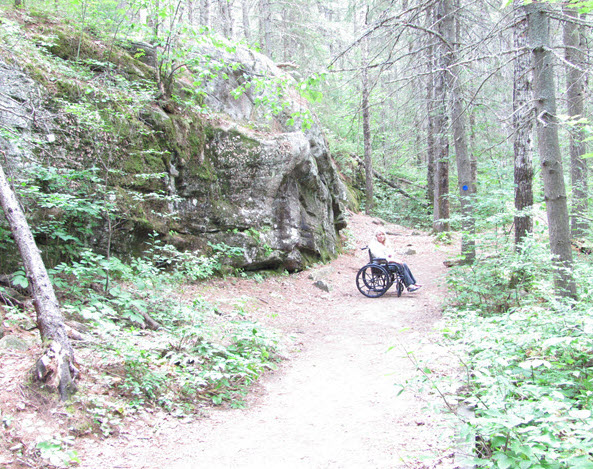
I’m originally from Glasgow, Scotland. We emigrated to Ontario when I was twelve, at the start of Grade Nine. It took me a LONG time to get used to Canada, but then I discovered Algonquin Park; plus I moved up to Northern Ontario four years ago and I love it up here: There are actually little mountains around Thunder Bay, and it stays light till 11pm in summer, the way it did in Scotland. So now I have the best of both worlds.
Here’s a shout out to all the awesome writers in CANADA!

*What is it about forests you enjoy?
The peace. The light. The scents. The wind rushing through the trees. And the fact they can also be a little bit haunting, and scary.
Being in a forest always makes me think something magical is going to happen. I’m going to see elves at any moment, round the next bend in the forest trail. Or bears. Or both.
That would be quite a sight—elves and bears rounding the corner. Let’s hope the bears would be nice.

*How long have you been a writer?
Since I could write. I wrote my first “novel” when I was eight, a gripping drama about my teddy bear being abducted by two evil henchmen called Grimm and Ghastly; both wearing rather Victorian-looking top hats draped with black crape. (At eight, you think that is highly original.) I actually still have it–complete with illustrations. 😉
I wrote four young adult/children’s fantasy novels in my twenties, and gave up too early in their rejection cycles. One almost got published by Scholastic–but my editor left and the new editor wasn’t interested.
My first published fantasy story was “Deus Ex Machina” in the early eighties, when computers were just being birthed. It’s very dated now–I wrote about (*gasp*) a sentient computer that started reading the books it stored. That story got me a job at TPUG Magazine (computers) and I was promoted to Assistant Editor and Managing Editor there. I’ve worked in various editorial and production positions at various magazines; both salaried and freelance. I had a stint as General Manager of “The Independent News”. And I invented my copywriting job when I ended up in a wheelchair, trapped in my house, back in 2008, when I ended up having to support my husband. I have been with the same major client now since 2009, and really enjoy it–but it kept me away from fiction till last year, when I joined Holly Lisle’s free “Flash Fiction” course and the fiction bug came back, full force.
Wow, it’s amazing you have that much writing experience, and your first novel sounds great! I’d totally read that.

*What’s are the best things about being a copywriter?
The chance to help people–and I’ve enjoyed my clients’ successes too. I also like the anonymity. I am actually pretty shy and don’t like being in the public eye. I’ve always liked being “behind the scenes”. Plus it allows me to work from home.
The thing I like most about copywriting (apart from the flexibility and the ability to work at home) — it teaches you discipline. There are always deadlines: There is no such thing as writer’s block and you learn to produce and be efficient about it. I’ve found this enormously helpful in my fiction writing.
This sounds it helps produce the solid character we all need to be efficient.
*What’s it like being a ghostwriter?
Very similar to my days as a magazine editor. It’s all about long hours, research, proofing, deadlines and deadlines. When I hear people I admire raving about something I wrote (not knowing I wrote it), it’s a very weird feeling.
Sounds like hard work! You’re doing all the heavy lifting, but no one knows your’re the muscle behind scenes.

*You have an awesome website! You stated “Communication is my passion” Can you elaborate on this?
Thank you. Communication has been the common thread running through my life, right from when I was little. I came from a dysfunctional family and a rough neighborhood. I always found myself in the middle at home and school, doing my best to get people to understand each other and be kind. I think there’s a lot of loneliness and disconnection in the world. I would love it if my stories made someone forget loneliness and feel connected while reading one of my books.
I love this because it’s so true. That’s a great aim for your books!
*Do you have professional storytelling experience?
I’m a graduate of the Storyteller’s School of Toronto and participated during the eighties and early nineties in several Storytelling Festivals and ran workshops. I was also lucky enough to have the great Irish storyteller, Alice Kane, as my teacher. She became a dear friend and the most moving milestone in my career was Alice choosing to tell a story I wrote for her, “Bonnyton Moor”, as the final story on the last CD she ever made before she passed away. That too was a very weird feeling.
My father and big brother, Stephen, were both amazing storytellers, and I got my love of stories from them. In addition to telling stories, Stephen also read us just about every fairy book in existence, his favorites being the Andrew Lang series. My sister and I still remember gorgeous illustrations by the likes of Edmund Dulac, Kai Nielsen and N. C. Wyeth.
And, of course, the Rupert Bear annuals.
Wow your experience is impressive! Would love to pick your brain more about the storytelling experience. Perhaps at a future date.
*What are the most enjoyable aspects of being a writer?
Being able to write out of deep values you hold, but being able to have fun too. Being able to lose yourself in another world, in your characters and cultures. Stories are nothing more than a way of making sense of real life, so you have to be brutally honest with yourself when you’re writing. Every flaw you have screams out at you from your writing–and I’m not talking about technique. You need to be brave and face yourself, otherwise you have wimpy, shallow characters. So in a way, it’s like therapy–which, in itself, is not much fun, but it’s worth it. You feel like you’re growing–particularly important when most of your life is lived between four walls. I’m never lonely when I’m writing.
I also love the way characters take on a life of their own and sometimes totally upset your plot structure and march your book off in a completely unexpected direction. I don’t always let them steer me off course–but most times, they’re usually right.
I also love the fact that I can write non-fiction as my “day job”–my bread-and-butter–and slip away into the forests of Dragonish when my workday is done. It’s having the best of both worlds.
YES, love it. This resonates deeply, and has a lot of wisdom to it.
************
************
*Give us a summary of your current WIP or most recent publication.
My flash fiction anthology from the world of my upcoming Dragonish series–“Tales of Mist and Magic”–is about to make its debut. (There’s a sample story from “Tales of Mist and Magic”, plus a bonus story you can download that won’t appear anywhere else, on my Original Fiction web page: http://maryamillerca.ipage.com/dragonish )
My last story published was “Block Magic” (no, that’s not a spelling mistake), which appeared on Day 23 in the Indie Author’s Advent Calendar. Before that, my last mainstream print published piece was “Too Happy to Die” in the anthology, “Chicken Soup for the Soul: My Dog’s Life”.
I’m sure you have tons stories waiting to be revealed, keep writing!
*In your opinion what are the elements of a great fantasy book?
To me, the characters are the heart and soul of the best fantasy books. They make or break them–if I don’t care about at least one character deeply, I won’t invest in the journey. In addition to this, there has to be something that makes me feel that there’s a magic door or curtain somewhere that will transport me to a world where magic is real. You can find those doors in all the greatest fantasy novels: Not literally, but you step through and suspend disbelief; and it’s both much safer than the world you’re in and more terrifying; and infinitely more beautiful.
There were moments in my childhood–for example, when I was three and my big brother saved up his pocket money and took me and my sister to Rouken Glen. We sat in a forest in a hovering mist of bluebells. He put a bluebell flower on his pinkie and told me it was a fairy’s hat, and I totally thought that was real! The beauty of that forest, the magic of the sunshine; the feeling that wonderful things could happen any minute–that’s what fantasy novels are all about for me. To give it a bit of context: We traveled to that forest on a tram, coming from the heart of Glasgow, which was grey and grimy in those days–there were still coal fires. We lived on the edge of the Gorbals, and life was pretty grim, so for my brother to transport me to this magical world… well. I can’t describe it. It was my first forest, and I was hooked.
My brother died when I was seven, and I’ve been trying to get back to that world ever since.
So for me fantasy novels are all about loss and hope; being surrounded by darkness and finding a way out through a combination of core values, courage–and magic. And if there are dragons, wizards and elves to reassure you that you’re not alone, so much the better.
Very touching story!

*Can you give us 3 critical components of storytelling? (you can list more if desired)
Universality, truth–and not getting in the way of the story.
A good story is universal. It needs to make people care about the outcome. It doesn’t matter if you don’t know that world–you need to be able to relate to the main character’s journey, care about it. A good story has to be true–even when it’s fiction. Pick a story with all these elements, and don’t get in the way of the story when you’re telling it–and you’ll be a great storyteller, whether you’re writing it or telling it.
EPIC. That’s great! I love absolutely love this. You need to put this on a t-shirt.
*What are you experiencing right now in your writing journey?
What I’m experiencing right now is excitement. I’m living for and through my Dragonish series, and I wish there were thirty-six hours in a day and I could spend them all writing. I feel that after years with fiction on the back burner, I’m finally reaching my zone. My own story arc is becoming clear, and the goal’s in sight.
Right now, I’m thrilled to be experiencing the wisdom of other writers through writer’s groups on Facebook. I took a smattering of real-world writing courses in the past, and for the most part, with the exception of one single course, I found them discouraging. I came away with the feeling “I may as well give up fiction: Everyone else is so much better at it than me”. But online groups like KM Weiland’s “Wordplayers”, Dave Lynch’s ePub Scene and the forums I’m on in Holly Lisle’s site have totally broken that curse. There is such generosity and professionalism in these groups from writers at all stages of the game: I’ve had feedback, inspiration, encouragement–and I’ve learned a lot.
I think you need real feedback and real interaction from other writers who understand the process. Without it, you’re stuck in a vacuum. That’s the place where all storytellers tend to wither and die.
This is so encouraging! I’m so glad you found a good source of inspiration and encouragement. One less storyteller in the graveyard. This is a HUGE reason why I started conducting these interviews in the first place.

*What’s your GOAL now in this stage of your career?
My goal is to be able to work full time on my own writing–not that I don’t enjoy copywriting, my day job: But for that I need to be three people! I want to see the Dragonish series in print before I die.
You’ll do it, Marya. I know you will.
*What 3 things have hindered you from completing your projects? (CONFLICT)
Nothing stops me from completing client projects. I owe it to my clients to give them #1 priority, so I do.
With my fiction, though (1) literally not enough hours in the day is my biggest obstacle–that, and (2) being completely intimidated by the technology end of uploading books to Amazon. (3) I would also like to invest in some professional editing on my books before I release them to the world–I need to increase my income first for that to happen.
(That being said, the nice thing about obstacles is that it’s fun looking for ways around them.)
I hope one day you can be a full time writer with your work as the top priority!
*What keeps you motivated in achieving your dream? (DESIRE)
What keeps me motivated is caring about my world and my characters. I want them to have voices, to be heard. I want to bring some magic back into the world, so that people can tackle the darkness safely, through the pages of the Dragonish stories. And my characters are fun to write–Granny Maberly, Ushguk, Anno, Morwen, Leith–I love them all. And a few of them are pretty funny. Though whatever you do, don’t tell Granny that!
I love that you want your characters to have a voice and be heard! That’s awesome!

*What’s your main ANTAGONIST? What’s in the way of you accomplishing your goals?
Wanting to be a better writer. Though I think ALL writers struggle with that. You have this wonderful, vibrant, rich story in your head, and you read what you’ve written; and you feel as if you’ve only captured a glimpse of it.
I think writing “better” or “good” can be quite elusive, just as it is deceptive. We should focus more on telling the story. No one ever feels good enough.
*Why do writers give up, quit or abandon their dream?
I think a lot of writers give up because there’s no one in their corner to say “keep going”. They question the value of their stories. They don’t receive feedback. They start to feel like voices in the wilderness–you know; the old “if a tree falls in the forest, will anyone hear it scream?” In traditional publishing, the world I’m from–and I had an actual, professional background in editing and publishing–the odds are stacked so hugely against you as a fiction writer. There are many horror stories about publishers from even successful authors. It’s a world of rejection as routine; and if you’re accepted, that’s only the beginning of the obstacles. Plus many writers have people telling them what they SHOULD be doing instead of writing. It amazes me that writers keep going at all, if I’m honest.
But being isolated as a writer … that’s like standing up in a darkened auditorium and telling a story to a chair (which I’ve done, by the way). It’s like sending a transmission out into space and knowing the odds of anyone ever hearing it are a gazillion to none. When a story isn’t heard, it tends to wither and die.
WOW. This is therapeutic. There’s the matter of someone being in our corner, surviving rejection, and overcoming isolation. These are all very critical elements to our success. Thanks for sharing.

*What would you say to a struggling writer who’s given up?
Your stories are important. They’re real. If you blow on all the stories that have withered and died, some of them will spark and come to life again–no matter how long they’ve lain in the darkness.
You are important. And the publishing community has changed, thanks to ePublishing and the internet. There’s never been a better time to be a writer!
If you’re really feeling down or discouraged, read KM Weiland’s “Conquering Writer’s Block and Summoning Inspiration”. Join Holly Lisle’s free Flash Fiction community and get your confidence back sharing 500-700 word stories with an informed, encouraging and honest group. Take her “How to Think Sideways” course (or ANY of her courses. My favorite, besides HTTS, is “The Secret of Page-Turning Scenes”). If you’re stuck at the business end of writing, visit Joanna Penn’s site and read her books too.
These are three authors–KM Weiland, Joanna Penn and Holly Lisle–who inspire, not flatten. They share incredibly valuable knowledge born of real-world experience, obstacles and success. They’re like a good fantasy novel: They give you the weapons to tackle the monsters with, and teach you how to use them. They’ve got your back, and you can trust them. Plus they’re fun to read.
And do join a good writer’s group–one without ego; where the emphasis is on the writing, not the personalities.
Exceptional. This is very inspiring! Thanks so much! When I do these interviews, I’m the first to get inspired! THANK YOU.
That’s such a broad question, I’m not sure how to answer it. All I can do is give you my own personal choice…
Ahhh, I’m going to get nailed for choice number one: JRR Tolkien. He’s my first love. In spite of what Peter Jackson and an ocean of imitators have done, you can’t beat Middle Earth.
I also love Terry Pratchett’s writing–his Discworld series in particular. He defies genre. He can go from low comedy to advanced philosophy in a blink–and it works.
Finally, John Bellairs; just for his book “The Face in the Frost”, which exuberantly defies every rule about adjectives and adverbs. It’s also the book I would memorize and become, if I was a character in Bradbury’s “Fahrenheit 451”.
Yes–all fantasy, I know; but each of these three authors defied genre and they gave their worlds and characters unique voices. They wrote books that changed lives, healed wounds, comforted. They’re like old friends to me now, and I still reread them.
Lovely, simply lovely.
*******
*******
*******
rejuvenatement - not retirement
...a crime-fictional site
Established in May 2011 to help nurture and inspire the poetic spirit.
A place for poems and pics
a simple pairing of pictures and poetry
Sharing Poetry and Hugs
Persistent WV Poet
A.I. Art and Poetry
short writing prompts
I am the way and the reality and the life...John 14:6
Submit your film, screenplay, novel, to the festival and get it showcased at the FEEDBACK Festival. Full Feedback on all entries.
Military Science Fiction Author
 The Writing Train: Join the locomotion