Talking Television, Movies & Characters with Writer Meg Bonney


film-1328404_960_720


WELCOME TO THE TRAIN MEG!


meg-bonney


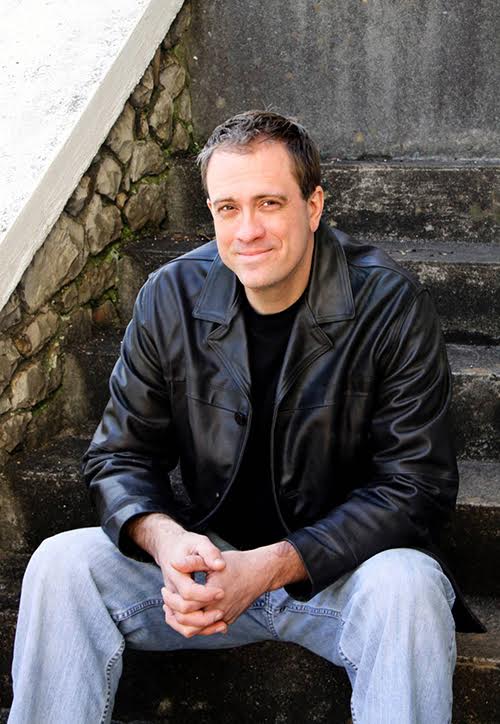
Meg Bonney is a mom, writer, blogger, freelance writer and TV extraordinaire. Her YA fantasy novel Everly is due this November through Pandamoon publishing.


TAKE ONE…


clapper-board-152088_960_720


*Were you born and raised in Wisconsin?

Meg Bonney: Yes, I was! I work in Illinois and often get asked why I don’t just move there, but I am in love with Wisconsin. My town is right on Lake Michigan and the lakefront is gorgeous. I can’t imagine moving away from it.

It sounds like a nice place. I should have asked you for pictures!


*Which diva cat rules the household?

That would be my older cat, Sammy. He is the less dominate cat between my two kitties, but Sammy is the most demanding of his humans, for sure. He will meow at you and jump on the counters if he can see the bottom of his food dish. He is a snuggler but gets so mad when you move. He’s a total diva.

Wow. Sounds like a domineering feline-diva cat snuggler. Yikes!


cat in the clothes of the king on a red background


*What did you study in college?

I went to school for Paralegal studies. I work for a large company in the Mergers and Acquisitions legal department. It’s really fast paced and keeps me on my toes.

Oh cool! I enjoy legal stuff. We’re going to get along just fine. Sherrie, another blog-buddy of mine is also a paralegal. 


*Why did you pick to write YA Fantasy?

That’s always been what I gravitated towards as a reader and as a writer. I think that there is something more magical about those teen years before you are slammed with actual real life problems. It’s just a much more emotional time and I love writing characters at that age. And Fantasy is just plain fun. I take the firm stance that real life is boring. Fairies, goblins and magic just make anything more exciting.

I’ll completely affirm, that life is rather boring at times. Mundane even. That’s why being a writer is so much FUN! You can live an adventurous life over and over again. 


*Tell us about your upcoming Everly Trilogy

Everly is the story of Madison Rosewood and her quest to save her aunt. She and her best friend, Jason must travel to a hidden world called Everly where Aunt Ruth is taken in order to save her from a terrible fate. Once they get there, Madison comes to realize that Everly holds all of the answers she has been searching for about her family and her past. Book 1, which will be out later this year, introduces you to the world of Everly and the emotional struggles that Madison must face when she gets there. Book 2 and Book 3 will continue to chronicle her journey as she tries to figure out where she fits in and how to manage the devastating events of Book 1.

I like your premise! Sounds very interesting and adventurous. Love the name Everly. It gives it a nice fantastical feel.


text-x-read-me-md


*Can you give us a snippet about the protagonist?

Madison lives on a tiny Florida island with her icy, fitness trainer Aunt Ruth and her cousin. Madison is the star athlete on her school’s track team. Even though she is a gifted runner, she has no passion for it and yearns for something more. Her life goal has always been to find her birth parents and escape the constant work outs and self defense classes that her Aunt makes her participate in. She is withdrawn and snarky to everyone but her best friend and constant companion, Jason. She is outspoken and doesn’t care what anyone thinks about her. She is far from perfect but always tries hard to do right by the ones she loves.

YES. I feel like I’m already drawn into the story. Love the dynamics of the relationships here. I was just reflecting on this today actually. Our characters and the ones we love in our favorite books round out in dynamic relationships. Just think of Sherlock and Watson. Stories or movies that have a great sidekick are more enjoyable than the typical lone wolf hero. 


*Which medium do you enjoy more, reading or TV?

That’s so hard! I guess I would have to say reading because your imagination has no budget. But TV is great because of the community aspect, especially when you are watching a show live and you can discuss and theorize together. That’s very fun!

I can’t wait to ask you more questions since you’re a TV buff. I’ve been enjoying comparing and contrasting the two mediums a lot recently.  One of my favorite authors, K.M. Weiland, will be posting an analysis about the movie Avenger Civil War this week. If you’re so inclined, check out her site:  Helpingwritersbecomeauthors.com



meadow-677878_960_720-1


*Who are your favorite TV characters and what do you enjoy about them?

I love Buffy Summers from Buffy the Vampire Slayer. She is flawed yet strong and faces her destiny with determination even though her lot in life isn’t always fair. She is one of the greatest television characters ever. I also really like Bellamy Blake from The 100. He tries so hard to do the right thing but is tragically misguided and makes some pretty terrible decisions. I love characters that want to be the good guys but have a hard time aligning their goals with their morals.

Please don’t stone me, but I haven’t seen Buffy the Vampire Slayer yet. I’ve always been the slow one in the family. Go figure. BUT I LOVE BELLAMY and the entire 100 series. I was so hooked on the first two seasons!!!  Then I dropped off the map for some reason. 


“I love characters that want to be the good guys but have a hard time aligning their goals with their morals.”


*Who are your favorite fictional characters and what do you enjoy about them?

Hermione Granger. She goes from stuck up young girl to brilliant young woman over the course of the story and its captivating. Her journey is still one of my favorites. I also really like Batman. He is just so complex and the older I got, the more I grew to appreciate how messed up he really is. He is one of the most emotionally screwed up heroes out there and that makes him super interesting to me.

Hermione certainly sounds popular. Not acquainted with her either, but I have a feeling I will be pretty soon. Batman is once of the best characters ever crafted. Definitively a timeless classic that keeps coming back again and again. Even the whole story of Batman is classical. Gotham city with its backstory, villains, police department etc. Gotham the television series is also EPIC. Loved it until I fell off the map again. 

I got a kick out of your appreciation for Batman’s twisted emotional state. Because we can totally relate to these “screwed up” characters. That’s why I never could relate to Superman. He too *super* if you know what I mean. Even Clark Kent is essentially flawless. In Avengers Civil War they tried to make Captain America go through some sort of change, or arc, perhaps. But it utterly failed in my opinion. Simply due to the fact that he’s too flawless. Mind you I’m no expert, but he’s seems too confident and sure of himself to have flaws. Captain America is the representation of our idolization of old school heroism and is the epitome of American idealism. He stands for freedom, rights, liberty etc. But too perfect if you ask me.  


batman-1407484_960_720

*Which inspires you more TV or reading?

Reading is what made me want to write. I spent most of my childhood reading and it solidified my love of books and storytelling. TV inspires me in my writing when it comes to character development. There are certain things that a show can do subtly with characters that you maybe can’t do in a book. There is a lot more chance for subtle moments in TV that you may not get in a book simply due to the point of view of the story.

Yes, I find the contrast between these two mediums very fascinating. I also get inspired by TV. That’s actually how I got started writing!! I kept watching all these awesome shows with great characters until the light bulb finally went off in my head. Every time I’d watch something interesting I’d say to myself, write it yourself…write it yourself. So I did! Or, am still writing. But there are things we can do in books that you won’t get in a movie. Like fully develop a character the way you want without the time restraint of a movie. 


~Reading is a discount ticket to everywhere~ Mary Schmich


*Tell us about PureFandom.com.

PureFandom.com is all about the fans and their nerdy loves. I write recaps and reviews for them covering Supernatural, Agents of SHIELD and The 100. I also write all sorts of news items. They are a site dedicated to fandom and working with them is a blast!

Sounds like it. That would be so fun! I love Agents of SHIELD and the The 100. They’re wonderfully written and keep you on your toes the whole time. 


*Tell us about the hiddenremote.com and your contributions.

For Hidden Remote, I will be covering Supergirl! Supergirl is making the big move to the CW and I think it’s going to be an amazing change for them. I can’t wait to cover it! #girlpower

You go girl!! (Pun fully intended).  🙂


Superhero Child With Cityscape To Sunset


*When will your book be available?

My book will be available later this year! I am in the crazy editing stage and its been a blast so far. I love sharing stories with people and I can’t wait to share the world of Everly with you!

We can’t wait to read your story! I bet you’re an excellent storyteller. Looking forward to it. 


“Great stories happen to those who can tell them” -Ira Glass

THANKS MEG PLEASE COME AGAIN!

Connect with Meg!

Meg Bonney

@MegBonneyWriter

Blog
Pinterest

Benjamin Thomas

@thewritingtrain

http://www.thewritingtrain.com

Storytelling with the Master Steven James


THURSDAY SPECIAL EDITION


EVERYONE PLEASE WELCOME CRITICALLY ACCLAIMED NOVELIST STEVEN JAMES MY FAVORITE CRIME FICTION AUTHOR


steven-james


Steven James is a national bestselling novelist whose award-winning, pulse-pounding thrillers continue to gain wide critical acclaim and a growing fan base.


bargain-456002_960_720


NEW BOOK BY STEVEN JAMES


TROUBLESHOOTING YOUR NOVEL: Essential Techniques for Identifying and Solving Manuscript Problems


troubleshooting-your-novel


  • Paperback: 360 pages

  • Publisher: Writer’s Digest Books (September 20, 2016)

  • Language: English

  • ISBN-10: 1599639807

  • ISBN-13: 978-1599639802

  • Product Dimensions: 5.5 x 1 x 8.4 inches


FROM AMAZON


Take your story to the next level of excellence!

You’ve completed the first draft of your novel–now what? Chances are, it’s not perfect…at least not yet. In order to increase your chances of getting a literary agent, selling your manuscript to a  publisher, or garnering an audience for your self-published work, you need targeted, practical instruction on tackling the problem areas and weak spots in your story. You need Troubleshooting Your Novel.

In this hand-on, easy-to-use guide, award-winning author Steven James provides helpful techniques and checklists, timesaving tricks of the trade, and hundreds of questions for manuscript analysis and revision. You’ll learn how to:


  • ADJUST elements of story progression, from causality, tension, and setbacks to plot twists, climaxes, and endings.

  • DEVELOP authentic, riveting characters by exploring their attitudes, desires, beliefs, and more.

  • LEARN narrative techniques for elements such as dialogue, flashbacks, suspense, voice, subtext, and flow.

  • ENSURE reader engagement by aligning with their expectations, fulfilling promises, and instilling trust.

  • CHECK issues with context and continuity.

You owe your book more than just a polish and a proofread. Strengthen your story, prepare it for the marketplace, and make it the best it can be with Troubleshooting Your Novel.


NO ONE TELLS A STORY LIKE STEVEN JAMES- Benjamin Thomas


award-151615_960_720


1. What exactly is organic storytelling and can it be learned?
Many people I speak with are simply not interested in or very good at outlining a book. For all of us, there is another approach.
Organic writing is the process of allowing the story to emerge as you work on it rather than plotting it out or outlining it beforehand. It’s a more natural and intuitive way of approaching any art form than imposing predetermined constraints on it. As far as learning it, unfortunately there are few books that really teach it. Most offer a repackaging of the traditional approach of structure and plot. I offer one approach in my book  Story Trumps Structure: Who to Write Unforgettable Fiction by Breaking the Rules. 

This is awesome! Two words stick out to me in this statement. Emerge and organic. Trusting the story to emerge as we’re writing it is very intuitive.  


100 Percent Organic Food on Price Label Tag
2. In another interview someone asked how you keep track of plot because you’re an organic writer. You stated the following: “I’m a big believer in context determining content”   Can you expand on this? 

Within every scene you will find a variety of narrative forces pressing in on the narrative. For example, believability (the scene needs to remain believable within that story world), causality (every event has an impetus and an implication), escalation (tension continues to tighten), and pace, flow, voice, and so on. The context that precedes a scene will affect the emergence and affect of these forces. Really, any scene edited out of context will suffer in one of these areas. Writing great fiction does not consist of filling in the blanks, but in allowing the context and the unfolding promises and their payoff to inform the direction that the story takes.

I love it. Can’t wait to get more into this. 

“Writing great fiction does not consist of filling in the blanks, but in allowing the context and the unfolding promises and their payoff to inform the direction that the story takes.”-Steven James

3. What are the major facets of storytelling?

Beyond the ones I mentioned early would be implied and explicit promises. So, is you start a story by showing how perfect Anna’s home life is, with her doting husband and obedient children and daily yoga lessons, it’s an implied promise to readers that things are about to go very wrong very soon. You’re not telling readers this, but they understand the movement of a story and anticipate it. I strive to always give readers what they want or something better. And much of that comes from making big promises. And then keeping them.

This sounds simple yet profound. I totally agree with readers understanding the movement of the story. When all is well in the beginning there’s a certain amount of anticipation and suspense built up. Excellent.


What is your story Concept

4. What are the biggest hindrances to storytelling?

It’s lonely. Every novel I write requires at least a thousand hours of solitude. At times it’s hard to feel motivated, especially on a project that’s so large and daunting. So, many of the hindrances deal not with content or ideas, but with words and perseverance.

That’s amazing! A thousand hours of solitude rounds out to be 41.6 days steeped in the organic writing process. You just elicited the Wow factor.


Wow Surprised Word Astonished Surprising

“Every novel I write requires at least a thousand hours of solitude.” -Steven James

 5. What do you love most about telling stories?

Not going insane by keeping them caged up in my imagination. If I keep them chained up, they start looking for their one way of escape.

I can totally relate to this. This is the real escapism for authors. To gladly unleash our imagination to the world.


Here’s a short poem I couldn’t help but write after hearing about the writing process of Steven James. Here it goes…


*********

A THOUSAND FOR THE MASSES


He gave himself;
to the power of solitude, willingly.

A thousand hours
fiercely burned, consumed, only knew 

Him.

He gave himself so;
to multitudes  

of words, unsparingly.

Now the masses consume them.

 Benjamin Thomas

THANKS STEVEN!

CONNECT WITH STEVEN ON SOCIAL MEDIA

Amazon Author page

@readstevenjames

www.stevenjames.net

***************

READ STEVEN JAMES BOOKS

The Patrick Bowers Series

The Jevin Banks Series

The Blur Trilogy

Other Books

Thanks for ridin’ the Train!

train-1635038_960_720

Benjamin Thomas

@thewritingtrain

http://www.thewritingtrain.com

Immersed in the Criminal Mind with Author Katherine Ramsland, PH.D.


This is the hauntingly true story of the infamous Wichita Kansas Serial Killer, BTK. Katherine Ramsland, PH.D. has in depth work into the minds of one of the most notorious extreme offenders in modern history.


*PLEASE NOTE THAT ALL PROCEEDS OF THIS BOOK WILL GO TO THE VICTIMS FAMILIES*


Get it now on Amazon


Confession


Available now on Amazon: CONFESSION


From Katherine Ramsland’s Amazon Author page:

Katherine Ramsland began her career as a writer with Prism of the Night: A Biography of Anne Rice. She had a bestseller with The Vampire Companion. Since then, she has published 59 books and over 1,000 articles, reviews and short stories. From ghosts to vampires to serial killers, she has taken on a variety of dark subjects.

She holds graduate degrees in forensic psychology, clinical psychology, criminal justice, and philosophy. Currently, she teaches forensic psychology and criminal justice at DeSales University. Her books include The Forensic Psychology of Criminal Minds, The Human Predator: A Historical Chronicle of Serial Murder and Forensic Investigation, Inside the Minds of Serial Killers, Inside the Minds of Sexual Predators, and Inside the Minds of Mass Murderers.

She speaks internationally about forensic psychology, forensic science, and serial murder, and has appeared on numerous documentaries, as well as such programs as The Today Show, 20/20, 48 Hours, NPR, Coast to Coast, Montel Williams, Larry King Live and E! True Hollywood. She spent 5 years assisting “BTK” Killer Dennis Rader write his autobiography, and has started a supernatural fiction series with The Ripper Letter.


WELCOME KATHERINE


search-1019904_960_720


*In your recent book, The Mind of a Murderer, and now Confession, both take the offender’s point of view. Can you tell us the significance of this as opposed to other approaches?

Actually, The Mind of a Murderer places each POV of an extreme offender in the frame of the theorist or clinician who interviewed him or her. It describes a dozen cases from the past century of mental health experts who devoted time to an extended case analysis through interview. This gave me an appreciation of the benefits of this approach, which can yield items that arise only with a deepening sense of the subject. Because it’s clinical and not salacious, the trained listener can structure the questions for maximum advantage to the discipline of criminology. You get a good sense of the layers of behavior – especially the manipulative behavior – as well as being able to ask a lot of questions that might occur to you along the way, so you can develop a more complex portrait. Within that, you might find motives that fail to fit stereotypes. An important aspect is to identify outliers, so that we can recognize the limits of our current theories and improve them. With Rader in Confession, at first, there was distance, as he did not know me well but he respected my credentials. As he found that it was easy to talk about ordinary things, he revealed more. There came an element of trust and familiarity that one can achieve only with numerous contacts. In addition, if you catch someone in an inconsistency or deception, you have their statements on tape or in writing. More important, though, is the ability to stay focused on a subject, pressing for clarity and detail. This is what we call qualitative research, which provides an open-ended richness to an interview that standardized tests or superficial questioning just cannot achieve. It’s not about having offenders just talk about whatever they want. Because the experts have background in research and/or trained expertise, they will structure the interviews to draw out helpful insights. There’s a bit of a research filter, but not much.

I appreciate this approach very much as it applies to the the discipline of criminology. Hopefully this will give us an inside view of the criminal mind and expose the limits of our understanding of serial killers. I’ve read another book entitled, Inside the Mind of BTK by former legendary FBI profiler John Douglas, who writes from a completely different approach. But the approach taken in Confession provides a certain mindset drawing out rich details. 


Forensic evidence word cloud


*How do you immerse yourself in the mind of an extreme offender such as Dennis Rader? 

I’m not sure if you’re asking about my method or my ability to endure it. My method was to read everything available, including five years of correspondence from a previous person who had contacted him. Then I spent five years corresponding with him and talking with him on the phone. Prison visits, I discovered, were of little value, aside from socializing. The real work came from his writing and drawings. How I was able to get deeply into this project relies on the ability to keep my goals in mind and adopt a clinical perspective. I have studied extreme offenders for many years and have written quite a few other books on them, so I had the ability to 1) listen to Rader describe his murders without reacting emotionally, and 2) place what he was saying in the context of my prior research. Many writers will tell you that immersion is truly the best way to experience and express yourself on any subject. Quite a few of my projects have been immersive. In this way, you shed your personal frame and evolve toward other perspectives. You learn to think like someone else. My first experience of this was jarring, but eventually I fully embraced it.

Wow. This was truly an immersive project. Having to read 5 years of previous correspondence, spend another 5 corresponding, and then conclude with a professional analysis is nothing short of amazing.


Brain activity


*What did you learn about the perception of this particular serial killer? 

Dennis Rader has written hundreds of pages and drawn explicit pictures from his fantasy life. He provided a rare opportunity to get inside the mind of an organized, predatory serial killer who designed his killing career on specific role models, real and fictional. Because he offered specific details, I could add some experience. For example, when he described how he had selected stamps to use on his cat-and-mouse letters, I considered this when I looked at a wall of stamps. It helped me to briefly think like a predator. In turn, this helps me to stay safe and teach others to do so. I expected that working so closely with someone like Rader would have an impact on my thinking and theorizing. I have deepened my description of certain aspects of the criminal mind. Rader and I discussed things like living compartmentalized, but watching the act of it up close is quite an experience. There were walls that kept him sealed inside specific narratives, and nothing I asked or said made him more self-reflective about them. However, this behavior interested me, too. Cops have said I didn’t confront him enough to get to the “truth,” but there are many types of truths. I wasn’t interrogating him.

People like Rader think differently. As Rader puts it, “Hunting and prowling became a habit, much like drugs. You learn to cover up, hide those times in your normal life and develop a different set of life frames.” We need to accept that reality has layers and we don’t all share the same perception of it.

Yes, I read about his development from his childhood, and it definitely sounds like he had some abnormalities that may have affected his brain development. Especially his hidden erotic fantasies. It seems that they secretly grew within him until he actively sought out to reproduce what he saw in his own head.


child-1154951_960_720


*How is Rader unique in the realm of other serial killers?

It’s difficult to answer this question succinctly, since I spent an entire book exploring it. But I can say this: Many people have assumptions about serial killers and they expected Rader to fit the mold. In some ways he did, but in other ways he didn’t. Not many serial killers start out trying to copy role models. Not many compartmentalize successfully for three decades, especially when addiction is part of the compulsion. Few carry on a successful social life, with family responsibilities and a job, while also planning murder. Those who are conversant with their paraphilias won’t necessarily offer up details for analysis the way Rader did. Many have abusive backgrounds, but he did not. He kept an extraordinary amount of “hidey-holes” for all of his fantasy paraphernalia. And he had contrived a way to be Jack the Ripper and the Boston Strangler all rolled into one – although he didn’t quite pull off his ultimate plan.

He definitely breaks the mold of assumption. This was definitely an eyeopener!


*In a separate interview, you made this statement: “I am most fascinated with Rader’s description of  “cubing” (his word for the more clumsy academic phrase, compartmentalization). He talks about how he developed “life frames,” but more interesting for me was bumping up against these boundaries whenever I asked difficult questions.” Is this “cubing” or compartmentalization unique to Rader, or do others exhibit this trait?

Living with several psychological compartments is common to anyone who attempts to have separate and contradictory centers of morality or meaning. It’s difficult to kill and also dictate that extreme violence on TV is wrong (as Rader does) unless you can move comfortably between these diverse points of view. It’s not multiple personality disorder. It’s more like being an actor, taking on different personas. With these people, the various roles are part of their lives. With psychopathic tendencies, the reduced sense of empathy and the lack of remorse assist the process. But compartmentalizing isn’t limited to serial killers, or even to criminals. It’s not difficult to spot it in many public figures, from sports stars to CEOs to politicians.

On one hand this is completely mind boggling, but on the other it’s very fascinating. A lot of people are intrigued by crime because they don’t understand the “why” or the motivations behind it. Although we may never understand the reasons or varied obscurities of crime, we should analyze its expression.  In this book, you let Rader express himself according to a structured clinical perspective. He also kept copious amounts of written material about his fantasies, crimes and drawings which gave us an intrinsic view of his mindset. 


crime-scene-1240780_960_720


*Do you think this “cubing” mindset contributed to his criminal behavior? Or why in his own mind would he separate his lifestyles in the way that he did?

Cubing is a pretty common activity, and it evolves gradually. It’s not a calculated adoption of a lifestyle. It’s part of the development of a fantasy life, because it’s about enjoying oneself in secrecy. The more deviant one’s fantasies are, the more likely one will develop a cube for it. In this way, the brain develops neural pathways to support it, so that it’s easier to go in and out, as well as easier to keep separate. You develop a persona that is acceptable to the people around you, but you go into your fantasy world when you want to fully indulge. I would say any novelist knows this experience, and probably other creative types. The more they accommodate the secret life, the more natural it feels, and if it’s more rewarding than ordinary life, it will become their ultimate retreat. Then, when they act out and actually commit a murder to accommodate their fantasy, they decide if it’s all it was cracked up to be. If so, and they get away with it, they will do it again. Rader describes how he kept believing there was a line he wouldn’t cross, but then he did. It was like being on a boat that was floating away. He kept thinking he wouldn’t float so far that he couldn’t get back to shore, but then he did. And he accommodated it, thereby evolving toward a new sense of himself. What he believed did not match his reality. His victims paid the price for that. Then his life changed and kept changing, but he had no moral base against which to measure himself. He just kept doing what felt good to him. He recreated himself.


I’m very curious about how his brain would’ve developed abnormally according to his dark fantasies. He probaby was hard wired completely for his intense fantasy world. Brain plasticity or neuroplasticity, has great potential for change throughout life according to normal life experiences. As a child develops over time their brain is shaped according to what they learn and practice producing neural pathways typical of any human being. But in this case, sounds like his brain developed atypically for something dark and abnormal. From what I’ve read, even way before he acted out his killings on others, he practiced binding on animals and even on himself. 

One other confusing thing is that he had no moral base against which to measure himself. He was the president of his church and an active member so he must’ve possessed some morals. Second, he was a strict city compliance officer who would go out and measure people’s lawns with a ruler. Third, he served in the U.S. military for some length of time. Fourth, he was a cub scout leader. Fifth, he was a wannabe cop who was addicted to reading detective magazines. The guy definitely had morals, well, at least in that “cube” of his life. But when it came to his “fantasy cubed life” he used a twisted sense of morality to carry out his crimes. Actually, his sense morality in this part of his life was entirely based on fictional and real serial killers. He would berate and measure himself if he didn’t’ conduct his crimes correctly or lose control. 


skull-1529065_960_720


*Was he incapable of distinguishing between his “normal” life from his own criminal fantasies?

No, he was capable of understanding the difference, but the reward of his darker life had more weight than his “social obligations.” It felt more alive and exciting; it held the possibility of fame. His ordinary life did not. Some offenders are much more focused on immediate reward than on moral duty and prosocial behavior. This does not mean they are mentally impaired. For Rader, it became an addiction, but he didn’t lose sight of the fact that murder was wrong and illegal. After all, he went regularly to church!

This is fascinating. That he was completely capable of understanding the difference between the two, yet the reward of the darker life dominated all sense of social obligation, or moral duty of law. Now I’m theorizing how this goes back to his lifelong practice of paraphilia would’ve affected his brain development and neural pathways. Any drug addiction is a neurochemical nightmare on any human body. According to WebMD, “drug addiction is a brain disease because the abuse of drugs leads to changes in the structure and function of the brain”.  Unfortunately his drug of choice was a complex binding and torturing fantasy of human beings.


smoking-1418483_960_720


*Why do killers seem to inspire one another? Is it fame, power, recognition?

Only some killers are inspired by others, and for a diversity of reasons. Healthcare serial killers, for example, want to learn how to use medications they hadn’t thought of. Among copycat mass murderers, some get ideas or methods that they hadn’t considered, while others find courage or confidence from seeing another carry out what they fantasize about doing. For some, the act of another is a trigger. Something similar can be said for serial killers who view others as role models or who think that this is the best road to fame. Rader got ideas, was inspired, fed his fantasies, acquired an identity, and felt compelled to become one of the elite. He had several reasons to copy others, but primarily it was for the erotic rush. But I’ve seen some killers who merely seek fame. There isn’t a way to generalize, because each has his or her own trajectory toward violence.

I think I understand some parts of his life, but seeking to become one of the “elite” is beyond me. We talked about cubing or compartmentalization. It seems that all his “cubes” were just a stage for the most dominant one, his fantasy. The addiction of the erotic rush was there, but so was ambition to become one of the greatest. To me, this is just an extension of his fantasy. 


*Why would he, or anyone, seek to be famous for serial murder? 

For some people, fame is highly intoxicating. Some people seek it through legitimate means, others through crime. Those who seek it through crime either believe it’s the only way they can be famous or they decide that crime is the most exciting avenue to fame. They see it in news coverage and they want to be described like that, too. Some even identify an actor to play them in a movie about their crimes.

Fame can be intoxicating. We can see that in the corruption of politics, sports, business and even our own lives. But how someone would seek it through crime is unfathomable. Then to decide that it’s the most exciting avenue to fame is startling. Fame can be a drug or an addiction. 


desert-444833_960_720


*How will the findings of this book affect criminal or forensic psychology?

It won’t affect these disciplines as a whole, but hopefully, I have added some information to a subfield of knowledge about extreme offenders. I would like to believe that I have elicited greater appreciation for the extended, in-person case study, but I know that few people have the time to devote to something like this. I also hope I have made a case for keeping our notions about serial violence open-ended. People who study human beings in terms of probabilities or trends tend to focus on categories – what I call a cookie-cutter approach. This encourages a “we know all we need to know” mentality. I prefer to ponder individuals, to see how the particular details of their lives braided together toward violence. I think we need to stay open to the element of surprise and uniqueness.

I believe your last statement wholeheartedly. I would prefer to ponder the individual as well, then apply it contextually.


*What did you experience in writing this?

Across the course of five years, I had many experiences, although I never had second thoughts about pursuing it. At first, it felt somewhat daunting, although I had already written two biographies and other books. Also, I knew that some serial killers can be vulgar, crude, and demanding, but Rader never was. Over time, we got to know each other and the project took shape. When I saw that he was really trying, this became a more significant project for my research. As I was wrapping up, it seemed like this could be the most intense and psychologically deep book that I’ve ever written. I didn’t know if it would actually turn out well, but during the final six months, I was pretty sure it would cap so much of what I had done before it. The final result feels dense and comprehensive, but I don’t think what I did is complete, so there’s an experience of anticipating something more.

I really appreicate the time, effort and dedication you’ve committed to this project. You’re a consummate professional. Thumbs up.


thumb-1429327_960_720


*How has this book affected your understanding of a serial killer?

I have deepened my understanding of certain aspects, such as the academic notion of compartmentalizing. But also, I have experienced pressure to force Rader into a “type,” to make him fit cultural and academic notions about serial killers. Colleagues had certain expectations, such as that he had to have been abused as a child, which made me think about the fact that we sometimes act as if we already have all the answers. This is a terrible attitude for researchers. It means we’ve closed off possibility and there’s no reason to keep exploring. When we’re dealing with humans, we can’t be so certain. Each person brings something from his own life story, and rather than try to force Rader into a pre-established mold to suit colleagues, I let his story be the way he saw it. Maybe it’s not all true and maybe some things remain hidden, but the behavior that went into the telling of it had its own revelations. Having once taught existentialism at Rutgers University and having studied phenomenology at Duquesne University, it was nice to be reminded to bracket my personal bias and let the raw material be what it was.

This is much appreciated! You’re highly regarded for expertise and experience. You’re honesty is also notable. Thank you so much for all your hard work.


Follow Katherine Ramsland:

On GOODREADS

On her website Katherine Ramsland

On her blog Psychology Today


*****************


OTHER BOOKS BY KATHERINE RAMSLAND

My Forensic Books

Psych Books

Paranormal

Other Books


thank-701985_960_720


Benjamin Thomas

@thewritingtrain

http://www.thewritingtrain.com


Book Review: Curious Minds A Knight and Moon Novel


51N-2N1xZkL._SX329_BO1,204,203,200_


 Enjoy the beginning of a new series with Janet Evanovich and Phoef Sutton, A Knight and Moon Novel! 
IT’S DELIGHTFULLY ENTERTAINING!
A definite 5/5 Stars.


 Janet & Phoef, give yourselves a high five! This was a great beginning to kick off the Knight and Moon series. I can’t wait to see what you come up with next. 
This was a humorous page turner. I enjoyed the playful tone displayed throughout the book. I found this to be a refreshing twist in today’s crowded crime writing genre. 

Dialogue, dialogue, dialogue! I’ve never seen a book that skillyfully utilizes dialogue like this one. Except for Janet’s and Lee Goldberg’s book, the Pursuit maybe, but this one is even better. Most authors are heavy on the narrative, or attempt to balance narration with dialogue. Not so in Curious Minds. This book is designed to exploit the dynamic relationship between Emerson Knight and Riley Moon by using excellent dialogue. This is a highlight of the book. The heavy use of dialogue means more exploration of CHARACTERS, which was effective and downright hilarious!

To use that much dialogue means the character development is off the charts brilliant. Not just the protagonists, but also the supporting cast and the host of antagonists. 
The depth of the plot is also noteworthy. Adventurous, entertaining, humorous, and full of suspense. 

You can pre-order the book now and is available Tuesday August 16th on Amazon.com. 

Benjamin Thomas 

Watch “A VERY EXCITING ANNOUNCMENT!” on YouTube

TIME FOR TUESDAY TELEVISION 


Great news from Sasha Alsberg and Lindsay Cummings!


Let’s talk publishing in the comments!


BENJAMIN THOMAS 

Author Interview: Discussing Comedy with Ana Spoke


WELCOME BACK TO THE WRITING TRAIN FOLKS

ALL ABOARD!


Everybody please welcome

ANA SPOKE


I am a self-published author and an unbridled enthusiast, moonlighting as a middle manager. I started my blog with one purpose – to finish a novel. The good news is, that after almost two years of constant writing, editing, and more editing, I have finished one. It’s a comedy, and it is now available on Amazon. I hope you have as much fun reading it as I did writing.

The sequel to Shizzle Inc, Indiot is now AVAILABLE. Ana also blogs about the book marketing game over at anaspoke.com . Have a look at the “book marketing” tab for lists of resources and my personal experiences testing various marketing gimmicks.


AnaSpoke face only


Fo’ shizzle


Ana is also the founder of Comedy Book Week. An awesome event with an official website, over 60 participating authors and 111 books! It should be even more epic next year! If you’d like to sign up see the link above or contact Ana.


textgram_1468982652


***************


LIVE 

LAUGH 

LEARN

REPEAT


***************


emotions-371238_1920


* What part of Australia are from? Were you born and raised there?

I live in Melbourne, Victoria, and it is currently the middle of winter here. I was born in Russia, but I’m technically Ukrainian, and I’ve lived in the US for 14 years. Melbourne is the second largest city in Australia but, arguably, the largest center for culture and arts.

Wow a world traveler! Melbourne sounds like a neat place.


*What’s Australia like?

It’s great, if you don’t mind the kangaroos, which are everywhere. Just kidding! Australia is more laid back than the US, but just like the US, it’s huge and varied in climate and local culture. In the US, I lived in Florida, so I still can’t get used to Melbourne’s crazy weather – it really can have “four seasons in one day.” Yesterday it was freezing and raining with hail (that’s the middle of winter for you), but today the sun is up and it’s warming up quickly. In summer, it’s not that unusual to have temperature drop by 20 degrees Fahrenheit in a space of an hour, when the wind changes direction and starts blowing from the Antarctica. To make me even more miserable, while I’m freezing here, I hear it’s almost 90 degrees in Darwin, Northern Territory.

One of the things I like best about Australia is its multi-cultured mix of people. In Melbourne, about 40% of residents were either born overseas or had at least one parent born outside of Australia. So, being a foreigner is not such a big deal, and I felt accepted from the very first day. Such a mix of people also means you can get any ethnic food you desire, and it would be authentic, too.

Another thing that’s different from the US is that in Australia, most people live in cities, so the rest of the country is barely populated. This means a lot of untouched, wild “bush” nature. It also means crazy property prices in the city, tiny apartments, and tiny backyards, if you are lucky enough to have one. I think most Americans would struggle with the size of an average family home here.

Sounds quite fascinating!  It’s good to experience different cultures. Thanks for sharing your experience. 


*Where did you go to school? What did you study?

I’ve gone to school on three continents! I’ve studied landscape architecture, microbiology, environmental science, and project management, and have 1.3 Ph.D.s to show for the total of 13 years of full- and part-time study. I’ve never studied literature or writing, but over the last 2 years I’ve put myself through a self-designed and managed Masters of Self-Publishing (sort of). I blame it all on a combination of curiosity, short attention span, and a life-long addiction to the endorphin rush that comes with achieving goals.

That’s quite a blend of academic studies. I do remember when you were agonizing over your debut comedy novel Shizzle Inc. in some blog posts. Now it’s out! Impressive.


* What was your career track before pursuing writing? You mentioned about being a middle manager on your blog.

Still doing that, although I am currently finishing up my five-month long service leave. I work in a government agency, managing a small group of people and putting together management strategies. Maybe that’s why I could not resist starting #ComedyBookWeek – I was missing the rush that comes from organizing something new and nurturing it to grow into something big.

That’s again very impressive. Especially since it’s something fairly new and grew so quickly. You’re hired!


* Do you have any major hobbies you enjoy?

Currently the only one, obsessive, and all-consuming hobby is writing and marketing. I’ve had others– from breeding rare fish to kiteboarding, but they tend to come and go (see the previous comment about short attention span and endorphin rush).

Ana, I have to say, you’re a very interesting individual. I’ve never heard of kiteboarding and organizing anything makes my eyes cross.


Young man with Work in progress mark over his head
My brain on organization


*What’s your genre and why? Will you branch out?

My life-long genre is humor. It’s in everything I do, so even if I ever write something different, it will be funny. Perhaps a hilarious erotica series?

I love it. Everybody needs a good laugh right? 


*Tell us about your upcoming book, the sequel to Shizzle.

Indiot follows Isa Maxwell to India, where she was supposed to help a mysterious prince win back his fortune. She also hopes to convince the prince to use his wealth to help the orphans, and maybe write a book about it. Needless to say, noting goes as planned. It’s a mad romp that goes from bad to worse, and then, just as she sighs with relief, it plunges her even deeper into trouble.

Sounds wildly entertaining! I’m finishing up Shizzle now and will press on to Indiot very shortly. 


Indiot for Kindle June 21 2016

INDIOT

(Isa Maxwell Escapades Book 2)


*What have you learned in your experience writing Shizzle?

I think the biggest lesson was to trust myself and to believe that somewhere in the world, there are people who would enjoy reading my books. I was so insecure about my ability to tell the story of Shizzle, Inc., that it took forever to finish it, and then even longer to get the balls to self-publish. Along the way, I just wanted someone to say, “Hey, this is not absolute garbage!” Now, thanks to my fans, I have an audience that’s eagerly awaiting Indiot’s release, and already asking about the third installment. It’s an amazing feeling, and a powerful fuel to keep going.


New Shizzle Kindle cover 21 June 2016


Shizzle, Inc (Isa Maxwell Escapades Book 1)


*Can you tell us about your experience in self-publishing and marketing your book?

I’m strange in the sense that I now love the experience of self-publishing, and even more so –marketing. I had a lot to learn – the launch of Shizzle, Inc. was basically me saying “Thank God, it’s finished” and pressing “publish.” It took me another three months to publish a paper copy and to figure out some of the basics of book marketing. This time around, I am better prepared. The ebook and paperback are available at the same time, I have some early reviews thanks to fans willing to review ARCs, there’s paid marketing, Goodreads and Amazon giveaways, and of course, #ComedyBookWeek. Fingers crossed, all that effort will pay off. More importantly, I am learning so much, I have no doubt that the third book will be even better.


*You’re a writer; so what’s your story? What inspired you to take this journey?

I think I was meant to be a comedian – books are just one of the outlets for my never-ending clowning around. I literally can’t put a lid on it, and keep my colleagues laughing at work, and my family at home. At one point, I was even a comedy actor but, unfortunately, you have to wait for someone else to give you a role and write your material. With books and my blog, I can channel my gags straight at the audience – no middle man necessary.

I wanted to be comedian when I was a kid. I can totally relate to you on this level. 


*Now that you’re published what’s your GOAL (S)? What’s the next step?

One of them is to continue writing the Isa Maxwell escapades series – I’m not finished yet or, rather, Isa is not finished. I trust she will tell me when she’s had enough. I also want to write a new book, and have a multitude of ideas noted down – it will be a matter of choosing one. It will definitely be funny, although it will have a different “flavor.”

I’m all too intrigued to see what you come up with next. You got me on my toes.


ballet-shoes-999807_1920


*What 3 things have hindered you from completing your projects? (CONFLICT)

Lack of self-belief had to be the most significant one. I consider myself to be a confident person, but even so, it’s pretty scary to say to yourself, “Hey, I think I can write a whole novel, and make it worth someone’s time.” The second obstacle is time – my “regular” job is demanding, and it’s hard to be creative after a full day. And finally, lack of knowledge – with the first one, I had to study plotting, character development, and editing alongside of writing the actual novel. If anyone is writing their first book, I would highly recommend undertaking a self-designed Masters of Writing. There are so many books on writing to choose from, plus you may find local courses or online resources. And if you want Cliff Notes on self-publishing and marketing, then read my blog!

A lack of self-belief is a big one across the board for majority of writers. I can relate to the lack of time! Especially after work and kids. Writing is such an subjective process it can be overwhelming for new authors. Then the objective side of learning the monstrosity of putting together a complete novel is a large undertaking to say the least.


*What keeps you motivated in achieving your dream? (DESIRE)

A vision of myself as a full-time writer, plus the positive reviews on my books. I have read and re-read the reviews many times over, and each time I vividly imagine that person, laughing out loud on a train or “snorting tea everywhere.” That’s what keeps me going, especially after I get an occasional bad review. There are people out there, on the other side of the planet that have never met me, but have loved reading a story that I made up and published. It’s an amazing “head trip” for me.

YES. I’m so happy for you AND very jealous.  I’m also one of those far away peeps cracking up when everyone else is asleep.


girl-204327_960_720


*What’s your main ANTAGONIST? What’s in the way of you accomplishing your goals?

Some unpublished writers think getting published is the only hurdle. Currently, I’m the boss of my antagonists and demons, and ploughing away every day. Again, this is thanks to the small successes along the way – positive reviews, supporters of my blog, and sales of my books. There have been times when I’ve questioned my investment of time and money, but I got up in the morning and kept going, and the Antagonist got weaker and weaker. I don’t think I will ever be completely free of self-doubt, but I’ve learned to manage it. Marketing your book is a much bigger hurdle than publishing. I hope writers understand and embrace it – and hey, it can even be fun! I would say that unpublished writers should have reasonable expectations of sales of their first book, and then continue working every day on improving their craft, as well as packaging, marketing, positioning, platform, and all that jazz. It’s a snowball, and it takes a long time of pushing it around before you start seeing it grow.

This is great info and inside scoop for us newbies looking to get out feet wet. Thanks Ana! I’m glad you keep going despite the hurdles you had to overcome. You must be good at track I suppose?


Overcome growing obstacles. Business concept. Render.


*Why do writers give up, quit or abandon their dream?

I have not studied this enough, but I would say self-doubt coupled with negative feedback could kill any dream. I would recommend striving for smaller, intermediate goals on your way to “success,” whatever that may mean to you. That way, there are bursts of positive energy all along the way that will keep you going.

Good practical advice here. That way we don’t set up ourselves for failure. 


*What would you say to a struggling writer who’s given up?

It’s a very personal issue, and this industry is not for the faint of heart, so I would ask them what it is they really want. It may not be writing – in my case, for example, it’s the desire to make people laugh. There are other outlets for it, such as acting or stand-up. If, however, the person truly wants to be a writer, I would tell them to stop acting like a victim, get it together, make a plan, and try again. What can I say, my Russian is showing.

This is good stuff here. I like your Russian.


*What else is coming down the pike for you?

Well, #ComedyBookWeek is shaping up to be quite a celebration. It’s hard to think it was just a vague idea six weeks ago, and now it’s an event with an official website, over 60 participating authors and 90 books. Based on the level of interest I’ve been getting over the last few weeks, the next year will be huge. Another sharp learning curve for me, and another blast of endorphins. Bring it on!


BRING ON THE LAUGHS!!!!


glassy-smiley-good


Stay connected with Ana! 


LINKS:

Shizzle, Inc: Isa Maxwell Escapades Book 1

Indiot: Isa Maxwell Escapades Book 2

Blog: anaspoke.com

#ComedyBookWeek: Comedybookweek.com


FAVORITE QUOTE


I thought about a few famous quotes, but decided to live the interview with a fresh one. My nephew-in- law has written a musical called “Einstein, Master of the Universe.” One quote from the play truly resonated with me:


“Pursue a problem, and it soon becomes a prize.” It worked for Einstein, and it would work for any of us.


Keep Writing


Benjamin Thomas

@thewritingtrain

http://www.thewritingtrain.com


Watch “A Thousand Nights Book Review!” on YouTube


Welcome to Television Tuesday


tv-md


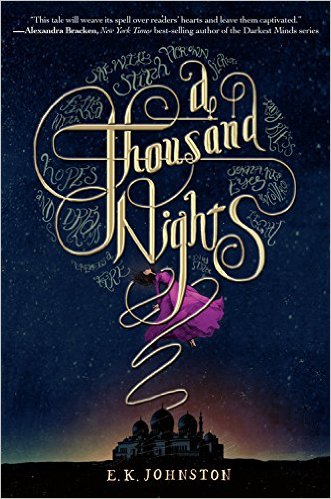
A Thousand Nights by E.K. Johnson


51qDwTeWiAL._SX329_BO1,204,203,200_


Have you read or heard of it? Tell me in the comments!


Benjamin Thomas

Watch “Summer Reading Recommendations!” on YouTube

Welcome to Television Tuesday


Have at it!


1197099192237286365ampeddesign_lcd_screen.svg_.med_.png


Tell me in the comments which books spark your interest! 


Benjamin Thomas

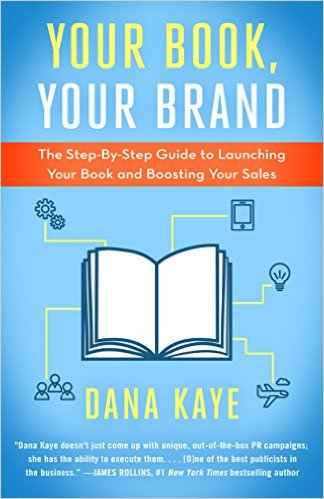
Book Review: Your Book, Your Brand by Dana Kaye


I’ve been waiting for a book like this!


51Z0ikveO4L._SX322_BO1,204,203,200_


Writing your book is just the beginning of a long journey. Especially in today’s new age of mass publishing. There’s probably more writers in the market today than ever before. Which makes it even more critical to be educated on what to do after your book is published. In order to be successful authors we need more than just knowledge of publishing. We need to continually learn how to effectively market and promote our books. So whether you’re self-published or traditional, this book is for you.

Dana Kaye does a wonderful job laying out this comprehensive guide. From developing your campaign, content strategy, pitching, media, it’s all there. Want to be your own publicist or hire one from the outside? Look no further. This book is a step by step guide for anyone looking for practical advice from a seasoned professional.

Goodreads

Amazon


Benjamin Thomas


Interview: Author Anne Janzer on her book, The Writing Process Getting Your Brain in Gear


WELCOME EVERYONE 


Today we have a very special guest

Professional writer and author

Anne Janzer!


00126_FCB_01


Anne is the author of the stunning books, The Writer’s Process: Getting Your Brain in Gear and Subscription Marketing: Strategies for Nurturing Customers in a World of Churn.


“I am part of everything that I have read.” -Theodore Roosevelt


WELCOME ANNE


Janzer headshot small low res


Anne Janzer is a marketing consultant and professional writer with more than 20 years of experience working with high tech businesses. Her clients include software industry giants, fast-moving tech start-ups disrupting the status quo, and clean tech companies trying to change the world.

Anne has worked with over a hundred technology businesses, from industry giants to innovative start-ups, helping them articulate positioning and messaging in crowded markets. In her consulting career, she has collaborated with serial entrepreneurs, industry thought leaders, and technology pioneers pushing the boundaries of what’s possible. As a ghost-writer for corporate executives, her work has appeared in dozens of industry publications and blogs, including Wired.com and the Sand Hill blog.

In addition to her own blog on subscription and content marketing, she contributes guest posts to many many technology and marketing blogs, including Business2Community, Social Media Strategies Summit blog, Marketo and Zuora blogs, Crowded Ocean, and others. Anne has an established and growing author platform, including an email list, blog, and expansive social media presence. She is a graduate of Stanford University.

Connect with Anne on twitter @AnneJanzer, see her website at annejanzer.com, and follow her blog.


84ef7a62cf5fc9a39163ea6f300d0a68


Let the games begin


*What did you study in college?

I was an English literature major at Stanford.

Awesome! 


*Why did you choose that particular degree?

I chose the English major because, as a lifelong reader, I knew that would always, no matter what, want a literature class on my schedule every term. I realized that with careful planning, I could complete the English major, leaving myself open to explore other subjects. I almost did a double major in Human Biology, which at Stanford is an interdisciplinary major combining the hard and soft sciences. But after completing the core work, I ran out of steam in designing a personalized major. Instead I took classes in journalism, computer science, and psychology. I’m a strong believer in the value of a liberal arts education!

Wonderful. Education can shape us in so many ways.


*Who or what were your early influences that led to a writing career?

I come from a family of readers and writers. I had always imagined myself as a writer, since the time I was young.

Your imagination was right on target.


*After college why did you go into writing for tech companies and marketing? 

My first job out of college was at Stanford, working in the administrative computing group as a technical writer in a group of systems programmers. Being able to understand and write clearly about technology is a useful skill, particularly in Silicon Valley. Like many English majors, my career was more of a wandering journey than a clear linear path. I moved into product marketing at a startup, and then took off on my own as a marketing consultant/writer.

Nice. That would prove to a very useful skill in the silicon valley! 


*Give us a summary of your book and why you decided to write it.

The Writer’s Process is about the inner game of writing – matching the stage of the work to the way that your brain operates to be more productive and creative. I’ve spent many years as a professional writer figuring out the ways that I work best. Reading research about focus and creativity, suddenly those methods started making sense from a cognitive scientific standpoint. That inspired me to dig in and analyze the process. I wrote the book because I truly believe that a better understanding of the inner craft can help writers of all levels have more fun and success with their work.

Well, I’m certainly glad that you did. This book had a major impact me. On the seeking and understanding of my own process. It’s very easily one of my favorite craft books of all time. See, all your hard work paid off. Come to think of it, this book seems to be a culmination of years of writing experience. Now it’s in print and ready for consumption. Thanks!


Brain activity
You’re brain on writing…


Writing is the painting of voice. – Voltaire


11949857102022828511gnome-graphics.svg.med

*What were your favorite parts in writing it?

I loved researching not only the science, but also the practices of other authors and writers. It’s fun to realize how much all writers have in common. Plus, there’s something very “meta” about writing a book about the writing; it gave me the opportunity to refine and tune my processes.

I think writing is both a collective and highly individualized art. We don’t exist or work in a vacuum. We’re influenced by those around us. The literary culture of our time leaves a remarkable footprint on society. Writers of every generation run, then pass the baton down to us.

The issue of their process, imagination and approach to writing leaves an indelible imprint on our souls. We seem to assimilate these ‘imprints’ into our own process, until we become a work of art ourselves. But when we learn, accumulate, express ourselves through our own process, we discover that it still bears a unique flavor. For when the flow strikes and flows through the artist, it takes on the sediment of the individual.


16d80bf9a7c15f417bb6a8c0d084b348


….Then go edit them ~Benjamin Thomas


*What did you learn from writing it? Or has it affected your craft?

Writing the book has definitely made me more disciplined about my own process. For example, now I notice when I am tempted to skip a step and short-cut the full end-to-end writing “recipe” to save time. I’m more intentional about incubating ideas and problems. When I recognize the Imposter Syndrome or run into other problems, I have defenses ready.

This is great. I always enjoy how others have adapted their own process. Having an understanding is critical, however discipline seems to be largely underrated in my opinion.

Second, the fact that we can change and adapt this process tells me that it’s extremely malleable. Sounds like a special piece of clay doesn’t it? I know in pottery clay can take on many forms, possibly thousands. It all depends on the hands that shape them.


pottery-md


*Tell us about the relationship and potential collaboration between the Scribe and the Muse.

The book describes two different mental systems that all writers rely on. The Scribe is my name for the intentional and hard-working writer, while the Muse refers to intuitive, creative processes.

I love this! Scribe is a great name by the way. Thumbs up. The Scribe resembles a type A, control-freak-businessman, while the Muse is much like a mysterious laid-back teenager with a mind of its own. But the two must learn to work seamlessly together as a team.


bf354fd8535ecbcc3ecc54df796cf054

                                    No hard feelings, eh?

                             (photo credit Angelos Ntinas)


*In your book you label the Scribe and Muse in order to point out the intentional and intuitive mental processes. 

It’s a useful fiction, a way to frame the complexity of different inputs that go into writing. All writing depends on both systems; you need focus and discipline to work. But you also need the ability to summon thoughts and ideas and to make connections that bring your subject to life. Productive writers learn how to hand off the work between the two mental systems.

I think this statement sums up my enjoyment from the entire book actually. It’s extremely enlightening to realize that they’re two; but not diametrically opposed mental systems, and in order to be productive we must learn how to “hand off” the work between the two. Powerful.


13289352641006235573143BundleSticks.svg.med


*Can you tell us more about open attention and focus and how they relate to our writing?

Focused attention is how we get the work done, blocking out distractions to write, research, or revise. In contrast, open attention is what happens when we do something that doesn’t require dedicated focus. We experience open attention when taking a walk or doing everyday tasks that are somewhat automatic.

Knowing about the nuances of attention is quite an eye opener. We must master both to tap into better productivity as writers. No wonder so many people get writer’s block. Too much dedicated focus and not enough open attention. The Scribe dominates the relationship and the Muse retreats to who knows where.


~Don’t bully the muse. Give it some room to fly high and mighty. -Benjamin Thomas


*You said something very critical about moving between the two systems of Scribe and Muse by directing our attention. This seems to be a somewhat voluntary gateway; through which we can toggle back and forth between the two systems, or writing minds. 

Exactly! Using the metaphor of the two mental systems, the Scribe operates in a state of focused attention, while the Muse appears when we’re in open attention. Perhaps the Muse is always there, but we only hear it in states of open attention. To hand off work between these systems, you need to be able to focus intently, and then let go of focus. Spend time writing, then time “not-writing.”

This is amazing every time I hear it. The intentional mental process and the intuitive mental process. Then learning how to utilize the gateway between the two to get our best work done. 


green-emergency-exit-left-md

              open attention 


*Speak about the benefits of open attention.

When we’re in open attention, the Scribe is not managing our thoughts, and the Muse has a chance to contribute, to process unrelated thoughts and come up with interesting ideas.

In this section you tell us that we connect to the Muse through open attention. I’ve never heard this before. That’s so cool!

The cool thing is that this really works! When you need creative input on a problem, queue it up in your head, and then seek out a period of open attention. Here’s an example: a client was looking for a metaphor for a complex technical topic. I was drawing a blank. So I thought about it intentionally, then walked to the gym, worked out, and returned home. In the process, I kept bringing my thoughts back to the problem. I ended up with a number of creative approaches. The Muse is present in the background, ready to contribute when you invite its input.

This is AWESOME. “We connect to the Muse through OPEN ATTENTION. This is the key!


chave-grande-metal-md


*Speak to us about how to achieve a state of flow and what that means.

You marvelously explained how this is the result of the two writing selves working together in a fluid process, the productive and creative. 


Flow is that ideal writing state, when you lose yourself in the work. It makes the work fun and worthwhile.

Using the Scribe and the Muse analogy, the two are working together side-by- side in a state of flow.

You cannot force flow to happen, but you can set up an environment in which it is more likely to occur. The Muse is easily distracted, so remove potential distractions or interruptions. Find a place you can focus and start working. If you hear yourself criticizing or critiquing as you work, try to silence the inner critic. Think about the work, not yourself, and keep going.

This is the ultimate benefit. When we achieve a state of flow by the productive work between the two mental processes. One major takeaway for me is learning how to go from the focused intentional state to the open attention intuitive one by learning how to direct our attention. To me, this is the real key of achieving balance, utilization, and producing an ecstatic state of flow. EPIC. 


SOMEBODY BREAK THE DAM!


9003206d619a00971259e0ba5f1d7c7e

This is your brain while writing in a state of flow…


***********************************************************


cd6834b52464294220788c312d2b924c


~But don’t feel bad when you have to turn off the faucet…Benjamin Thomas


*Bonus

Can you give a brief rundown of the 7 steps of the writing process?


Sure, these are my 7 steps. I try to schedule time for all of them. You might vary the steps, but the idea is to schedule for each phase, and bring the right system to the task at hand.

1. Research (both internal and external)

2. Incubate the ideas – give the Muse a chance to contribute

3. Outline or structure

4. Write the first draft – ideally finding a state of flow during drafting)

5. Rest before revising

6. Revise, edit and proofread

7. Publish!


Excellent, but in order to get the full affect please get the book!  The Writer’s Process: Getting Your Brain in Gear.


*******************************


~The WORST thing you write is BETTER than the BEST thing you DID NOT WRITE.-Unknown


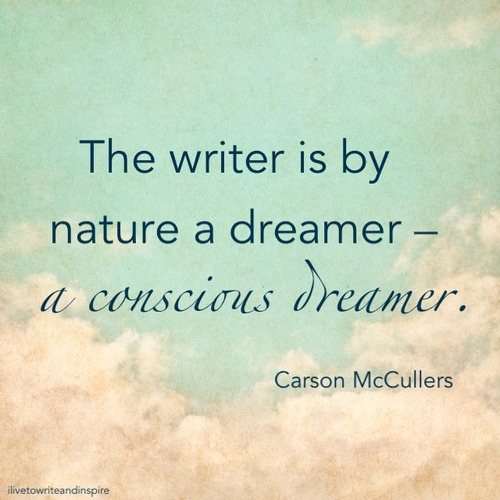
carson_quote


~I’ll write until the sky fails and the ink runs dry. But the sky is firm, and the heart’s well is deep. ~Benjamin Thomas


***************


Don’t hold back, take off your gloves and put up a fight.


***************


Every writer’s legacy resides in the written word. It comes alive when you read it.


SEE YA!


Benjamin Thomas

@thewritingtrain

http://www.thewritingtrain.com