Karen is an Appellate attorney, author of several novels, picture books, a mother of two, a photographer, political junkie and a Indiana Hoosier fan.
WELCOME KAREN!
*You’re a writer; so what’s your story, or what inspired you?
I wanted to be a novelist since at least the age of nine. I can’t remember exactly why, but my family greatly valued literature and education.
Those are very good values to have in family!
*******
If a story is in you it has to come out -William Faulkner
*******
*What’s your GOAL in becoming a writer?
(a) To create interesting characters with whom readers can empathize, and embed them in thought-provoking stories. (b) To have people read what I write.
I share the same goals as you. To create interesting characters that people care read and care about. Easier said than done though!
*What 3 things have hindered you from completing your projects? (CONFLICT)
When I was younger: lack of anything particular to say, difficulty getting words to flow, and lack of confidence. Now: nothing.
Impressive progression here. My main problem right now is completing my first project.
*What keeps you motivated in achieving your dream? (DESIRE)
Unlike the world in which I formed and then (for decades) abandoned my ambition, the current literary era allows authors to publish without the approval of gatekeepers or the investment of large sums of money. That means I’ve been able to find readers who have enjoyed and cared about my work – and that keeps me motivated.
Finding those who truly care about your is one of the greatest motivations! But also, as you said, being able to publish your work is critical.
Your readers
*What’s your ANTAGONIST? What’s in the way?
When I was younger, besides the obstacles already mentioned, I encountered a last straw in the form of a teacher (graduate student teaching undergraduates) who casually mentioned in public that I did something well for someone who “[wasn’t] a born writer.” Through years of failing to find the right medium, the right genre, or the right story, my lifelong belief that I was indeed and exactly a “born writer” had kept me going. That moment was my excuse to give up writing fiction for several decades. (About one decade into that span, I found a few of her books in a bookstore. I am not generally someone who hates, but if she had walked in at that moment, I might have assaulted her. And I will admit enjoying some schadenfreude when I discovered, perhaps three years ago, that none of her books appear to be in print.)
I hear this from time to time about someone in faculty. How someone had a negative impact on a potential future author always surprises me.
I find your goals—rather disturbing, young Jedi…
*Why do writers give up, quit or never complete their projects?
Many writers still feel the need to “be” published, aka traditionally published, and give up after multiple unsuccessful attempts to find a publisher.
Many writers continually second-guess themselves, self-editing constantly, which greatly slows their output. National Novel Writing Month (aka NaNoWriMo or Nano), an annual online event which challenges writers to complete a very rough draft of a novel at least 50,000 words long within the month of November, is a great way to overcome this tendency. At that pace, there’s no time to self-edit.
They’re are many potholes on the road to publication. Not to mention that that road is always under construction.
Illustration of the writing journey
*What would you say to a struggling writer who’s given up?
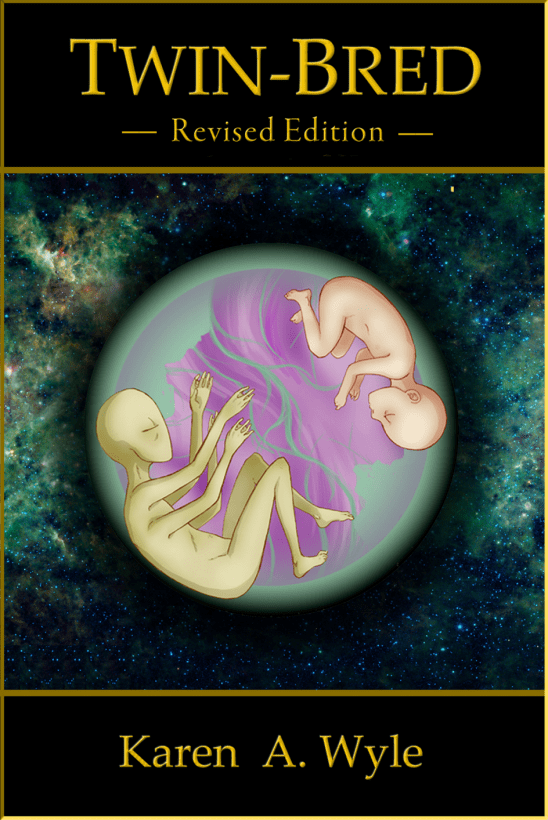
If that writer still wants to write and is unhappy with having given up, I’d suggest giving NaNoWriMo (see above) a try. There’s no commitment involved: you can dive in with minimal preparation and see what the next day or two may bring. That’s how I started what became my first novel, Twin-Bred, and I’m now preparing my seventh novel for publication.
NaNoWriMo is an excellent way to begin! That’s what gave me a boost last year in my project. 2016 NaNoWriMo is just around the corner!
*******
“I’m convinced that about half of what separates the successful entrepreneurs from the non-successful ones is pure perseverance.” -Steve Jobs
Learn how to start your own publishing company with Kristen Martin, the author of The Alpha Drive Trilogy, and owner of her own publishing company! AMAZING.
What are your publishing aspirations? Tell me in the comments!
*I read about your location in your bio. Does living near the ocean help your writing process?
When my bio was written I assumed that I would be living primarily In Pacific Grove, California. Instead, I ended up living in both Fresno and in Pacific Grove. I have many horses, and dogs in Fresno. I couldn’t bare to leave them for any length of time . As to writing, I write in Fresno, in a back bedroom that I have turned into an office. I paint in the garage in Pacific Grove and create ideas for writing while walking on the boardwalk or on the sand with my dogs. I also belong to a writing group in Pacific Grove that are creative men and women.
Wonderful! I’m picturing you walking along the boardwalk with tons of ideas.
Very beautiful horse!
*Are you originally from California?
I am originally from Oregon City, Oregon. Most of my family still lives there. I miss the cool weather, the smell of the trees, and the freshness of the air.
I’ve heard Oregon is absolutely gorgeous, can’t wait to go there one day.
What did I study?
I studied many things, becoming an airline stewardess, journalism, reprographics, and animal communication, then I became older and realized that I had two sons with learning disabilities. I saw how teachers out of frustration or lack of training had difficulty working with them and so many other kids. I decided not only to help in the class room, but I became a school psychologist, learning disability specialist, behavior analyst, and I also received a degree in Communicative Disorders and a Masters in Education.
WOW. That’s amazing! You’re quite an accomplished person, and a lot to do with communicating. Now I can understand why you would be a writer. It’s just another way of communicating. Excellent.
*Which genre do you claim as your own?
The genre that I read the most is nonfiction, historical. What I claim as my own is speculative historical fiction.
I always have a high appreciation for anyone who can write historical fiction. Hats off to you, Linda!
*Why do you write for adults and children?
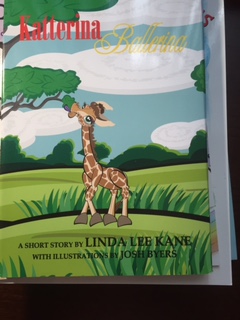
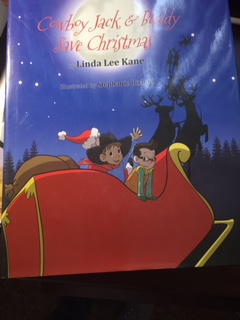
That is a great question. I write for me when it comes to the adult books. I finished The Black Madonna, a historical fiction book with romance after two years of research on the Cathars. I write for children because of my background in learning disabilities. The stories provide inspiration in never giving up, whether it’s dancing, math, reading, or conquering your fears.
Very inspiring! You’re truly a multi-talented artist.
Steve Berry, Brad Metzler, Tey, Agatha Christie, Dr. Seuss, the Brothers Grimm, and so many more.
Wonderful group of authors.
*You strike me as a very expressive person, have you ever written poetry?
I had never really read poetry until a woman I met, Brenda Najamin would read her poetry in a class I was taking. I would take her poems home and pour over them, it was amazing. I do like Robert Frost, I have kept his poetry tucked back in my mind. I love his flow, his rhythm and the stories he tells.
I’d bet you’re a natural at it. I got that vibe when I read your bio.
~Poetry is the rhythmical creation of beauty in words -Edgar Allan Poe
How did I come to love history?
Great question. I could give the tried and true answer that if you don’t know the past you’re destined to repeat it. But for me, there is so much more. I believe that when you see individuals struggle through life, you realize no matter what era you live in, you’re not alone. We all have the same ‘wants’, desires, and compassion.I also like to rediscover people from old books, like Richard III, or Mary, Queen of Scots. The battles, the heroism, and yes, the love.
History is my worst subject, so I appreciate anyone who can write historical fiction.
This is my brain on history…..
***************
“We are not makers of history. We are made by history.” ~Martin Luther King Jr.
***************
Do I have a favorite time period?
I believe that in every time period there is something that gets me excited, that I want to learn more about. I stumbled upon the Cathars from the 12th century and how the Roman Church persecuted them for their beliefs. I’m reading about the Plantagenets and the Tudors and was amazed to find out that King Henry VIII’s fifth wife, Catherine Howard was only thirteen years old. His reasoning to cut off her head was insane, he probably was by then. How Henry VII won the crown from Richard III, and I ponder who really was responsible for the death of the Princes in the Tower, or did they die? My family is from the Isle of Man and about Illiam Dhone who rose against the Stanleys and captured all the insular forts. Dhone was tried and executed and a famous poem was written about him by Sir Walter Scott. Yes, he is a relative.
That’s cool! Can’t wait to read your book, the Black Madonna.
Why did I begin to write?
I think to chase the demons away, it’s cathartic. Something in every book has a little of me. By writing about it, creating a story I can resolve parts of history and possibly help others with a clearer understanding of that time period, or possibly about themselves, or me.
I see a fascinating connection between your desire to resolve something in history, in your past, and your love of history.
What is my goal?
To write well, to learn, to educate, and possibly with my children’s books, help kids with learning disabilities or life struggles.
Those are all honorable goals.
What hinders me?
Nothing hinders me, I set a goal, and I go after it. Every day I write, every day I set a new goal for myself. Primarily it’s to educate. My father always said, ‘You may not be the brightest bulb in the batch but you have tenacity’. I think that’s true of me.
YES. “Nothing hinders me, I set a goal, and I go after it.” I love that spirit! A tenacious bulb!
What keeps me motivated?
I believe that I have no choice, I have to share what I learn, I have to educate, and for a personal goal, I would like to be the best that I can be as a storyteller.
I kind of knew this was coming. You’re a very driven person, and you strike me as an overachiever. You can only be the best you at any given moment. Your desire to educate is very inspiring.
Why do people give up?
I believe they give up because of their lack of belief in themselves. You can make an excuse like, time, kids, etc. but if you really want it, you toss out the naysayers in your life or the evil demon that sits on your shoulder telling you to ‘give up, you can’t do it. You find a time to write, to go after your dream, you never give up, you never give in. You Just Do It (like the Nike commercial).
This is great. I’m seeing the fire of your tenacity here, it’s admirable. Can I borrow some? I see why you’re an educator. You’re passionate, dedicated, focused, driven, and committed to learning. This is also why I say you’re “expressive”. You have strong feeling to communicate, connect and help others. This was evident in the beginning when you said you studied animal communication, became a school psychologist, and even painting and writing. You go Linda!
What do I say to people who have given up?
Believe in yourself, there is no one but you, and only you will live to regret the choices you’ve made. If you want it bad enough, don’t let anyone or anything stop you.
Therapeutic.
*Can you give us a summary of the Black Madonna?
The Black Madonna is a story of Luci de Foix, a young woman who was orphaned at the age of nine when her parents were killed in a car accident. But the more Luci learns, the more she realizes that there might not have been an ‘accident’ at all. A mysterious group called The Order has been keeping watch over her family line for hundreds of years, and has been waiting for the day when a secret diary will be delivered to Luci, unlocking a code that The Order desperately wants. And when just such a diary is delivered to Luci when she is twenty-nine years old, she realizes that it might be the only way to learn her true family history and the key to her own future. Will Luci be able to figure out the codex in time to save herself and avenge family?
Excellent premise. Whoever did the book cover for this did a great job.
Light at end of the tunnel.
Robert Frost wrote a poem called, ‘The Road Not Taken’, I think it’s a must read for anyone thinking of not pursuing their dream.
THE ROAD NOT TAKEN
Two roads diverged in a yellow wood,
And sorry I could not travel both
And be one traveler, long I stood
And looked down one as far as I could
To where it bent in the undergrowth;
***
Then took the other, as just as fair,
And having perhaps the better claim,
Because it was grassy and wanted wear;
Though as for that the passing there
Had worn them really about the same,
***
And both that morning equally lay
In leaves no step had trodden black.
Oh, I kept the first for another day!
Yet knowing how way leads on to way,
I doubted if I should ever come back.
***
I shall be telling this with a sigh
Somewhere ages and ages hence:
Two roads diverged in a wood, and I—
I took the one less traveled by,
And that has made all the difference.
By Robert Frost
What am I currently working on?
I just finished a YA titled Chilled to the Bone which will be out in the next few weeks, a children’s story to help kids and parents with math, a children’s story about an abandoned pony named Clyde. It’s a true story, and I can’t wait for the artwork to be completed. My current book is called Bottoms Up, it’s about the Central Valley, murder, and mystery in the world of fine wine and the competition that goes on.
Can’t wait to see what you come up with! Thanks Linda!
Favorite Quote:
Anything by Mae West, she was incredible so I’m not quoting anything profound, or am I?
Between two evils, I always pick the one I never tried before, or you only live once, but if you do it right, once is enough.
Here’s another: I never worry about diets. The only carrots that interest me are the number you get in a diamond.
I am a self-published author and an unbridled enthusiast, moonlighting as a middle manager. I started my blog with one purpose – to finish a novel. The good news is, that after almost two years of constant writing, editing, and more editing, I have finished one. It’s a comedy, and it is now available on Amazon. I hope you have as much fun reading it as I did writing.
The sequel to Shizzle Inc, Indiot is now AVAILABLE. Ana also blogs about the book marketing game over at anaspoke.com . Have a look at the “book marketing” tab for lists of resources and my personal experiences testing various marketing gimmicks.
Fo’ shizzle
Ana is also the founder of Comedy Book Week. An awesome event with an official website, over 60 participating authors and 111 books! It should be even more epic next year! If you’d like to sign up see the link above or contact Ana.
***************
LIVE
LAUGH
LEARN
REPEAT
***************
* What part of Australia are from? Were you born and raised there?
I live in Melbourne, Victoria, and it is currently the middle of winter here. I was born in Russia, but I’m technically Ukrainian, and I’ve lived in the US for 14 years. Melbourne is the second largest city in Australia but, arguably, the largest center for culture and arts.
Wow a world traveler! Melbourne sounds like a neat place.
*What’s Australia like?
It’s great, if you don’t mind the kangaroos, which are everywhere. Just kidding! Australia is more laid back than the US, but just like the US, it’s huge and varied in climate and local culture. In the US, I lived in Florida, so I still can’t get used to Melbourne’s crazy weather – it really can have “four seasons in one day.” Yesterday it was freezing and raining with hail (that’s the middle of winter for you), but today the sun is up and it’s warming up quickly. In summer, it’s not that unusual to have temperature drop by 20 degrees Fahrenheit in a space of an hour, when the wind changes direction and starts blowing from the Antarctica. To make me even more miserable, while I’m freezing here, I hear it’s almost 90 degrees in Darwin, Northern Territory.
One of the things I like best about Australia is its multi-cultured mix of people. In Melbourne, about 40% of residents were either born overseas or had at least one parent born outside of Australia. So, being a foreigner is not such a big deal, and I felt accepted from the very first day. Such a mix of people also means you can get any ethnic food you desire, and it would be authentic, too.
Another thing that’s different from the US is that in Australia, most people live in cities, so the rest of the country is barely populated. This means a lot of untouched, wild “bush” nature. It also means crazy property prices in the city, tiny apartments, and tiny backyards, if you are lucky enough to have one. I think most Americans would struggle with the size of an average family home here.
Sounds quite fascinating! It’s good to experience different cultures. Thanks for sharing your experience.
*Where did you go to school? What did you study?
I’ve gone to school on three continents! I’ve studied landscape architecture, microbiology, environmental science, and project management, and have 1.3 Ph.D.s to show for the total of 13 years of full- and part-time study. I’ve never studied literature or writing, but over the last 2 years I’ve put myself through a self-designed and managed Masters of Self-Publishing (sort of). I blame it all on a combination of curiosity, short attention span, and a life-long addiction to the endorphin rush that comes with achieving goals.
That’s quite a blend of academic studies. I do remember when you were agonizing over your debut comedy novel Shizzle Inc. in some blog posts. Now it’s out! Impressive.
* What was your career track before pursuing writing? You mentioned about being a middle manager on your blog.
Still doing that, although I am currently finishing up my five-month long service leave. I work in a government agency, managing a small group of people and putting together management strategies. Maybe that’s why I could not resist starting #ComedyBookWeek – I was missing the rush that comes from organizing something new and nurturing it to grow into something big.
That’s again very impressive. Especially since it’s something fairly new and grew so quickly. You’re hired!
* Do you have any major hobbies you enjoy?
Currently the only one, obsessive, and all-consuming hobby is writing and marketing. I’ve had others– from breeding rare fish to kiteboarding, but they tend to come and go (see the previous comment about short attention span and endorphin rush).
Ana, I have to say, you’re a very interesting individual. I’ve never heard of kiteboarding and organizing anything makes my eyes cross.
My brain on organization
*What’s your genre and why? Will you branch out?
My life-long genre is humor. It’s in everything I do, so even if I ever write something different, it will be funny. Perhaps a hilarious erotica series?
I love it. Everybody needs a good laugh right?
*Tell us about your upcoming book, the sequel to Shizzle.
Indiot follows Isa Maxwell to India, where she was supposed to help a mysterious prince win back his fortune. She also hopes to convince the prince to use his wealth to help the orphans, and maybe write a book about it. Needless to say, noting goes as planned. It’s a mad romp that goes from bad to worse, and then, just as she sighs with relief, it plunges her even deeper into trouble.
Sounds wildly entertaining! I’m finishing up Shizzle now and will press on to Indiot very shortly.
*What have you learned in your experience writing Shizzle?
I think the biggest lesson was to trust myself and to believe that somewhere in the world, there are people who would enjoy reading my books. I was so insecure about my ability to tell the story of Shizzle, Inc., that it took forever to finish it, and then even longer to get the balls to self-publish. Along the way, I just wanted someone to say, “Hey, this is not absolute garbage!” Now, thanks to my fans, I have an audience that’s eagerly awaiting Indiot’s release, and already asking about the third installment. It’s an amazing feeling, and a powerful fuel to keep going.
*Can you tell us about your experience in self-publishing and marketing your book?
I’m strange in the sense that I now love the experience of self-publishing, and even more so –marketing. I had a lot to learn – the launch of Shizzle, Inc. was basically me saying “Thank God, it’s finished” and pressing “publish.” It took me another three months to publish a paper copy and to figure out some of the basics of book marketing. This time around, I am better prepared. The ebook and paperback are available at the same time, I have some early reviews thanks to fans willing to review ARCs, there’s paid marketing, Goodreads and Amazon giveaways, and of course, #ComedyBookWeek. Fingers crossed, all that effort will pay off. More importantly, I am learning so much, I have no doubt that the third book will be even better.
*You’re a writer; so what’s your story? What inspired you to take this journey?
I think I was meant to be a comedian – books are just one of the outlets for my never-ending clowning around. I literally can’t put a lid on it, and keep my colleagues laughing at work, and my family at home. At one point, I was even a comedy actor but, unfortunately, you have to wait for someone else to give you a role and write your material. With books and my blog, I can channel my gags straight at the audience – no middle man necessary.
I wanted to be comedian when I was a kid. I can totally relate to you on this level.
*Now that you’re published what’s your GOAL (S)? What’s the next step?
One of them is to continue writing the Isa Maxwell escapades series – I’m not finished yet or, rather, Isa is not finished. I trust she will tell me when she’s had enough. I also want to write a new book, and have a multitude of ideas noted down – it will be a matter of choosing one. It will definitely be funny, although it will have a different “flavor.”
I’m all too intrigued to see what you come up with next. You got me on my toes.
*What 3 things have hindered you from completing your projects? (CONFLICT)
Lack of self-belief had to be the most significant one. I consider myself to be a confident person, but even so, it’s pretty scary to say to yourself, “Hey, I think I can write a whole novel, and make it worth someone’s time.” The second obstacle is time – my “regular” job is demanding, and it’s hard to be creative after a full day. And finally, lack of knowledge – with the first one, I had to study plotting, character development, and editing alongside of writing the actual novel. If anyone is writing their first book, I would highly recommend undertaking a self-designed Masters of Writing. There are so many books on writing to choose from, plus you may find local courses or online resources. And if you want Cliff Notes on self-publishing and marketing, then read my blog!
A lack of self-belief is a big one across the board for majority of writers. I can relate to the lack of time! Especially after work and kids. Writing is such an subjective process it can be overwhelming for new authors. Then the objective side of learning the monstrosity of putting together a complete novel is a large undertaking to say the least.
*What keeps you motivated in achieving your dream? (DESIRE)
A vision of myself as a full-time writer, plus the positive reviews on my books. I have read and re-read the reviews many times over, and each time I vividly imagine that person, laughing out loud on a train or “snorting tea everywhere.” That’s what keeps me going, especially after I get an occasional bad review. There are people out there, on the other side of the planet that have never met me, but have loved reading a story that I made up and published. It’s an amazing “head trip” for me.
YES. I’m so happy for you AND very jealous. I’m also one of those far away peeps cracking up when everyone else is asleep.
*What’s your main ANTAGONIST? What’s in the way of you accomplishing your goals?
Some unpublished writers think getting published is the only hurdle. Currently, I’m the boss of my antagonists and demons, and ploughing away every day. Again, this is thanks to the small successes along the way – positive reviews, supporters of my blog, and sales of my books. There have been times when I’ve questioned my investment of time and money, but I got up in the morning and kept going, and the Antagonist got weaker and weaker. I don’t think I will ever be completely free of self-doubt, but I’ve learned to manage it. Marketing your book is a much bigger hurdle than publishing. I hope writers understand and embrace it – and hey, it can even be fun! I would say that unpublished writers should have reasonable expectations of sales of their first book, and then continue working every day on improving their craft, as well as packaging, marketing, positioning, platform, and all that jazz. It’s a snowball, and it takes a long time of pushing it around before you start seeing it grow.
This is great info and inside scoop for us newbies looking to get out feet wet. Thanks Ana! I’m glad you keep going despite the hurdles you had to overcome. You must be good at track I suppose?
*Why do writers give up, quit or abandon their dream?
I have not studied this enough, but I would say self-doubt coupled with negative feedback could kill any dream. I would recommend striving for smaller, intermediate goals on your way to “success,” whatever that may mean to you. That way, there are bursts of positive energy all along the way that will keep you going.
Good practical advice here. That way we don’t set up ourselves for failure.
*What would you say to a struggling writer who’s given up?
It’s a very personal issue, and this industry is not for the faint of heart, so I would ask them what it is they really want. It may not be writing – in my case, for example, it’s the desire to make people laugh. There are other outlets for it, such as acting or stand-up. If, however, the person truly wants to be a writer, I would tell them to stop acting like a victim, get it together, make a plan, and try again. What can I say, my Russian is showing.
This is good stuff here. I like your Russian.
*What else is coming down the pike for you?
Well, #ComedyBookWeek is shaping up to be quite a celebration. It’s hard to think it was just a vague idea six weeks ago, and now it’s an event with an official website, over 60 participating authors and 90 books. Based on the level of interest I’ve been getting over the last few weeks, the next year will be huge. Another sharp learning curve for me, and another blast of endorphins. Bring it on!
I thought about a few famous quotes, but decided to live the interview with a fresh one. My nephew-in- law has written a musical called “Einstein, Master of the Universe.” One quote from the play truly resonated with me:
“Pursue a problem, and it soon becomes a prize.” It worked for Einstein, and it would work for any of us.
“I am part of everything that I have read.” -Theodore Roosevelt
WELCOME ANNE
Anne Janzer is a marketing consultant and professional writer with more than 20 years of experience working with high tech businesses. Her clients include software industry giants, fast-moving tech start-ups disrupting the status quo, and clean tech companies trying to change the world.
Anne has worked with over a hundred technology businesses, from industry giants to innovative start-ups, helping them articulate positioning and messaging in crowded markets. In her consulting career, she has collaborated with serial entrepreneurs, industry thought leaders, and technology pioneers pushing the boundaries of what’s possible. As a ghost-writer for corporate executives, her work has appeared in dozens of industry publications and blogs, including Wired.com and the Sand Hill blog.
In addition to her own blog on subscription and content marketing, she contributes guest posts to many many technology and marketing blogs, including Business2Community, Social Media Strategies Summit blog, Marketo and Zuora blogs, Crowded Ocean, and others. Anne has an established and growing author platform, including an email list, blog, and expansive social media presence. She is a graduate of Stanford University.
I chose the English major because, as a lifelong reader, I knew that would always, no matter what, want a literature class on my schedule every term. I realized that with careful planning, I could complete the English major, leaving myself open to explore other subjects. I almost did a double major in Human Biology, which at Stanford is an interdisciplinary major combining the hard and soft sciences. But after completing the core work, I ran out of steam in designing a personalized major. Instead I took classes in journalism, computer science, and psychology. I’m a strong believer in the value of a liberal arts education!
Wonderful. Education can shape us in so many ways.
*Who or what were your early influences that led to a writing career?
I come from a family of readers and writers. I had always imagined myself as a writer, since the time I was young.
Your imagination was right on target.
*After college why did you go into writing for tech companies and marketing?
My first job out of college was at Stanford, working in the administrative computing group as a technical writer in a group of systems programmers. Being able to understand and write clearly about technology is a useful skill, particularly in Silicon Valley. Like many English majors, my career was more of a wandering journey than a clear linear path. I moved into product marketing at a startup, and then took off on my own as a marketing consultant/writer.
Nice. That would prove to a very useful skill in the silicon valley!
*Give us a summary of your book and why you decided to write it.
The Writer’s Process is about the inner game of writing – matching the stage of the work to the way that your brain operates to be more productive and creative. I’ve spent many years as a professional writer figuring out the ways that I work best. Reading research about focus and creativity, suddenly those methods started making sense from a cognitive scientific standpoint. That inspired me to dig in and analyze the process. I wrote the book because I truly believe that a better understanding of the inner craft can help writers of all levels have more fun and success with their work.
Well, I’m certainly glad that you did. This book had a major impact me. On the seeking and understanding of my own process. It’s very easily one of my favorite craft books of all time. See, all your hard work paid off. Come to think of it, this book seems to be a culmination of years of writing experience. Now it’s in print and ready for consumption. Thanks!
You’re brain on writing…
Writing is the painting of voice. – Voltaire
*What were your favorite parts in writing it?
I loved researching not only the science, but also the practices of other authors and writers. It’s fun to realize how much all writers have in common. Plus, there’s something very “meta” about writing a book about the writing; it gave me the opportunity to refine and tune my processes.
I think writing is both a collective and highly individualized art. We don’t exist or work in a vacuum. We’re influenced by those around us. The literary culture of our time leaves a remarkable footprint on society. Writers of every generation run, then pass the baton down to us.
The issue of their process, imagination and approach to writing leaves an indelible imprint on our souls. We seem to assimilate these ‘imprints’ into our own process, until we become a work of art ourselves. But when we learn, accumulate, express ourselves through our own process, we discover that it still bears a unique flavor. For when the flow strikes and flows through the artist, it takes on the sediment of the individual.
….Then go edit them ~Benjamin Thomas
*What did you learn from writing it? Or has it affected your craft?
Writing the book has definitely made me more disciplined about my own process. For example, now I notice when I am tempted to skip a step and short-cut the full end-to-end writing “recipe” to save time. I’m more intentional about incubating ideas and problems. When I recognize the Imposter Syndrome or run into other problems, I have defenses ready.
This is great. I always enjoy how others have adapted their own process. Having an understanding is critical, however discipline seems to be largely underrated in my opinion.
Second, the fact that we can change and adapt this process tells me that it’s extremely malleable. Sounds like a special piece of clay doesn’t it? I know in pottery clay can take on many forms, possibly thousands. It all depends on the hands that shape them.
*Tell us about the relationship and potential collaboration between the Scribe and the Muse.
The book describes two different mental systems that all writers rely on. The Scribe is my name for the intentional and hard-working writer, while the Muse refers to intuitive, creative processes.
I love this! Scribe is a great name by the way. Thumbs up. The Scribe resembles a type A, control-freak-businessman, while the Muse is much like a mysterious laid-back teenager with a mind of its own. But the two must learn to work seamlessly together as a team.
No hard feelings, eh?
(photo credit Angelos Ntinas)
*In your book you label the Scribe and Muse in order to point out the intentional and intuitive mental processes.
It’s a useful fiction, a way to frame the complexity of different inputs that go into writing. All writing depends on both systems; you need focus and discipline to work. But you also need the ability to summon thoughts and ideas and to make connections that bring your subject to life. Productive writers learn how to hand off the work between the two mental systems.
I think this statement sums up my enjoyment from the entire book actually. It’s extremely enlightening to realize that they’re two; but not diametrically opposed mental systems, and in order to be productive we must learn how to “hand off” the work between the two. Powerful.
*Can you tell us more about open attention and focus and how they relate to our writing?
Focused attention is how we get the work done, blocking out distractions to write, research, or revise. In contrast, open attention is what happens when we do something that doesn’t require dedicated focus. We experience open attention when taking a walk or doing everyday tasks that are somewhat automatic.
Knowing about the nuances of attention is quite an eye opener. We must master both to tap into better productivity as writers. No wonder so many people get writer’s block. Too much dedicated focus and not enough open attention. The Scribe dominates the relationship and the Muse retreats to who knows where.
~Don’t bully the muse. Give it some room to fly high and mighty. -Benjamin Thomas
*You said something very critical about moving between the two systems of Scribe and Muse by directing our attention. This seems to be a somewhat voluntary gateway; through which we can toggle back and forth between the two systems, or writing minds.
Exactly! Using the metaphor of the two mental systems, the Scribe operates in a state of focused attention, while the Muse appears when we’re in open attention. Perhaps the Muse is always there, but we only hear it in states of open attention. To hand off work between these systems, you need to be able to focus intently, and then let go of focus. Spend time writing, then time “not-writing.”
This is amazing every time I hear it. The intentional mental process and the intuitive mental process. Then learning how to utilize the gateway between the two to get our best work done.
open attention
*Speak about the benefits of open attention.
When we’re in open attention, the Scribe is not managing our thoughts, and the Muse has a chance to contribute, to process unrelated thoughts and come up with interesting ideas.
In this section you tell us that we connect to the Muse through open attention. I’ve never heard this before. That’s so cool!
The cool thing is that this really works! When you need creative input on a problem, queue it up in your head, and then seek out a period of open attention. Here’s an example: a client was looking for a metaphor for a complex technical topic. I was drawing a blank. So I thought about it intentionally, then walked to the gym, worked out, and returned home. In the process, I kept bringing my thoughts back to the problem. I ended up with a number of creative approaches. The Muse is present in the background, ready to contribute when you invite its input.
This is AWESOME. “We connect to the Muse through OPEN ATTENTION. This is the key!
*Speak to us about how to achieve a state of flow and what that means.
You marvelously explained how this is the result of the two writing selves working together in a fluid process, the productive and creative.
Flow is that ideal writing state, when you lose yourself in the work. It makes the work fun and worthwhile.
Using the Scribe and the Muse analogy, the two are working together side-by- side in a state of flow.
You cannot force flow to happen, but you can set up an environment in which it is more likely to occur. The Muse is easily distracted, so remove potential distractions or interruptions. Find a place you can focus and start working. If you hear yourself criticizing or critiquing as you work, try to silence the inner critic. Think about the work, not yourself, and keep going.
This is the ultimate benefit. When we achieve a state of flow by the productive work between the two mental processes. One major takeaway for me is learning how to go from the focused intentional state to the open attention intuitive one by learning how to direct our attention. To me, this is the real key of achieving balance, utilization, and producing an ecstatic state of flow. EPIC.
SOMEBODY BREAK THE DAM!
This is your brain while writing in a state of flow…
~But don’t feel bad when you have to turn off the faucet…Benjamin Thomas
*Bonus
Can you give a brief rundown of the 7 steps of the writing process?
Sure, these are my 7 steps. I try to schedule time for all of them. You might vary the steps, but the idea is to schedule for each phase, and bring the right system to the task at hand.
1. Research (both internal and external)
2. Incubate the ideas – give the Muse a chance to contribute
3. Outline or structure
4. Write the first draft – ideally finding a state of flow during drafting)



























 The Writing Train: Join the locomotion