As a writer, I’m also a huge reader. Over the last 10 years, I’ve transitioned from someone who reads all my books in paper form to someone who uses multiple formats to get all my reading done. I love listening to books on CD and I always have a book on my Kindle app on […]
Bringing you the best of the reading experience. What’s yours?
“Finishing a good book is like leaving a good friend” -William Feather
*******
“To read without reflecting is like eating without digesting” ~Edmund Burke
*******
This series is all about reflecting on the reading experience. When we read and enjoy a great book, there’s so many things happening in our brains! We need time to reflect and digest what we just ate, then fully appreciate the beauty.
~When you read a good book what do your eyes really see?
Well, we all see a little differently. Let’s introduce today’s guest!
WELCOME WENDY GREENE
Wendy is an aspiring writer, successful bookworm, a fellow blogger and follower of Christ.
What were your childhood experiences with reading?
I actually hated reading when I was younger! I enjoyed small books once and a while, but I never really got into it until I was probably in 5th grade. I was in the library and randomly started reading the Dear America series. I read every single one they had in about six months and fell in love with historical fiction that later branched out into more genres.
WOW! I find that so fascinating. You once were a person who hated reading, then somehow you became a complete BOOKWORM. The impact the Dear America series had on you is nothing less than impressive.
Which books influenced you the most as a child?
Of course, the Dear Americas were so influential in my life as well as Little House on the Prairie. But I remember, very distinctly, the first book that made me sob. It was titled Ashes of Roses by Mary Jane Auch. I would say it traumatized me more than influenced me, though XD It was a historical fiction about a girl who immigrated to Ellis Island to work in a clothing factory in New York. Horrific events occurred (but I won’t spoil it for you ;)) and the realization that it based on actual events rattled me to the core. Even though that experience hurt, it made me realize the power of words and how a collection of pages can change someone.
Words are powerful. I love to see how the writings of others have affected us.This never ceases to amaze me.
What’s your favorite genre to read? (it could be plural) and what do you enjoy most about them?
As of this moment, I really love science fiction. I hadn’t read a lot of that genre before, but I just love the mix of science and whimsy. Although, fantasy is a longtime love for me and the possibilities of that genre are ENDLESS. But also historical fiction. ALL OF THEM, PRETTY MUCH.
I love science fiction and fantasy as well. Hard to choose one eh?
Who are your top 5 favorite characters of all time?
Ooooh, that’s SO HARD. I’d have to say Percy Jackson from the Percy Jackson series is definitely up there along with Anne Shirley from Anne of Green Gables, Aslan from Narnia, Bilbo Baggins from The Hobbit, and Wolf from the Lunar Chronicles.
Bilbo is lovable and Wolf from the Lunar Chronicle is a pretty cool guy.
*******
~There is more treasure in books than in all the pirates loot on treasure island – Walt Disney
*******
What is it about them that draws you?
I love quirky personalities. Especially in Percy and Anne, they have a significant amount of spunk.They’re also brave without realizing it and simply view themselves as normal people; nothing particularly special. With Aslan, of course, he’s such a strong character and I’ve admired him for a long time. Bilbo is basically me if I were a hobbit, so there’s that. Wolf is just so awesome. He’s so violent yet sweet and I just loved him. ^_^
This is a nice handful of heroes! Sounds like they all have had a particular affect on you as a reader.
Do you enjoy character driven books more or plot driven?
I definitely believe that good characters can make up for a bad plot. If I can connect and love a character, I tend to ignore the massive plot holes that stand in the way. With that said, I love a good, intense, well-written storyline. So, both?
Good answer!
Have you ever cried while reading? If so, what were you experiencing?
YES. I cry in books All. The. Time. Sometimes the author will describe an emotion in such a beautifully rich way that touches me so deep I can’t help but cry. Other times I just feel the pain of the characters or relate something to my own life that moves me to tears. Oh, and there are also the copious amounts of character deaths I sob through…
Yes, this is truly a special moment when an author evokes tears in the reader.
I always enjoy seeing what irks people the most in books. Good things to avoid when writing!
When you read what are you seeking most?
Sometimes that depends on why I’m reading. Sometimes I delve into a book to escape from the world, other times I want to laugh or think. Sometimes I read as a writer. Reading is the tool I use the most when trying to develop my own writing style. If that’s the case, I read to glean information on style, story structure etc. But overall, I read because it’s so unique and beautiful. It gives me a glimpse of a universe unexplored and allows me to become someone else. I read because it changes me.
You just elicited the wow factor!!! That’s probably one of the best answers I’ve seen yet.
What are your top reads of 2016?
Oh dear…such a hard question! Number one would probably be Scarlett by Marissa Meyer. I also loved Little Dorrit by Charles Dickens, Storm Siren by Mary Weber, and What He Must Be by Vodie Baucham (there are so many more, but there ya go XD)
I enjoyed Scarlett too, but my favorite of that series was Cress. Great choices!
Thank you so much for interviewing me, I had so much fun! =D
THANKS SO MUCH WENDY!!!!!
~The more that you read, the more things you will know. The more that you learn, the more places you’ll go. –Dr. Seuss
~Nothing transforms the mind like a good book -Benjamin Thomas
I am a self-published author and an unbridled enthusiast, moonlighting as a middle manager. I started my blog with one purpose – to finish a novel. The good news is, that after almost two years of constant writing, editing, and more editing, I have finished one. It’s a comedy, and it is now available on Amazon. I hope you have as much fun reading it as I did writing.
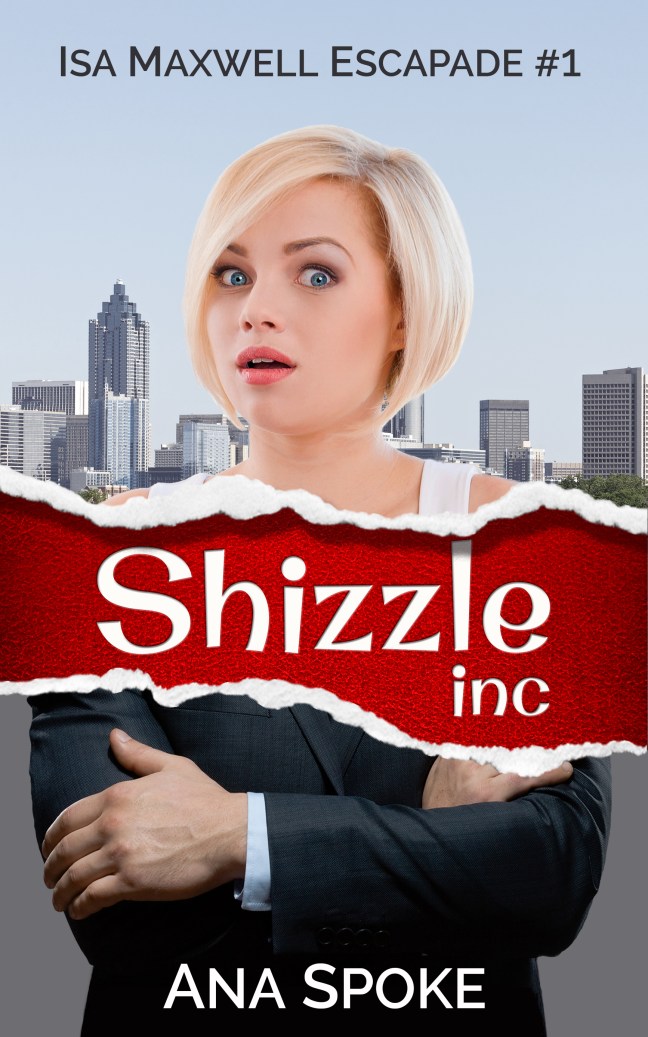
The sequel to Shizzle Inc, Indiot is now AVAILABLE. Ana also blogs about the book marketing game over at anaspoke.com . Have a look at the “book marketing” tab for lists of resources and my personal experiences testing various marketing gimmicks.
Fo’ shizzle
Ana is also the founder of Comedy Book Week. An awesome event with an official website, over 60 participating authors and 111 books! It should be even more epic next year! If you’d like to sign up see the link above or contact Ana.
***************
LIVE
LAUGH
LEARN
REPEAT
***************
* What part of Australia are from? Were you born and raised there?
I live in Melbourne, Victoria, and it is currently the middle of winter here. I was born in Russia, but I’m technically Ukrainian, and I’ve lived in the US for 14 years. Melbourne is the second largest city in Australia but, arguably, the largest center for culture and arts.
Wow a world traveler! Melbourne sounds like a neat place.
*What’s Australia like?
It’s great, if you don’t mind the kangaroos, which are everywhere. Just kidding! Australia is more laid back than the US, but just like the US, it’s huge and varied in climate and local culture. In the US, I lived in Florida, so I still can’t get used to Melbourne’s crazy weather – it really can have “four seasons in one day.” Yesterday it was freezing and raining with hail (that’s the middle of winter for you), but today the sun is up and it’s warming up quickly. In summer, it’s not that unusual to have temperature drop by 20 degrees Fahrenheit in a space of an hour, when the wind changes direction and starts blowing from the Antarctica. To make me even more miserable, while I’m freezing here, I hear it’s almost 90 degrees in Darwin, Northern Territory.
One of the things I like best about Australia is its multi-cultured mix of people. In Melbourne, about 40% of residents were either born overseas or had at least one parent born outside of Australia. So, being a foreigner is not such a big deal, and I felt accepted from the very first day. Such a mix of people also means you can get any ethnic food you desire, and it would be authentic, too.
Another thing that’s different from the US is that in Australia, most people live in cities, so the rest of the country is barely populated. This means a lot of untouched, wild “bush” nature. It also means crazy property prices in the city, tiny apartments, and tiny backyards, if you are lucky enough to have one. I think most Americans would struggle with the size of an average family home here.
Sounds quite fascinating! It’s good to experience different cultures. Thanks for sharing your experience.
*Where did you go to school? What did you study?
I’ve gone to school on three continents! I’ve studied landscape architecture, microbiology, environmental science, and project management, and have 1.3 Ph.D.s to show for the total of 13 years of full- and part-time study. I’ve never studied literature or writing, but over the last 2 years I’ve put myself through a self-designed and managed Masters of Self-Publishing (sort of). I blame it all on a combination of curiosity, short attention span, and a life-long addiction to the endorphin rush that comes with achieving goals.
That’s quite a blend of academic studies. I do remember when you were agonizing over your debut comedy novel Shizzle Inc. in some blog posts. Now it’s out! Impressive.
* What was your career track before pursuing writing? You mentioned about being a middle manager on your blog.
Still doing that, although I am currently finishing up my five-month long service leave. I work in a government agency, managing a small group of people and putting together management strategies. Maybe that’s why I could not resist starting #ComedyBookWeek – I was missing the rush that comes from organizing something new and nurturing it to grow into something big.
That’s again very impressive. Especially since it’s something fairly new and grew so quickly. You’re hired!
* Do you have any major hobbies you enjoy?
Currently the only one, obsessive, and all-consuming hobby is writing and marketing. I’ve had others– from breeding rare fish to kiteboarding, but they tend to come and go (see the previous comment about short attention span and endorphin rush).
Ana, I have to say, you’re a very interesting individual. I’ve never heard of kiteboarding and organizing anything makes my eyes cross.
My brain on organization
*What’s your genre and why? Will you branch out?
My life-long genre is humor. It’s in everything I do, so even if I ever write something different, it will be funny. Perhaps a hilarious erotica series?
I love it. Everybody needs a good laugh right?
*Tell us about your upcoming book, the sequel to Shizzle.
Indiot follows Isa Maxwell to India, where she was supposed to help a mysterious prince win back his fortune. She also hopes to convince the prince to use his wealth to help the orphans, and maybe write a book about it. Needless to say, noting goes as planned. It’s a mad romp that goes from bad to worse, and then, just as she sighs with relief, it plunges her even deeper into trouble.
Sounds wildly entertaining! I’m finishing up Shizzle now and will press on to Indiot very shortly.
*What have you learned in your experience writing Shizzle?
I think the biggest lesson was to trust myself and to believe that somewhere in the world, there are people who would enjoy reading my books. I was so insecure about my ability to tell the story of Shizzle, Inc., that it took forever to finish it, and then even longer to get the balls to self-publish. Along the way, I just wanted someone to say, “Hey, this is not absolute garbage!” Now, thanks to my fans, I have an audience that’s eagerly awaiting Indiot’s release, and already asking about the third installment. It’s an amazing feeling, and a powerful fuel to keep going.
*Can you tell us about your experience in self-publishing and marketing your book?
I’m strange in the sense that I now love the experience of self-publishing, and even more so –marketing. I had a lot to learn – the launch of Shizzle, Inc. was basically me saying “Thank God, it’s finished” and pressing “publish.” It took me another three months to publish a paper copy and to figure out some of the basics of book marketing. This time around, I am better prepared. The ebook and paperback are available at the same time, I have some early reviews thanks to fans willing to review ARCs, there’s paid marketing, Goodreads and Amazon giveaways, and of course, #ComedyBookWeek. Fingers crossed, all that effort will pay off. More importantly, I am learning so much, I have no doubt that the third book will be even better.
*You’re a writer; so what’s your story? What inspired you to take this journey?
I think I was meant to be a comedian – books are just one of the outlets for my never-ending clowning around. I literally can’t put a lid on it, and keep my colleagues laughing at work, and my family at home. At one point, I was even a comedy actor but, unfortunately, you have to wait for someone else to give you a role and write your material. With books and my blog, I can channel my gags straight at the audience – no middle man necessary.
I wanted to be comedian when I was a kid. I can totally relate to you on this level.
*Now that you’re published what’s your GOAL (S)? What’s the next step?
One of them is to continue writing the Isa Maxwell escapades series – I’m not finished yet or, rather, Isa is not finished. I trust she will tell me when she’s had enough. I also want to write a new book, and have a multitude of ideas noted down – it will be a matter of choosing one. It will definitely be funny, although it will have a different “flavor.”
I’m all too intrigued to see what you come up with next. You got me on my toes.
*What 3 things have hindered you from completing your projects? (CONFLICT)
Lack of self-belief had to be the most significant one. I consider myself to be a confident person, but even so, it’s pretty scary to say to yourself, “Hey, I think I can write a whole novel, and make it worth someone’s time.” The second obstacle is time – my “regular” job is demanding, and it’s hard to be creative after a full day. And finally, lack of knowledge – with the first one, I had to study plotting, character development, and editing alongside of writing the actual novel. If anyone is writing their first book, I would highly recommend undertaking a self-designed Masters of Writing. There are so many books on writing to choose from, plus you may find local courses or online resources. And if you want Cliff Notes on self-publishing and marketing, then read my blog!
A lack of self-belief is a big one across the board for majority of writers. I can relate to the lack of time! Especially after work and kids. Writing is such an subjective process it can be overwhelming for new authors. Then the objective side of learning the monstrosity of putting together a complete novel is a large undertaking to say the least.
*What keeps you motivated in achieving your dream? (DESIRE)
A vision of myself as a full-time writer, plus the positive reviews on my books. I have read and re-read the reviews many times over, and each time I vividly imagine that person, laughing out loud on a train or “snorting tea everywhere.” That’s what keeps me going, especially after I get an occasional bad review. There are people out there, on the other side of the planet that have never met me, but have loved reading a story that I made up and published. It’s an amazing “head trip” for me.
YES. I’m so happy for you AND very jealous. I’m also one of those far away peeps cracking up when everyone else is asleep.
*What’s your main ANTAGONIST? What’s in the way of you accomplishing your goals?
Some unpublished writers think getting published is the only hurdle. Currently, I’m the boss of my antagonists and demons, and ploughing away every day. Again, this is thanks to the small successes along the way – positive reviews, supporters of my blog, and sales of my books. There have been times when I’ve questioned my investment of time and money, but I got up in the morning and kept going, and the Antagonist got weaker and weaker. I don’t think I will ever be completely free of self-doubt, but I’ve learned to manage it. Marketing your book is a much bigger hurdle than publishing. I hope writers understand and embrace it – and hey, it can even be fun! I would say that unpublished writers should have reasonable expectations of sales of their first book, and then continue working every day on improving their craft, as well as packaging, marketing, positioning, platform, and all that jazz. It’s a snowball, and it takes a long time of pushing it around before you start seeing it grow.
This is great info and inside scoop for us newbies looking to get out feet wet. Thanks Ana! I’m glad you keep going despite the hurdles you had to overcome. You must be good at track I suppose?
*Why do writers give up, quit or abandon their dream?
I have not studied this enough, but I would say self-doubt coupled with negative feedback could kill any dream. I would recommend striving for smaller, intermediate goals on your way to “success,” whatever that may mean to you. That way, there are bursts of positive energy all along the way that will keep you going.
Good practical advice here. That way we don’t set up ourselves for failure.
*What would you say to a struggling writer who’s given up?
It’s a very personal issue, and this industry is not for the faint of heart, so I would ask them what it is they really want. It may not be writing – in my case, for example, it’s the desire to make people laugh. There are other outlets for it, such as acting or stand-up. If, however, the person truly wants to be a writer, I would tell them to stop acting like a victim, get it together, make a plan, and try again. What can I say, my Russian is showing.
This is good stuff here. I like your Russian.
*What else is coming down the pike for you?
Well, #ComedyBookWeek is shaping up to be quite a celebration. It’s hard to think it was just a vague idea six weeks ago, and now it’s an event with an official website, over 60 participating authors and 90 books. Based on the level of interest I’ve been getting over the last few weeks, the next year will be huge. Another sharp learning curve for me, and another blast of endorphins. Bring it on!
I thought about a few famous quotes, but decided to live the interview with a fresh one. My nephew-in- law has written a musical called “Einstein, Master of the Universe.” One quote from the play truly resonated with me:
“Pursue a problem, and it soon becomes a prize.” It worked for Einstein, and it would work for any of us.
“I am part of everything that I have read.” -Theodore Roosevelt
WELCOME ANNE
Anne Janzer is a marketing consultant and professional writer with more than 20 years of experience working with high tech businesses. Her clients include software industry giants, fast-moving tech start-ups disrupting the status quo, and clean tech companies trying to change the world.
Anne has worked with over a hundred technology businesses, from industry giants to innovative start-ups, helping them articulate positioning and messaging in crowded markets. In her consulting career, she has collaborated with serial entrepreneurs, industry thought leaders, and technology pioneers pushing the boundaries of what’s possible. As a ghost-writer for corporate executives, her work has appeared in dozens of industry publications and blogs, including Wired.com and the Sand Hill blog.
In addition to her own blog on subscription and content marketing, she contributes guest posts to many many technology and marketing blogs, including Business2Community, Social Media Strategies Summit blog, Marketo and Zuora blogs, Crowded Ocean, and others. Anne has an established and growing author platform, including an email list, blog, and expansive social media presence. She is a graduate of Stanford University.
I chose the English major because, as a lifelong reader, I knew that would always, no matter what, want a literature class on my schedule every term. I realized that with careful planning, I could complete the English major, leaving myself open to explore other subjects. I almost did a double major in Human Biology, which at Stanford is an interdisciplinary major combining the hard and soft sciences. But after completing the core work, I ran out of steam in designing a personalized major. Instead I took classes in journalism, computer science, and psychology. I’m a strong believer in the value of a liberal arts education!
Wonderful. Education can shape us in so many ways.
*Who or what were your early influences that led to a writing career?
I come from a family of readers and writers. I had always imagined myself as a writer, since the time I was young.
Your imagination was right on target.
*After college why did you go into writing for tech companies and marketing?
My first job out of college was at Stanford, working in the administrative computing group as a technical writer in a group of systems programmers. Being able to understand and write clearly about technology is a useful skill, particularly in Silicon Valley. Like many English majors, my career was more of a wandering journey than a clear linear path. I moved into product marketing at a startup, and then took off on my own as a marketing consultant/writer.
Nice. That would prove to a very useful skill in the silicon valley!
*Give us a summary of your book and why you decided to write it.
The Writer’s Process is about the inner game of writing – matching the stage of the work to the way that your brain operates to be more productive and creative. I’ve spent many years as a professional writer figuring out the ways that I work best. Reading research about focus and creativity, suddenly those methods started making sense from a cognitive scientific standpoint. That inspired me to dig in and analyze the process. I wrote the book because I truly believe that a better understanding of the inner craft can help writers of all levels have more fun and success with their work.
Well, I’m certainly glad that you did. This book had a major impact me. On the seeking and understanding of my own process. It’s very easily one of my favorite craft books of all time. See, all your hard work paid off. Come to think of it, this book seems to be a culmination of years of writing experience. Now it’s in print and ready for consumption. Thanks!
You’re brain on writing…
Writing is the painting of voice. – Voltaire
*What were your favorite parts in writing it?
I loved researching not only the science, but also the practices of other authors and writers. It’s fun to realize how much all writers have in common. Plus, there’s something very “meta” about writing a book about the writing; it gave me the opportunity to refine and tune my processes.
I think writing is both a collective and highly individualized art. We don’t exist or work in a vacuum. We’re influenced by those around us. The literary culture of our time leaves a remarkable footprint on society. Writers of every generation run, then pass the baton down to us.
The issue of their process, imagination and approach to writing leaves an indelible imprint on our souls. We seem to assimilate these ‘imprints’ into our own process, until we become a work of art ourselves. But when we learn, accumulate, express ourselves through our own process, we discover that it still bears a unique flavor. For when the flow strikes and flows through the artist, it takes on the sediment of the individual.
….Then go edit them ~Benjamin Thomas
*What did you learn from writing it? Or has it affected your craft?
Writing the book has definitely made me more disciplined about my own process. For example, now I notice when I am tempted to skip a step and short-cut the full end-to-end writing “recipe” to save time. I’m more intentional about incubating ideas and problems. When I recognize the Imposter Syndrome or run into other problems, I have defenses ready.
This is great. I always enjoy how others have adapted their own process. Having an understanding is critical, however discipline seems to be largely underrated in my opinion.
Second, the fact that we can change and adapt this process tells me that it’s extremely malleable. Sounds like a special piece of clay doesn’t it? I know in pottery clay can take on many forms, possibly thousands. It all depends on the hands that shape them.
*Tell us about the relationship and potential collaboration between the Scribe and the Muse.
The book describes two different mental systems that all writers rely on. The Scribe is my name for the intentional and hard-working writer, while the Muse refers to intuitive, creative processes.
I love this! Scribe is a great name by the way. Thumbs up. The Scribe resembles a type A, control-freak-businessman, while the Muse is much like a mysterious laid-back teenager with a mind of its own. But the two must learn to work seamlessly together as a team.
No hard feelings, eh?
(photo credit Angelos Ntinas)
*In your book you label the Scribe and Muse in order to point out the intentional and intuitive mental processes.
It’s a useful fiction, a way to frame the complexity of different inputs that go into writing. All writing depends on both systems; you need focus and discipline to work. But you also need the ability to summon thoughts and ideas and to make connections that bring your subject to life. Productive writers learn how to hand off the work between the two mental systems.
I think this statement sums up my enjoyment from the entire book actually. It’s extremely enlightening to realize that they’re two; but not diametrically opposed mental systems, and in order to be productive we must learn how to “hand off” the work between the two. Powerful.
*Can you tell us more about open attention and focus and how they relate to our writing?
Focused attention is how we get the work done, blocking out distractions to write, research, or revise. In contrast, open attention is what happens when we do something that doesn’t require dedicated focus. We experience open attention when taking a walk or doing everyday tasks that are somewhat automatic.
Knowing about the nuances of attention is quite an eye opener. We must master both to tap into better productivity as writers. No wonder so many people get writer’s block. Too much dedicated focus and not enough open attention. The Scribe dominates the relationship and the Muse retreats to who knows where.
~Don’t bully the muse. Give it some room to fly high and mighty. -Benjamin Thomas
*You said something very critical about moving between the two systems of Scribe and Muse by directing our attention. This seems to be a somewhat voluntary gateway; through which we can toggle back and forth between the two systems, or writing minds.
Exactly! Using the metaphor of the two mental systems, the Scribe operates in a state of focused attention, while the Muse appears when we’re in open attention. Perhaps the Muse is always there, but we only hear it in states of open attention. To hand off work between these systems, you need to be able to focus intently, and then let go of focus. Spend time writing, then time “not-writing.”
This is amazing every time I hear it. The intentional mental process and the intuitive mental process. Then learning how to utilize the gateway between the two to get our best work done.
open attention
*Speak about the benefits of open attention.
When we’re in open attention, the Scribe is not managing our thoughts, and the Muse has a chance to contribute, to process unrelated thoughts and come up with interesting ideas.
In this section you tell us that we connect to the Muse through open attention. I’ve never heard this before. That’s so cool!
The cool thing is that this really works! When you need creative input on a problem, queue it up in your head, and then seek out a period of open attention. Here’s an example: a client was looking for a metaphor for a complex technical topic. I was drawing a blank. So I thought about it intentionally, then walked to the gym, worked out, and returned home. In the process, I kept bringing my thoughts back to the problem. I ended up with a number of creative approaches. The Muse is present in the background, ready to contribute when you invite its input.
This is AWESOME. “We connect to the Muse through OPEN ATTENTION. This is the key!
*Speak to us about how to achieve a state of flow and what that means.
You marvelously explained how this is the result of the two writing selves working together in a fluid process, the productive and creative.
Flow is that ideal writing state, when you lose yourself in the work. It makes the work fun and worthwhile.
Using the Scribe and the Muse analogy, the two are working together side-by- side in a state of flow.
You cannot force flow to happen, but you can set up an environment in which it is more likely to occur. The Muse is easily distracted, so remove potential distractions or interruptions. Find a place you can focus and start working. If you hear yourself criticizing or critiquing as you work, try to silence the inner critic. Think about the work, not yourself, and keep going.
This is the ultimate benefit. When we achieve a state of flow by the productive work between the two mental processes. One major takeaway for me is learning how to go from the focused intentional state to the open attention intuitive one by learning how to direct our attention. To me, this is the real key of achieving balance, utilization, and producing an ecstatic state of flow. EPIC.
SOMEBODY BREAK THE DAM!
This is your brain while writing in a state of flow…
~But don’t feel bad when you have to turn off the faucet…Benjamin Thomas
*Bonus
Can you give a brief rundown of the 7 steps of the writing process?
Sure, these are my 7 steps. I try to schedule time for all of them. You might vary the steps, but the idea is to schedule for each phase, and bring the right system to the task at hand.
1. Research (both internal and external)
2. Incubate the ideas – give the Muse a chance to contribute
3. Outline or structure
4. Write the first draft – ideally finding a state of flow during drafting)
Take the journey to enjoy the view -Jeffrey Benjamin
********
What is the actual experience of the reader? -Benjamin Thomas
Welcome back ladies and gentlemen for another edition of Forensic Lenses; an investigative and exploratory approach into minds of voracious readers. Somewhat recently I put my thinking cap on (Yes, I have one) and imagined viewing people in a different light. Not just as writers, but as readers. Reading is the fire that ignites the imagination in so many that have become authors. So we’re here trying to discover the vast wealth of the complete reader experience. Join me, as we embark on this journey.
I’m so glad I had opportunity to connect with Candace, because she is an avid reader who consumes books by the minute. I wish I could read as fast as she does. Or perhaps, a second set of eyes could be helpful. Or it could prove to be more troublesome! Hah!
*You’re a blogger, book reviewer and a reader. Are you also a writer or artist?
Well I try to write, but haven’t gotten far enough where I could be called a writer. Hopefully one day I will finish a book. I also used to be really into photography, but I don’t have much time for that. As for any other art form? I can’t draw a stick figure to save my life.
Hey, if you writing you’re a writer. There’s no set of rules to dictate the designation. You’re a writer when you call yourself one. This kind of struggle is fairly common actually. Myself included. It took me several months to call myself a writer. Try it, its fun!
*What did you study in school?
I studied to be a teacher, but I didn’t finish that.
Never too late I suppose. You don’t necessarily need school to be a positive role model in someone’s life though.
*I saw that you are obsessed with books. What is it about books that you love?
I love the escape, and the opportunity to be in someone else’s mind for a moment. The fact that you can go almost anywhere whether it is a fictional world that is beautiful or dark without the worry of something dreadful actually happening to you yet getting to experience something incredible.
Candace, I utterly enjoy the escapism too. The last six years have been a complete nightmare. I plunged deep into depression without a way out. Just this morning while listening to an audiobook on the way to work was therapeutic. I take great pleasure being in someone else’s skin for a while. You know, there’s a lot of benefits to audiobooks that you don’t get by reading. The subtle intonation of voice, minor dramatic effects, and the different dialects of characters make a BIG difference. Actually I laughed pretty hard a few times because the way something was said.
*What is your current occupation?
I actually stay at home. I suffer from hemiplegic migraines.
More time to read books! Sometimes all I want to do is read and write. Put the world and everything in it on pause.
Time to read…
*What were your favorite childhood books and why?
Strega Nona, Where the Wild Things Are, and The Giving Tree. I loved these books because they have meaning within them, and I feel they teach life lessons inside of their short pages, and the pictures inside are memorable and have stayed with me.
Those are the best. The stories that teach you something with theme and rich significance. You can’t beat it.
*You mentioned how you like to be in someone else’s mind when reading. Name your all time favorite characters and how you most relate to them.
I was always into reading when I was younger, but when I was in high school I read 1984, and that book opened a whole new world for me. Being in Winston’s head was interesting, and the whole thing was just intense. I feel like if I were in that situation with the whole “Big Brother” type situation I would want to break the rules too.
Nice. It’s stunning, how one character can open up “worlds” for us when we read them on the page. Amazing.
*Name your top five fictional worlds
1. A Court of Thorns and Roses by: Sarah J. Maas
2. The Covenant series by: Jennifer L. Armentrout
3. The Hunger Games by: Suzanne Collins
4. Angelfall by: Susan Ee
5. Shatter Me by: Tahereh Mafi
Don’t hate me, but I actually haven’t read any of these authors yet. I always enjoy seeing what others favs are though. Thanks for sharing.
*If you had a one way ticket to one of them, which would it be?
Most of these worlds would actually be pretty scary to live in, but I am going to go with A Court of Thorns and Roses because in Rhysand’s world I could spend an eternity.
Sounds intriguing!
*Have you ever cried while reading? If so, why, and state what you were feeling at the moment.
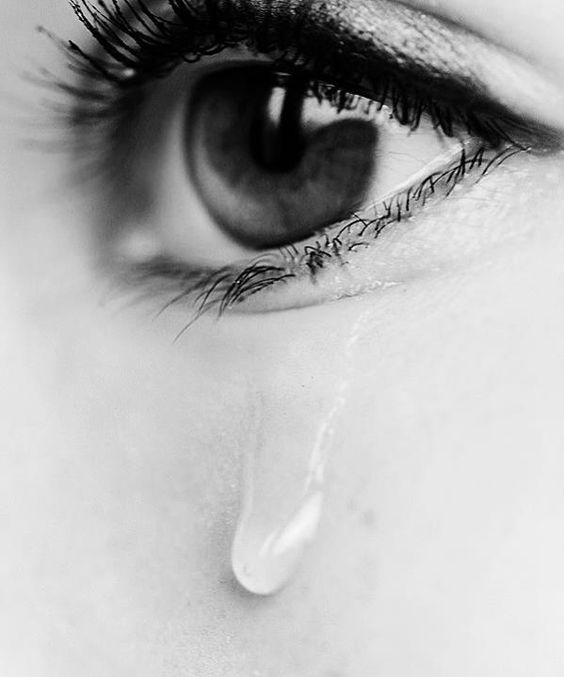
I have cried while reading, but I don’t get hysterical. It is mainly just tears sliding down my face, but it has been when characters I really have grown to love die, and it feels like a piece of your soul has been torn away. It is weird how you can feel for these characters that aren’t even real, yet they feel so three dimensional.
This is the most amazing experience, when an author can make me cry. There’s only two books where I’ve almost cried, only because I was holding back. *he he he* 😉
It’s good to cry, let those feelings out.
You know in some countries if you burp that means the meal was good. Well, if and when there’s a tear streaking down your face, hats off to the author.
*Name your favorite YA books and what you love about them.
The Shatter Me series by Tahereh Mafi, The Under the Never Sky series by: Veronica Rossi, The Precious Stone Trilogy by: Kerstin Gier, Throne of Glass and A Court of Thorns and Roses by: Sarah J. Maas, Six of Crows by Leigh Bardugo, The Falling Kingdoms series by: Morgan Rhodes, and The Blood of Eden series by: Julie Kagawa, and I could keep going on for a while. I love these mainly because most of them are just a whole different world, and these characters just all do things that normal people just don’t do, and I love that.
I can almost see your enjoyment here. Great!
AT THE SCENE OF THE CRIME….
*Name your top 5-10 pet peeves you hate when reading a book.
1. Too much self loathing
2. When characters say someone “Let out a breath they didn’t know they were holding”. How is that possible?
3. If characters have kissing scene etc. and get interrupted too many times. Does that happen in real life?
4. Way too many point of views.
5. Names I can’t pronounce. Unless the author provides a page on how to sound out the names.
Hold it right there, pal…
*What other genres do you read?
Fantasy, Paranormal, New Adult contemporary. I can’t do a lot of the “People with real problems” type books.
I hear you. Guess that could be rather depressing.
*What do you think of the current 5 star system for book reviews?
It is okay, but I know the 3 star area is different to some people. Some people say 3 stars is still a good book while others have 3 stars as thinking it wasn’t great, so it is all opinion pretty much.
I’ve heard the same thing. It think it serves a certain purpose while failing in others. Doesn’t capture the complete reader experience in my opinion. But eh, what do I know?
*When you rate a book, do you have specific criteria? Or does it depend on your subjective feeling?
If I am left really thinking about the book I give it a 5. I don’t really give books a 1 because those are ones that I wasn’t able to finish, but I feel bad about rating a book I don’t finish, so I just don’t rate it at all.
Same here. If I didn’t finish a book I wouldn’t be able to properly assess it.
*In your opinion, who are the top authors of the century and why?
Wow okay sorry to disappoint, but I don’t have something like Shakespeare or Poe. At the moment it has to be Sarah J. Maas. Her series are just so addicting and always has me yearning for the next book.
You just elicted the WOW factor!
Give credit to Sarah J. Maas
*Over the course of your life, how has reading affected you?
It has opened doors to all sorts of places where I now have an open mind and can see from others perspectives even if I don’t agree with their actions. I feel that that has helped me be a better person and can empathize with people in real life and understand the choices that some people make even if they are not the same choices I would choose. Everyone is different, and if we were all the same and thought the same then what a boring world this place would be.
Awesome! I read somewhere that reading literally changes your brain and how you think. Empathy was one thing the article mentioned. That’s so cool!
Thanks for joining us Candace!
********
~Books fall open, you fall in. -David McCord
********
“I was born with a reading list I will never finish.” -Maud Casey
********
Never take for granted what you read -Benjamin Thomas
When you read a book, what do your eyes see? What do they perceive?
Writers extend to virtually every corner of the earth; east, west, south, north and arguably are the most fascinating people on the planet. Well if you ask me, they arethe most fascinating people on the planet. It’s no great secret that I take great joy in interviewing them. To discover and share in their craft, learn how they tick, or don’t. Fascinating indeed.
I had a crazy thought of interviewing writers from a completely different perspective. Most writers began their journey as readers so why not get a view into this experience? So here it is, the Forensic Lenses series. An investigative and exploratory approach into the minds of your favorite authors.
FORENSIC LENSES
SERIES
Do you–follow the reader?
I do…
Her name is KM Weiland.
Welcome Kate!
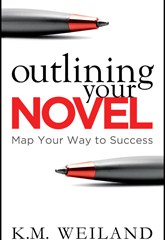
K.M. Weiland is an award-winning, butt-kicking, internationally published author of the bestselling Outlining Your Novel and Structuring Your Novel books. She writes speculative and historical fiction from imaginary lands. Her blog helpingwritersbecomeauthors.com is regularly ranked in Writer’s Digest top 101 Best Websites For Writers every year, but is #1 in my book. She puts up with writers like me who don’t know grammar yet. Way to go Kate!
In the history of the blogosphere, there has never been such a defining moment until today. As a token of our appreciation we bestow upon you, KM Weiland, the ever noble…
Seal of Awesomeness
Wear it with dignity and honor.
*applause, standing ovation*
Alright, so let’s cut to the chase.
Was reading Scottish Chiefs by Jane Porter, the inciting Incident in your path of becoming a writer? You mentioned how this sparked your love of history, laid the groundwork for your book A man called Outlaw, influenced your novel Behold the Dawn and not to mention your desire to write historical fiction.
That’s an interesting way to look at it. The Scottish Chiefs was definitely a formative fiction experience for me as a child. But I think it was more of a “feeding” of my love for stories, than it was an inspiration to actually start writing. I didn’t start writing until several years later and certainly not with any intent to actually *be* a writer. I actually really like that I kind of slipped sideways into writing. It was never an ambition. It was more just an out-breathing of myself.
But Scottish Chiefs definitely influenced me, on at least a subconscious level, in regards to *what* I would end up writing: medieval-esque epic and heroic tales–what I call “blood and thunder” stories.
Never was my ambition either. Funny how that works huh? So it was more of a feeding your love for stories, great! How reading affects us on a subconscious level and fuels our imaginations is quite a mystery. Perhaps we should we call it, Fuelination? Whatever the term, early reading habits in children serve as the impetus for authorship later in life. Then all it takes is a small spark of inspiration to ignite the flame. BOOM. The passionate flame has been lit, begetting another writer. A particular breed of humanity.
How has your reading experience and love for stories evolved from childhood, teenage, to adulthood?
I have always loved stories. They have always been my language. But I was a very undisciplined reader as a child and teenager. My parents weren’t readers themselves and weren’t able to guide my reading choices. I read and loved and re-read (and re-read and re-read) a few classics like Little Women, Anne of Green Gables, The Black Stallion. But I also read a lot of highly forgettable children’s novels–and probably every book in the Star Wars Extended Universe that had been published to that point. It wasn’t until I was in my late teens that I started discovering better quality fiction and disciplining myself to read widely and broadly–especially in the classics. It’s my goal to read all the classics before I die. I’m working my way through the authors alphabetically. So far, I’m up to M.
I find it interesting, even though your family wasn’t a reading family, you still became a voracious reader and ultimately a writer. I’m wondering if you got your books from the library or bought them on allowance. It sounds like your learned that discipline through reading experience on your own. Versus someone telling you this is good, or that is bad. You had to cultivate it yourself. Which I think had a big role in making you who you are today. You’re probably more keen because of it.
Reading the classics
How has being a writer affected your reading? Is it a killjoy because you have more of a critical eye? Or does it yield more appreciation for the story? Take us into your realm as a reader.
Most of my childhood reading was from the library. My grandparents and aunts bought me a lot of books as well. I tended to reread the books I owned a lot–hence the multiple visits to Anne of Green Gables and Co. As for writing affecting my reading… You hear a lot about authors who find that their own awareness of the principles of writing turns them into hypercritical readers and robs them of the joy of reading. But I’ve never really experienced that. Maybe because I’ve always been hypercritical! :p For me, writing has only enhanced my reading. Instead of *just* reading for pleasure, now I also read with a writer’s eye and get to explore and enjoy the psychology and craft of every new author’s work. It brings a whole new dimension to my appreciation of a good book.
I really appreciate this. Having a writer’s eye, exploring and enjoying the craft are all pluses!
AT THE SCENE OF THE CRIME…
As a reader what are your 3-5 pet peeves and why?
Flat narrative voices that “tell” instead of “show.”
Self-indulgent authors, who are obviously too in love with their own story worlds and characters to be objective about the reader experience.
Unnecessary prologues
Repetitious dialogue
Overuse of character names when addressing each other in dialogue
It’s good to be aware of these. Thanks!
I’ve often heard you say you must read all the Classics before you die. It must be high on the bucket list! So why this journey through the Classics and what impressions do you have?
For the purposes of challenging myself to read all the classics, I define a classic as any book published before 1966 with a title or author I recognize. I started the challenge really just as a way to get myself to read the important literature landmarks from history. It’s been an interesting journey–tedious at times, but, overall, definitely worth the effort. I feel like I’ve vastly broadened myself and my understanding of people, the world, and writing. It’s made me read books by authors I never would have touched otherwise–from so many time periods and countries and about so many different topics. I estimate I’m about halfway done (I’ve just reached the “M” authors). I’ve found it incredibly rewarding.
I’m looking forward to your response when you’re finished as well. I’ve been thinking a lot about the most influential authors of the century. How they left their footprint upon society and the craft of writing.
Every great writer has left their footprints in the craft. We gladly follow in their footsteps. But as we do, we don’t realize we begin to make our own.
~Benjamin Thomas
BONUS: Your mission should you choose to except it, would be to note the changes in the craft while reading the Classics.
The primary facets of good storytelling have remained the same over time: structure, character, and theme. I would cite two things in particular as the biggest changes over the years:
1) The visual style. Television, the movies, and the Internet have made the far corners of the world accessible to everyone. As a result, complex descriptions of foreign places and things are no longer necessary. Writers today need only a few vivid details to bring a scene to life for readers, who can then fill in the blanks for themselves. At the same time, however, due to the overwhelmingly visual nature of entertainment these days, authors also have to be much more evocative in their descriptions. Readers want to see a “movie” in their heads, which is why “showing” (instead of “telling”) has become such a touted technique.
2)The pacing is much tighter and faster these days, for the most part. Again, the culture in which we now live is faster-paced and more than a little distracted. Readers today aren’t as patient with long, flowing passages. They want to get to the point.
Excellent! Thanks so much for sharing.
Thanks KATE!
*Please see KM Weiland‘s Amazon author page and her award winning books!
Have you ever had to go out of your way to get a window seat? Whether it be on a bus, train, car, or an airplane? Well if you did, there were definite benefits to the journey. So why do adults and children alike fight for the ever-sacred window seat? It’s not about the window itself, but the view that comes with it. The scenery and vista are the grand prize! Something well worth fighting for, so here it is.
Today we have a “window seat” experience with a very special person among both the publishing and writing community. Someone who hardly requires an introduction; who is widely respected for her knowledge, experience, generosity and expertise in multiple areas.
EVERYONE PLEASE WELCOME JANE FRIEDMAN
.
People are multi-faceted creatures with many sides that we may or may not be aware of. In the process this interview, I was ecstatic to see various sides of Jane I hadn’t seen before. Splendid indeed!
LET US BEGIN
Hi Jane!
Here’s a little more about Jane, which is just the tip of the iceberg. If you’d like the full iceberg experience please visit her about page on her blog. Her resume could very easily saturate an entire blog post.
A Writer and Professor who has 20 years of experience in the publishing industry and specializes in digital media strategy for authors and publishers.
Former Editorial director and publisher of Writer’s Digest.
Teaches digital media and publishing at the University of Virginia
Columnist for Publishers Weekly.
Educates authors about the publishing industry
So just in summary:
~Jane is the ultimate Jedi Master~
If you’re looking to publish anything anytime soon, take heed you of little faith, to the work of Jane.
I’ve heard of some famous Friedmans in Cincinnati and beyond, are you related to them?
I wish I knew, but probably not.
Fair enough.
You write poetry! Do you still write poetry? I was so elated to see “Jane’s Embarrassing College Poetry” on Amazon. I think we largely know you in the publishing realm, but not so much as a writer, or even a reader.
I haven’t written poetry since I left graduate school in the early 2000s—I became consumed with my career in the publishing industry.
Now that I’m my own boss, and my business is doing well, I have a chance to steal back some personal time. So what do I write? I don’t know. Staying busy with my career (perhaps a “shadow career” to use a term from Steven Pressfield) has been an excellent way to avoid confronting the most fearful step of all—seriously devoting myself to my own writing.
Jane writes poetry! YES. I almost fell out of my chair when I saw your poetry book on Amazon. I’ve included the first poem for proof.
LYING IN BED
The little things that keep us up at night-
a drip drip coming from the kitchen sink;
the entrancing glow of the streets and soft moonlight;
the heater rattling on, clink by clink.
Two thrown-off sheets and sweat above my lip,
the windows open, breezes blowing in.
Both hands and fingers grasping the air,no grip,
but shadows touch the walls, acting the twin.
The curse of overactive minds I know,
for the art of sleeping well is lost on me,
when I remember your leaving years ago
and sleep away from where I thought I’d be.
Then you laugh someplace and mention my small name.
I wake to hear you; nothing is the same.
~Jane Friedman
*******
*Poetry is just the evidence of life. If your life is burning well, poetry is just the ash. -Leonard Cohen
I read somewhere where you said, “I probably read more than anyone on the planet”…and I wanted to get a window into your THAT experience. I’m assuming this is academic reading. Can you bring us into this experience, and what exactly you’re looking for?
I think what you’re remembering is a line from Publishing 101, where I discuss having read more writing advice than anyone else on the planet. That’s a result of working for Writer’s Digest, the No. 1 publisher of writing advice books in the world. We released several dozen books every year while I worked there—in addition to the monthly magazine—and not only did I read the majority of what we published, but I had to keep up on the competing books as well.
These days, most of my reading is related to the business of the publishing industry and the evolution and future of the media. I have moments of existential angst where I ask myself, “Did I really choose this? How did I end up here?” But I don’t think the answer matters; it’s where I am, and there’s satisfaction in the mastery I’ve attained. However, it does matter what I do next: is this an obsession I want to keep feeding?
In recent years I’ve become interested in reading histories. Maybe reading too many trend pieces and hot takes has resulted in a desire for a deeper understanding of cyclical change and behavioral patterns. I want to get beyond either/or, reductionist thinking and instead investigate better questions to ask and how certain frameworks affect the questions and answers we come up with. Unfortunately, nuanced thinking isn’t known to drive traffic or buzz.
Epic indeed. I enjoyed what you said about the “evolution and future of the media” as it relates the business of publishing. Definitely a hot topic!
The Hot Flame of Publishing
What kind of books do you read for pleasure?
Almost always nonfiction. One of my recent favorite reads was What Technology Wants by Kevin Kelly. I’m currently working through From Dawn to Decadence by Jacques Barzun and will soon finish Status Anxietyby Alain de Botton. I’m looking forward to reading Virginia Heffernan’s newest book on the internet. To fall asleep I read Wikipedia entries on my phone.
I’m also a devoted subscriber to The New Yorker; that’s my coffee-and-toast reading in the morning. I haven’t missed an issue since 1998.
Nice. I hear you–Can’t miss that coffee time. The apocalypse can wait…Give me my coffee first. I’m all over the place with reading habits, but reading a lot about personality traits. I saw that you’re INFP! Woo-hoo! I’m ENFP, so we’re in the same neighborhood.
Who are your favorite authors and why?
I don’t really have favorite authors, but if I had to choose one, Alain de Botton. Reading his books are like eating a nutritious doughnut.
Nutritious doughnuts, now that’s something they could genetically modify. Haven’t heard of Alain de Botton, I’ll have to check him out.
Here’s my one publishing question based on the most recent Hot Sheet [http://hotsheetpub.com] newsletter. Can you briefly touch on the deeper market factors affecting the income of writers today? (See excerpt below)
“Publishers share the frustration of the author community that it is increasingly difficult for authors to make a decent living from their writing. However, we locate the principal source of this problem not in the contractual relations between publisher and author but in deeper market factors. With margins being squeezed across the whole supply chain, books facing increasing stiff competition from other media and entertainment sectors for consumers’ time, and there simply being more writers … the reasons for the decline in average author income are wide and varied.”
Well, here’s the thing—my partner on The Hot Sheet wrote this particular item, and while you can find evidence to support this view, I don’t buy into the popular myth that it’s increasingly difficult for authors to make a decent living from their writing. It has always been difficult.
That said, perhaps one of the best times to be a writer was during the 19th century. Literacy dramatically increased, and the number of magazines exploded, in addition to the number of books published annually. But despite it being something of a golden age, one author complained to a US congressional committee that he did not know any author who made a living by writing literary work. He said that of all the learned professions, “Literature is the most poorly paid.” The truth is that many writers’ careers are gifted into existence by their birth, by privilege, by marriage.
Authors sometimes lay the blame for their economic situation on the publisher, and it has always been thus. Going back to ancient Rome, authors have been accusing their publishers of greed. But such accusations almost always betray ignorance about how the industry works.
In the digital era, it’s becoming more common to lay the blame for authors’ suffering on the tech companies, such as Google. The Authors Guild in particular has expended all kinds of resource on trying to argue before the US courts that Google essentially steals money out of the pockets of authors and publishers. There’s an oft-repeated and oft-misunderstood saying that “information wants to be free,” which the Authors Guild says creates a sense of entitlement among readers, or that it creates an expectation that writers shouldn’t be paid. I don’t think this is true at all. However, what’s valuable to us, or what is worth paying for, has changed. Analyst Ben Thompson explains the value shift very well in his post about the the Smiling Curve [https://stratechery.com/2014/publishers-smiling-curve/]. Clay Shirky too has written at length about how publishing has been turned into a “button”—publishing is the new literacy, meaning that anyone can publish, it doesn’t require professional experience any longer. We live in an era of universal authorship where everyone has the ability for self-expression and distribution of that expression. Not all of that expression will be high quality (a lot of it will be crap), but I don’t place a value judgment on that; it’s a fact of digital life and we can’t go back to some previous era. And if you could go back to a previous era, you would simply find the same complaints in the culture: that too much crap is being published. It dates back to Gutenberg, these “problems” we have with both quality and quantity of material being published.
Authors can make a decent living from their writing if they’re willing to pay attention to how the business works, figure out a business model that works for them, and adapt as needed. Too many authors and authors’ organizations want to preserve a system that doesn’t work with new forms of publishing, distribution, and media.
This is great info. I think I’ll start calling you Jedi Jane.
Your Twitter profile has the following statement: “A writer who believes art and business can happily co-exist.” Can you give us a little marriage counseling, those of us who are not looking forward to this union?
Another one of the harmful assumptions of “serious” writers is that art and business are antithetical to one another. This belief is so ingrained that no one questions it any longer. Before writers even have a single word published—before they’ve encountered any aspect of the business of their art—they presume that they are bad at business or that business concerns will pollute their efforts. There’s absolutely no openness to the possibility that the business side can be just as imaginative and interesting as the artistic process itself. And of course businesses excel when they employ people who have kept their artistic side alive, who can bring imagination and innovation to their work.
To be sure, business can and does ask for compromises—but that’s not always to the detriment of art. A bit of friction, some kind of barrier—a net on the tennis court!—is healthy. There’s a wonderful book Make Money Make Art by Elizabeth Hyde Stephens that looks at this dynamic using the framework of Jim Henson’s career. He started off in advertising, and found ways to pursue his art in commercial settings. He used those commercial opportunities to hone his craft and support later artistic projects. Dana Gioia is another example of someone who sees how art and business can inform each other—a poet who has an MBA and worked as a corporate executive. And Alain de Botton is yet another; although I don’t think I’ve heard or read him on this topic, it’s clear that he has an integrative approach. Just look at his venture, The School of Life, and how it’s a business manifestation of the ideas you find in his books. It’s genius. What if he said, “Oh no, getting involved in a business is beneath me, it is crass. I need to focus on my writing.” Thank God he is not that boring.
Thanks, I needed to hear that. I’m glad you’re pointing the misconceptions that many of us have ingrained us already. I guess this is the part where we ride off into the sunset and live happily ever after!. Hey, my grandparents were married for 60+ years! And that’s really saying something.
Tell us about your upcoming book!
There are thousands of students in creative writing programs who study the art and the craft, but receive very little or no guidance on what to do once they’ve graduated. They don’t know how the publishing business works and their expectations can be wildly out of line with reality. Even worse, they can even be conditioned—because of everything I’ve described above—to feel bitter and resentful toward editors, agents, and the industry, to feel victimized. This doesn’t help anyone and it has to stop.
My book, The Business of Being a Writer, is meant to provide that missing education—what it means to make a living as a writer, and how to understand the business well enough to advance your writing career, without relying on luck or magical thinking. It’s slated for release in Fall 2017 from the University of Chicago Press.
*The Business of Being a Writer*
Thanks Jane!
To show we really appreciate your time, we’d like to present to you an honorary fist bump. I’ve only given out a few of these so I hope you enjoy it.
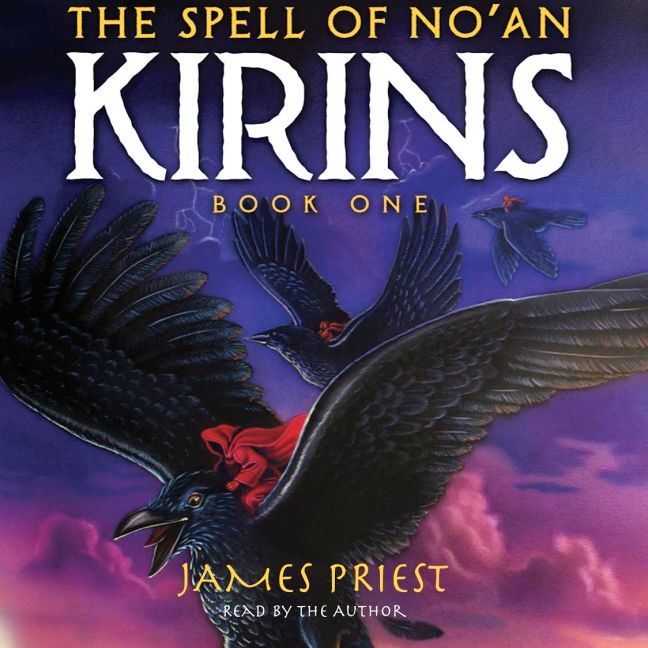
Everybody say hello to fantasy author James D. Priest! He’s the author of the KIRINS fantasy trilogy, a retired physician, husband, father, podcaster and currently enjoying life in Hawaii. You can check out his official home page at www.kirinbooks.com.
I was born and raised in Minnesota, went to high school and college in Minnesota, and went on to medical school at the University of Minnesota. However, since then I have lived in Japan, California, and now Hawaii.
Nice. I’ve been to the twin cities a few years ago and to the gigantic uber mall there. I used to live in So. Cal, would love to visit Japan, and never been to Hawaii.
*You used to tell stories to your friends on the bus. How did that come about? Or how did you pick up the knack for storytelling?
Storytelling on the grade school bus came from what I have since discovered is an ample imagination. In composing my fantasy trilogy, I borrowed a few names from real people or situations, but the vast majority of what I created and wrote is directly from imagination.
I’m lovin’ it Jim. Just by looking at your fantasy trilogy I can see you have a very vivid imagination.
*What was it about Tolkien that drew you into fantasy?
I loved his world building, creating an alternate universe, Middle-earth, from nothing but his imagination. His conflict between good and evil. His characters, such as Frodo and Bilbo, are genuine and likable. His Gollum is a work of creative art, the likes of which fantasy authors should strive for, as I have with an urgol, Gian, in the third book of my trilogy.
Yes! You’re touching on some of the things I love most about being a writer. CREATING AND IMAGINATION are my favs. Don’t hate me, but I haven’t read Tolkien yet. I’ve seen all the movies though. Gollum is probably the most compelling character to me in the whole book!
*Did you want to be writer before going into medicine?
I think I’ve always had somewhere in the back of my mind that I wanted to be a writer. And I was a writer while in medicine, where I published about 30 medical articles.
Ah yes, I’m all too familiar with this kind of writing. Not my favorite honestly, but necessary.
*How has studying English in undergrad, graduate school and participating in professional medical writing prepared you as an author?
As they say, practice makes perfect. I think the more writing you do, the better you get. But I’ve also learned that every writer needs an editor. We’re only human, and we need guidance both on a grammatical level, and in the line of reasoning, the logic, of your writing.
Yep, you nailed it there Jim. We desperately need good editors, especially us intuitive types.
*First, give us a knockout summary of your trilogy.
My trilogy is published in print, ebook, and audiobook. But there is, in fact, a fourth book, a sequel, not yet published.
KIRINS SERIES SUMMARY:
My trilogy, The Spell of No’an,The Flight of the Ain, and The Secret of the Hanging Stones, tells the epic tale of KIRINS, a race of tiny, magical beings who live throughout Earth today.
Dwelling in elaborate tree homes and underground sanctuaries, they enjoy a strong kinship with the animals and birds of their region. In the distant past humans knew them well. But an ancient rift occurred between the races, and kirins chose to separate themselves from humans. Sadly, we humans are now unaware of their secret civilization.
For thousands of years kirins everywhere lived in calm. But now a mysterious, dark force threatens their existence. Knowing little about the enemy they face, the kirin clans choose a party of five daring adventurers led by the wise magician Speckarin. On the backs of birds they travel thousands of clan-dominions across land and sea to Stonehenge, to save the kirin race. But what the journey holds in store for them, they could never have imagined.
In the fourth book, The Seer of Serone, a sequel, Speckarin and his intrepid party journey to Alaska to attempt to bridge the chasm between kirins and humans, and to rescue a kirin lad captured and forced into loathsome service by a human. Assistance in dealing with the offending human is provided by a powerful local wizard, a kirin, The Seer of Serone.
Review by Mary Logue, award-winning writer and poet, author of Dancing with an Alien and Snatched: “Having read all three books of James Priest’s wonderful trilogy, I have nothing but praise. The scope of this work, which takes us from the middle of North America across the Atlantic on the backs of birds to Stonehenge, is extraordinary. I enjoyed every moment I spent with the kirins. Priest’s work resembles Lord of the Rings, but is more rooted in nature and gentler in tone.”
This looks so fascinating! Love the cover images on all three books. You’ve got some great reviews too on Amazon.
*You’re a writer; so what’s your story, or what inspired you?
Having always liked the idea of writing, I challenged myself to write in a genre I’ve enjoyed, fantasy. I decided to write a story set in today’s world. Every culture has mythical small beings. In Ireland they are leprechauns, in Norway and Denmark nisse, and in Hawaii menehune. People want to believe they exist in gardens, trees, and nature. In my tale they are kirins. Because I have always liked small things, the story is of a race of tiny, magical beings, kirins, living throughout Earth today, though humans are unaware of their existence.
Wonderful. Creative little creatures!
*What’s your GOAL in becoming a writer?
Like most or all writers, to become a bestselling author, and to leave something in this world that will make it a better place.
Excellent. No shame in that. It shows you’ve got heart!
You’ve got heart
*What 3 things have hindered you from completing your projects?
Finding time to write was a problem while I was practicing medicine. Getting the books into all three formats, print, ebook, and audiobook (self-narrated), has taken years to complete. As with almost all writers, promotion and marketing have been a challenge.
WOW! That’s unbelievable! You wrote these books while practicing medicine, had them formatted AND self-narrated them? That’s more than amazing. Promotion and marketing are challenge, no doubt.
*What keeps you motivated in achieving your dream?
I like to work, but writing fantasy was never work for me. It engrossed me so much that it made me forget about anything else. If I went too long at the keyboard, I would become fatigued, tired of writing. I didn’t want that, so learned to pace myself and take time off when necessary. I never had a specific time of the day to write. I wrote when I could, and loved it.
I am motivated by two factors:
1) I want to create something for all the world, especially my family, to appreciate, and 2) My books are good, and thus I keep working in promotion and marketing. KIRINS is a fantasy in the classic tradition: epic storyline, an immersive all-new world, great characters, powerful and mysterious magic, plot twists and turns, an immediate threat, romance, and heroism. And the books are suitable for readers 10 to 110. No vampires, werewolves, zombies, blood, guns, drugs, car wrecks, or post-apocalyptic landscapes. No obscenities or erotica. No superheroes, just heroes.
Hah! I love it. Your vision and motivation is very clear.
*What would you say to a struggling writer who’s given up?
If he/she wants to be a writer, pick yourself up, dust yourself off, and start all over again.
Amen, and amen. I’ll add, if you can’t pick yourself up, join a supportive writing group. They’ll pick you up and keep you going.
BONUS:
*Who’s your favorite author?
J.R.R. Tolkien
*******
*What’s your favorite quote?
“A professional writer is an amateur who didn’t quit.” -Richard Bach, author of Jonathan Livingston Seagull
































 The Writing Train: Join the locomotion