
Welcome to Television Tuesday

A Thousand Nights by E.K. Johnson
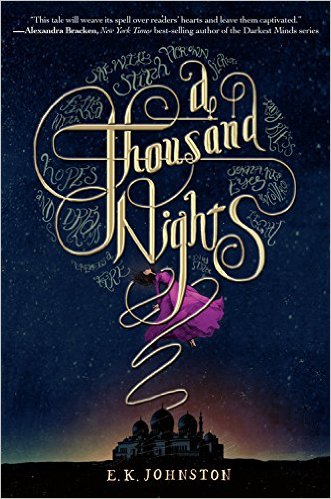
Have you read or heard of it? Tell me in the comments!

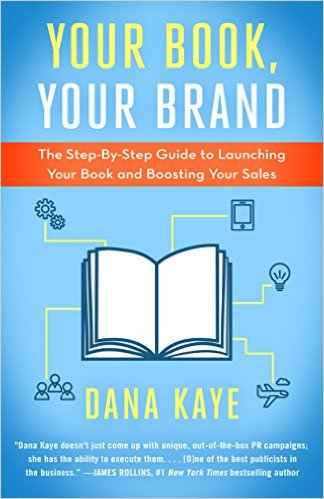
Writing your book is just the beginning of a long journey. Especially in today’s new age of mass publishing. There’s probably more writers in the market today than ever before. Which makes it even more critical to be educated on what to do after your book is published. In order to be successful authors we need more than just knowledge of publishing. We need to continually learn how to effectively market and promote our books. So whether you’re self-published or traditional, this book is for you.
Dana Kaye does a wonderful job laying out this comprehensive guide. From developing your campaign, content strategy, pitching, media, it’s all there. Want to be your own publicist or hire one from the outside? Look no further. This book is a step by step guide for anyone looking for practical advice from a seasoned professional.
Benjamin Thomas

Anne is the author of the stunning books, The Writer’s Process: Getting Your Brain in Gear and Subscription Marketing: Strategies for Nurturing Customers in a World of Churn.

Anne Janzer is a marketing consultant and professional writer with more than 20 years of experience working with high tech businesses. Her clients include software industry giants, fast-moving tech start-ups disrupting the status quo, and clean tech companies trying to change the world.
Anne has worked with over a hundred technology businesses, from industry giants to innovative start-ups, helping them articulate positioning and messaging in crowded markets. In her consulting career, she has collaborated with serial entrepreneurs, industry thought leaders, and technology pioneers pushing the boundaries of what’s possible. As a ghost-writer for corporate executives, her work has appeared in dozens of industry publications and blogs, including Wired.com and the Sand Hill blog.
In addition to her own blog on subscription and content marketing, she contributes guest posts to many many technology and marketing blogs, including Business2Community, Social Media Strategies Summit blog, Marketo and Zuora blogs, Crowded Ocean, and others. Anne has an established and growing author platform, including an email list, blog, and expansive social media presence. She is a graduate of Stanford University.
Connect with Anne on twitter @AnneJanzer, see her website at annejanzer.com, and follow her blog.

*What did you study in college?
I was an English literature major at Stanford.
Awesome!
*Why did you choose that particular degree?
I chose the English major because, as a lifelong reader, I knew that would always, no matter what, want a literature class on my schedule every term. I realized that with careful planning, I could complete the English major, leaving myself open to explore other subjects. I almost did a double major in Human Biology, which at Stanford is an interdisciplinary major combining the hard and soft sciences. But after completing the core work, I ran out of steam in designing a personalized major. Instead I took classes in journalism, computer science, and psychology. I’m a strong believer in the value of a liberal arts education!
Wonderful. Education can shape us in so many ways.
*Who or what were your early influences that led to a writing career?
I come from a family of readers and writers. I had always imagined myself as a writer, since the time I was young.
Your imagination was right on target.
*After college why did you go into writing for tech companies and marketing?
My first job out of college was at Stanford, working in the administrative computing group as a technical writer in a group of systems programmers. Being able to understand and write clearly about technology is a useful skill, particularly in Silicon Valley. Like many English majors, my career was more of a wandering journey than a clear linear path. I moved into product marketing at a startup, and then took off on my own as a marketing consultant/writer.
Nice. That would prove to a very useful skill in the silicon valley!
*Give us a summary of your book and why you decided to write it.
The Writer’s Process is about the inner game of writing – matching the stage of the work to the way that your brain operates to be more productive and creative. I’ve spent many years as a professional writer figuring out the ways that I work best. Reading research about focus and creativity, suddenly those methods started making sense from a cognitive scientific standpoint. That inspired me to dig in and analyze the process. I wrote the book because I truly believe that a better understanding of the inner craft can help writers of all levels have more fun and success with their work.
Well, I’m certainly glad that you did. This book had a major impact me. On the seeking and understanding of my own process. It’s very easily one of my favorite craft books of all time. See, all your hard work paid off. Come to think of it, this book seems to be a culmination of years of writing experience. Now it’s in print and ready for consumption. Thanks!


*What were your favorite parts in writing it?
I loved researching not only the science, but also the practices of other authors and writers. It’s fun to realize how much all writers have in common. Plus, there’s something very “meta” about writing a book about the writing; it gave me the opportunity to refine and tune my processes.
I think writing is both a collective and highly individualized art. We don’t exist or work in a vacuum. We’re influenced by those around us. The literary culture of our time leaves a remarkable footprint on society. Writers of every generation run, then pass the baton down to us.
The issue of their process, imagination and approach to writing leaves an indelible imprint on our souls. We seem to assimilate these ‘imprints’ into our own process, until we become a work of art ourselves. But when we learn, accumulate, express ourselves through our own process, we discover that it still bears a unique flavor. For when the flow strikes and flows through the artist, it takes on the sediment of the individual.

*What did you learn from writing it? Or has it affected your craft?
Writing the book has definitely made me more disciplined about my own process. For example, now I notice when I am tempted to skip a step and short-cut the full end-to-end writing “recipe” to save time. I’m more intentional about incubating ideas and problems. When I recognize the Imposter Syndrome or run into other problems, I have defenses ready.
This is great. I always enjoy how others have adapted their own process. Having an understanding is critical, however discipline seems to be largely underrated in my opinion.
Second, the fact that we can change and adapt this process tells me that it’s extremely malleable. Sounds like a special piece of clay doesn’t it? I know in pottery clay can take on many forms, possibly thousands. It all depends on the hands that shape them.

*Tell us about the relationship and potential collaboration between the Scribe and the Muse.
The book describes two different mental systems that all writers rely on. The Scribe is my name for the intentional and hard-working writer, while the Muse refers to intuitive, creative processes.
I love this! Scribe is a great name by the way. Thumbs up. The Scribe resembles a type A, control-freak-businessman, while the Muse is much like a mysterious laid-back teenager with a mind of its own. But the two must learn to work seamlessly together as a team.

No hard feelings, eh?
(photo credit Angelos Ntinas)
*In your book you label the Scribe and Muse in order to point out the intentional and intuitive mental processes.
It’s a useful fiction, a way to frame the complexity of different inputs that go into writing. All writing depends on both systems; you need focus and discipline to work. But you also need the ability to summon thoughts and ideas and to make connections that bring your subject to life. Productive writers learn how to hand off the work between the two mental systems.
I think this statement sums up my enjoyment from the entire book actually. It’s extremely enlightening to realize that they’re two; but not diametrically opposed mental systems, and in order to be productive we must learn how to “hand off” the work between the two. Powerful.
*Can you tell us more about open attention and focus and how they relate to our writing?
Focused attention is how we get the work done, blocking out distractions to write, research, or revise. In contrast, open attention is what happens when we do something that doesn’t require dedicated focus. We experience open attention when taking a walk or doing everyday tasks that are somewhat automatic.
Knowing about the nuances of attention is quite an eye opener. We must master both to tap into better productivity as writers. No wonder so many people get writer’s block. Too much dedicated focus and not enough open attention. The Scribe dominates the relationship and the Muse retreats to who knows where.
*You said something very critical about moving between the two systems of Scribe and Muse by directing our attention. This seems to be a somewhat voluntary gateway; through which we can toggle back and forth between the two systems, or writing minds.
Exactly! Using the metaphor of the two mental systems, the Scribe operates in a state of focused attention, while the Muse appears when we’re in open attention. Perhaps the Muse is always there, but we only hear it in states of open attention. To hand off work between these systems, you need to be able to focus intently, and then let go of focus. Spend time writing, then time “not-writing.”
This is amazing every time I hear it. The intentional mental process and the intuitive mental process. Then learning how to utilize the gateway between the two to get our best work done.

open attention
*Speak about the benefits of open attention.
When we’re in open attention, the Scribe is not managing our thoughts, and the Muse has a chance to contribute, to process unrelated thoughts and come up with interesting ideas.
In this section you tell us that we connect to the Muse through open attention. I’ve never heard this before. That’s so cool!
The cool thing is that this really works! When you need creative input on a problem, queue it up in your head, and then seek out a period of open attention. Here’s an example: a client was looking for a metaphor for a complex technical topic. I was drawing a blank. So I thought about it intentionally, then walked to the gym, worked out, and returned home. In the process, I kept bringing my thoughts back to the problem. I ended up with a number of creative approaches. The Muse is present in the background, ready to contribute when you invite its input.
This is AWESOME. “We connect to the Muse through OPEN ATTENTION. This is the key!

*Speak to us about how to achieve a state of flow and what that means.
You marvelously explained how this is the result of the two writing selves working together in a fluid process, the productive and creative.
Flow is that ideal writing state, when you lose yourself in the work. It makes the work fun and worthwhile.
Using the Scribe and the Muse analogy, the two are working together side-by- side in a state of flow.
You cannot force flow to happen, but you can set up an environment in which it is more likely to occur. The Muse is easily distracted, so remove potential distractions or interruptions. Find a place you can focus and start working. If you hear yourself criticizing or critiquing as you work, try to silence the inner critic. Think about the work, not yourself, and keep going.
This is the ultimate benefit. When we achieve a state of flow by the productive work between the two mental processes. One major takeaway for me is learning how to go from the focused intentional state to the open attention intuitive one by learning how to direct our attention. To me, this is the real key of achieving balance, utilization, and producing an ecstatic state of flow. EPIC.

***********************************************************

Sure, these are my 7 steps. I try to schedule time for all of them. You might vary the steps, but the idea is to schedule for each phase, and bring the right system to the task at hand.
1. Research (both internal and external)
2. Incubate the ideas – give the Muse a chance to contribute
3. Outline or structure
4. Write the first draft – ideally finding a state of flow during drafting)
5. Rest before revising
6. Revise, edit and proofread
7. Publish!
*******************************
***************
***************
l
Benjamin Thomas
@thewritingtrain

********

Please Welcome H.M. (Hannah) an avid reader, aspiring author, blogger, adjective lover, Big Sister, Sweater-wearer, Fangirl, Coffee drinker, Christ follower, and TEENAGER. She has a very beautiful and impressive blog over at Plottingertwist. Very impressive for a young person! Here is a link to a recent post My Thoughts on J.K. Rowling’s Harry Potter Series.
Hannah and I first bumped elbows on Twitter and since have become blog-buddies. She’s a very impressive teenage writer, blogger and reader! I can see the talent literally pouring out of her hears, and as an INFJ, she’s also one of the rarest personality types on the planet.

So where are you from?
~ I am from a tiny town in Texas. (Buffalo, TX if you need a specific one.)
I’ve been to Texas several times but I’ve never heard of Buffalo, TX. A lot of Buffaloes must roam there eh?

How did you come to love books so much?
~ I grew up in a book-loving family! My great grandmother collected books & she passed the tradition down.
That’s so sweet. I grew up in a TV-loving family, I defected later. Books are much better. I find that family is always so instrumental in our early reading habits. I love how your grandmother collected books, what a good pattern. My grandmother helped us out a lot when we were wet behind the ears. And when our ears dried she was still tireless. Kind of like an older version of the Energizer Bunny. I miss her dearly.
********
Even though my grandmother passed some time ago, her love never entered the grave. It fervently lives before us; bright as coming day, tugging on our souls forevermore.
What childhood experiences had a major impact on your writing?
~ I was homeschooled, so one of my favorite bookish memories is my mother teaching me to read. Along with that, my father used to read to me before bed every night. Together we went on many adventures with Doctor Doolittle, Mr. Popper’s penguins, & Ramona with her sister Beezus.
It’s astounding that parents can give the gift of reading to a hungry child.

Favorite childhood books?
~ A Wrinkle in Time by Madeline L’Engle & Tuck Everlasting by Natalie Babbit were two of my favorites as a child. And even as an adult, I still continue to go back & reread my old favorites. There is something special to me about both stories!
YES we always come back to the classics!
Who are your favorite authors today?
~ I enjoy reading the works of Charles Dickens, Roald Dahl, J.K. Rowling, and Jane Austen.
Nice. Uh, mine were probably Dr. Seuss and the incredible Hulk. I suppose they’d make a nice team. Lol!
What writing project are you currently working on?
~ I am currently working on several projects, but my primary one is called Polaroids + Postcards. It is a story about a serious guitar-player & a free-spirited travel blogger who cross paths and are forced to go on a road trip across America together. (It’s been an especially fun project thus far because I am uploading each chapter on Wattpad, so my blogging friends can read it & give me advice as I write.)
That sounds like a pretty interesting story premise. Haven’t used Wattpad before but I’ve heard of it several times.

You’re a writer; so what’s your story or what inspired you?
~ It all started with books. There was something almost magical about the moments when my mother would sit with me curled in her lap, reading my favorite picture-book for the thousandth time. And this feeling only grew when she took me to the library for the first time. And when she taught me to finally read on my own. I felt like I wielded some kind of super-power when all the words melded together into sentences, and that’s when the burning first began. I knew that I wanted to write a story of my own! And I finally did. And it was terrible. The cringe-worthy picture book was entitled Princess Butterfly. Oh, and let’s not forget to mention that I illustrated it myself! (Need I say more?)
Yet as bad as that little story of mine was, seeing my parents smile at my poor attempt at a masterpiece added fuel to the fire. I didn’t stop there, and my stories grew in depth & complexity. Now, at the age of 18, I’ve lost count of the number of stories I have penned, the notes I have scribbled, and the characters I have crafted. None can quite compare with my debut work, Princess Butterfly, but it’s safe to say that I am glad of that!
AMAZING STORY. I love it. You’ve definitely got the fire. I can almost see the smoke and embers.

What’s your GOAL in becoming a writer?
~ My “surface goal” is to become a best-selling fiction author. But this is just scratching the top layer of my aspirations. In my journey to become an author, I dream of sharing my deepest thoughts & feelings through the written word. I hope to inspire others the way my favorite authors have inspired me. I want to not only entertain my readers, but also help them grow by writing stories that ask hard questions & make them think for themselves. And I desire to write something that will touch people & make them look at the world with a new perspective.
Impressive! You just elicited the WOW factor.

What 3 things have hindered you from completing your projects? (CONFLICT)
~ Time-management has ALWAYS been a challenge for me. Sometimes pulling away from one project to work on another is hard for me, because I like to give my everything to one specific thing at a time. But along with that, I also tend to be distracted quite easily. So you can imagine how quickly that can get out of hand… Lol! (Darn you, Twitter & Pinterest!)
I completely understand this one. The quicker you get a handle on this the better off you’ll be. You’re headed straight to the bestseller’s list one day kid…Tell em’ I sent ya.
What keeps you motivated in achieving your dream? (DESIRE)
~ First of all, writing isn’t just a hobby for me—it is a calling. I truly feel like it is something God has planted in me, so I honestly think it would be impossible to completely stop writing. But at the same time, the idea of becoming someone’s favorite author & them being inspired by my work makes me want to work even harder at it!
I already know you’re a hard worker. It practically jumps out of your pores. But, HAVE FUN IN THE PROCESS. Don’t let pressure, stress, or even the work, take away the joy in writing.
********
********
Author Anne Janzer in her book, The Writer’s Process Getting Your Brain in Gear, speaks of balancing and utilizing both parts of your brain in the writing process. She points out knowing when to implement or inhibit, the editor and the muse in different phases of the process. I highly recommend it to any student of the craft.
What’s your ANTAGONIST? What’s in the way?
~ Honestly, I think most of the time we are our own worst enemy. We allow ourselves to be discouraged, get bored, be lazy, be distracted, and it makes for a tough battle to win. So I would have to say that goes for myself as well. It’s an uphill climb! You live, you struggle, and you learn from your mistakes.
Are you sure you’re only 18? License and registration please.

Why do writers give up, quit or never complete their projects?
~ I know that for me, personally, this often happens due to my strange attention-span. I will have inspiration for stories at the oddest of times & feel the need to start working on it immediately, temporarily abandoning the unfinished project I was currently working on. (But I rarely work on ONLY one WIP at a time. I usually have several that I add to, which helps me to never let my brain completely shut down if I reach a dry spot on one story.)
But another reason I think writers do this is because of boredom. Sometimes we get discouraged after reading the same piece of writing over & over, and it just seems increasingly uninteresting, so we scrap the idea altogether. The key here is not allowing yourself to become discouraged. Remember, even the greatest authors of all time had first-drafts of their novels!
Yes. This brings to mind many thoughts. Many of us have the same experience trust me. *raises hand* Having ideas is one thing, but being able to grasp and develop it into a compelling story, is craft. This is what I’m learning right now. Here’s a profitable remedy for distracting story ideas:
New Story Ideas Distracting You From Your Book? Find Out What You Should Do
********
********
********

Writers extend to virtually every corner of the earth; east, west, south, north and arguably are the most fascinating people on the planet. Well if you ask me, they are the most fascinating people on the planet. It’s no great secret that I take great joy in interviewing them. To discover and share in their craft, learn how they tick, or don’t. Fascinating indeed.
I had a crazy thought of interviewing writers from a completely different perspective. Most writers began their journey as readers so why not get a view into this experience? So here it is, the Forensic Lenses series. An investigative and exploratory approach into the minds of your favorite authors.
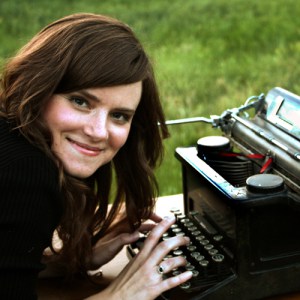
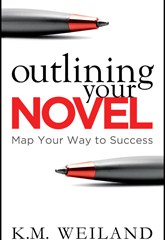
K.M. Weiland is an award-winning, butt-kicking, internationally published author of the bestselling Outlining Your Novel and Structuring Your Novel books. She writes speculative and historical fiction from imaginary lands. Her blog helpingwritersbecomeauthors.com is regularly ranked in Writer’s Digest top 101 Best Websites For Writers every year, but is #1 in my book. She puts up with writers like me who don’t know grammar yet. Way to go Kate!
In the history of the blogosphere, there has never been such a defining moment until today. As a token of our appreciation we bestow upon you, KM Weiland, the ever noble…

*applause, standing ovation*
Alright, so let’s cut to the chase.
Was reading Scottish Chiefs by Jane Porter, the inciting Incident in your path of becoming a writer? You mentioned how this sparked your love of history, laid the groundwork for your book A man called Outlaw, influenced your novel Behold the Dawn and not to mention your desire to write historical fiction.
How has your reading experience and love for stories evolved from childhood, teenage, to adulthood?
I have always loved stories. They have always been my language. But I was a very undisciplined reader as a child and teenager. My parents weren’t readers themselves and weren’t able to guide my reading choices. I read and loved and re-read (and re-read and re-read) a few classics like Little Women, Anne of Green Gables, The Black Stallion. But I also read a lot of highly forgettable children’s novels–and probably every book in the Star Wars Extended Universe that had been published to that point. It wasn’t until I was in my late teens that I started discovering better quality fiction and disciplining myself to read widely and broadly–especially in the classics. It’s my goal to read all the classics before I die. I’m working my way through the authors alphabetically. So far, I’m up to M.
Most of my childhood reading was from the library. My grandparents and aunts bought me a lot of books as well. I tended to reread the books I owned a lot–hence the multiple visits to Anne of Green Gables and Co. As for writing affecting my reading… You hear a lot about authors who find that their own awareness of the principles of writing turns them into hypercritical readers and robs them of the joy of reading. But I’ve never really experienced that. Maybe because I’ve always been hypercritical! :p For me, writing has only enhanced my reading. Instead of *just* reading for pleasure, now I also read with a writer’s eye and get to explore and enjoy the psychology and craft of every new author’s work. It brings a whole new dimension to my appreciation of a good book.
I really appreciate this. Having a writer’s eye, exploring and enjoying the craft are all pluses!

AT THE SCENE OF THE CRIME…
As a reader what are your 3-5 pet peeves and why?
It’s good to be aware of these. Thanks!

I’ve often heard you say you must read all the Classics before you die. It must be high on the bucket list! So why this journey through the Classics and what impressions do you have?
For the purposes of challenging myself to read all the classics, I define a classic as any book published before 1966 with a title or author I recognize. I started the challenge really just as a way to get myself to read the important literature landmarks from history. It’s been an interesting journey–tedious at times, but, overall, definitely worth the effort. I feel like I’ve vastly broadened myself and my understanding of people, the world, and writing. It’s made me read books by authors I never would have touched otherwise–from so many time periods and countries and about so many different topics. I estimate I’m about halfway done (I’ve just reached the “M” authors). I’ve found it incredibly rewarding.
I’m looking forward to your response when you’re finished as well. I’ve been thinking a lot about the most influential authors of the century. How they left their footprint upon society and the craft of writing.

The primary facets of good storytelling have remained the same over time: structure, character, and theme. I would cite two things in particular as the biggest changes over the years:
1) The visual style. Television, the movies, and the Internet have made the far corners of the world accessible to everyone. As a result, complex descriptions of foreign places and things are no longer necessary. Writers today need only a few vivid details to bring a scene to life for readers, who can then fill in the blanks for themselves. At the same time, however, due to the overwhelmingly visual nature of entertainment these days, authors also have to be much more evocative in their descriptions. Readers want to see a “movie” in their heads, which is why “showing” (instead of “telling”) has become such a touted technique.
2) The pacing is much tighter and faster these days, for the most part. Again, the culture in which we now live is faster-paced and more than a little distracted. Readers today aren’t as patient with long, flowing passages. They want to get to the point.
Excellent! Thanks so much for sharing.




Melanie is a science fiction & fantasy novelist-in-progress, a published poet and short story writer and all around awesome person. I first met Melanie through our awesome Facebook group entitled: THE WORDPLAYERS. Sounds cool huh? Because it is!
Are you originally from Canada?
Well, this is an interesting story (but I may be biased). I was born right here, in Sudbury, Ontario, and when I was about a year and a half, my grandparents built themselves a new house. My parents decided to buy my grandparents’ old house, where my dad had grown up.
It gets better.
After I spent a few years away at university, I returned to Sudbury, married, and, once we both had stable employment, my husband and I bought the house from my parents 🙂
The land on which both houses stand was part of a farm that my grandfather had bought, back in the day, and to finance the building of their new house (which my parents eventually moved into after my grandparents passed) they sold off some of the land to the city.
So I live in the house in which three generations of Marttilas have lived, on the street that bears my family name. Beside my mom. My writing room was my bedroom growing up. How cool is that?
I mean, some people might think it’s BORING, but, you know. Cool. *smiles*
I keep meeting great writers from Canada, it’s wonderful! I seriously need to go there one day. Look out Canada!

What’s it like?
Sudbury is a mining town in what most people consider northern Ontario. If you look at a map, we’re actually smack in the middle, about an hour and a half drive from Manitoulin Island in Georgian Bay, which is part of Lake Huron.
We’re the site of an ancient meteor impact, which is where all the stuff mined here came from and why Sudbury is called the nickel capitol.
Sudbury is also on pre-Cambrian shield, ancient mountains that have been ground down by glaciers. We have a chunk of it in our basement 🙂
When I was a kid, open pit smelting had blackened the rock and consumed most of the trees as fuel. In the 60’s, NASA came up here because the landscape, at the time, was very much what they expected to find on the moon . . .
The International Nickel Company (INCO) built the stack (to divert the sulfurous smog produced by smelting the nickel), changed their refining processes, and started to recover the landscape that had been ravaged by their previous practices. Now, we’re lovely and green again—in the summer, anyway. Winters here are pretty hellish.
Having said all that, my family was never involved in mining. Sudbury is the kind of place that gets into your blood, though. That’s why I came back and have made my life here, despite the winters.
Our area of Ontario is dotted with lakes that have formed in depressions in the pre-Cambrian shield. Outside the city, it’s considered prime cottage country.
Sounds like a memorable and scenic place.
How long have you been writing?
Egad. Since I was seven years old.

Wowsers! I have a seven year boy right now. Writing is not his strong suit, its reading. But it’s amazing you were able to begin writing stories at such a young age.
What was your career path?
I worked in retail from the age of thirteen through high school, had some interesting jobs in university—canine security patrol and video camera person and editor for a company that filmed show jumping and dressage shows across Canada and down into New York—and after graduation, I had an unreliable series of contracts in libraries and academia. My sister-in-law made me aware of an opportunity with her employer, and now I’ve been working with that same employer for fifteen years.
I’m currently in L&D, learning and development. Call me a corporate trainer. I’m a certified trainer (and certifiable, some would argue), but still working toward the goal of being able to leave my day job for my true passion, writing.
That’s an interesting mix of jobs there. I love how it always comes back to writing in the end.

I find everyone’s story so fascinating. Normally it starts early in childhood, then comes back full circle with a full blown passion of writing.
AMAZING.
*******
*******
*******
*******
What did you study in college?

BA in English Literature, rhetoric emphasis, cum laude, thankyouverymuch 😉 MA in English Literature and Creative Writing.
Ouch, that sounds difficult. But it does make me very curious. I’ve only had one creative writing class in college. Got an A. Makes me feel smart.
You’re a writer; so what’s your story, or what inspired you?
I was in grade three. I’d just gotten a puppy and wrote what might be called a “personal essay” about her. So I was already writing. I just hadn’t really caught the bug. Yet.
Then . . . IT happened. The students of the grade five class wrote and illustrated their own storybooks and were invited to present them to us.
One of the grade five students, a girl named Siobhan Riddell (isn’t that a lovely name?) did her own version of St. George and the Dragon. I didn’t even remember the rest of the stories. I wanted to take Siobhan’s home with me and read it and look at the pictures, over and over.
The thing you should know about Siobhan is that she was an awesome artist, even then. She grew up to become a professional artist and then, that bastard cancer took her from the world 😦
But that was the moment. I made my first submission—to CBC’s Pencil Box, a show that dramatized the stories of their young viewers—that year. I wrote the Christmas play for my class the next year.
And I’ve been in love with words ever since.
That’s such a lovely story! I often wonder what it is that ignites in some children to become writers and not others. I suppose some just “catch the bug”. Love that expression.

What’s your GOAL in becoming a writer?
To write. Pure and simple. Writing is (almost) everything to me. It’s my spiritual practice; my counsellor; my companion, and my comfort. I feel off when I can’t write for whatever reason. I have said that I’m going to write until age and infirmity—it’s going to take both of them because I’m not going down without a fight—rob me of the capacity.
My self-worth isn’t pinned to getting published, but I can’t see how I can justify quitting my day job unless I can make a decent living from my words. So, I’m doing the work to make that happen.
So far, I’ve had three sales of science fiction short stories, a handful of wins in local writing contests, and a bunch of poetry published in anthologies.
2015 was a year of near misses, long lists, short lists, second readings, and the like. And lots of rejections. I’m also querying an epic fantasy novel, without success. I like to reframe rejections: I’m one ‘no’ closer to ‘yes!’
I’m focused mostly on writing novels now, though, and most of those are fantasy of various shades.
YES. I love your attitude here. “one step closer to yes” is a great way to look at it. I can’t wait to see what you come up with. We wouldn’t mind seeing more of your poetic muscle too.
What 3 things have hindered you from completing your projects? (CONFLICT)
I generally finish what I start. I’m diligent (and a bit compulsive) that way.
The three things that keep me from writing as much, or as quickly, as I’d like are:
The day job. It allows me to invest in my writing (conferences, courses, etc.) but—man—would I love to spend my days doing the thing I love.
Actually, it’s just the one thing (oopsie). *grins*
I like that you are DILIGENT. It’s an indispensable character trait necessary for every writer. Without it our stories go nowhere. Our characters go nowhere. Our careers go nowhere. Splendid. You don’t suppose you could lend me some of yours do you? Got an extra gallon or so lying around?

Here’s a picture of Melanie’s desk
What keeps you motivated in achieving your dream? (DESIRE)
The writing itself. It is truly a way of life for me. I wouldn’t give it up for anything.
As one of my characters says, I want to be a part of the great voice that carries this age into the future.
Now that’s not arrogant at all, is it? 😛
Not at all. You are very clearly a writer to me. I love your laser-beam-like focus on writing.
What’s your ANTAGONIST? What’s in the way?
Um. Yeah. Day job.
Ah yes, the dreaded day job. The more I dive into the writing realm the less I like my day job. All I want to do is read and write. I’m not sure how that happened, but there it is.
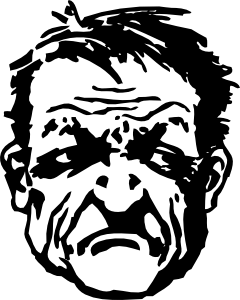
Day Job: I hate you.
You: I hate you too.
Day Job: I wish you’d quit and go write somewhere.
You: I will, you just wait…
If you have given up your dream, why?
I’ve never given up. The dream has lain dormant for periods of time (sometimes years), but even when I wasn’t writing, I was thinking about writing, journaling, daydreaming, and doing other creative stuff (sketching, gardening, cross stitch–yeah, that’s what I thought at first, too–and I was even in a musical for a local theatre company).
I discovered Joseph Campbell in my undergraduate years and I’ve really come to understand my creative journey in terms of the Hero’s Journey. It hasn’t been a straight line, or even a circle, as the Hero’s Journey is often presented.
It’s been more of a spiral, kind of like the end of C.S. Lewis’s The Last Battle, where the Pevensies, Scrubb, Pole, and the rest run through Narnia after Narnia, in Escher-esque fashion, Aslan urging them, “Further on! Further in!” until they reach their final destination.
My journey has been defined by my threshold guardians. The play I wrote in grade four? The teacher edited my work substantially without telling me or explaining why the changes were necessary. Even at that point, I knew it was wrong, and it seeded a deep distrust of authority.
In grade five, a former friend appeared to offer an olive branch, bury the hatchet, what have you, but only did so long enough to gain my trust and ask to ready my stories . . . to which she took an entire bottle of white out, returning my exercise book of obliterated words only when the teacher made her stop.
The big threshold guardian was my first advisor in my MA program, an icon of Canadian Literature. He questioned my presence in the program and accused me of “wasting his time.” That was the wound that wouldn’t heal, even after I returned to work with a different advisor and finish the collection of short stories that became my creative thesis.
After that, I internalized the lessons of my threshold guardians over the years and my internal editor became monstrous. It’s one thing when other people tear you or your work down, but when you start to tear yourself apart . . .
It wasn’t until another icon of Canadian Literature shared his own trials with threshold guardians that I found my way back to the page.
I’m happy to say I haven’t left it since.
Wow that’s a very touching story with devastating experiences along the way. But what I’m really seeing and enjoying, is your resilience through it all.
Why do writers give up, quit or never complete their projects?
Fear.
The new writer is afraid to look silly or expose their relative level of craft to the scrutiny of others.
The experienced, but unpublished, or minimally published, writer is afraid that they can’t be as good as other publish authors, or that their stories have no value.
Even published writers fear that they can’t write another novel as good as their last.
You have to learn to put fear in its place, make it your friend, listen to the legitimate lessons it has to teach you, and then agree to disagree on the rest.
That’s the hard part.
Well said. Seems like fear must teach us many lessons along our journey. To step out there and expose ourselves to the world. For better or for worse. With this in mind, I found a Superhero guy to help us out a little. I call him….CAPTAIN NO FEAR.

learning the words;
noun and adjective,
verb and adverb.
Putting them together
in little sentences—
she won’t let me play
with the big ones yet—
But she’s left me alone
just for a minute
with this big cauldron
teeming with
letters
and other viscera.
Before she returns
I grab the ladle
and gulp,
burning my mouth
with the potent brew.
Then I run
me and my belly full of words,
out the Dutch-door,
through the muddied fields
of hay stubble,
to the tree with leaves of paper,
draw forth the quill–
stolen from a feather duster–
prick my thumb
for ink.
Then.
I write.
Lovely! That’s great! UGH I miss poetry so much. I haven’t written very much lately. You’ll have to come back and grace us with your poetic words.

*Tell us about your short stories
In “The Broken Places,” a doctor on board a generation ship headed for another galaxy tries to diagnose a strange plague affecting the ship’s crew/citizens. What she discovers in trying to find a cure for the blue skin, void-like eyes, and verbal non-sequiturs is something she never suspected, but if she doesn’t stop the condition from progressing, the crew, and their mission, are in jeopardy. That one was published in Bastion Science Fiction Magazine in June 2014.
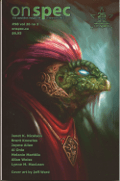
“Downtime” is the story of Opus, an AI-borg who achieves sentience, and liberation from her creators, as she learns what it means to be human, and that she’ll never be one. The good people of On Spec Magazine, one of Canada’s most respected speculative fiction markets, published that in their Fall 2014 issue.
Something tells me one day you’re going to hit one out of the ball park.
*what has writing taught you over the years?
What has writing taught me? Who I am. That quote by Flannery O’Connor, “I write because I don’t know what I think until I read what I say,” is very true. The more I write, the better, the more authentic, a person I become. The rest is between me and the page 😉
Oh yes! I love that quote. I’m finding it to be very true in my own experience. Writing things out is a very tranquil experience. There’s no like it.
*******
Have you ever had to go out of your way to get a window seat? Whether it be on a bus, train, car, or an airplane? Well if you did, there were definite benefits to the journey. So why do adults and children alike fight for the ever-sacred window seat? It’s not about the window itself, but the view that comes with it. The scenery and vista are the grand prize! Something well worth fighting for, so here it is.
Today we have a “window seat” experience with a very special person among both the publishing and writing community. Someone who hardly requires an introduction; who is widely respected for her knowledge, experience, generosity and expertise in multiple areas.
.

People are multi-faceted creatures with many sides that we may or may not be aware of. In the process this interview, I was ecstatic to see various sides of Jane I hadn’t seen before. Splendid indeed!

Here’s a little more about Jane, which is just the tip of the iceberg. If you’d like the full iceberg experience please visit her about page on her blog. Her resume could very easily saturate an entire blog post.


Don’t miss Publishing 101!
I’ve heard of some famous Friedmans in Cincinnati and beyond, are you related to them?
I wish I knew, but probably not.
Fair enough.
You write poetry! Do you still write poetry? I was so elated to see “Jane’s Embarrassing College Poetry” on Amazon. I think we largely know you in the publishing realm, but not so much as a writer, or even a reader.
I haven’t written poetry since I left graduate school in the early 2000s—I became consumed with my career in the publishing industry.
Now that I’m my own boss, and my business is doing well, I have a chance to steal back some personal time. So what do I write? I don’t know. Staying busy with my career (perhaps a “shadow career” to use a term from Steven Pressfield) has been an excellent way to avoid confronting the most fearful step of all—seriously devoting myself to my own writing.
Jane writes poetry! YES. I almost fell out of my chair when I saw your poetry book on Amazon. I’ve included the first poem for proof.
LYING IN BED
The little things that keep us up at night-
a drip drip coming from the kitchen sink;
the entrancing glow of the streets and soft moonlight;
the heater rattling on, clink by clink.
Two thrown-off sheets and sweat above my lip,
the windows open, breezes blowing in.
Both hands and fingers grasping the air,no grip,
but shadows touch the walls, acting the twin.
The curse of overactive minds I know,
for the art of sleeping well is lost on me,
when I remember your leaving years ago
and sleep away from where I thought I’d be.
Then you laugh someplace and mention my small name.
I wake to hear you; nothing is the same.
~Jane Friedman
*******

I read somewhere where you said, “I probably read more than anyone on the planet”…and I wanted to get a window into your THAT experience. I’m assuming this is academic reading. Can you bring us into this experience, and what exactly you’re looking for?
I think what you’re remembering is a line from Publishing 101, where I discuss having read more writing advice than anyone else on the planet. That’s a result of working for Writer’s Digest, the No. 1 publisher of writing advice books in the world. We released several dozen books every year while I worked there—in addition to the monthly magazine—and not only did I read the majority of what we published, but I had to keep up on the competing books as well.
These days, most of my reading is related to the business of the publishing industry and the evolution and future of the media. I have moments of existential angst where I ask myself, “Did I really choose this? How did I end up here?” But I don’t think the answer matters; it’s where I am, and there’s satisfaction in the mastery I’ve attained. However, it does matter what I do next: is this an obsession I want to keep feeding?
In recent years I’ve become interested in reading histories. Maybe reading too many trend pieces and hot takes has resulted in a desire for a deeper understanding of cyclical change and behavioral patterns. I want to get beyond either/or, reductionist thinking and instead investigate better questions to ask and how certain frameworks affect the questions and answers we come up with. Unfortunately, nuanced thinking isn’t known to drive traffic or buzz.
Epic indeed. I enjoyed what you said about the “evolution and future of the media” as it relates the business of publishing. Definitely a hot topic!

The Hot Flame of Publishing
What kind of books do you read for pleasure?
Almost always nonfiction. One of my recent favorite reads was What Technology Wants by Kevin Kelly. I’m currently working through From Dawn to Decadence by Jacques Barzun and will soon finish Status Anxietyby Alain de Botton. I’m looking forward to reading Virginia Heffernan’s newest book on the internet. To fall asleep I read Wikipedia entries on my phone.
I’m also a devoted subscriber to The New Yorker; that’s my coffee-and-toast reading in the morning. I haven’t missed an issue since 1998.
Nice. I hear you–Can’t miss that coffee time. The apocalypse can wait…Give me my coffee first. I’m all over the place with reading habits, but reading a lot about personality traits. I saw that you’re INFP! Woo-hoo! I’m ENFP, so we’re in the same neighborhood.
Who are your favorite authors and why?
I don’t really have favorite authors, but if I had to choose one, Alain de Botton. Reading his books are like eating a nutritious doughnut.
Nutritious doughnuts, now that’s something they could genetically modify. Haven’t heard of Alain de Botton, I’ll have to check him out.
Here’s my one publishing question based on the most recent Hot Sheet [http://hotsheetpub.com] newsletter. Can you briefly touch on the deeper market factors affecting the income of writers today? (See excerpt below)
“Publishers share the frustration of the author community that it is increasingly difficult for authors to make a decent living from their writing. However, we locate the principal source of this problem not in the contractual relations between publisher and author but in deeper market factors. With margins being squeezed across the whole supply chain, books facing increasing stiff competition from other media and entertainment sectors for consumers’ time, and there simply being more writers … the reasons for the decline in average author income are wide and varied.”
Well, here’s the thing—my partner on The Hot Sheet wrote this particular item, and while you can find evidence to support this view, I don’t buy into the popular myth that it’s increasingly difficult for authors to make a decent living from their writing. It has always been difficult.
That said, perhaps one of the best times to be a writer was during the 19th century. Literacy dramatically increased, and the number of magazines exploded, in addition to the number of books published annually. But despite it being something of a golden age, one author complained to a US congressional committee that he did not know any author who made a living by writing literary work. He said that of all the learned professions, “Literature is the most poorly paid.” The truth is that many writers’ careers are gifted into existence by their birth, by privilege, by marriage.
Authors sometimes lay the blame for their economic situation on the publisher, and it has always been thus. Going back to ancient Rome, authors have been accusing their publishers of greed. But such accusations almost always betray ignorance about how the industry works.
In the digital era, it’s becoming more common to lay the blame for authors’ suffering on the tech companies, such as Google. The Authors Guild in particular has expended all kinds of resource on trying to argue before the US courts that Google essentially steals money out of the pockets of authors and publishers. There’s an oft-repeated and oft-misunderstood saying that “information wants to be free,” which the Authors Guild says creates a sense of entitlement among readers, or that it creates an expectation that writers shouldn’t be paid. I don’t think this is true at all. However, what’s valuable to us, or what is worth paying for, has changed. Analyst Ben Thompson explains the value shift very well in his post about the the Smiling Curve [https://stratechery.com/2014/publishers-smiling-curve/]. Clay Shirky too has written at length about how publishing has been turned into a “button”—publishing is the new literacy, meaning that anyone can publish, it doesn’t require professional experience any longer. We live in an era of universal authorship where everyone has the ability for self-expression and distribution of that expression. Not all of that expression will be high quality (a lot of it will be crap), but I don’t place a value judgment on that; it’s a fact of digital life and we can’t go back to some previous era. And if you could go back to a previous era, you would simply find the same complaints in the culture: that too much crap is being published. It dates back to Gutenberg, these “problems” we have with both quality and quantity of material being published.
Authors can make a decent living from their writing if they’re willing to pay attention to how the business works, figure out a business model that works for them, and adapt as needed. Too many authors and authors’ organizations want to preserve a system that doesn’t work with new forms of publishing, distribution, and media.
This is great info. I think I’ll start calling you Jedi Jane.
Your Twitter profile has the following statement: “A writer who believes art and business can happily co-exist.” Can you give us a little marriage counseling, those of us who are not looking forward to this union?
Another one of the harmful assumptions of “serious” writers is that art and business are antithetical to one another. This belief is so ingrained that no one questions it any longer. Before writers even have a single word published—before they’ve encountered any aspect of the business of their art—they presume that they are bad at business or that business concerns will pollute their efforts. There’s absolutely no openness to the possibility that the business side can be just as imaginative and interesting as the artistic process itself. And of course businesses excel when they employ people who have kept their artistic side alive, who can bring imagination and innovation to their work.
To be sure, business can and does ask for compromises—but that’s not always to the detriment of art. A bit of friction, some kind of barrier—a net on the tennis court!—is healthy. There’s a wonderful book Make Money Make Art by Elizabeth Hyde Stephens that looks at this dynamic using the framework of Jim Henson’s career. He started off in advertising, and found ways to pursue his art in commercial settings. He used those commercial opportunities to hone his craft and support later artistic projects. Dana Gioia is another example of someone who sees how art and business can inform each other—a poet who has an MBA and worked as a corporate executive. And Alain de Botton is yet another; although I don’t think I’ve heard or read him on this topic, it’s clear that he has an integrative approach. Just look at his venture, The School of Life, and how it’s a business manifestation of the ideas you find in his books. It’s genius. What if he said, “Oh no, getting involved in a business is beneath me, it is crass. I need to focus on my writing.” Thank God he is not that boring.
Thanks, I needed to hear that. I’m glad you’re pointing the misconceptions that many of us have ingrained us already. I guess this is the part where we ride off into the sunset and live happily ever after!. Hey, my grandparents were married for 60+ years! And that’s really saying something.
Tell us about your upcoming book!
There are thousands of students in creative writing programs who study the art and the craft, but receive very little or no guidance on what to do once they’ve graduated. They don’t know how the publishing business works and their expectations can be wildly out of line with reality. Even worse, they can even be conditioned—because of everything I’ve described above—to feel bitter and resentful toward editors, agents, and the industry, to feel victimized. This doesn’t help anyone and it has to stop.
My book, The Business of Being a Writer, is meant to provide that missing education—what it means to make a living as a writer, and how to understand the business well enough to advance your writing career, without relying on luck or magical thinking. It’s slated for release in Fall 2017 from the University of Chicago Press.

To show we really appreciate your time, we’d like to present to you an honorary fist bump. I’ve only given out a few of these so I hope you enjoy it.

Honorary Fist Bump
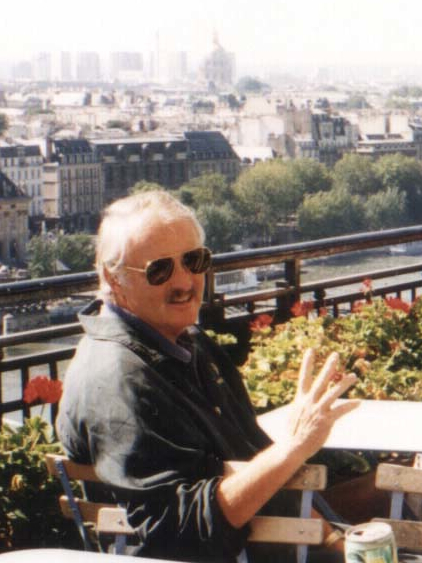
Everybody say hello to fantasy author James D. Priest! He’s the author of the KIRINS fantasy trilogy, a retired physician, husband, father, podcaster and currently enjoying life in Hawaii. You can check out his official home page at www.kirinbooks.com.

*Where are you originally from?
I was born and raised in Minnesota, went to high school and college in Minnesota, and went on to medical school at the University of Minnesota. However, since then I have lived in Japan, California, and now Hawaii.
Nice. I’ve been to the twin cities a few years ago and to the gigantic uber mall there. I used to live in So. Cal, would love to visit Japan, and never been to Hawaii.
*You used to tell stories to your friends on the bus. How did that come about? Or how did you pick up the knack for storytelling?
Storytelling on the grade school bus came from what I have since discovered is an ample imagination. In composing my fantasy trilogy, I borrowed a few names from real people or situations, but the vast majority of what I created and wrote is directly from imagination.
I’m lovin’ it Jim. Just by looking at your fantasy trilogy I can see you have a very vivid imagination.
*What was it about Tolkien that drew you into fantasy?
I loved his world building, creating an alternate universe, Middle-earth, from nothing but his imagination. His conflict between good and evil. His characters, such as Frodo and Bilbo, are genuine and likable. His Gollum is a work of creative art, the likes of which fantasy authors should strive for, as I have with an urgol, Gian, in the third book of my trilogy.
Yes! You’re touching on some of the things I love most about being a writer. CREATING AND IMAGINATION are my favs. Don’t hate me, but I haven’t read Tolkien yet. I’ve seen all the movies though. Gollum is probably the most compelling character to me in the whole book!
*Did you want to be writer before going into medicine?
I think I’ve always had somewhere in the back of my mind that I wanted to be a writer. And I was a writer while in medicine, where I published about 30 medical articles.
Ah yes, I’m all too familiar with this kind of writing. Not my favorite honestly, but necessary.

*How has studying English in undergrad, graduate school and participating in professional medical writing prepared you as an author?
As they say, practice makes perfect. I think the more writing you do, the better you get. But I’ve also learned that every writer needs an editor. We’re only human, and we need guidance both on a grammatical level, and in the line of reasoning, the logic, of your writing.
Yep, you nailed it there Jim. We desperately need good editors, especially us intuitive types.
*First, give us a knockout summary of your trilogy.
My trilogy is published in print, ebook, and audiobook. But there is, in fact, a fourth book, a sequel, not yet published.
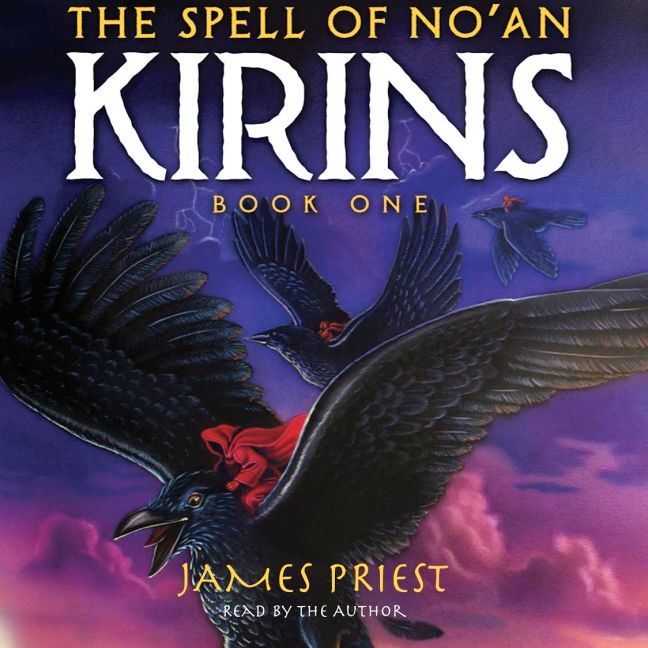
My trilogy, The Spell of No’an, The Flight of the Ain, and The Secret of the Hanging Stones, tells the epic tale of KIRINS, a race of tiny, magical beings who live throughout Earth today.
Dwelling in elaborate tree homes and underground sanctuaries, they enjoy a strong kinship with the animals and birds of their region. In the distant past humans knew them well. But an ancient rift occurred between the races, and kirins chose to separate themselves from humans. Sadly, we humans are now unaware of their secret civilization.

For thousands of years kirins everywhere lived in calm. But now a mysterious, dark force threatens their existence. Knowing little about the enemy they face, the kirin clans choose a party of five daring adventurers led by the wise magician Speckarin. On the backs of birds they travel thousands of clan-dominions across land and sea to Stonehenge, to save the kirin race. But what the journey holds in store for them, they could never have imagined.

In the fourth book, The Seer of Serone, a sequel, Speckarin and his intrepid party journey to Alaska to attempt to bridge the chasm between kirins and humans, and to rescue a kirin lad captured and forced into loathsome service by a human. Assistance in dealing with the offending human is provided by a powerful local wizard, a kirin, The Seer of Serone.
Review by Mary Logue, award-winning writer and poet, author of Dancing with an Alien and Snatched: “Having read all three books of James Priest’s wonderful trilogy, I have nothing but praise. The scope of this work, which takes us from the middle of North America across the Atlantic on the backs of birds to Stonehenge, is extraordinary. I enjoyed every moment I spent with the kirins. Priest’s work resembles Lord of the Rings, but is more rooted in nature and gentler in tone.”
This looks so fascinating! Love the cover images on all three books. You’ve got some great reviews too on Amazon.
*You’re a writer; so what’s your story, or what inspired you?
Having always liked the idea of writing, I challenged myself to write in a genre I’ve enjoyed, fantasy. I decided to write a story set in today’s world. Every culture has mythical small beings. In Ireland they are leprechauns, in Norway and Denmark nisse, and in Hawaii menehune. People want to believe they exist in gardens, trees, and nature. In my tale they are kirins. Because I have always liked small things, the story is of a race of tiny, magical beings, kirins, living throughout Earth today, though humans are unaware of their existence.
Wonderful. Creative little creatures!
*What’s your GOAL in becoming a writer?
Like most or all writers, to become a bestselling author, and to leave something in this world that will make it a better place.
Excellent. No shame in that. It shows you’ve got heart!

*What 3 things have hindered you from completing your projects?
Finding time to write was a problem while I was practicing medicine. Getting the books into all three formats, print, ebook, and audiobook (self-narrated), has taken years to complete. As with almost all writers, promotion and marketing have been a challenge.
WOW! That’s unbelievable! You wrote these books while practicing medicine, had them formatted AND self-narrated them? That’s more than amazing. Promotion and marketing are challenge, no doubt.
*What keeps you motivated in achieving your dream?
I like to work, but writing fantasy was never work for me. It engrossed me so much that it made me forget about anything else. If I went too long at the keyboard, I would become fatigued, tired of writing. I didn’t want that, so learned to pace myself and take time off when necessary. I never had a specific time of the day to write. I wrote when I could, and loved it.
I am motivated by two factors:
1) I want to create something for all the world, especially my family, to appreciate, and 2) My books are good, and thus I keep working in promotion and marketing. KIRINS is a fantasy in the classic tradition: epic storyline, an immersive all-new world, great characters, powerful and mysterious magic, plot twists and turns, an immediate threat, romance, and heroism. And the books are suitable for readers 10 to 110. No vampires, werewolves, zombies, blood, guns, drugs, car wrecks, or post-apocalyptic landscapes. No obscenities or erotica. No superheroes, just heroes.
Hah! I love it. Your vision and motivation is very clear.

*What would you say to a struggling writer who’s given up?
If he/she wants to be a writer, pick yourself up, dust yourself off, and start all over again.
Amen, and amen. I’ll add, if you can’t pick yourself up, join a supportive writing group. They’ll pick you up and keep you going.
*******
rejuvenatement - not retirement
...a crime-fictional site
Established in May 2011 to help nurture and inspire the poetic spirit.
A place for poems and pics
a simple pairing of pictures and poetry
Sharing Poetry and Hugs
Persistent WV Poet
A.I. Art and Poetry
short writing prompts
I am the way and the reality and the life...John 14:6
Submit your film, screenplay, novel, to the festival and get it showcased at the FEEDBACK Festival. Full Feedback on all entries.
Military Science Fiction Author


 The Writing Train: Join the locomotion