
TIME FOR TUESDAY TELEVISION
Great news from Sasha Alsberg and Lindsay Cummings!

Let’s talk publishing in the comments!


*Are you originally from Ontario Canada?
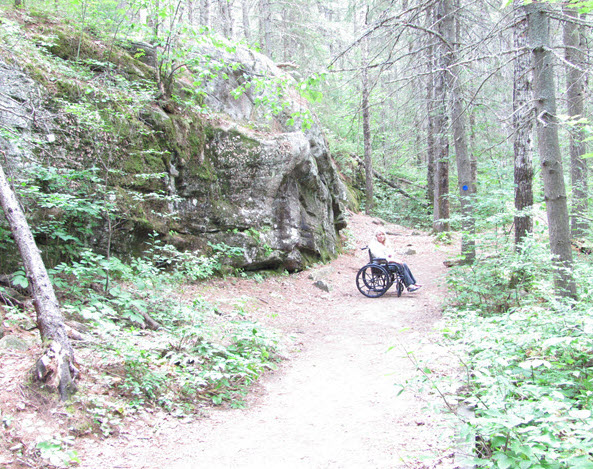
I’m originally from Glasgow, Scotland. We emigrated to Ontario when I was twelve, at the start of Grade Nine. It took me a LONG time to get used to Canada, but then I discovered Algonquin Park; plus I moved up to Northern Ontario four years ago and I love it up here: There are actually little mountains around Thunder Bay, and it stays light till 11pm in summer, the way it did in Scotland. So now I have the best of both worlds.
Here’s a shout out to all the awesome writers in CANADA!

*What is it about forests you enjoy?
The peace. The light. The scents. The wind rushing through the trees. And the fact they can also be a little bit haunting, and scary.
Being in a forest always makes me think something magical is going to happen. I’m going to see elves at any moment, round the next bend in the forest trail. Or bears. Or both.
That would be quite a sight—elves and bears rounding the corner. Let’s hope the bears would be nice.

*How long have you been a writer?
Since I could write. I wrote my first “novel” when I was eight, a gripping drama about my teddy bear being abducted by two evil henchmen called Grimm and Ghastly; both wearing rather Victorian-looking top hats draped with black crape. (At eight, you think that is highly original.) I actually still have it–complete with illustrations. 😉
I wrote four young adult/children’s fantasy novels in my twenties, and gave up too early in their rejection cycles. One almost got published by Scholastic–but my editor left and the new editor wasn’t interested.
My first published fantasy story was “Deus Ex Machina” in the early eighties, when computers were just being birthed. It’s very dated now–I wrote about (*gasp*) a sentient computer that started reading the books it stored. That story got me a job at TPUG Magazine (computers) and I was promoted to Assistant Editor and Managing Editor there. I’ve worked in various editorial and production positions at various magazines; both salaried and freelance. I had a stint as General Manager of “The Independent News”. And I invented my copywriting job when I ended up in a wheelchair, trapped in my house, back in 2008, when I ended up having to support my husband. I have been with the same major client now since 2009, and really enjoy it–but it kept me away from fiction till last year, when I joined Holly Lisle’s free “Flash Fiction” course and the fiction bug came back, full force.
Wow, it’s amazing you have that much writing experience, and your first novel sounds great! I’d totally read that.

*What’s are the best things about being a copywriter?
The chance to help people–and I’ve enjoyed my clients’ successes too. I also like the anonymity. I am actually pretty shy and don’t like being in the public eye. I’ve always liked being “behind the scenes”. Plus it allows me to work from home.
The thing I like most about copywriting (apart from the flexibility and the ability to work at home) — it teaches you discipline. There are always deadlines: There is no such thing as writer’s block and you learn to produce and be efficient about it. I’ve found this enormously helpful in my fiction writing.
This sounds it helps produce the solid character we all need to be efficient.
*What’s it like being a ghostwriter?
Very similar to my days as a magazine editor. It’s all about long hours, research, proofing, deadlines and deadlines. When I hear people I admire raving about something I wrote (not knowing I wrote it), it’s a very weird feeling.
Sounds like hard work! You’re doing all the heavy lifting, but no one knows your’re the muscle behind scenes.

*You have an awesome website! You stated “Communication is my passion” Can you elaborate on this?
Thank you. Communication has been the common thread running through my life, right from when I was little. I came from a dysfunctional family and a rough neighborhood. I always found myself in the middle at home and school, doing my best to get people to understand each other and be kind. I think there’s a lot of loneliness and disconnection in the world. I would love it if my stories made someone forget loneliness and feel connected while reading one of my books.
I love this because it’s so true. That’s a great aim for your books!
*Do you have professional storytelling experience?
I’m a graduate of the Storyteller’s School of Toronto and participated during the eighties and early nineties in several Storytelling Festivals and ran workshops. I was also lucky enough to have the great Irish storyteller, Alice Kane, as my teacher. She became a dear friend and the most moving milestone in my career was Alice choosing to tell a story I wrote for her, “Bonnyton Moor”, as the final story on the last CD she ever made before she passed away. That too was a very weird feeling.
My father and big brother, Stephen, were both amazing storytellers, and I got my love of stories from them. In addition to telling stories, Stephen also read us just about every fairy book in existence, his favorites being the Andrew Lang series. My sister and I still remember gorgeous illustrations by the likes of Edmund Dulac, Kai Nielsen and N. C. Wyeth.
And, of course, the Rupert Bear annuals.
Wow your experience is impressive! Would love to pick your brain more about the storytelling experience. Perhaps at a future date.
*What are the most enjoyable aspects of being a writer?
Being able to write out of deep values you hold, but being able to have fun too. Being able to lose yourself in another world, in your characters and cultures. Stories are nothing more than a way of making sense of real life, so you have to be brutally honest with yourself when you’re writing. Every flaw you have screams out at you from your writing–and I’m not talking about technique. You need to be brave and face yourself, otherwise you have wimpy, shallow characters. So in a way, it’s like therapy–which, in itself, is not much fun, but it’s worth it. You feel like you’re growing–particularly important when most of your life is lived between four walls. I’m never lonely when I’m writing.
I also love the way characters take on a life of their own and sometimes totally upset your plot structure and march your book off in a completely unexpected direction. I don’t always let them steer me off course–but most times, they’re usually right.
I also love the fact that I can write non-fiction as my “day job”–my bread-and-butter–and slip away into the forests of Dragonish when my workday is done. It’s having the best of both worlds.
YES, love it. This resonates deeply, and has a lot of wisdom to it.
************
************
*Give us a summary of your current WIP or most recent publication.
My flash fiction anthology from the world of my upcoming Dragonish series–“Tales of Mist and Magic”–is about to make its debut. (There’s a sample story from “Tales of Mist and Magic”, plus a bonus story you can download that won’t appear anywhere else, on my Original Fiction web page: http://maryamillerca.ipage.com/dragonish )
My last story published was “Block Magic” (no, that’s not a spelling mistake), which appeared on Day 23 in the Indie Author’s Advent Calendar. Before that, my last mainstream print published piece was “Too Happy to Die” in the anthology, “Chicken Soup for the Soul: My Dog’s Life”.
I’m sure you have tons stories waiting to be revealed, keep writing!
*In your opinion what are the elements of a great fantasy book?
To me, the characters are the heart and soul of the best fantasy books. They make or break them–if I don’t care about at least one character deeply, I won’t invest in the journey. In addition to this, there has to be something that makes me feel that there’s a magic door or curtain somewhere that will transport me to a world where magic is real. You can find those doors in all the greatest fantasy novels: Not literally, but you step through and suspend disbelief; and it’s both much safer than the world you’re in and more terrifying; and infinitely more beautiful.
There were moments in my childhood–for example, when I was three and my big brother saved up his pocket money and took me and my sister to Rouken Glen. We sat in a forest in a hovering mist of bluebells. He put a bluebell flower on his pinkie and told me it was a fairy’s hat, and I totally thought that was real! The beauty of that forest, the magic of the sunshine; the feeling that wonderful things could happen any minute–that’s what fantasy novels are all about for me. To give it a bit of context: We traveled to that forest on a tram, coming from the heart of Glasgow, which was grey and grimy in those days–there were still coal fires. We lived on the edge of the Gorbals, and life was pretty grim, so for my brother to transport me to this magical world… well. I can’t describe it. It was my first forest, and I was hooked.
My brother died when I was seven, and I’ve been trying to get back to that world ever since.
So for me fantasy novels are all about loss and hope; being surrounded by darkness and finding a way out through a combination of core values, courage–and magic. And if there are dragons, wizards and elves to reassure you that you’re not alone, so much the better.
Very touching story!

*Can you give us 3 critical components of storytelling? (you can list more if desired)
Universality, truth–and not getting in the way of the story.
A good story is universal. It needs to make people care about the outcome. It doesn’t matter if you don’t know that world–you need to be able to relate to the main character’s journey, care about it. A good story has to be true–even when it’s fiction. Pick a story with all these elements, and don’t get in the way of the story when you’re telling it–and you’ll be a great storyteller, whether you’re writing it or telling it.
EPIC. That’s great! I love absolutely love this. You need to put this on a t-shirt.
*What are you experiencing right now in your writing journey?
What I’m experiencing right now is excitement. I’m living for and through my Dragonish series, and I wish there were thirty-six hours in a day and I could spend them all writing. I feel that after years with fiction on the back burner, I’m finally reaching my zone. My own story arc is becoming clear, and the goal’s in sight.
Right now, I’m thrilled to be experiencing the wisdom of other writers through writer’s groups on Facebook. I took a smattering of real-world writing courses in the past, and for the most part, with the exception of one single course, I found them discouraging. I came away with the feeling “I may as well give up fiction: Everyone else is so much better at it than me”. But online groups like KM Weiland’s “Wordplayers”, Dave Lynch’s ePub Scene and the forums I’m on in Holly Lisle’s site have totally broken that curse. There is such generosity and professionalism in these groups from writers at all stages of the game: I’ve had feedback, inspiration, encouragement–and I’ve learned a lot.
I think you need real feedback and real interaction from other writers who understand the process. Without it, you’re stuck in a vacuum. That’s the place where all storytellers tend to wither and die.
This is so encouraging! I’m so glad you found a good source of inspiration and encouragement. One less storyteller in the graveyard. This is a HUGE reason why I started conducting these interviews in the first place.

*What’s your GOAL now in this stage of your career?
My goal is to be able to work full time on my own writing–not that I don’t enjoy copywriting, my day job: But for that I need to be three people! I want to see the Dragonish series in print before I die.
You’ll do it, Marya. I know you will.
*What 3 things have hindered you from completing your projects? (CONFLICT)
Nothing stops me from completing client projects. I owe it to my clients to give them #1 priority, so I do.
With my fiction, though (1) literally not enough hours in the day is my biggest obstacle–that, and (2) being completely intimidated by the technology end of uploading books to Amazon. (3) I would also like to invest in some professional editing on my books before I release them to the world–I need to increase my income first for that to happen.
(That being said, the nice thing about obstacles is that it’s fun looking for ways around them.)
I hope one day you can be a full time writer with your work as the top priority!
*What keeps you motivated in achieving your dream? (DESIRE)
What keeps me motivated is caring about my world and my characters. I want them to have voices, to be heard. I want to bring some magic back into the world, so that people can tackle the darkness safely, through the pages of the Dragonish stories. And my characters are fun to write–Granny Maberly, Ushguk, Anno, Morwen, Leith–I love them all. And a few of them are pretty funny. Though whatever you do, don’t tell Granny that!
I love that you want your characters to have a voice and be heard! That’s awesome!

*What’s your main ANTAGONIST? What’s in the way of you accomplishing your goals?
Wanting to be a better writer. Though I think ALL writers struggle with that. You have this wonderful, vibrant, rich story in your head, and you read what you’ve written; and you feel as if you’ve only captured a glimpse of it.
I think writing “better” or “good” can be quite elusive, just as it is deceptive. We should focus more on telling the story. No one ever feels good enough.
*Why do writers give up, quit or abandon their dream?
I think a lot of writers give up because there’s no one in their corner to say “keep going”. They question the value of their stories. They don’t receive feedback. They start to feel like voices in the wilderness–you know; the old “if a tree falls in the forest, will anyone hear it scream?” In traditional publishing, the world I’m from–and I had an actual, professional background in editing and publishing–the odds are stacked so hugely against you as a fiction writer. There are many horror stories about publishers from even successful authors. It’s a world of rejection as routine; and if you’re accepted, that’s only the beginning of the obstacles. Plus many writers have people telling them what they SHOULD be doing instead of writing. It amazes me that writers keep going at all, if I’m honest.
But being isolated as a writer … that’s like standing up in a darkened auditorium and telling a story to a chair (which I’ve done, by the way). It’s like sending a transmission out into space and knowing the odds of anyone ever hearing it are a gazillion to none. When a story isn’t heard, it tends to wither and die.
WOW. This is therapeutic. There’s the matter of someone being in our corner, surviving rejection, and overcoming isolation. These are all very critical elements to our success. Thanks for sharing.

*What would you say to a struggling writer who’s given up?
Your stories are important. They’re real. If you blow on all the stories that have withered and died, some of them will spark and come to life again–no matter how long they’ve lain in the darkness.
You are important. And the publishing community has changed, thanks to ePublishing and the internet. There’s never been a better time to be a writer!
If you’re really feeling down or discouraged, read KM Weiland’s “Conquering Writer’s Block and Summoning Inspiration”. Join Holly Lisle’s free Flash Fiction community and get your confidence back sharing 500-700 word stories with an informed, encouraging and honest group. Take her “How to Think Sideways” course (or ANY of her courses. My favorite, besides HTTS, is “The Secret of Page-Turning Scenes”). If you’re stuck at the business end of writing, visit Joanna Penn’s site and read her books too.
These are three authors–KM Weiland, Joanna Penn and Holly Lisle–who inspire, not flatten. They share incredibly valuable knowledge born of real-world experience, obstacles and success. They’re like a good fantasy novel: They give you the weapons to tackle the monsters with, and teach you how to use them. They’ve got your back, and you can trust them. Plus they’re fun to read.
And do join a good writer’s group–one without ego; where the emphasis is on the writing, not the personalities.
Exceptional. This is very inspiring! Thanks so much! When I do these interviews, I’m the first to get inspired! THANK YOU.
That’s such a broad question, I’m not sure how to answer it. All I can do is give you my own personal choice…
Ahhh, I’m going to get nailed for choice number one: JRR Tolkien. He’s my first love. In spite of what Peter Jackson and an ocean of imitators have done, you can’t beat Middle Earth.
I also love Terry Pratchett’s writing–his Discworld series in particular. He defies genre. He can go from low comedy to advanced philosophy in a blink–and it works.
Finally, John Bellairs; just for his book “The Face in the Frost”, which exuberantly defies every rule about adjectives and adverbs. It’s also the book I would memorize and become, if I was a character in Bradbury’s “Fahrenheit 451”.
Yes–all fantasy, I know; but each of these three authors defied genre and they gave their worlds and characters unique voices. They wrote books that changed lives, healed wounds, comforted. They’re like old friends to me now, and I still reread them.
Lovely, simply lovely.
*******
*******
*******
**********
**********

*I read about your location in your bio. Does living near the ocean help your writing process?
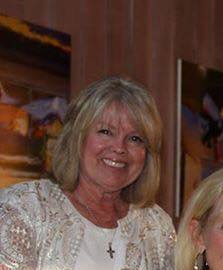
When my bio was written I assumed that I would be living primarily In Pacific Grove, California. Instead, I ended up living in both Fresno and in Pacific Grove. I have many horses, and dogs in Fresno. I couldn’t bare to leave them for any length of time . As to writing, I write in Fresno, in a back bedroom that I have turned into an office. I paint in the garage in Pacific Grove and create ideas for writing while walking on the boardwalk or on the sand with my dogs. I also belong to a writing group in Pacific Grove that are creative men and women.
Wonderful! I’m picturing you walking along the boardwalk with tons of ideas.

Very beautiful horse!
*Are you originally from California?
I am originally from Oregon City, Oregon. Most of my family still lives there. I miss the cool weather, the smell of the trees, and the freshness of the air.
I’ve heard Oregon is absolutely gorgeous, can’t wait to go there one day.
What did I study?
I studied many things, becoming an airline stewardess, journalism, reprographics, and animal communication, then I became older and realized that I had two sons with learning disabilities. I saw how teachers out of frustration or lack of training had difficulty working with them and so many other kids. I decided not only to help in the class room, but I became a school psychologist, learning disability specialist, behavior analyst, and I also received a degree in Communicative Disorders and a Masters in Education.
WOW. That’s amazing! You’re quite an accomplished person, and a lot to do with communicating. Now I can understand why you would be a writer. It’s just another way of communicating. Excellent.

*Which genre do you claim as your own?
The genre that I read the most is nonfiction, historical. What I claim as my own is speculative historical fiction.
I always have a high appreciation for anyone who can write historical fiction. Hats off to you, Linda!

*Why do you write for adults and children?
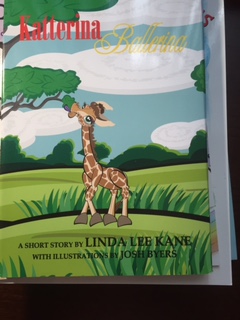
That is a great question. I write for me when it comes to the adult books. I finished The Black Madonna, a historical fiction book with romance after two years of research on the Cathars. I write for children because of my background in learning disabilities. The stories provide inspiration in never giving up, whether it’s dancing, math, reading, or conquering your fears.
Very inspiring! You’re truly a multi-talented artist.
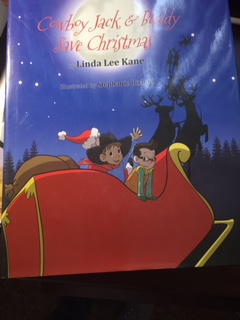

*Who are your favorite authors and books?
Steve Berry, Brad Metzler, Tey, Agatha Christie, Dr. Seuss, the Brothers Grimm, and so many more.
Wonderful group of authors.
*You strike me as a very expressive person, have you ever written poetry?
I’d bet you’re a natural at it. I got that vibe when I read your bio.
How did I come to love history?
Great question. I could give the tried and true answer that if you don’t know the past you’re destined to repeat it. But for me, there is so much more. I believe that when you see individuals struggle through life, you realize no matter what era you live in, you’re not alone. We all have the same ‘wants’, desires, and compassion.I also like to rediscover people from old books, like Richard III, or Mary, Queen of Scots. The battles, the heroism, and yes, the love.
History is my worst subject, so I appreciate anyone who can write historical fiction.

***************
***************
Do I have a favorite time period?
I believe that in every time period there is something that gets me excited, that I want to learn more about. I stumbled upon the Cathars from the 12th century and how the Roman Church persecuted them for their beliefs. I’m reading about the Plantagenets and the Tudors and was amazed to find out that King Henry VIII’s fifth wife, Catherine Howard was only thirteen years old. His reasoning to cut off her head was insane, he probably was by then. How Henry VII won the crown from Richard III, and I ponder who really was responsible for the death of the Princes in the Tower, or did they die? My family is from the Isle of Man and about Illiam Dhone who rose against the Stanleys and captured all the insular forts. Dhone was tried and executed and a famous poem was written about him by Sir Walter Scott. Yes, he is a relative.
That’s cool! Can’t wait to read your book, the Black Madonna.

Why did I begin to write?
I think to chase the demons away, it’s cathartic. Something in every book has a little of me. By writing about it, creating a story I can resolve parts of history and possibly help others with a clearer understanding of that time period, or possibly about themselves, or me.
I see a fascinating connection between your desire to resolve something in history, in your past, and your love of history.
What is my goal?
To write well, to learn, to educate, and possibly with my children’s books, help kids with learning disabilities or life struggles.
Those are all honorable goals.
What hinders me?
Nothing hinders me, I set a goal, and I go after it. Every day I write, every day I set a new goal for myself. Primarily it’s to educate. My father always said, ‘You may not be the brightest bulb in the batch but you have tenacity’. I think that’s true of me.
YES. “Nothing hinders me, I set a goal, and I go after it.” I love that spirit! A tenacious bulb!

What keeps me motivated?
I believe that I have no choice, I have to share what I learn, I have to educate, and for a personal goal, I would like to be the best that I can be as a storyteller.
I kind of knew this was coming. You’re a very driven person, and you strike me as an overachiever. You can only be the best you at any given moment. Your desire to educate is very inspiring.
Why do people give up?
I believe they give up because of their lack of belief in themselves. You can make an excuse like, time, kids, etc. but if you really want it, you toss out the naysayers in your life or the evil demon that sits on your shoulder telling you to ‘give up, you can’t do it. You find a time to write, to go after your dream, you never give up, you never give in. You Just Do It (like the Nike commercial).
This is great. I’m seeing the fire of your tenacity here, it’s admirable. Can I borrow some? I see why you’re an educator. You’re passionate, dedicated, focused, driven, and committed to learning. This is also why I say you’re “expressive”. You have strong feeling to communicate, connect and help others. This was evident in the beginning when you said you studied animal communication, became a school psychologist, and even painting and writing. You go Linda!
What do I say to people who have given up?
Believe in yourself, there is no one but you, and only you will live to regret the choices you’ve made. If you want it bad enough, don’t let anyone or anything stop you.
Therapeutic.
*Can you give us a summary of the Black Madonna?
Two roads diverged in a yellow wood,
And sorry I could not travel both
And be one traveler, long I stood
And looked down one as far as I could
To where it bent in the undergrowth;
***
Then took the other, as just as fair,
And having perhaps the better claim,
Because it was grassy and wanted wear;
Though as for that the passing there
Had worn them really about the same,
***
And both that morning equally lay
In leaves no step had trodden black.
Oh, I kept the first for another day!
Yet knowing how way leads on to way,
I doubted if I should ever come back.
***
I shall be telling this with a sigh
Somewhere ages and ages hence:
Two roads diverged in a wood, and I—
I took the one less traveled by,
And that has made all the difference.
What am I currently working on?
I just finished a YA titled Chilled to the Bone which will be out in the next few weeks, a children’s story to help kids and parents with math, a children’s story about an abandoned pony named Clyde. It’s a true story, and I can’t wait for the artwork to be completed. My current book is called Bottoms Up, it’s about the Central Valley, murder, and mystery in the world of fine wine and the competition that goes on.
Can’t wait to see what you come up with! Thanks Linda!
Anything by Mae West, she was incredible so I’m not quoting anything profound, or am I?

Benjamin Thomas

Benjamin Thomas
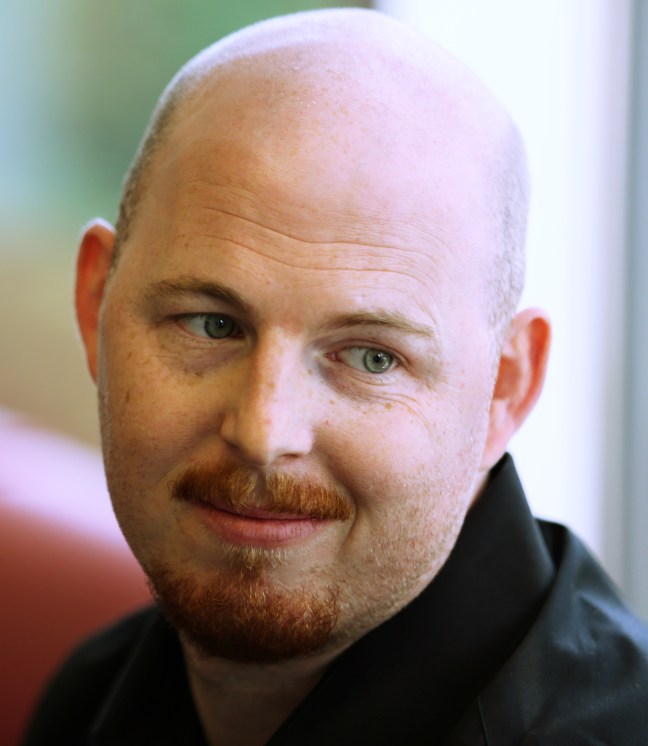
Welcome a fellow writer, blogger and Wordplayer from our Facebook group. Check out Ian’s blog over at The Town’s End Tribune .
***********
***********
* Were you born and raised in Texas?
I was born and raised in Dallas, Texas. Despite not living in the state since I graduated high school (minus a 9 month period when I was stationed in Corpus Christi), it is still home to me. Hopefully, in the near future I will be moving back!
Awesome, I love Texas!
*What did you read in your early years?
When I moved past children’s books, I started out reading the things that my parents had on the bookshelves. It was mostly sci-fi, fantasy, historical fiction, mysteries, and horror. Some of the authors stuck with me, but I eventually branched out and found authors and stories that I liked. I read as often as I could, and I loved going to the used book stores to search for hidden or gently used treasures.
I always enjoy learning how others got started loving reading.

*Any particular stories that had a major impact on you?
The Bazil Broketail series by Christopher Rowley is, hands down, my favorite series of all time. It wasn’t all that popular during its time, and you can’t find it anywhere except in paperback, but no other story influenced my imagination as much as that one. There is also the Fuzzy Papers by H. Beam Piper. The simplicity of the story showed me that you don’t have to beat people over the head with details to tell a great story.
It’s fascinating how certain stories resonate with certain individuals and not with others. The other mystery is how these stories seem to ignite, inspire and influence our imagination.

*Who are your favorite characters?
Bazil Broketail is #1 for me, because he is not only the namesake of my favorite series, but he is the heart and soul of everything great about the book. There would still be a good story without him, but he makes it extraordinary. Harry Dresden of the Dresden Files by Jim Butcher really got me interested in using magic in my stories. I also loved the humor and “Hard Luck Harry” feel about him. Aspar Whyte from the Kingdom of Thorn and Bone Series by Greg Keyes is a great everyman character. All he wants is to do is protect his forest and be left alone, but with the world going crazy all around him, he has to leave his comfort zone to protect people he has come to care about, and to try and help ease the madness that has gripped the world. He’s not a superhero, and he’s not your prototypical protagonist, but he will do anything to protect what he loves, and that makes him a hero in his own right.
Nice. It’s amazing how one character can make an impact on us. Now it’s our turn!
*Name your top 3-5 favorite authors.
I’ll start off with John Scalzi, who has written a lot of great sci-fi. His Star Trek spoof novel Redshirts was highly entertaining. Jim Butcher’s works influenced me to begin writing again, via his connection to Deborah Chester. When I got my hands on her writing book, I began seeking out other writing advice, and here I am now. Jim’s urban fantasy and new steampunk work are very good reads, and they are so immersive. I can always see exactly what the book is saying in my head. Then, of course, there is Christopher Rowley. I wish that he had written more of the stories in the world he created, but after the seventh book in the Broketail series, he moved to a different genre. That fantasy world is the one that I can’t help but return to for inspiration.
Inspiration is great isn’t it? Its contagious nature is powerful.
*In your opinion who are some of the top authors of the century?
To me, being a top author doesn’t have to correlate with the most successful one. Jim Butcher and John Scalzi are recognized in their fields, but they are not giants in the writing world. I still think they are top authors of the 21 st century, in my humblest of opinions. Douglas Preston and Lincoln Child always put out compelling stories together in the mystery/thriller department that are far better than most of the well-known writers in the genre. There are so many more I could point out, but those four are the ones I have read most regularly over the past 16 years.
This is great. I’ve been asking different writers this question and enjoyed every answer. There’s definitely no shortage of talent among authors.

Summary of A Mage’s Fire (working title)
When the discovery of his extraordinary magical powers puts his family in danger, Cade embarks on an improbable journey to rescue them. Silas, an outcast mage, has set a trap to lure Cade in so that he may exact revenge and gain favor and glory he so desperately seeks. Cade must learn to control the potent magic flowing through him in time to save his loved ones and himself from the vicious enemies that lurk beyond the borders of the Ferrovathi Empire.
Cool! Sounds intriguing.
*You’re a writer; so what’s your story, or what inspired you?
When I was younger, I did a lot of reading. I would always imagine what if scenarios associated with the books I was reading, and my imagination was always full of ideas and stories. It was never really anything substantial or interesting until I learned how to harness my ability to write in college. I was talked in to joining the school newspaper and it took off from there. What was just an imaginary world in my head began to take shape on paper. Before I learned how to properly write, I had a lot of great ideas, but no understanding in how to expand upon those premises. I would get a fantastic thought, and it would die after the initial burst of creativity. In college, I learned about “going down the rabbit hole” to see where the story led. Journalism is a different world than fiction writing, but there are many similarities that I was able to apply to my desire to pursue being a fiction novelist.
Awesome. This also seems to be the ultimate fascination. How to translate what we see in our heads into stories on the page.

*What’s your GOAL in becoming a writer?
I want to make a living as a fiction novelist. I want to do something with my life that I can put my heart and soul in to, and this is my brass ring. Writing is a love that I have always had, and after college, it was a pursuit that has been who I am. I had to set it aside for a long time, but now I am going after it again harder than ever before.
Go after your dreams! I’m doing the same myself.
*What 3 things have hindered you from completing your projects? (CONFLICT)
The biggest hindrance for me has been my job in the military. After college, I was working for 2 newspapers and I was also working a part time job in retail. I loved my writing jobs, but I wasn’t making ends meet. I joined the Navy to follow family military tradition and to pay the bills. This didn’t really leave me time to write. I put it on the back burner to focus on the military, and I would take stabs at it when I could. Another thing that has hindered me is myself. I doubted my abilities to actually write something worth sharing with others. You are your biggest critic, and if you tell yourself you can’t do it, you won’t. The third thing that has hindered me from being productive is creative atrophy. If you don’t work your creative muscles, they will stop working. When I would try to work on things, I would hit walls because my creativity wasn’t in shape. I would get frustrated and give up, and my creativity would atrophy even farther.
I can totally relate to this. Trying to keep the drive alive so to speak, is difficult.
*What keeps you motivated in achieving your dream? (DESIRE)
When I decided to really give writing another shot, it came with the realization that I didn’t want to spend 20 years in the military. My wife has been working on her Bachelor’s degree in music performance, and we always talked about her achieving her dreams of playing viola in a big time orchestra. She had times where she wanted to quit, but I always talked her through it, and told her to never give up on her dreams. I realized that it was time for me to start focusing on what I wanted. The military wasn’t it. My sports days were long over, and I was not going back to journalism. It was time for me to really focus on being a fiction writer. So I began working on it. Right now, I am just getting my skills back in shape and doing what I can to keep it in my life on a constant basis. Being a part of my wife’s pursuit of her dream has kick-started my chase. Setting my future goals is also helping my motivation, because now I have something to shoot for.
Seeing others go after their dreams is so invigorating and encouraging.

************
************
*What’s your ANTAGONIST? What’s in the way?
The biggest antagonist I have is myself. I control what time I set aside to write and how much effort I put in to it. I am my own worst enemy, and the only way to beat me is to keep doing things in small doses. I have been taking my process in small increments, which has helped me space out the work. By doing this, I have been able to create a stable platform to work on and I keep myself from overloading. I also keep myself from creative starvation, because I am not doing everything all at once, and leaving nothing in the tank. You will constantly fight battles in your own head, and the only way to win is to find a way to work with yourself. (I realize I sound like someone with multiple personality disorder, but don’t all novelists suffer from this?)
I know this all to well. By the time the day is over whatever fuel writing is on fumes.

*Why do writers give up, quit or never complete their projects?
There are so many answers to this question. You could ask 100 different authors and get 100 different answers. I think the ultimate REASON is the writer. Whatever factor plays in, the writer is the common denominator. If the writer wants to get the book done, they will. If there is a will, there is a way. It can sometimes take years, but if they persevere, it will get done. If someone gives up, then ultimately, the writer is the reason that the book failed. Life is fluid and ever changing, so for a writer to completely give up on a project is for the writer to fail. I am guilty of this. I have thrown several projects in the trash, and that was a failure by myself as a writer. No idea is unsalvageable. Never give up on an idea. One day, many years later, you may finally be able to complete it, but not if you throw it out.
I believe writers are pretty resilient. You have to be in order to complete something like a novel. Thanks for sharing!
*************************
*************************

Anne is the author of the stunning books, The Writer’s Process: Getting Your Brain in Gear and Subscription Marketing: Strategies for Nurturing Customers in a World of Churn.

Anne Janzer is a marketing consultant and professional writer with more than 20 years of experience working with high tech businesses. Her clients include software industry giants, fast-moving tech start-ups disrupting the status quo, and clean tech companies trying to change the world.
Anne has worked with over a hundred technology businesses, from industry giants to innovative start-ups, helping them articulate positioning and messaging in crowded markets. In her consulting career, she has collaborated with serial entrepreneurs, industry thought leaders, and technology pioneers pushing the boundaries of what’s possible. As a ghost-writer for corporate executives, her work has appeared in dozens of industry publications and blogs, including Wired.com and the Sand Hill blog.
In addition to her own blog on subscription and content marketing, she contributes guest posts to many many technology and marketing blogs, including Business2Community, Social Media Strategies Summit blog, Marketo and Zuora blogs, Crowded Ocean, and others. Anne has an established and growing author platform, including an email list, blog, and expansive social media presence. She is a graduate of Stanford University.
Connect with Anne on twitter @AnneJanzer, see her website at annejanzer.com, and follow her blog.

*What did you study in college?
I was an English literature major at Stanford.
Awesome!
*Why did you choose that particular degree?
I chose the English major because, as a lifelong reader, I knew that would always, no matter what, want a literature class on my schedule every term. I realized that with careful planning, I could complete the English major, leaving myself open to explore other subjects. I almost did a double major in Human Biology, which at Stanford is an interdisciplinary major combining the hard and soft sciences. But after completing the core work, I ran out of steam in designing a personalized major. Instead I took classes in journalism, computer science, and psychology. I’m a strong believer in the value of a liberal arts education!
Wonderful. Education can shape us in so many ways.
*Who or what were your early influences that led to a writing career?
I come from a family of readers and writers. I had always imagined myself as a writer, since the time I was young.
Your imagination was right on target.
*After college why did you go into writing for tech companies and marketing?
My first job out of college was at Stanford, working in the administrative computing group as a technical writer in a group of systems programmers. Being able to understand and write clearly about technology is a useful skill, particularly in Silicon Valley. Like many English majors, my career was more of a wandering journey than a clear linear path. I moved into product marketing at a startup, and then took off on my own as a marketing consultant/writer.
Nice. That would prove to a very useful skill in the silicon valley!
*Give us a summary of your book and why you decided to write it.
The Writer’s Process is about the inner game of writing – matching the stage of the work to the way that your brain operates to be more productive and creative. I’ve spent many years as a professional writer figuring out the ways that I work best. Reading research about focus and creativity, suddenly those methods started making sense from a cognitive scientific standpoint. That inspired me to dig in and analyze the process. I wrote the book because I truly believe that a better understanding of the inner craft can help writers of all levels have more fun and success with their work.
Well, I’m certainly glad that you did. This book had a major impact me. On the seeking and understanding of my own process. It’s very easily one of my favorite craft books of all time. See, all your hard work paid off. Come to think of it, this book seems to be a culmination of years of writing experience. Now it’s in print and ready for consumption. Thanks!


*What were your favorite parts in writing it?
I loved researching not only the science, but also the practices of other authors and writers. It’s fun to realize how much all writers have in common. Plus, there’s something very “meta” about writing a book about the writing; it gave me the opportunity to refine and tune my processes.
I think writing is both a collective and highly individualized art. We don’t exist or work in a vacuum. We’re influenced by those around us. The literary culture of our time leaves a remarkable footprint on society. Writers of every generation run, then pass the baton down to us.
The issue of their process, imagination and approach to writing leaves an indelible imprint on our souls. We seem to assimilate these ‘imprints’ into our own process, until we become a work of art ourselves. But when we learn, accumulate, express ourselves through our own process, we discover that it still bears a unique flavor. For when the flow strikes and flows through the artist, it takes on the sediment of the individual.

*What did you learn from writing it? Or has it affected your craft?
Writing the book has definitely made me more disciplined about my own process. For example, now I notice when I am tempted to skip a step and short-cut the full end-to-end writing “recipe” to save time. I’m more intentional about incubating ideas and problems. When I recognize the Imposter Syndrome or run into other problems, I have defenses ready.
This is great. I always enjoy how others have adapted their own process. Having an understanding is critical, however discipline seems to be largely underrated in my opinion.
Second, the fact that we can change and adapt this process tells me that it’s extremely malleable. Sounds like a special piece of clay doesn’t it? I know in pottery clay can take on many forms, possibly thousands. It all depends on the hands that shape them.

*Tell us about the relationship and potential collaboration between the Scribe and the Muse.
The book describes two different mental systems that all writers rely on. The Scribe is my name for the intentional and hard-working writer, while the Muse refers to intuitive, creative processes.
I love this! Scribe is a great name by the way. Thumbs up. The Scribe resembles a type A, control-freak-businessman, while the Muse is much like a mysterious laid-back teenager with a mind of its own. But the two must learn to work seamlessly together as a team.

No hard feelings, eh?
(photo credit Angelos Ntinas)
*In your book you label the Scribe and Muse in order to point out the intentional and intuitive mental processes.
It’s a useful fiction, a way to frame the complexity of different inputs that go into writing. All writing depends on both systems; you need focus and discipline to work. But you also need the ability to summon thoughts and ideas and to make connections that bring your subject to life. Productive writers learn how to hand off the work between the two mental systems.
I think this statement sums up my enjoyment from the entire book actually. It’s extremely enlightening to realize that they’re two; but not diametrically opposed mental systems, and in order to be productive we must learn how to “hand off” the work between the two. Powerful.
*Can you tell us more about open attention and focus and how they relate to our writing?
Focused attention is how we get the work done, blocking out distractions to write, research, or revise. In contrast, open attention is what happens when we do something that doesn’t require dedicated focus. We experience open attention when taking a walk or doing everyday tasks that are somewhat automatic.
Knowing about the nuances of attention is quite an eye opener. We must master both to tap into better productivity as writers. No wonder so many people get writer’s block. Too much dedicated focus and not enough open attention. The Scribe dominates the relationship and the Muse retreats to who knows where.
*You said something very critical about moving between the two systems of Scribe and Muse by directing our attention. This seems to be a somewhat voluntary gateway; through which we can toggle back and forth between the two systems, or writing minds.
Exactly! Using the metaphor of the two mental systems, the Scribe operates in a state of focused attention, while the Muse appears when we’re in open attention. Perhaps the Muse is always there, but we only hear it in states of open attention. To hand off work between these systems, you need to be able to focus intently, and then let go of focus. Spend time writing, then time “not-writing.”
This is amazing every time I hear it. The intentional mental process and the intuitive mental process. Then learning how to utilize the gateway between the two to get our best work done.

open attention
*Speak about the benefits of open attention.
When we’re in open attention, the Scribe is not managing our thoughts, and the Muse has a chance to contribute, to process unrelated thoughts and come up with interesting ideas.
In this section you tell us that we connect to the Muse through open attention. I’ve never heard this before. That’s so cool!
The cool thing is that this really works! When you need creative input on a problem, queue it up in your head, and then seek out a period of open attention. Here’s an example: a client was looking for a metaphor for a complex technical topic. I was drawing a blank. So I thought about it intentionally, then walked to the gym, worked out, and returned home. In the process, I kept bringing my thoughts back to the problem. I ended up with a number of creative approaches. The Muse is present in the background, ready to contribute when you invite its input.
This is AWESOME. “We connect to the Muse through OPEN ATTENTION. This is the key!

*Speak to us about how to achieve a state of flow and what that means.
You marvelously explained how this is the result of the two writing selves working together in a fluid process, the productive and creative.
Flow is that ideal writing state, when you lose yourself in the work. It makes the work fun and worthwhile.
Using the Scribe and the Muse analogy, the two are working together side-by- side in a state of flow.
You cannot force flow to happen, but you can set up an environment in which it is more likely to occur. The Muse is easily distracted, so remove potential distractions or interruptions. Find a place you can focus and start working. If you hear yourself criticizing or critiquing as you work, try to silence the inner critic. Think about the work, not yourself, and keep going.
This is the ultimate benefit. When we achieve a state of flow by the productive work between the two mental processes. One major takeaway for me is learning how to go from the focused intentional state to the open attention intuitive one by learning how to direct our attention. To me, this is the real key of achieving balance, utilization, and producing an ecstatic state of flow. EPIC.

***********************************************************

Sure, these are my 7 steps. I try to schedule time for all of them. You might vary the steps, but the idea is to schedule for each phase, and bring the right system to the task at hand.
1. Research (both internal and external)
2. Incubate the ideas – give the Muse a chance to contribute
3. Outline or structure
4. Write the first draft – ideally finding a state of flow during drafting)
5. Rest before revising
6. Revise, edit and proofread
7. Publish!
*******************************
***************
***************

l
Benjamin Thomas
@thewritingtrain
A source for updates, advances and information on everything autism
Discovering how our neurodivergent brains work
rejuvenatement - not retirement
...a crime-fictional site
Established in May 2011 to help nurture and inspire the poetic spirit.
A place for poems and pics
a simple pairing of pictures and poetry
Sharing Poetry and Hugs
Persistent WV Poet
A.I. Art and Poetry
short writing prompts
I am the way and the reality and the life...John 14:6

