The Atwelle Confession Book Trailer by Joel Gordonson

IT’S TELEVISION TUESDAY FOLKS!


old-tv-1149416_960_720


The Atwelle Confession Book Trailer


BOOK RELEASES SEPT. 19TH!


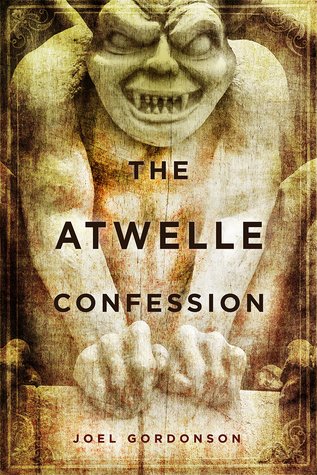
Atwelle Confession


I’m reading this book right now and it’s very intriguing! It’s that kind of book that draws you back into its pages.


BOOK BLURB

After discovering rare gargoyles mysteriously positioned inside an ancient church being restored in the small English town of Atwelle, the architect Don Whitby and a young research historian Margeaux Wood realize that the gargoyles are predicting the bizarre murders that are occurring in the town. Five hundred years earlier when the church is being built, two powerful families in Atwelle are contesting control of the region in the delicate backdrop of King Henry VIII’s dispute with the Pope over the King’s divorce. In the middle of these conflicts, the same bizarre murders are being committed in the town. Two stories of identical macabre murders five hundred years apart ─ One surprising solution in the mystery of the gargoyles and the Atwelle Confession


Amazon | Goodreads | joelgordonson.com


Benjamin Thomas

@thewritingtrain

http://www.mysterythrillerweek.com

Talking Mysteries with Author Margot Kinberg


Margot Kinberg


Margot Kinberg is a mystery author and Associate Professor. Born and raised in Pennsylvania, Kinberg graduated from Indiana University of Pennsylvania, then moved to Philadelphia, which Kinberg still considers home.


*Who influenced you to read books?

 
My sister had a real influence on my love of books. She read to me when I was very young, and then taught me how to read when I was in preschool. And there were a lot of books in my home, too, as I was growing up. I was also fortunate to have helpful, friendly librarians in the schools I attended (our public library, too). All of them encouraged me to read, and talked to me about books. As you can see, I was truly lucky to have a lot of support for reading.


So Many Books, So Little Time.


*What are the benefits of supporting literacy?

 
Research supports a number of benefits for literacy. First, there are cognitive benefits. Reading and writing promote critical thinking skills, perseverance skills, creative skills, and communication skills. Literacy also gives children access to information that they wouldn’t otherwise have. There are also major advantages in terms of academic prospects. And there’s the worldwide economic divide between people who are literate and those who aren’t. Being able to read and write makes it far more likely that a child will find meaningful work and more economic security.


The fact is, though, that millions of people, even in wealthy countries, don’t have access to literacy. Poverty, politics, war, remote living, and other realities mean that literacy is out of reach for a lot of people. For this reason, I think it’s important to carefully choose and then support groups that provide books, literacy education, and other literacy resources for those who don’t have them.


Literacy - 3d rendered metallic typeset


*What impresses you the most about Agatha Christie?

 
Ah, you’ve found out I’m a Christie fan! Well, that’s no big surprise… Many things impress me about Christie’s writing. For one thing, she was prolific; she wrote for fifty years. And she tried several different formats, too: novels, short stories, plays, and radio scripts, to name a few. I respect that willingness to venture into different territory. I also am impressed with her willingness to bend, or even break, the ‘rules’ of writing in service of a good story. The Murder of Roger Ackroyd is just one example, but it’s perhaps the best known one.

For all that, though, Christie worked very hard at writing, and understood the need to keep at it. If she broke some rules, it was only after she knew what they were, and when it’s important to follow them. To me, it’s a bit like music. You can’t understand and use dissonance in a musical piece if you aren’t thoroughly familiar with how melody and harmony work.


“Work harder than you think you did yesterday.”


*Who was the first mystery novelist you were addicted and why?

 
The first mystery novelist I read was Arthur Conan Doyle. I started with his stories when I was a child, and never looked back. I think it was the intellectual puzzles that really appealed to me. I also liked learning about what life was like in Victorian London. At the same time, like many other children, I read Nancy Drew and the Hardy Boys. I loved trying to find the solution before the ‘star’ of the book did.


Arthur Conan Doyle


*What do you teach as an associate professor?

 
I’ve taught a number of different courses. Mostly, though, I teach in my university’s education program. Most of my students are working towards their master’s degrees in education. The classes I teach focus mostly on culture, language, and their impact on teaching and learning. I would love to teach writing and literature classes, but that hasn’t happened yet. I hope it will some time.


*You began writing fiction in 2007. How did you reach this point?

 
I’ve actually been writing since I was about eleven. That’s when I wrote my first short story. Over the years, I did mostly academic/non-fiction writing, especially when I was working on my doctoral degree. But I still wrote the occasional flash fiction piece, and a few short stories. Then, I decided to start writing novels, mostly at the encouragement of my family. That part of my writing career started with a dinner-table conversation. I told a work-related story, and my husband and daughter said I ought to write a mystery novel about it. And so I did. And I couldn’t be happier that they encouraged me; I love writing.


Writer


*What do you appreciate about crime fiction?

 
The diversity of the genre. Today’s crime fiction takes place all over the world, and features so many different sorts of plots and protagonists that it’s impossible to get bored. It’s diverse in other ways, too. Crime fiction can be fun and light, or the bleakest noir. It can be comic, tragic, and everything in between. There are long novels, short stories, and more. I could go on, but I think I’ve made my point. It really is a genre that offers something for just about every taste. And there are mystery stories written at all reading levels, too, from beginning readers to the most accomplished adult readers. What more could you want?


fiction, 3D rendering, blue street sign


*What makes a great mystery?

 
Everyone’s got a different response to that question, I think. People have different tastes, and look for different things in their books. But for me, a great mystery starts with well-defined characters. They don’t have to be sympathetic, but they do have to catch the reader’s interest. If you don’t care what happens to the characters, then why bother reading?

 
Great mysteries also need to be believable. It’s hard to be drawn into a story if you can’t imagine that it could really happen. Of course, fiction is fiction, so there’s always a bit of suspension of disbelief. But in real life, murders aren’t generally solved in just a few days, as they are on plenty of TV dramas. In real life, there aren’t that many credible motives for taking another person’s life. And in real life, police, attorneys, and other
professionals in the justice system do things in certain ways. The best crime fiction reflects that reality.


*What are your top pet peeves as a reader?

 
One thing that really bothers me as a reader is lack of careful editing. Skillful editing can tighten up a plot, so that the book moves along at a solid pace. It can also pinpoint inaccuracies, inconsistencies, and other problems, so that they can be corrected. And, of course, thorough editing calls attention to spelling and grammar issues, so that they can be fixed, too. When a book hasn’t been carefully edited, it leaves the impression
that the author didn’t care enough to make sure the book was well written. That may very well not be true, but that’s how it seems.

 
In a similar way, I dislike too many stretches of credibility. Everyone’s different about this, but I prefer to keep my disbelief close by. So, I get pulled out of a story rather quickly if something too unlikely happens. That includes too many coincidences, characters doing things they wouldn’t be able/allowed to do, and glaring inaccuracies.

 
I have to admit, too, that I’m not much of a one for extreme, brutal violence or other extreme explicitness in my crime fiction. Gratuitousness doesn’t serve a story. And adding something in just for ‘shock value’ takes away from the plot, in my opinion.


*What’s the hardest part about writing?

 
For me, the hardest part about writing is the perseverance it requires. Writing first drafts, revising, editing, and so on all take time. They don’t happen overnight, and it takes persistence to do those things. And then there’s the process of querying and sending manuscripts out to agents and publishers. Any writer can tell you that rejection happens a lot more often than acceptance, and it takes perseverance to keep going even after the fifth, or sixth, or tenth ‘no.’ Writing also takes a physical toll, and there are plenty of times when it’s tempting not to sit down in that chair and get to it. It takes determination to write when you’re least in the mood to do it.


Distracted businessman distracted


*Your favorite books of 2017?

 
That’s a difficult question to answer, because the year’s only a little past half over. There are lots more good books to be released. But here are a few 2017 releases that I’m especially excited about:

 
The Story of Classic Crime in 100 Books – Martin Edwards
The Dry – Jane Harper
Greenlight – Kalpana Swaminathan
Magpie Murders – Anthony Horowitz

 
There are also several other new entries in series I like – far too many to list here. I think 2017 is going to be a fine year for crime fiction.


recommended vintage orange seal isolated on white


*What are you currently working on?

 
Thanks for asking. I’m currently working on a few things. I’m finishing the revisions for my next Joel Williams novel, which will hopefully come out in the early spring of 2018. I’m also working on two standalones. One of them follows the story of one of the characters in my second Williams novel, B-Very Flat. The other is an expansion of a very short story I wrote a couple of years ago. We’ll see how these projects go, but I’m hoping they’ll turn out well.


Thanks again for hosting me, Benjamin!


CONNECT WITH MARGOT KINBERG!

Amazon | Goodreads | Website


From Traditional Publishing to Hybrid & Indie with Crime Thriller author Michael Ridpath

IT’S TELEVISION TUESDAY


TV


From Traditional Publishing To Hybrid And Indie With Crime Thriller Author Michael Ridpath


Are you traditional, hybrid or Indie author? Tell me in the comments!!


  • Write mysteries or thrillers?
  • Read mysteries or thrillers?
  • Blog about mysteries or thrillers?
  • Want to meet authors of mysteries or thrillers?


Sign up for MYSTERY THRILLER WEEK: HERE

Begins Feb. 12-22nd 2018. Don’t miss out!!


MTW 2018 Banner 2


Benjamin Thomas

@thewritingtrain

http://www.mysterythrillerweek.com

The Story of Writer Lorelei Logsdon


Lorelei Logsdon


Lorelei Logsdon worked as a communication specialist and technical writer for 20 years before turning her hand to fiction. She has published ten books in various genres under several pseudonyms, and is working on her next psychological thriller called THE OCEAN BETWEEN.


WELCOME LORELEI!!!


bow


Name some inspirations that led you to become a writer. 

I’ve been writing stories since I was very little, and my grandmother was always encouraging me. I’d like to think she would be very proud to know I’ve published a few books.

That’s great your grandmother encouraged you to keep going. Inspiration goes a long way. 


Road Leading Into A Sunset


Describe your experience from technical writing to fiction writing.

I’ve been a communications specialist for over 20 years, and I’ve been a freelance editor for the past four years. I’ve worked with hundreds of authors and have edited over 400 books in that time. The trick to all types of writing is to know your audience and write to their needs.

Cool! That’s a lot of writing experience. Would love to pick your brain sometime. Not literally, of course. 


thoughts


What do you enjoy about writing psychological thrillers?

As I’ve gotten older, I’ve developed an unhealthy interest in horror and dark fiction. I love the mystery, adding a twist here and there, and trying to fool the reader. I like taking readers for a ride.

I like psychological thrillers too. I would imagine these are a bit harder to write though.


What’s your goal now as a writer?

For now, my goal is simply to enjoy the process. The act of writing is enjoyable, and I want to keep it that way. Writing is a pastime, a hobby, a way to unwind. I never want it to become a chore.

YES. I love this. 


“For now, my goal is simply to enjoy the process. The act of writing is enjoyable, and I want to keep it that way.”–Lorelei Logsdon


In Comorbid, who is Jame’s Davis?

James Davis is a child trapped in a grownup’s body, his development truncated at a moment in his childhood when overwhelming trauma took complete control over him. He has found a way to function, or at least he thinks he has, but in reality he’s at the mercy of his troubled, damaged mind.

Wow. This definitely sounds intriguing. 


What can you tell us about those whom he cares about?

Consciously, James cares about his mother and her memory. She was the most important person in his life. Subconsciously, James cares about children who are suffering, having a deep desire to help them like he wishes someone would have helped him. By helping others, he’s helping his own inner child. At its heart, though, COMORBID is about James’s mother, even though her POV is given only sparingly in the book.

I love seeing the inner motivation of characters and what drives them to do things. It makes the story stick in my mind for some reason. 


Thinking


What was your response to all the positive reviews on COMORBID?

I love reviews, regardless if they’re positive or negative. Of course it’s great to see a positive review, but just knowing someone read the book and was affected strongly enough to review it makes me happy.

Great attitude. I hope it rubs off on me. 


Name three things that have hindered you in completing your work. 

There’s never enough time in the day. Most of COMORBID was written over the course of six months between 2:00 a.m. and 6:00 a.m. It was an extremely tiring process, though worth it! The only other challenge in writing it was letting other opinions affect your work. If you ask opinions of 100 people, you’ll likely get 100 different opinions. While it’s nice to get feedback, don’t let other people’s ideas interfere too much with your vision.

Ouch. That sounds like a grueling schedule to write anything. It’s incredible you were even able to pull it off!


“Life is either a daring adventure or nothing at all.”


What keeps you motivated?

At the time, the story wouldn’t leave me alone. It wasn’t a choice to write it. I had to write it in order to get it out of my head and finally be able to find some peace again. Story ideas would wake me up at night and if I didn’t get up and go write them down, I couldn’t get back to sleep. Once a story gets stuck in your head, it’s impossible to focus on much else.

Many of us can relate to this. Mine has been bouncing around the head for a while now. 


Share your story


What’s your antagonist? Or what prevents you to achieving your dream?

Time is the #1 enemy.

Very true. Isn’t there a pause button somewhere?


Pause button


Why do writers quit?

I think writers quit for lots of varied reasons. Some may have an unrealistic definition of success, and when they inevitably don’t reach it, they throw in the towel. Some writers are perfectionists, always needing the perfect office setup, the perfect title, the perfect cover, and the perfect sentence. That’s a lot of pressure! If you put too much pressure on yourself to do everything perfectly, you can lose the joy in the process. For the most part, I think we often make things much more difficult than they really are. First and foremost, write for yourself.

This is a good viewpoint to have. Much appreciated. 


~First and foremost, write for yourself~


What would you say to a writer who has given up?

There’s nothing wrong with giving up. No one should feel pressured into something they no longer love or no longer are interested in. If you’ve given it everything you have and you’re ready to move on, then do that. Just know that you can always come back. It may be 10 years, 25 years, or 50 years, but you can always come back.

There’s a sense of hope here in your statement. Love it. 


Can you give us a sneak peek of The Ocean Between?

The Ocean Between is currently just an idea floating in my brain. It’s a story I published several years ago in another genre, forced to fit a mold it is uncomfortable in. The true story will be The Ocean Between, and it will be unrecognizable to the first published for those characters. You’ve heard it said that sometimes characters refuse to do the things writers want them to do, but in this case they did them but weren’t happy about it. I owe it to them to tell their true story.

Well, I hope the idea goes from floating to bouncing and a full blown story!


Do you have a tentative release date?

As I write for the joy of it rather than to someone’s arbitrary deadlines, I have no date in mind for release. When the story is ready to come out, I will let it. Until then, I won’t bother to try to force it.

We’ll be waiting…


240_F_69873591_zy6MobTUjk8puynzSCsclplGfaC7RmOH

Benjaminin Thomas

@thewritingtrain

http://www.mysterythrillerweek.com

Relaunching an Old Series to Success and Hitting Lists with a Multi-Author Set with Ella Summers

Light


Science Fiction & Fantasy Marketing Podcast


Connect with Ella Summers

Amazon | Newsletter | Books | Goodreads


Benjamin Thomas

@thewritingtrain

http://www.mysterythrillerweek.com

Discussing The Strange Luck Series with Amie Irene Winters


Pageflex Persona [document: PRS0000046_00071]


Strange Luck #1


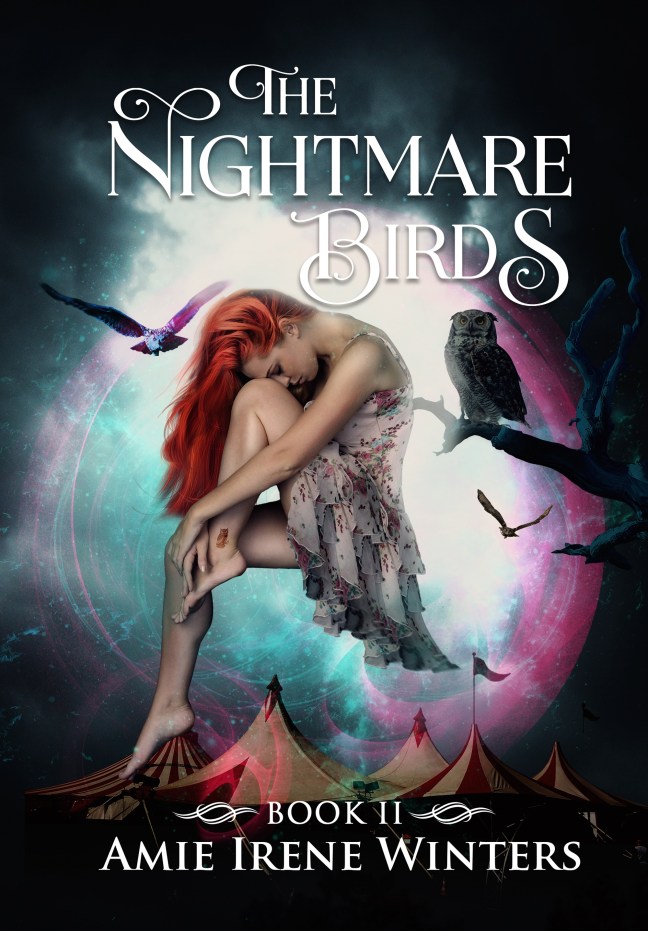
thenightmarebirds-yafantasybook-bookcover.jpg


Strange Luck #2


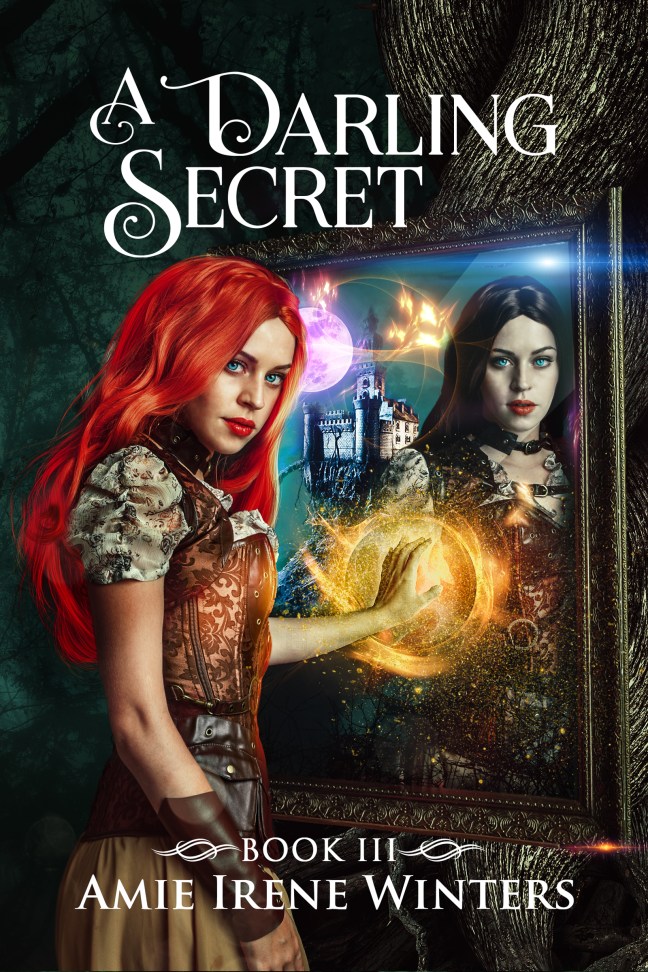
A DARLING SECRET_AMIEIRENEWINTERS_FRONTCOVER


Strange Luck #3


Q&A


Where you a reader growing up?

Not so much. The main reason was because of the types of books that I was allowed to read. They weren’t very interesting, well-known, and almost all were religious. I dreaded reading because of this. It wasn’t until I was older that I discovered that not all books were dull and boring.
I remember that when I got my license, I regularly drove to Barnes & Noble to buy books (most in secret). Classics, poetry, non-fiction—I devoured all of them with enthusiasm.
Although I would have loved to read Harry Potter and The Chronicles of Narnia growing up, I think being deprived of good books has made me that much more appreciative of them today. I can’t imagine my life without reading now.

Same here. I’m glad you had a wonderful discovery later in life. Too many great books!


books-1837043_960_720


Was there anything in your background that influenced you to write later in life?


Reading the book Chocolat in college. It was the first time I had ever read a book that was filled with magic and whimsy. This launched my obsession with magical realism books, which led to my obsession with books about witches, which led to my obsession with fantasy books.

Nice. Once you read something you like, you’re hooked. 


~Reading is for awesome people~


Why did you choose fantasy for a debut novel?


Fantasy is my favorite genre to read because of the limitless possibilities. I love visiting other worlds. I love magic and supernatural entities. I love exploring things that I am afraid of. It seemed only fitting to write in the genre I love most.

Great! Limitless possibilities is fascinating! 


What made you move from California to Pennsylvania?

My husband teaches philosophy and got a position at a local university. Prior to PA, we lived in Florida and Colorado.
PA is my favorite place I’ve lived so far though. I absolutely love the seasons, especially fall. I also prefer living in a small country town versus a big bustling city.

Nice. There’s a certain kind of peace out in the countryside. 


countryside


Describe the decision to write a book after other job opportunities.


Creative writing was my favorite subject in grade school, but once I went to college and began to explore various job opportunities, writing fell by the wayside.
I eventually went on to work in corporate America and was miserable, so I started writing stories again as a way for me to relax from the grind.
It didn’t take me long to spark the passion I had lost for writing. I looked forward to my hobby at every opportunity. After I published my first book, Strange Luck, I knew that I wanted to dedicate my life to writing. Just as Chocolat inspired me, I can only hope that my books will do the same for my readers.

Ohhh. I can totally relate to this. 


Who is Daisy Darling and how do you relate to her?

Daisy Darling is a stubborn, quirky girl who wants to be a writer, but things keep getting in the way. She inherits her family’s antique shop, ends up in a mysterious world where her memories are stolen, and then accidentally becomes ringleader for an ancient and evil theater.
Many of Daisy’s quirks are similar to mine, and some of her experiences are based on things that have happened to me.

Cool. 

 
You can learn more here:

10 Things You Didn’t Know About Strange Luck

10 Things You Didn’t Know About The Nightmare Birds


Does she have a mentor that she confides in?


In each book, Daisy has a mentor that helps guide her. In Strange Luck, it was a time-traveling wizard. In The Nightmare Birds, it was a beautiful and immortal performer, but in A Darling Secret, Daisy finally learns how to harness her own strengths and therefore relies only on herself.

I like the progression here. 

 
Tell us about the upcoming release of A Darling Secret.

A Darling Secret is the conclusion to the series, where you’ll learn the fate of your favorite heroes and love-to- hate foes. It’s a little darker than The Nightmare Birds, with lots of occult themes, magic, and psychological games. My favorite! ��
I wanted this book to answer remaining questions and leave the reader with a satisfying sense of completion. I spent a lot of time talking to my readers to find out what they wanted to see happen, which characters they wanted to see more of, and what they liked most about the previous books. I hope my readers will enjoy the result.

Awesome. I love that you seek out feedback from your readers. 


What have you learned after writing your third book?

The more you write, the better you become at writing.

Amen to that. It’s simple yet profound.  


Write


Do you outline or construct character arcs?

When I write, I don’t plot everything out in advance. I have a very general idea of what I’m going to do and the rest I come up with as I go. For example, I wanted to write a book about a world built using stolen memories. That was the general idea I had for Strange Luck. The rest took form as I wrote. A lot of the time I don’t even know what is going to happen in the story or to my characters, but that’s part of the fun. All the themes I discuss in my books are important to me and are largely based on my own experiences/thoughts, like how we are our memories.

Exploring the plot as you go does sound interesting. 


What’s next after the Strange Luck series?

I plan to write a standalone psychological horror novel. Details to come.

Oh, do share when available. 


240_F_69873591_zy6MobTUjk8puynzSCsclplGfaC7RmOH


Bio:


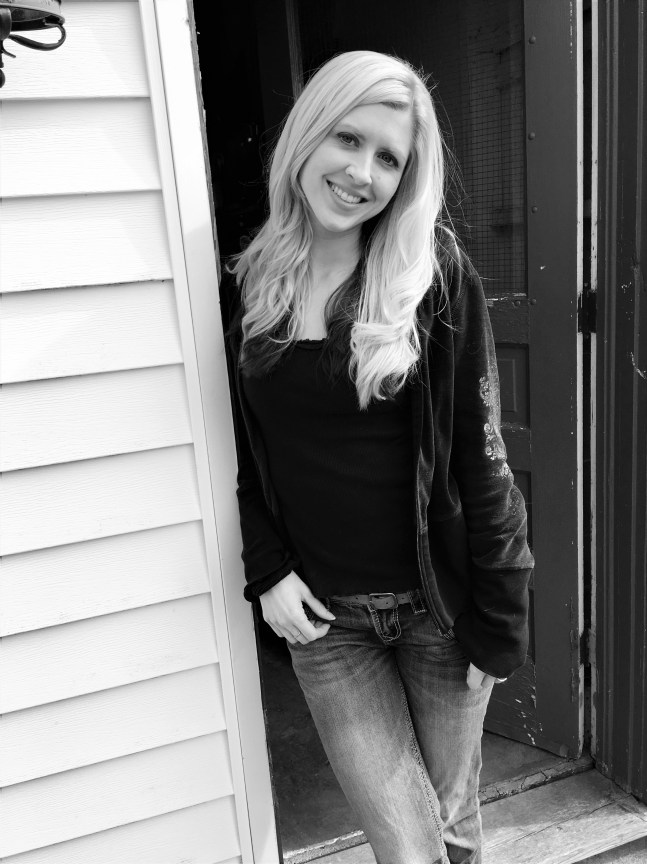
AmieIreneWinters-author-strangeluckseries.jpg


Amie Irene Winters was born and raised in California but now lives and writes in western Pennsylvania. She is the author of the award-winning Strange Luck series.
When not writing, she can be found hiking with her dog, baking desserts, or breaking a sweat in kickboxing class.

To learn more about Amie and her books, visit amieirenewinters.com.


Connect:

Website
Blog

Facebook

Twitter


Buy Links:

Amazon
Barnes & Noble

Book Depository

Books-A-Million


Don’t be a stranger! Come back and see us!


Benjamin Thomas

@thewritingtrain

@MTW_2018

http://www.mysterythrillerweek.com


Author Interview with Megan Tennant and upcoming Book Release


The Official Aletheia Book Trailer!


AVAILABLE SEPT. 7, 2017


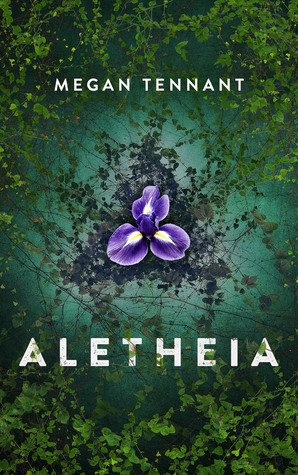
Aletheia


Book Blurb


The first book in The Seventh River series, Aletheia, takes the young adult dystopian genre to new, and often dark, places. While coming highly recommended to fans of the Hunger Games, Maze Runner, and Divergent, readers will find a gut-wrenching, original plot that dares to stand apart from what is expected of the genre. Brilliant and brutal, Aletheia is praised for tearing deep emotions from even the toughest reader. Whether you enjoy post-apocalyptic, dystopian, or general science fiction, reviewers agree, Aletheia is a must read.

Nearly two decades after the fall, the transcendent city of Iris is the only place rumored to have a cure to the disease that decimated the world. Beyond Iris, are the remnants of the old world, crawling with the Depraved. Infected with Lethe, they no longer remember the people or dreams they were once willing to fight for, and are left instead with familiar voices that whisper dark and unfamiliar words within their minds. Instinct is all that keeps the diseased struggling to exist another day.

Deep underground, below Iris, exists a compound, prison to the Nameless who traded their freedom for the cure to Lethe. It is here that 736 fights to protect those she loves. Not against the Depraved that she’s taught to fear, but against the society that saved her from that fate. She was willing to trade away her rights to regain the ability to form memories, but she won’t let the cult that cured her treat the lives of the Nameless like a resource to be used and discarded. At least, not without a fight.

How much is 736 willing to sacrifice for revenge against her captors? For those she cares about? For freedom? Everything has a cost, what would you be willing to pay?


Amazon | Goodreads 


AUTHOR INTERVIEW


interview-1018332_960_720


*Where are you originally from?

I’m originally from Angels Camp, California. A cute little town near Big Trees State Park.


*What’s it like living in Silicon Valley?

Expensive! But other than that, fairly nice. Silicon Valley is very diverse and full of science and art. It’s my kind of place, though cost of living could definitely improve.


*Is anyone else in your family a writer?

My mother has written some published children’s poems and stories, and my father is an aspiring science fiction writer. My brother is a great graphic artist who also dabbles in shadow boxes, but never caught the writing bug.


*Did you really spend half your life exploring wild jungles in Costa Rica? Have pictures?

I did, and it was incredible. From the age of roughly 8 to near 16 I lived on the Nicoya Peninsula, surrounded by jungles, beaches, and waterfalls. It was an amazing experience and has fueled many of the more fundamental aspects of my writing. And I do have pictures, which is a good thing, because I might not believe all of my stories if I didn’t have proof.

Costa Rica 3


Costa Rica 1


Cost Rica 2


*Why did you choose to be an indie author?

I chose to be an indie author from the very start, before even querying a publisher. For me, the choice was easy and ultimately came down to control. I knew what I wanted my novels to be, and I didn’t want them being twisted to fit into the market norms. A lot of beautiful things are lost from art when parts are carved away so it can fit in a more ‘market friendly’ box. I don’t recommend this route for everyone. But for those who can afford it, and want a high degree of control over their work, it’s definitely something to look into. My partner and I actually started a company (Cloud Kitten Publishing) to publish Aletheia, and we hope to one day soon offer services that mesh the experience and support of traditional publishing with the creative freedom of self-publishing.


*How do you personally define dystopian, or Post-apocalyptic fiction?

I believe there are many different ways to define a genre, but personally, what I take most out of dystopian and post-apocalyptic fiction is the way humans handle disaster and immense societal shifts. In both of these genres, we commonly see a society that was once our own but has been forced through a rapid set of changes whether due to disaster, war, disease, power shifts, or a combination. We see societies torn apart, and sometimes rebuilt. In these settings, characters are pushed to their limits and forced into gray areas that test them on levels we don’t often experience ourselves.


*Why did you decide to write this genre?

I decided to write my first series in the dystopian genre in part because the idea I had for Aletheia was dystopian by nature, but also, because I’m passionate about the genre. I love to see stories where humans are pushed out of their comfort zone and forced to face and overcome their fears. I love stories where characters are very real and have a gray range to their personality. The dystopian genre contains many of these stories. I also believe that it’s very important to write what you love. If a writer is truly passionate about a story, it will show and make for a better read. Also, writing a novel takes a very long time, so I reserve that level of dedication for genres I’m passionate about. In future projects, I’ll be exploring alien science fiction and fantasy, since those are genres I’m passionate about. But I don’t expect to stray much beyond the three. And you will never find a contemporary novel written by me.

*What is Aletheia about?

In Aletheia, the world has been ravaged by a disease that causes a range of psychotic behavior, but most notably, interrupts the reconsolidation of memories. The latter means that when infected people remember things, the memories aren’t restored, and are thus partially or fully lost. The nature of this disease leads people to try to avoid thinking about the things most important to them, but there’s a catch.

Don’t think about the white bear.

You thought of the white bear, didn’t you? The memories people most try to avoid recalling are the first they lose, leading to a rapid breakdown of their mental well being.This is only further fueled by the voices in their heads, the deep set paranoia, and the very real fact that society has crumbled around them and they can’t trust anyone.

Aletheia starts roughly two decades after the fall of society. The protagonist was infected with the disease as a child, and in exchange for the cure, she traded her freedom to the Prophet, who is the main antagonist. She, along with thousands of other Nameless, are now imprisoned underground, working for the Prophet and the elite city of Iris, paying a debt that can never be repaid. 736 lives like this for a decade, until the game changes and the risks of staying in the compound, outweigh the risks of escape. But plans are underway, and 736 soon meets someone on the outside who promises a chance of freedom, not just for her, but for all of the Nameless. But freedom will come with a great deal of costs, not just for 736, but for those she loves.

Aletheia is all about a very gray and realistic portrayal of a post-apocalyptic world, the costs of survival, and the choices we make when trapped. In Aletheia, you’ll find a diverse cast in terms of ethnicity, sexuality, disabilities, motives, and more. Characters clash and plans Interweave, leaving a thread of difficult decisions that cost lives. In a world where no one can really be trusted, but alliances are the only way to win, Aletheia delves into the nature of sacrifice and victory.


*Is there a central character or protagonist?

Aletheia is written in first person present tense from the point of view of 736. Our protagonist, 736, is a strong female lead with a murky past. Having contracted the disease as a child, she has no real memory of her time before being infected. Living in the underground compound, and doing the Prophet’s bidding has left 736 stronger in some ways, but weaker in others. 736 struggles with PTSD, guilt, and anger, but she also has a lot of love for those she trusts.


*Can you tell us a little about the setting of Aletheia?

Aletheia is set in the crumbling remnants of a city built around science, art, and nature. The compound where 736 spends much of her time is deep underground and made of cold concrete. High above, the land is split between the magnificent, wall encased, city of Iris, and the nature strewn ruins beyond. Aletheia is set in the future, so you will see some slight technological advancements, but after two decades without society, most of the environment is in a state of partial ruin.


*When is the next book of the series due?

You can expect to see Aletheia’s sequel (The Seventh River #2) out sometime in 2018.

CONNECT WITH MEGAN TENNANT!


Megan Tennant Author

Main siteAletheia site

Amazon | Goodreads


Youtube


Thanks Megan!!


Benjamin Thomas

@thewritingtrain

http://www.mysterythrillerweek.com

http://www.audiospy.wordpress.com

Self-Publishing Podcast: Getting Paid for your Passion

SMILE IT’S TELEVISION TUESDAY!!


tv APPLE


SPF podcast 75: Getting Paid for your Passion


What’s your story? Are you getting paid for your passion? Tell me in the comments!

Benjamin Thomas

@thewritingtrain

http://www.mysterythrillerweek.com


Mobile, Multimedia And An Audience Of Voracious Readers. Talking Wattpad With Ashleigh Gardner

IT’S TELEVISION TUESDAY!!


television-clker-purple-2


Mobile, Multimedia And An Audience Of Voracious Readers. Talking Wattpad With Ashleigh Gardner


What do you think of Wattpad? Tell me in the comments!!

Benjamin Thomas

@thewritingtrain

http://www.mysterythrillerweek.com

http://www.audiospy.wordpress.com


Exclusive Interview with Author Alexandria Szeman


Exclusive Concept.


Somebody get out the red carpet!


Red Carpet Festival Glamour Scene


Welcome Alexandria!


Alexandria Constantinova Szeman, Ph.D. is the auuthor of several critically acclaimed and award-winning books, including THE NEW YORK TIME BOOK REVIEW’s “Best Book” and Kafka Award Winner “for the outstanding book of prose fiction by an American woman,” THE KOMMANDANT’S MISTRESS. Her true crime memoir, M IS FOR MUNCHERS: THE SERIAL KILLERS NEXT DOOR, about surviving a serial killer, heals and empowers abuse victims.

Other award-winning books include LOVE IN THE TIME OF DINOSAURS, WHERE LIGHTNING STRIKES, NAKED WITH GLASSES, MASTERING POINT OF VIEW, LOVE IS A MANY ZOMBIED THING, MASTERING FICTION & POINT OF VIEW, among others.


Hmmm….Let us begin shall we?


How did you come to love literature and writing?
I’ve always loved books, ever since I can remember. When I was 6, I decided I wanted to be a writer. I fell in love with T.S. Eliot’s poems, then with Chaucer’s work (when I was 8), and with Shakespeare’s plays (age 12).  I just never thought of doing anything other than being a writer.

Wow, you had excellent taste at an early age!

 
What exactly is world literature?
When I was in college, most Literature majors studied only American and British literatures, unless they took advanced foreign language classes where they read the classics in their original tongue. When I was working on my PhD, it was in a department that called itself “English and Comparative Literatures.” We were encouraged to study the classics of the entire world, in addition to those in the American and British Lit canons. I really loved that approach, and when I taught University, I taught the World Literature class. I tried to include novels, stories, and poems from many different countries, by men and women, to make the students become more literate.

That approach is amazing. Sounds like it really broadens the literary mindset. Wish I had a course like that in college.


global image


What did you like most about teaching?
My students. They kept me young. With all their popular culture references, slang, clothing, hairstyles, music, and jokes, they forced me to be “hip.”

Love it. The teachers who care about their students are the best. 


Teacher


In your years of teaching what are some common problems that plague writers?
The most common problem new creative writers have is a lack of Urgency: what keeps the readers turning pages. They learn it quickly, though, even if it’s only urgency in plot. After that, the biggest problem for writers is not reading enough literature that is classic, non contemporary, or outside their preferred genre. That lack of reading shows up in their writing as poor or unimaginative plotting, weak character development, and stilted dialogue.

Oh, I love this. Food for thought for us newbies. 

 
How did you begin writing poetry?
I can’t even remember not writing poetry, though I’m sure my juvenile poetry was just atrocious. As I got older, I read more modern and contemporary poetry, like the work of T.S. Eliot, Sylvia Plath, Anne Sexton, Theodore Roethke, Walt Whitman, W.S. Merwin, Sharon Olds, etc. and my own work improved.

Wonderful, keep writing!


“Poetry is when an emotion has found its thought and the thought has found words.” –Robert Frost

 
What is poetry to you?  
Poetry is like a photograph of a moment in a character’s life.
The characters could be completely imaginary ones, like those who came from unsuccessful short story attempts: Eddie Madison in the poem “Eddie Madison and the Theory of Evolution” or Auggie Vernon in “Auggie Vernon and the Eclipse.” The characters could be mythological, like Ulysses’ wife Penelope who relates her feelings after her husband returns to her after 20 years of wandering; or the characters could be biblical, like Cain, who rages against God’s injustice.
The most frequent character in my non-Holocaust poetry is the woman-poet persona, who is either the second or third wife, with children from her husband’s previous marriages: she feels isolated, alone, and unloved, despite now being part of a large family.
No matter who the characters in my poems, the poem is like a photo of their lives, frozen for a moment, but telling a definite story about them.
My short stories are like little videos, so they have more plot than my poems. My novels are like feature films or mini-series, so they have more complex plot, usually multiple perspectives, and often multiple Points of View.

I love seeing the answer to this question. Poetry is particular to each individual. 

 
If you had to write a poem to your younger self, what would you write?
I have to admit that I would never have thought of writing a poem to my younger self, even if that “younger self” was only a persona who appeared in my early poems. It took me over a year to write “While the Music Lasts”, if only because I hadn’t written anything in the Voice of the woman-poet persona in almost a decade.
I had a tremendously difficult time “hearing” that Voice again. After months of very bad drafts, I finally treated the poem and that Voice as I treat a novel which I’ve been away from for a while: I began re-reading Portrait of the Poet as a Woman, Part 2 of my book Love in the Time of
Dinosaurs, where that persona appears. I read that section over and over and over, trying to reach that Voice again. Eventually, that Voice came back, but then it took me another few months to get the poem itself right. The title was easy once I found the epigraph: it took me at least a month to find the epigraph (from a T.S. Eliot poem) that felt as if it fit the poem.
Here’s the poem to my younger self, “While the Music Lasts.”


While the Music Lasts


For most of us, there is only the unattended
Moment… or music heard so deeply
That it is not heard at all, but you are the music
While the music lasts.

T.S. Eliot
Four Quartets: Dry Salvages
5: 598-604


to my younger self


Each night, standing in the hallway at the open
door of the bedroom, I see you lying in the
fading light, his arms around you, your head on his

chest, his lips against your hair, and I want to tell
you how he takes your words – wrapped in ribbons of poems –
and gives them away to others. I want to tell

you how his own words change depending on whether
his sons’ crying woke him in the night, on whether
his first wife called again to complain that you have

moved into her house, on the color of some strange
woman’s eyes in the village market when she looks
up at the sound of his deep, burring voice. Standing

there each night in the hallway, I want to tell you
that one day, when his children are grown, they will seek
you out because you gave them seeds to plant in their

own corner of the garden, because you chased them
through piles of brittle autumn leaves, because they told
you they hated you more than they hated the sound

of their mother’s weeping. And they will offer you
their own children. Because you helped them build a fort,
so very long ago, in the cold and bitter

snow. Standing there each night, watching you sleep, I want
to tell you that he will do worse than meeting your
best friend three afternoons a week at motels while

you make dinner for him and his sons. One day, he
will toss out your heart with the coffee grounds, wrapped in
yesterday’s newspaper. Standing there in the dark,

leaning over you in the deep dark night, I start
to tell you, to whisper you all these things, but the
chill of the night air, the chime of the clock in the

downstairs hall, the look on your face when you open
your eyes to gaze at him lying there beside you,
and once again my tongue stumbles and goes still. The

unbearable weight of your happiness steals all
my words and buries them deep underground in some
faraway place, some place not marked on any map

but the map of our own heart, some faraway place
where you will have to find these words and dig them up
yourself, one day, many years from now, on your own.

Alexandria Constantinova Szeman

© Copyright 2017


“Poetry is like a photograph of a moment in a character’s life.”–Alexandria Szeman


100 percent quality


If your life were a metaphor, how would you describe it?
I survived the fire.

Love your spirit of survival here. Actually, you’ve done much more than that dear friend.  I wrote a poem. 


Life after the Flame


the fire consumed

but I survived its wake

for the ruin of flame

was powerless to take

my withering soul

laid bare


Nor ashes to ashes 

or dust to dust

could bury my will 

to live I must 

ascend within

the embers of the flame


the fire consumed

yet could not earn

the precious ether of life 

in turn but rather proved 

that hope can never burn


-Benjamin Thomas


You not only survived. You lived, and you exceeded.


Hope. Inspirational quote typed on an old typewriter.


If you had to give a quote to the world, what would you say?

If you can imagine it, it can happen.

I love this one! According to Einstein, imagination is the true intelligence. 


If you had to give a quote to the next generation of young writers, what would you say?
Read everything you can, learn your craft well, and never, ever give up on yourself.

Amen to that! Love it.
What’s the best part of being creative?
As soon as most people hear that I’m a writer, they think I’m weird, and that keeps them guessing.

I got a kick out of this one 🙂


Thanks Alexandria!


Links

Blog & Website
The Alexandria Papers
Poetry
Love in the Time of Dinosaurs


Love in the Time of Dinosaurs (cover)

 
Where Lightning Strikes: Poems on The Holocaust

Where Lightning Strikes Poems on the Holocaust (cover)


Connect with Alexandria!

Twitter | Facebook | Amazon

ACS


Thanks for ridin’ the train folks. Don’t be a stranger!


black train


Benjamin Thomas

@thewritingtrain

http://www.mysterythrillerweek.com

http://www.audiospy.wordpress.com