

Science Fiction & Fantasy Marketing Podcast
Connect with Ella Summers
Amazon | Newsletter | Books | Goodreads

![Pageflex Persona [document: PRS0000046_00071]](https://thewritingtrain.com/wp-content/uploads/2017/08/strangeluck-yafantasy-bookcover.jpg?w=648)
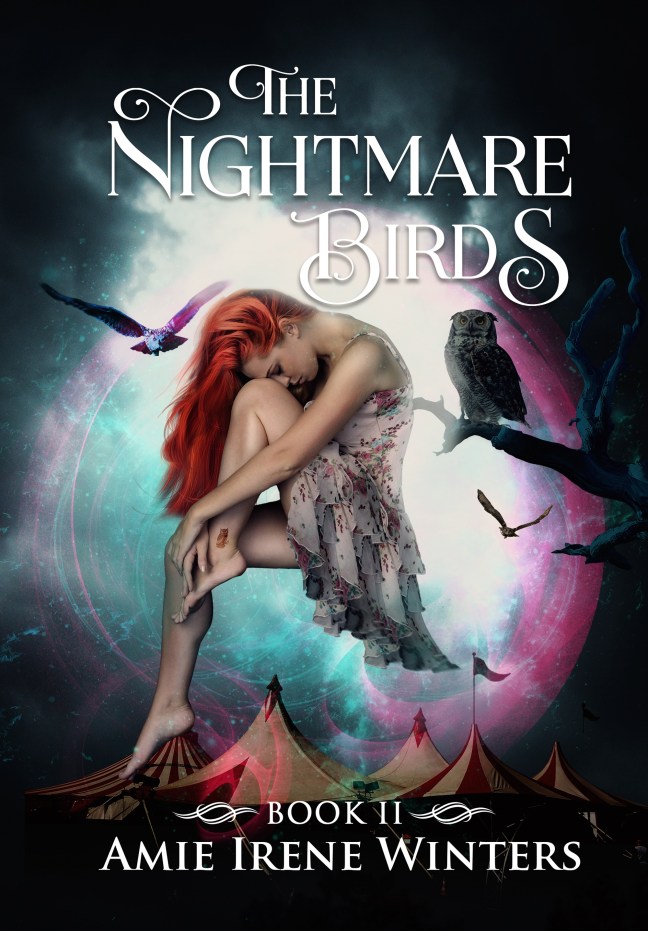
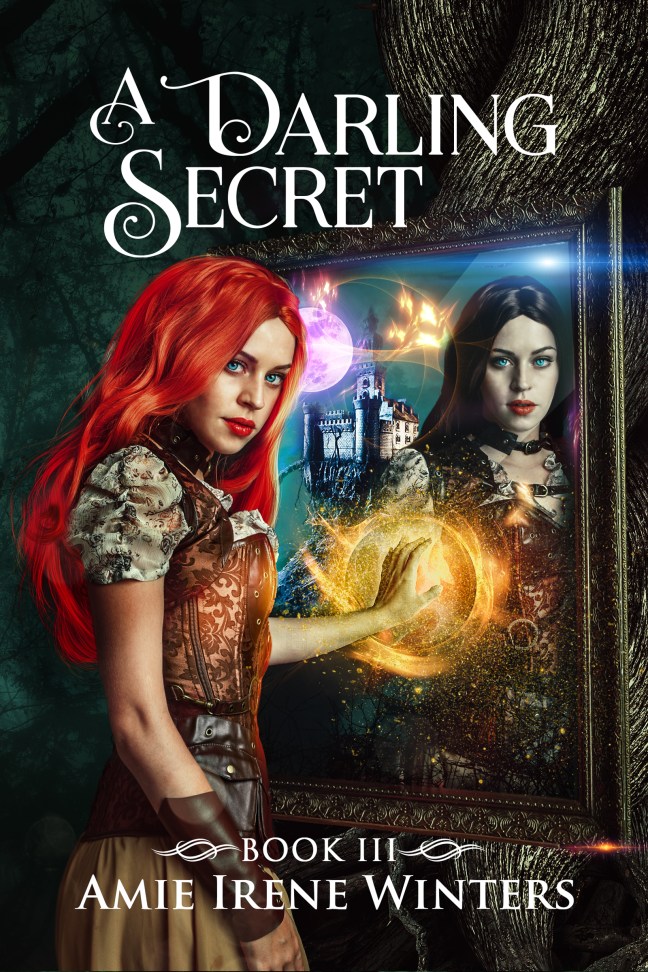

Where you a reader growing up?
Not so much. The main reason was because of the types of books that I was allowed to read. They weren’t very interesting, well-known, and almost all were religious. I dreaded reading because of this. It wasn’t until I was older that I discovered that not all books were dull and boring.
I remember that when I got my license, I regularly drove to Barnes & Noble to buy books (most in secret). Classics, poetry, non-fiction—I devoured all of them with enthusiasm.
Although I would have loved to read Harry Potter and The Chronicles of Narnia growing up, I think being deprived of good books has made me that much more appreciative of them today. I can’t imagine my life without reading now.
Same here. I’m glad you had a wonderful discovery later in life. Too many great books!

Was there anything in your background that influenced you to write later in life?
Reading the book Chocolat in college. It was the first time I had ever read a book that was filled with magic and whimsy. This launched my obsession with magical realism books, which led to my obsession with books about witches, which led to my obsession with fantasy books.
Nice. Once you read something you like, you’re hooked.
Why did you choose fantasy for a debut novel?
Fantasy is my favorite genre to read because of the limitless possibilities. I love visiting other worlds. I love magic and supernatural entities. I love exploring things that I am afraid of. It seemed only fitting to write in the genre I love most.
Great! Limitless possibilities is fascinating!
What made you move from California to Pennsylvania?
My husband teaches philosophy and got a position at a local university. Prior to PA, we lived in Florida and Colorado.
PA is my favorite place I’ve lived so far though. I absolutely love the seasons, especially fall. I also prefer living in a small country town versus a big bustling city.
Nice. There’s a certain kind of peace out in the countryside.

Describe the decision to write a book after other job opportunities.
Creative writing was my favorite subject in grade school, but once I went to college and began to explore various job opportunities, writing fell by the wayside.
I eventually went on to work in corporate America and was miserable, so I started writing stories again as a way for me to relax from the grind.
It didn’t take me long to spark the passion I had lost for writing. I looked forward to my hobby at every opportunity. After I published my first book, Strange Luck, I knew that I wanted to dedicate my life to writing. Just as Chocolat inspired me, I can only hope that my books will do the same for my readers.
Ohhh. I can totally relate to this.
Who is Daisy Darling and how do you relate to her?
Daisy Darling is a stubborn, quirky girl who wants to be a writer, but things keep getting in the way. She inherits her family’s antique shop, ends up in a mysterious world where her memories are stolen, and then accidentally becomes ringleader for an ancient and evil theater.
Many of Daisy’s quirks are similar to mine, and some of her experiences are based on things that have happened to me.
Cool.
You can learn more here:
10 Things You Didn’t Know About Strange Luck
10 Things You Didn’t Know About The Nightmare Birds
Does she have a mentor that she confides in?
In each book, Daisy has a mentor that helps guide her. In Strange Luck, it was a time-traveling wizard. In The Nightmare Birds, it was a beautiful and immortal performer, but in A Darling Secret, Daisy finally learns how to harness her own strengths and therefore relies only on herself.
I like the progression here.
Tell us about the upcoming release of A Darling Secret.
A Darling Secret is the conclusion to the series, where you’ll learn the fate of your favorite heroes and love-to- hate foes. It’s a little darker than The Nightmare Birds, with lots of occult themes, magic, and psychological games. My favorite! ��
I wanted this book to answer remaining questions and leave the reader with a satisfying sense of completion. I spent a lot of time talking to my readers to find out what they wanted to see happen, which characters they wanted to see more of, and what they liked most about the previous books. I hope my readers will enjoy the result.
Awesome. I love that you seek out feedback from your readers.
What have you learned after writing your third book?
The more you write, the better you become at writing.
Amen to that. It’s simple yet profound.

Do you outline or construct character arcs?
When I write, I don’t plot everything out in advance. I have a very general idea of what I’m going to do and the rest I come up with as I go. For example, I wanted to write a book about a world built using stolen memories. That was the general idea I had for Strange Luck. The rest took form as I wrote. A lot of the time I don’t even know what is going to happen in the story or to my characters, but that’s part of the fun. All the themes I discuss in my books are important to me and are largely based on my own experiences/thoughts, like how we are our memories.
Exploring the plot as you go does sound interesting.
What’s next after the Strange Luck series?
I plan to write a standalone psychological horror novel. Details to come.
Oh, do share when available.

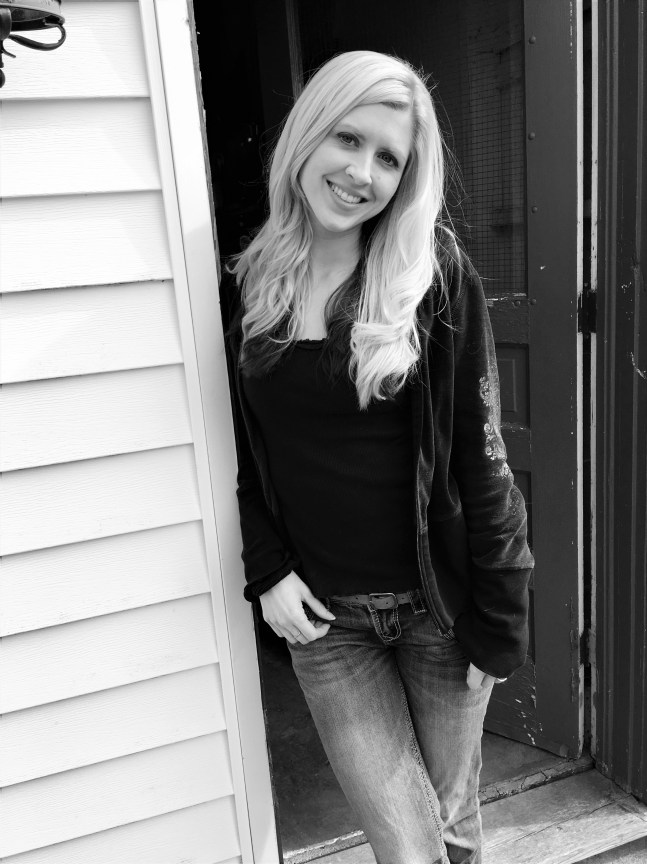
Amie Irene Winters was born and raised in California but now lives and writes in western Pennsylvania. She is the author of the award-winning Strange Luck series.
When not writing, she can be found hiking with her dog, baking desserts, or breaking a sweat in kickboxing class.
To learn more about Amie and her books, visit amieirenewinters.com.
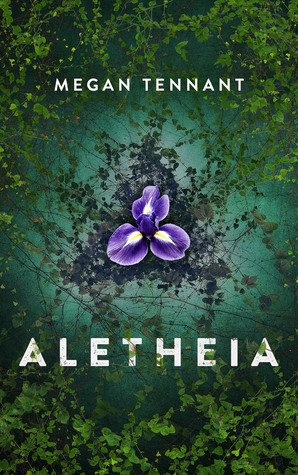
The first book in The Seventh River series, Aletheia, takes the young adult dystopian genre to new, and often dark, places. While coming highly recommended to fans of the Hunger Games, Maze Runner, and Divergent, readers will find a gut-wrenching, original plot that dares to stand apart from what is expected of the genre. Brilliant and brutal, Aletheia is praised for tearing deep emotions from even the toughest reader. Whether you enjoy post-apocalyptic, dystopian, or general science fiction, reviewers agree, Aletheia is a must read.
Nearly two decades after the fall, the transcendent city of Iris is the only place rumored to have a cure to the disease that decimated the world. Beyond Iris, are the remnants of the old world, crawling with the Depraved. Infected with Lethe, they no longer remember the people or dreams they were once willing to fight for, and are left instead with familiar voices that whisper dark and unfamiliar words within their minds. Instinct is all that keeps the diseased struggling to exist another day.
Deep underground, below Iris, exists a compound, prison to the Nameless who traded their freedom for the cure to Lethe. It is here that 736 fights to protect those she loves. Not against the Depraved that she’s taught to fear, but against the society that saved her from that fate. She was willing to trade away her rights to regain the ability to form memories, but she won’t let the cult that cured her treat the lives of the Nameless like a resource to be used and discarded. At least, not without a fight.
How much is 736 willing to sacrifice for revenge against her captors? For those she cares about? For freedom? Everything has a cost, what would you be willing to pay?

*Where are you originally from?
I’m originally from Angels Camp, California. A cute little town near Big Trees State Park.
*What’s it like living in Silicon Valley?
Expensive! But other than that, fairly nice. Silicon Valley is very diverse and full of science and art. It’s my kind of place, though cost of living could definitely improve.
*Is anyone else in your family a writer?
My mother has written some published children’s poems and stories, and my father is an aspiring science fiction writer. My brother is a great graphic artist who also dabbles in shadow boxes, but never caught the writing bug.
*Did you really spend half your life exploring wild jungles in Costa Rica? Have pictures?
I did, and it was incredible. From the age of roughly 8 to near 16 I lived on the Nicoya Peninsula, surrounded by jungles, beaches, and waterfalls. It was an amazing experience and has fueled many of the more fundamental aspects of my writing. And I do have pictures, which is a good thing, because I might not believe all of my stories if I didn’t have proof.


*Why did you choose to be an indie author?
I chose to be an indie author from the very start, before even querying a publisher. For me, the choice was easy and ultimately came down to control. I knew what I wanted my novels to be, and I didn’t want them being twisted to fit into the market norms. A lot of beautiful things are lost from art when parts are carved away so it can fit in a more ‘market friendly’ box. I don’t recommend this route for everyone. But for those who can afford it, and want a high degree of control over their work, it’s definitely something to look into. My partner and I actually started a company (Cloud Kitten Publishing) to publish Aletheia, and we hope to one day soon offer services that mesh the experience and support of traditional publishing with the creative freedom of self-publishing.
*How do you personally define dystopian, or Post-apocalyptic fiction?
I believe there are many different ways to define a genre, but personally, what I take most out of dystopian and post-apocalyptic fiction is the way humans handle disaster and immense societal shifts. In both of these genres, we commonly see a society that was once our own but has been forced through a rapid set of changes whether due to disaster, war, disease, power shifts, or a combination. We see societies torn apart, and sometimes rebuilt. In these settings, characters are pushed to their limits and forced into gray areas that test them on levels we don’t often experience ourselves.
*Why did you decide to write this genre?
I decided to write my first series in the dystopian genre in part because the idea I had for Aletheia was dystopian by nature, but also, because I’m passionate about the genre. I love to see stories where humans are pushed out of their comfort zone and forced to face and overcome their fears. I love stories where characters are very real and have a gray range to their personality. The dystopian genre contains many of these stories. I also believe that it’s very important to write what you love. If a writer is truly passionate about a story, it will show and make for a better read. Also, writing a novel takes a very long time, so I reserve that level of dedication for genres I’m passionate about. In future projects, I’ll be exploring alien science fiction and fantasy, since those are genres I’m passionate about. But I don’t expect to stray much beyond the three. And you will never find a contemporary novel written by me.
*What is Aletheia about?
In Aletheia, the world has been ravaged by a disease that causes a range of psychotic behavior, but most notably, interrupts the reconsolidation of memories. The latter means that when infected people remember things, the memories aren’t restored, and are thus partially or fully lost. The nature of this disease leads people to try to avoid thinking about the things most important to them, but there’s a catch.
Don’t think about the white bear.
You thought of the white bear, didn’t you? The memories people most try to avoid recalling are the first they lose, leading to a rapid breakdown of their mental well being.This is only further fueled by the voices in their heads, the deep set paranoia, and the very real fact that society has crumbled around them and they can’t trust anyone.
Aletheia starts roughly two decades after the fall of society. The protagonist was infected with the disease as a child, and in exchange for the cure, she traded her freedom to the Prophet, who is the main antagonist. She, along with thousands of other Nameless, are now imprisoned underground, working for the Prophet and the elite city of Iris, paying a debt that can never be repaid. 736 lives like this for a decade, until the game changes and the risks of staying in the compound, outweigh the risks of escape. But plans are underway, and 736 soon meets someone on the outside who promises a chance of freedom, not just for her, but for all of the Nameless. But freedom will come with a great deal of costs, not just for 736, but for those she loves.
Aletheia is all about a very gray and realistic portrayal of a post-apocalyptic world, the costs of survival, and the choices we make when trapped. In Aletheia, you’ll find a diverse cast in terms of ethnicity, sexuality, disabilities, motives, and more. Characters clash and plans Interweave, leaving a thread of difficult decisions that cost lives. In a world where no one can really be trusted, but alliances are the only way to win, Aletheia delves into the nature of sacrifice and victory.
*Is there a central character or protagonist?
Aletheia is written in first person present tense from the point of view of 736. Our protagonist, 736, is a strong female lead with a murky past. Having contracted the disease as a child, she has no real memory of her time before being infected. Living in the underground compound, and doing the Prophet’s bidding has left 736 stronger in some ways, but weaker in others. 736 struggles with PTSD, guilt, and anger, but she also has a lot of love for those she trusts.
*Can you tell us a little about the setting of Aletheia?
Aletheia is set in the crumbling remnants of a city built around science, art, and nature. The compound where 736 spends much of her time is deep underground and made of cold concrete. High above, the land is split between the magnificent, wall encased, city of Iris, and the nature strewn ruins beyond. Aletheia is set in the future, so you will see some slight technological advancements, but after two decades without society, most of the environment is in a state of partial ruin.
*When is the next book of the series due?
You can expect to see Aletheia’s sequel (The Seventh River #2) out sometime in 2018.





Alexandria Constantinova Szeman, Ph.D. is the auuthor of several critically acclaimed and award-winning books, including THE NEW YORK TIME BOOK REVIEW’s “Best Book” and Kafka Award Winner “for the outstanding book of prose fiction by an American woman,” THE KOMMANDANT’S MISTRESS. Her true crime memoir, M IS FOR MUNCHERS: THE SERIAL KILLERS NEXT DOOR, about surviving a serial killer, heals and empowers abuse victims.
Other award-winning books include LOVE IN THE TIME OF DINOSAURS, WHERE LIGHTNING STRIKES, NAKED WITH GLASSES, MASTERING POINT OF VIEW, LOVE IS A MANY ZOMBIED THING, MASTERING FICTION & POINT OF VIEW, among others.
Hmmm….Let us begin shall we?
How did you come to love literature and writing?
I’ve always loved books, ever since I can remember. When I was 6, I decided I wanted to be a writer. I fell in love with T.S. Eliot’s poems, then with Chaucer’s work (when I was 8), and with Shakespeare’s plays (age 12). I just never thought of doing anything other than being a writer.
Wow, you had excellent taste at an early age!
What exactly is world literature?
When I was in college, most Literature majors studied only American and British literatures, unless they took advanced foreign language classes where they read the classics in their original tongue. When I was working on my PhD, it was in a department that called itself “English and Comparative Literatures.” We were encouraged to study the classics of the entire world, in addition to those in the American and British Lit canons. I really loved that approach, and when I taught University, I taught the World Literature class. I tried to include novels, stories, and poems from many different countries, by men and women, to make the students become more literate.
That approach is amazing. Sounds like it really broadens the literary mindset. Wish I had a course like that in college.

What did you like most about teaching?
My students. They kept me young. With all their popular culture references, slang, clothing, hairstyles, music, and jokes, they forced me to be “hip.”
Love it. The teachers who care about their students are the best.

In your years of teaching what are some common problems that plague writers?
The most common problem new creative writers have is a lack of Urgency: what keeps the readers turning pages. They learn it quickly, though, even if it’s only urgency in plot. After that, the biggest problem for writers is not reading enough literature that is classic, non contemporary, or outside their preferred genre. That lack of reading shows up in their writing as poor or unimaginative plotting, weak character development, and stilted dialogue.
Oh, I love this. Food for thought for us newbies.
How did you begin writing poetry?
I can’t even remember not writing poetry, though I’m sure my juvenile poetry was just atrocious. As I got older, I read more modern and contemporary poetry, like the work of T.S. Eliot, Sylvia Plath, Anne Sexton, Theodore Roethke, Walt Whitman, W.S. Merwin, Sharon Olds, etc. and my own work improved.
Wonderful, keep writing!
What is poetry to you?
Poetry is like a photograph of a moment in a character’s life.
The characters could be completely imaginary ones, like those who came from unsuccessful short story attempts: Eddie Madison in the poem “Eddie Madison and the Theory of Evolution” or Auggie Vernon in “Auggie Vernon and the Eclipse.” The characters could be mythological, like Ulysses’ wife Penelope who relates her feelings after her husband returns to her after 20 years of wandering; or the characters could be biblical, like Cain, who rages against God’s injustice.
The most frequent character in my non-Holocaust poetry is the woman-poet persona, who is either the second or third wife, with children from her husband’s previous marriages: she feels isolated, alone, and unloved, despite now being part of a large family.
No matter who the characters in my poems, the poem is like a photo of their lives, frozen for a moment, but telling a definite story about them.
My short stories are like little videos, so they have more plot than my poems. My novels are like feature films or mini-series, so they have more complex plot, usually multiple perspectives, and often multiple Points of View.
I love seeing the answer to this question. Poetry is particular to each individual.
If you had to write a poem to your younger self, what would you write?
I have to admit that I would never have thought of writing a poem to my younger self, even if that “younger self” was only a persona who appeared in my early poems. It took me over a year to write “While the Music Lasts”, if only because I hadn’t written anything in the Voice of the woman-poet persona in almost a decade.
I had a tremendously difficult time “hearing” that Voice again. After months of very bad drafts, I finally treated the poem and that Voice as I treat a novel which I’ve been away from for a while: I began re-reading Portrait of the Poet as a Woman, Part 2 of my book Love in the Time of
Dinosaurs, where that persona appears. I read that section over and over and over, trying to reach that Voice again. Eventually, that Voice came back, but then it took me another few months to get the poem itself right. The title was easy once I found the epigraph: it took me at least a month to find the epigraph (from a T.S. Eliot poem) that felt as if it fit the poem.
Here’s the poem to my younger self, “While the Music Lasts.”
For most of us, there is only the unattended
Moment… or music heard so deeply
That it is not heard at all, but you are the music
While the music lasts.
T.S. Eliot
Four Quartets: Dry Salvages
5: 598-604
Each night, standing in the hallway at the open
door of the bedroom, I see you lying in the
fading light, his arms around you, your head on his
chest, his lips against your hair, and I want to tell
you how he takes your words – wrapped in ribbons of poems –
and gives them away to others. I want to tell
you how his own words change depending on whether
his sons’ crying woke him in the night, on whether
his first wife called again to complain that you have
moved into her house, on the color of some strange
woman’s eyes in the village market when she looks
up at the sound of his deep, burring voice. Standing
there each night in the hallway, I want to tell you
that one day, when his children are grown, they will seek
you out because you gave them seeds to plant in their
own corner of the garden, because you chased them
through piles of brittle autumn leaves, because they told
you they hated you more than they hated the sound
of their mother’s weeping. And they will offer you
their own children. Because you helped them build a fort,
so very long ago, in the cold and bitter
snow. Standing there each night, watching you sleep, I want
to tell you that he will do worse than meeting your
best friend three afternoons a week at motels while
you make dinner for him and his sons. One day, he
will toss out your heart with the coffee grounds, wrapped in
yesterday’s newspaper. Standing there in the dark,
leaning over you in the deep dark night, I start
to tell you, to whisper you all these things, but the
chill of the night air, the chime of the clock in the
downstairs hall, the look on your face when you open
your eyes to gaze at him lying there beside you,
and once again my tongue stumbles and goes still. The
unbearable weight of your happiness steals all
my words and buries them deep underground in some
faraway place, some place not marked on any map
but the map of our own heart, some faraway place
where you will have to find these words and dig them up
yourself, one day, many years from now, on your own.
Alexandria Constantinova Szeman
© Copyright 2017

If your life were a metaphor, how would you describe it?
I survived the fire.
Love your spirit of survival here. Actually, you’ve done much more than that dear friend. I wrote a poem.
Life after the Flame
the fire consumed
but I survived its wake
for the ruin of flame
was powerless to take
my withering soul
laid bare
Nor ashes to ashes
or dust to dust
could bury my will
to live I must
ascend within
the embers of the flame
the fire consumed
yet could not earn
the precious ether of life
in turn but rather proved
that hope can never burn
-Benjamin Thomas

If you had to give a quote to the world, what would you say?
If you can imagine it, it can happen.
I love this one! According to Einstein, imagination is the true intelligence.
If you had to give a quote to the next generation of young writers, what would you say?
Read everything you can, learn your craft well, and never, ever give up on yourself.
Amen to that! Love it.
What’s the best part of being creative?
As soon as most people hear that I’m a writer, they think I’m weird, and that keeps them guessing.
I got a kick out of this one 🙂
Blog & Website
The Alexandria Papers
Poetry
Love in the Time of Dinosaurs

Where Lightning Strikes: Poems on The Holocaust


ABOUT LESLIE TENTLER
Leslie Tentler is the author of six novels, including BEFORE THE STORM, LOW TIDE, FALLEN and the Chasing Evil Trilogy (MIDNIGHT CALLER, MIDNIGHT FEAR and EDGE OF MIDNIGHT). She was a finalist for Best First Novel at ThrillerFest 2012, and is a two-time finalist for the Daphne du Maurier Award for Excellence in Mystery and Suspense. She is also the recipient of the prestigious Maggie Award of Excellence. A native of East Tennessee, she currently resides in Atlanta with her husband, standard poodle and three aloof cats.
Tell us about Rarity Cove and what bearings it has on the story.
Setting is such an important piece of any story. It sets the atmosphere and builds the mood. I first introduced readers to Rarity Cove in Before the Storm (Rarity Cove Book One). It’s a fictional seaside town about forty minutes outside of Charleston, South Carolina. It’s a small tourist town and quite idyllic, with a quaint downtown with centuries old live oaks in the square and the ocean boardwalk nearby. Rarity Cove is best known for the St. Clair, which is a four-star resort hotel that has been run by the St. Clair family for generations.

What’s the St. Clair family like?
I strongly recommend reading Before the Storm before moving on to Low Tide (Rarity Cove Book Two) in order to truly get to know the St. Clair family and especially to understand the dynamics between Mark, the eldest St. Clair sibling and the hero in book one, and Carter, the younger brother who is the hero in book two.
The St. Clair family is considered to be “old money” in the small Southern town, and Mark, who is head of the St. Clair hotel, is a business and civic leader. In book one, Carter is sort of the prodigal son who has returned to Rarity Cove while on hiatus from the soap opera he stars on in New York City. He and Mark have a bit of a contentious relationship, and the reason as to why is revealed in Before the Storm.
In Before the Storm, you’ll also be introduced to Mercer, the youngest St. Clair sibling and only daughter, and Olivia, the family matriarch, who is a socialite and a bit of a meddler in her family’s personal lives. You’ll visit all these characters again in Low Tide.
Who is Carter St. Clair?
When you first meet Carter in Before the Storm, he is an actor on a soap opera in New York City, still on the cusp of superstardom. At the end of that book, his career has taken off in a big way, and you’re just beginning to get a glimpse of his trajectory to fame.
Low Tide begins three years later, and Carter is now an A-list Hollywood leading man, very much in demand. But then the unexpected happens. Seriously wounded in his LA mansion by a deranged stalker, he leaves the glare of Hollywood and returns home to Rarity Cove to recuperate, both physically and emotionally.
A few readers mentioned to me they initially had qualms about reading Carter’s story in Low Tide, since he was a bit of an antagonist to Mark in Before the Storm, at least until the two brothers finally buried the hatchet over something that had happened years earlier. But those same readers have told me how much they ended up loving Carter in book two. Carter has matured quite a bit and the nearly fatal stalker attack in particular has forced him to really take a hard look at his life and the kind of man he wants to be.

Introduce us to Quinn Reese.
Quinn Reese is a physical therapist who has returned to her mother’s home in Rarity Cove after fleeing her soon-to- be ex-husband, a professional football player in San Francisco. Currently out of work, she receives a lucrative offer from the St. Clair family to work with Carter. But Quinn has her own personal history with the St. Clairs, and with Carter in particular. Mark talks her into working with Carter since he has been resistant to other physical therapists so far. Mark believes Quinn won’t be intimidated by Carter’s fame, since she was married to someone famous herself. Quinn is reluctant, but needs the money to truly get a fresh start on life.
I really enjoyed writing Quinn—she’s smart, good at her job, and empathetic. She’s also a vegetarian, a dog lover and a yoga enthusiast. But while she seems like she has it all together on the outside, on the inside, she’s kind of a mess and keeping some pretty big secrets that spill out over the course of Low Tide.

What was your experience like writing Low Tide?
Low Tide was my first foray into writing a continuing series. Both Before the Storm and Low Tide are also my only books that aren’t high-stakes, law enforcement oriented thrillers. I enjoyed revisiting the characters I’d created in Before the Storm in Low Tide.
Who is your favorite character?
With this series, it really is Carter. I had a lot of fun making him a bad boy in Before the Storm, and then knocking him off his throne in Low Tide. At the beginning of Low Tide, Carter is in pain, he’s depressed and he’s really struggling with the “new normal” in his life after being so seriously wounded. Until Quinn’s arrival, he’d lashed out against physical therapy, but Quinn isn’t having any of his attitude. At the point that Carter realizes he’s falling for Quinn, he really has made a 180-degree turn from the man he used to be. Carter has been a “ladies man” his whole life—his looks, the St. Clair money and later, his fame—always allowed him to have his choice of women. Having him realize that ordinary Quinn is actually someone quite special, someone he wants to protect and cherish, was fulfilling for me as a writer.
If you could be any character in this book who would it be?
Quinn, definitely. Who wouldn’t want to be the heroine in her own book? 😉

LOW TIDE (Rarity Cove Book Two) BACK COVER BLURB
Hollywood leading man Carter St. Clair had it all—until a brutal stalker attack nearly takes his life. Seriously injured, he returns to his hometown of Rarity Cove, South Carolina, to recover in private, his outlook on fame forever changed by someone claiming to be his “number-one fan.”
Physical therapist Quinn Reese fled San Francisco to be free of her soon-to- be ex-husband, professional football player Jake Medero. Staying at her mother’s house in Rarity Cove seems like her only option until she can get back on her feet financially. When the St. Clair family makes her a lucrative offer of employment, Quinn sees the potential for starting over, even if it means working with Carter, who broke her heart years ago. As Carter heals under Quinn’s care, a fragile bond forms between them. Carter also recognizes a parallel between his own stalker and the possessive pro baller who considers Quinn his property. But even as Carter steps into the role of Quinn’s protector, another dangerous storm is brewing…one for which neither of them is prepared.


LOW TIDE is the second book in the Rarity Cove series, so we recommend reading
BEFORE THE STORM first. Low Tide is available at the following retailers:

rejuvenatement - not retirement
...a crime-fictional site
Established in May 2011 to help nurture and inspire the poetic spirit.
A place for poems and pics
a simple pairing of pictures and poetry
Sharing Poetry and Hugs
Persistent WV Poet
A.I. Art and Poetry
short writing prompts
I am the way and the reality and the life...John 14:6
Submit your film, screenplay, novel, to the festival and get it showcased at the FEEDBACK Festival. Full Feedback on all entries.
Military Science Fiction Author
 The Writing Train: Join the locomotion