Book Hoarders Bucket List Challenge


Hoarding Boxes Piled Up Word Collection Mess Trash


ARE YOU A COMPULSIVE BOOK HOARDER?

IS YOUR TBR LIST TEN MILES LONG?


If you answered yes to either of these questions you may be suffering from CBH, compusive book hoardom. That’s when your ‘to be read’ list far exceeds the books you’ve actually read. Go ahead and admit it. Let’s say it together, ready? I’m a compulsive book hoarder. Good, again. I’m a compulsive book hoarder. Maybe you’re not a book hoarder and perhaps you just enjoy a challenge. Or you’d like to reduce the amount of books in your TBR pile. Well, we’ve got a challenge for you!


“When faced with a challenge, look for a way, not a way out.” -David L. Weatherford 


chess-1709621_960_720


A fellow blogger, book enthusiast, Sally Allen and I were discussing reducing our TBR piles and actually reading the books that we own. We came up with a great solution. A strategy. Challenge. Fun competition.


I have so many books lined up I could literally read for an entire year without buying or adding another title. To make it worse I keep adding MORE books to the insurmountable mountain that I’ve built. Yikes!!

Are you like this? Am I the only one? We need to systematically target all of the juicy books on our digital and actual bookshelves! We need to go in guns blazing and take out those books mocking you on the shelf. That’s right, no more Mr. nice guy. I’d like you to meet our new mascot.


Allow me to introduce….

HANK THE HITMAN

OF THE BOOK HOARDERS BUCKET LIST CHALLENGE


action man


RULES:


  • Choose the number of books you’d like to read per month
  • Pair up with one other person
  • Determine how many books you’ll add to your TBR list per month
  • Determine a mutually agreed upon prize for the winner.


Example:)

Group 1

Person A reads 16 books/month

Person B reads 8 books/month 

Persons A & B  cannot add more than 10% of books determined to be read. So Person A can only add 2 books to read to his TBR pile a month. That’s the threshold multiplied by the total of determined books to be read. Or 10% x (Books to read) = Allowable amount to add to TBR/month. Person A’s allowable amount would turn out to be 1.6/books to add per month.  0.1 x 16= 1.6 rounded up to 2. If the number is only below a .05% then you cannot round up.

Person B cannot add more than 10% of books determined to be read. So person B can only add 1 book per month to his TBR pile. The math would be 10% x 8= .80 or 1 book per month. We get 0.80 as the answer but you can’t add 0.8 of a book, so we round it up to 1. Make sense?


  • The more books you read, the more books you get to add to your TBR.
  • The less books you read, less books you get to add to your TBR.


Example:)

If you read 25 books/month = add 2.5 or 3 book/month

If you read 35 books/month = add 3.5 or 4 books/month


*It is recommended that you keep the threshold percentage low in order to reduce your ‘to be read’ pile and unread books.*


Rules:


  • If either party fails to read the determined amount of books loses.
  • If either party exceeds the maximum threshold is automatic failure.
  • If you are the losing party you must submit a mutually agreed upon and predetermined prize to the winner.
  • If both parties read all books and remain within the threshold then it is declared a tie, unless one party tallies more points.
  • If both parties fail to meet the mutually agreed upon requirements then no books are to be added to either TBR list for the next month.


Point System:


  • No points will be allotted for the total number of books read per month.
  • Points will be added if you complete the predetermined number of books to be read in one month.
  • Points will be added if you remain within the threshold percentage.
  • Points will be added for the percentage of reviews posted according to the predetermined amount of books in one month.


Points:


  • 100 points for reading all of the predetermined amount of books/month.
  • 50 points for remaining within the maximum percentage threshold/month.
  • 100 points if 100% of books are reviewed in one month.
  • 75 points if amount of books reviewed falls within 75%-99%  in one month.
  • 50 points if amount of books reviewed falls within 50%-74%  in one month.
  • 25 points if amount of books reviewed falls within 25%-49%  in one month.
  • 0 points if amount of books reviewed is less than 25% in one month.


Prizes:


  • It is suggested that prizes be rewarded among two persons at a time.
  • Prizes must be mutually agreed upon by both parties.
  • It is suggested that prizes be books or bookish in nature.
  • Prizes must be rewarded at the end of the month.
  • Prizes may be a reward to the winner with a book from the winners wish list.


HAVE QUESTIONS OR IDEAS?


questions


Let me know in the comments if you’re interested in participating!  Also if you write about the challenge on your blog please leave a link in the comments. I would love to hear from you!


Thanks


PS


Don’t miss out on the inaugural powerhouse event of 2017!!

Check out my other site: Mysterythrillerweek.com


Benjamin Thomas

@thewritingtrain

http://www.thewritingtrain.com

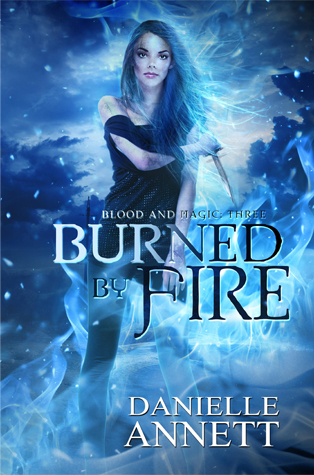
Burned by Fire Book Tour with Author Danielle Annett

Burned by Fire

Blood and Magic #3

Genres: New Adult, Urban Fantasy, Magic, Vampires

Publication date: September 30th 2016


Aria’s pyrokinetic ability has always been hard to control, and being pulled in so many directions, isn’t making it any easier.

Now she has to help Inarus, a foe turned friend who is being targeted by the Human Alliance Corporation-the very organization he once worked for.

But the HAC has more than just Inarus in their sights. Aria finds herself going deep into enemy territory to save a witchling child with never before seen powers, that the HAC has kidnapped to further their own ends.

Aria has been hired to save a child once before, and she failed. That failure has haunted her even to this day and she wonnt let herself fail again. With the HAC closing in, and complications between herself and the Pack rising, Aria has no choice but to succeed. A child’s life is on the line and Aria will risk everything to save that life.


Add to Goodreads

Buy links: Amazon Kobo


There’s nothing like the imagination of a buddinig writer. Author Danielle Annett does a great job conveying her characters in the midst of dynamic relationships and navigating through dire circumstances. I’ve always appreciated the cast that surrounds the main character. To me, it always brings out the best fiction in any story. Aria has good intentions, but struggles to contorol her pyrokinetic abilities. Because of her lack of control, and apparent weakness, she’s become dependent upon her Alpha mate, Declan. This forces her to deal with her mixed feelings about him, her friend Inarus, is caught up right in the middle of it.


My rating


Four golden stars isolated on white background


danielle-headshot


Author Biography

Danielle Annett is a reader, writer, photographer, and blogger. Born in the SF Bay area, she now resides in Spokane, WA, the primary location for her Blood & Magic series. Addicted to coffee at an early age, she spends her restless nights putting pen to paper as she tries to get all of the stories out of her head before the dogs wake up the rest of the house and vye for her attention


Website Facebook


Thank you Bookmark booktours and Danielle!

Benjamin Thomas

@thewritingtrain

http://www.thewritingtrain.com

Brainwalker Blog Tour: by Robyn Mundell & Stephan Lacast!

brainwalker-tour-banner


BRAINWALKER BLOG TOUR


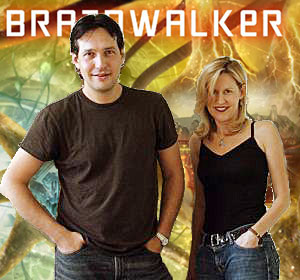
by Robyn Mundell & Stephan Lacast
Genre: YA Scifi/Fantasy
Release Date: October 1st 2016
Dualmind Publishing


brainwalker-book-authors-robyn-mundell-stephan-lacast


********************


Check out a Q&A with the authors here!


********************


brainwalker_cover-large


*************************


  • Paperback: 258 pages
  • Publisher: Dualmind Publishing (September 21, 2016)
  • Language: English
  • ISBN-10: 0997652519
  • ISBN-13: 978-0997652512
  • Product Dimensions: 5.5 x 0.6 x 8.5 inches


*************************


brain-1-544404_960_720


Summary from Goodreads:


Fourteen year-old Bernard

Fourteen year-old Bernard is full of out of the box ideas—ideas that nobody appreciates. Not his ultra-rational father, not his classmates, and definitely not his teacher, who’s fed up waiting for Bernard’s overdue science project. You’d think with a hotshot quantum physicist for a dad, the assignment would be easy as “pi”, but with his relationship with his father on rocky ground, Bernard is under more pressure than a helium atom.

And Bernard’s impulse control flies out the window when he’s stressed. So instead of turning in his project, he moons the class and gets suspended. Now his dad’s got no choice but to bring him to his work. At the Atom Smasher. It’s the chance of a lifetime for Bernard, who knows smashing atoms at the speed of light can—theoretically—make wormholes. How about that for the most mind-bending science project ever? But when he sneaks into the particle accelerator and someone hits the power button, Bernard ends up in the last place he’d ever want to be.

Inside his father’s brain.

And it’s nothing like the spongy grey mass Bernard studied at school. It’s a galaxy, infinite and alive. Like, people live there. A mysterious civilization on the brink of extinction, as unaware of their host as he is of them. But there’s zero time to process this. Bernard’s about to be caught up in an epic war between the two sides of his dad’s brain over their most precious resource:

Mental Energy.

With his father’s life at stake, Bernard must go up against the tyrannical left side of his father’s brain to save the dying, creative right side. But how the heck is he supposed to do that when he’s just a hopelessly right-brained kid himself? (less)


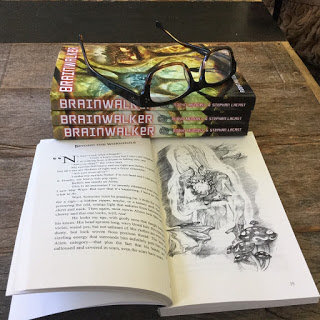
brainwalker-open-book-2-img_2708


ADD TO GOODREADS:  Brainwalker

WEBSITE: Brainwalker.net

BUY LINKS: Amazon Kindle | Amazon Paperback


brainwalker-open-book-1-img_2692


My Rating


Four golden stars isolated on white background


What a fascinating read! I enjoyed the romp through the Brainiverse that Bernard takes us on in order to save his Dad, and even himself. He goes on quite an adventure to both sides on his Father’s brain in efforts to restore peace, communication and unity between the two cerebral hemispheres, Reezon and Intuit.


neuron-1392404_960_720


The authors do a great job of taking complicated brain science and turning it into an entertaining story to read. From neurons, microorganisms and organelles, it has it all. 


neve-cell-730778_960_720


May this book raise your appreciation for neuroscience, physiology, the nervous system, not to mention the balance of intuition and logic within all of us. 


THANK YOU TO YA BOUND BOOK TOURS FOR ORGANIZING THIS EVENT!!


Benjamin Thomas

@thewritingtrain

http://www.thewritingtrain.com

The Reading Voracity of Author Rayne Hall


Welcome Back to the reading series


FORENSIC LENSES


Bringing you the best of the reading experience. 


There are those who read. Then there’s the avid readers. Beyond that, you have the chronic bookworms and voracious readers who set themselves apart from the pack. After reading this article, you’ll discover a person who is altogether in another realm when it comes to reading voracity. 


Contact lenses


Forensic Lenses seeks to discover the rich reading experience accumulated deep in the wells of the human heart. Taking an investigative and exploratory approach, case by case, I hope you’ll join me in this exciting journey.


used books at the bookshop


BOOKS, BOOKS, AND MORE BOOKS!


EVERYBODY PLEASE WELCOME 

RAYNE HALL

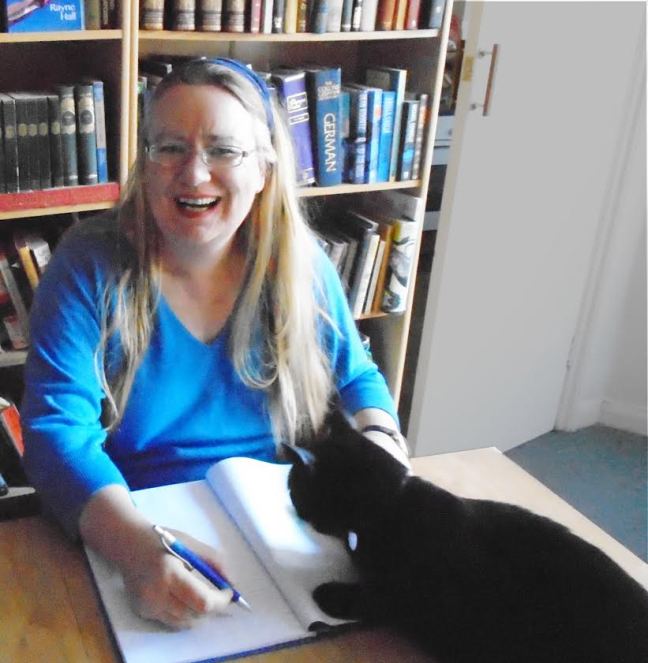
and Sulu the Cat


Rayne Hall


Rayne Hall is a Publishing guide, writing coach, the bestselling author of the Writer’s Craft guides who has three decades of experience in the publishing industry as a publishing manager, editorial assistant, magazine editor, investigative journalist, production editor, literary agent, and publishing consultant. WHEW. But the most impressive feat to me is that…


SHE READS 500 BOOKS A YEAR!!!


Jubiläum


Yes, you read that correctly. 


LET US BEGIN OUR JOURNEY INTO THE MIND OF ONE OF THE MOST VORACIOUS READERS ALIVE


Who influenced you in your early reading habits as a child?

I learnt to read early. At the age of 4, I startled my parents by reading a political newspaper headline out loud. They were aghast, because they had not taught me to read. I had somehow worked out the meaning of letters myself, though I can’t remember how I did it.

From then on, I devoured books, starting with small-sized illustrated children’s books from the ‘Pixi’ series which was popular in Germany at the time. Soon I grew bored and read bigger books, borrowed from my elder sister who encouraged me. There were a lot of religious books in our home, mostly gifts from a great-uncle who was a catholic priest, and they included some really exciting children’s stories. I also remember a book filled with stories about the lives and deaths of martyrs. That was scary stuff – it seemed that the reward for a pious life was to get crucified, burnt alive or eaten by lions!

When I finally went to school to be taught to read, I was of course bored. After reading about kings, robbers, goblins and pirates, the school book with pages of nothing but ‘i I i’ and ‘l l l’ held no interest. Even in year two, when we finally got a textbook with stories, I was frustrated, because I’d read the whole book on the first day which left nothing new for the rest of the year.

This is rather AMAZING. You seemed to devour books even before you were officially taught to read! You’re probably the most voracious reader yet. You’re voracity is off the charts!


Portrait of a very hungry, wild and angry young boy, holding and


*Who were your childhood favorite authors?

You may not have heard of them, because they’re German authors: Hans Baumann, Karl May, Anna Müller-Tannewitz. Erich Kästner. I was also a fan of Enid Blyton and devoured every book available in German translation. Once a week I took the bus into town and borrowed as many library books as the library card allowed, which was never enough. Eventually, I’d read every book in the library’s children’s section.

Now that’s an amazing feat. Reading EVERY book in the library’s children’s section. That’s completely mind-boggling.  You just elicited the WOW factor. 


Wow Surprised Word Astonished Surprising


*Tell us how you came to read around 500 books a year

I read very, very fast.

It’s not just your appetite for books, but also the pace of reading that’s stunning. 


superhero-534120_960_720


READING AT SUPERSONIC VORACITY LEVELS 


*That comes down to about 10 books per week and 41 per month. That’s a lot of books. Are a lot of them forgettable? Which one’s touch you the most and why? 

I easily read a book a day, often more. Sometimes I don’t read for a day or two, but that’s rare.

I remember most of them, although not consciously. I often buy or borrow a book which feels familiar after a few pages and after a couple of chapters it’s clear that I’ve already read it many years ago.

If a book is forgettable, I won’t waste time reading anything by that author again. I wish Amazon had a feature for marking authors I don’t want to read again. On the other hand, if I loved a book, I immediately look for more works by that author.

You must have an awesome memory! Can I borrow some? There must be a longstanding history in the memory banks. I can only imagine.



quote-1342706_960_720


*In your motivation to read so many books, are you searching for something particular?

I seek the pleasure of reading, of experiencing different worlds, meeting new people, learning new things, going on adventures without putting myself in danger. Sometimes I look for excitement, sometimes for something to smile about, sometimes for information, inspiration or advice.

These are all so lovely. It’s amazing how we can experience it all through the written word. Exciting!


*What’s your method? Do you aim for a certain amount books per week or month?

Not at all. That would make reading a duty.

Well said. 


*Do you have an outlet after accumulating so many experiences reading?

I’m not sure I understand your question. I always mean to review all the books I read, but I rarely get round to this, because I’m always busy reading the next book.

 There’s a wealth of experience just waiting to be mined. I would love to pick your brain sometime. 


brain-770044_960_720


AT THE SCENE OF THE CRIME…..


*You’re a very experienced reader who must have a keen eye. What are your 5 biggest pet peeves?

Let me think.

1. Characters who sigh and grunt all the time, and heave deep breaths to steady themselves on every page.

2. Over-use of ‘began to’ and ‘started to’.

3. Gratuitous sex scenes.

4. Head-hopping/point- of-view violations, i.e. when I’m reading the story and experiencing the events from inside the head of one of the characters, and then suddenly I’m in another character’s head. That jolts me out of the story.

5. Writers obviously natural talent but haven’t honed their skill to the full level and instead used self-publishing as a short-cut before they were great. Had they continued learning their craft and revising their works, their books could have been great.

These are all very good. Everyone’s pet peeves are different but some are more common than others. Head hopping or POV hopping is definitely one of the more frequent ones. 


police-850054_960_720


*How has reading affected your career in writing, editing and publishing?

I’ve become very aware of how important the free sample pages are. As a reader, I always download several samples, glance at the beginning, and decide which one I want to buy. Some books are appallingly written, and I won’t buy them. But I’ve also come across many books where the free sample had no real content. The sample was taken up by legal disclaimers, forewords, quotes, lists of the author’s other works, review excerpts – but no taste of the actual book. So I didn’t buy them. This has taught me to arrange the front matter in away that leads the reader straight into the main content.

I spot common mistakes, and see what kind of mistakes writers make most. These range from lay/lie confusions to early flashbacks. Knowing what mistakes writers make is useful when I guide writers in my classes, books and consultations.

I know which beginnings are overused, for example, the main character travelling to a destination, the main character waking up and readying himself for the day, the main character selecting a dress to wear for the special event. This knowledge helps me avoid those beginnings in my fiction, and it enables me to advise other writers.

It’s also the other way round: my writing and editing work influences how I read. I see flaws in books more than a ‘normal’ reader does. If I wasn’t a writer and editor myself, I would probably still perceive those flaws, but I couldn’t put a finger on what exactly is wrong, I would just sense vaguely that ‘I don’t like this’.

You must have a very keen eyes.


biometrics-154660_960_720


*As a person who has read probably thousands of books, what has changed over the years?

Are you asking about books, or about me? I’ll answer both. What’s changed about me is that I’ve become less patient. I used to read at least two chapters before giving up on a book I didn’t like. Now I don’t even read two pages. Two paragraphs is enough to tell me whether a book is worth reading or not. The free sample downloads are great for this. I guess I’ve become blasé in my assessment what books are worth reading.

What’s changed about books over the years? A lot! Thanks to ebooks and the indie publishing revolution, far more books are getting published, and a much wider choice is available for any taste. Books have become available catering to very specific niches. There’s more freedom for readers to choose, and more freedom for writers to write what they want. All this is wonderful.

The downside of this is that a lot of sub-standard stuff gets published. New authors don’t realise that their book isn’t good enough yet, and some people hire ghostwriters for ridiculously low rates to churn out book after book. But I don’t think this is a big problem, because readers can choose what they want to read, thanks to the ‘look inside’ and ‘download sample’ functions.

There’s a lot more interactions between readers and authors. In part that’s because in many cases, middlemen have been removed from the publishing process, and in part its thanks to easy online communications. In the past, if I wanted to write to an author, I had to write a snail mail letter c/o the publisher, who would forward it to the agent, who would forward it to the author, and if I was lucky, the author would reply. Most of the time, I didn’t get a reply, because the author was long dead (and I didn’t realise that), because the publisher hadn’t bothered to forward my letter (withholding fan mail was common practice) or because the author couldn’t be bothered – and I didn’t know which was the case. Nowadays, I simply search the author online, send them a message via their website, leave a comment on their blog or write a quick tweet. And most of the time, I get a reply. That’s wonderful. Often there’s a dialogue between authors and readers that wasn’t possible in the past.

Book buying has become easier. I remember how long I had to wait to get a book I wanted. I had to go to a book shop, order the book, wait for days or weeks for it to arrive… and then it was often a disappointment.

Now I click ‘download sample’, dip into those pages, and if I like it, I click ‘buy now’ and have the book within seconds.

Regarding book content, I’ve noticed that there’s a lot more sex in fiction. Erotic fiction has become easily available in a wide range of subcategories catering to every taste. It think the emergence of ebooks enabled that, because readers can buy the book they want without exposing their interest, and they can read it on their Kindles without anyone seeing. I remember as a twenty-year- old I wanted to read some erotic fiction. I waited until I went on a journey by railway, then at the destination station, where nobody knew me, I scanned the shelf for such titles and had to make a rapid choice without test-reading. Hot and blushing with embarrassment, I took my selection to the cashier. Back at home, I wrapped the books to hide the covers, less any visitors would see the titles. When I finally got to reading them, they were often disgusting stuff I didn’t like, because of the narrow available range and the hurried decisions. These days, I could browse at leisure, pick a book I really wanted to read, and read it discreetly on my Kindle. I’m no longer interested in reading erotica – I choose not to – but I think it’s good that other adults have the freedom to read erotica if they choose. And they don’t even have go through the mortifying process of taking the books to a cashier.

Sex has also become more common in other genres – so common that sometimes it’s difficult to find a book without sex in it. Personally, I prefer erotic tension to erotic actions, and when characters have sex, I prefer it if they keep their bedroom doors closed. I get annoyed when sex scenes are forced on me. I remember wanting to read some good urban fantasy novel and every one of them had gratuitous sex. Of course, the latest development is the rise of the ‘chaste’ book. In almost any genre, it’s possible to search for ‘chaste’ or ‘clean read’ books. That’s part of the diversity and increased choice, and is good.

In crime fiction – cosy mysteries and thrillers – specific real locations have come to play a much bigger role than they used to. Whole series are set in Edinburgh or in Colorado or wherever, often the place where the author lives. This local flavour has become part of the pleasure of reading crime fiction.

In non-fiction, I’ve observed that advice books are increasingly based on the author’s experiences, and include first-person sections. This makes the books more authentic and personal.

This is great info indeed, thanks!


change-671376_960_720


*As an experienced reader, in your opinion, what makes a good book?

My answer would be different depending on what kind of book. A good book is a book that gives me what I want – and what I want differs from day to day and genre to genre.


I love this answer. It’s so succinct and to the point. 

 
THANK YOU RAYNE
 

************


A good book is a book that gives me what I want – and what I want differs from day to day and genre to genre.- Rayne Hall


************


Connect with Rayne Hall! 

@RayneHallraynehall.comcontact

Writer’s Craft Series

Amazon Author Page

Suscribe to mailing list!


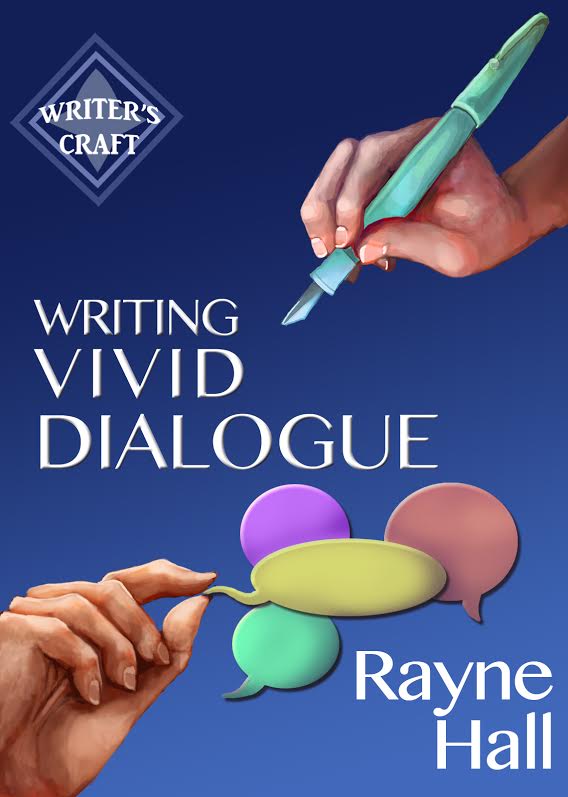
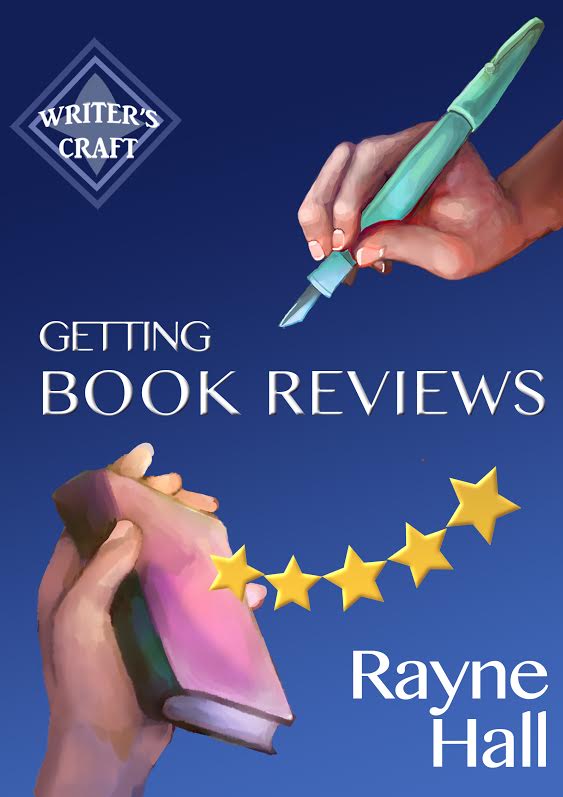
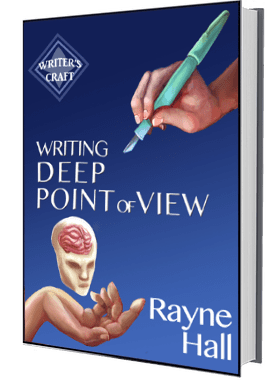
HERE’S A SAMPLE OF SOME OF HER BOOKS


unnamed (12)


unnamed (23)


unnamed


unnamed (21)


unnamed (22)


unnamed (20)


unnamed (19)


unnamed (18)


unnamed (17)


unnamed (16)


unnamed (15)


unnamed (9)


unnamed (1)


___________________________________________________________


Reading is a basic tool in the living of a good life. -Mortimer Adler


************


Reading a good book is living life dangerously- Benjamin Thomas


************


_____________________________________________________________


COME AND JOIN US AGAIN ON THE TRAIN!


Benjamin Thomas

@thewritingtrain

http://www.thewritingtrain.com


Forensic Lenses: With Cozy Mystery Author Elizabeth S. Craig


“Read a lot. Write a lot. Delete a lot.”

~ Hannah Richell


Hello everyone and welcome back to another episode on the Writing Train. Well today is very special because it’s the day we’re kicking off our new series! Check it out.


Contact lenses


What is forensic lenses? First, it’s another reason for me to interview people. Second, it’s an interview with a particular view in mind (No pun intended) hence the name forensic lenses. But why forensic lenses? The word forensic means: pertaining to, connected with, or used in courts of law or public discussion and debate.  So far I’ve been interviewing so many wonderful writers both published and unpublished. Writers from all backgrounds, levels and walks of life. Now, I’d like to interview  them as…wait for it…..READERS. Yes you read that correctly. Readers.


A lens is defined in part, as a substance that changes the convergence of light rays, as for magnification, or in correcting defects of vision. In other words, they help you see things you wouldn’t normally see. They make things bigger, or magnified, that wouldn’t normally stick out. But the most simplistic definition is that they help you see. Everyone’s eyes are different, and everyone’s lenses are different in how they affect eyesight. We were all born with two embedded scanners in our heads, but we still see things in our own particular way. So when you’re reading the next bestseller what do you see? What do I see?  What resonates you to tears may bore me to death, and vice versa.


Personally I LOVE eyes for some reason. Research estimates that eighty to eighty five percent of our perception, learning, cognition and activities are mediated through vision (Vision Is Our Dominant Sense). Before there were writing conferences, retreats, blogs, and how-to-do-everything, there were just books. Good old fashioned tangible books. How did the great writers before our time learn the craft so well? BREAKING NEWS: They read a lot. Sounds simple eh?


12603896661797746970jantonalcor_ReaderBoy.svg.med


Forensics naturally solves crimes by scientifically providing evidence to be used in a court of law. To prove one’s guilt, or perhaps their innocence. In other words help solve crimes and catch criminals.  As a reader do you have any pet peeves? Have you ever read something that made you throw the book across the room? Or made you close it, never wanting to open it again? Most of the time it’s not that dramatic, but it could be something small and equally frustrating. These are what I consider crimes so to speak. Things that violate your emotional resonance. That’s on the negative side. The positives are things you enjoy, observe, or witness that prove to be worth your time. It’s the evidence of a great read, and possibly a re-read!


Reading is dreaming with your eyes open

~YoYo


open your eyes
Keep your eyes open…


Teen girl reading book outdoors
Dream reading


FORENSIC LENSES


Let’s get started with the first guest of the series!

Please welcome

Elizabeth S. Craig 


ElizabethCraig1


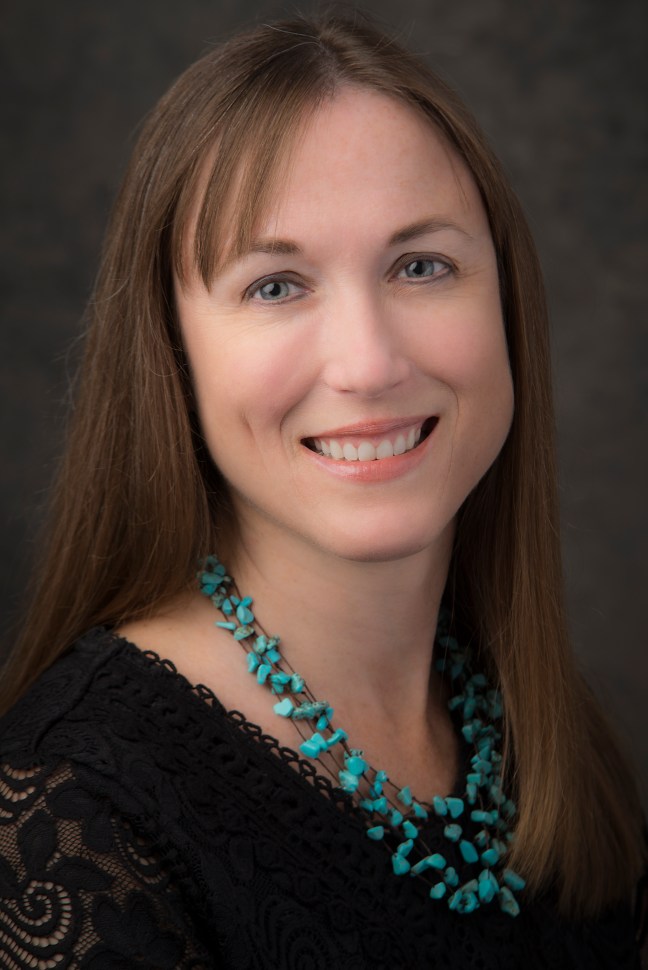
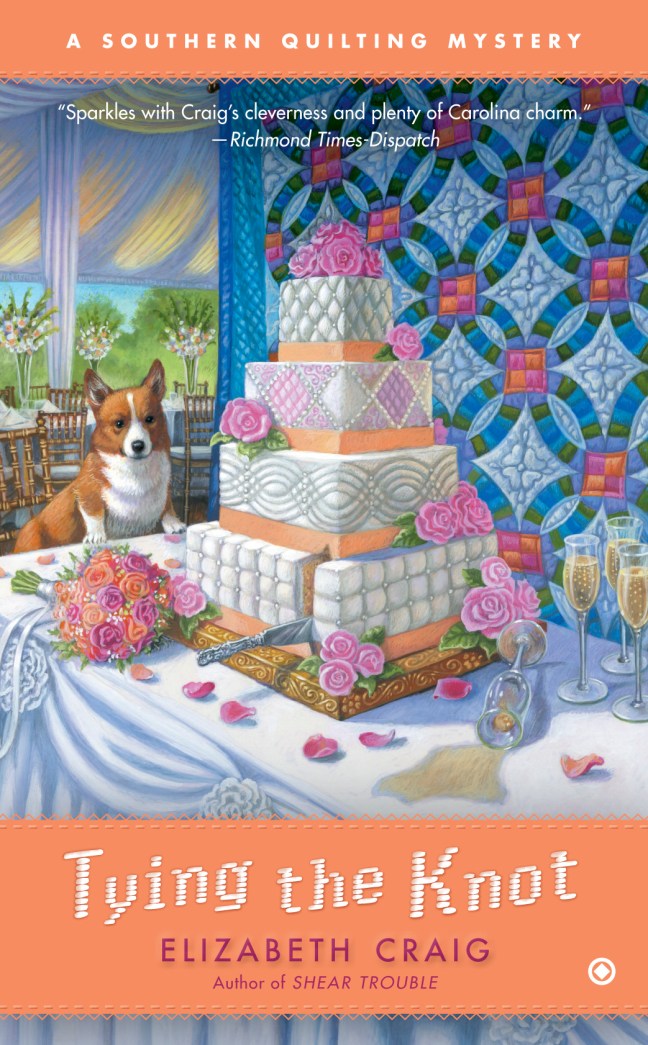
Elizabeth is the bestselling cozy mystery author of the Southern Quilting mysteries and Memphis Barbeque mysteries. She also has one of Writer’s Digest’s 101 best websites for writers. Feel free to visit her over at: elizabethspanncraig.com. Receive a free ebook, updates, recipes by signing up for her newsletter click here.


MurderonOpeningNight_ebook


TyingTheKnot_FC


tn_fingerlickindead (2)


To see more books by Elizabeth click  here.


*How did you begin reading habits as a child? Did someone in your family read to you?

My father was an English teacher and my grandmother was a retired English teacher. Reading was as much a part of my day as eating and sleeping.  Everyone in my family read to me and continued reading to me, even when I was able to read for myself.  Sometimes the settings of the books we read together, the Oz complete series, for example, were almost more real to me than my own home.

YES I love this. It always begins with reading. That’s great you had English teachers in your family AND experience collective reading habits from family members. Amazing.


*Who was your childhood favorite? Scooby-Doo, Nancy Drew, Trixie Belden, Hardy Boys? Why?

Nancy Drew was an early-elementary school favorite because she seemed so calm, collected, mature and brave as she unraveled genuinely creepy mysteries.  By late elementary, I’d shifted my loyalties to Trixie a bit.  That’s probably because Trixie was closer to my age and actually misbehaved in the stories…she seemed a little more realistic.  The interesting thing about my childhood favorites; Nancy, Trixie, and Scooby; is that they all embody the ‘friends as sidekicks’ approach to sleuthing.  That had a tremendous influence on me as a writer…no solo sleuths or lone wolf detectives for me.

Yeah, I think the lone wolf characters are kind of boring honestly. Unless something really sticks out.


“Reading… a vacation for the mind….” ~Dave Barry


*In your bio, you state “I started in on the Agatha Christies. Miss Marple and Hercule Poirot made me a lifelong mystery fan.” What was it at this stage of reading that made you a LIFELONG mystery fan? Something had a major impact here.  


Agatha Christie and the other masters of the genre turn mystery reading into an interactive experience. Their mysteries grab the reader and drag him in. A good mystery, such as the ones Christie wrote, make the reader feel as if he or she is in the sleuth’s skin, solving the mystery as they go.  It’s this armchair detection, the ability to feel the thrill of edging closer to a dangerous killer, all from the comfort and safety of one’s home. To me, there’s nothing else like it—it’s the ultimate escape.


Wow! I had an escape just by reading your statement! Excellent.


*Currently, who are your top 5 mystery writers and why? 

For cozies, my top pick is M.C. Beaton.  Her ability to write quirky characters and an engrossing setting is second to none. For police procedurals I like Elizabeth George, Deborah Crombie, and Louise Penney—their sympathetic portrayals of their detectives and how they balance their personal lives and professional lives makes their books both realistic and a joy to read.  For a darker story, I go to Norwegian writer Jo Nesbø…the grittiness of his stories sometimes just hits the spot, as a reader.


Elizabeth George is absolutely amazing. Can’t wait to read more of her books. 


*Since you’re an experienced reader in the mystery genre, is it easy to figure out whodunit? Or does it make it harder to enjoy a good mystery book? 

Unfortunately, yes, I usually figure it out.  I absolutely love it when I’m wrong. I love twists, I love being surprised.  But if the writer has done a good job wrapping up all the loose ends of a mystery and circled around to the beginning of the book from the conclusion, I’m still satisfied as a reader, even when I’ve pegged the killer.


Man, just was thinking how hard it must be to fool an experienced mystery reader.


*As a reader, what are your biggest pet peeves? (Writer Crimes)

I’m really not keen on plot devices and seeing writers manipulate plot and make characters behave out of character just out of convenience. This kind of Deus ex machina, especially at the end of a book, feels contrived and can contribute to a flat ending.

This is a very interesting viewpoint. We must be the ever skillful writer to avoid things like these. 


*After all these years of reading, what makes a good mystery? Or a great one?

I think greatness ultimately is attained through the sleuth’s personality. We don’t have to like the sleuth, but we have to relate to or understand him or her. A good mystery will have an interesting or appealing sleuth and a cast of supporting recurring characters that either act as a sleuth’s foil or play up his or her strengths.

I love this. It comes down to character and more specifically his personality. Understanding him or her makes all the difference. Sweet!


Thanks so much for joining us Elizabeth! Please come again.


elizabethspanncraig.com
Newsletter Sign-up


A book is a gift you can open again and again.

-Garrison Keillor


**********

Keep reading

It’s one of the most marvelous adventures

that anyone can have

-Lloyd alexander


**********


READING IS FUEL 

FOR THE IMAGINATION

~ Benjamin Thomas


Join the Locomotion

Benjamin Thomas

@thewritingtrain
http://www.thewritingtrain.com