Talking Mysteries with Author Margot Kinberg


Margot Kinberg


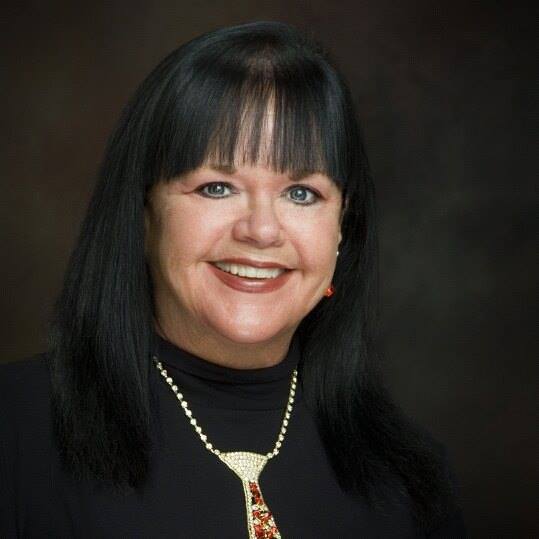
Margot Kinberg is a mystery author and Associate Professor. Born and raised in Pennsylvania, Kinberg graduated from Indiana University of Pennsylvania, then moved to Philadelphia, which Kinberg still considers home.


*Who influenced you to read books?

 
My sister had a real influence on my love of books. She read to me when I was very young, and then taught me how to read when I was in preschool. And there were a lot of books in my home, too, as I was growing up. I was also fortunate to have helpful, friendly librarians in the schools I attended (our public library, too). All of them encouraged me to read, and talked to me about books. As you can see, I was truly lucky to have a lot of support for reading.


So Many Books, So Little Time.


*What are the benefits of supporting literacy?

 
Research supports a number of benefits for literacy. First, there are cognitive benefits. Reading and writing promote critical thinking skills, perseverance skills, creative skills, and communication skills. Literacy also gives children access to information that they wouldn’t otherwise have. There are also major advantages in terms of academic prospects. And there’s the worldwide economic divide between people who are literate and those who aren’t. Being able to read and write makes it far more likely that a child will find meaningful work and more economic security.


The fact is, though, that millions of people, even in wealthy countries, don’t have access to literacy. Poverty, politics, war, remote living, and other realities mean that literacy is out of reach for a lot of people. For this reason, I think it’s important to carefully choose and then support groups that provide books, literacy education, and other literacy resources for those who don’t have them.


Literacy - 3d rendered metallic typeset


*What impresses you the most about Agatha Christie?

 
Ah, you’ve found out I’m a Christie fan! Well, that’s no big surprise… Many things impress me about Christie’s writing. For one thing, she was prolific; she wrote for fifty years. And she tried several different formats, too: novels, short stories, plays, and radio scripts, to name a few. I respect that willingness to venture into different territory. I also am impressed with her willingness to bend, or even break, the ‘rules’ of writing in service of a good story. The Murder of Roger Ackroyd is just one example, but it’s perhaps the best known one.

For all that, though, Christie worked very hard at writing, and understood the need to keep at it. If she broke some rules, it was only after she knew what they were, and when it’s important to follow them. To me, it’s a bit like music. You can’t understand and use dissonance in a musical piece if you aren’t thoroughly familiar with how melody and harmony work.


“Work harder than you think you did yesterday.”


*Who was the first mystery novelist you were addicted and why?

 
The first mystery novelist I read was Arthur Conan Doyle. I started with his stories when I was a child, and never looked back. I think it was the intellectual puzzles that really appealed to me. I also liked learning about what life was like in Victorian London. At the same time, like many other children, I read Nancy Drew and the Hardy Boys. I loved trying to find the solution before the ‘star’ of the book did.


Arthur Conan Doyle


*What do you teach as an associate professor?

 
I’ve taught a number of different courses. Mostly, though, I teach in my university’s education program. Most of my students are working towards their master’s degrees in education. The classes I teach focus mostly on culture, language, and their impact on teaching and learning. I would love to teach writing and literature classes, but that hasn’t happened yet. I hope it will some time.


*You began writing fiction in 2007. How did you reach this point?

 
I’ve actually been writing since I was about eleven. That’s when I wrote my first short story. Over the years, I did mostly academic/non-fiction writing, especially when I was working on my doctoral degree. But I still wrote the occasional flash fiction piece, and a few short stories. Then, I decided to start writing novels, mostly at the encouragement of my family. That part of my writing career started with a dinner-table conversation. I told a work-related story, and my husband and daughter said I ought to write a mystery novel about it. And so I did. And I couldn’t be happier that they encouraged me; I love writing.


Writer


*What do you appreciate about crime fiction?

 
The diversity of the genre. Today’s crime fiction takes place all over the world, and features so many different sorts of plots and protagonists that it’s impossible to get bored. It’s diverse in other ways, too. Crime fiction can be fun and light, or the bleakest noir. It can be comic, tragic, and everything in between. There are long novels, short stories, and more. I could go on, but I think I’ve made my point. It really is a genre that offers something for just about every taste. And there are mystery stories written at all reading levels, too, from beginning readers to the most accomplished adult readers. What more could you want?



fiction, 3D rendering, blue street sign


*What makes a great mystery?

 
Everyone’s got a different response to that question, I think. People have different tastes, and look for different things in their books. But for me, a great mystery starts with well-defined characters. They don’t have to be sympathetic, but they do have to catch the reader’s interest. If you don’t care what happens to the characters, then why bother reading?

 
Great mysteries also need to be believable. It’s hard to be drawn into a story if you can’t imagine that it could really happen. Of course, fiction is fiction, so there’s always a bit of suspension of disbelief. But in real life, murders aren’t generally solved in just a few days, as they are on plenty of TV dramas. In real life, there aren’t that many credible motives for taking another person’s life. And in real life, police, attorneys, and other
professionals in the justice system do things in certain ways. The best crime fiction reflects that reality.


*What are your top pet peeves as a reader?

 
One thing that really bothers me as a reader is lack of careful editing. Skillful editing can tighten up a plot, so that the book moves along at a solid pace. It can also pinpoint inaccuracies, inconsistencies, and other problems, so that they can be corrected. And, of course, thorough editing calls attention to spelling and grammar issues, so that they can be fixed, too. When a book hasn’t been carefully edited, it leaves the impression
that the author didn’t care enough to make sure the book was well written. That may very well not be true, but that’s how it seems.

 
In a similar way, I dislike too many stretches of credibility. Everyone’s different about this, but I prefer to keep my disbelief close by. So, I get pulled out of a story rather quickly if something too unlikely happens. That includes too many coincidences, characters doing things they wouldn’t be able/allowed to do, and glaring inaccuracies.

 
I have to admit, too, that I’m not much of a one for extreme, brutal violence or other extreme explicitness in my crime fiction. Gratuitousness doesn’t serve a story. And adding something in just for ‘shock value’ takes away from the plot, in my opinion.


*What’s the hardest part about writing?

 
For me, the hardest part about writing is the perseverance it requires. Writing first drafts, revising, editing, and so on all take time. They don’t happen overnight, and it takes persistence to do those things. And then there’s the process of querying and sending manuscripts out to agents and publishers. Any writer can tell you that rejection happens a lot more often than acceptance, and it takes perseverance to keep going even after the fifth, or sixth, or tenth ‘no.’ Writing also takes a physical toll, and there are plenty of times when it’s tempting not to sit down in that chair and get to it. It takes determination to write when you’re least in the mood to do it.


Distracted businessman distracted


*Your favorite books of 2017?

 
That’s a difficult question to answer, because the year’s only a little past half over. There are lots more good books to be released. But here are a few 2017 releases that I’m especially excited about:

 
The Story of Classic Crime in 100 Books – Martin Edwards
The Dry – Jane Harper
Greenlight – Kalpana Swaminathan
Magpie Murders – Anthony Horowitz

 
There are also several other new entries in series I like – far too many to list here. I think 2017 is going to be a fine year for crime fiction.


recommended vintage orange seal isolated on white


*What are you currently working on?

 
Thanks for asking. I’m currently working on a few things. I’m finishing the revisions for my next Joel Williams novel, which will hopefully come out in the early spring of 2018. I’m also working on two standalones. One of them follows the story of one of the characters in my second Williams novel, B-Very Flat. The other is an expansion of a very short story I wrote a couple of years ago. We’ll see how these projects go, but I’m hoping they’ll turn out well.


Thanks again for hosting me, Benjamin!


CONNECT WITH MARGOT KINBERG!

Amazon | Goodreads | Website


The Story of Writer Lorelei Logsdon


Lorelei Logsdon


Lorelei Logsdon worked as a communication specialist and technical writer for 20 years before turning her hand to fiction. She has published ten books in various genres under several pseudonyms, and is working on her next psychological thriller called THE OCEAN BETWEEN.


WELCOME LORELEI!!!


bow


Name some inspirations that led you to become a writer. 

I’ve been writing stories since I was very little, and my grandmother was always encouraging me. I’d like to think she would be very proud to know I’ve published a few books.

That’s great your grandmother encouraged you to keep going. Inspiration goes a long way. 


Road Leading Into A Sunset


Describe your experience from technical writing to fiction writing.

I’ve been a communications specialist for over 20 years, and I’ve been a freelance editor for the past four years. I’ve worked with hundreds of authors and have edited over 400 books in that time. The trick to all types of writing is to know your audience and write to their needs.

Cool! That’s a lot of writing experience. Would love to pick your brain sometime. Not literally, of course. 


thoughts


What do you enjoy about writing psychological thrillers?

As I’ve gotten older, I’ve developed an unhealthy interest in horror and dark fiction. I love the mystery, adding a twist here and there, and trying to fool the reader. I like taking readers for a ride.

I like psychological thrillers too. I would imagine these are a bit harder to write though.


What’s your goal now as a writer?

For now, my goal is simply to enjoy the process. The act of writing is enjoyable, and I want to keep it that way. Writing is a pastime, a hobby, a way to unwind. I never want it to become a chore.

YES. I love this. 


“For now, my goal is simply to enjoy the process. The act of writing is enjoyable, and I want to keep it that way.”–Lorelei Logsdon


In Comorbid, who is Jame’s Davis?

James Davis is a child trapped in a grownup’s body, his development truncated at a moment in his childhood when overwhelming trauma took complete control over him. He has found a way to function, or at least he thinks he has, but in reality he’s at the mercy of his troubled, damaged mind.

Wow. This definitely sounds intriguing. 


What can you tell us about those whom he cares about?

Consciously, James cares about his mother and her memory. She was the most important person in his life. Subconsciously, James cares about children who are suffering, having a deep desire to help them like he wishes someone would have helped him. By helping others, he’s helping his own inner child. At its heart, though, COMORBID is about James’s mother, even though her POV is given only sparingly in the book.

I love seeing the inner motivation of characters and what drives them to do things. It makes the story stick in my mind for some reason. 


Thinking


What was your response to all the positive reviews on COMORBID?

I love reviews, regardless if they’re positive or negative. Of course it’s great to see a positive review, but just knowing someone read the book and was affected strongly enough to review it makes me happy.

Great attitude. I hope it rubs off on me. 


Name three things that have hindered you in completing your work. 

There’s never enough time in the day. Most of COMORBID was written over the course of six months between 2:00 a.m. and 6:00 a.m. It was an extremely tiring process, though worth it! The only other challenge in writing it was letting other opinions affect your work. If you ask opinions of 100 people, you’ll likely get 100 different opinions. While it’s nice to get feedback, don’t let other people’s ideas interfere too much with your vision.

Ouch. That sounds like a grueling schedule to write anything. It’s incredible you were even able to pull it off!


“Life is either a daring adventure or nothing at all.”


What keeps you motivated?

At the time, the story wouldn’t leave me alone. It wasn’t a choice to write it. I had to write it in order to get it out of my head and finally be able to find some peace again. Story ideas would wake me up at night and if I didn’t get up and go write them down, I couldn’t get back to sleep. Once a story gets stuck in your head, it’s impossible to focus on much else.

Many of us can relate to this. Mine has been bouncing around the head for a while now. 


Share your story


What’s your antagonist? Or what prevents you to achieving your dream?

Time is the #1 enemy.

Very true. Isn’t there a pause button somewhere?


Pause button


Why do writers quit?

I think writers quit for lots of varied reasons. Some may have an unrealistic definition of success, and when they inevitably don’t reach it, they throw in the towel. Some writers are perfectionists, always needing the perfect office setup, the perfect title, the perfect cover, and the perfect sentence. That’s a lot of pressure! If you put too much pressure on yourself to do everything perfectly, you can lose the joy in the process. For the most part, I think we often make things much more difficult than they really are. First and foremost, write for yourself.

This is a good viewpoint to have. Much appreciated. 


~First and foremost, write for yourself~


What would you say to a writer who has given up?

There’s nothing wrong with giving up. No one should feel pressured into something they no longer love or no longer are interested in. If you’ve given it everything you have and you’re ready to move on, then do that. Just know that you can always come back. It may be 10 years, 25 years, or 50 years, but you can always come back.

There’s a sense of hope here in your statement. Love it. 


Can you give us a sneak peek of The Ocean Between?

The Ocean Between is currently just an idea floating in my brain. It’s a story I published several years ago in another genre, forced to fit a mold it is uncomfortable in. The true story will be The Ocean Between, and it will be unrecognizable to the first published for those characters. You’ve heard it said that sometimes characters refuse to do the things writers want them to do, but in this case they did them but weren’t happy about it. I owe it to them to tell their true story.

Well, I hope the idea goes from floating to bouncing and a full blown story!


Do you have a tentative release date?

As I write for the joy of it rather than to someone’s arbitrary deadlines, I have no date in mind for release. When the story is ready to come out, I will let it. Until then, I won’t bother to try to force it.

We’ll be waiting…


240_F_69873591_zy6MobTUjk8puynzSCsclplGfaC7RmOH

Benjaminin Thomas

@thewritingtrain

http://www.mysterythrillerweek.com

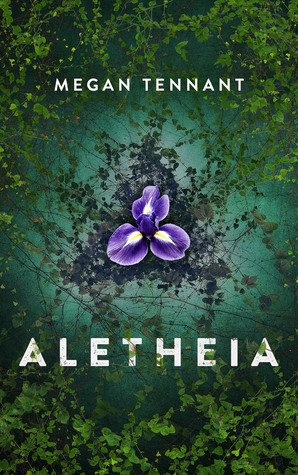
Author Interview with Megan Tennant and upcoming Book Release


The Official Aletheia Book Trailer!


https://youtu.be/XOx0y9SyCXk


AVAILABLE SEPT. 7, 2017


Aletheia


Book Blurb


The first book in The Seventh River series, Aletheia, takes the young adult dystopian genre to new, and often dark, places. While coming highly recommended to fans of the Hunger Games, Maze Runner, and Divergent, readers will find a gut-wrenching, original plot that dares to stand apart from what is expected of the genre. Brilliant and brutal, Aletheia is praised for tearing deep emotions from even the toughest reader. Whether you enjoy post-apocalyptic, dystopian, or general science fiction, reviewers agree, Aletheia is a must read.

Nearly two decades after the fall, the transcendent city of Iris is the only place rumored to have a cure to the disease that decimated the world. Beyond Iris, are the remnants of the old world, crawling with the Depraved. Infected with Lethe, they no longer remember the people or dreams they were once willing to fight for, and are left instead with familiar voices that whisper dark and unfamiliar words within their minds. Instinct is all that keeps the diseased struggling to exist another day.

Deep underground, below Iris, exists a compound, prison to the Nameless who traded their freedom for the cure to Lethe. It is here that 736 fights to protect those she loves. Not against the Depraved that she’s taught to fear, but against the society that saved her from that fate. She was willing to trade away her rights to regain the ability to form memories, but she won’t let the cult that cured her treat the lives of the Nameless like a resource to be used and discarded. At least, not without a fight.

How much is 736 willing to sacrifice for revenge against her captors? For those she cares about? For freedom? Everything has a cost, what would you be willing to pay?


Amazon | Goodreads 


AUTHOR INTERVIEW


interview-1018332_960_720


*Where are you originally from?

I’m originally from Angels Camp, California. A cute little town near Big Trees State Park.


*What’s it like living in Silicon Valley?

Expensive! But other than that, fairly nice. Silicon Valley is very diverse and full of science and art. It’s my kind of place, though cost of living could definitely improve.


*Is anyone else in your family a writer?

My mother has written some published children’s poems and stories, and my father is an aspiring science fiction writer. My brother is a great graphic artist who also dabbles in shadow boxes, but never caught the writing bug.


*Did you really spend half your life exploring wild jungles in Costa Rica? Have pictures?

I did, and it was incredible. From the age of roughly 8 to near 16 I lived on the Nicoya Peninsula, surrounded by jungles, beaches, and waterfalls. It was an amazing experience and has fueled many of the more fundamental aspects of my writing. And I do have pictures, which is a good thing, because I might not believe all of my stories if I didn’t have proof.

Costa Rica 3


Costa Rica 1


Cost Rica 2


*Why did you choose to be an indie author?

I chose to be an indie author from the very start, before even querying a publisher. For me, the choice was easy and ultimately came down to control. I knew what I wanted my novels to be, and I didn’t want them being twisted to fit into the market norms. A lot of beautiful things are lost from art when parts are carved away so it can fit in a more ‘market friendly’ box. I don’t recommend this route for everyone. But for those who can afford it, and want a high degree of control over their work, it’s definitely something to look into. My partner and I actually started a company (Cloud Kitten Publishing) to publish Aletheia, and we hope to one day soon offer services that mesh the experience and support of traditional publishing with the creative freedom of self-publishing.


*How do you personally define dystopian, or Post-apocalyptic fiction?

I believe there are many different ways to define a genre, but personally, what I take most out of dystopian and post-apocalyptic fiction is the way humans handle disaster and immense societal shifts. In both of these genres, we commonly see a society that was once our own but has been forced through a rapid set of changes whether due to disaster, war, disease, power shifts, or a combination. We see societies torn apart, and sometimes rebuilt. In these settings, characters are pushed to their limits and forced into gray areas that test them on levels we don’t often experience ourselves.


*Why did you decide to write this genre?

I decided to write my first series in the dystopian genre in part because the idea I had for Aletheia was dystopian by nature, but also, because I’m passionate about the genre. I love to see stories where humans are pushed out of their comfort zone and forced to face and overcome their fears. I love stories where characters are very real and have a gray range to their personality. The dystopian genre contains many of these stories. I also believe that it’s very important to write what you love. If a writer is truly passionate about a story, it will show and make for a better read. Also, writing a novel takes a very long time, so I reserve that level of dedication for genres I’m passionate about. In future projects, I’ll be exploring alien science fiction and fantasy, since those are genres I’m passionate about. But I don’t expect to stray much beyond the three. And you will never find a contemporary novel written by me.

*What is Aletheia about?

In Aletheia, the world has been ravaged by a disease that causes a range of psychotic behavior, but most notably, interrupts the reconsolidation of memories. The latter means that when infected people remember things, the memories aren’t restored, and are thus partially or fully lost. The nature of this disease leads people to try to avoid thinking about the things most important to them, but there’s a catch.

Don’t think about the white bear.

You thought of the white bear, didn’t you? The memories people most try to avoid recalling are the first they lose, leading to a rapid breakdown of their mental well being.This is only further fueled by the voices in their heads, the deep set paranoia, and the very real fact that society has crumbled around them and they can’t trust anyone.

Aletheia starts roughly two decades after the fall of society. The protagonist was infected with the disease as a child, and in exchange for the cure, she traded her freedom to the Prophet, who is the main antagonist. She, along with thousands of other Nameless, are now imprisoned underground, working for the Prophet and the elite city of Iris, paying a debt that can never be repaid. 736 lives like this for a decade, until the game changes and the risks of staying in the compound, outweigh the risks of escape. But plans are underway, and 736 soon meets someone on the outside who promises a chance of freedom, not just for her, but for all of the Nameless. But freedom will come with a great deal of costs, not just for 736, but for those she loves.

Aletheia is all about a very gray and realistic portrayal of a post-apocalyptic world, the costs of survival, and the choices we make when trapped. In Aletheia, you’ll find a diverse cast in terms of ethnicity, sexuality, disabilities, motives, and more. Characters clash and plans Interweave, leaving a thread of difficult decisions that cost lives. In a world where no one can really be trusted, but alliances are the only way to win, Aletheia delves into the nature of sacrifice and victory.


*Is there a central character or protagonist?

Aletheia is written in first person present tense from the point of view of 736. Our protagonist, 736, is a strong female lead with a murky past. Having contracted the disease as a child, she has no real memory of her time before being infected. Living in the underground compound, and doing the Prophet’s bidding has left 736 stronger in some ways, but weaker in others. 736 struggles with PTSD, guilt, and anger, but she also has a lot of love for those she trusts.


*Can you tell us a little about the setting of Aletheia?

Aletheia is set in the crumbling remnants of a city built around science, art, and nature. The compound where 736 spends much of her time is deep underground and made of cold concrete. High above, the land is split between the magnificent, wall encased, city of Iris, and the nature strewn ruins beyond. Aletheia is set in the future, so you will see some slight technological advancements, but after two decades without society, most of the environment is in a state of partial ruin.


*When is the next book of the series due?

You can expect to see Aletheia’s sequel (The Seventh River #2) out sometime in 2018.

CONNECT WITH MEGAN TENNANT!


Megan Tennant Author

Main siteAletheia site

Amazon | Goodreads


Youtube


Thanks Megan!!


Benjamin Thomas

@thewritingtrain

http://www.mysterythrillerweek.com

http://www.audiospy.wordpress.com

Books & Blurbs featuring David Baldacci

IT’S TIME FOR BOOKS AND BLURBS


Girl  reading a book


Featuring books by Author Juggernaut, David Baldacci


Light


The Fix David Baldacci


Goodreads


I like what D. Baldacci has done with the Amos Dekker series, although this wasn’t my favorite one. The best part was the last 1/3 of the book. The first 2/3’s IS well written, intriguing, with a killer hook, but still felt lacking. Having said all of that—David Baldacci still writes the best plots! They’re absolutely off the charts, cerebral, and entertaining. Also enjoyed the introduction of a new character, DIS agent Harper Brown. She played a vital role throughout the book and I can sense she’ll be back in the future.


Other points…


  • I wish Melvin Mars played a bigger role in the book.
  • Enjoyed Melvin’s developing relationship (no spoilers!)
  • Can’t say that I really like Alex Jamison that much. I know she’s a well written character, but I’m not impressed with her role suppose.
  • I’m guessing Jamison is there to bring out the human side of Amos Dekker and provide some level of conflict. If that’s the case, then it worked.
  • I would’ve loved to see Baldacci go deeper into Dekker’s personal worldview. Maybe see more of his motivations. It came out more in the last act of the book. His sense of humor, boldness, quirkiness was revealed more.
  • The hook in the beginning was AWESOME. The solving of the crime took a TON of deduction, investigation, and deliberation from multiple sources. I think this was somewhat overdone, although the plot was excellent.
  • There was one subplot that could’ve been eliminated in my opinion. It didn’t bear any weight on the story, conflict or overall story goal.
  • The Climax wasn’t the greatest I’ve seen from Baldacci, but there was a nice twist at the end.
  • Finally, I felt the first 2/3’s lacked somewhere, but I can’t say what. Take away the subplot, beef up the role with Melvin Mars, polish the climax, and I would’ve given this 5 stars.


The Innocent David Baldacci


Goodreads


David Baldacci is a master storyteller on steroids.

This was my first Will Robbie book and loved it! Not many people can make an assassin so intriguing, appealing, and compelling. Loved the wit, charm, and sarcastic humor of Robie. His personality fully springs out of the dynamics of his relationship with FBI agent Vance, and fourteen old runaway.

Baldacci writes the most complex plots that I’ve read of any author, yet his characters are just as deep. The use of foreshadowing, characters, tension, stakes, causes you to be lost in the story.


Other points…


  • Will Robie’s personality is a winner in this one, especially for a lone-ranger assassin. Actually, you see him saving lives more than taking them.
  • He’s a great investigator.
  • His personality is more entertaining than similar types like, Brad Thor’s Scot Harvath etc. Scot Harvath is technically ex-marine, CIA, black ops, but still similar.
  • This is one of my favorite Baldacci books so far!
  • Looking forward to the next Will Robie books!


  1.  The Hit
  2. Bullseye (short story)
  3. The Target
  4. The Guilty
  5. End Game coming November 14th, 2017!


End Game David Baldacci


Thanks David!!


David Baldacci Headshot


Benjamin Thomas

@thewritingtrain

http://www.mysterythrillerweek.com


BOOKS AND BLURBS: WHO A novel of the near future by Karen A. Wyle


Pages and glowing letters flying out of a book


BOOKS AND BLURBS


WHO A novel of the near future

by Karen A. Wyle


WHO


Goodreads


Have they changed their minds? Or have their minds been changed?

Death is no longer the end. Those who prepare, and can afford it, may have their memories and personalities digitally preserved. The digitally stored population can interact with the world of the living, remaining part of their loved ones’ lives. They can even vote.

But digital information has its vulnerabilities.

After the young and vital Thea dies and is stored, her devoted husband Max starts to wonder about changes in her preoccupations and politics. Are they simply the result of the new company she keeps? Or has she been altered without her knowledge and against her will?

And if Thea is no longer herself, what can they do?


virtual-reality-1802469_960_720


*How did the concept of this book develop?

I’ve been aware of the concept of digital survival after corporeal death since reading Frederick Pohl’s Heechee Saga, if not before. Following all the public discussion of hacking computer files, I eventually thought of the possibility that digital personalities and memories could be hacked.

This is definitely a scary thought! I’ve read some of Ray Kurzweil’s writings along this line. Cool, but scary. 


hacked


*Tell us about the main character, Thea. 

Thea is a tough and assertive young woman. She’s very creative but also analytical. In the latter respect, she takes after her mother, though the two of them disagree on politics. (Thea leans libertarian.) I wouldn’t call her a romantic, though she is deeply in love with her husband Max. She has a big appetite for experience and sensation.

She sounds like someone I’d like to meet! Thea is also a nice name 🙂


*What is the setting like in WHO?

There are two basic settings: the “real” or corporeal world, and the digital environment LiveAfter provides its clients. The latter lacks variety and interest, though this may be corrected eventually. I tried to create a contrast between the vivid sensory detail of our world and the digital alternative.

I believe settings matter a lot in stories to cement the reader and deepen the storyline. This one sounds marvelous!


*Tell us about the technology employed in your book. 

Clients are given a liquid filled with nanoparticles that travel throughout the nervous system. They are then put through very detailed scans that rely on the nanoparticles to map neural pathways and connections. That data is used to create virtual files of the client’s personality and memories. After the initial baseline data collection, clients can come in for subsequent scans to update their files.

It’s amazing what they’re able to do with nanoparticles. What will they come up next! 


Nerve cell


*Can you tell us something about WHO that we wouldn’t know by reading the book?

You wouldn’t know about a disgusting slob of a hacker who figured in the story until fairly late in the revision process.

You might not realize how much I didn’t already know, and had to learn, about federal court procedure in general and class actions in particular.

You might not know how much of the plot I made up as I went along. I’m what some writers call a “pantser,” meaning I fly by the seat of my pants – at the rough draft stage at least — rather than planning ahead in detail.

Learning is always a good thing, eh? That’s one thing I like about reading and being a writer—You get to learn all manner of things. 


*What did you learn from researching the technology?

One of my beta readers, who’s an expert on software and related technologies, educated me about what machine-generated code would look like and how it would differ from code a human would write. He also shared with me a few basics about subroutines.

Wow. I didn’t know machine generate codes at all. That’s amazing. 


code


*Do you think there’s a  futuristic possibility of digitizing memories and personalities?

Assuming no catastrophic descent into a pre-technological era, I’d call it (pun intended) a virtual certainty.

Yikes! Digitizing memories or personalities definitely hard to fathom at this point, but I wouldn’t be surprised when we get there!


memories


THANKS


Connect with Karen!

Goodreads | Website | Facebook |

Amazon


Thanks for riding the Train folks!! Don’t be a stranger!


Waving bye


Benjamin Thomas

@thewritingtrain

http://www.mysterythrillerweek.com

How To Make A Million With Your Books With Dean Crawford

SMILE IT’S TELEVISION TUESDAY!!


Television Tuesday B


How To Make A Million With Your Books With Dean Crawford


How do you market your books? Tell me in the comments!

Benjamin Thomas

@thewritingtrain

http://www.mysterythrillerweek.com

Book Review: Elderhaus by Anne Carmichael

elderhaus


Gertrude spent the better part of her adult life scouring Europe for Helmut Klingenfelter, the father who vanished not only from her life and that of her mother but had forsaken everyone in his past.
With midlife looming on the horizon, Gertie made the decision to stop chasing the ghosts of the past and return to her childhood home of Pitch Pine, where she purchased a century-old house at 1211 Castle Lane sight unseen.
Elderhaus, as it came to be known, had a mysterious past of its own, one that would threaten more than Gertrude’s desire for finding happiness.


My Thoughts


thoughts


There is something about this book that draws you into it’s story. Who is Gertie Klingenfelter? And what happened to her father Helmut? It takes you down a path discovering her roots and mysterious family history. Finally she decides to return to her home town, Pitch Pine.

I found the setting of Pitch Pine with it’s characters to be very endearing ! There’s something about them that sticks out begging you to find out more. Gertie’s family history is heart wrenching but makes the story that much more resonant.

Quality writing with good characters. What else can you ask for? Recommended!


recommended vintage orange seal isolated on white


anne-carmichael


Anne Carmichael

Goodreads | Website | Twitter | Amazon


Benjamin Thomas

@thewritingtrain

http://www.mysterythrillerweek.com


mtw-email-logo

Audiobook Review: Portraits of the Dead

Skeleton X-Ray - DJ 3


AUDIO FORENSICS EDITION


Portraits of the Dead by John Nicholl


potraits-of-the-dead-audiobook-1


Written by: John Nicholl

Narrated by: Jake Urry

Length: 8 hrs and 14 mins

Unabridged Audiobook

Release Date: 10-18-16

Publisher: John Nicholl


 GOODREADS DESCRIPTION

Emma didn’t know how long he hid, silent and unmoving, in the large Victorian wardrobe to the side of her single bed. She didn’t know how long he peered, salivating and drooling, between the two heavy dark oak doors, and watched, mesmerised, as she slowly drifted into fitful sleep. She didn’t know what time he pushed the doors open and crept towards her in the drab grey darkness of the night.

Detective Inspector Gravel finds himself floundering when a local nineteen-year-old university student is abducted and imprisoned by a sadistic serial killer, who has already tortured and killed at least five young women.

The greater the evil, the more deadly the game… How far would you go to save your life?


Hear Me Out….


Deaf man


This is one of my top audiobooks of the year so far. No one captures the twisted mind of serial killers quite like John Nicholl does. He puts you into the demented point of view of the killer throughout the story, which I think has certain benefits. You feel like you are literally there within the story seeing through the eyes of the killer. If you consider it, this is truly a remarkable skill to pull off effectively.

Another POV character was the victim, Emma, a young college student with a bright future ahead of her. In the midst of all of the dark things she endures by a sliver of hope. These kind of stories are always about hope, survival and justice.

It also brings you into the POV of the two primary detectives working the case. Clive Rankin and DI Gravel. We also get to see their quirks and personalities which I found very entertaining.

The only thing I didn’t like was the ending, but I can’t say more otherwise there’d be a huge spoiler.


AUDIO FORENSICS


listen to music (+clipping path, xxl)


Narrator Performance: 10/10

Of course you should know that I’m a Jake Urry fan by now. He does an phenomenal job of drawing you into the story. He does it so well you don’t even notice he’s narrating at all. I just felt ‘in the moment’. What else can you ask for?


Story Connection: 10/10

Like I’ve said before, Urry connects very well to the characters and story as a whole. You can tell when someone is just reading text without much emotional attachment.  This is important to me as a listener. This is difference between experienced narrators and other ones. If your connection to the story is impeded by the voice or skill of the narrator that’s never good. Since they have to act as the medium this is pretty critical. The book could be a classic, but if the narration is not gelling I can’t finish the book.


Voice Switch over: 10/10

This is another ninja-like quality that narrators possess. I’m still not sure how they manage to do it the entire story! It’s utterly amazing. I also relate this to the narrators ability to connect with story/characters. Jake Urry does it so well his voices totally sound like different people. Their idiosyncrasies, intonation, dialect, and gender are excellent. The switching back and forth in the midst of dialogue between characters was flawless. This made it more believable and drew me more into the story.


Sound quality: 10/10

Definitely professional. It would show if the sound quality was poor. Not the case here.


Emotional Resonance: 10/10

I was really drawn into the story at every turn. Emotionally invested to everything that was happening. Whether it was being repulsed by the killer, sorrow for the victim, or hope for the detectives. I was bummed when one of the characters died! Was surprised and a bit disappointed honestly. Not sure if Nicholl is penning another in the series, but I definitely  want more!


Overall:  10/10

Listen to it! Author John Nicholl is a very skilled writer. You won’t be disappointed!


recommended vintage orange seal isolated on white


John Nicholl: Amazon | Audible | Goodreads | Website


Jake Urry:  Audible | Website | Twitter


Got Audiobooks?


audiobook-image-1


Benjamin Thomas

@thewritingtrain

http://www.mysterythrillerweek.com


mtw-email-logo


Book Review: Winter of Wolves by Marc Rainer

winter-of-wolves


A Winter of Wolves (Jeff Trask Crime Drama #4)


Goodreads Description


Federal prosecutor Jeff Trask is summoned to a murder scene. A Park Police officer has been brutally murdered at the Lincoln Memorial. As Trask and a team of local and federal investigators try to find the killer, more police officers are murdered. While attending the funeral for one of these victims, Trask and his team find themselves in a firefight with a cell of radical Islamic terrorists. Disqualified because of his involvement at the scene at Arlington National Cemetery, Trask is reassigned to Washington D.C.’s Joint Terrorism Task Force, where he discovers that the firefight at Arlington was only part of a bigger and much more sinister plot to bomb that threatens the entire eastern seaboard.


My Rating


Awesome Gold Vintage Label


My Impressions…


I was immediately drawn into this story from the beginning with a heinous crime committed against the ambassador of San Salvador. From there, every line, jot and tittle unravels layer upon layer until you reach the end. the level of detail is not only remarkable, but entertaining and relevant to the storyline.

The distinct effect of this book, as well as the others in the Jeff Trask Crime drama, bear a particular flavor. Marc Rainer a former Federal prosecutor has a working knowledge of law enforcement personnel at every level. Including intelligence, FBI, CIA, investigators, counterterrorism, Washington D.C, U.S. Attorney relations, and Police forces. It’s like the old Prego commercial theme “It’s all in there”.

Having said all of that, the book carried a unique ‘flavor’ to it unlike others I’ve read. It has more realism within it’s pages but not a boring kind of realism. It was still fascinating and kept me turning the pages!

The author really does an excellent job portraying a sense of family among the main characters. They really appreciate one another, play offer each others strength, and truly work as a team. The heroism of Jeff Trask was more balanced within the team approach, which I believe,  had a nice impact.

Winter of Wolves had all the necessary ingredients  for an entertaining read, including humor. You won’t be disappointed!


recommended vintage orange seal isolated on white


Marc Rainer

Goodreads | Website | Amazon



Benjamin Thomas

@thewritingtrain

http://www.thewritingtrain.com


mtw-email-logo

Book Review: The World Beneath by Rebecca Cantrell

the-world-beneath


Introducing the Joe Tesla Thriller Series


https://youtu.be/aEC5sWTufnk


Goodreads Description


***Winner of International Thriller Writers’s Best Ebook Original Novel award!*** Award-winning and New York Times bestselling author Rebecca Cantrell drops you into a vast, dark world: 100 miles of living, breathing, tunnels that is the New York City underground. This subterranean labyrinth inhales three million bustling commuters every day. And every day, it breathes them all out again… except for one. Software millionaire Joe Tesla is set to ring the bell on Wall Street the morning his company goes public. On what should be the brightest day in his life, he is instead struck with severe agoraphobia. The sudden dread of the outside is so debilitating, he can’t leave his hotel at Grand Central Terminal, except to go underground. Bad luck for Joe, because in the tunnels lurk corpses and murderers, an underground Victorian mansion and a mysterious bricked-up 1940s presidential train car. Joe and his service dog, Edison, find themselves pursued by villains and police alike, their only salvation now is to unearth the mystery that started it all, a deadly, contagious madness on the brink of escaping The World Beneath.


review


***********


My Rating

stars-720213_960_720


You’re going to love Joe Tesla! A brilliant programmer and millionaire debilitated by agoraphobia, a gripping fear of crowds and public places. Throughout his journey to discover the truth about a hidden presidential train car hidden in the depths of New York’s tunnels, you’ll see his flaws and his strengths. Accompanied by his faithful dog Edison, they embark on a journey to discover the truth that might cost them their lives.

I found Joe to be a very compelling character. The mysterious settings and circumstances make this an intriguing adventure. I actually missed him when it was over! What more can you ask for?


  • Characters 10/10
  • Story 10/10
  • Settings 10/10
  • Mystery 10/10
  • Emotional Resonance 9/10
  • Antagonist 8/10
  • Resolution 10/10


Reading this book brought to mind the importance of creating great characters. Memorable characters. It wasn’t so much the action, or plotting per se, but it was Joe and Edison. A man and his dog confined to a myriad of hidden tunnels in New York City. You throw in a mystery with that and you have yourself a bestseller.

Joe Tesla stands for a certain group of people. People who have fears and weaknesses. Yet this man became a hero when it counted most. In the midst of life or death circumstances his brilliance in programming, resourcefulness, ingenuity, and will to survive are exemplary. That’s why I love Joe Tesla.

People are a combination of strength and weaknesses. Flawed virtues and quirky traits. But I found Joe’s character to rather refreshing and teeming with originality. Simple, yet resoundingly profound. Most of the ‘flawed’ characters we see today are very heavily flawed, troubled individuals. Those aren’t bad by any means, but maybe too much on the extreme side of things. Joe was certainly flawed but it seemed within reason.

Then you have his trusty companion, Edison. You can sense the love he has for his dog. Much more than a dog to him though. As he’s resigned by no fault of his to the dark tunnels beneath the city, he’s accompanied by no except Edision. Faithful Edision. What a team!


premium-quality-100


THANKS FOR RIDIN’ THE TRAIN!! DON’T BE A STRANGER!


train-a


Benjamin Thomas

@thewritingtrain

http://www.mysterythrillerweek.com


mtw-email-logo