Interview with Career Journalist and Author Nick Rippington


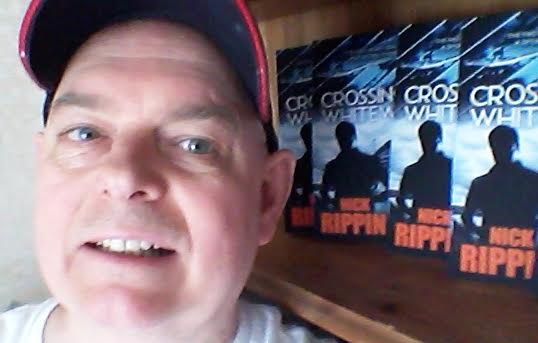
nick-rippington-at-desk


Please welcome Nick Rippington a career journalist award winning author from East London. Nick is also one of our many talented authors participating in this year’s Mystery Thriller Week beginning February 12th!


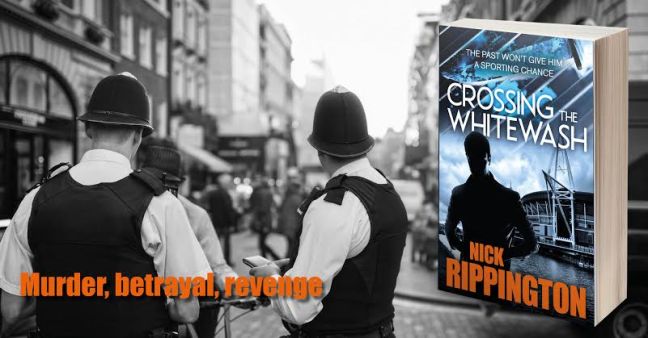
crossing-the-whitewash-book


Goodreads | Amazon | Audible


*Where did you go to college and what did you study?

Writing was in my blood from a very young age and by the age of 11 I knew I wanted to be a journalist. In fact, putting pen to paper had its merits even then. When I was at junior school in Bristol, England, I was the only student outside the school football team allowed to bunk off lessons to go to games – my reports appearing in the school newspaper, The Elm Park Ranger, each month. Out of 100’s of applicants I managed to qualify for the one-year pre-entry journalism course in Cardiff, Wales, which was great fun. I learnt all about the profession, passed my 100 words per minute shorthand, and studied journalism law, use of language and public administration. Two years later I had to return for a proficiency test after landing a job as a reporter on my local paper. Once I had passed that I was a qualified senior journalist. From there I progressed to sports journalism and have worked all over the UK. I am still managing to hold on to a job in a dying profession 38 years later, working as a freelance on UK national newspapers in London.


Wow. This is quite a resume!


resume-1799953_960_720


*What did you grow up reading? 

I wasn’t a big reader until one day I was moaning to my mum during the school holidays about being bored. “Read a book”, she said. “Boring,” I said. “I bet you won’t find this one boring,” she said. It was Ira Levin’s A Kiss Before Dying, and I read it in little more than a day. After that I was hooked. I always liked a twist or something that thrilled. Jaws, by Peter Benchley, was another quick read. Levin has always been my favourite though. I’ve read all his stuff, pretty diverse from horror (Rosemary’s Baby) to Sci-Fi (this perfect day). Boys from Brazil is possibly my favourite.


Haven’t heard of any of these guys but I love learning of new and interesting authors.


learning


*What do you read for entertainment?

I love discovering something really original. I love psychological thrillers and books that at some stage give you an OMG moment where you just stare at the page, mouth open, shocked by what you’ve just read!


YES. I love psychological thrillers too! I think it takes a lot of skill it pull it off correctly with the desired effect. 


new-skills


*What are your favorite resources for journalism?

I’m more on the design and editing side these days so it’s a difficult question to answer. I like designing on In design, though the software does have its glitches.


I have seen this program and it looks pretty powerful from a designing standpoint. If I had to start over, design would be in my top 5 choices.


*Favorite genres to read?

Thriller/suspense/mystery… something original

Me too. Hard to resist a good thriller, suspense or mystery!


book-pile


*According to your experience how is writing different from journalism?

The whole process needs a different mindset. When you go to journalism college or take a course the first thing they teach you is to follow a formula, which over time erodes your creative side. It is a different case for columnists or feature writers I imagine, but as a plain news hack you learn a series of rules that MUST be obeyed. The idea is to get the story across as quickly as possible without frills. You have to answer the five key questions in the first sentence or two in case the story is ‘cut’. There is no slow burn, it is instant: Who? Where? What? Why? When? How? It took a lot of “re-educating” myself to return to creative writing, though the one thing journalism has taught me is not to waste words and to avoid repetition. I am pretty adept at editing my own work ruthlessly before going to an independent editor at a later stage.


Wow. Sounds like being a journalist does have good benefit in training yourself in certain ways. I can see how it would affect your creativity though. It’s good that you still were able to retrain yourself after so many years. That’s great! 


“Creativity is a wild mind & a disciplined eye.”- Dorothy Parker


*How did you research your book Crossing The Whitewash?

As a career journalist of 38 years who has worked over the whole spectrum of the business I could draw on my own experiences greatly. Also, as a sports journalist I have met a lot of characters, so amalgamated many of them. For the things that happen earlier in the book there were stories I was told and I drew upon some experiences of my teen years. I have lived in most of the places featured – or know someone who has and was able to tap into their experiences. I had to read up about jails, but I’ve encountered so many situations it was just a case of getting them into a coherent order and embellishing them.


This is great. Sounds like you had a wealth of experience to draw from coupled with other resources. 


researcher


*Introduce us to the football prodigy Gary Marshall

As a young teen, Gary is just an ordinary kid with a big talent for football (soccer) that his dad Stan is keen to encourage. Though he lives on a seedy, rundown estate he is happy-go- lucky with a positive outlook on life. This starts  when he encounters a gang who want to steal his bike. He ends up indebted to another boy, Arnie Dolan, who helps him escape and is then drawn into the Boxer Boys gang and slides slowly off the rails. It’s a case of how a youngster can bow to peer pressure. It all has a deep effect on Gary’s life and the story is really about how he goes about trying to break those shackles.


Sounds like quite a story. I’ll be listening to the audio version of this book and really looking forward to it. You picked a good narrator too! Can’t wait to see how Gary brakes those shackles!


shackles


*Who is Arnie Dolan?

Crossing The Whitewash got an honourable mention in the genre category of the 2016 Writers’ Digest self-published eBook awards with the judges saying: “Arnie Dolan is terrifying, but never two dimensional”. I am hugely proud of this character. I wanted to write a real bad guy but to explain how he had got that way – the outside influences which dictated he turned out the way he did. He is incredibly resourceful but doesn’t use his attributes in a good way. Strange, really, that some of the first people to read the book admitted to feeling sympathy for a guy who has a propensity for savage violence – against men and women. Arnie is driven by a warped sense of right and wrong. His biggest asset is his immense loyalty and he feels let down by others who don’t afford him the same respect. The way his back story unfurls gave me a great deal of satisfaction.


Sounds like a juicy character! Very intriguing. Readers love these kind of anti-hero/grey kind of characters that they can relate to. 


*What can you tell us about their relationship with one another?

This relationship forms the basis for the whole book. Arnie is a leader and all the other boys on the estate look up him. Gary has a bit of an individual streak, and is blessed with a couple of talents the others don’t have, so he never really fully immerses himself in the gang despite Arnie’s promptings. As Gary grows older, he realises that if he is to get his life back on track he must separate from Arnie completely. He moves away at a time when Arnie isn’t about and creates an entirely new life for himself. Pretty soon, though, Arnie goes looking for him.


This sounds like a really good book. Looking forward to getting into it. 


book-black-and-white


*Tell us how the setting in the rundown London estate plays a part in the book

There were a lot of cheap estates built in London after the second world war. Tower blocks were grouped together to answer the demand for housing, but over time they became run down. The Boxers estate is a prime example, situated in a deprived area of London’s East End where the no.1 job opportunity is villainy. With little to do, kids on the estate form gangs with the intention of defending themselves against outsiders. It is against this background that Gary and Arnie meet.


Wow. I can almost picture the scenery in my head. Sounds pretty intriguing when you think about it. There are situations like this all over the world. Kids in the midst of poor environment, looking for a way out, hoping to survive. Excellent.


nick-rippington-headshot


*What else are you working on?

My latest work is set in 1982, a prequel involving Arnie’s dad Big Mo Dolan. He has no end of worries, having to raise a young family on the same London estate with no job and little money. As his mind turns to crime, he is also concerned that his brother Clive has enlisted for the army at a time when Britain and Argentina are poised to go to war over the Falkland Islands. The story – as yet untitled – explains much of what later develops in Crossing The Whitewash. It is with the editor and I am hoping to release it in late Feb/early March.


Oh great! Keep us posted on the development. Would love to read this. 


coming-soon-2


Thanks Nick!!


Up for a reading challenge? Join the Book Hoarders Bucket List Reading Challenge  (Goodreads group here)


A Challenge for Book Hoarders Like Me at SallyAllenBooks.com


Don’t miss the inaugural powerhouse event of 2017!! Check out Mystery Thriller Week on my other site: Mysterythrillerweek.com


Benjamin Thomas

@thewritingtrain

http://www.thewritingtrain.com


Watch “FAVE BOOKS OF 2016!” on YouTube

IT’S TELEVISION TUESDAY

Book Recommendations

With Sasha Alsberg


television-148223_960_720


Have you read any these books?  Tell me in the comments!!


Up for a reading challenge? Join the Book Hoarders Bucket List Reading Challenge  (Join Goodreads group here)


A Challenge for Book Hoarders Like Me at SallyAllenBooks.com


Don’t miss the inaugural powerhouse event of 2017!! Check out Mystery Thriller Week on my other site: Mysterythrillerweek.com


Benjamin Thomas

@thewritingtrain

http://www.thewritingtrain.com

Introducing Audio Forensics

listen to music (+clipping path, xxl)


I’m happy to announce a brand new series deemed Audio Forensics! It will exclusively be about audiobooks and everything related to them. News, reviews, interviews from the latest and the greatest. Some will go here and others will go to my other site at Mystery Thriller Week. I’ll mix it up and try to keep things interesting. It should be epic fun! There’s more interesting things I’d love to say about Audio Forensics but I’m much too pooped to say more. Another day I promise!

If you would like to do a guest post in relation to this drop me a line in the comment section. The more the merrier.

The growth of audiobooks has been steadily booming the last several years and bound to only get better. Time to give them some lovin’.  I listen to about two per week so this will be a nice outlet for what I’ve experienced.


So, on that note let us introduce my favorite audiobook of 2016. And the winner is….


Drumroll….


drumroll


CRYPTIC LINES


cryptic-lines-audiobook


Written by Richard Storry

Narrated by Jake Urry

Length: 4 hrs and 13 mins

Unabridged Audiobook

Release Date: 03-16-16

Publisher: Richard Alan Storry


Goodreads

Set in a sprawling gothic mansion in a remote coastal location, somewhere in the British Isles, the elderly recluse Lord Alfred Willoughby is deciding what is to become of his vast fortune after his death. Whilst his head is telling him to leave nothing at all to his wastrel son, Matthew, his heart is speaking differently. After much deliberation, in a last-ditch attempt to try and show to his son the importance of applying himself to a task and staying with it to the end, he devises a series of enigmatic puzzles cunningly concealed within the lines of a poem – the cryptic lines. If he completes the task successfully and solves the puzzles he will inherit the entire estate; but if he fails he will receive nothing. However, from Lord Alfred’s Will it emerges that Matthew is not the only interested party. The mysterious old house holds many secrets, and nothing is as it first appears


My rating


Five golden stars isolated on white background


Performance: Narrated by Jake Urry


Jake had the perfect voice to go along with this story. Absolutely perfect. He has that creepy, eerie, mysteriousness to his of voice that really brings out the story to the fullest degree. His performance was off the charts in my estimation.


Story: by Richard Storry


This story was amazing! I honestly didn’t expect it to be as good as it was, but was pleasantly surprised. It kept me on the edge of my seat the entire book. That’s probably what I enjoy most about it. The SUSPENSE was brilliant. The plot twists toward the end are even better. This one had it all. Out of all the audiobooks I’ve listened to this year, this one resonated with me the most.


Listen to an audio sample: Cryptic Lines


Have fun! Thanks for ridin’ the train folks!


train-old-fashioned


Up for a challenge? Join the Book Hoarders Bucket List Reading Challenge  (Join the Goodreads group here)


A Challenge for Book Hoarders Like Me at SallyAllenBooks.com


Don’t miss the inaugural powerhouse event of 2017!! Check out Mystery Thriller Week on my other site: Mysterythrillerweek.com


waving-by


Benjamin Thomas

@thewritingtrain

http://www.thewritingtrain.com


Meet Multi-talented Author Kristen Twardowski


kristen-twardowski-headshot


Everyone I present to you Kristen Twardowski!


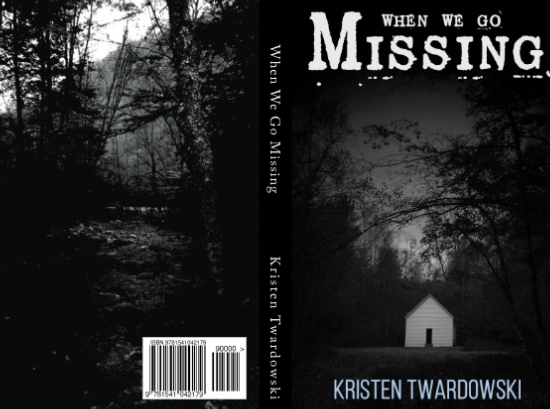
She’s works in marketing and data analysis within the book industry, an avid blogger and author of a new psychological thriller, When We Go Missing.  Kristen is also participating in the inaugural launch of Mystery Thriller Week.


when-we-go-missing


According to Goodreads


Once, Alex Gardinier was a successful physical therapist and a happy wife. Now she is trapped in a crumbling hospital room. Seven years ago Alex’s ex-husband, Nathan, was convicted of murdering five girls, and he has been rotting in prison ever since. Except the doctors say that Nathan isn’t in prison. In fact, they don’t believe that he is a criminal at all. According to them, Nathan is a devoted husband who visits her every week. But Alex can’t recall ever seeing him at the hospital, and the last time they met he was holding her hostage on a boat.

Maybe the doctors are right – maybe these memories of his crimes are her own personal delusions – but if they are wrong, then Nathan somehow escaped from prison. If they are wrong, he has trapped Alex in a psychiatric ward.

If they are wrong, he is hunting her sister


welcome-on-board


Where are you originally from?

I’m originally from a cornfield in Illinois but have lived in several different places across the Midwest. I’ll always have an attraction to the flatlands because of it.

Yay! The Midwest is awesome. Plenty of cornfields here! 


What did you study in college?


As an undergraduate, I studied history and art history. When I finished my graduate degree, I studied gender and the history of Imperial Germany.

Wow. This is rather impressive. I took an art history course once and it was pretty difficult. 


Did you used to be a librarian?

Though I worked at several libraries, I never held the position of librarian. Most institutions want to hire people who hold library degrees for those roles. Instead, I held customer facing positions in an undergraduate and business library. There, I did things like organize events for speakers and authors, help manage the acquisition of journals and magazines, and do reference work, which involved helping people find the reading materials that suited their research needs.

That sounds very intriguing and not to mention good work experience. 


library-1


What do you do exactly in publishing?

Currently I am a sales and marketing research coordinator for a small press. This means I perform several different functions that have to do with data and book promotion. In terms of data, I do analyses to see where we have opportunities to expand our books and journals programs and make suggestions about how to package our products. This also means that I pay a lot of attention to how money flows through the press. Though I don’t directly do design work, I help to write marketing copy for items and give input on promotional materials like posters, emails, and information on our website. Prior to my current position, I briefly worked in the acquisitions department of a different publisher. While there, I helped edit manuscripts, assess submissions, and write rejection letters.

This is amazing. You have an amazing, well rounded skill set!


skills


What do you love most about fantasy? 


Fantasy is my great passion. It’s the genre that I was raised on and the one that I always return to. Because they tell stories that are a step away from the real world, fantasy novels often get to the heart of what it means to be human. They delve into our strengths and weakness, our hopes and fears, and they let us dream. What if the world was different? What would we do then?

Some authors that represent the best of fantasy are Diana Wynne Jones, Melanie Rawn, Peter S. Beagle, Jan Siegel, and a dozen others. Oddly, my first novel, “When We Go Missing”, doesn’t deal with fantasy at all – it is a psychological thriller – but the feel of fantasy, the arc of its stories, the texture of its language, bleeds into my writing.

 Nice. I still think it’s impressive that you can write a psychological thriller even though it isn’t your passion. I believe it’ll make you a better writer in the end. 


“Fantasy is hardly as escape from reality. It’s a way of understanding it.”-LLoyd Alexander


How has reading affected your writing? 


I just finished some research on how reading affects writing. It turns out that reading materials alter the syntax and writing level that people use. For example, people who spend their time reading a lot of Buzzfeed articles write much simpler sentences than people who read pulp fiction, and people who read pulp fiction write less complex sentences than folks who read more literary books.

Of course complexity isn’t always best. I’ve had to undo some bad writing habits because I have spent a lot of time reading scholarly theorists and academic texts. Fiction requires a very different style. And no one wants to read a sentence that is the length of an entire paragraph.


 That’s so interesting. You’re blog posts tend to be more on the scholarly side. I admire your style. 


writing-1


Why did you write a psychological thriller for your first book?


I ended up writing When We Go Missing through sheer luck. I am a fantasy author at heart, but When We Go Missing was a story I felt like I had to tell. Over the past several years, I have become more and more aware of the ways that people, especially women, really do go missing in America and the way that society deals with those disappearances. It was fascinating and horrifying realm to discover, and I wanted to explore the whys behind it a bit more. The story turned into a psychological thriller because that was the best way to tell the story without completely breaking my heart about the subject.


The premise for your books is mesmerizing. The theme behind it is also powerful. 


Tell us how you developed this idea into a novel. 

When We Go Missing was a writing experiment for me. I had different ideas about how I wanted to talk about women who vanish and decided that I needed to bite the bullet and write the book.

In July of 2016, I gave myself the goal of publishing this manuscript – I didn’t even really know what the plot was back then – in December of 2016. This meant I had to buckle down and prioritize my writing. I ended up finishing the rough draft in September and spent October and November revising it. I do not encourage anyone to follow my schedule. It meant working a lot of high density hours on a single project, and I always suggest that people give themselves more time to reflect during the editing process. Having said all of that, the contracted schedule was a great decision for me because in my heart of hearts, all I want to do is continually edit my books. Historically that prevented me from publishing any of them. I had to push myself to get over my perfectionist tendencies, and I am excited to share my final result.


Nice. Perfectionism can be a problem for sure. But I’m glad you pushed through it! Impressive. 


hard-work


What do you love most about reading books?

I love that books allow me to step outside of myself. Through novels, I can experience the world from a different perspective. I’ve learned a lot about myself and about others that way.

 Very true. It’s an amazing experience isn’t it? We get tour another world, life, viewpoint, struggles and victories of another. 


Name 3-5 top pet peeves as a reader. 


Most of my bookish pet peeves relate to characters, how they act, what they say. I can’t stand:

  • Stilted dialogue
  • Character decisions that make no sense
  • Obvious author fantasies (self-inserts, idealized romance, etc.)

Basically I need characters to feel real. They should have their own motivations, weaknesses, and logic. I need to be able to convince myself that they could exist outside of the pages of the book, and if the author can’t portray that well, I struggle to stick with a novel.

 This is great info here. I love seeing what different authors say about this subject.  I see authors fantasies as well, or an idealized trait that’s totally cliche.


Does When We Go Missing employ any themes?


When We Go Missing deals with several major themes. These include trauma, love, family, resilience, and, most importantly, what we do to survive. There is no single way that people react when terrible things happen to them or their loved ones, and in the book, I really wanted to explore the range of those reactions.

 Sounds like a great thriller to me! A really deep one at that. 


eyes-brown


Is this a standalone or will you write more psychological thrillers?


Though When We Go Missing will likely not become a book in a series, I do have several other ideas for thrillers that are floating around in my head. My next project is a contemporary fantasy book, but I imagine that I will return to the realm of thrillers sooner or later. It provides a fantastic sandbox for authors to play in after all, and I don’t think I’ll be able to resist it.

Good. Don’t resist it! I can’t wait to see what you come up with. 


Thanks Kristen, you’re awesome!


Up for a challenge? Join the Book Hoarders Bucket List Reading Challenge  (Join the Goodreads group here)


A Challenge for Book Hoarders Like Me at SallyAllenBooks.com


Don’t miss the inaugural powerhouse event of 2017!! Check out Mystery Thriller Week on my other site: Mysterythrillerweek.com


Benjamin Thomas

@thewritingtrain

http://www.thewritingtrain.com

Watch “Favorite Book Characters of ALL TIME!” on YouTube

IT’S TELEVISION TUESDAY FOLKS!


television-clker-1


Who’s your favorite character? Tell me in the comments!


Up for a challenge? Join the Book Hoarders Bucket List Reading Challenge  (Join the Goodreads group here)


A Challenge for Book Hoarders Like Me at SallyAllenBooks.com


Don’t miss the inaugural powerhouse event of 2017!! Check out Mystery Thriller Week on my other site: Mysterythrillerweek.com


Benjamin Thomas

@thewritingtrain

http://www.thewritingtrain.com

Watch “INFINITE BOOK CHALLENGE 2016!” on YouTube

IT’S TELEVISION TUESDAY

With Sasha Alsberg


television-899265_960_720


What do you think about the Infinite Book Challenge? Tell me in the comments!


Up for a challenge? Join the Book Hoarders Bucket List Reading Challenge


A Challenge for Book Hoarders Like Me at SallyAllenBooks.com


Don’t miss the inaugural powerhouse event of 2017!! Check out Mystery Thriller Week on my other site: Mysterythrillerweek.com


Benjamin Thomas

@thewritingtrain

http://www.thewritingtrain.com


Watch “November Wrap Up and December TBR” on YouTube

IT’S TELEVISION TUESDAY FOLKS!

Book Recommendations with Sasha Alsberg


What are you reading this December? Tell me in the comments!


Extras


Up for a challenge? Join the Book Hoarders Bucket List Reading Challenge


A Challenge for Book Hoarders Like Me at SallyAllenBooks.com


Don’t miss the inaugural powerhouse event of 2017!! Check out Mystery Thriller Week on my other site: Mysterythrillerweek.com


Benjamin Thomas

@thewritingtrain

http://www.thewritingtrain.com

Eye Opening Interview with Historian and Author JB Richards


Everyone Please Welcome the Talented International Author JB Richards!


jb-richards


“More than anything else, it is important to study history.”-B.B. King


history-book


Introduction:

JB Richards is an historian and international award-winning Amazon, Goodreads, and Xlibris author. Her debut novel, “Miriamne the Magdala – The First Chapter in the Yeshua and Miri Novel Series”, was recently voted a Top 10 Best Historical Fiction Novel, Top 20 Best New Adult Novel, and Top 50 Best Young Adult Novel, and received a nomination for Best Romance Novel in the 2016 Summer Indie Book Awards (SIBA’s). “Miriamne the Magdala” has also been awarded a Readers’ Favorite 5-Star Seal and has continued to be nominated in multiple book award venues. Richards is currently a nominee for Author of the Year in the upcoming 2016 Indie Author Books Readers’ Choice Awards, while “Miriamne the Magdala” has been nominated in the Goodreads Self-Pub or Indie Books Worth Reading Awards. Her upcoming second chapter in the Yeshua and Miri Novel Series, “Yeshua the Christ: The Silk Road”, is due for publication in 2017.


jb-richardson-book-cover


Recipient of 5-Star Seal
Reader’s Favorite

2016 Summer Indie Book Awards

“Miriamne the Magdala” voted 

Top 10 Best Historical Fiction

Top 20 Best New Adult Novel

Top 50 Best Young Adult Novel

Best Romance Nominee


first-class


What began your love of history?

My great uncle, Antes Boudreau, was an avid book collector. He kept stacks and stacks of books, novels, almanacs, newspapers, magazines—you name it, he had it—lined up along the walls, floor to ceiling, of his tiny, single-occupancy, one-bedroom apartment. At the age of 21, he had lost his wife in a tragic fire. He never remarried, and had no children, but he considered my dad as his son. Uncle was sort of a curmudgeon. He always led a solitary life, preferring to mingle with the pigeons in the local park rather than share breakfast and a cup of coffee with a friend. But because of his special relationship with my dad, he was always present at family gatherings where he felt most comfortable sitting on the sidelines wistfully observing everyone else having fun. Don’t get me wrong, it’s not that my uncle was anti-social. Certainly, a few stiff shots of Canadian Club loosened his tie to the point that he’d enjoy playing the odd card game after dinner, or even regaling present company with all the precious knowledge he gained from his beloved books. As a young, impressionable 9-year-old feminist, whom Uncle thought would either be a future candidate for president or the first female astronaut, I absolutely adored him.

So, why am I telling you all about my uncle? Uncle taught me about the Classical Era, the “Hellenistic” period, Homer and Cato, the founding of Rome, Cleopatra and Marc Antony … and I was a sponge, absorbing everything and anything he cared to share with me. As I grew older and began college, I visited him frequently, avidly engaging in raucous debates about religion, theology, and philosophy. He was a self-proclaimed atheist, and we often focused on the historical lives and the times of the great prophets and sages, rather than writings which tended to glorify them. We often honed in on the life of the Buddha and the man called Jesus, the “Christ”. Because of my uncle, I developed a passion for this era, earning degrees in both History and Psychology. Decades later, when I could no longer work a 9-5 job due to chronic health issues, I happened upon some old books of his pertaining to the missing years of Jesus. Once I reread these books, did a huge amount of research on my own, and gathered all my notes, I finally found a place to start. That’s when I began writing the Yeshua and Miri Novel Series!


Wow. It’s amazing how those close to us can leave such an impression. Thanks for sharing!


Did you read historical fiction growing up?

It’s funny, but the great majority of the books I read—and there were many borrowed from the local library as well as my Uncle’s extensive personal collection—were textbooks, journals, and almanacs. My preference was always for fact, not fiction … even when I was a little kid. I was only 7-years-old when my dad’s employer offered the Golden Book Encyclopedia for Children to their employees at a discounted fee. Each Friday evening as my dad left work, he bought one letter from the collection (A-Z) and took it home. Night after night, I loved pouring over the pages of each volume before bedtime! I was barely able to contain my anticipation as I wondered what would be waiting for me between the pages of the very next issue. My love for history, science, and nature took hold when I began to read those wonderful encyclopedia volumes.


That’s awesome! Your love for history and science is infectious. 


old-books


What’s your favorite time period and why?

I think you can pretty much tell by now which historical era was my favorite! The centuries preceding and subsequent to the 1st century CE represent one of the true apexes of intellectual and philosophical evolution in modern human beings. Five-hundred years before the Christian Era and 500 years afterward, mark an early renaissance in humankind’s development. Our view of God and the Universe shifted in a big way, and we began to question what our place was in relation to Creation. It was during this time that sages, magi, prophets, philosophers, teachers, gurus, and bodhisattvas—enlightened beings like Jesus and the Buddha—flourished. These “Great Teachers”, as they are known to History, revolutionized science, astrology (which included the study of the stars, predicting fortunes and fates, and the marking of the changing seasons along with other astronomical data), mathematics, philosophy, culture, the arts, and—most importantly—religion. Although the list of advances in various genres goes on and on, it was during these accumulated 1,000-years in the history of humankind that represented a key turning point—a great shift in attitude—that completely altered our belief system. There was a great shift in how humankind perceived the Divine—not as a bullying and judgmental God/gods who remained impassive and far removed from the world, but as an inner spiritual force with each individual manifesting as an extension of the Divine. The Buddha and Jesus taught that we each hold within us a Divine “spark” (some call it the “Soul”), and that part of our Selves exists both separated and in conjunction with the Divine Itself. As Jesus taught, we are all sons and daughters of the Divine.


I’m probably not your typical person. I believe human beings are inherently tripartite beings as created by God. Having three distinct parts. Body, soul and spirit. In the old and new testament there are several references, but 1 Thess. 5:23 sums it up in one verse. 


ruins


What did you experience researching you first novel?

I discovered that the telling of a story is not so much a dictation of the facts as it is the interpretation of a life subjected to all the outside influences put upon it. That realization alone can make for a story that is insightful, compelling, and terribly funny! For example, in choosing to become incarnate, Jesus (Yeshua, in his native Aramaic tongue) not only gained the ability to walk among us and teach us about becoming better individuals, he learned a lot about what it was to be an actual human being—to be subjected to the laws of both Man and Nature. Think about that and put yourself in his sandals for a moment … What a revelation it must have been for Jesus when he gained a corporeal form—a body—with all its natural … functions! I can’t help but be amused sometimes when I think about the first time Yeshua suddenly realized the end result of catching a stomach-flu, or getting a cold, or simply eating a meal! I’m sure he found it all quite … fascinating.

We tend not to see Yeshua as a human being. And one thing I was sensitive to in developing the storyline for “Miriamne the Magdala” was that he, the Magdala, and certain individuals in the early Christian community are seen by the members of many faiths as sacred beings who are to remain unsullied by everyday life and an everyday existence. Many of the faithful see them as pastoral, benign peasants that had an unwavering belief in God and their religion. The truth about Jesus and his followers, however, couldn’t be further from the truth. The profile of Yeshua that I uncovered in my research is vastly different from the idealized “Good Shepherd” modern-day Christians derive from the Synoptic Gospels. I doubt many would recognize Jesus the actual man—the Galilean rabbi who wanted to change the status quo and reclaim his homeland from the Roman Empire and the Hasmonean dynasty that had been put in place to rule Galilee and Judea. In researching the “historical” Jesus, I found that Yeshua—for that was his true name—was most certainly not a Christian. He was a Jew. He was born a Jew, grew up a Jew, lived the life of a Jew, worshiped as a Jew, and died a Jew.

Today, far removed from his time, many have a tendency to view Jesus as a Christian. But Christianity never even existed until decades after his death. James, who was named as leader of the disciples by Yeshua himself should anything happen to him, strongly upheld the tenets of Judaism and Jewish culture because that was what his brother wanted. In fact, James, and the disciples who were with him, continued to worship in synagogues that were accepting of their particular manner of worship as long as it maintained its roots in Judaism. It was Paul who radically departed from Judaism to form his own idealized version of what Jesus had taught. Sure, his theology was still based on the teachings of Jesus, but geared toward the Gentiles who were flocking in droves to him and his own cadre of disciples. Shortly after he began preaching, Paul had sought to gain the approval of James to relax the rules, but James would not wander from the tenets of his Jewish faith and culture just to please a self-declared Apostle. Eventually, the disagreement between Paul and James escalated to a standoff, and caused a great schism between the two communities. This is what led to the formation of a more popular belief—Christianity—Paul’s version of Jesus’ teachings.

I also found that my own view of Jesus changed as my research continued. Yeshua grew up in Roman-occupied Galilee, and like other young Galilean men who matured under these same conditions, he yearned for his people and homeland to be free. He was not, according to our traditional view, some passive, itinerant preacher wandering about the countryside performing miracles, encouraging people to be kind to one another, and patiently telling them to wait for the coming of the Kingdom of God. No … Yeshua was a rabble-rouser, a revolutionary, and an outspoken challenger of the status quo. He, like most of the other Jews in his homeland, wanted the Romans gone—expelled from Galilee and Judea. They wanted the right to practice their religion and maintain their traditions freely—without the scrutiny of Rome, or come to mention it, the Temple Priests, the Pharisees and the Sadducees who put–what Yeshua saw as—ridiculous restrictions on the Jewish people. Yeshua was so vocal in his preaching and forceful in his choice of words, he became an outlaw—a man on the run from the authorities—and for three long years he carefully planned out how he was going to avoid capture as he went about fulfilling his Mission. This purposeful, determined, and passionate young champion of a suppressed and beleaguered people is the Yeshua that I present in “Miriamne the Magdala” and the Yeshua and Miri Novel Series.


Wow. Sounds like you learned a lot!


Did you almost give up after 20 years?

No way! Never!

Great!
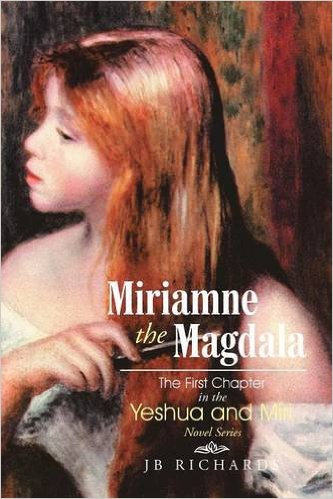


miriamne


Goodreads


Tell us about the main characters.

Miriamne, aka Miri, is a 12-year-old entitled aristocrat—daughter of Commander Micah bar Abram, the former Hekatontarchus of the Hyperatai (the Holy Temple Guard) and his lovely wife, Salome—when she first meets her bedraggled and estranged Galilean cousin, Yeshua bar Joseph, at the Grand Marketplace in Sepphoris. At first sight, she thinks he is a simple peasant and wonders how he could possibly be related to her family. But as she comes to know the story behind their family’s estrangement, and begins to see Yeshua as a charming and sensitive boy with a keen intelligence and wit to match, she quickly falls in love.

Young Yeshua is the fifth son in line, youngest among his four brothers—James, Joses, Judas, and Simeon. His four older brothers come from the union of Joseph bar Jacob and his first wife, Miriam. He also has two younger sisters, Sali and Mara, who are both born of the union between Joseph and Mary. Yeshua’s own mother, Mary, does not consider Joseph to be Yeshua’s natural father, and this causes problems with the local villagers in Nazareth who label her son a “mamzer”—a bastard. The family has just returned to the region after a trip to Jerusalem, where Yeshua has only recently made his Bar Mitzvah. The ceremony awakens the inner soul of the 13-year-old, and Yeshua comes to recognize that His Mission is fast upon Him. Weeks later, Yeshua considers it a mitzvah—a token of good fortune—when his family is suddenly reunited with their estranged cousins from Bethany. He finds a pleasant distraction from his woes in his beautiful young cousin, Miriamne, and the two begin a friendship that binds them together in some surprising and unexpected ways. When a family tragedy suddenly strikes, Yeshua is sorely tested, and He is suddenly torn between using His miraculous powers and keeping His allegiance to His Divine Father intact.


This should be an interesting read. Especially from a historical standpoint!


read-sign


Tell us about the setting of the 1st century in the common era.

“Miriamne the Magdala” takes place in Roman-occupied Galilee, only a decade after a Jewish uprising ended in the razing of Sepphoris—the main hub of commerce near Nazareth, Cana, and Nain. In retaliation, the Romans not only burned the city to the ground, they crucified 2,000 rebels along the main roads connecting the small towns to the bustling city on the hill. The remaining population of Sepphoris—men, women, and children—were all rounded up within days of the rebellion and were sold off as slaves.

Not a stone lay upon a stone when the Romans left the hilltop burning like a bonfire that terrifying night as the villagers of Nazareth hid their children and themselves away in the maze of secret tunnels burrowed beneath their little town. By the time Miriamne’s family returns to the region, and her father, the Commander, takes over his deceased father’s huge estate, Sepphoris is a newly rebuilt city perched on the top of the hill overlooking the Kaveelah—the Bar Abram paternal family home. It is in this city—recently populated with Jewish aristocrats sympathetic to Rome, and dubbed “The Jewel of the Galilee” because of the newly-built King’s Palace and Grand Marketplace—that Miriamne, her mother, Salome, her older sister, Martha, and her 6-year-old brother, Lazarus, meet Yeshua.


This will be a great history lesson. Admittedly my worst subject!


bookshelf


Can you tell us some factual elements of history that aren’t in your book?

Oh, my goodness, where should I begin? There was so much going on in Judea and Galilee during Yeshua and Miri’s childhood and early teenage years, and I tried to be as thorough as possible in explaining the Roman influence on Jewish culture during that time. One thing I might not have gone into detail about, which I will cover more extensively in the subsequent 4 novels in the Yeshua and Miri Novel Series, is the divisions that existed between the Pharisees, the Sadducees, and the Zealots—the three main groups who provided the Jews with an interpretation of the Law of Moses in that era. These three factions will have a more important role in the third chapter of the Yeshua and Miri Novel Series, “Thomas the Twin: The Sefer Revealed”.

Oh, that would be a good one to explore. The differences between the Jewish sects of the time. 


Name 3-5 customs or traditions of 1st century CE.

One of my favorite Jewish customs is hanging a mezuzah. A mezuzah is a small piece of paper or parchment inscribed with a Hebrew prayer that is sealed inside a tiny decorative box affixed to the front doorpost of a home. In “Miriamne the Magdala”, everyone touches the mezuzah and recites a short prayer before entering their home.

One custom that bothers the girls—Martha, Miri, and Sali—in “Miriamne the Magdala” is the tradition of arranged marriages. It was common in those days for girls who had started their menses, as young as 9-years-old, to be lawfully betrothed, then wedded to a man who was in his 30’s or much older. Fathers were in complete control of the arrangements, and betrothals were sealed between the father of the bride and the bridegroom with a Ketubah—a marriage contract. Once the dowry was presented, the terms of the marriage were haggled over, and a Ketubah was drawn up by a scribe. It was reviewed and signed by the fathers of both families and the bridegroom. The Ketubah could not be broken without severe and irreparable damage to the withdrawing party’s family reputation.

Another Jewish tradition that Yeshua, and all Jewish men, were careful to observe was the Shaharit—the Morning Prayer. Each day when he arises, Yeshua follows a specific ritual, donning his tallit—prayer shawl—and his phylacteries in a step-by-step, prescribed manner. He then recites the prayer, “Hear, oh Israel, the Lord our God is one!” It’s a beautiful custom, and I sometimes find myself thinking of the words of the Shaharit each morning when I arise.

I love the mezuzah tradition! That sounds quite lovely. Pass on the arranged marriages part, the Shaharit is agreeable. Prayer is always good!


jerusalem-1712855_960_720


Tell us about the upcoming 2nd book.

In “Yeshua the Christ: The Silk Road”, Yeshua and Miriamne leave their home in Galilee to join their uncle, Joseph bar Abram, and his Caravaneers on the road to the Far East. The wonders of Syria, Persia, the Sind, and the Indus fascinate and delight the young couple who, as guests of their sponsor, Prince Ravanna of Orissa, are shown the grandeur of the Far East as they are treated to the luxuries of palace life.

As a sponsored scholar, Yeshua discovers a whole new system of beliefs among Persia’s Magi, and the Brahmana of the Indus. At the Temple at Jagganath, the priests are highly impressed with their young protégé and they entrust him with their most sacred and secret teachings usually granted only to a privileged few. Yeshua, however, believes no one, including the lower castes, should be excluded from this important teaching, and he challenges his teachers, insisting that—just like the Torah—these sacred writings were meant to be shared with all the people of the world.

When Yeshua decides to leave the Temple after a heated argument with his mentors and sets out on his own, the brash young preacher brings down the wrath of the Chief Lama who immediately censors him and orders him to cease his public teaching. But Yeshua has a will of His own. And when he continues to preach the doctrine to the Sudras of the lower caste, and refuses to bow down to the Lama—even upon penalty of death, an assassination plot is hatched by the Brahmana, placing his life, and the lives of his family and friends, in mortal danger!

Will Yeshua escape the Indus unscathed, and if he does, who will pay the price for his betrayal of the Brahmana? Find out in my upcoming novel, “Yeshua the Christ: The Silk Road”—due for publication in 2017!


Let us know when you’re up for publication and we’ll help promote it. 


coming-soon


Name 3 things you really enjoyed about writing this book.

The humorous, and sometimes farcical, situations that Yeshua and Miriamne find themselves in, particularly when the Commander or the Brothers Bar Joseph get out of hand. Writing the love scenes between Yeshua and Miriamne—that always seemed to end up in some sort of embarrassment for both, or either one, of them—was a lot of fun, too!

Dreaming up the various dishes that Haggah, the Head Cook for the Bar Abram family, would prepare for the Commander, his family, and guests were also quite challenging. But it was fun to research all the ingredients that would have been available in the region of Galilee during that time and put them together in a dish that Haggah would have been proud to serve at the Bar Abram dinner table.

Last, but certainly not least, coming up with the personality clashes between siblings; the testing of brotherly bonds and sisterly love; and the strange and curious circumstances of everyday life at the homes of Yeshua and Miri, was sometimes difficult to conceive, but writing these types of scenes was always an eye-opener! It’s nice to know that there are good days and bad days for both the Bar Jacob and Bar Abram families, but in the end they always seem to pull together, take things in stride, and carry on!


Oh clashes between siblings is always a good one. 


sibling-rivalry


Name 3 of the most difficult aspects of writing this book.

Writer’s block is a plague for most authors, but when you’re trying to come up with situations to put “the Boy who would be Christ” in, while trying to remain sensitive to the fact that—for some people, much of this material might be considered heretical—it can be downright agonizing. I spend a lot of time getting into my character’s heads, but Yeshua always seems to speak louder than any of the other characters—including Miriamne. While I wrote Miriamne, he always pointed me in the right direction, and I in the editing process, I found that he was seldom wrong. He even sent me signs! Many times, I wanted to remove certain scenes from the final manuscript because I was worried how the scene would affect my readers. Inevitably, some chance encounter with an old friend or a certain song on the radio would tell me that I was on the right track. Truthfully, Yeshua was pretty hard to ignore. Eventually, I just gave in and wrote what he gave me.

I was also very worried about the size of the novel. Let’s face it, at 850 pages, Miriamne is big enough to use as a booster seat for a toddler! I consulted with editors and several other authors, but no one could figure out where to cut the book in half, or what to take out. Believe it or not, there are whole chapters that were cut from the end product, still wasting away in a huge bin up in my attic! All those pages in “Miriamne the Magdala” explain the history, cultures, and traditions that support this story, and each is as necessary to explaining the rich and detailed tapestry that is Yeshua and Miri’s lives as they are essential to understanding their purpose and Mission. And “Miriamne the Magdala” is just the beginning of our Journey! She is the introductory chapter that will lead us through to the conclusion of Christ’s life and the centuries beyond. In essence, she’s really two books in one, and neither part can be presented without the other.

Now, here’s a True Confession … I found it a tremendous and oftentimes overwhelming challenge to understand, interpret, and explain Jewish culture and traditions to my readers. You see, I’m not Jewish. I was raised as a Roman Catholic, attending parochial schools that had little to no exposure to Judaism. I didn’t even know there were Jews in my hometown until I attended college! My second confession is that I don’t speak Hebrew or Aramaic—the native language of Yeshua and Miriamne. Although I can, now and then, adeptly turn a phrase or two thanks to a wonderful and generous young man in—of all places—Hobart, Tasmania who volunteered to translate dozens of phrases from English to Hebrew for me via online communications.

I was lucky in that I had the pleasure of connecting with some amazing people on social media who helped guide me through any cultural traditions I found confusing or difficult to understand. These individuals are mentioned in the Acknowledgements section of my novel, and I am indeed fortunate that they are still standing in the wings, ready to assist me with “Yeshua the Christ: The Silk Road”! It is to them that I owe my deepest gratitude and thanks because Miriamne would not have a single shred of authenticity without their cooperation and hard work.


Well, I highly commend you on such an achievement. Really, I find that utterly amazing.



live-your-dreams


What 3 things from history would you bring into our society today?

First and foremost, I would bring forward the strong sense of family exhibited in “Miriamne the Magdala”. Too many families today are split-up and living great distances apart. I had a huge family when I was younger, and I remember family get-togethers, picnics, and beach parties that would last from morning to late at night. Those sorts of regular family reunions just don’t happen anymore, with family members so busy with personal and professional lives and homes scattered all over the country.

Next, I would bring back some form of proper etiquette. I’m not talking about the stuffy, highbrow manners authors like Emily Bronte exemplify, but a small taste of plain old chivalry and civility. There was a time when a man wouldn’t hesitate to dash out of his house in his slippers to help the elderly woman across the street drag her trash out to the curb. There was a time when a teen would cheerfully hold the door open for a pregnant woman loaded down with grocery packages so she could easily pass through. There was a time when kids went door to door offering to shovel neighbors out after a big snowstorm. Nowadays, people are too afraid to glance at one another, let alone speak to anyone. Today, suspicion and rudeness prevail. No one sees a fellow human being standing at their front door, but an enemy with a hostile intent to pillage whatever meager assets one might hold dear. We need more enmity in our world today.

I often wonder what society would look like if we had maintained, from days gone by, a strong belief in the Divine. How different our lives would be if we still believed that there was some Thing or some One greater than ourselves running our Universe (or as science seems to dictate … Universes). Considering all the scientific advances mankind has made–the discovery of the Higgs-Boson particle, the development of the Big Bang and the Big Crunch theories, and cracking the code for the human genome, just to name a few—we still have no explanation for what Life represents. We don’t know what the true essence of Life is, or where it comes from, or where it goes once a creature ceases to breathe. In the past, things were much simpler … Humanity seemed guided by Fate, steering mankind toward a Destiny. Today, many people shun their belief in a Higher Power. And those who do believe are often much too embarrassed to admit it. All in all, there seems to be no guidance, no dream, no ultimate goal for humanity nowadays, and it causes me to wonder whether we really have advanced as much as we think we have, or if we have lost our Selves in the process.


All great thoughts here. Thanks for sharing. 



change-1082791_960_720


Would you like to be a time traveler?

Only if I could return to my own time whenever I wished … I’d enjoy taking a peek or two at life in the past or in the future, but the present is Home, and Home is where I belong.


There’s no place like home!


home-shoe


Favorite quotes?

Wow, this is a toughie! There are so many great and awesome quotes that have come down to us through history, and it’s hard to single any one of them out! But, if I have to choose, I suppose I’d have to go with Anais Nin – “There came a time when the risk to remain tight in the bud was more painful than the risk it took to blossom.” This one quote exemplifies my entire life in a nutshell.


“There came a time when the risk to remain tight in the bud was more painful than the risk it took to blossom.”-Anais Nin


Thanks JB!!



handshake-cartoon


Come back and see us on the writing train!


PS

Don’t miss the inaugural powerhouse event of 2017!!

Check out my other site: Mysterythrillerweek.com


Benjamin Thomas

@thewritingtrain

http://www.thewritingtrain.com


Watch “To Watch You Bleed: A Novel by Jordon Greene | Official Trailer” on YouTube


Behold, the best Book Trailer I have ever seen…


to-watch-you-bleed


A Dark New Psychological Horror Thriller by Jordon Greene


Truly creepy…


Available on Kindle & Paperback February 21, 2017

Pre-order Now on Amazon


jordon-greene


Jordongreene.com

Facebook | Twitter | Amazon


Don’t miss the inaugural powerhouse event of 2017!!

Check out my other site: Mysterythrillerweek.com


Benjamin Thomas

@thewritingtrain

http://www.thewritingtrain.com


Splendid Interview with Fellow Intuitive Author Lauren Sapala


LAUREN SAPALA

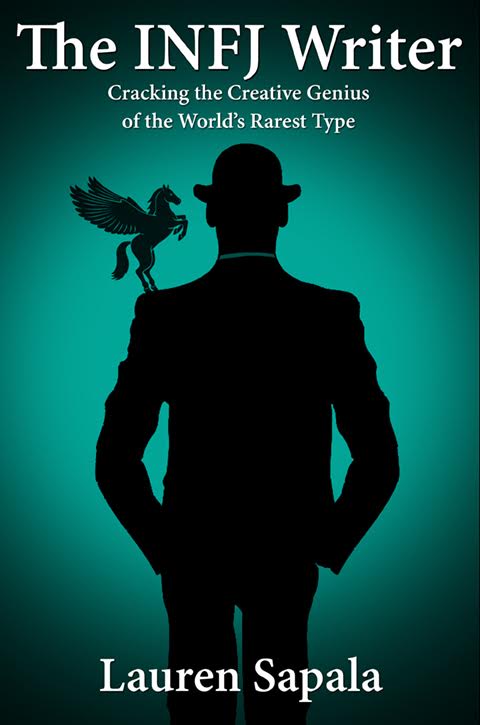
Author of The INFJ Writer Cracking the Creative Genius of the World’s Rarest Type


lauren-sapala


Lauren Sapala is a writer, writing coach, author of The INFJ Writer, is obsessed with all literature, and my newfound best friend.


Welcome Lauren!


red-carpet-1


*Are you originally from the west coast ? 

I’m originally from Michigan, but moved to Seattle right after college. After a few years there I took off for San Francisco. I had never visited the west coast at all before moving to Seattle, and I had never been to California before I moved to San Francisco. I’m a fly-by-the-seat-of-my-pants kind of girl!

I hear you! Me too! 


san-francisco-1633204_960_720


*When did you decide to be a writer?

Wow, this might be the toughest question I’ve ever been asked about writing! I don’t think I ever “decided.” I started writing stories and poems from a young age and it was just always something I did. I never had to think about it or choose it. However, I did choose to stop writing, right after my senior year in college when a professor told me I wasn’t very good at it and I should find something else to do with my life.

That’s awesome it feels very natural and instinctive to you, or at least until you encountered a negative influence in college. Sorry to hear that. You’d be surprised how many writers I’ve talked to that had the same experience. I find that very perplexing.


WRITING

“Forget all the rules. Forget about being published. Write for yourself and celebrate writing.” -Melinda Haynes


*Who or what influenced you the most in your decision?

There are too many names to list so, in the interest of brevity, I’ll just say: Other writers. Every book I read that spoke to me had a writer behind it who encouraged me to start writing again, and then to keep going.

It’s great to receive encouragement and motivation from other writers isn’t it?


never-stop-fighting


*Besides nonfiction, what else do you write?

I’ve written three memoirs and two novels. The first memoir is scheduled for release in Spring 2017.

Oh nice! Yippee! Another book release! Drop me line and I’ll help you with some promotion if you’d like. 


*Why did you decide to become a story coach?

After I started writing again in my mid 20’s I formed a writing group in Seattle and then one in San Francisco. These writing groups were based off of the Alcoholics Anonymous format, meaning: you came and you shared your struggle with writing, but you didn’t have to participate if you didn’t want to, you could always remain just an observer. After the sharing, we settled down to do an hour of silent writing together. I found myself working one-on-one with a lot of the writers in the group, and pretty soon it was eating up so much of my free time that I decided to open a business doing this work.

Nice. I like how those begin. Organically and spontaneously. So glad you started writing again. 


coach


*Can you name a few benefits from helping others in their writing?

Holy cow, there are so many benefits I don’t know that I could even begin to cover them all! My first and favorite probably is that I get to hear about and share in other people’s lives. Whatever story someone is writing, it always has everything to do with them. I find human beings to be the most fascinating magical creatures, and the fact that other people trust me enough to let me try to help them with their creative process, and sometimes all their inner emotional “stuff” too, is such an honor.

There’s definitely a rewarding social aspect to helping others. Human beings are definitely fascinating magical creatures! Especially the intuitive, artistic types! 


*Tell us about your book, The INFJ Writer.

The INFJ Writer is a writing guide based on the real-world experiences of my writing clients. After a year or two of doing coaching work with writers, I noticed that almost every blocked writer that showed up on my doorstep (that is, in my email inbox) was an INFJ or INFP personality type. These writers were highly sensitive introverts who had A LOT to say about the world but no way to get the words out. I saw immediately that they were the same kind of writers who had shown up to the writing groups I formed based on the AA format—scared, creatively paralyzed idealists who were also thoughtful, compassionate, and invested with a deep sense of purpose and passion about art and writing.

They were intuitive writers. And traditional methods don’t work for intuitive writers, as I had found out through my own personal experience, and as I saw my clients finding out, over and over and over again. Outlining, plotting the entire arc of the story in advance, using checklists for character development—none of this stuff worked for intuitive writers. In fact, it blocked them even more from their own inner creative light. That’s when I knew I had to write The INFJ Writer. It’s for intuitive writers who are experiencing blocks and don’t have the money or the time to hire a coach like myself who specializes in working with intuitive introverts. The book contains exercises in every chapter to get the blocked writer’s creative energy moving again.

Thank you for taking the time to write such a book. Although my personality type if not INFJ, I can relate to all of the points that you make here. We’re not too different!


just-be-yourself


*What led you to discover your personality type and what bearings did it have on you as a writer?

I had a desk job for a while where I had a ton of free time and unlimited access to the internet. I had always been interested in psychology so I started taking a lot of online personality tests. Most of them were just for fun, but when I read the description of the INFJ personality type it was like my whole world cracked wide open. Suddenly I realized there was a chance that I wasn’t a completely weird alien (which is how I had felt for most of my life). Finding out I was an INFJ bolstered my self esteem in a thousand ways, one of those being that I finally had the confidence to start putting my writing out into the world.

I could never have a desk job, although I’ve been blogging a lot these days, lol! Wow. You’re story sounds strikingly similar to mine. I’ve only discovered my personality type earlier this year after suffering from a long bout of depression and low self-esteem. But when I read Heidi Priebe’s book, The Comprehensive ENFP Survival Guide, It opened up mines of life changing revelations. 


*How much does our personality type affect our ability to learn the craft of writing?

Hmmm…this is an interesting question. I would say that our personality type doesn’t affect our ability at all, but it does affect the way we view ourselves and how adequately we are measuring up to what we consider “ability.” For instance, most INFP writers do not do well with linear structure. When they’re writing, they tend to write in scattered pieces. There IS an order there, but the order usually has to do with a hidden beautiful pattern that the INFP writer follows almost solely according to intuition. From the outside, it might look like a mess. And many, many INFP writers have internalized the assumptions of mainstream writing culture, which says writers should be very concerned with the coherence of the storyline, even in the very first draft. So the INFP writer will see that he’s writing in pieces and get very down on himself for it, and then the negative self-talk comes in and the INFP writer berates himself for not having any writing “ability.” Well, this writer does have ability. His ability just shows up in a different way (especially in that first draft) than it does for most other people.

I should’ve phrased this question differently, but your response is perfect! I can totally relate to this one. 


book-1014197_960_720


*How can not knowing our personality type inadvertently affect our writing?

Just like in the world at large, an intuitive who does not know she’s an intuitive will tend to feel crazy or like something is wrong with her most of the time. It’s exactly the same thing in writing. If you write in scattered pieces, or you have a lot of trouble finishing things, or you go through huge amounts of anxiety and emotional turmoil whenever your stories are critiqued, and you don’t know you’re a highly sensitive intuitive writer, the first thing you’ll do is blame yourself. The second thing you’ll do is try to “toughen up” and introduce some sort of harsh discipline into your writing life, which will make you feel worse. Until you learn about your true makeup as a person and an artist—and accept that makeup—you’ll always be caught in this vicious cycle that swings between the inner critic and writer’s block.

This is all very helpful and therapeutic information. Thanks for sharing. 


*Have words of encouragement to all the intuitive types?

Almost every intuitive person I’ve ever met undervalues their own intuition and their own strong intelligence. Use that mind that’s so strong in you! Read everything you can about what you are, and learn everything you can about other people and what makes them tick. The more deeply you know yourself, the easier everything becomes.

I love this statement! I find it very uplifting. Do you have any reading recommendations for personality type? How about your book! 


the-infj-writer


Goodreads | Amazon | Website


According to Goodreads

After years of coaching writers who struggled with procrastination issues, high sensitivity to criticism, and crippling self doubt, Lauren Sapala realized that almost every one of her clients was an INFJ or INFP. Using the insights gleaned from these clients, as well as her own personal story, Sapala shows us how the experience of the intuitive writer can be radically different from the norm.

INFJ writers don’t think like anyone else, and their highly creative brains take a toll on them that they rarely share with the outside world. The INFJ Writer discusses such topics as:

How an INFJ writer’s physical health is tied to their creative output
Why INFJ writers are more likely to fall prey to addictions
When an INFJ writer should use their natural psychic ability to do their best creative work

Whether looking to start writing again or to finish the novel/memoir they started so long ago, any writer with the self-awareness to identify themselves as highly sensitive and intuitive will benefit from this book that helps them to find their own magic, and to finally use it to build the creative life that actually works for them.


Add this one to your TBR pile!


Reading


*I’m an ENFP writer. What 3-5 things would you say to this kind of writer?

Oh, one of my best friends is an ENFP! You guys are truly bubbling fountains of light and inspiration…who can very quickly turn into avenging angels when someone has been unfairly wronged. ENFPs tend to experience a lot of guilt because they are driven so strongly by their curiosity that it makes them sometimes abandon projects they cared about a lot or befriend people who can be unhealthy for them in different ways. ENFPs are very, very hard on themselves inwardly and, like all intuitives, they struggle with giving too much to others and not letting themselves receive.

Oh good, make that two of your best friends are ENFP! Tell her I said hi and give her a big high five! Thanks for sharing this. It all rings so true. Never realized how hard I was on myself either. I’m totally Curious George on steroids. 


Curious Hello I Am Questioning Interested Name Tag 3d Illustrati


I always advise ENFPs:

To follow your curiosity wherever it takes you. It doesn’t matter if no one else understands why you’re drawn to that person or thing. If you’re drawn to it, it’s got something for you.

You’re way more intelligent than you give yourself credit for. ENFPs can come off as bouncy and happy and even a little spacey, but under the surface they are extremely astute observers and very quick studies. Science, math, foreign languages—all of these subjects come naturally to ENFPs who find some emotional reason to get invested in them.

It’s okay to work on a bunch of different writing projects at once. And it’s okay to abandon a writing project if the spark is gone for you. ENFPs are true artisans. They’re like sculptors with words—they like to have their hands on many different textures at once. Let yourself play and explore. ENFPs need to do that.

WOW. I love this. I want to print this out and plaster it on my forehead!


forehead


*If you could change yourself which personality type would you pick? Or perhaps, what would change in your cognitive stack?

A few years ago I probably would have said that I wished I was an ENTJ or an ENFJ, some type that still had the intuitive piece but perhaps didn’t share the constant companion of introverted anxiety I’ve experienced for so much of my life. But now, in my late 30s, I’m actually pretty happy with what I was born with, anxiety and all.

What a great answer. I love it. Sometimes I want to be an ENFJ, but I would be a completely different bird. Having that “P” Perceiving function is a huge part of my personality. Thank for sharing.


*Favorite quotes?

One of my very favorites is from Napoleon Hill:


“It takes half your life before you discover life is a do-it-yourself project.”

Isn’t that the truth. 


*Favorite writing books?

I love, love, LOVE Stephen King’s Memoirs on Writing. That man is a genius.

That he is. Haven’t read it yet but looking forward to it. 


Thanks for joining us Lauren!


good-bye-1477872_960_720


Benjamin Thomas

@thewritingtrain
http://www.thewritingtrain.com

Check out my other site: Mysterythrillerweek.com