
IT’S TELEVISION TUESDAY!

80 Million Books Sold. Tips For Long-Term Author Success With Sherrilyn Kenyon
Benjamin Thomas
@thewritingtrain
http://www.mysterythrillerweek.com


After being bit by the “I’m going to write a book” bug, I blazed through five months and 113,000 words to create two separate stories. All the time I spent was filled with excitement and enthusiasm, feeling my ‘muse’ on my shoulder cheering me to the finish line.
As it turned out, I realized I was in a race on a very long course, not a drag strip. Completing the first 2 eBooks was just the beginning. As I wrote those stories, each chapter I completed filled my head with new ideas and plot twists for the follow-on story.
After completing the second story to my second trilogy (that’s another by itself) I took the leap and decided to go the self-publish, print-on-demand route by placing my completed work on CreateSpace for all to hold if they so choose.
Unfortunately, while my artist and I struggled with a formatting issue on one of the covers, my ‘muse’ decided to take a nap as it were, without permission. I still had pages of notes and plotlines to work through on my fifth WIP, but my desire and motivation had left on the heels of my ‘muse’.
One thing I do to escape is to listen to music, and this is what I turned to in an attempt to coax my ‘muse’ to return. Thankfully I have an abundance of instrumental music to dive into, and so for several days, actually weeks, I would sit and listen, staring at the proverbial blank page of MS Word in the hopes something would jump out and stick.
My other trick I used in the past, and once again in this case, was rereading my previous work. After writing 3 individuals ‘chapters’, I create a new file allowing me to consolidate what I’ve completed. After this is done, I continue to add my completed pieces until I exceed my word count or page count, whichever comes first.
I’m happy to say, this works for me, but for others, I’m sure they have their own methods, tricks and secrets. In the end, it all comes down to one think, Keep Writing!
By Anthony Harrison

READ THIS FIRST
Starting Point:
Today is a writing day. This is about word production. Start at the beginning then go in chronological order. When finished, put the word count in the title. Change the icon to something awesome like a star or something.
STARTUP: Keep a legal pad handy for notes.
-What’s my goal for today’s writing session?
-Word count by 15 minute increment.
-Doubts about my character.
-Doubts about my fictional characters.
-Doubts about the direction of the scene.
-Possible fixes.
-Questions about the next scene.
-Any other interrupting thoughts.
Then at the end of a writing session:
-What did I accomplish? Yay me!
-What should I do before next writing session?
-What will I write next?
-Review these notes before the next Day’s writing.
NOW CRUMPLE IT UP AND THROW IT AWAY! YAY!
KEEP IN MIND WHILE WRITING:
-Why do I love writing?
-What is my story about in a paragraph?

Act 1 is a bitch.
It took me 2 years to write Act 1 of my recently completed WIP Winded Embers. It took 7 months to write Act 2.
Act 3 took less than a week.
Act 1 seems daunting because there are multitudinous variables to organize and implement. You must answer questions like: What does this character want? Why does he want it? Who is in his way? Why?
I’ll stop now lest I begin sobbing. You will revise so breathe.
That is just what comes from the story. Never forget, humans are pre-fabricated with self-doubt and anxiety. This is extra true for creatives who must essentially get naked in public. Accusation and questions will flood you while you write.
What if I suck and have to re-write the entire thing? Wow, am I screwed up for writing about this? Who am I going to offend by writing? Worse, I am not going to offend anyone? Am I writing garbage that doesn’t mean anything?
In my experience (limited though it is) stories tend to come more easily when unimpeded by Writer’s block. Industry secret: Writer’s block= personal problems.
Here is my advice on surviving the production of act 1.
–Create a positive writing habit (more on this in “go Analog”).
–Recruit allies. Writer buddies can shut down your self-doubt and make you work better. There are some questions you cannot answer about your own book. Knowing you have beta readers creates a mental toilet for the questions you can’t answer. “Is my character relatable?” I have Betas for that. ::FLUSH::
–Go Analog. never underestimate the power of paper. Physically setting down a noisome idea is underrated. Nothing gets rid of negative thoughts like a pad of paper. Little in this world is as satisfying as crumpling said thoughts and winging them across the coffee shop into the waste basket. I’m just sayin’
Below is my warm-up. I needed it while writing Act 1. KEY: This worked for me. Use what works for YOU!
Now go write and be awesome, you writer you.
Ames Karas candor.amykaras.com


Thanks so much for having me here, Benjamin! It’s a privilege. One of the things that many writers struggle with is how to begin their stories. And that’s not just a problem for new writers, either. Even very experienced writers can find that first bit of a story to be a challenge.
There are lots of different ways to get started, and no one way is ‘the right way.’ So, I can just share the approach that’s worked for me. I write crime fiction, and, most of the time, that means that at least one character is going to get killed. The thing is, though, that most of us couldn’t imagine taking a life. So, if a story’s going to be believable, there has to be something about the victim that gives someone a compelling reason to kill.
That’s one reason I start my stories by introducing the victim in some way. I want readers to get a sense of who this person is (or was). Then, I hope I can convince them that this is a plausible murder victim. Starting a story with the victim also gives me the chance to make that character seem like a real human being. This, I hope, invites the reader to engage in the story.
I’ve used different strategies to introduce the victim. In my first two novels, the first sentence of the story takes us into the victim’s life. Here, for instance, is the first sentence of B-Very Flat:
‘Serena Brinkman smiled as she took a deep breath of the crisp October air.’
The next sentences place Serena on the campus of (fictional) Tilton University, where she is a student. Then, she encounters other characters, and readers get a sense (I hope) of what her relationships with those characters are, and why she would become a victim.
In my second two novels, the victim’s basically dead before the story really starts (although in one, the victim dies in the prologue). Those novels begin as the victim’s death is discovered, and the police, as well as my sleuth, Joel Williams, start to ask questions. That approach lets me offer the ‘hook’ of a murder case to the reader, and still lets me introduce the victim as the case is investigated.
There are, of course, lots of other ways to start a story and invite readers to engage themselves. Some crime writers introduce a story with the sleuth. Others start with a particularly compelling setting or incident. I do it by introducing the victim, but there really is no one ‘correct’ approach. As long as the story gets the reader’s attention, that’s what matters.
Thanks again for hosting me, Benjamin!


As a veteran, I learned early in my career that you need to plan to succeed, or you’ll fail from the lack of planning. But I didn’t adhere to this mantra when it came to writing. To me writing starts with an idea, a nugget of inspiration, or a pearl of wisdom. Actually, for me it started with the knowledge my cousin had written a story. It was a cozy murder-mystery set in the California wine country. But alas, he left it, unfinished, never to see the light of day. I mentioned to my wife that writing should end with the story being released to the masses. I decided I would write my own story, which I took on as a form of therapy from my day job, oddly enough, as a technical writer.
With my wife’s encouragement, I dove into the deep end. With a snippet of guidance from an online blurb on ‘writing your first novel,’ I started at the end, the dramatic finish. I soon realized I had no idea how to begin, having just created my ending. So, staring at the blank page of MS Word, I started to type what floated about between my ears. Soon, I realized, I had lost my way. My trouble lay before in not keeping track of characters, locations, scenes, and most importantly, time.
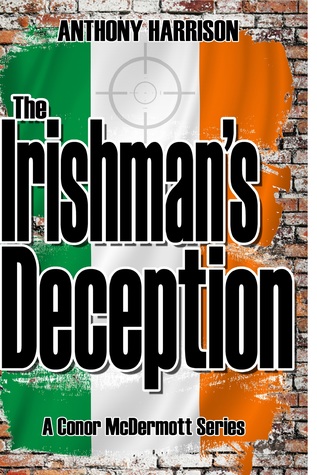
But, each evening, I would sit at my laptop, headphones in place putting a string of words together. After receiving feedback from fellow writers, I realized my passion had become a monster, and I had pantsed my way to nearly 113,000 words. After a moment of soul searching (and a few drams of Scotch), I pared my story in half. With each passing verse from ABBA to ZZ Top, I soon found myself reaching that first chapter I had written, the dramatic finish. After five and a half months, and over seventy-five-thousand words, I was finally able to type ’THE END’ to my first novel “The Irishman’s Deception.” Along the way I also took some of the fallen pieces and created a second novel, “Suspicious by Design.”
Over this time, I learned there is a 3-Part Act, there are emotional needs and inciting events, all parts of the story that should be included. Though I didn’t follow the ‘rules’ which so many others cite in their own terminology, I did learn that even though I enjoy the thrill of spewing forth words unencumbered on my laptop, it pays to have a few cheat sheets.
I now use a single sentence to establish my scenes, a sheet listing my characters and their relationships, and several shelves burdened with references. And thankfully, the ever-present hot key linking me to the internet, which allows me to view a myriad of information that the famous writers of yesteryear could only dream of.
Even though I’ve grown and continue to learn about the craft of writing, for me, the pleasure still remains in the act of writing what I’ve dreamed of, what inspires and intrigues me. And to think, it all started with an idea.



rejuvenatement - not retirement
...a crime-fictional site
Established in May 2011 to help nurture and inspire the poetic spirit.
A place for poems and pics
a simple pairing of pictures and poetry
Sharing Poetry and Hugs
Persistent WV Poet
A.I. Art and Poetry
short writing prompts
I am the way and the reality and the life...John 14:6
Submit your film, screenplay, novel, to the festival and get it showcased at the FEEDBACK Festival. Full Feedback on all entries.
Military Science Fiction Author
 The Writing Train: Join the locomotion