An Excerpt of Hymns Of The Republic by S.C. Gwynne


Hymns of the Repbulic upgrade image


From the New York Times bestselling, celebrated, and award-winning author of Empire of the Summer Moon and Rebel Yell comes the spellbinding, epic account of the dramatic conclusion of the Civil War.

The fourth and final year of the Civil War offers one of that era’s most compelling narratives, defining the nation and one of history’s great turning points. Now, S.C. Gwynne’s Hymns of the Republic addresses the time Ulysses S. Grant arrives to take command of all Union armies in March 1864 to the surrender of Robert E. Lee at Appomattox a year later. Gwynne breathes new life into the epic battle between Lee and Grant; the advent of 180,000 black soldiers in the Union army; William Tecumseh Sherman’s March to the Sea; the rise of Clara Barton; the election of 1864 (which Lincoln nearly lost); the wild and violent guerrilla war in Missouri; and the dramatic final events of the war, including the surrender at Appomattox and the murder of Abraham Lincoln.

Hymns of the Republic offers angles and insights on the war that will surprise many readers. Robert E. Lee, known as a great general and southern hero, is presented here as a man dealing with frustration, failure, and loss. Ulysses S. Grant is known for his prowess as a field commander, but in the final year of the war he largely fails at that. His most amazing accomplishments actually began the moment he stopped fighting. William Tecumseh Sherman, Gwynne argues, was a lousy general, but probably the single most brilliant man in the war. We also meet a different Clara Barton, one of the greatest and most compelling characters, who redefined the idea of medical care in wartime. And proper attention is paid to the role played by large numbers of black union soldiers—most of them former slaves. They changed the war and forced the South to come up with a plan to use its own black soldiers.

Popular history at its best, from Pulitzer Prize finalist S.C. Gwynne, Hymns of the Republic reveals the creation that arose from destruction in this thrilling read.

Amazon | Goodreads | Website | B&N


EXCERPT -Realistic Neon Sign on Brick Wall background


CHAPTER ONE: The End Begins

Excerpted from HYMNS OF THE REPUBLIC: The Story of the Final Year of the American Civil War, by S.C. Gwynne. Copyright © 2019 by Samuel C. Gwynne.  Excerpted with permission by Scribner, a Division of Simon & Schuster, Inc.


Washington, DC, had never, in its brief and undistinguished history, known a social season like this one. The winter of 1863–64 had been bitterly cold, but its frozen rains and swirling snows had dampened no spirits. Instead a feeling, almost palpable, of optimism hung in the air, a swelling sense that, after three years of brutal war and humiliating defeats at the hands of rebel armies, God was perhaps in his heaven, after all. The inexplicably lethal Robert E. Lee had finally been beaten at Gettysburg. Vicksburg had fallen, completing the Union conquest of the Mississippi River. A large rebel army had been chased from Chattanooga. Something like hope—or maybe just its shadow—had finally loomed into view.


The season had begun as always with a New Year’s reception at the Executive Mansion, hosted by the Lincolns, then had launched itself into a frenzy whose outward manifestation was the city’s newest obsession: dancing. Washingtonians were crazy about it. They were seen spinning through quadrilles, waltzes, and polkas at the great US Patent Office Ball, the Enlistment Fund Ball, and at “monster hops” at Willard’s hotel and the National. At these affairs, moreover, everyone danced. No bored squires or sad-eyed spinsters lingered in the shadows of cut glass and gaslight. No one could sit still, and together all improvised a wildly moving tapestry of color: ladies in lace and silk and crinolines, in crimson velvet and purple moire, their cascading curls flecked with roses and lilies, their bell-shaped forms whirled by men in black swallowtails and colored cravats.

The great public parties were merely the most visible part of the social scene. That winter had seen an explosion of private parties as well. Limits were pushed here, too, budgets broken, meals set forth of quail, partridge, lobster, terrapin, and acreages of confections. Politicians such as Secretary of State William Seward and Congressman Schuyler “Smiler” Colfax threw musical soirees. The spirit of the season was evident in the wedding of the imperially lovely Kate Chase—daughter of Treasury Secretary Salmon P. Chase—to Senator William Sprague. Sprague’s gift to Kate was a $50,000 tiara of matched pearls and diamonds. When the bride appeared, the US Marine Band struck up “The Kate Chase March,” a song written by a prominent composer for the occasion.

What was most interesting about these evenings, however, was less their showy proceedings than the profoundly threatened world in which they took place. It was less like a world than a child’s snow globe: a small glittering space enclosed by an impenetrable barrier. For in the winter of 1863–64, Washington was the most heavily defended city on earth. Beyond its houses and public buildings stood thirty-seven miles of elaborate trenches and fortifications that included sixty separate forts, manned by fifty thousand soldiers. Along this armored front bristled some nine hundred cannons, many of large caliber, enough to blast entire armies from the face of the earth. There was something distinctly medieval about the fear that drove such engineering.

The danger was quite real. Since the Civil War had begun, Washington had been threatened three times by large armies under Robert E. Lee’s command. After the Union defeat at the Second Battle of Bull Run in August 1862, a rebel force under Lee’s lieutenant Stonewall Jackson had come within twenty miles of the capital while driving the entire sixty-thousand-man Union army back inside its fortifications, where the bluecoats cowered and licked their wounds and thanked heaven for all those earthworks and cannons.

A year and a half later, the same fundamental truth informed those lively parties. Without that cordon militaire, they could not have existed. Washington’s elaborate social scene was a brocaded illusion: what the capital’s denizens desperately wanted the place to be, not what it actually was.

This garishly defended capital was still a smallish, grubby, corrupt, malodorous, and oddly pretentious municipality whose principal product, along with legislation and war making, was biblical sin in its many varieties. Much of the city had been destroyed in the War of 1812. What had replaced the old settlement was both humble and grandiose. Vast quantities of money had been spent to build the city’s precious handful of public buildings: the Capitol itself (finished in December 1863), the Post Office Building, the Smithsonian Institution, the US Patent Office, the US Treasury, and the Executive Mansion. (The Washington Monument, whose construction had been suspended in 1854 for lack of funds, was an abandoned and forlorn-looking stump.)

But those structures stood as though on a barren plain. The Corinthian columns of the Post Office Building may have been worthy of the high Renaissance, but little else in the neighborhood was. The effect was jarring, as though pieces of the Champs-Élysées had been dropped into a swamp. Everything about the place, from its bloody and never-ending war to the faux grandiosity of its windswept plazas, suggested incompleteness. Like the Washington Monument, it all seemed half-finished. The wartime city held only about eighty thousand permanent residents, a pathetic fraction of the populations of New York (800,000) and Philadelphia (500,000), let alone London (2.6 million) or Paris (1.7 million). Foreign travelers, if they came to the national capital at all, found it hollow, showy, and vainglorious. British writer Anthony Trollope, who visited the city during the war and thought it a colossal disappointment, wrote:

Washington is but a ragged, unfinished collection of unbuilt broad streets.… Of all the places I know it is the most ungainly and most unsatisfactory; I fear I must also say the most presumptuous in its pretensions. Taking [a] map with him… a man may lose himself in the streets, not as one loses oneself in London between Shoreditch and Russell Square, but as one does so in the deserts of the Holy Land… There is much unsettled land within the United States of America, but I think none so desolate as three-fourths of the ground on which is supposed to stand the city of Washington.

He might have added that the place smelled, too. Its canals were still repositories of sewage; tidal flats along the Potomac reeked at low tide. Pigs and cows still roamed the frozen streets. Dead horses, rotting in the winter sun, were common sights. At the War Department, one reporter noted, “The gutter [was] heaped up full of black, rotten mud, a foot deep, and worth fifty cents a car load for manure.” The unfinished mall where the unfinished Washington Monument stood held a grazing area and slaughterhouse for the cattle used to feed the capital’s defenders. The city was both a haven and a dumping ground for the sort of human chaff that collected at the ragged edges of the war zone: deserters from both armies, sutlers (civilians who sold provisions to soldiers), spies, confidence men, hustlers, and the like.

Washington had also become the nation’s single largest refuge for escaped slaves, who now streamed through the capital’s rutted streets by the thousands. When Congress freed the city’s thirty-three hundred slaves in 1862, it had triggered an enormous inflow of refugees, mostly from Virginia and Maryland. By 1864 fifty thousand of them had moved within Washington’s ring of forts. Many were housed in “contraband camps,” and many suffered in disease-ridden squalor in a world that often seemed scarcely less prejudiced than the one they had left. But they were never going back. They were never going to be slaves again. This was the migration’s central truth, and you could see it on any street corner in the city. Many would make their way into the Union army, which at the end of 1863 had already enlisted fifty thousand from around the country, most of them former slaves.

But the most common sights of all on those streets were soldiers. A war was being fought, one that had a sharp and unappeasable appetite for young men. Several hundred thousand of them had tramped through the city since April 1861, wearing their blue uniforms, slouch hats, and knapsacks. They had lingered on its street corners, camped on its outskirts. Tens of thousands more languished in wartime hospitals. Mostly they were just passing through, on their way to a battlefield or someone’s grand campaign or, if they were lucky, home. Many were on their way to death or dismemberment. In their wake came the seemingly endless supply trains with their shouting teamsters, rumbling wagon wheels, snorting horses, and creaking tack.

Because of these soldiers—unattached young men, isolated, and far from home—a booming industry had arisen that was more than a match for its European counterparts: prostitution. This was no minor side effect of war. Ten percent or more of the adult population were inhabitants of Washington’s demimonde. In 1863, the Washington Evening Star had determined that the capital had more than five thousand prostitutes, with an additional twenty-five hundred in neighboring Georgetown, and twenty-five hundred more across the river in Alexandria, Virginia. That did not count the concubines or courtesans who were simply kept in apartments by the officer corps. The year before, an army survey had revealed 450 houses of ill repute. All served drinks and sex. In a district called Murder Bay, passersby could see nearly naked women in the windows and doors of the houses. For the less affluent—laborers, teamsters, and army riffraff—Nigger Hill and Tin Cup Alley had sleazier establishments, where men were routinely robbed, stabbed, shot, and poisoned with moonshine whiskey. The Star could not help wondering how astonished the sisters and mothers of these soldiers would be to see how their noble young men spent their time at the capital. Many of these establishments were in the heart of the city, a few blocks from the president’s house and the fashionable streets where the capital’s smart set whirled in gaslit dances.

This was Washington, DC, in that manic, unsettled winter of 1863–64, in the grip of a lengthening war whose end no one could clearly see.


Excerpted from HYMNS OF THE REPUBLIC: The Story of the Final Year of the American Civil War, by S.C. Gwynne. Copyright © 2019 by Samuel C. Gwynne.  Excerpted with permission by Scribner, a Division of Simon & Schuster, Inc.


SC Gwynee Head shot iamge


About the Author:

S.C. Gwynne is the author of Hymns of the Republic: The Story of the Final Year of the American Civil War and the New York Times bestsellers Rebel Yell and Empire of the Summer Moon, which was a finalist for the Pulitzer Prize and the National Book Critics Circle Award. He spent most of his career as a journalist, including stints with Time as bureau chief, national correspondent, and senior editor, and with Texas Monthly as executive editor. He lives in Austin, Texas, with his wife. For more information, please visit https://scgwynne.com



Vintage Steam Train Crossing a River in Colorado


Book Review: Realm of Knights by Jennifer Anne Davis


Realm of Nights Banner


***The first book in a new fantasy series from best-selling author Jennifer Anne Davis.***


Realm of Knights (audiobook)


About the Audiobook


Author: Jennifer Anne Davis

Narrator: Kim Bretton

Length: hours minutes

Publisher: Reign Publishing⎮2019

Genre: Fantasy

Series: Knights of the Realm, Book 1

Release date: Oct. 11, 2019


Synopsis: Reid has spent her whole life pretending to be a man so she can inherit her father’s estate, but when a chance encounter threatens to expose her lie, she is forced to risk everything.

In the kingdom of Marsden, women are subservient to men, and land can only pass from father to son. So, when Reid Ellington is born, the fifth daughter to one of the wealthiest landholders in the kingdom, it’s announced that Reid is a boy.    

Eighteen years later, Reid struggles to conceal the fact she’s actually a young woman. Every day, her secret becomes harder to keep. When one of Marsden’s princes sees her sparring with a sword, she is forced to accept his offer and lead her father’s soldiers to the border. Along the way, she discovers a covert organization within the army known as the Knights of the Realm. 

If Reid wants to save her family from being arrested for treason and robbed of their inheritance, she will have to join the knights and become a weapon for the crown.    

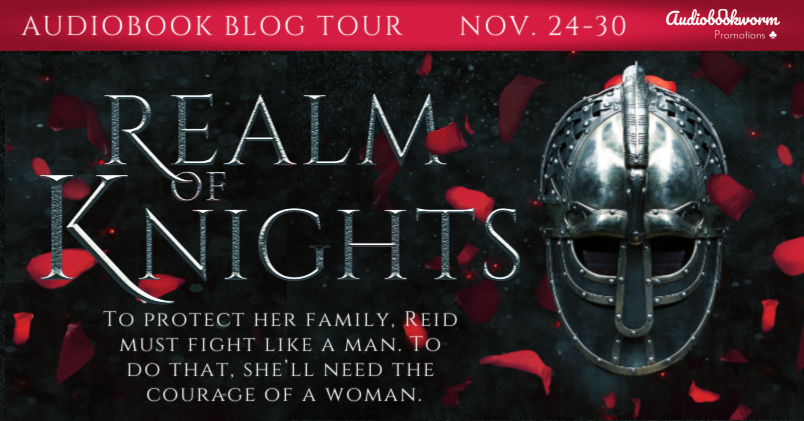
To protect her family, Reid must fight like a man. To do that, she’ll need the courage of a woman.

This is the first book in a new fantasy series from best-selling author Jennifer Anne Davis


Buy Links

Buy on AmazonAudible


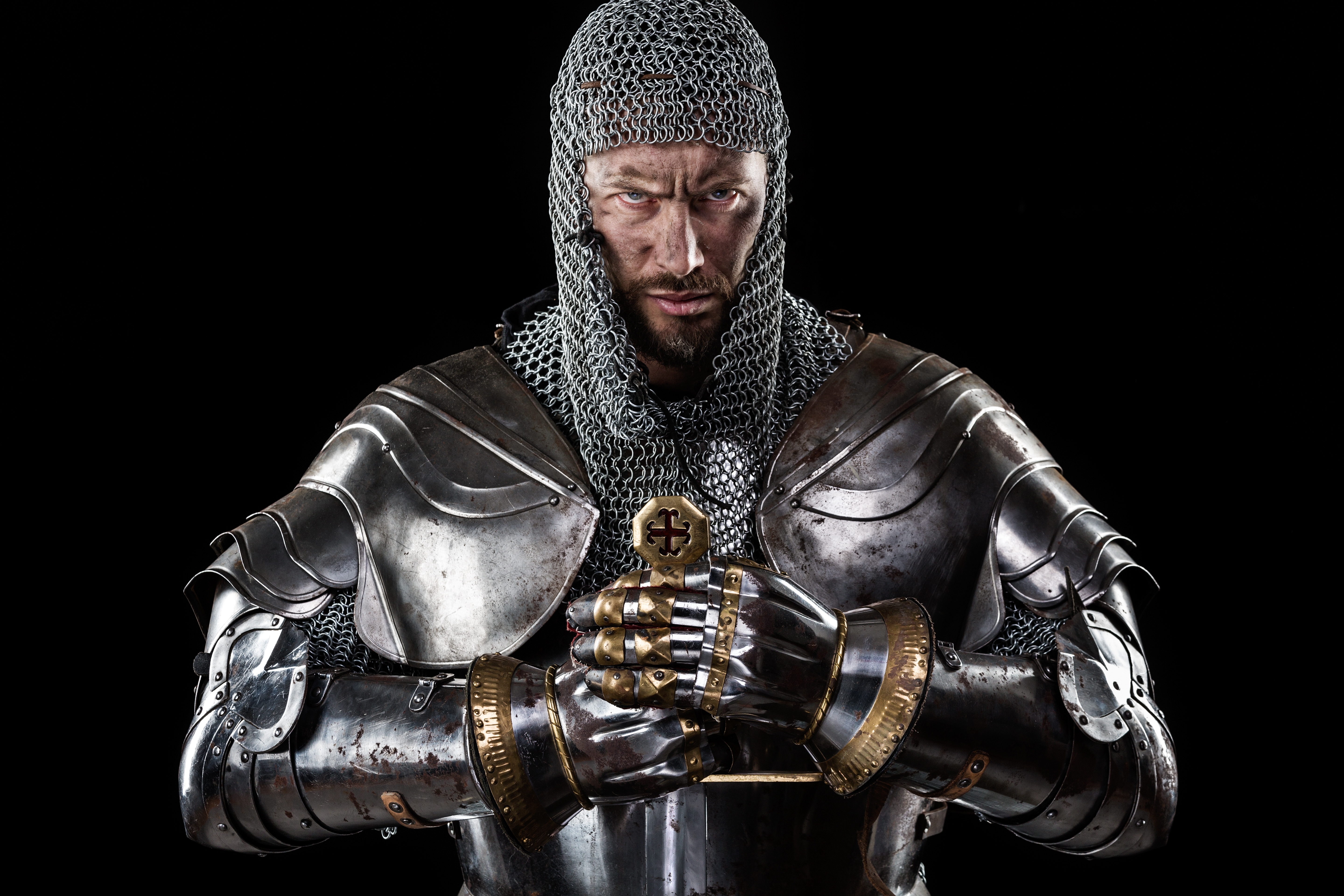
Medieval Warrior with Chain Mail Armour and Sword


BOOK REVIEW


The Realm of Knights is a gem! I was very delighted to find this book via Audiobookwormpromotions.com. The premise, plotting, characterization is excellent. Reid Ellington is faced with a dilemma at every turn that forces her to comply and keep her family secret. I thought the writing was brilliant. It kept me turning the pages! 


concept image of setting a five star goal. increase rating or ranking, evaluation and classification idea. Top view. Flat lay.


AUTHOR INTERVIEW 


How often do you write?

I write five days a week, 8-10 hours a day. I usually set a goal for myself, and I’ll work until I reach that goal. When I’m writing a first draft, I try and write 5,000 words a day. Then when I’m editing, I usually try and edit 10 pages a day.


Tell us a little bit about the characters in Realm of Knights.

Realm of Knights is centered around Reid Ellington. She’s an 18 year old young woman, and the fifth daughter of Duke Ellington. Since land and title can only pass from father to son, the duke tells everyone Reid is a boy when she’s born. So Reid has grown up wearing boy clothing and playing with boys. It has made her fiercely independent and she views the world differently than those around her. There are a few other characters of importance in the book. Her best friend, Harlan, helps her out. He’s the sort of guy that’s always there, fiercely loyal, and he respects Reid even when he learns she’s a woman. Then there’s the princes—Ackley and Gordon. They’re brothers and best friends. Ackley is tall and lean. There’s a fierceness to him that he manages to keep hidden. Gordon is the commander of the army. He’s shorter and stockier than Ackley, he’s fairly quiet, and he’s a little stubborn. 


How do you balance other aspects of your life with your writing? 

It’s hard to balance everything. I treat writing as my full-time job (because it is). It allows me the freedom to be there for my kids when they need me. However, when I’m on a deadline, it can be rough revising when I need everything to be quiet around me. Thankfully, my family is very supportive and we make it work.


What makes a great story line? 

Interesting characters that the reader can connect with, an obstacle the main character has to overcome, a fantastic villain, and a unique love interest.


What is the hardest thing about writing a book? 

Revising. Writing the first draft is the fun part. Revising—which is basically rewriting the entire story—is difficult for me. I want to make sure that everything I’m thinking and feeling in my head is exposed on the page. It usually takes me about 25 min to revise one page.


Do you have any people who help you with your story lines as well beta reading and such? 

Yes. I have two people that read everything I write. They’ve both been with me for years, and I couldn’t write without them. One started out as my biggest critic and now is my biggest cheerleader. The other is a pro at finding plot holes and inconsistencies. 


How did you choose your narrator?

For Realm of Knights, I wanted a female voice with a British accent. It was important to me that the narrator have a youthful voice since Reid is only 18. However, I also wanted her to have a maturity to her that hints at the hardships Reid has faced over the years. When I was listening to auditions, the second I heard Kim’s voice, I knew I’d found the perfect narrator. I was so excited when she agreed to take on the project, that I had her sign for all three books in the series. She is the perfect person for these books, and I couldn’t be happier. 


About the Author: Jennifer Anne Davis


Jennifer Anne Davis graduated from the University of San Diego with a degree in English and a teaching credential. She is currently a full-time writer and mother of three kids, one weimaraner, and a tortoise. She is happily married to her high school sweetheart and lives in the San Diego area.

Jennifer is the recipient of the San Diego Book Awards Best Published Young Adult Novel (2013), winner of the Kindle Book Awards (2018), a finalist in the USA Best Book Awards (2014), and a finalist in the Next Generation Indie Book Awards (2014).

Publishers Marketplace listed Jennifer as one of the best-selling indie authors in June 2017. She has also been ranked among the top 100 best-selling authors on Amazon.


WebsiteTwitterFacebookInstagramPinterest


Narrator Kim Bretton


About the Narrator: Kim Bretton


Kim is an accomplished and award winning actress and director with West End/Broadway theatre credits. Kim has narrated over 35 audiobooks and counting. She is also an in demand voice over talent in the commercial and corporate arena and owns her own class A recording studio in Nashville. Kim is from the UK but has lived in NYC, L.A. and now Nashville TN. She continues to work in Theatre, Film and TV as an actress and a director alongside narrating audiobooks and commercial voice overs. 


Website


Vintage Steam Train Billowing Smoke in the Snow as it Moves Through the Mountains.


200th Episode: Four Years of the Self Publishing Show with Mark Dawson & James Blatch


IT’S TELEVISION TUESDAY


TV child watching image


200th Episode: Four Years of the Self Publishing Show (The Self Publishing Show, episode 200)


PATREON: Self Publishing Formula Show’s Patreon page

SPF FOUNDATION:


Train black and white image


Stop Worrying and Start Writing With Sarah Painter & Mark Dawson


IT’S TELEVISION TUESDAY


television-tuesday


Stop Worrying and Start Writing (The Self Publishing Show, episode 199)


Self Publishing Formula’s Patreon Page

The Worried Writer Podcast


Old steam train


How To Create A STORYBOARD For Your Book With Author Kristen Martin


IT’S TELEVISION TUESDAY


Retro television with white noise / high contrast image


How To Create A STORYBOARD For Your Book | STORYBOARDING YOUR NOVEL TUTORIAL


Kristen Martin Alpha Drive Series

Shadow Crown Series


train black and white image


Author Interview with Pulitzer Prize Finalist S.C. Gwynne of Hymns of the Republic


Hymns of the Repbulic upgrade image


From the New York Times bestselling, celebrated, and award-winning author of Empire of the Summer Moon and Rebel Yell comes the spellbinding, epic account of the dramatic conclusion of the Civil War.

The fourth and final year of the Civil War offers one of that era’s most compelling narratives, defining the nation and one of history’s great turning points. Now, S.C. Gwynne’s Hymns of the Republic addresses the time Ulysses S. Grant arrives to take command of all Union armies in March 1864 to the surrender of Robert E. Lee at Appomattox a year later. Gwynne breathes new life into the epic battle between Lee and Grant; the advent of 180,000 black soldiers in the Union army; William Tecumseh Sherman’s March to the Sea; the rise of Clara Barton; the election of 1864 (which Lincoln nearly lost); the wild and violent guerrilla war in Missouri; and the dramatic final events of the war, including the surrender at Appomattox and the murder of Abraham Lincoln.

Hymns of the Republic offers angles and insights on the war that will surprise many readers. Robert E. Lee, known as a great general and southern hero, is presented here as a man dealing with frustration, failure, and loss. Ulysses S. Grant is known for his prowess as a field commander, but in the final year of the war he largely fails at that. His most amazing accomplishments actually began the moment he stopped fighting. William Tecumseh Sherman, Gwynne argues, was a lousy general, but probably the single most brilliant man in the war. We also meet a different Clara Barton, one of the greatest and most compelling characters, who redefined the idea of medical care in wartime. And proper attention is paid to the role played by large numbers of black union soldiers—most of them former slaves. They changed the war and forced the South to come up with a plan to use its own black soldiers.

Popular history at its best, from Pulitzer Prize finalist S.C. Gwynne, Hymns of the Republic reveals the creation that arose from destruction in this thrilling read.


Amazon | Goodreads | Website | B&N


SC Gwynee side view image


Interview with S. C. Gwynne,

Author of Hymns of the Republic


  • How did you develop a love for history?


The first history books I loved were the Cornelius Ryan works about World War II: The Longest Day and A Bridge Too Far. I also loved the Bruce Catton books about the Civil War, starting with A Stillness at Appomattox and This Hallowed Ground. Note the war theme. These books taught me what history could do. I had two great professors at Princeton—Stephen Cohen (Soviet history) and Robert Darnton (history of the French revolution)—who really inspired me.


  • What’s the significance behind the title, Hymns of the Republic? 


The title is a play on “Battle Hymn of the Republic,” that Bible-based, blood-drenched, sword-themed song of divine triumph that the northern soldiers liked to sing. I meant to suggest other “hymns,” in a more metaphorical sense, that were sung by the various constituencies of the war. (Black soldiers actually had their own battle hymn!)


  • What drew you to write about the final year of the civil war?


A few years ago I wrote a biography of Stonewall Jackson, entitled Rebel Yell, that ended with his death in May 1863 and thus covered roughly the first two years of the war. When I was researching the last year of the conflict, I was struck by how much more violent, desperate, brutal, and vengeful the war had become. This was the product of many things, including the progressive destruction of southern property, southern industry, and southern wealth; the staggering body counts from the Grant-Lee fight in Virginia; the anti-civilian warfare of William T. Sherman and Phil Sheridan; the rise of the prisoner of war camps; the rise of a bitter guerrilla war; and the presence of 180,000 black soldiers in the northern army, which drove Confederate soldiers to unprecedented acts of violence. I wanted to try to convey how deeply the war had changed, and the final year gave me a mechanism by which to do that.


  • Do you follow a certain process for writing nonfiction?


For this book I did about a year of background reading, then proceeded to research and write each chapter as I went along. I always travel to the places I am writing about. The research/writing ratio was probably 60-40.


  • How do you take facts from history, or story that’s already been told, and turn it into a compelling narrative?


Characters are always the drivers of compelling narratives. So I start with interesting characters and do as much reading as I can in their memoirs, letters, and other documents, as well as other primary sources of the era. With a character like Grant, about whom much has been written, I just try to look for a particular angle that other historians haver not pursued. The difference lies less in the facts themselves than in how I analyze those facts.


  • If you had an opportunity to change anything about the civil war, would you?


That is a very hard question. Assuming that the war had to happen, I guess that the single worst piece of news for the nation, and for its future, was the assassination of Lincoln. So I would save Lincoln.


  • How do you think the final year of the war shaped us as a nation today?


Again, tough question! You can pick up virtually any major newspaper these days and immediately grasp the fact that the United States of America has not solved its problems with race. One can argue that it hasn’t even come to terms with them. Our nation has always been deeply divided. More than twenty percent of the residents of the American colonies were loyal to the English king. I grew up in the 1960s, a time when the nation was badly split over the Vietnam War. There were race riots in the streets, riots at the Democratic convention. In 2019 we are deeply divided. The Civil War was the worst split of all. 750,000 men died because Americans could not agree on questions related to race and the future of the country. I actually take a positive lesson from this. I think you can read about the war and understand 1) that we are by nature divided, sometimes violently; and 2) that in spite of these problems we always manage to muddle through. Democracy is messy, and often violent, but the republic stands. 


SC Gwynee Head shot iamge


About the Author:

S.C. Gwynne is the author of Hymns of the Republic: The Story of the Final Year of the American Civil War and the New York Times bestsellers Rebel Yell and Empire of the Summer Moon, which was a finalist for the Pulitzer Prize and the National Book Critics Circle Award. He spent most of his career as a journalist, including stints with Time as bureau chief, national correspondent, and senior editor, and with Texas Monthly as executive editor. He lives in Austin, Texas, with his wife. For more information, please visit https://scgwynne.com


How to Turn a Struggle Into a Strength with Mark Dawson & Hilary Jastram


IT’S TELEVISION TUESDAY


TV Television Tuesday


How to Turn a Struggle Into a Strength (The Self Publishing Show, episode 196)


The Self Publishing Formula

The Self Publishing Show Patreon Page


freight train


How To Get Organized To Write Your Book & Preparation for NaNoWriMo With Kristen Martin


IT’S TELEVISION TUESDAY


woman  watching  tv


How To Get Organized To Write Your Book | PREPARATION FOR NANOWRIMO


www.kristenmartinbooks.com

www.nanowrimo.org


Vintage steam train with yellow wagons going uphill in mountain area


The Catharsis of Memoir Writing by Beth Ruggiero York


Airplane take off over the panorama city at twilight scene


Beth Ruggiero York


Beth York Headshot 2 image


The Catharsis of Memoir Writing

by Beth Ruggiero York

Author of Flying Alone: A Memoir 


It takes courage to write a memoir. Sort of like going to confession if you are Catholic. If you want absolution, you must admit to all the stupid things you’ve done. Similarly, if you want to sell your story, you must bare your moments of weakness to readers. The difference is that, in a memoir, you also get to tell about your triumphs and how you won in the end. Your life events need to span the full gamut of what life has thrown at you and resonate in the readers’ hearts and minds, and this means going deep into your soul to create the story, your story


For me, Flying Alone was not going to be a memoir, even though all the events and characters are real. It was going to be a novel. Actually, it was to be a memoir masquerading as a novel, complete with names changed to protect the innocent and not so innocent. This way, I could fully reveal the events without having to own up to them. Those years in the 1980s when I was climbing and clawing my way up the aviation ladder were filled with risk, dangerous situations and some bad decisions. When I lost my FAA medical certificate in 1990 with the diagnosis of multiple sclerosis, my aviation career ended and I knew I had to write about it. Even though I wasn’t ready to expose some of it, I still pushed those thoughts aside and wrote… and wrote. The memories were fresh, and I could record them in the greatest detail. After completing the writing, I put it in a box and set it aside knowing that someday there would be a time to revisit it. Well, the time passed until about two years ago, when I finally knew I was ready. 


I read it all the way through for the first time in so very long, reliving the experiences with all the edge-of-my-seat terror and suspense as when it actually happened. 

Even though it was intended to be a novel, written in the third-person to shield myself from what readers might think of my escapades, there was no doubt only halfway through rereading it that it was, in fact, a memoir of a very turbulent time in my life. This posed the greatest difficulty in the editing process—telling it as my personal story in the first person, i.e., baring myself to readers and owning the truth. I had to make peace with all that had happened back then and, ultimately, I shared everything and could forgive myself for old mistakes and regrets. 

At times, the distance of thirty years made it seem unreal, but that separation also helped me to look at those years with the objective compassion that comes with maturity. I remember and love the people who played important roles during that time, from Rod, my employer, mentor and flight examiner, to Melanie, my student, friend and cheerleader, and Peter, my dear friend and fellow risk taker who paid the highest price.

Flying Alone is the result of the cathartic process called memoir writing. But not only is this process cleansing and peace-making, it serves another important purpose—that is, recording history. Whether my history is important or not is not the point. Rather, the point is it is the history of a time and a small slice of life at that time. 

In sharing my story, my hopes are for a variety of reactions from a variety of people. For other women, I hope they can see how it is possible to emerge from life situations and decisions that make you feel as desperate as an airplane in an uncontrollable spin. My relationship with Steve was just that, and even though recovery was never a guarantee, persistence allowed it to happen. 

I equally hope that young women aspiring to careers in aviation and other male-dominated professions will understand that it can be done successfully. Certainly, the circumstances are much more forgiving today than they were in the 1980s, but there still remain obstacles. I hope the ultimate message received is never to give up even when it just doesn’t seem worth the effort anymore. Don’t plant the seeds for later regrets.

Of course, I also want to share it with pilots of all types so they can see my side of the world of civil aviation and perhaps derive amusement, stir their own memories or, in the case of student pilots, learn what not to do. An early reviewer of my book summed it up in this way: “… [Beth’s] book will warm the hearts of grizzled pilots like me or anyone seeking insight into the challenges and rewards of flying.”

As I look back, despite the fact that quite a bit of courage is needed to write a memoir, the memoir is in fact a reward earned for simply living life. Taking the time to look back on years past and contemplate the events that have shaped and changed you as well as others is an act of accepting yourself, but writing about these events to share with others is the reward.


Beth York nature shot image


About the Author: 

Beth Ruggiero York is the author of Flying Alone: A Memoir. She is a former airline pilot for Trans World Airlines. She entered the world of civil aviation in 1984 shortly after graduating from college and, for the next five years, climbed the ladder to her ultimate goal of flying for a major airline. Beth originally wrote Flying Alone in the early 1990s, shortly after her career as a pilot ended and the memories were fresh. She is now a Chinese translator and a professional photography instructor for Arizona Highways PhotoScapes. She has published a popular instructional book on night photography, Fun in the Dark: A Guide to Successful Night Photography, which has worldwide sales, and she has co-written a book entitled, Everglades National Park: A Photographic Destination. Beth and her husband live in Fountain Hills, AZ. For more information, please visit https://bethruggieroyork.com and follow Beth on Facebook, LinkedIn and Instagram.


modern aircraft of an airfield


Mark Dawson Live from Florida! At the NINC Conference


IT’S TELEVISION TUESDAY


TV display 3D rendering


Live from Florida! At the NINC Conference (The Self Publishing Show, episode 194)


Patreon: Self Publishing Formula Show’s Patreon Page: Patreon

Self Publishing Formula 101 Course: SPF 101


Train on Nine arch Bridge in Sri Lanka. Beautiful train track in hill country. Old bridge in Ceylon.