
IT’S TELEVISION TUESDAY
WITH JOANNA PENN & STEVEN PRESSFIELD


Suzanne is an award-winning author of historical crime fiction set during the American Revolution. She is also one of our talented participating authors in this years Mystery Thriller Week event Feb. 12-22. Don’t miss it!
Suzanne currently has two series:
Mysteries of the American Revolution series
Paper Woman
The Blacksmith’s Daughter
Camp Follower
Michael Stoddard American Revolution Mysteries
Deadly Occupation
Regulated for Murder
A Hostage to Heritage

We all perceive things a bit differently. The subtle shifts in perception makes all the difference from person to person. The faculty of sight may be the same, however the interpretation and reflection is quite different. Different indeed.
Now come, let us see through the eyes of yet another talented author…
*Who shaped your reading experience as a child?
Preschool, my reading experience was shaped by my mother, a schoolteacher. After that it was shaped by peers, popular television shows like Star Trek, and the Space Program. (I’m a native of Florida.)
I really appreciate how important early reading experiences are. They help sow the seeds that develop much later in life.

*Which books had the most impact on you in the early years?
In elementary school I devoured books in the Nancy Drew series. I also enjoyed biographies of women like Sacajawea and Abigail Adams. Later I shifted to reading classic science fiction, horror, historical fiction, and mysteries.
I’ve heard many authors begin with the Nancy Drew series! Sounds like you have a wide ranging interest in books.

*How did you develop a love for history?
That didn’t happen until I’d graduated from high school—where I had to memorize dates and details of long-ago battles without much context—and had the room to appreciate Florida’s fascinating history. When I studied history on my own, I discovered how horribly biased high-school history had been. History became fascinating because it was no longer sanitized.
Oh wow. You had quite an eye opening experience. I wonder why history books are biased? I’m sure that would open up a few can of worms!!

*Did you read historical fiction or texts in high school?
Yes, I read biographies of people who’d lived centuries earlier. I tried reading historical romances, but although the historical periods often inspired me to research them on my own, the characters did not appeal to me.
Wow. Not too many teenagers read historical biographies. This is rather impressive. If I were to start with biographies it’d be deathly boring. Reading historical fiction would have the reverse effect however.

*Which books developed your love for science fiction?
Most fiction written by H.G. Wells, Jules Verne, Ray Bradbury, Ursula LeGuin, Robert Silverberg, Larry Niven, Jerry Pournelle, H.P. Lovecraft, and Poul Anderson. Andre Norton’s “Witchworld.” Anne McCaffrey’s “Pern.” Marion Zimmer Bradley’s “Darkover.”
Great group of authors!!
*What sources do you read for American history?
In the last twenty years, there’s been a surge of research published by scholars and historians on the Southern theater of the American Revolution. That’s the setting for my series, and in the back of each of my novels, I include a one-page bibliography of those works that were helpful.
Oh good. I hope to get a copy of a few of your books soon.

*Name 3 of your favorite historical people.
Enheduanna, Hannibal Barca, Dag Hammarskjöld
Yikes. Never heard of these guys.
*Name 3 things you hate about American history education.
Only three? Gee. It downplays or omits the successes of the “enemy” while downplaying or omitting American mistakes. It offers almost no hands-on interaction with historical elements, so it’s boring. And you don’t learn specific examples of how history repeats itself.
Now I can smell the bias there. It’s amazing what we willingly omit from the truth.

*What draws you to the American Revolution?
Religion was losing its stranglehold over people’s thinking as well as the running of governments during that time. Scientific thinking and processes were emerging as acceptable. Women also had more freedoms during the Revolution than they did prior to the war or for more than a century afterward. And with industry gaining momentum, the average person was no longer totally dependent upon handmade items.
Rather intriguing!

*Besides the revolution what are your favorite parts of history?
I’m fascinated with early civilizations, such as the people of the Indus Valley, Anatolia, and Sumer. However some periods of history I avoid because they’ve been done to death: Tudor, Elizabethan, Regency, Victorian, and recently WW1.
I have interest in the early civilizations as well. Most recently, the early native Americans.
*Name historical fiction authors or books you enjoy.
Ellis Peters, Mary Stewart, Robert Louis Stevenson, Ashley Gardner, Daphne du Maurier.
Thanks! I always love good recommendations.
*Who are your favorite science fiction characters?
I have a soft spot for many of the characters (guests and regulars) of Star Trek: the Original Series as well as Star Trek: Deep Space Nine. Also Lois McMaster Bujold’s protagonist Cordelia Naismith in Shards of Honor and Barrayar; and Maggie Black, protagonist in Terri Windling’s The Wood Wife. And, of course, Princess Leia.
Hard not to like the old Star Trek classics. I love what they’ve done with the new series too. I’m a big fan of the Fringe, Star Wars, 100 etc. The list go on and on…

*Name 3-5 pet peeves as a reader.
o Breaking a promise to the reader or otherwise not playing fair
o Creating a stupid villain or antagonist
o Dumping in pages of description or backstory that can easily be skipped
o Giving a protagonist unmerited rewards
*If you were a time traveler where would you go?
The future.
One that would bother me the most would be a stupid villain. I personally believe that ruins the entire story.

*Which historical customs would you bring into our society?
o Courtesy and politeness. In my lifetime, I’ve seen people become outrageously rude.
Instead of finding it appalling, society now considers rudeness entertainment.
o A thirst for knowledge. Where have all the critical thinkers gone?
I always enjoy seeing the different responses to this question. Your last response is rather intriguing.

*If you had to marry someone in the American Revolution who would it be?
It would be someone with many of John Adams’s qualities, but he needn’t necessarily be a patriot. In addition to being intelligent, Adams recognized and appreciated the intelligence of women. He didn’t chase petticoats like Ben Franklin did. He wasn’t a party animal like his cousin Sam, or Paul Revere, or John Hancock. (Wow, get those three together, and they’d drink all your booze.) He wasn’t weird, like Thomas Jefferson was. He also didn’t allow sentiment to derail his logic, demonstrated by his ability to successfully represent the British soldiers involved in the Boston “Massacre.”
Wonderful. I need to learn more about John Adams. I have a book about him buried deep in my TBR list.

*****


Gertrude spent the better part of her adult life scouring Europe for Helmut Klingenfelter, the father who vanished not only from her life and that of her mother but had forsaken everyone in his past.
With midlife looming on the horizon, Gertie made the decision to stop chasing the ghosts of the past and return to her childhood home of Pitch Pine, where she purchased a century-old house at 1211 Castle Lane sight unseen.
Elderhaus, as it came to be known, had a mysterious past of its own, one that would threaten more than Gertrude’s desire for finding happiness.
*Who is Anyaleise Klingenfelter?
Anyaleise Hoffmann (aka Anya Klingenfelter) is the mother of Gertrude Klingenfelter. Anya was born the daughter of a Jewish farmer named Jacob Hoffmann and his wife, Leah Hoffman.
*Does her name mean anything?
Anyaleise is a name of German origin. In German the meaning of the name Anyaleise is: Derived from a compound of Anna (meaning grace) and Liesa, which is a German diminutive of Elizabeth (God is bountiful).
*What part of Germany is she from?
from Alsace-Lorraine on the border of France and Germany.

*How did you come up with the concept for Anya?
Right before I awoke on a Saturday morning, I heard the name Gertrude Klingenfelter in a sort of dream. When I sat up in bed, I knew that this is was the day I was to begin my novel and that Gertrude Klingenfelter was to be my protagonist. I started researching the origin of the surname Klingenfelter, which lead me to a town in Germany in the 1500s. It was called Lingenfelter and since people in that time didn’t really have surnames, they were known by the village where they resided. In my book, all of Gertrude’s father, Helmut’s, family spells their name without the ‘K’ to their name. One of the questions Gertrude has in her quest to find her father is why he added the ‘K’to their name when he came to America. [Helmut had been a very secretive man and had never shared anything about his pasts with his wife or his child. As I continued my research on the family name, I found myself studying Nazi Germany and the back-story of Anya’s family came to life. The back story was eventually removed from ‘Elderhaus’ during editing, as the publisher felt it detracted from the evolution of the story. I’m so glad that I’m able to share some of it with you here, as it was very compelling as I was writing it.

*What was her experience like in Nazi Germany?
Jacob Hoffmann secluded his family in the hills outside Alsace-Lorraine. They farmed and lived off the land. Only Jacob ever ventured into town to purchase supplies and he sometimes picked up books for his wife Leah to home school Anya. Because they lived on the border of France and Germany, Leah taught Anya French and English, because she hoped someday her daughter would be able to leave the confines of their mountain sanctuary. One day, a strangely dressed man named Isaac who wore a tattered black hat with long curls down each side of his face appeared at their door and spoke in a foreign language that Anya did not understand. Her father, however, seemed to understand perfectly and hurried the man from the door and into the barn. She learned much later, that man irrevocably change their lives and those of future generations forever.
Anya overheard the following life-altering conversation between her father and mother in August of 1948:
“You and Anya must pack your personal belongings quickly and prepare for a trip via a military cargo ship to America. The American leader has signed a law called the Displaced Person’s Act. 205,000 displaced persons and 17,000 orphans are going to be permitted entry into the country and we will be among those immigrants,” said her Father. “In order to immigrate, a displaced person must have a sponsor who is willing to arrange for housing and employment upon arrival.
Perhaps you remember the man called Isaac, the transient, Hasidic Jew who visited our farm some time ago? It seemed he was traveling throughout Europe, as part of a mission trip to find, free and assist other Jews before they disappear, as so many of our brethren have done. Isaac told me the Nazi regime has been capturing trainloads of Jews and hauling them off to concentration camps where they are treated deplorably and murdered in gas chambers. He urged me to take our family and flee Germany.
Soon, their bags were loaded onto the cargo ship in Bremerhaven. After what seemed an eternity aboard the military cargo ship, they arrived in New York.
They spent two nights at a hostel in New York City before Isaac was able to manage transportation for them to Pennsylvania. He arranged work for Jacob at a small carpentry shop in Milford, near Pitch Pine”

*What impact did this have on her?
Anya had been segregated from the community growing up, so she was very anxious to find new friends in Pitch Pine. That also made her vulnerable to people who befriended her for their own agenda….particularly the mayor’s wife, Dottie Franklin. Anya trusted Dottie with her life and Dottie betrayed her.
After Gertie finished college, she left for Europe to try to find her father and get answers to his disappearance. Anya went to work in Polka Dot’s dress shop, which belonged to Dottie Franklin, the Mayor’s wife . One day Dot came in to find that Anya had apparently hanged herself with several yards of silk brocade, but was it really as it appeared?
*How did this impact her relationship with her daughter Gertrude?
After her Helmut abandoned Anya and Gertie when she was just five years old, she trusted no one, except her mother. She found that animals were more loyal and loving than people and she ‘collected’ every injured or stray animal she found. Old Doc Myers would patch them up and Gertie would care for them until they were able to go back out on their own (wild animals) or she would find homes for the domestic animals.
In later life, her love for the animals lead her to her one true love and her collection of senior dogs is why she named her home ‘Elderhaus’ (which means ‘old house’ in German).

*Who forced her to have an arranged marriage?
Anyaleise was seventeen when her family arrived in America. home-schooled me. Her father immediately set about finding a matchmaker who would choose a suitor for her. since she was almost eighteen years old and nearing an age when she would be considered an old maid.
As luck, or in Anya’s case fate would have it, there was just such a matchmaker right there in Pitch Pine. Her name was Zelda Baasch. Apparently, he had gone to Zelda with a checklist of the attributes he wished his future son-in- law to possess. Ultimately, Zelda returned to him with what she proclaimed to be the perfect suitor. She told him that the young man known as Helmut Klingenfelter was of German Jewish descent with an advanced degree in architecture and a 2nd major in Business Administration. Zelda was forced to admit that Helmut had not been forthcoming in sharing details of his past; but she knew that for so many refugees of World War II, there were memories which were too painful to recall, much less share.
Helmut told his prospective father-in- law, that he wished to raise his family in Pitch Pine. He said he wanted to become the City Planner of the township. He wanted to restore and develop the land and structures originally built by early settlers.
Anyaleise and Helmut were married in June of 1949 and exactly nine months to the day following our wedding, Gertrude Leah Klingenfelter was born.
*What are some facts about Anya that are not in the story?
Anya was far stronger than anyone ever gave her credit for and that’s not obvious to anyone who hasn’t been there themselves. She stood up to Helmut when she thought he was cheating on her and made the choice to raise Gertrude alone, rather than accept his philandering. She raised a child alone in a time when to do so was not as prevalent as it is today and she was wise enough to build a sizable inheritance to leave her daughter.


*Where are you originally from?
I am South African born and bred, hailing from Springs, a small mining town on the apron of Johannesburg, the city of Gold.
Awesome!! I know a few peeps in S. Africa. In Cape Town and Johannesburg.

*What kind of band were you in?
LOL! I was never in a band. I was a dancer. I started in engineering then computers and then did a flip flop and became a dancer. I must have been pretty good at it – I did my first professional show before taking a class! I went on to perform as principal dancer at the Moulin Rouge in Paris – a show with the hottest women on Earth. What a life!
Wow! I’m trying to picture you dancing in my head.

*Introduce us to your main character.
Arnold Dup Preez makes movies – and everyone calls him Dup. He was a dancer when he was younger (funny that), and followed a natural progression into movie production. He has an ex beauty queen wife and two young kids, but his life is a shambles. His business is going to the dogs and he is less than impressed with life in the new South Africa. He is not overly ambitious and his business is floundering. He has reached a cross-roads in his life. He knows the journey ahead will not have a happy ending the way things are going, but does not know how to change. He is pretty desperate and open to suggestions – that could have bad outcomes. But deep down he has character and strength even he never knew he had. And being forced into corners will reveal his true mettle.
Nice. Our true colors shine when we’re under pressure. Way to go Dup!
*You’re a writer; so whats your story, or what inspired you?
Frustration in a world going bonkers? My first book was Seed of Reason – a fantasy. It is about a New Order that was going to right all wrongs – which then goes pear-shaped when the darker attributes of puppet-masters reveal themselves. It is a book that takes a look at people and society and questions a lot of things about life. It took me 7 years to complete and I am very proud of it. After that I decided to have some fun, and Dup was written with a very different intent –basically to press buttons and get pulses racing.
Interesting. At least your persistence paid off after 7 years. At this rate, my first book will be done after 7 years.

*What’s your GOAL in becoming a writer?
I s’pose to be read – and hope some people like my stuff. Writing is a very frightening prospect at times. It is human nature to want people to like you when you are bearing your soul and placing your talents up for scrutiny. But the Goal? Hey: Fame and fortune! Lol!
Hahahhaha!! That’s great. I understand and agree about bearing your soul to the page wondering how it’ll turn out. I”m there right now. I love the simplicity of wanting to be read. That says it all.

*What 3 things have hindered you from completing your projects? (CONFLICT)
Three things that hinder? Me, me and me. We can all do what we set our minds to, but sometimes life gets in the way …Or that’s what we tell ourselves. I believe I can write, but sometimes when writing, question this conviction. But always, we have it within us to do. But that doing is sometimes really difficult.
I totally relate to this. Why is it so hard get past our fears? It’s a very subtle feeling.
*What keeps you motivated in achieving your dream? (DESIRE)
Ask that to the worker bee. It is in my nature. I chizel away in my little playground and believe that one day, some of the things I do will be great.
That’s right! If we believe it, it will happen. Plain and simple.

*What’s your ANTAGONIST? What’s in the way?
Family and professional obligations. I once heard that if a guy hasn’t made it by forty, he never will. I don’t think it’s as much an age thing as a family thing. When still single, I could do with my time what I wanted. Now my first responsibility is my family – and that’s not only financial. It’s love, my company, my time. This is a blessing, but with regard to dedication to creation, certainly a challenge – But one well appreciated!
Those are all wonderful things! I’m in the same boat.

*If you have given up your dream, why?
I believe dreams change. What I dreamt for in my twenties are not the same things I dream about now. And it is this fact that brings the dynamics which forge our characters. When you get stuck in a dream, you miss out on the world of opportunities that pass you every day.
I like the spin on this. Very true.

*Why do writers give up, quit or never complete their projects?
I don’t think it’s only writers that give up. People give up in all careers and situations – the same as there are success stories everywhere in life. Giving up is not a milestone, it is a state of mind. We can achieve whatever we want so long as we believe it can be done, we believe we personally can do it; we start and then keep going, and resolve never to give up until it’s done. This is the mindset of success.
I love that statement!! Lovely. The mindset means a lot. Our state of mind throughout the process has a lot to do with it. Thanks for sharing.

*What would you say to a struggling writer who’s given up?
Don’t be so dumb. Stop feeling sorry for yourself and looking to blame someone or something. And stop being so precious about whether it is a success or not. Set a date, stick to the date and get down to it. Keep going ‘til the end, and whether it is a best seller or spaghetti, pat yourself on the back for writing a book – because not everyone can do that…
Amen to that brother! I love the bluntness to this one. In other words, get ‘er done! Totally needed to hear that one.

BONUS: What else do you have coming down the pike?
I’ve got three other stories swimming around in my head. I have started on two of them. One is a prequel to Dup. A somewhat darkly humorous love story. Should be interesting…Beside that, life, life and more life – warm in the love of my family.


*Who influenced your reading habits the most as a child?
My parents taught me to love reading. I was read to extensively by both parents. My father would put his rocking chair in front of my and my older sister’s bedroom doors, and we would go to sleep to the sound of his voice and the shushing of the rocker on the hardwood floor. We read the Narnia series, the Hobbit and Lord of the Rings, Watership Down, all the great books. The other big influence I had as a child was my paternal grandmother. Granny read mysteries and westerns, she got me into those genres.
I love that they taught you a *love* of reading. That says much more than just reading itself.

*Who were your childhood heroes?
Nancy Drew. Misty of Chicoteague and the two kids who own her. Lucy in The Lion, The Witch, and the Wardrobe. Outside the literary world, probably Carl Jung. My parents had a Jungian library for a while. It was the 70s.
Oh wow. Carl Jung. I’ve been enjoying his work too, among others. ENFP’s rock!! Everyone’s heroes are unique.

*What sort of books did you read as a teenager?
Mysteries – Tony Hillerman, Sue Grafton, I loved the Jean Auel Clan of the Cave Bear series. I read a lot of Sci-Fi – Robert Heinlein, Asimov, Anne McCaffrey.
Lovely. I like Sci-fi too. Haven’t read Sue Grafton yet, unfortunately.
*Any particular books that shaped you in this time period?
Watership Down was a big one. And The Hobbit. I use The Hobbit all the time when I teach story structure. Little House on the Prairie series, I wanted to be Laura Ingalls. Any book about horses, I’m still in love with them.
YES. I just listened to the Hobbit audiobook and it was wonderful. I got a better realization of the story this time around.
*How did you get into theater?
I dropped out of high school, so when I decided I was going back to school I had to start at a community college, because I didn’t qualify for a four-year. I started back, while working full-time as a bartender, and started with Spanish and Acting. Spanish because I’d need a language requirement and I’d been very good at it in high school. I grew up in San Diego, so there was a lot of Spanish spoken around me. I took Acting because I’d always thought it would be fun to try and I was easing into going back to school. I loved the acting class and went on to take every theater course Grossmont College offered, as well as working on a number of productions. I went on to get a theater minor at the University of San Diego, a M.Ed with an emphasis in teaching theater from UW-Tacoma, and a Ph.D. in dramatic theory and criticism from the University of Georgia. Throughout my educational years and beyond I continued to work professionally in theater and teach on the university level.
Very academic! I’d love to hear one of your classes!

*Name the core elements of a play, and what is its purpose?
This could be answered a number of ways. I’m going to go with dialogue, conflict, and universality. Dialogue, because despite the fact there is action in plays and we go to watch them, not just hear them, the basis of a play is the text written by the playwright, primarily in dialogue. Conflict, because without conflict there’s nothing to overcome, and if there’s nothing to overcome, there’s no tension or rising action or character development, and universality because it is through the specificity of a character or event that makes the experience of going to see theater universal. We have the opportunity to realize we often struggle through the same issues, regardless of race, ethnicity, politics, or religion. I can watch a play about a black family and feel it resonate with my own experiences, even though I’m white. I can watch a play about gay issues or struggles of faith, and while I’m straight and agnostic, I can still find common ground with the characters. It also creates the opportunity to recognize our own prejudices and hopefully become more accepting and compassionate.
Very interesting. I’ve actually only been to one play so I don’t anything about the subject. Thanks for sharing!

*How does the structure differ from a novel?
I would argue it really doesn’t, except there are no intermissions in a novel. I often hear people talk about “Three-act structure” – but as a playwright and novelist, I think novels are like One-Act plays, not Three-Act plays.
Interesting. I wish I could pick your brain more about this subject!
*Have you written any plays?
Several. I’ve been published and produced around the US, and parts of the UK and Canada.
Awesome. I wonder what happens next? Do you submit it to someone for casting?
*Name your top 5 favorite characters.
Bilbo Baggins from JRR Tolkien. Dorothy from the Wizard of Oz. Pryor from Angels in America. Bosch from Michael Connolly. Kinsey Millhone from Sue Grafton.
YES. Bilbo Baggins is a wonderful reluctant hero. LOVE Bosch.
*Did your taste in books change while in college?
Nope.
Simplicity is bliss.

*If all the books were going to be burned, yet you had your choice of three, which would you select?
The Oxford English Dictionary, Stephen King’s On Writing, and Strunk and White’s Elements of Style. Then we could write new ones.
Oh wow. This is s fascinating choice indeed. Then writing new ones! You have the right kind of spirit!!
*If you could pick any fictional character for a sibling who would it be? Brother or sister.
Merlin the Magician. He would be an awesome brother. Though Gandalf would be a close second.
I can see you love magic! Personally I’d take Gandalf.

*Name your favorite modern authors and what you appreciate about them.
Dennis Lehane, he writes stand alones, a contemporary series, and historical, I love his breadth. Gillian Flynn for her strong, unique voice and proof women can write terrible people too. Blake Crouch, I can’t put it into words why his books enthrall me so, but I can’t put them down once I start them. Sue Grafton for her sheer tenacity and so many years of wonderful books.
Historical fiction is now one of my favorites. Not so familiar with the others. At least I haven’t read them yet. (Don’t hate me).
*What books would you like to recommend to us?
Ordinary Grace by William Kent Krueger, The Life We Bury by Allen Eskens, Friday Night Lights by H.G. Bissinger, Bury Your Dead by Louise Penny, Burial Rites by Hannah Kent, Water for Elephants by Sara Gruen.
Awesome. I’ve come across William Kent Kreuger. Thanks for the recommendations!



*Are you originally from Northern Virginia?
Yes, born in raised in the suburbs of Northern Virginia, outside of DC.
I‘ve never been to northern Virginia before.

*What do you do currently in your occupation?
I’m a Communications Associate for The Kennedy Forum, a mental health advocacy non-profit founded by Patrick Kennedy – his book, A Common Struggle, is a great read if you haven’t checked it out yet!
Nice. Thanks for the book recommendation!
*Did you have a childhood fascination with fairy tales? Tell us about it and your all time favorites.
I don’t think it’s so much fairy tales, but just darker stories in general. I loved Alice In Wonderland, of course, and poetry by Edgar Allan Poe. Not your average childhood reads, but I think I had such an idyllic childhood that the dark and edgy stories captured my interest.
That makes sense. I’ve read some of Poe’s work, but now enough.

*What genre do you write?
Fiction. Leaning toward the magical surrealist side. I think the creative possibilities there are endless, and that intrigues me.
Can’t wait to see what you come up with!
*Have you always wanted to be a writer?
I read a quote recently that said something like look to your childhood passions to see where your life calling lies. I’ve always written, and I think when I reached an age where you start to question what you want to do, becoming an author seemed like a natural goal for me.
I love that quote!

*Where did you go to school? Major?
I went to Boston College and majored in Communications. I wrote Meditations In Wonderland there my last semester.
Wow. That sounds like a major feat. Penning a novel in your last semester of college is remarkable.
*What led you to write Meditations in Wonderland? Your premise looks pretty intriguing.
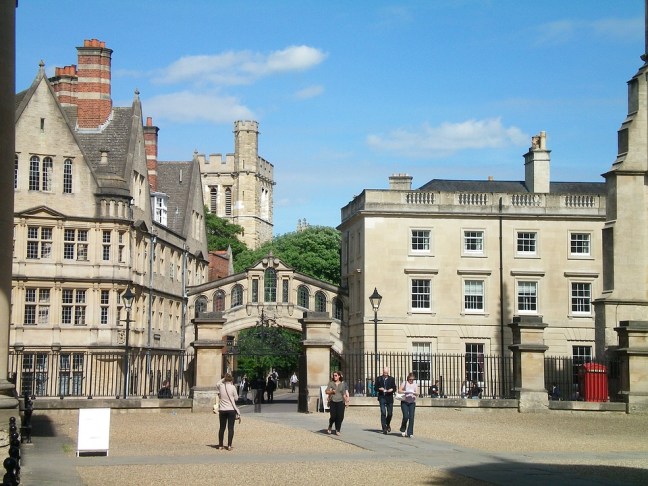
Thank you! I grew up loving Alice In Wonderland, and I was inspired by the dark tones it took on over the years as my generation grew with the story. From that landscape my story manifested itself in my mind over a few years, primarily starting when I studied abroad in London, saw Lewis Carroll’s original manuscript and visited Oxford, through to my senior year of college when I finally wrote it. It’s been called “Pretty Little Liars meets Alice In Wonderland.”
Never been to Oxford, but Cambridge is beautiful.
*Would it be classified as a psychological thriller?
I can definitely see an argument for that. As a dark Alice In Wonderland retelling I think no one would dispute that. It definitely has a lot of thriller-esque scenes and notes of magical surrealism. And, of course, a little nonsense.
It’s amazing to see what different authors are able to craft with their imagination.

*Tell us a little about the main character.
Elizabeth is 24, and she lives in Brooklyn and works as an interior designer in the city. I think many people can relate to the themes she’s struggling with – confronting and acknowledging the darker sides of herself, struggling with mental static and getting lost in the noise. In a sense she has to reclaim herself after giving in to a pattern of self-destructive behavior. She meditates, falls down the rabbit hole, and the rest is history.
Wow. Makes me want to know more about her.

You’re a writer; so whats your story, or what inspired you?
I don’t think I can pinpoint a single moment when I decided that I would be a writer – I’ve always just written, and then I couldn’t separate myself from the act of writing, it always felt a part of me. I used to carry around a composition notebook in elementary school that housed my first “novel,” scribbled in mechanical pencil between classes and after school, and eventually I graduated to my MacBook in college on which I wrote the manuscript for Meditations In Wonderland my last semester at Boston College. In terms of inspiration, I just follow that internal whisper that compels me to return to the blank page time and time again.
Keep following that internal whisper. And when you don’t hear it, write anyway.
What’s your GOAL in becoming a writer?
Having my writing published has always been the “ultimate” goal for me, and I think many writers can relate to that, however I think a more realistic goal is just to keep writing, to keep the process alive. The hardest part about writing, in truth, is the act of sitting down to write in the first place. If I can cultivate and keep my writing practice going, that’s a goal in itself that I think leads to the more penultimate dream of having your work published.
YES. I love this. The more realistic goal is to keep writing. I struggle with having consistent writing time so I completely understand this. The ‘butt in chair’ is the only way.

What 3 things have hindered you from completing your projects? (CONFLICT)
Timing, spaces, and disconnect. As for the first, why is it when you’re about to shut your eyes and fall asleep, warm under the covers, does your muse begin to speak? I think mine might be a sadist in that way. So the first conflict for me is the timing of writing, capturing what I need to capture often against difficult circumstances for doing so, like commuting, unplugging for a night’s sleep, or while on a run. As for the second, my writing practice benefits from having a clean, creative space to work in with minimal distractions from my “to do” list, which is probably why I wrote my first novel out of my home in a local Barnes & Noble. Last, disconnect is often a gatekeeper I grapple with. Either feeling disconnected from the story, from myself, from my creative process, or just from the voice that compels me to pick up where I left off. Some days you’re just not “feeling it,” so to speak, and I think writers can all commiserate there. The goal is to at least try to make sure two out of the three are at bay on any given day to try to make writing happen, and keep it cohesive!
The writing process is so mysterious to me. Not sure if you’ve read Anne Janzer’s book , The Writing Process, but I was greatly helped by it.

What keeps you motivated in achieving your dream? (DESIRE)
If the story needs to be told, I’ll continue to tell it. When I don’t feel that ache in my bones to keep writing, I’ll stop, but I still have that voice that refuses to stop whispering.
Stories are great and equally mysterious.
What’s your ANTAGONIST? What’s in the way?
Aren’t all of the best antagonists just reflections of ourselves, or our greatest fears? The fear that any next novel wouldn’t live up to the first, or that those new daring stylistic choices won’t engage the reader the way we hoped they would – we all have our dragon at that gate. For me, it’s scales are green, shiny, and coated with that existential “if I finish this, I have to turn it over to the business side of things” doubts. Writing is the fun part, but I think it’s important to embrace every part of the process, even the parts that we might rather procrastinate in facing.
Well spoken. It’s always a constant battle. Let’s keep at it, shall we?

Why do writers give up, quit or never complete their projects?
I think leaving a project is a very personal choice, so the reasons could be many. The best reason is probably because the project no longer feels authentic, which I think is a noble reason to step away, and faced with the same reality I hope I have the courage to do the same if it frees me up for the better project waiting in the shadows!
Seeing the next project is always tempting!
What would you say to a struggling writer who’s given up?
Take your time away, if you need it, and return to it when you feel compelled, nagged, and eaten away to resume. Because then you’ll really enjoy it, and your reader will feel that, too.
For me, it’s a gut feeling. If I stop, then it returns begging to be written.

BONUS: What else do you have coming down the pike?
I’ve been playing around with a sequel to my next novel, loosely based off of Through The Looking Glass, as Meditations In Wonderland was loosely based of Lewis Carrol’s Alice’s Adventures In Wonderland.
Keep us posted on the release date!


*Where did you go to college and what did you study?
Writing was in my blood from a very young age and by the age of 11 I knew I wanted to be a journalist. In fact, putting pen to paper had its merits even then. When I was at junior school in Bristol, England, I was the only student outside the school football team allowed to bunk off lessons to go to games – my reports appearing in the school newspaper, The Elm Park Ranger, each month. Out of 100’s of applicants I managed to qualify for the one-year pre-entry journalism course in Cardiff, Wales, which was great fun. I learnt all about the profession, passed my 100 words per minute shorthand, and studied journalism law, use of language and public administration. Two years later I had to return for a proficiency test after landing a job as a reporter on my local paper. Once I had passed that I was a qualified senior journalist. From there I progressed to sports journalism and have worked all over the UK. I am still managing to hold on to a job in a dying profession 38 years later, working as a freelance on UK national newspapers in London.
Wow. This is quite a resume!

*What did you grow up reading?
I wasn’t a big reader until one day I was moaning to my mum during the school holidays about being bored. “Read a book”, she said. “Boring,” I said. “I bet you won’t find this one boring,” she said. It was Ira Levin’s A Kiss Before Dying, and I read it in little more than a day. After that I was hooked. I always liked a twist or something that thrilled. Jaws, by Peter Benchley, was another quick read. Levin has always been my favourite though. I’ve read all his stuff, pretty diverse from horror (Rosemary’s Baby) to Sci-Fi (this perfect day). Boys from Brazil is possibly my favourite.
Haven’t heard of any of these guys but I love learning of new and interesting authors.

*What do you read for entertainment?
I love discovering something really original. I love psychological thrillers and books that at some stage give you an OMG moment where you just stare at the page, mouth open, shocked by what you’ve just read!
YES. I love psychological thrillers too! I think it takes a lot of skill it pull it off correctly with the desired effect.

*What are your favorite resources for journalism?
I’m more on the design and editing side these days so it’s a difficult question to answer. I like designing on In design, though the software does have its glitches.
I have seen this program and it looks pretty powerful from a designing standpoint. If I had to start over, design would be in my top 5 choices.
*Favorite genres to read?
Thriller/suspense/mystery… something original
Me too. Hard to resist a good thriller, suspense or mystery!

*According to your experience how is writing different from journalism?
The whole process needs a different mindset. When you go to journalism college or take a course the first thing they teach you is to follow a formula, which over time erodes your creative side. It is a different case for columnists or feature writers I imagine, but as a plain news hack you learn a series of rules that MUST be obeyed. The idea is to get the story across as quickly as possible without frills. You have to answer the five key questions in the first sentence or two in case the story is ‘cut’. There is no slow burn, it is instant: Who? Where? What? Why? When? How? It took a lot of “re-educating” myself to return to creative writing, though the one thing journalism has taught me is not to waste words and to avoid repetition. I am pretty adept at editing my own work ruthlessly before going to an independent editor at a later stage.
Wow. Sounds like being a journalist does have good benefit in training yourself in certain ways. I can see how it would affect your creativity though. It’s good that you still were able to retrain yourself after so many years. That’s great!
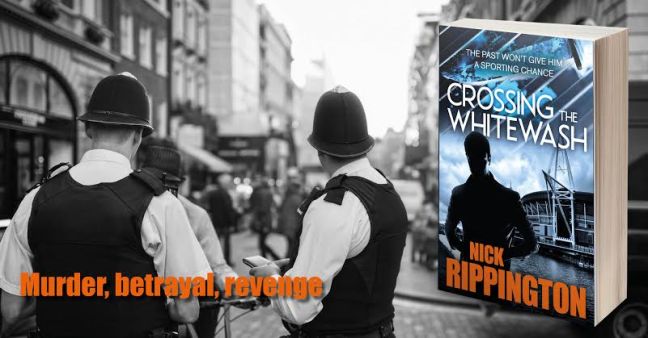
*How did you research your book Crossing The Whitewash?
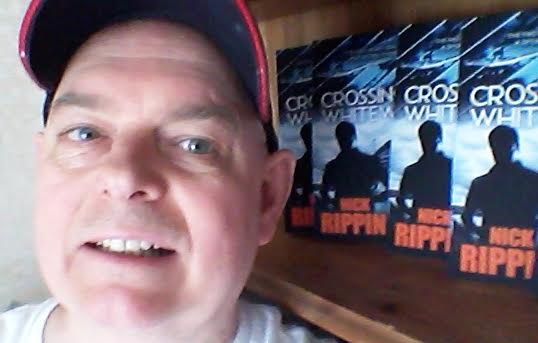
As a career journalist of 38 years who has worked over the whole spectrum of the business I could draw on my own experiences greatly. Also, as a sports journalist I have met a lot of characters, so amalgamated many of them. For the things that happen earlier in the book there were stories I was told and I drew upon some experiences of my teen years. I have lived in most of the places featured – or know someone who has and was able to tap into their experiences. I had to read up about jails, but I’ve encountered so many situations it was just a case of getting them into a coherent order and embellishing them.
This is great. Sounds like you had a wealth of experience to draw from coupled with other resources.
*Introduce us to the football prodigy Gary Marshall
As a young teen, Gary is just an ordinary kid with a big talent for football (soccer) that his dad Stan is keen to encourage. Though he lives on a seedy, rundown estate he is happy-go- lucky with a positive outlook on life. This starts when he encounters a gang who want to steal his bike. He ends up indebted to another boy, Arnie Dolan, who helps him escape and is then drawn into the Boxer Boys gang and slides slowly off the rails. It’s a case of how a youngster can bow to peer pressure. It all has a deep effect on Gary’s life and the story is really about how he goes about trying to break those shackles.
Sounds like quite a story. I’ll be listening to the audio version of this book and really looking forward to it. You picked a good narrator too! Can’t wait to see how Gary brakes those shackles!
*Who is Arnie Dolan?
Crossing The Whitewash got an honourable mention in the genre category of the 2016 Writers’ Digest self-published eBook awards with the judges saying: “Arnie Dolan is terrifying, but never two dimensional”. I am hugely proud of this character. I wanted to write a real bad guy but to explain how he had got that way – the outside influences which dictated he turned out the way he did. He is incredibly resourceful but doesn’t use his attributes in a good way. Strange, really, that some of the first people to read the book admitted to feeling sympathy for a guy who has a propensity for savage violence – against men and women. Arnie is driven by a warped sense of right and wrong. His biggest asset is his immense loyalty and he feels let down by others who don’t afford him the same respect. The way his back story unfurls gave me a great deal of satisfaction.
Sounds like a juicy character! Very intriguing. Readers love these kind of anti-hero/grey kind of characters that they can relate to.
*What can you tell us about their relationship with one another?
This relationship forms the basis for the whole book. Arnie is a leader and all the other boys on the estate look up him. Gary has a bit of an individual streak, and is blessed with a couple of talents the others don’t have, so he never really fully immerses himself in the gang despite Arnie’s promptings. As Gary grows older, he realises that if he is to get his life back on track he must separate from Arnie completely. He moves away at a time when Arnie isn’t about and creates an entirely new life for himself. Pretty soon, though, Arnie goes looking for him.
This sounds like a really good book. Looking forward to getting into it.
*Tell us how the setting in the rundown London estate plays a part in the book
There were a lot of cheap estates built in London after the second world war. Tower blocks were grouped together to answer the demand for housing, but over time they became run down. The Boxers estate is a prime example, situated in a deprived area of London’s East End where the no.1 job opportunity is villainy. With little to do, kids on the estate form gangs with the intention of defending themselves against outsiders. It is against this background that Gary and Arnie meet.
Wow. I can almost picture the scenery in my head. Sounds pretty intriguing when you think about it. There are situations like this all over the world. Kids in the midst of poor environment, looking for a way out, hoping to survive. Excellent.
*What else are you working on?
My latest work is set in 1982, a prequel involving Arnie’s dad Big Mo Dolan. He has no end of worries, having to raise a young family on the same London estate with no job and little money. As his mind turns to crime, he is also concerned that his brother Clive has enlisted for the army at a time when Britain and Argentina are poised to go to war over the Falkland Islands. The story – as yet untitled – explains much of what later develops in Crossing The Whitewash. It is with the editor and I am hoping to release it in late Feb/early March.
Oh great! Keep us posted on the development. Would love to read this.



*Who influenced your reading habits the most as a child?
Oh, so many people. Probably the earliest was my grandmother, but once I started school I was fortunate to have wonderful teachers. And once I discovered the public library and that librarians LOVED to help kids find new books about things they liked, I couldn’t be stopped.
Thank the Lord for grandmothers! That’s wonderful you had so many helpful people early in life. I remember two particular teachers in elementary that encouraged me a lot. We never forget the ones who truly cared for us.

*Which were the first mysteries that drew you into the genre?
The first mystery I ever read was in third grade, and it was The Brownie Scout Mystery by Dorothy Sterling. I checked it out of my elementary school library and honestly only chose it because I was a Brownie at the time, so felt that connection. Then, for Christmas, my aunt (the daughter of the grandmother I mentioned in the earlier question) gave me my first Trixie Belden book. It was the fourth book in the series, and I was thrilled to realize there were so many more Trixie Belden books for me to read, since I think they were all written before I was born. That led on to Hardy Boys and Nancy Drew, and I read a few Robin Kane mysteries that my cousin had, but none of them compared to Trixie and Honey’s mysteries and adventures. Later, I moved on to Sherlock Holmes and Agatha Christie.
I love hearing about the mysteries that shaped a writer early in life.
*Name your top 5 favorite books and what affect they had on you.
1) The Odessa File by Frederick Forsythe – I don’t want to spoil it for anyone who hasn’t read it, but I still have that amazed feeling whenever I think about the answer the bad guy received when he asked why the main character continued trying so hard to pursue him. I’d read the whole book up until then wondering why, myself, and the answer surprised me so much—especially when I realized the clue had been there all along, but I’d missed it.
2) Dirk Gently’s Holistic Detective Agency by Douglas Adams – I purchased the hardcover edition of this book in 1987 because I was already an Adams fan due to the Hitchhiker’s Guide to the Galaxy series. So, I knew this wasn’t going to be your standard mystery. The absolute creative genius behind this book makes it not only my all-time favorite by this author (though the addition of Thor in the sequel The Long Dark Tea Time of the Soul makes that novel come a close second), but I’ve read and reread this book (and too short series) several times. I haven’t yet seen the BBC program featuring the novel, but it’s on my to-watch list when I get time for some British binging.
3) Prince of Tides by Pat Conroy – This isn’t a mystery, but there were so many absolutely beautiful passages to fall into as I read the book. The first time I read it I probably took three times longer than usual to do so because I kept going back and rereading whole paragraphs and pages.
4) Every Single Novel by Elizabeth Peters – Actually, I like a lot of her Barbara Michaels books, too, and I own several of her nonfiction books written under her real name of Barbara Mertz. But truly, I love everything penned as Elizabeth Peters and own every title she wrote under that name. Rather than list a novel, I’d have to say her Amelia Peabody Mystery Series would be my favorite because of the way she wove fascinating real facts within her historical mysteries, and had such standout characters throughout the titles. For almost the same reasons, I’d have to list the Vicky Bliss Mystery Series as a close second—with less books in the series it doesn’t have quite the depth of Peabody, but it does a great job of blending fact and mystery plot and characters. And, of course, there are the Jacqueline Kirby books, and the many wonderful standalones Peters wrote before all her series took off.
5) The Harry Potter Series – I think every book in that series was wonderful, but together, seeing the complete series arc by the end, and all the pieces Rowling wove within the individual novels requires this whole series to be listed as one piece in my top five. But I’ve always been a series reader—as implied by my inclusion of all-things-Peters in the previous question—so this probably isn’t surprising.
I like these! Of course, I only recognize one of them, but I love to get book recommendations. There’s too many good writers around to count.

*Name your favorite classic sleuths and how are they different from one another?
I love Miss Marple and Columbo for the same reasons: they pay attention to so much more than just the visible clues and they want to solve the crime to truly give the victim justice—not for accolades or to improve their own position.
I also love to read Martha Grimes’s Inspector Richard Jury series, but primarily the ones where Melrose Plant is involved in the case with him—because I love Melrose. He’s kind of a contemporary Lord Peter Wimsey and I look forward to his arrival in the books each time and the way he impacts the case.
Equally, I especially enjoy unconventional sleuths. I often stay up late on weekends to watch the old Avengers shows with Diana Riggs as Mrs. Peel, to see what kind of off-beat crime she and Steed will solve—usually eminently quirky. And finally, I adore the new BBC Sherlock series with Benedict Cumberbatch and Martin Freeman because they so perfectly play off one another and show not only Sherlock’s brilliance, but how his almost sociopathic tendency to not consider others is offset by Watson’s tempering humanity—which all comes together to better solve the case and understand the outcome.
I’ve yet to see the Sherlock Holmes series with Cumberbatch, although it’s cued and ready to go.

*How has reading affected your style of writing?
I think my writing has more often affected my reading style than the reverse. I’ve always been a voracious reader and read across all genres and literary and nonfiction standards. But while I used to be able to read through things that weren’t…shall we say…written as well as they could be, now that isn’t the case. I simply cannot read something filled with bad editing or—especially—are written with unbelievable plots, or if characters begin changing to suit a plot need rather than acting the way they always have. I just stop reading and move on to something else.
I find this very fascinating for some reason. The dynamic relationship between reading and writing is wonderful. I would say a voracious reader would develop a keen eye for the matters you mentioned above. Then developing the writing craft would only serve to sharpen those skills to a whole new level.
*If you could hire any fictional sleuth to solve a major crime who would it be? Who would be the sidekick?
I would love to see Columbo and Adrian Monk solve a crime together. I know that sounds mean because Columbo just standing next to Monk would probably give the OCD detective a mental breakdown, but to me it would be kind of an American Sherlock/Watson combo. I imagine Columbo would be the humanizing end of the team and Monk would be…well, Monk. But the crime solving could be the absolutely fastest on record with those two brilliant minds working on it at the same time.
That sounds like a great combination!

AT THE SCENE OF THE CRIME
*Name 3-5 of your pet peeves as a reader
1) Love triangles. Hate them. Just pick a guy or girl already and move on to the real story. Don’t let the “which guy will she choose” go on from book to book to book.
2) Authors who don’t think readers are smart enough to figure things out and try to fill in every single dot or write mostly dialogue and skimp on narrative because it’s easier.
3) Characters who change from the way they’ve been throughout the story to fit plot problems a writer stumbled into and couldn’t figure how else to get out of.
4) Unnecessary sex, violence or language as a quick and cheap way to try to heighten the tension.
I always find this one interesting. Writers can learn so much by hearing these.

*How have mysteries changed over the years?
It feels like they’ve become more real to life through the years, but that may just be that I’ve gotten older and read things more contemporary to my life. I still love the old standbys like Christie and Dick Francis and Forsythe, but there are so many new authors like Michael Connelly and Lee Child who write fabulous, exciting mysteries that truly are 21stcentury. I think more than anything, we’re getting more blending of genres, so while we can find straight mysteries still, we also have great combinations we likely wouldn’t have had decades ago. The aforementioned Dirk Gently series, for example, or the fabulous Spellman Files series by Lisa Lutz, both of which use humor and contemporary insight as much as they do elements of mystery. Another offbeat cross-genre example is the Bryant and May series by Christopher Fowler, or anything by Jasper Fforde.
Wow, great examples here. I’m very interested in this topic for some reason. So intriguing!

*What makes a great mystery?
It must give me something to figure out, and provide good characters I want to spend time with. I’ve read so many mysteries that I’m seldom halfway through a book before I’ve figured out whodunit, and that’s okay, as long as there are still surprises for me to discover as the character(s) still look for clues. I don’t want to know everything about everyone from the beginning, I want that to unfold just like the mystery, so if I solve the mystery halfway along, there’s still something to keep me reading.
That’s wonderful. There’s something so cerebral about solving a good puzzle, especially a ‘whodunit’. When you weave in great characters, the book is well worth the read.

###

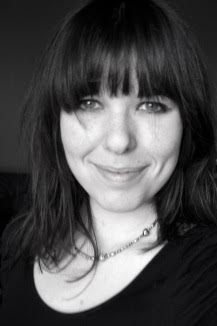
She’s works in marketing and data analysis within the book industry, an avid blogger and author of a new psychological thriller, When We Go Missing. Kristen is also participating in the inaugural launch of Mystery Thriller Week.
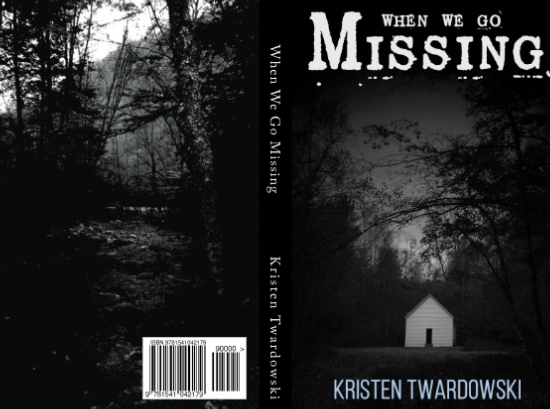
According to Goodreads
Once, Alex Gardinier was a successful physical therapist and a happy wife. Now she is trapped in a crumbling hospital room. Seven years ago Alex’s ex-husband, Nathan, was convicted of murdering five girls, and he has been rotting in prison ever since. Except the doctors say that Nathan isn’t in prison. In fact, they don’t believe that he is a criminal at all. According to them, Nathan is a devoted husband who visits her every week. But Alex can’t recall ever seeing him at the hospital, and the last time they met he was holding her hostage on a boat.
Maybe the doctors are right – maybe these memories of his crimes are her own personal delusions – but if they are wrong, then Nathan somehow escaped from prison. If they are wrong, he has trapped Alex in a psychiatric ward.
If they are wrong, he is hunting her sister

Where are you originally from?
I’m originally from a cornfield in Illinois but have lived in several different places across the Midwest. I’ll always have an attraction to the flatlands because of it.
Yay! The Midwest is awesome. Plenty of cornfields here!
What did you study in college?
As an undergraduate, I studied history and art history. When I finished my graduate degree, I studied gender and the history of Imperial Germany.
Wow. This is rather impressive. I took an art history course once and it was pretty difficult.
Did you used to be a librarian?
Though I worked at several libraries, I never held the position of librarian. Most institutions want to hire people who hold library degrees for those roles. Instead, I held customer facing positions in an undergraduate and business library. There, I did things like organize events for speakers and authors, help manage the acquisition of journals and magazines, and do reference work, which involved helping people find the reading materials that suited their research needs.
That sounds very intriguing and not to mention good work experience.

What do you do exactly in publishing?
Currently I am a sales and marketing research coordinator for a small press. This means I perform several different functions that have to do with data and book promotion. In terms of data, I do analyses to see where we have opportunities to expand our books and journals programs and make suggestions about how to package our products. This also means that I pay a lot of attention to how money flows through the press. Though I don’t directly do design work, I help to write marketing copy for items and give input on promotional materials like posters, emails, and information on our website. Prior to my current position, I briefly worked in the acquisitions department of a different publisher. While there, I helped edit manuscripts, assess submissions, and write rejection letters.
This is amazing. You have an amazing, well rounded skill set!
What do you love most about fantasy?
Fantasy is my great passion. It’s the genre that I was raised on and the one that I always return to. Because they tell stories that are a step away from the real world, fantasy novels often get to the heart of what it means to be human. They delve into our strengths and weakness, our hopes and fears, and they let us dream. What if the world was different? What would we do then?
Some authors that represent the best of fantasy are Diana Wynne Jones, Melanie Rawn, Peter S. Beagle, Jan Siegel, and a dozen others. Oddly, my first novel, “When We Go Missing”, doesn’t deal with fantasy at all – it is a psychological thriller – but the feel of fantasy, the arc of its stories, the texture of its language, bleeds into my writing.
Nice. I still think it’s impressive that you can write a psychological thriller even though it isn’t your passion. I believe it’ll make you a better writer in the end.
How has reading affected your writing?
I just finished some research on how reading affects writing. It turns out that reading materials alter the syntax and writing level that people use. For example, people who spend their time reading a lot of Buzzfeed articles write much simpler sentences than people who read pulp fiction, and people who read pulp fiction write less complex sentences than folks who read more literary books.
Of course complexity isn’t always best. I’ve had to undo some bad writing habits because I have spent a lot of time reading scholarly theorists and academic texts. Fiction requires a very different style. And no one wants to read a sentence that is the length of an entire paragraph.
That’s so interesting. You’re blog posts tend to be more on the scholarly side. I admire your style.
Why did you write a psychological thriller for your first book?
I ended up writing When We Go Missing through sheer luck. I am a fantasy author at heart, but When We Go Missing was a story I felt like I had to tell. Over the past several years, I have become more and more aware of the ways that people, especially women, really do go missing in America and the way that society deals with those disappearances. It was fascinating and horrifying realm to discover, and I wanted to explore the whys behind it a bit more. The story turned into a psychological thriller because that was the best way to tell the story without completely breaking my heart about the subject.
The premise for your books is mesmerizing. The theme behind it is also powerful.
Tell us how you developed this idea into a novel.
When We Go Missing was a writing experiment for me. I had different ideas about how I wanted to talk about women who vanish and decided that I needed to bite the bullet and write the book.
In July of 2016, I gave myself the goal of publishing this manuscript – I didn’t even really know what the plot was back then – in December of 2016. This meant I had to buckle down and prioritize my writing. I ended up finishing the rough draft in September and spent October and November revising it. I do not encourage anyone to follow my schedule. It meant working a lot of high density hours on a single project, and I always suggest that people give themselves more time to reflect during the editing process. Having said all of that, the contracted schedule was a great decision for me because in my heart of hearts, all I want to do is continually edit my books. Historically that prevented me from publishing any of them. I had to push myself to get over my perfectionist tendencies, and I am excited to share my final result.
Nice. Perfectionism can be a problem for sure. But I’m glad you pushed through it! Impressive.

What do you love most about reading books?
I love that books allow me to step outside of myself. Through novels, I can experience the world from a different perspective. I’ve learned a lot about myself and about others that way.
Very true. It’s an amazing experience isn’t it? We get tour another world, life, viewpoint, struggles and victories of another.
Name 3-5 top pet peeves as a reader.
Most of my bookish pet peeves relate to characters, how they act, what they say. I can’t stand:
Basically I need characters to feel real. They should have their own motivations, weaknesses, and logic. I need to be able to convince myself that they could exist outside of the pages of the book, and if the author can’t portray that well, I struggle to stick with a novel.
This is great info here. I love seeing what different authors say about this subject. I see authors fantasies as well, or an idealized trait that’s totally cliche.
Does When We Go Missing employ any themes?
When We Go Missing deals with several major themes. These include trauma, love, family, resilience, and, most importantly, what we do to survive. There is no single way that people react when terrible things happen to them or their loved ones, and in the book, I really wanted to explore the range of those reactions.
Sounds like a great thriller to me! A really deep one at that.

Is this a standalone or will you write more psychological thrillers?
Though When We Go Missing will likely not become a book in a series, I do have several other ideas for thrillers that are floating around in my head. My next project is a contemporary fantasy book, but I imagine that I will return to the realm of thrillers sooner or later. It provides a fantastic sandbox for authors to play in after all, and I don’t think I’ll be able to resist it.
Good. Don’t resist it! I can’t wait to see what you come up with.


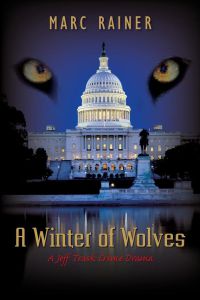
A Winter of Wolves is also the 4th volume in the series. Check out the first three volumes on Goodreads.
What led you to become a writer?
After 30 years of service as a federal prosecutor, I had collected hundreds of professional “war stories” from cases. Told correctly, these are also known as “plot lines.” My wife kept saying, “You should write a book,” so I did.
There’s no better fuel than life experience. Excellent!
Which authors inspire your writing the most?
If any served as inspiration, it would be the W.E.B. Griffin father-son team and series, since it showed me how characters could be developed over the course of a series of novels. I also love the way Michael Connelly writes.
Haven’t heard of W. E. B. Griffin, but I also love Michael Connelly. Great source of inspiration!

What’s your goal in becoming a writer?
I honestly just wanted to see what I could do. Nothing beyond that. The modest success (about 40,000 sales as a self-published author) has been a pleasant surprise.
Wonderul. I believe it’ll only get better. The reviews are great!
What three things have hindered your writing?
I don’t have three. The only obstacle before I retired was the day job; in other words, having enough time. Since then, the retail bias against self-published authors may have hindered sales, but not the writing itself.
Having enough time is always a struggle.

What keeps you motivated?
I just like to write.
That’s good enough motivation for anyone.
What is my antagonist?
I don’t allow those, don’t have one.
Oh, I love that attitude. Excellent.
Compared to my previous work, what’s it like being a writer?
First, I like my boss a lot more. Second, since I was a career prosecutor, I miss the cops and agents – real-life heroes – with whom I had the pleasure of working for years. Third, my schedule is my own now, and being comfortably retired, there’s no pressure. I’m very fortunate in that way.
This sounds like a very sweet experience. I wish I had it!

What would I say to a writer who has given up?
Find something you believe in enough to NOT give up on. Examine yourself. Why did you give up on writing? Lack of financial success? Self doubt? One can be overcome with perseverance. The other is a sign of some deeper issues. Identify them and start to deal with them.
Perseverance is the name of the game. I needed to hear this myself.
What are the key elements to a legal thriller?
I try very hard to avoid formulas. In real-life legal work – especially in solving criminal cases – formulaic approaches can lead to “tunnel vision.” By that, I mean that if you approach a case the same way every time, trying to solve a case using the same method that happened to work the last time, you can miss a lot of clues, make a lot of serious mistakes. Each case involves different people with different motivations. Some criminals act without rational motivation at all; they are creatures of impulse. A crime-based legal thriller by definition has to involve a crime, or series of crimes. After that, I climb on board with my characters for the investigative “ride,” to see where that leads. The solution can occur in or out of the courtroom.
I agree wholeheartedly. Formulas can be quite boring.

Introduce us to the Jeff Trask series.
Trask is my fictional alter-ego. A lot of my plot lines are based upon actual cases, and I use trial transcripts from actual cases in the books, with the usual name changes “to protect the innocent” (and guilty). While Trask and I share a lot of experiences, he probably learns faster on the job than I did. I strive for realism. There aren’t any Hollywood gun fights where the good guys snapshoot someone off the roof of a building a hundred yards away with a handgun, then outrun a string of machine gun bullets. I also try not to use the hackneyed lone, tortured soul, alcoholic detective approach. Complex crimes are not solved by rogue superheroes acting alone. They are solved by teams of good people – cops, medical examiners, forensic specialists, and then prosecutors and their staffs – all working together. I’ve been fortunate enough to earn praise from professionals in these fields who say, “Finally, somebody got it right.” Some critics have said that Trask is “too perfect,” in that he is NOT the typical tortured hero. We all have some demons, but I don’t seek readers who have to look down on a character in order to feel better about themselves. I don’t write literary fiction, and don’t have to apologize for that. The series is about how real teams solve real cases, facing criminals or criminal organizations posing real threats. It also has a lot of dark humor in it, which is also real, in that the guys and gals who do this work for a living have to have that sense of humor to do their jobs without going nuts.
I love the whole team idea to solving crimes. Not conforming to the typical hero complex is a great way to step outside the box.

What are the chief characteristics of Jeff Trask?
Smart. Occasionally a smart-ass, in fact. He does not, however, talk down to anyone or use his brain for anything other than finding solutions. He loves classic rock, and always has a jukebox playing in his head, usually providing a theme-based tune to any situation in which he finds himself. For example, in one book, he encounters a crime scene with about a dozen victims – gang members – shot to hell by a rival criminal element. Oingo Boingo’s “Dead Man’s Party” starts playing in his mind. Trask works well with others as long as they are interested in being part of the solution and not the problem.
The characteristics of the protagonist help readers fall in love with them.
Any planned releases for 2017?
The next book in the series has already started to take shape in my head. It will find its way to a keyboard some time next year.
Looking forward to it! it’ll give me some time to catch up in the series.

Facebook | Goodreads | www.marcrainer.com | Amazon

rejuvenatement - not retirement
...a crime-fictional site
Established in May 2011 to help nurture and inspire the poetic spirit.
A place for poems and pics
a simple pairing of pictures and poetry
Sharing Poetry and Hugs
Persistent WV Poet
A.I. Art and Poetry
short writing prompts
I am the way and the reality and the life...John 14:6
Submit your film, screenplay, novel, to the festival and get it showcased at the FEEDBACK Festival. Full Feedback on all entries.
Military Science Fiction Author
 The Writing Train: Join the locomotion