
IT’S TELEVISION TUESDAY

How To Pitch Your Book For TV and Film With DJ Williams & Joanna Penn
djwilliamsbooks.com
www.thecreativepenn.com





Geoff Symon is a 20-year Federal Forensic Investigator and Polygraph Examiner. His participation in high-profile cases includes the attacks on September 11, 2001, the War in Iraq, the Space Shuttle Columbia explosion, the 2002 bombings in Bali and the Chandra Levy investigation, among countless other cases.
He has direct, first-hand experience investigating cases including murder (of all types), suicide, arson, kidnapping, bombings, sexual assault, child exploitation, theft and financial crimes. He has specified and certified training in the collection and preservation of evidence, blood-spatter analysis, autopsies and laboratory techniques. You can reach him at GeoffSymon.com.
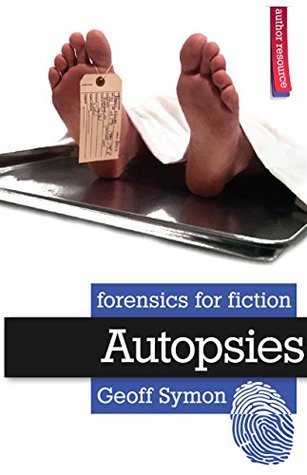
Want to add an autopsy that won’t kill your story? Death swings its scythe in every genre, from family funerals to crime scenes to creatures that won’t stay buried. This user-friendly, illustrated reference digs into all things posthumous and postmortem.
Presented as a research manual for the experienced writer, this “Forensics for Fiction” title offers practical approaches and realistic details by covering:
¤ Terms and techniques used during autopsy procedures
¤ Different postmortem professionals and their specialties
¤ The stages of decomposition in different environments
¤ Methods used to estimate the time of death
¤ Case studies in which autopsies cracked the crime
¤ Examples of how to use autopsies in any popular genre
Whether you’re writing about dissection or resurrection, this guidebook covers it all from cadaver to slab as an easy-to-understand resource for dead-on storytelling.



How do you introduce your story?
I always begin my books with a catastrophic event in the prologue that directly affects both the protagonist’s internal conflict and the entire plot. For Example, in my upcoming novel: The Born Weapons, my protagonist is the first “natural-born” of his kind and his birth is an act of Rebellion against “the Maker.” The Maker makes a deal with my protagonist’s mother that if she kills the Rebel Leader, who is her honorary brother, than her baby can live.
What’s your process of creating characters?
I base my characters off a theme such as truth or innocence. There after, I build their backstory, psychology, personality, appearance, and quirks. The themes I choose correspond to the plot work. For example, my protagonist is based on truth and the catalyst to the climax is the event in which he tells humanity the truth about why his kind was created.

How do you introduce the main conflict?
I design the main conflict and my protagonist’s identity to be symbiotic. In my current novel, the main conflict is that the ‘Alma’ (a type of cyborg) are subject to the oppression of their Makers and Humanity. Since my protagonist is an Alma, he and the conflict are introduced simultaneously.
How do you approach writing the first Act, or 25% of the book?
I love to hit the ground running. I believe that characterization and world building are best shown and not told, so I throw my MC into peril from the first chapter and introduce settings, characters, etc… in pace with the plot.

Do you use a certain number of scenes per Act?
Nope! I actually don’t pay attention to anything regarding quantity such as pages, scenes, or acts until I am revising. I only concern myself with following my outline to ensure I cover all my plot points, sub plot points, character development milestones, ect….
What’s the hardest part of developing the setup?
I assume that by ‘setup’ you mean world building and primary conflict. I often struggle to include world building details while drafting because I tend to focus on plot and character development. I’ve learned to let these details go and add them in while revising.
What has helped you develop your writing skills?
I have to say that the process of trial and error has been most helpful. I’ve been writing books since I was eight years old. Also, reading has helped improve my writing voice over the years.

What’s your creative approach to writing?
I treat it like a job, these days. It may sound unromantic, but writing one or two novels a year takes discipline. I tend to research, write and edit for eight hours, every week day.
Outlining or pantsing?
I like to outline, but always veer away from my plan! I wish I could stick to my blueprint, but I get distracted by better ideas, or juicier characters, so my plans are constantly changing.

When you write crime fiction what comes first? The crime, character, idea?
First the location, then the theme. I fell in love with the Isles of Scilly as a child, for their wild remoteness and knew I had to set a series there.
How do you get to know your characters?
I write detailed profiles, so I know all of their quirks.

What’s the hardest part of writing for you?
Lack of confidence. It doesn’t matter how many books I write, I always reach a point, midway through the writing when my belief takes a nosedive. It takes one heck of a lot of stamina and a robust ego to stay in the writing game.
How has your writing process changed over the years and books written?
I began life as a poet, writing longhand, but now use my computer for pretty much everything. With poetry you have to agonise over every word because the form is so precise, but prose is much more discursive.

Did you write poetry before novels?
I surely did. Two collections, Reversal and The Alice Trap, both published by wonderful London press, Enitharmon.
What do you enjoy most about poetry?
Its impact. If a poem is doing its job well, it can be like a bullet of truth, straight to the heart.

Can you share one of your poems?
Not right now, I’m afraid, I’m deep in the middle of a crime novel, but my poems are floating around on the net if you go looking for them.
What next for you?
Two more books in my Hell Bay series, published by Simon and Schuster, which I’m enjoying enormously.

KATE RHODES is a full-time crime writer, living in Cambridge with her husband, a writer and film maker. Kate used to be an English teacher and has published two award winning collections of poetry. In 2015 she won the Ruth Rendell short story prize. Kate is the author of the acclaimed ALICE QUENTIN series, with the fifth book, BLOOD SYMMETRY published in 2016.
In January 2018 Kate will publish the first novel in a new series, HELL BAY, a crime novel set on the remote Cornish island of Bryher, featuring DI Ben Kitto.
.


Mark Dawson has worked as a lawyer and in the London film industry. His first books, The Art of Falling Apart and Subpoena Colada, have been published in multiple languages. He is currently writing three series. The John Milton series features a disgruntled assassin who aims to help people make amends for the things that he has done. The Beatrix Rose series features the headlong fight for justice of a wronged mother–who happens to be an assassin–against the six names on her Kill List. Soho Noir is set in the West End of London between 1940 and 1970. The first book in the series, The Black Mile, deals with the (real-life but little-known) serial killer who operated in the area during the Blitz. The Imposter traces the journey of a criminal family through the period; it has been compared to The Sopranos in austerity London. Mark lives in Wiltshire with his family.





rejuvenatement - not retirement
...a crime-fictional site
Established in May 2011 to help nurture and inspire the poetic spirit.
A place for poems and pics
a simple pairing of pictures and poetry
Sharing Poetry and Hugs
Persistent WV Poet
A.I. Art and Poetry
short writing prompts
I am the way and the reality and the life...John 14:6
Submit your film, screenplay, novel, to the festival and get it showcased at the FEEDBACK Festival. Full Feedback on all entries.
Military Science Fiction Author
 The Writing Train: Join the locomotion