Autopsies For Authors with Geoff Symon & Joanna Penn

IT’S TELEVISION TUESDAY


Old vintage tv on pink background


Autopsies For Authors with Geoff Symon


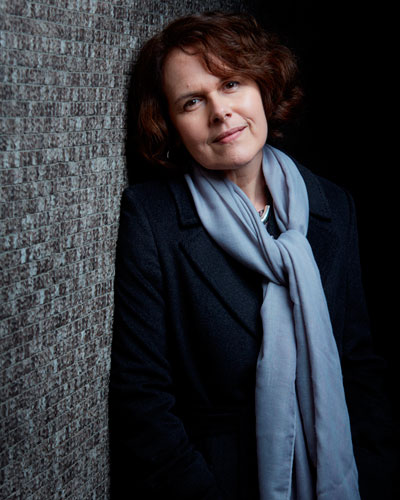
About Geoff Symon


Geoff Symon is a 20-year Federal Forensic Investigator and Polygraph Examiner. His participation in high-profile cases includes the attacks on September 11, 2001, the War in Iraq, the Space Shuttle Columbia explosion, the 2002 bombings in Bali and the Chandra Levy investigation, among countless other cases.

He has direct, first-hand experience investigating cases including murder (of all types), suicide, arson, kidnapping, bombings, sexual assault, child exploitation, theft and financial crimes. He has specified and certified training in the collection and preservation of evidence, blood-spatter analysis, autopsies and laboratory techniques. You can reach him at GeoffSymon.com.


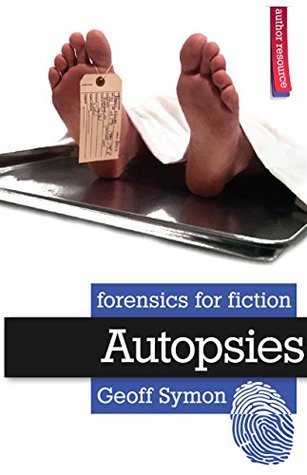
Autopsies for Authors


Want to add an autopsy that won’t kill your story? Death swings its scythe in every genre, from family funerals to crime scenes to creatures that won’t stay buried. This user-friendly, illustrated reference digs into all things posthumous and postmortem.

Presented as a research manual for the experienced writer, this “Forensics for Fiction” title offers practical approaches and realistic details by covering:

¤ Terms and techniques used during autopsy procedures
¤ Different postmortem professionals and their specialties
¤ The stages of decomposition in different environments
¤ Methods used to estimate the time of death
¤ Case studies in which autopsies cracked the crime
¤ Examples of how to use autopsies in any popular genre

Whether you’re writing about dissection or resurrection, this guidebook covers it all from cadaver to slab as an easy-to-understand resource for dead-on storytelling.


Amazon | Goodreads | Website


train vintage in woods image.jpeg


How To Write A Compelling Villain

IT’S TELEVISION TUESDAY


tv old school black cartoon image


How To Write A Compelling Villain (The Self Publishing Show, episode 163)


selfpublishingformula.com

markjdawson.com

sachablack.co.uk


train railway with couple image

The First Act with Author Emily Elaine

First Act image on racetrack.jpeg


The First Act of Writing with Emily Elaine


How do you introduce your story?


I always begin my books with a catastrophic event in the prologue that directly affects both the protagonist’s internal conflict and the entire plot. For Example, in my upcoming novel: The Born Weapons, my protagonist is the first “natural-born” of his kind and his birth is an act of Rebellion against “the Maker.” The Maker makes a deal with my protagonist’s mother that if she kills the Rebel Leader, who is her honorary brother, than her baby can live.


What’s your process of creating characters?


I base my characters off a theme such as truth or innocence. There after, I build their backstory, psychology, personality, appearance, and quirks. The themes I choose correspond to the plot work. For example, my protagonist is based on truth and the catalyst to the climax is the event in which he tells humanity the truth about why his kind was created.  


Create neon sign image.jpeg


How do you introduce the main conflict?


I design the main conflict and my protagonist’s identity to be symbiotic. In my current novel, the main conflict is that the ‘Alma’ (a type of cyborg) are subject to the oppression of their Makers and Humanity. Since my protagonist is an Alma, he and the conflict are introduced simultaneously.


How do you approach writing the first Act, or 25% of the book?


I love to hit the ground running. I believe that characterization and world building are best shown and not told, so I throw my MC into peril from the first chapter and introduce settings, characters, etc… in pace with the plot.  


Plot image on button.jpeg


Do you use a certain number of scenes per Act?


Nope! I actually don’t pay attention to anything regarding quantity such as pages, scenes, or acts until I am revising. I only concern myself with following my outline to ensure I cover all my plot points, sub plot points, character development milestones, ect….


What’s the hardest part of developing the setup?


I assume that by ‘setup’ you mean world building and primary conflict. I often struggle to include world building details while drafting because I tend to focus on plot and character development. I’ve learned to let these details go and add them in while revising.


What has helped you develop your writing skills?

I have to say that the process of trial and error has been most helpful. I’ve been writing books since I was eight years old. Also, reading has helped improve my writing voice over the years.  


Train confined in quarters image.jpg


A Word with Kate Rhodes on Writing

Kate Rhodes image


A Word with Kate Rhodes on Writing


What’s your creative approach to writing?

I treat it like a job, these days. It may sound unromantic, but writing one or two novels a year takes discipline. I tend to research, write and edit for eight hours, every week day.


Outlining or pantsing?  

I like to outline, but always veer away from my plan! I wish I could stick to my blueprint, but I get distracted by better ideas, or juicier characters, so my plans are constantly changing.


Close up on hand writing on notepad with pen


When you write crime fiction what comes first? The crime, character, idea?

First the location, then the theme. I fell in love with the Isles of Scilly as a child, for their wild remoteness and knew I had to set a series there.


How do you get to know your characters?

I write detailed profiles, so I know all of their quirks.


Nice to Meet you image.jpeg


What’s the hardest part of writing for you?

Lack of confidence. It doesn’t matter how many books I write, I always reach a point, midway through the writing when my belief takes a nosedive. It takes one heck of a lot of stamina and a robust ego to stay in the writing game.


How has your writing process changed over the years and books written?

I began life as a poet, writing longhand, but now use my computer for pretty much everything. With poetry you have to agonise over every word because the form is so precise, but prose is much more discursive.


Poetry image on wood.jpeg


Did you write poetry before novels?

I surely did. Two collections, Reversal and The Alice Trap, both published by wonderful London press, Enitharmon.


What do you enjoy most about poetry?

Its impact. If a poem is doing its job well, it can be like a bullet of truth, straight to the heart.


Bullet in motion dark background image.jpeg


Can you share one of your poems?

Not right now, I’m afraid, I’m deep in the middle of a crime novel, but my poems are floating around on the net if you go looking for them.


What next for you?

Two more books in my Hell Bay series, published by Simon and Schuster, which I’m enjoying enormously.


Hell Bay

Ruin Beach

Burnt Island


Kate Rhodes image 2


KATE RHODES is a full-time crime writer, living in Cambridge with her husband, a writer and film maker. Kate used to be an English teacher and has published two award winning collections of poetry. In 2015 she won the Ruth Rendell short story prize. Kate is the author of the acclaimed ALICE QUENTIN series, with the fifth book, BLOOD SYMMETRY published in 2016.

In January 2018 Kate will publish the first novel in a new series, HELL BAY, a crime novel set on the remote Cornish island of Bryher, featuring DI Ben Kitto.
.


KateRhodeswriter.com


Train vintage red in mountains image.jpeg

#Bookstagrammars: How to reach Readers through Instagram

IT’S TELEVISION TUESDAY!


tv


#Bookstagrammars How to reach Readers through Instagram


Do you use Instagram? Why or why not?


Benjamin Thomas

@thewritingtrain

http://www.mysterythrillerweek.com


Tips For Long-Term Author Success With Sherrilyn Kenyon & Joanna Penn

IT’S TELEVISION TUESDAY!


1950s TV Set


80 Million Books Sold. Tips For Long-Term Author Success With Sherrilyn Kenyon


Benjamin Thomas

@thewritingtrain

http://www.mysterythrillerweek.com


Talking Writing Points with Ames Karas

Draft Preliminary First Attempt Try Word Stamp 3d Illustration


READ THIS FIRST

Starting Point:

Today is a writing day. This is about word production. Start at the beginning then go in chronological order. When finished, put the word count in the title. Change the icon to something awesome like a star or something.


STARTUP: Keep a legal pad handy for notes.

-What’s my goal for today’s writing session?

-Word count by 15 minute increment.

-Doubts about my character.

-Doubts about my fictional characters.

-Doubts about the direction of the scene.

-Possible fixes.

-Questions about the next scene.

-Any other interrupting thoughts.


Then at the end of a writing session:

-What did I accomplish? Yay me!

-What should I do before next writing session?

-What will I write next?

-Review these notes before the next Day’s writing.


NOW CRUMPLE IT UP AND THROW IT AWAY! YAY!

KEEP IN MIND WHILE WRITING:

-Why do I love writing?

-What is my story about in a paragraph?


Closeup woman shocked face with eyeglasses


Act 1 is a bitch.

It took me 2 years to write Act 1 of my recently completed WIP Winded Embers. It took 7 months to write Act 2.  

Act 3 took less than a week.


Act 1 seems daunting because there are multitudinous variables to organize and implement. You must answer questions like: What does this character want? Why does he want it? Who is in his way? Why?

I’ll stop now lest I begin sobbing. You will revise so breathe.


That is just what comes from the story. Never forget, humans are pre-fabricated with self-doubt and anxiety. This is extra true for creatives who must essentially get naked in public. Accusation and questions will flood you while you write.  


What if I suck and have to re-write the entire thing? Wow, am I screwed up for writing about this? Who am I going to offend by writing? Worse, I am not going to offend anyone? Am I writing garbage that doesn’t mean anything?


In my experience (limited though it is) stories tend to come more easily when unimpeded by Writer’s block. Industry secret: Writer’s block= personal problems.

Here is my advice on surviving the production of act 1.

Create a positive writing habit (more on this in “go Analog”).


Recruit allies. Writer buddies can shut down your self-doubt and make you work better. There are some questions you cannot answer about your own book. Knowing you have beta readers creates a mental toilet for the questions you can’t answer. “Is my character relatable?” I have Betas for that. ::FLUSH::  


Go Analog. never underestimate the power of paper. Physically setting down a noisome idea is underrated. Nothing gets rid of negative thoughts like a pad of paper. Little in this world is as satisfying as crumpling said thoughts and winging them across the coffee shop into the waste basket. I’m just sayin’

Below is my warm-up. I needed it while writing Act 1.  KEY: This worked for me. Use what works for YOU!

Now go write and be awesome, you writer you.

Ames Karas   candor.amykaras.com


Man ready to run


This is Where it Starts by Author Margot Kinberg

Undecided businessman weighing his choice


This is Where it Starts


Thanks so much for having me here, Benjamin! It’s a privilege. One of the things that many writers struggle with is how to begin their stories. And that’s not just a problem for new writers, either. Even very experienced writers can find that first bit of a story to be a challenge.

There are lots of different ways to get started, and no one way is ‘the right way.’ So, I can just share the approach that’s worked for me. I write crime fiction, and, most of the time, that means that at least one character is going to get killed. The thing is, though, that most of us couldn’t imagine taking a life. So, if a story’s going to be believable, there has to be something about the victim that gives someone a compelling reason to kill.

That’s one reason I start my stories by introducing the victim in some way. I want readers to get a sense of who this person is (or was). Then, I hope I can convince them that this is a plausible murder victim. Starting a story with the victim also gives me the chance to make that character seem like a real human being. This, I hope, invites the reader to engage in the story.

I’ve used different strategies to introduce the victim. In my first two novels, the first sentence of the story takes us into the victim’s life. Here, for instance, is the first sentence of B-Very Flat:

‘Serena Brinkman smiled as she took a deep breath of the crisp October air.’

The next sentences place Serena on the campus of (fictional) Tilton University, where she is a student. Then, she encounters other characters, and readers get a sense (I hope) of what her relationships with those characters are, and why she would become a victim.

In my second two novels, the victim’s basically dead before the story really starts (although in one, the victim dies in the prologue). Those novels begin as the victim’s death is discovered, and the police, as well as my sleuth, Joel Williams, start to ask questions. That approach lets me offer the ‘hook’ of a murder case to the reader, and still lets me introduce the victim as the case is investigated.

There are, of course, lots of other ways to start a story and invite readers to engage themselves. Some crime writers introduce a story with the sleuth. Others start with a particularly compelling setting or incident. I do it by introducing the victim, but there really is no one ‘correct’ approach. As long as the story gets the reader’s attention, that’s what matters.

Thanks again for hosting me, Benjamin!


Margot Kinberg


About Margot Kinberg


Margot Kinberg is a mystery author and Associate Professor. Born and raised in Pennsylvania, Kinberg graduated from Indiana University of Pennsylvania, then moved to Philadelphia, which Kinberg still considers home.

Kinberg had always been fascinated by crime fiction and mystery novels. In fact, she became an “addict” while still in her teens. So in 2007, she began her fiction writing career with her debut novel, Publish or Perish. In that novel, Kinberg put her experience in the world of higher education to use in creating a murder mystery that takes place at fictional Tilton University. This story introduces Joel Williams, a former police detective-turned-professor, who teaches in Tilton University’s Department of Criminal Justice. In this first outing, Williams helps solve the murder of a graduate student. The second in Kinberg’s Joel Williams series is B-Very Flat, in which Williams helps to solve the murder of a young violin virtuosa who dies suddenly on the night of an important musical competition. Kinberg’s third Joel Williams novel, Past Tense, begins when a set of bones is discovered at a construction site on campus. This case ties in with a missing person case from 1974.

Kinberg, who now lives with her family in Southern California, is currently at work on her fourth Joel Williams novel.

WebsiteAmazon | Twitter


Why You Need to be Publishing Audiobooks with Mark Dawson & Tina Dietz

IT’S TELEVISION TUESDAY!


tv


Why You Need to be Publishing Audiobooks SPF 137 Tina Dietz


Have you made any audiobooks yet? Tell us in the comments!


Benjamin Thomas

@thewritingtrain

http://www.mysterythrillerweek.com

Plotter or Pantser? What’s Your Style? I Think I’m a Binge Writer

writing


Plotter or Pantser? What’s Your Style? I Think I’m a Binge Writer


Thank you so much for letting me stop by for a visit on your blog. I love to talk about books and writing.

Writers usually fall into one of two camps, plotters (those who plan, plot, and outline before writing), and pantsers (those who write by the seat of their pants). Plotters know the path and the plan to get to the end. Pantsers go where the characters and story takes them.

I am probably a hybrid of the two, though I lean heavily on the plotter side. I plot everywhere. I jot ideas on sticky notes and on scraps of paper. I carry a notebook in my purse for plotting emergencies.  I have outlines, character biographies, and color-coded storylines.  I keep a chart of all the places and characters. I describe them to the nth degree. This is also helpful if you decide to write a series. That way, my character’s eye color or the color of her kitchen doesn’t change in a later work.

I also use this to take care of my urge to write backstory. I put all the details in this document. Some of the information will never see the light of day, but it keeps me from overloading the story with too much history. Backstory or historical details are better sprinkled in throughout the work.

After my major plotting, I’m ready to start writing. And that’s when the pantser raises its head. I always decide I like a minor character better than another, and sometimes the story takes a tangent. In my first novel, Secret Lives and Private Eyes (May 2016), I planned to keep one character around for the series to create some tension. But as it turned out, I liked another character much better, and his role took on a life of its own. So, without spoiling the surprise, character two is around for book two.


GPS Navigation auf Stadtplan


After the plotting and the first draft, which my friend Mary Burton calls the “sloppy copy,” I am ready to revise. This phase takes me the longest. I can write pretty quickly once I get started, but it takes me forever to reorder, change, and revise. And what I think is chapter one during the writing stage, never ends up that way in the final, published version.

I try to write every day, but it doesn’t always happen. I work full-time in IT, and sometimes the only thing I wrote in a week were performance evaluations and budget recommendations. Life gets in the way. I’m much happier when I stopped beating myself up about writing and hitting daily word counts. I write when I can. I binge write. I get up at 5:00 AM and write or do my social media promotion before work. I write at lunch. My coworkers tease me when I write in the cafeteria (but they always want to know who dies in the next book). I write a lot on my days off, weekends, and holidays.

You need to decide what works for you and create your style. It is harder to pick up your writing after you’ve been away for a while, but you need to balance your writing with everything else in your life. The best advice that I’ve received throughout the years is to be persistent and keep writing if you want to be published.
 

Persistence arrow with beach background


Heather Weidner image


Author Biography

Heather Weidner, a member of SinC – Central Virginia and Guppies, is the author of the Delanie Fitzgerald Mysteries, Secret Lives and Private Eyes and The Tulip Shirt Murders. Her short stories appear in the Virginia is for Mysteries series and 50 Shades of Cabernet. She has a novella included in To Fetch a Thief (November 2018).

Heather lives in Virginia with her husband and a pair of Jack Russell terriers, Disney and Riley. She’s been a mystery fan since Scooby Doo and Nancy Drew.

Some of her life experience comes from being a technical writer, editor, college professor, software tester, IT manager, and cop’s kid. She blogs at Pens, Paws, and Claws.


Synopsis

Private investigator Delanie Fitzgerald, and her computer hacker partner, Duncan Reynolds, are back for more sleuthing in The Tulip Shirt Murders. When a local music producer hires the duo to find out who is bootlegging his artists’ CDs, Delanie uncovers more than just copyright thieves. And if chasing bootleggers isn’t bad enough, local strip club owner and resident sleaze, Chaz Smith, pops back into Delanie’s life with more requests. The police have their man in a gruesome murder, but the loud-mouthed strip club owner thinks there is more to the open and shut case. Delanie and Duncan link a series of killings with no common threads. And they must put the rest of the missing pieces together before someone else is murdered.

The Tulip Shirt Murders is a fast-paced mystery that appeals to readers who like a strong female sleuth with a knack for getting herself in and out of humorous situations such as larping and trading elbow jabs with roller derby queens.


Contact Information

Website and Blog: http://www.heatherweidner.com

Pens, Paws, and Claws Blog: http://penspawsandclaws.com/

Twitter: https://twitter.com/HeatherWeidner1

Facebook: https://www.facebook.com/HeatherWeidnerAuthor

Instagram: https://www.instagram.com/heather_mystery_writer/

Goodreads: https://www.goodreads.com/author/show/8121854.Heather_Weidner

Amazon Authors: http://www.amazon.com/-/e/B00HOYR0MQ

Pinterest: https://www.pinterest.com/HeatherBWeidner/

LinkedIn: https://www.linkedin.com/in/heather-weidner-0064b233?trk=hp-identity-name

BookBub: https://www.bookbub.com/authors/heather-weidner-d6430278-c5c9-4b10-b911-340828fc7003


Book Links

Amazon: https://www.amazon.com/dp/B077CSZ53X

Apple: https://itunes.apple.com/us/book/id1310643581

Barnes and Noble: https://www.barnesandnoble.com/w/the-tulip-shirt-murders-heather-weidner/1127425899?ean=2940155054696

Kobo: https://www.kobo.com/us/en/ebook/the-tulip-shirt-murders

Scribd: https://www.scribd.com/book/363967058/The-Tulip-Shirt-Murders-The-Delanie-Fitzgerald-Mysteries-2

24Symbols: https://www.24symbols.com/book/x/x/x?id=2468512

Playster: https://play.playster.com/books/10009780999459812/the-tulip-shirt-murders-heather-weidner

Goodreads: https://www.goodreads.com/book/show/36591325-the-tulip-shirt-murders?from_search=true