
It’s Television Tuesday!

Writing Tips: How To Be A Prolific Writer With Bec Evans From Prolifiko
Get back to writing!
Benjamin Thomas
@thewritingtrain
http://www.mysterythrillerweek.com


After being bit by the “I’m going to write a book” bug, I blazed through five months and 113,000 words to create two separate stories. All the time I spent was filled with excitement and enthusiasm, feeling my ‘muse’ on my shoulder cheering me to the finish line.
As it turned out, I realized I was in a race on a very long course, not a drag strip. Completing the first 2 eBooks was just the beginning. As I wrote those stories, each chapter I completed filled my head with new ideas and plot twists for the follow-on story.
After completing the second story to my second trilogy (that’s another by itself) I took the leap and decided to go the self-publish, print-on-demand route by placing my completed work on CreateSpace for all to hold if they so choose.
Unfortunately, while my artist and I struggled with a formatting issue on one of the covers, my ‘muse’ decided to take a nap as it were, without permission. I still had pages of notes and plotlines to work through on my fifth WIP, but my desire and motivation had left on the heels of my ‘muse’.
One thing I do to escape is to listen to music, and this is what I turned to in an attempt to coax my ‘muse’ to return. Thankfully I have an abundance of instrumental music to dive into, and so for several days, actually weeks, I would sit and listen, staring at the proverbial blank page of MS Word in the hopes something would jump out and stick.
My other trick I used in the past, and once again in this case, was rereading my previous work. After writing 3 individuals ‘chapters’, I create a new file allowing me to consolidate what I’ve completed. After this is done, I continue to add my completed pieces until I exceed my word count or page count, whichever comes first.
I’m happy to say, this works for me, but for others, I’m sure they have their own methods, tricks and secrets. In the end, it all comes down to one think, Keep Writing!
By Anthony Harrison


READ THIS FIRST
Starting Point:
Today is a writing day. This is about word production. Start at the beginning then go in chronological order. When finished, put the word count in the title. Change the icon to something awesome like a star or something.
STARTUP: Keep a legal pad handy for notes.
-What’s my goal for today’s writing session?
-Word count by 15 minute increment.
-Doubts about my character.
-Doubts about my fictional characters.
-Doubts about the direction of the scene.
-Possible fixes.
-Questions about the next scene.
-Any other interrupting thoughts.
Then at the end of a writing session:
-What did I accomplish? Yay me!
-What should I do before next writing session?
-What will I write next?
-Review these notes before the next Day’s writing.
NOW CRUMPLE IT UP AND THROW IT AWAY! YAY!
KEEP IN MIND WHILE WRITING:
-Why do I love writing?
-What is my story about in a paragraph?

Act 1 is a bitch.
It took me 2 years to write Act 1 of my recently completed WIP Winded Embers. It took 7 months to write Act 2.
Act 3 took less than a week.
Act 1 seems daunting because there are multitudinous variables to organize and implement. You must answer questions like: What does this character want? Why does he want it? Who is in his way? Why?
I’ll stop now lest I begin sobbing. You will revise so breathe.
That is just what comes from the story. Never forget, humans are pre-fabricated with self-doubt and anxiety. This is extra true for creatives who must essentially get naked in public. Accusation and questions will flood you while you write.
What if I suck and have to re-write the entire thing? Wow, am I screwed up for writing about this? Who am I going to offend by writing? Worse, I am not going to offend anyone? Am I writing garbage that doesn’t mean anything?
In my experience (limited though it is) stories tend to come more easily when unimpeded by Writer’s block. Industry secret: Writer’s block= personal problems.
Here is my advice on surviving the production of act 1.
–Create a positive writing habit (more on this in “go Analog”).
–Recruit allies. Writer buddies can shut down your self-doubt and make you work better. There are some questions you cannot answer about your own book. Knowing you have beta readers creates a mental toilet for the questions you can’t answer. “Is my character relatable?” I have Betas for that. ::FLUSH::
–Go Analog. never underestimate the power of paper. Physically setting down a noisome idea is underrated. Nothing gets rid of negative thoughts like a pad of paper. Little in this world is as satisfying as crumpling said thoughts and winging them across the coffee shop into the waste basket. I’m just sayin’
Below is my warm-up. I needed it while writing Act 1. KEY: This worked for me. Use what works for YOU!
Now go write and be awesome, you writer you.
Ames Karas candor.amykaras.com



Thanks so much for having me here, Benjamin! It’s a privilege. One of the things that many writers struggle with is how to begin their stories. And that’s not just a problem for new writers, either. Even very experienced writers can find that first bit of a story to be a challenge.
There are lots of different ways to get started, and no one way is ‘the right way.’ So, I can just share the approach that’s worked for me. I write crime fiction, and, most of the time, that means that at least one character is going to get killed. The thing is, though, that most of us couldn’t imagine taking a life. So, if a story’s going to be believable, there has to be something about the victim that gives someone a compelling reason to kill.
That’s one reason I start my stories by introducing the victim in some way. I want readers to get a sense of who this person is (or was). Then, I hope I can convince them that this is a plausible murder victim. Starting a story with the victim also gives me the chance to make that character seem like a real human being. This, I hope, invites the reader to engage in the story.
I’ve used different strategies to introduce the victim. In my first two novels, the first sentence of the story takes us into the victim’s life. Here, for instance, is the first sentence of B-Very Flat:
‘Serena Brinkman smiled as she took a deep breath of the crisp October air.’
The next sentences place Serena on the campus of (fictional) Tilton University, where she is a student. Then, she encounters other characters, and readers get a sense (I hope) of what her relationships with those characters are, and why she would become a victim.
In my second two novels, the victim’s basically dead before the story really starts (although in one, the victim dies in the prologue). Those novels begin as the victim’s death is discovered, and the police, as well as my sleuth, Joel Williams, start to ask questions. That approach lets me offer the ‘hook’ of a murder case to the reader, and still lets me introduce the victim as the case is investigated.
There are, of course, lots of other ways to start a story and invite readers to engage themselves. Some crime writers introduce a story with the sleuth. Others start with a particularly compelling setting or incident. I do it by introducing the victim, but there really is no one ‘correct’ approach. As long as the story gets the reader’s attention, that’s what matters.
Thanks again for hosting me, Benjamin!


Thank you so much for letting me stop by for a visit on your blog. I love to talk about books and writing.
Writers usually fall into one of two camps, plotters (those who plan, plot, and outline before writing), and pantsers (those who write by the seat of their pants). Plotters know the path and the plan to get to the end. Pantsers go where the characters and story takes them.
I am probably a hybrid of the two, though I lean heavily on the plotter side. I plot everywhere. I jot ideas on sticky notes and on scraps of paper. I carry a notebook in my purse for plotting emergencies. I have outlines, character biographies, and color-coded storylines. I keep a chart of all the places and characters. I describe them to the nth degree. This is also helpful if you decide to write a series. That way, my character’s eye color or the color of her kitchen doesn’t change in a later work.
I also use this to take care of my urge to write backstory. I put all the details in this document. Some of the information will never see the light of day, but it keeps me from overloading the story with too much history. Backstory or historical details are better sprinkled in throughout the work.
After my major plotting, I’m ready to start writing. And that’s when the pantser raises its head. I always decide I like a minor character better than another, and sometimes the story takes a tangent. In my first novel, Secret Lives and Private Eyes (May 2016), I planned to keep one character around for the series to create some tension. But as it turned out, I liked another character much better, and his role took on a life of its own. So, without spoiling the surprise, character two is around for book two.

After the plotting and the first draft, which my friend Mary Burton calls the “sloppy copy,” I am ready to revise. This phase takes me the longest. I can write pretty quickly once I get started, but it takes me forever to reorder, change, and revise. And what I think is chapter one during the writing stage, never ends up that way in the final, published version.
I try to write every day, but it doesn’t always happen. I work full-time in IT, and sometimes the only thing I wrote in a week were performance evaluations and budget recommendations. Life gets in the way. I’m much happier when I stopped beating myself up about writing and hitting daily word counts. I write when I can. I binge write. I get up at 5:00 AM and write or do my social media promotion before work. I write at lunch. My coworkers tease me when I write in the cafeteria (but they always want to know who dies in the next book). I write a lot on my days off, weekends, and holidays.
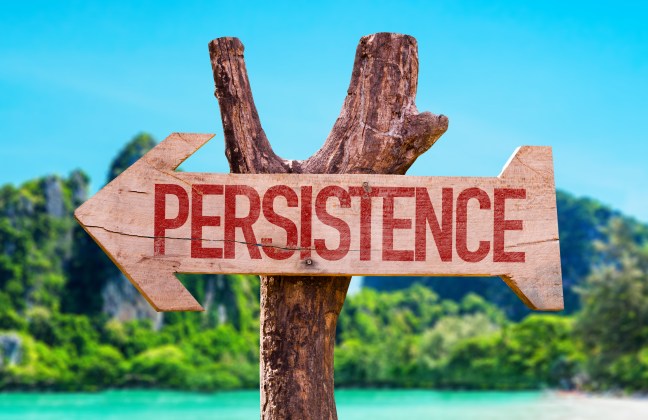
You need to decide what works for you and create your style. It is harder to pick up your writing after you’ve been away for a while, but you need to balance your writing with everything else in your life. The best advice that I’ve received throughout the years is to be persistent and keep writing if you want to be published.

Author Biography
Heather Weidner, a member of SinC – Central Virginia and Guppies, is the author of the Delanie Fitzgerald Mysteries, Secret Lives and Private Eyes and The Tulip Shirt Murders. Her short stories appear in the Virginia is for Mysteries series and 50 Shades of Cabernet. She has a novella included in To Fetch a Thief (November 2018).
Heather lives in Virginia with her husband and a pair of Jack Russell terriers, Disney and Riley. She’s been a mystery fan since Scooby Doo and Nancy Drew.
Some of her life experience comes from being a technical writer, editor, college professor, software tester, IT manager, and cop’s kid. She blogs at Pens, Paws, and Claws.
Synopsis
Private investigator Delanie Fitzgerald, and her computer hacker partner, Duncan Reynolds, are back for more sleuthing in The Tulip Shirt Murders. When a local music producer hires the duo to find out who is bootlegging his artists’ CDs, Delanie uncovers more than just copyright thieves. And if chasing bootleggers isn’t bad enough, local strip club owner and resident sleaze, Chaz Smith, pops back into Delanie’s life with more requests. The police have their man in a gruesome murder, but the loud-mouthed strip club owner thinks there is more to the open and shut case. Delanie and Duncan link a series of killings with no common threads. And they must put the rest of the missing pieces together before someone else is murdered.
The Tulip Shirt Murders is a fast-paced mystery that appeals to readers who like a strong female sleuth with a knack for getting herself in and out of humorous situations such as larping and trading elbow jabs with roller derby queens.
Contact Information
Website and Blog: http://www.heatherweidner.com
Pens, Paws, and Claws Blog: http://penspawsandclaws.com/
Twitter: https://twitter.com/HeatherWeidner1
Facebook: https://www.facebook.com/HeatherWeidnerAuthor
Instagram: https://www.instagram.com/heather_mystery_writer/
Goodreads: https://www.goodreads.com/author/show/8121854.Heather_Weidner
Amazon Authors: http://www.amazon.com/-/e/B00HOYR0MQ
Pinterest: https://www.pinterest.com/HeatherBWeidner/
LinkedIn: https://www.linkedin.com/in/heather-weidner-0064b233?trk=hp-identity-name
BookBub: https://www.bookbub.com/authors/heather-weidner-d6430278-c5c9-4b10-b911-340828fc7003
Book Links
Amazon: https://www.amazon.com/dp/B077CSZ53X
Apple: https://itunes.apple.com/us/book/id1310643581
Barnes and Noble: https://www.barnesandnoble.com/w/the-tulip-shirt-murders-heather-weidner/1127425899?ean=2940155054696
Kobo: https://www.kobo.com/us/en/ebook/the-tulip-shirt-murders
Scribd: https://www.scribd.com/book/363967058/The-Tulip-Shirt-Murders-The-Delanie-Fitzgerald-Mysteries-2
24Symbols: https://www.24symbols.com/book/x/x/x?id=2468512
Playster: https://play.playster.com/books/10009780999459812/the-tulip-shirt-murders-heather-weidner
Goodreads: https://www.goodreads.com/book/show/36591325-the-tulip-shirt-murders?from_search=true


*In the beginning of your writing career you underlined the struggles you had, but in the end you said, “But I had a story to tell.” I love that! Can you tell us about this feeling?
The building that inspired The Dead Key haunted me for ten years before I really sat down to write the story. In that time, I changed jobs, I got married, and I had children, but no matter where life took me, the abandoned vault below the Euclid Avenue and its unclaimed safe deposit boxes followed. It nagged at me in daydreams and every time I picked up a novel. Whenever I talked about the vacant building with friends, I could tell they were intrigued. When I considered what treasures and secrets had been left buried in the basement of that old bank, my toes would curl up with anticipation. The story just wouldn’t leave me alone.
*How did the story about the torso killer emerge and made you want to tell it?
Another abandoned building in Cleveland inspired The Unclaimed Victim. I had no idea that the Torso Killer would become the focus of the story. I just began researching the empty Union Gospel Press building’s history, particularly its years as a religious mission in the 1920s and 1930s, and became fascinated with the nun-like “Sallies” that lived there and the city of Cleveland during the Great Depression. The labyrinthine factory cried out for a serial killer in the mold of H.H. Holmes (see Devil in the White City by Erik Larson), and the Torso Killer became an obvious, albeit daunting, choice. So much has been written about the Torso Murders, I was reluctant to take on these true crimes, but as I delved into the research, it became clear that not every story about the murders had been told.
*Describe how you came up with the title, The Unclaimed Victim.
With this book, I wanted to tell a serial killer story from the victims’ perspective. So many thrillers are told from the detective’s or the killer’s point of view, and the victims become more like objects than people. The fact that only three of the thirteen official Torso victims were ever identified or claimed by their families struck me as another injustice of these crimes. It was my intent to breathe life into the Torso Killer victims with the hope that one might just get away.
*What was your first reaction when you heard about the Torso killer?
First I was horrified, then morbidly fascinated, then ultimately skeptical of the official findings. The Torso Killer became a media sensation as one of the nation’s most notorious maniacs back in a time before the term “serial killer” even existed. The detectives and coroners that worked the case were certainly devoted and professional, but they had no concept of modern profiling or access to modern forensics. After looking at the facts, I couldn’t shake the feeling that some evidence and potential suspects slipped through the cracks. The killer was never officially identified.

*Describe your experience writing about him, the unclaimed victim, and the final conclusion (no spoilers of course!).
It took eight months of research and drafting to really find the story I wanted to tell and another several months to finish it. I don’t outline, so I usually don’t know the answer to the mystery until I write the ending. As a result, I’m on the edge of my seat as the final scenes unfold. The process of writing this book took me to some pretty dark places where I considered murder on an intimate level from many angles, and asked myself almost daily what it would take for me to kill someone. My kids gave me funny looks for a few weeks there.

*How does it feel knowing the success you have today versus the struggles you began with?
I feel unbelievably lucky that my books have found an audience and I am able to write full time right now. I try to be thankful each day I sit down to work. I am currently editing my fourth novel, and I’ve found that every book presents different struggles and challenges. I still try to write my first draft like nobody will ever read it. I still worry the literary police will take me away in handcuffs any day now for impersonating a writer.
*Do you like historical fiction?
I love historical fiction, but I generally prefer to write and read stories about the 20th century. Some of my favorites right now are The Paris Wife by Paula McClain, All the Light We Cannot See by Anthony Doerr, and The Stranger House by Reginald Hill.

*Are your stories always based upon true crime?
I like to use real history as a backdrop for my stories. The Dead Key wasn’t based on true crime as much as Cleveland’s history of political corruption and financial default. Similarly, The Buried Book was inspired by true events like the 1953 Flint-Beecher tornadoes and Detroit-area history. My third and fourth novels were inspired by true crimes from Cleveland’s past.
*What would you say to all the struggling writers out there?
Keep writing. Keep reading. Don’t fall in love with your words; just find and follow the story. Don’t be afraid to try and fail. Always be willing to re-write, rework, and re-examine. Don’t give up. I also recommend reading craft books including On Writing by Stephen King, No Plot, No Problem by Chris Baty, and Save the Cat by Blake Snyder.
*What are you working on next?
My fourth book is a historical mystery about a hundred-year-old mansion in Shaker Heights, Ohio and the decades of secrets and lies hidden behind its facade.

Before becoming a full-time writer, D.M. Pulley worked as a Professional Engineer, rehabbing historic structures and conducting forensic investigations of building failures. Pulley’s structural survey of a vacant building in Cleveland inspired her debut novel, The Dead Key, the winner of the 2014 Amazon Breakthrough Novel Award. The disappearance of a family member formed the basis for her second historical mystery, The Buried Book. Pulley’s third novel, The Unclaimed Victim, delves into the dark history behind Cleveland’s Torso Killer and is due out November 14, 2017. She lives in northeast Ohio with her husband, her two children, and a dog named Hobo, and she is hard at work on her fourth book.


rejuvenatement - not retirement
...a crime-fictional site
Established in May 2011 to help nurture and inspire the poetic spirit.
A place for poems and pics
a simple pairing of pictures and poetry
Sharing Poetry and Hugs
Persistent WV Poet
A.I. Art and Poetry
short writing prompts
I am the way and the reality and the life...John 14:6
Submit your film, screenplay, novel, to the festival and get it showcased at the FEEDBACK Festival. Full Feedback on all entries.
Military Science Fiction Author
 The Writing Train: Join the locomotion