The Crew Reviews: Michael Connelly – THE LAW OF INNOCENCE

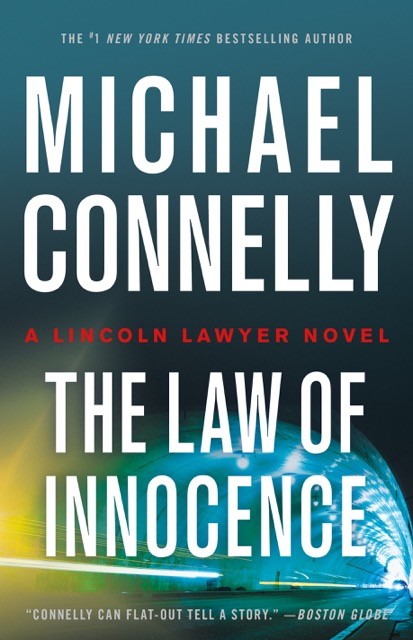
Michael Connelly | THE LAW OF INNOCENCE

TheCrewReviews.com

YouTube.com

MichaelConnelly.com


Lincoln Lawyer Mickey Haller is back in the heartstopping new thriller from #1 New York Times bestselling author Michael Connelly.

Defense attorney Mickey Haller is pulled over by police, who find the body of a client in the trunk of his Lincoln. Haller is charged with murder and can’t make the exorbitant $5 million bail slapped on him by a vindictive judge.

Mickey elects to defend himself and must strategize and build his defense from his jail cell in the Twin Towers Correctional Center in downtown Los Angeles, all the while looking over his shoulder–as an officer of the court he is an instant target.

Mickey knows he’s been framed. Now, with the help of his trusted team, he has to figure out who has plotted to destroy his life and why. Then he has to go before a judge and jury and prove his innocence.

In his highest stakes case yet, Mickey Haller fights for his life and shows why he is “a worthy colleague of Atticus Finch…in the front of the pack in the legal thriller game” (Los Angeles Times).


Goodreads |Amazon | B&N


About Michael Connelly

Michael Connelly is the bestselling author of over thirty novels and one work of nonfiction. With over eighty million copies of his books sold worldwide and translated into forty foreign languages, he is one of the most successful writers working today. A former newspaper reporter who worked the crime beat at the Los Angeles Times and the Fort Lauderdale Sun-Sentinel, Connelly has won numerous awards for his journalism and his fiction. His very first novel, The Black Echo, won the prestigious Mystery Writers of America Edgar Award for Best First Novel in 1992. In 2002, Clint Eastwood directed and starred in the movie adaptation of Connelly’s 1998 novel, Blood Work. In March 2011, the movie adaptation of his #1 bestselling novel, The Lincoln Lawyer, hit theaters worldwide starring Matthew McConaughey as Mickey Haller. His most recent New York Times bestsellers include Fair Warning, The Night Fire, Dark Sacred Night, The Late Show, Two Kinds Of Truth, The Late Show, The Wrong Side Of Goodbye, The Crossing, The Burning Room, The Gods of Guilt, The Black Box, and The Drop. Michael is the executive producer of BOSCH, an Amazon Studios original drama series based on his bestselling character Harry Bosch, starring Titus Welliver and streaming on Amazon Prime. He is also the executive producer of the documentary films, SOUND OF REDEMPTION: The Frank Morgan Story and Tales Of the American. He spends his time in California and Florida.


www.michaelconnelly.com

Book Frenzy Book Recommendations

Welcome to Thursday Book Frenzy book recommendations! Since I LOVE searching for good books and exploring, I decided to put together a weekly list of recommendations. At least, that’s my intention. Some will be my own, but a lot will be from other readers, bloggers, authors, and other book lovers. Here we go!


Getting snowed in at a beautiful, rustic mountain chalet doesn’t sound like the worst problem in the world, especially when there’s a breathtaking vista, a cozy fire, and company to keep you warm. But what happens when that company is eight of your coworkers…and you can’t trust any of them?

When an off-site company retreat meant to promote mindfulness and collaboration goes utterly wrong when an avalanche hits, the corporate food chain becomes irrelevant and survival trumps togetherness. Come Monday morning, how many members short will the team be?

Amazon| Ruthware.com


The gentrification of a Brooklyn neighborhood takes on a sinister new meaning…

Sydney Green is Brooklyn born and raised, but her beloved neighborhood seems to change every time she blinks. Condos are sprouting like weeds, FOR SALE signs are popping up overnight, and the neighbors she’s known all her life are disappearing. To hold onto her community’s past and present, Sydney channels her frustration into a walking tour and finds an unlikely and unwanted assistant in one of the new arrivals to the block—her neighbor Theo.

But Sydney and Theo’s deep dive into history quickly becomes a dizzying descent into paranoia and fear. Their neighbors may not have moved to the suburbs after all, and the push to revitalize the community may be more deadly than advertised.

When does coincidence become conspiracy? Where do people go when gentrification pushes them out? Can Sydney and Theo trust each other—or themselves—long enough to find out before they too disappear?

Amazon|Alyssa Cole


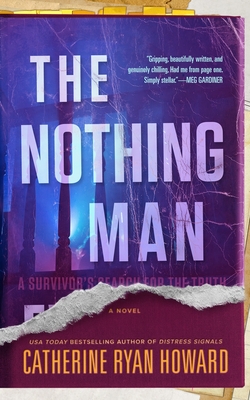
At the age of twelve, Eve Black was the only member of her family to survive an encounter with serial attacker the Nothing Man. Now an adult, she is obsessed with identifying the man who destroyed her life.

Supermarket security guard Jim Doyle has just started reading The Nothing Man—the true-crime memoir Eve has written about her efforts to track down her family’s killer. As he turns each page, his rage grows. Because Jim’s not just interested in reading about the Nothing Man. He is the Nothing Man.

Jim soon begins to realize how dangerously close Eve is getting to the truth. He knows she won’t give up until she finds him. He has no choice but to stop her first …

Amazon|CatherineRyanHoward.com


The secrets lurking in a rundown roadside motel ensnare a young woman, just as they did her aunt thirty-five years before, in this new atmospheric suspense novel from the national bestselling and award-winning author of The Broken Girls.

Upstate NY, 1982. Every small town like Fell, New York, has a place like the Sun Down Motel. Some customers are from out of town, passing through on their way to someplace better. Some are locals, trying to hide their secrets. Viv Delaney works as the night clerk to pay for her move to New York City. But something isn’t right at the Sun Down, and before long she’s determined to uncover all of the secrets hidden…

Amazon| SimoneStJames.com

All the book recommendations are from a wonderful book lover, Laura Rash, aka Wonder Chick.

You can find her on Twitter or on Instagram.

Writing, Rewriting, and Craft by Elena Hartwell


Writing, Rewriting, and Craft

By Elena Hartwell


As a novelist and playwright, I’m often asked where I get my ideas. Almost every writer I know gets this question, and I think we all feel the same. Ideas are never the problem. That’s the easy part. Ideas are a dime a dozen. The hard part, the magic part, is turning the idea into a polished, final manuscript.


The writing process varies wildly from author to author. Some write extensive, detailed outlines. Others sit down with an idea and write scenes on the fly. A number of writers fall somewhere in between, while they may not outline, neither do they sit down and write completely organically. They might write a synopsis or outline a chapter in advance.


The various combinations of these methods all work, depending on the writer and the project. There is no “wrong” way to write a novel. The “how” a writer works isn’t why their manuscript sells or doesn’t sell. The primary reason an author’s work has not yet sold is a lack of craft.


People who lack craft skills rarely sit down to write a novel. Or if they do, they can start, but never finish. Or if they do finish, they don’t rewrite. Or if they do rewrite, they quit after a single pass. Or, if they do continue to rewrite, they aren’t aware enough of craft to recognize the flaws in their own work. You get the picture. The problem is the writer stops too soon.


As a writing coach—I do one-on-one manuscript critiques as well as teaching workshops—there are some fundamental issues I see repeated in early drafts, over and over. These same issues show up in my own work, and probably on some level, in the early drafts of every writer out there. So the first thing aspiring writers can do to increase their chances of writing a successful manuscript, is learn how to identify these problems.


The first is a lack of clear objectives, obstacles, and stakes. It’s not enough to have a dead body to write a mystery. Someone has to investigate the murder. The person investigating the murder has to need to solve the crime. If they don’t need to solve the crime (objective) there’s no tension about the investigation. If the solution doesn’t matter to the investigator, it won’t matter to the reader. 


The sleuth also can’t solve the crime easily, that’s not dramatic. Various impediments (obstacles) have to appear, one after the other, to prevent the protagonist from catching the killer. The more the investigator has to overcome, the more satisfying to the reader when they do. 


Lastly, it has to matter (stakes). For example, the protagonist with an internal struggle, coinciding with their investigation, is far more interesting than someone who simply goes through the motions of solving a crime.


The more important solving the case is to the protagonist, the more dangerous or difficult the journey, and the greater the importance to find the guilty party, the more invested a reader will be. That’s what keeps a reader turning pages.


Complex protagonists will also have personal objectives, obstacles, and stakes to go along with their investigation. For example, a crumbling marriage, a child in danger, or overcoming an addiction are common tropes within the genre. When we know an investigator has to choose between catching a killer and saving their marriage, the stakes are high and we breathlessly turn each page waiting to see what the character chooses.


Another common error I find is a lack of structure. All stories have an underpinning structure. While there are variations to that structure, for the most part, especially in crime fiction, we start with the world as we know it, which is disrupted by a specific event, followed by rising action, where events pile one on top the other, each more important than the one that went before. This ends with a climactic scene, with the maximum danger to our hero or heroine, followed by a glimpse into the new world order for our characters.


If any of these parts are missing, the story can feel unfinished. For example, if we don’t have some sense of what the character’s life was before the intrusion, we don’t know what they are putting at risk. The “world before” can often be well hidden, it might not appear in the first chapter, but later in reflections the character makes as the story progresses, but usually a reader can identify it if they look for it. 


The middle of a manuscript might falter if a lot of exciting things happen at the beginning, then nothing exciting follows. Rising action is important, because it builds dramatic tension, making it impossible to put the book down.


Lastly, an ending can feel unsatisfying if we have no sense of the outcome. Readers don’t need everything tied up in a bow, but they do want the primary threads to be resolved enough to know what the character’s lives will be like after they read “the end.”


Dialogue can also be difficult to master. One of the most common problems I see is when authors have their characters say exactly what they feel and exactly what they mean. That doesn’t ring true. People lie all the time. We lie because it’s expedient, it benefits us in some way, it keeps us from hurting others, or we don’t want to get in trouble. We rarely say what we mean, we obfuscate, we dither, we agree out loud when disagreeing feels like a mistake. Dialogue works best when each character speaks distinctly from the others, through word choice, sentence length, grammatical accuracy, and the use of slang. 


If a writer can identify just these specific problem areas in their own writing, their next draft will be a much tighter, more polished manuscript. It can feel overwhelming to try to identify and fix all the issues I’ve outlined at one time. My recommendation for writers is to choose one aspect and rewrite just for that. Heighten the stakes in one rewrite. Focus solely on dialogue for the next. Breaking down the process into smaller chunks can make each rewrite a more successful venture. This will help the writer get through a series of rewrites rather than attempting one and feeling like the mountain is too high to climb. My final piece of advice. Don’t give up. That’s the only difference between a published author and an unpublished one. 


Elena Hartwell started out her storytelling career in the theater. She worked for several years as a playwright, director, designer, technician, and educator before becoming a novelist.

Elena has more than twenty years of teaching experience and now works one-on-one with writers as a manuscript consultant and writing coach.

She lives in North Bend, Washington, with her husband, two cats, and the greatest dog in the world. When she’s not writing, teaching writing, or talking about writing, she can be found at a nearby stables, playing with her horses.

For more information about Elena, please visit www.elenahartwell.com.


Twitter |Goodreads | Amazon


For fans of Julia Keller and Sheena Kamal, All We Buried disturbs the long-sleeping secrets of a small Washington state mountain town.

Deep in the woods surrounding the Cascade mountain range, a canvas-wrapped body floats in a lake, right in Elizabeth “Bet” Rivers’s jurisdiction. Bet has been sitting as interim sheriff of Collier after her father’s–the previous sheriff’s–death six months ago. Everyone knows everyone in a town like Collier. She has made it her duty to protect the people she’s come to see as family. And she intends to hold her title in the upcoming election, but she’s never worked a murder investigation on her own before and her opponent and deputy, Dale Kovac, isn’t going down without a fight.

Upon unwrapping the corpse, Bet discovers the woman is from out of town. Without an identification, the case grows that much more puzzling. Determined to prove herself worthy, however, Bet must confront the warped history of Collier. The more she learns, the more she realizes she doesn’t know the townspeople of Collier as well as she thought, and nothing can prepare her for what she is about to discover.


Amazon|B&N | Audible


Moving Beyond Trauma: An Interview with Author Ilene Smith


Moving Beyond Trauma image


Have you noticed that no matter how much time you spend in talk therapy, you still feel anxious and triggered? That is because talk therapy can keep you stuck in a pattern of reliving your stories, rather than moving beyond them. But, most of all, it’s because trauma doesn’t just reside inside your mind–much more importantly, it locks itself in other parts of your body. When left unresolved, that trauma continues to live there, impacting your life, your relationships, your sense of safety, and your ability to experience joy in very real ways.

In Moving Beyond TraumaIlene Smith will introduce you to Somatic Experiencing, a body-based therapy capable of healing the damage done to your nervous system by trauma. She breaks down the ways in which trauma impacts your nervous system and walks you through a program designed to process trauma in a non-threatening way. You will discover a healing lifestyle marked by a deeper connection with yourself, those around you, and with everything you do.


AudibleGoodreads | Audible


Gentle Healing Words


INTERVIEW WITH ILENE SMITH


What is somatic experiencing?


Somatic Experiencing (SE) is a body therapy modality used to heal trauma. When an event happens too fast and we do not have the time or ability for self-protection or defense, this survival energy gets stuck in our body as an incomplete biological reaction. This stuck energy is what causes trauma symptoms and the nervous system loses its ability to maintain a state of balance. The trapped energy from the traumatic experience causes the nervous system to rush to a state of fight, flight, or freeze. SE works to help bring the nervous system back on-line by helping the individual restore their sense of safety. This can only happen when the body has a “biological completion” and the trauma energy has the opportunity to reintegrate back into the body.  

While SE uses talking in the process, the talking is used to track body sensation and meaning attached to experiences, rather than bring the individual back into the event of the trauma. When we bring the body into the therapy process and facilitate a way for the individual to physically move through the experience with a sense of safety, the relationship to the experience changes and the stuck energy will discharge.


Why did you want to become a somatic experiencing practitioner?

When I went back to school in my early 40’s for a degree in mental health counseling, I knew I wanted to work with trauma. I was introduced to SE during my internship at an eating disorder clinic and felt as though SE was complimentary to talk therapy. I also felt as though it was the missing link for trauma healing. I became a student of the work as well as a patient because I believe you can only take a client as far as you are willing to go yourself. I was experiencing great results personally and began applying the principles of SE with my clients. The results were phenomenal. Clients with eating disorders and addiction were moving away from their maladaptive behaviors and finding deeper and more meaningful connections with themselves and others. I feel strongly and passionately that the body and the nervous system need to be part of the healing process for real and everlasting change.


What type of rewards do you get by helping others heal?

There is nothing more rewarding than watching a person go from surviving to thriving in their life. I have and continue to walk people through incredible healing journeys. I love being part of transformation and nothing feels better than being able to add value to other’s lives.


What is the focus on the nervous system related to this type of therapy?

While the nervous system is designed to be self-regulating, it has its limitations around trauma. Unresolved trauma, especially when trauma is chronic and accumulated, can lead to more extensive mental and physical health symptoms. The long-term effect of SE treatment is a restored sense of healthy nervous system functioning, which includes reduction in maladaptive coping skills, resolved sleep issues, and mood stabilization — to name a few. When the body gains the capacity to self-regulate, it restores its sense of safety and balance. In turn, stress hormones are lower and the body can produce more “feel good” hormones such as serotonin and oxytocin.

Unlike most therapy modalities which are considered “top down,” meaning they use our highest form of cognition, SE begins with a “bottom up” approach of sensorimotor processing aimed at guiding the client through the most primitive to the most complex brain systems. The therapist begins by guiding the client to track sensation and movements, helping a patient develop a felt sense of his internal states of tension, relaxation and respiration cycles. This is a powerful mechanism to regulate the autonomic nervous system. 


What does unresolved trauma mean and how does it affect our bodies?

When trauma is unresolved our survival mechanisms of fight flight and freeze get stuck in the on position and our autonomic nervous system (ANS) kicks into high gear. These states are only meant for acute situations for defense and protection. Our ANS contributes to how we regulate every state in our body including heart rate, breath, digestion and bladder.  When our bodies are in stress physiology, hormones such as adrenaline and cortisol start pumping through the body causing all sorts of imbalances both emotionally and physically. There have been many studies showing the impact of trauma and stress on the emotional and physical body. The Adverse Childhood Experience (ACE) study showed that the more emotional and physical abuse a person had during childhood the more likely they are to experience mental and physical health issues as adults. This body and mind are intrinsically connected and this is why bringing the body into the healing process is so important.


What happens in the brain when trauma is processed, or resolved?

When trauma is resolved a person will begin to see and move through the world with more vitality and ease. They will begin to have a more accurate ability to sense safety and danger and experience a deeper connection to themselves and the world around them. When trauma is resolved a person will feel more present, helping them better express themselves and understand their needs and desires. These changes in the nervous system and brain, reduce anxiety, depression and maladaptive behaviors used to cope with pain and discomfort. Ultimately the individual will feel more curious and resilient to face the ups and down of life.


How does this type of therapy build resilience? 

SE works with the bodies most primitive instincts to help integrate trauma memories into the body. When this occurs, a person will experience a greater sense of safety within themselves. In other words, a person gains a sense of mastery over themselves and their feelings. It is a knowing that you can handle and tolerate what you are experiencing. Resilience is a byproduct of knowing you have the internal resources to survive and this is what we teach the body through the process of SE.


I love the title of your book, Moving Beyond Trauma. What can a life beyond trauma look like, and what kind of hope does it bring? 

Thank you! When trauma is resolved we gain capacity to live our lives with more presence and intention. We can connect to ourselves and others and feel more curious to explore the things that we like. Ultimately moving beyond trauma allows the space to find passion and vibrance. I like to think of life after trauma as a healing lifestyle. A healing lifestyle is different for each person, but it is a life of self-care with body/mind alignment. It is a life beyond survival where an individual can and has the desire to grow and thrive.


Where can people learn more about somatic experiencing?

My book Moving Beyond Trauma is available on Amazon. 

If someone is interested in finding a Somatic Experiencing Practitioner in their area, they can go to www.traumahealing.org. I also have many articles on my website www.ilenesmith.com


Ilene Smith author image


*Any donations are greatly appreciated via the Paypal link: The Writing Train.

*Thank you for supporting bloggers!


Train with landscape image


A Q&A With the Authors of Robin Hood’s Widow: Olivia Longueville & J.C. Plummer


Robin Hoods Widow book 2 image


Don’t miss this unique retelling of the Robin Hood legend!

England, 1154-1194
A kingdom under assault.
A conspiracy born of anarchy.
A hero standing against tyranny.

Robin’s duty to his king sends him on an odyssey that will unfold from the streets of Paris to the banks of the Danube. From incredible triumphs on the battlefields of the Crusade, to harrowing sea voyages, to a desperate dash across the frozen landscape of Central Europe, Robin Hood must ensure that King Richard safely returns to England.

Meanwhile, the outlaws of Sherwood Forest rise again under a new leader—and she is unwavering in her pursuit of justice against the tyranny of Sheriff de Argentan. Marian endures the heartbreak of widowhood only to find strength and purpose as she leads a small band of devoted men in her quest for vengeance while she protects Robin’s legacy.

Sir Guy of Gisborne, tormented by his conscience and enslaved by the sheriff, faces the wraith-like fury of the woman he once loved. How do you find forgiveness when you have committed an unforgivable crime? He must attempt a daunting journey of redemption, while finding inspiration from an unexpected source.

And through it all, Robin, Marian, and Guy are entangled in a web of treachery spun by the King of France and his sinister advisor, Montlhéry, as the plot to dismantle the Angevin Empire and take the throne of England from the Plantagenets boldly continues.

Part two of an exciting three-part retelling of the Robin Hood legend!

Although the books in the trilogy are not stand-alone, they do not end in cliffhangers.


AmazonGoodreads | B&N


Q&A written on blackboard


Author Q&A with Olivia Longueville and J.C. Plummer

Robin Hood has been featured in many books, movies, and television shows.  How is your trilogy different?

In our first book, Robin Hood’s Dawn, we re-imagined the origins of the Robin Hood legend, which included exploring his family dynamics: an aloof, selfish father and a kind-hearted mother devoted to ministering to the poor.  One theme is how the consequences of immoral actions and secret sins can reverberate across generations.  This is part of Robin’s legacy from his father.

We cast Robin as a hero fighting against the tyranny of a lawless government official. When Robin is falsely accused of a shocking crime by the new Sheriff of Nottingham, he could have retreated to a safe place beyond the reach of the sheriff.  However, he feels a responsibility to the people because he believes in the intrinsic value of every human being.  Instead of running away, he stays to protect the people from the sheriff.  And this points to another theme: one person can make a difference by taking a stand for what is right.

The second book, Robin Hood’s Widow, picks up where the first book ends. Robin is alive and still with King Richard in the Holy Land, but Marian, the sheriff, and Guy of Gisborne have returned to England thinking that Robin Hood is dead.

Robin Hood’s Widow explores themes of grief and redemption, while featuring Marian’s adventures as leader of the outlaws. Her story is interwoven with Robin’s quest to return home while fulfilling his obligations to King Richard.

In this book, we wanted to explore both the stages of grief and their non-linear nature. Experiencing loss and grief is not like climbing stairs; you don’t complete one stage, progress to the next, and eventually arrive at acceptance. The emotional turmoil of an earlier stage can reappear and reassert itself during the process.

That being said, this story is not sad or depressing; Robin Hood’s Widow is an optimistic tale of triumphing over adversity. 

You’ve emphasized how your Robin Hood story has been re-imagined.  Will fans of the traditional ballads still recognize this as a Robin Hood story?

There is a lot of variety in the many books and screen adaptations of the Robin Hood legend.  We wanted to create a story that was respectful towards fans of the original ballads and legends without adhering to the same story lines that have been previously written.  We hope that all Robin Hood fans will enjoy this fresh retelling of the story.

However, we felt that Marian is a character who deserves more attention.  All too often she is a background character with little to do.  With this in mind, we have focused on creating a Lady Marian who will figure more prominently in the story, especially in Robin Hood’s Widow, where she takes center stage as the leader of the outlaws. She must learn how to lead while finding clever ways to thwart the sheriff and rob those supporters of Prince John who dare enter Sherwood Forest.  We also wanted Marian to be feminine and believable as a woman of the 12th century.    

Do the first two books of the trilogy end in cliff-hangers? Are the books stand alone?  

We have structured the trilogy so that the books do not end in cliff-hangers, and we have endeavored to create a sense of completion in each of the books. 

Although we want readers to start with Robin Hood’s Dawn, we know that some might be more interested in Robin Hood’s Widow. Therefore, we have endeavored to provide enough information in the second book so that a new reader will not be lost.

Both Robin and Marian are guarding secrets that will be revealed in Robin Hood’s Widow!

How did you become interested in writing this story and working together as co-authors?

Olivia:

The story of Robin Hood’s Widow is very special to me, and I wrote the original version after I experienced a devastating personal loss. Readers might be surprised to learn that Robin Hood’s Widow was written before Robin Hood’s Dawn!

I love to tell stories with multi-dimensional characters.  I am multi-lingual, and I enjoy writing stories in different languages.  My first novel is an English-language alternate history featuring Anne Boleyn.

I met Coleen (J.C.) on the Internet, and we decided to co-author a Robin Hood Trilogy with Robin Hood’s Widow as its centerpiece.  

So, you’ve never met, you come from different countries, different cultures, and speak different languages.  How can you co-author a book?  Is it because you have similar writing styles?

Coleen:

Fortunately, Olivia is fluent in English, because that’s the only language I know!

Olivia:

We have found that we have a lot in common—especially our love of writing and of history.  We have to work hard to merge our writing styles, but we have successfully done this. 

Coleen:

That’s true.  Olivia and I have very different “voices” and writing styles.  You might even say they are nearly opposite styles.  

I write in a straightforward, expository style, with a minimum of descriptive elements and metaphorical flourishes.  I am good at explaining things, organizing ideas, and creating natural sounding dialogue.

Olivia:

My writing is characterized by lush romanticism and passionate lyricism.  I love to create metaphors and descriptions which excite the imagination of the reader in a vivid and dramatic way.

Coleen:

In some respects, Olivia’s words are the emotional heart of the story, and my words represent the rational intellect.  Of course, it’s not quite that cut-and-dried, but it is one way to describe how two people with such different styles have come together to create Robin Hood’s Dawn and Robin Hood’s Widow


A hooded hunter with bow and arrows walks through a forest


Author Information

Below are the author biographies and social media profiles.  

Olivia Longueville 

Olivia has always loved literature and fiction, and she is passionate about historical research, genealogy, and the arts.  She has several degrees in finance & general management from London Business School (LBS) and other universities.  At present, she helps her father run the family business.  

During her first trip to France at the age of ten, Olivia had a life-changing epiphany when she visited the magnificent Château de Fontainebleau and toured its library.  This truly transformed her life as she realized her passion for books and writing, foreshadowing her future career as a writer.  In childhood, she began writing stories and poems in different languages.  Loving writing more than anything else in her life, Olivia has resolved to devote her life to creating historical fiction novels.  She has a special interest in the history of France and England.  

Having met on the Internet, Olivia and J. C. Plummer, a writer and historian, decided to co-author The Robin Hood Trilogy.  Olivia and J. C. are retelling the Robin Hood story with an unusual and imaginative plot that is solidly grounded in 12th century history. The trilogy incorporates twists and turns which will captivate and entertain readers.


Olivia’s social media profiles:

Personal websiteOlivialongueville.com

Project websitewww.angevinworld.com

Twitter@O_Longueville

FacebookOlivia Longueville

Tumblr: http://www.olivia-longueville.tumblr.com


J. C. Plummer 

J.C. Plummer (Jennie Coleen) graduated Summa Cum Laude from Washburn University with a Bachelor of Arts degree in History and Anthropology.  She later earned a Master of Science degree in Computer Information Science from Dartmouth College.

Co-authoring The Robin Hood Trilogy has merged J.C.’s passions for history, culture, and technology into one unique, exciting project.

As an author and historian, J.C.’s goal is to provide thoughtful and entertaining storytelling that honors the past, is mindful of the present, and is optimistic for the future.


J.C.’s social media profiles:

Project websitewww.angevinworld.com

Twitter@JC_Plummer

FacebookJennie Newbrand

The Obsolescence Trilogy: Book #2 UPGRADE by Chris Muhlenfeld


banner Obsolescence Trilogy image


Billions are dead. The World is still smoldering. A terrifying new threat has emerged from the ashes. 


upgrade book 2 image


About Audiobook #2

Author: Chris Muhlenfeld

Narrator: Price Waldman

Length: 8 hours 44 minutes

Publisher: Chris Muhlenfeld⎮2018

Genre: Science Fiction

Series: The Obsolescence Trilogy, Book 2

Release date: March 5, 2019


Synopsis: Billions are dead. The world is still smoldering. A terrifying new threat has emerged from the ashes.

Returning safely from their expedition, James and Alexa deliver the weird news to the survivors at Winona Station. Everyone still alive is now faced with an impossible decision: betray their very humanity to survive, or watch the human race regress into a new stone age.

The stakes could not be higher.

Will they choose wisely?

Make time now because once you start listening to UPGRADE, you’ll be instantly hooked. Get it now! 

UPGRADE is the second thrilling audiobook in The Obsolescence Trilogy. This audiobook is plausible, near-future sci-fi that’s full of rich, insightful characters, and compelling ideas.


Buy Links for Audiobook #2

Buy on Audible


Review - 3d rendered headline


A solid follow up from book one, Upgrade has several fascinating story developments.  A mysterious Artificial Intelligence with unknown motives, intriguing technology, good characters, and a good dose of humor made this an entertaining book. The ending was a bit confusing, but I’m assuming that will be explained in the next book, RESET.


Cyborg head using artificial intelligence to create digital interface 3D rendering


muhlenfeld_author_photo


About the Author: Chris Muhlenfeld

Chris has been reading and writing science fiction since he was a teenager. After roaming all over the world,  he finally settled down in the beautiful mountains of western Montana where he publishes Distinctly Montana magazine with his wife. When he’s not hiking, biking or camping in the Montana wilderness, he and his wife are traveling the world. 


WebsiteFacebookAmazon


narrator Price_waldman


About the Narrator: Price Waldman

Price Waldman is an actor and singer, born and raised in NYC. Classically trained, and working professionally in the theater for over 20 years he is new to the world of audiobooks. As an actor he has performed multiple times on Broadway, toured nationally and internationally and appeared on film and television.


train black and white image


A Self-Care Checklist for the Sandwich Generation by Dr. Ken Druck


Raising an aging parent image


A Self-Care Checklist for the Sandwich Generation

By Dr. Ken Druck

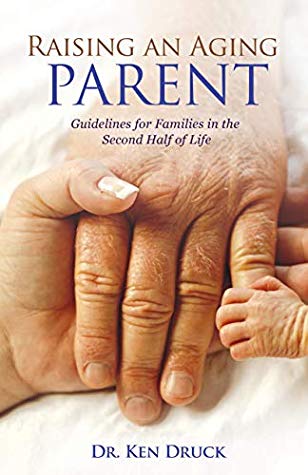
Regardless of whether adult children are distant or close, the pressure to get involved in a parent’s life increases over time. Parents who are beginning to look and feel older, slow down, unplug from a career, face a new season of life—and whose needs are changing—may look to their adult children for greater support. The parent who once gave care is now in need of care. For many adult children, meeting the needs of an aging parent comes at a time when they’re raising their own children and immersed in their career. “The Sandwich Generation,” a term officially added by Merriam Webster to its dictionary in 2006: is defined as “a generation of people (usually in their forties to seventies) who care for their aging parents while supporting their own children.” I refer to them as “SanGen’s.” Adult “SanGen” sons and daughters are called into action no matter how overwhelmingly busy they are with their own lives, necessitating a new self-care OS (Operating System).

A Self-Care Checklist for the Sandwich Generation

To repeat something very important: the only way to survive the squeeze of SanGen stress is to upgrade your operating system for self-care. When we feel exhausted and pulled in a million directions, self-management is the key. SanGen survival requires upping your self-care game. At the end of the day, each of us is our own primary care physician. We are responsible for ourselves.

Here is a blueprint for taking exceptionally good care of yourself—that you can tailor to meet your particular needs—taken from my new book, Raising an Aging Parent: Guidelines for Families in the Second Half of Life.


1. Exercise and move

2. Balance stress and activity with rest and relaxation


3. Eat right and hydrate


4. Say “No” and avoid putting anything more on your plate


5. Find healthy/constructive outlets for emotions like fear, sorrow and anger 

6. Maintain a positive outlook to the best of your ability

7. Stay engaged with other parts of your life (friends, neighbors, community, etc.)

8. Make a plan to do things that lighten and lift your heart

9. Work smarter, not harder and waste not


Having less stress or being stress-less. Hand turns a cube and changes the word "STRESS" to "LESS".


A self-care checklist can be more powerful than it might look at first glance. At its core, taking good care of ourselves is about balancing rest and activity, getting in game shape to play at our life, restoring and rejuvenating our souls, and investing wisely in our best possible futures. For perhaps as long as we can remember, we may have been running around doing everything for everyone else, leaving ourselves with crumbs and leftovers. It’s time for a change.


Dr Ken Druck headshot image


About: Dr. Ken Druck is an international authority on healthy aging and author of the new book “Raising an Aging Parent.” He has spent four decades helping people grow into the more courageous, compassionate, and resilient version of themselves by transforming adversities and losses of every kind into opportunities. Learn more at www.kendruck.com.


AmazonGoodreads | Audible


black train


An Excerpt of Hymns Of The Republic by S.C. Gwynne


Hymns of the Repbulic upgrade image


From the New York Times bestselling, celebrated, and award-winning author of Empire of the Summer Moon and Rebel Yell comes the spellbinding, epic account of the dramatic conclusion of the Civil War.

The fourth and final year of the Civil War offers one of that era’s most compelling narratives, defining the nation and one of history’s great turning points. Now, S.C. Gwynne’s Hymns of the Republic addresses the time Ulysses S. Grant arrives to take command of all Union armies in March 1864 to the surrender of Robert E. Lee at Appomattox a year later. Gwynne breathes new life into the epic battle between Lee and Grant; the advent of 180,000 black soldiers in the Union army; William Tecumseh Sherman’s March to the Sea; the rise of Clara Barton; the election of 1864 (which Lincoln nearly lost); the wild and violent guerrilla war in Missouri; and the dramatic final events of the war, including the surrender at Appomattox and the murder of Abraham Lincoln.

Hymns of the Republic offers angles and insights on the war that will surprise many readers. Robert E. Lee, known as a great general and southern hero, is presented here as a man dealing with frustration, failure, and loss. Ulysses S. Grant is known for his prowess as a field commander, but in the final year of the war he largely fails at that. His most amazing accomplishments actually began the moment he stopped fighting. William Tecumseh Sherman, Gwynne argues, was a lousy general, but probably the single most brilliant man in the war. We also meet a different Clara Barton, one of the greatest and most compelling characters, who redefined the idea of medical care in wartime. And proper attention is paid to the role played by large numbers of black union soldiers—most of them former slaves. They changed the war and forced the South to come up with a plan to use its own black soldiers.

Popular history at its best, from Pulitzer Prize finalist S.C. Gwynne, Hymns of the Republic reveals the creation that arose from destruction in this thrilling read.

Amazon | Goodreads | Website | B&N


EXCERPT -Realistic Neon Sign on Brick Wall background


CHAPTER ONE: The End Begins

Excerpted from HYMNS OF THE REPUBLIC: The Story of the Final Year of the American Civil War, by S.C. Gwynne. Copyright © 2019 by Samuel C. Gwynne.  Excerpted with permission by Scribner, a Division of Simon & Schuster, Inc.


Washington, DC, had never, in its brief and undistinguished history, known a social season like this one. The winter of 1863–64 had been bitterly cold, but its frozen rains and swirling snows had dampened no spirits. Instead a feeling, almost palpable, of optimism hung in the air, a swelling sense that, after three years of brutal war and humiliating defeats at the hands of rebel armies, God was perhaps in his heaven, after all. The inexplicably lethal Robert E. Lee had finally been beaten at Gettysburg. Vicksburg had fallen, completing the Union conquest of the Mississippi River. A large rebel army had been chased from Chattanooga. Something like hope—or maybe just its shadow—had finally loomed into view.


The season had begun as always with a New Year’s reception at the Executive Mansion, hosted by the Lincolns, then had launched itself into a frenzy whose outward manifestation was the city’s newest obsession: dancing. Washingtonians were crazy about it. They were seen spinning through quadrilles, waltzes, and polkas at the great US Patent Office Ball, the Enlistment Fund Ball, and at “monster hops” at Willard’s hotel and the National. At these affairs, moreover, everyone danced. No bored squires or sad-eyed spinsters lingered in the shadows of cut glass and gaslight. No one could sit still, and together all improvised a wildly moving tapestry of color: ladies in lace and silk and crinolines, in crimson velvet and purple moire, their cascading curls flecked with roses and lilies, their bell-shaped forms whirled by men in black swallowtails and colored cravats.

The great public parties were merely the most visible part of the social scene. That winter had seen an explosion of private parties as well. Limits were pushed here, too, budgets broken, meals set forth of quail, partridge, lobster, terrapin, and acreages of confections. Politicians such as Secretary of State William Seward and Congressman Schuyler “Smiler” Colfax threw musical soirees. The spirit of the season was evident in the wedding of the imperially lovely Kate Chase—daughter of Treasury Secretary Salmon P. Chase—to Senator William Sprague. Sprague’s gift to Kate was a $50,000 tiara of matched pearls and diamonds. When the bride appeared, the US Marine Band struck up “The Kate Chase March,” a song written by a prominent composer for the occasion.

What was most interesting about these evenings, however, was less their showy proceedings than the profoundly threatened world in which they took place. It was less like a world than a child’s snow globe: a small glittering space enclosed by an impenetrable barrier. For in the winter of 1863–64, Washington was the most heavily defended city on earth. Beyond its houses and public buildings stood thirty-seven miles of elaborate trenches and fortifications that included sixty separate forts, manned by fifty thousand soldiers. Along this armored front bristled some nine hundred cannons, many of large caliber, enough to blast entire armies from the face of the earth. There was something distinctly medieval about the fear that drove such engineering.

The danger was quite real. Since the Civil War had begun, Washington had been threatened three times by large armies under Robert E. Lee’s command. After the Union defeat at the Second Battle of Bull Run in August 1862, a rebel force under Lee’s lieutenant Stonewall Jackson had come within twenty miles of the capital while driving the entire sixty-thousand-man Union army back inside its fortifications, where the bluecoats cowered and licked their wounds and thanked heaven for all those earthworks and cannons.

A year and a half later, the same fundamental truth informed those lively parties. Without that cordon militaire, they could not have existed. Washington’s elaborate social scene was a brocaded illusion: what the capital’s denizens desperately wanted the place to be, not what it actually was.

This garishly defended capital was still a smallish, grubby, corrupt, malodorous, and oddly pretentious municipality whose principal product, along with legislation and war making, was biblical sin in its many varieties. Much of the city had been destroyed in the War of 1812. What had replaced the old settlement was both humble and grandiose. Vast quantities of money had been spent to build the city’s precious handful of public buildings: the Capitol itself (finished in December 1863), the Post Office Building, the Smithsonian Institution, the US Patent Office, the US Treasury, and the Executive Mansion. (The Washington Monument, whose construction had been suspended in 1854 for lack of funds, was an abandoned and forlorn-looking stump.)

But those structures stood as though on a barren plain. The Corinthian columns of the Post Office Building may have been worthy of the high Renaissance, but little else in the neighborhood was. The effect was jarring, as though pieces of the Champs-Élysées had been dropped into a swamp. Everything about the place, from its bloody and never-ending war to the faux grandiosity of its windswept plazas, suggested incompleteness. Like the Washington Monument, it all seemed half-finished. The wartime city held only about eighty thousand permanent residents, a pathetic fraction of the populations of New York (800,000) and Philadelphia (500,000), let alone London (2.6 million) or Paris (1.7 million). Foreign travelers, if they came to the national capital at all, found it hollow, showy, and vainglorious. British writer Anthony Trollope, who visited the city during the war and thought it a colossal disappointment, wrote:

Washington is but a ragged, unfinished collection of unbuilt broad streets.… Of all the places I know it is the most ungainly and most unsatisfactory; I fear I must also say the most presumptuous in its pretensions. Taking [a] map with him… a man may lose himself in the streets, not as one loses oneself in London between Shoreditch and Russell Square, but as one does so in the deserts of the Holy Land… There is much unsettled land within the United States of America, but I think none so desolate as three-fourths of the ground on which is supposed to stand the city of Washington.

He might have added that the place smelled, too. Its canals were still repositories of sewage; tidal flats along the Potomac reeked at low tide. Pigs and cows still roamed the frozen streets. Dead horses, rotting in the winter sun, were common sights. At the War Department, one reporter noted, “The gutter [was] heaped up full of black, rotten mud, a foot deep, and worth fifty cents a car load for manure.” The unfinished mall where the unfinished Washington Monument stood held a grazing area and slaughterhouse for the cattle used to feed the capital’s defenders. The city was both a haven and a dumping ground for the sort of human chaff that collected at the ragged edges of the war zone: deserters from both armies, sutlers (civilians who sold provisions to soldiers), spies, confidence men, hustlers, and the like.

Washington had also become the nation’s single largest refuge for escaped slaves, who now streamed through the capital’s rutted streets by the thousands. When Congress freed the city’s thirty-three hundred slaves in 1862, it had triggered an enormous inflow of refugees, mostly from Virginia and Maryland. By 1864 fifty thousand of them had moved within Washington’s ring of forts. Many were housed in “contraband camps,” and many suffered in disease-ridden squalor in a world that often seemed scarcely less prejudiced than the one they had left. But they were never going back. They were never going to be slaves again. This was the migration’s central truth, and you could see it on any street corner in the city. Many would make their way into the Union army, which at the end of 1863 had already enlisted fifty thousand from around the country, most of them former slaves.

But the most common sights of all on those streets were soldiers. A war was being fought, one that had a sharp and unappeasable appetite for young men. Several hundred thousand of them had tramped through the city since April 1861, wearing their blue uniforms, slouch hats, and knapsacks. They had lingered on its street corners, camped on its outskirts. Tens of thousands more languished in wartime hospitals. Mostly they were just passing through, on their way to a battlefield or someone’s grand campaign or, if they were lucky, home. Many were on their way to death or dismemberment. In their wake came the seemingly endless supply trains with their shouting teamsters, rumbling wagon wheels, snorting horses, and creaking tack.

Because of these soldiers—unattached young men, isolated, and far from home—a booming industry had arisen that was more than a match for its European counterparts: prostitution. This was no minor side effect of war. Ten percent or more of the adult population were inhabitants of Washington’s demimonde. In 1863, the Washington Evening Star had determined that the capital had more than five thousand prostitutes, with an additional twenty-five hundred in neighboring Georgetown, and twenty-five hundred more across the river in Alexandria, Virginia. That did not count the concubines or courtesans who were simply kept in apartments by the officer corps. The year before, an army survey had revealed 450 houses of ill repute. All served drinks and sex. In a district called Murder Bay, passersby could see nearly naked women in the windows and doors of the houses. For the less affluent—laborers, teamsters, and army riffraff—Nigger Hill and Tin Cup Alley had sleazier establishments, where men were routinely robbed, stabbed, shot, and poisoned with moonshine whiskey. The Star could not help wondering how astonished the sisters and mothers of these soldiers would be to see how their noble young men spent their time at the capital. Many of these establishments were in the heart of the city, a few blocks from the president’s house and the fashionable streets where the capital’s smart set whirled in gaslit dances.

This was Washington, DC, in that manic, unsettled winter of 1863–64, in the grip of a lengthening war whose end no one could clearly see.


Excerpted from HYMNS OF THE REPUBLIC: The Story of the Final Year of the American Civil War, by S.C. Gwynne. Copyright © 2019 by Samuel C. Gwynne.  Excerpted with permission by Scribner, a Division of Simon & Schuster, Inc.


SC Gwynee Head shot iamge


About the Author:

S.C. Gwynne is the author of Hymns of the Republic: The Story of the Final Year of the American Civil War and the New York Times bestsellers Rebel Yell and Empire of the Summer Moon, which was a finalist for the Pulitzer Prize and the National Book Critics Circle Award. He spent most of his career as a journalist, including stints with Time as bureau chief, national correspondent, and senior editor, and with Texas Monthly as executive editor. He lives in Austin, Texas, with his wife. For more information, please visit https://scgwynne.com


Vintage Steam Train Crossing a River in Colorado


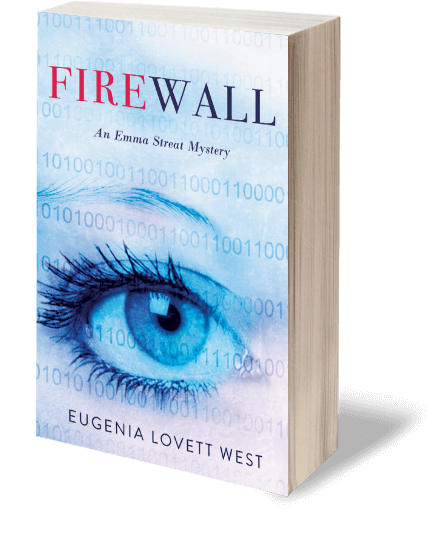
Author Eugenia Lovett West Introduces FIREWALL An Emma Streat Mystery


Firewall book image at angle


Former opera singer Emma Streat has survived the murder of her husband and the destruction of her beautiful old house. Now a full-time single mother, she struggles to move forward and make a home for her two sons. Because of her detection skills, she has become a go-to person for help–so, when her rich, feisty, socialite godmother is blackmailed, she turns immediately to Emma. Soon, Emma founds herself thrust into the dark world of cybercrime. Mounting challenges take her to exclusive European settings where she mixes with top people in the financial and art collecting worlds and has intriguing and emotion-packed experiences with men–including her dynamic ex-lover, Lord Andrew Rodale. When she is targeted by a cybercrime network using cutting-edge technology, it takes all of Emma’s resilience and wits to survive and bring the wily, ruthless criminal she’s hunting to justice. Action-packed and full of twists and turns, this third book of the Emma Streat Mystery series does not disappoint!


Amazon | Goodreads | Website


Excerpt


Chapter 1


Excerpted from Firewall: An Emma Streat Mystery by Eugenia Lovett West. Copyright © 2019 Eugenia Lovett West. All rights reserved. Published by SparkPress. 

March 25


A spring blizzard was cascading snow over Boston’s Public Garden. I poured my first cup of coffee and went to the living room window of my temporary apartment. People going to work struggled along the paths, heads bent, feet slipping. I watched, glad that in a few days I’d be on an island in the Caribbean. Lying in the sun with a man. Finding out if a dynamic former relationship could be renewed.


My phone on the counter sounded its little chime. I picked it up and saw that the call was from my godmother, Caroline Vogt. She never called before noon, but today the gravelly tuba voice reverberated in my ear.


“Emma, I need you, and I need you now.” 


This was demanding, even for Caroline. I took a deep breath. “Why do you need me? Are you still down in the Keys?” 


“I’m back in New York and something has happened.” 


“What?”


“Oh God, I can’t believe it, but someone’s trying to blackmail me.”


Blackmail? When?” 


“Just now. I was simply sitting in my bed, eating my breakfast, and the doorbell rang. Minnie went to open it. No one was there, just a note shoved under the door telling me to pay a million dollars to an account in a Miami bank. Pay it today. If I don’t, my dirty little secret will go to the media tomorrow. All the media.” The tuba voice wobbled. 


I shifted the phone. Caroline’s usual reaction to trouble was assault mode. Strike back. Never show weakness. This call for help was totally out of character—and the timing couldn’t be worse.


“Look. I can see why you’re upset,” I said, trying to apply calm. “Blackmail is nasty, but it happens. The dirty little secret bit— everyone has secrets and that person is just trying to scare you. If you’re really worried, I think you should call the police or a detective. Someone who has real expertise.” 


“No. Absolutely not. I won’t have strangers prying into my business. You’re the person we all trust in a crisis. You found Lewis’s killer. You exposed those virus terrorists and saved your niece Vanessa. You have credentials. You have to find this bastard before he comes back and wants more.” 


“Wait. Let me think.” I pushed back my hair. No way did I want to be the family detective, involved in another crisis, but Caroline was now in her eighties, a mega heiress from Chicago, a fixture in New York society. Divorced four times, no children. I was the closest thing she had to family and she was frightened. I must go, but with any luck I could still get to that island. Spend three days sorting her out, then fly there from New York. 


“Emma?” 


“I’m here. Listen. It’s snowing hard in Boston, a freak storm, but I’ll try for a flight today. Failing that, I’ll take the train. I’ll let you know. Relax, no need to be paranoid. Love you,” I said and clicked off. 


A siren went shrieking down Arlington Street, the sound that signaled trouble. I sat down on the stool at the counter and reminded myself that I owed Caroline. She had been my unfailing support from the day I was born. She had taken the place of my dead mother. Fourteen months ago she had given me a stern lecture: 


“You’re still young. You survived losing your rising opera career. You’ve done a superb job bringing up those two hunks of boys, but now they’re off to college. Cut the cord and let them go. You’ve got the money and the energy to do something important. Different.” 


Good advice, but three days later, my husband was murdered and my world had gone up in flames along with my beautiful old house on the Connecticut River. I still had Jake and Steve, but creating a new life wasn’t easy. It was time, past time, to move forward. 


I took a deep breath and picked up a pad of paper. First, call the airlines, then cancel this morning’s appointment for a haircut. Start packing. 


By now experience should have taught me that one small incident can spiral into a tsunami of trouble. But no siren sounded, warning me that by helping Caroline I would be targeted by a network of cybercriminals. No way of knowing that her call would take me to many countries, lead to heartbreak, and nearly cost me my life. 


Excerpted from Firewall: An Emma Streat Mystery by Eugenia Lovett West. Copyright © 2019 Eugenia Lovett West. All rights reserved. Published by SparkPress.


Eugenia Lovett


About the Author:

Eugenia Lovett West is the author of Firewall: An Emma Streat Mystery. Eugenia was born in Boston, Massachusetts. Her father was Reverend Sidney Lovett, the widely known and loved former chaplain at Yale. She attended Sarah Lawrence College and worked for Harper’s Bazaar and the American Red Cross. Then came marriage, four children, volunteer work, and freelancing for local papers. Her first novel, The Ancestors Cry Out, was published by Doubleday; it was followed by two mysteries, Without Warning and Overkill, published by St. Martin’s Press. West divides her time between Essex, Connecticut, and Holderness, New Hampshire, where she summers with her large extended family. For more information, please visit http://www.eugenialovettwest.com


Glenfinnan Railway Viaduct in Scotland with the Jacobite steam train against sunset over lake

Book Recommendations with Regan from Peruse Project

 

IT’S TELEVISION TUESDAY


Vintage Red Television


Exciting August Book Haul with Regan from Peruse Project


Downdload Libby

Instagram: Peruse Project


steam locomotive with steam clouds in winter, front view, Slovakia