
IT’S TELEVISION TUESDAY!

How to Start Simple Habits to Reach Your Writing and Self-Publishing Goals with Steve Scott


England, 1154-1194
A kingdom under assault.
A conspiracy born of anarchy.
A hero standing against tyranny.
Falsely convicted of a shocking crime, Robin Fitzooth, the Earl of Huntingdon, finds refuge in Sherwood Forest and becomes Robin Hood.
Leading a band of men against the injustices of a malevolent sheriff and his henchmen, Robin begins to unravel a web of treachery threatening the English royal family.
As shadowy forces gather to destroy the future of a nation, Robin faces deceit, betrayal, and the ravages of war as he defends his king, his country, his people, and the woman he loves from a conspiracy so diabolical, so unexpected, that the course of history hangs in the balance.
From the mists of an ancient woodland, to lavish royal courts teeming with intrigue, to the exotic shores of the Holy Land – Robin Hood leads the fight in a battle between good and evil, justice and tyranny, the future and the past.
Part one of an exciting three-part retelling of the Robin Hood legend!
Although the books in the trilogy are not stand-alone, they do not end in cliffhangers.

Authors Olivia Longueville and J.C. Plummer combine to produce a stunning work of art in Robin Hood’s Dawn, Book one in the Robin Hood Trilogy. The first sense I had in reading this book was like being in the setting with the characters. I truly believe that those who can write quality historical fiction are some of the best writers out there.
My second realization was the originality and richness of historical detail. This really puts you on the ground alongside the characters.
Third, the scenes in the book are quite stunning and captivating in their depiction and prose. My favorite scene is where Lady Marion and Robin are reunited at a certain point professing their love to one another. I don’t want to give away too many details here if you haven’t read it yet. But, it was literally dripping with rich prose that flowed back and forth between them. I can tell the authors really enjoyed writing that one.
Looking forward to the next book!


Robin Hood has been featured in many books, movies, and television shows. How is your story different?
We have taken a fresh approach to the Robin Hood story, and we’re excited to share our vision with fans of the legendary hero.
We have creatively reimagined the origins of the Robin Hood legend, which includes exploring the complexity of his family dynamics – an aloof, proud father loyal to King Henry II, and a kind-hearted, generous mother devoted to ministering to the poor with her gift for healing. One theme is that the consequences of immoral actions and secret sins can reverberate across generations, and this is part of the legacy that Robin receives from his father.
We wanted to cast him as a hero fighting against the tyranny of a lawless government official instead of a bandit redistributing wealth. When Robin is falsely accused of a shocking crime by the new Sheriff of Nottingham, he could have simply retreated to a safe place beyond the reach of the sheriff. However, he feels a responsibility to the people – he believes in the intrinsic value of every human being – so he takes a stand to defend the people from the actions of the sheriff. And this points to another theme: one person can make a difference by taking a stand for what is right.
Robin also feels great admiration for the newly crowned King Richard the Lionhearted. His loyalty to the king will create a number of conflicts and unexpected consequences in the story.
Lastly, we wanted to set our Robin Hood story in a fascinating time period: the 12th century. In our humble opinion, the 12th century has much to offer fans of sweeping tales of political, social, and spiritual upheaval.
We have carefully constructed our story within the framework of real history. We hope that this realism and devotion to actual history will add to the enjoyment of the story and encourage people to learn more about this time.

You’ve emphasized how your Robin Hood story has been reimagined. Will fans of the traditional ballads still recognize this as a Robin Hood story?
There is a lot of variety in the many books and screen adaptations of the Robin Hood legend. We wanted to create a story that was respectful towards fans of the original ballads and legends without necessarily adhering to the same storylines that have been previously written. It is our hope that all Robin Hood fans will enjoy this fresh retelling of the story.
For example, we feel that Marian is a character who deserves more attention. All too often she is a background character with little to do. With this in mind, we have focused on creating a Lady Marian who will figure more prominently in the story, especially in book 2.
Our Marian is more than a love interest for Robin. Over the course of Robin Hood’s Dawn, Marian transforms from a sheltered, somewhat pampered, girl into a brave woman who continuously strives to overcome both her fears and the obstacles that she faces. We also wanted her to be feminine and remain believable as a woman of the 12th century. Of course, keep in mind that the most prominent woman of the 12th century was the indomitable Eleanor of Aquitaine, an inspiration to any woman living in a male-dominated society.
Fans of the Robin Hood legend will find many familiar characters: Maid Marian, Little John, Allan-a- dale, Will Scarlet, Much the Miller’s son, Guy of Gisborne, and the Sheriff of Nottingham.
Readers will also meet real historical figures such as King Stephen, King Henry II, Richard the Lionhearted, King Philippe II of France, Prince John “Lackland”, and many others, including Ranulphus Besace. Who was he? Well, he was a real person who was King Richard’s personal physician!

This book is advertised as the first in a trilogy. Will the first two books end in cliff- hangers? Will any of the books be stand-alone?
Although the final mysteries and conflicts will not be resolved until book 3, we have structured the trilogy so that books 1 and 2 do not end in cliffhangers.
The readers will not be left wondering whether the main characters will live or die, and we have endeavored to create a sense of completion in each of the first two books. Some story threads will be resolved, and some of the mysteries surrounding the main characters will be revealed in each of the first two books.
We think readers will be excited and eager for the next installment without suffering undue frustration at the endings of books 1 and 2.
The books will not be stand-alone.

How did each of you become interested in writing this story and working together as co-authors?
Olivia:
I love to tell stories with multi-dimensional characters. I speak several languages, and I found that I enjoyed not only writing stories but also writing them in different languages. My favorite legendary hero is Robin Hood, and my favorite historical figure is Anne Boleyn.
My first novel is an English-language re-imagining of the story of Anne Boleyn.
In 2015, I met Coleen (J.C.) on the Internet and we decided to co author a Robin Hood Trilogy.
It is amazing that Coleen and I have managed to successfully work together on our project despite the fact that we have never met each other in real life. We talk on the phone and frequently exchange skype messages as well as emails. We have been working together long- distance despite living in very different time zones.
Coleen (J.C.)
I began writing about three years ago. I had previously done editing work for other authors, but I had never thought about writing my own stories until one day when I was suddenly inspired to start writing, and I’ve been writing nearly non-stop ever since.
I wanted to write a book that would honor the legend of Robin Hood as a man who stood against the tyranny of a powerful government official; a man who fought for justice and fairness because he recognized the intrinsic value rooted in the humanity of all people.
So, you’ve never actually met, you come from different countries, different cultures, and speak different languages. How can you co-author a book? Is it because you have similar writing styles?
Coleen:
Fortunately, Olivia is fluent in English, because that’s the only language I know!
Olivia:
We have found that we have a lot in common – especially our love of writing and of history. We have to work hard to merge our writing styles, but we have successfully done this.
Coleen:
That’s very true. Oliva and I have very different “voices” and writing styles. You might even say they are nearly opposite styles.
I tend to write in a straightforward, expository style, with a minimum of descriptive elements and metaphorical flourishes. I am good at explaining things, organizing ideas, and creating natural sounding dialogue.
Olivia:
My writing is characterized by lush romanticism and passionate lyricism. I love to create metaphors and descriptions which excite the imagination of the reader in a vivid and dramatic way.
Coleen:
In some respects, Olivia’s words are the emotional heart of the story, and my words represent the rational intellect. Of course, it’s not quite that cut-and- dried, but it is one way to describe how two people with such different styles have come together to create Robin Hood’s Dawn.



The best writing advice I ever received was to plot from the point of view of the antagonist and write from the perspective of the protagonist. Simple, right? But it was an a-ha moment for me.

A bit of background. Like most writers, I have a couple of practice manuscripts currently occupying space in the bottom of a drawer. They both garnered decent feedback from agents, but the novels were episodic—most of the second act chapters could have been rearranged without affecting the story. I wasn’t building on prior events. Why? Because I didn’t know what my antagonist was doing behind the scenes.

I think most writers put a great deal of thought into the character development of their heroes, but they tend to give their antagonist short shrift. But think about it—the antagonist is the character that drives the story. It is his or her actions that the protagonist must address.
For most of my adult life, I was a police officer. Part of the job description involved investigating crimes. Most incidents began when someone called 9-1- 1. Upon arrival, I’d try to piece together what happened by observing the scene, obtaining witness statements, and collecting physical evidence. Armed with this information, I’d search databases, develop additional contacts, run down new leads.
I was a first responder—just like my protagonist.

Imagine how easy police work would be if an officer knew before being dispatched to the scene exactly how the criminal had planned the crime, what motivated the person to do such a nefarious deed, and what steps he’d taken to avoid detection.
As a writer, you can do that!

To combat my story-structure issues, I enrolled in a plotting course for mystery and thriller writers. During the course, the instructor assigned two exercises that I’ve since incorporated into the planning stage of every story I write.
The first exercise explains the antagonist’s motivation for doing what he did. I write it in first person and it essentially creates the backstory of the character. The first line of this exercise for Adrift, my debut novel reads:
Ishmael Styx is a man who knows what he wants, and he wants to be dead. All he has to do is figure out how to make it temporary.
I then wrote 1200 words explaining what had happened in his life to bring him to this
point.
The second exercise explains how the antagonist pulled off his crime. Adrift had a complicated crime (more than one, actually, but that developed later in the story).

Drawing on my background, I hatched the plan. Knowing how the crime occurred gave me the insight I needed to identify the clues my protagonist had to notice, what other things could be misinterpreted, and how to follow the breadcrumb trail left by the antagonist. The exercise revealed some surprising options that prompted me to go deeper into my storytelling.
The structure of a mystery novel is such that the antagonist runs the show in the first act. His crime is the inciting incident that ensures the protagonist’s involvement. Roughly the first half of the story involves the hero reacting to the actions of the protagonist. After the midpoint, their roles change. Now your protagonist is hot on the trail, developing those leads, realizing her mistakes. Sure, she’ll have setbacks, but as she gets closer to solving the crime, the two characters are also nearing their final confrontation. Both exercises will help you determine how your cornered antagonist will lash out, try to escape, or outwit your sleuth.

Mapping out the crime allowed me to structure my storyline so that it built on the information learned in previous chapters. Actions had consequences. My writing was no longer episodic.
The first time I’d put this writing advice into action was during the writing of Adrift. The novel won both the Daphne du Maurier Award for Excellence and the Royal Palm Literary Award for mystery. Coincidence? I don’t think so.
I knew how to foil the crime because I had plotted it first.

An FBI National Academy graduate, Micki Browning worked in municipal law enforcement for more than two decades, retiring as a division commander. Now a full time writer, she won the 2015 Daphne du Maurier Award for Excellence and the Royal Palm Literary Award for her debut mystery, ADRIFT.
Micki also writes short stories and non-fiction. Her work has appeared in dive magazines, anthologies, mystery magazines and textbooks. She resides in Southern Florida with her partner in crime and a vast array of scuba equipment she uses for “research”


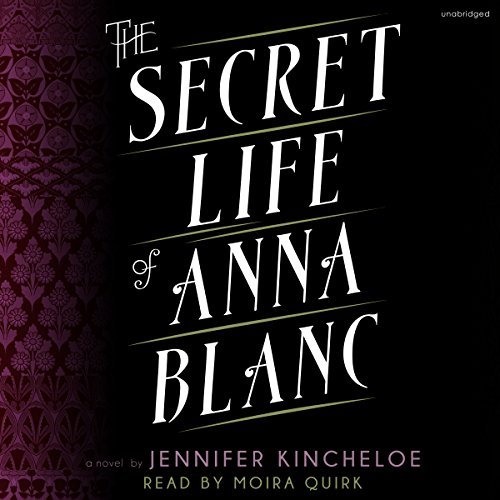
Author: Jennifer Kincheloe
Narrator: Moira Quirk
Length: 10 hours 50 minutes
Publisher: Jennifer Kincheloe⎮20
Genre: Historical Fiction Mystery
Series: Anna Blanc Mysteries, Book 2
Release date: Nov. 14, 2017
Synopsis: Los Angeles, 1908. In Chinatown, the most dangerous beat in Los Angeles, police matron Anna Blanc and her former sweetheart, Detective Joe Singer, discover the body of a white missionary woman, stuffed in a trunk in the apartment of her Chinese lover. Her lover has fled. If news gets out that a white woman was murdered in Chinatown, there will be a violent backlash against the Chinese. Joe and Anna plan to solve the crime quietly and keep the death a secret. So does good-looking Mr. Jones, a prominent Chinese leader who has mixed feelings about helping the LAPD and about Anna.
Meanwhile, the Hop Sing tong has kidnapped two slave girls from the Bing Kong tong, fuelling existing tensions. They are poised on the verge of a bloody tong war that would put all Chinatown residents in danger.
Joe orders Anna out of Chinatown to keep her safe, but to atone for her own family’s sins, Anna must stay to solve the crime before news of the murder is leaked and Chinatown explodes.
This book was quality historical fiction in my opinion. I found it extremely entertaining on many levels! Anna Blanc is a very delightful, fiercely independent character. The Narrator was the perfect medium for this book. She fully brought the characters to life! Jennifer has created one of the most memorable characters that I can remember. Anna Blanc reminds me of the talented young sleuth, Flavia de Luce.
Loved all the interpersonal conflict, tension among the characters. Very well written. Jennifer Kincheloe is a good writer.


In your opinion, what are the pros and cons of writing a stand-alone novel vs. writing a series?
I liken it to a movie vs. a TV series. You simply have more time to develop the characters. You know them so well.You also have the challenge of making them grow or change in every book. Sustaining the romance is a trick, but I love how Elizabeth Peters did it in the Amelia Peabody series. It never got old. The audiobooks of that series are seriously the best I’ve ever heard (after Moira). They relate the adventures of a woman Egyptologist in the late 19th and early 20th century. Start with CROCODILE ON THE SANDBANK. You’ll thank me.
What bits of advice would you give to aspiring authors?
Write for yourself. Not for money, critics, or glory. Only write for yourself.
What’s next for you?
I have a contract for book three in the Anna Blanc mystery series, which I’ve tentatively titled GRIFFITH PARK. It’s hard to describe the plot because there’s a twist in the beginning and I’m not sure how much to reveal, but it’s more Anna and Joe, more adventures, more LA history straight from the papers.
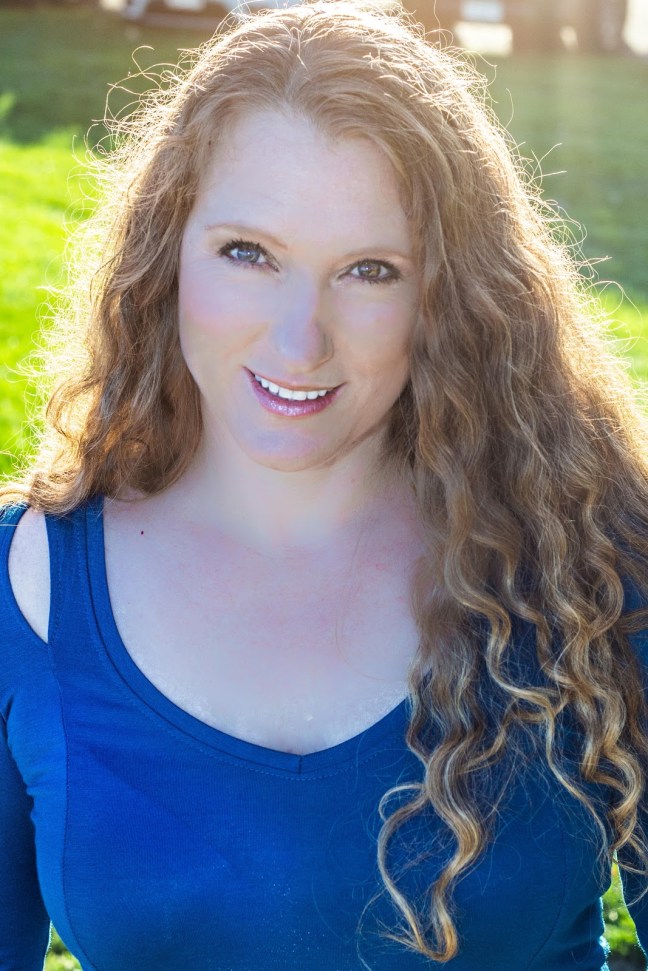
Jennifer has been a block layer, a nurse’s aid, a fragrance model, and on the research faculty at UCLA, where she spent 11 years conducting studies to inform health policy. A native of Southern California, she now lives in Denver, Colorado with her husband and two teenagers. She’s currently writing book three in the Anna Blanc Mystery series. Book two, THE WOMAN IN THE CAMPHOR TRUNK, is coming out in Fall of 2017 from Seventh Street Books.

Moira grew up in teeny-tiny Rutland, England’s smallest county, which is fitting as she never managed to make it past five feet herself. Moira’s work spans the pantheon of the voiceover world: plays for BBC radio, plays for NPR, video games, commercials, television promos, podcasts, cartoons, movies and award winning audiobooks. She’s won Multiple Audie Awards, Earphone Awards, as well as Audible’s prestigious Book-of-the-Year Award. She has lately set foot in front of the camera again, appearing in “Pretty: the Series” and the Emmy-winning “Dirty Work.”


A riveting psychological thriller inspired by the never-caught Zodiac Killer, about a young detective determined to apprehend the serial murderer who destroyed her family and terrorized a city twenty years earlier.
Caitlin Hendrix has been a Narcotics detective for six months when the killer at the heart of all her childhood nightmares reemerges: the Prophet. An Unsub—what the FBI calls an unknown subject—the Prophet terrorized the Bay Area in the 1990s and nearly destroyed her father, the lead investigator on the case.
The Prophet’s cryptic messages and mind games drove Detective Mack Hendrix to the brink of madness, and Mack’s failure to solve the series of ritualized murders—eleven seemingly unconnected victims left with the ancient sign for Mercury etched into their flesh—was the final nail in the coffin for a once promising career.
Twenty years later, two bodies are found bearing the haunting signature of the Prophet. Caitlin Hendrix has never escaped the shadow of her father’s failure to protect their city. But now the ruthless madman is killing again and has set his sights on her, threatening to undermine the fragile barrier she rigidly maintains for her own protection, between relentless pursuit and dangerous obsession.
Determined to decipher his twisted messages and stop the carnage, Caitlin ignores her father’s warnings as she draws closer to the killer with each new gruesome murder. Is it a copycat, or can this really be the same Prophet who haunted her childhood? Will Caitlin avoid repeating her father’s mistakes and redeem her family name, or will chasing the Prophet drag her and everyone she loves into the depths of the abyss?
A Damn good thriller!
This is one of the best books I’ve read this year, and definitely the best crime fiction. Absolutely amazing. A must read. Caitlin Hendrix, a narcotics detective joins an investigation to catch one of the nations worst serial killers that her father failed to catch. In fact, her father Mack Hendrix now a retired cop, tries to persuade to stop investigating since it ruined his life nearly driving him insane.
I loved what Meg Gardiner has done with detective Caitlin Hendrix. She’s not necessarily an expert, but joins the homicide division due to her father’s connection to the case. Determined, focused, bold, not to mention brillant; she works with law enforcement to catch the UNSUB.
Meg Gardiner does a spectacular job creating the twisted M.O. of the serial killer, UNSUB. He was such a formidable opponent it made for a JUICY conflict. Meg crafts his motivations perfectly.
The suspense is so thick you can cut it with a steak knife. So if you like edge-of-your-seat thrillers, THIS IS IT. Look no further.
In the crowded arena of crime fictiob UNSUB is quite unique. Don’t miss it!!

Inspired by real-life serial killer Ted Bundy, an exhilarating thriller in which FBI profiler Caitlin Hendrix faces off against a charming, merciless serial killer
In southern Texas, on Saturday nights, women are disappearing. One vanishes from a movie theater. Another is ripped from her car at a stoplight. Another vanishes from her home while checking on her baby. Rookie FBI agent Caitlin Hendrix, newly assigned to the FBI’s elite Behavioral Analysis Unit, fears that a serial killer is roaming the dark roads outside Austin.
Caitlin and the FBI’s serial crime unit discover the first victim’s body in the woods. She’s laid out in a bloodstained, white baby-doll nightgown. A second victim in a white nightie lies deeper in the forest’s darkness. Both bodies are surrounded by Polaroid photos, stuck in the earth like headstones. Each photo pictures a woman in a white negligee, wrists slashed, suicide-style–posed like Snow White awaiting her prince’s kiss.
To track the UNSUB, Caitlin must get inside his mind. How is he selecting these women? Working with a legendary FBI profiler, Caitlin searches for a homology–that elusive point where character and action come together. She profiles a confident, meticulous killer who convinces his victims to lower their guard until he can overpower and take them in plain sight. He then reduces them to objects in a twisted fantasy–dolls for him to possess, control, and ultimately destroy. Caitlin’s profile leads the FBI to focus on one man: a charismatic, successful professional who easily gains people’s trust. But with only circumstantial evidence linking him to the murders, the police allow him to escape. As Saturday night approaches, Caitlin and the FBI enter a desperate game of cat and mouse, racing to capture the cunning predator before he claims more victims.


Meg Gardiner is the author of thirteen thrillers. UNSUB, her latest novel, features homicide detective Caitlin Hendrix. Don Winslow says, “Like The Silence of the Lambs, this novel scared the hell out of me. I dare you to try putting it down.” The novel has been bought for development as a TV series by CBS.
Meg was born in Oklahoma and raised in Santa Barbara, California. A graduate of Stanford Law School, she practiced law in Los Angeles and taught writing at the University of California Santa Barbara. She’s also a three time Jeopardy! champion. Meg lives in Austin, Texas.
She’s the author of the Evan Delaney series and the Jo Beckett novels. China Lake won the 2009 Edgar award from the Mystery Writers of America for Best Paperback Original. The Dirty Secrets Club won the Romantic Times Reviewers’ Choice Award for Best Procedural Novel of 2008.


Ruth Jones is the Director of Business Development at Ingram Content Group and is currently working on developing Aer.io.
An introduction to Aer.io and why authors should know about it Selling books direct from your site using Ingram’s catalogue and http://www.Aer.io

rejuvenatement - not retirement
...a crime-fictional site
Established in May 2011 to help nurture and inspire the poetic spirit.
A place for poems and pics
a simple pairing of pictures and poetry
Sharing Poetry and Hugs
Persistent WV Poet
A.I. Art and Poetry
short writing prompts
I am the way and the reality and the life...John 14:6
Submit your film, screenplay, novel, to the festival and get it showcased at the FEEDBACK Festival. Full Feedback on all entries.
Military Science Fiction Author
 The Writing Train: Join the locomotion